A Complete Guide to the History and Highlights of Iwao Castle – A Thorough Explanation of the Three Castles of Higo, Tanba, and Shinano
Iwao Castle (Iwao-jo) is a type of mountain castle built in various locations throughout Japan from the Sengoku period to the early Edo period. In particular, castles with the same name existed in Higo Province (present-day Kumamoto Prefecture), Tanba Province (present-day Hyogo Prefecture), and Shinano Province (present-day Nagano Prefecture), each playing an important role in the history of its respective region. This article provides a comprehensive explanation of these three Iwao Castles, including their history, structure, changes in their lords, and modern-day visitor information.
Table of Contents
- What is Iwao Castle? – An Overview of Three Castles
- Iwao Castle in Higo Province (Yamato-cho, Kumamoto Prefecture)
- Iwao Castle in Tanba Province (Tanba City, Hyogo Prefecture)
- Iwao Castle in Shinano Province (Saku City, Nagano Prefecture)
- Structural Characteristics as a Mountain Castle
- Visitor Guide and Access Information
- Historical Episodes Surrounding Iwao Castle
What is Iwao Castle? – An Overview of Three Castles
The name Iwao Castle means “rocky ridge,” and is a common name for mountain castles that utilize rugged terrain. While several Iwao Castles existed throughout Japan, only three main locations still have remains and are preserved as historical sites.
Iwao Castle in Higo Province was under the control of the Aso clan and is a mountain castle said to have been built by Aso Koretada. It is a designated historical site of Yamato-cho. Iwao Castle in Tanba Province is known as the residence of the Wada clan and later fell during Akechi Mitsuhide’s conquest of Tanba. Iwao Castle in Shinano Province was built by the Oi clan and later served as the castle lord under Sanada Yukitaka; it is a designated historical site of Nagano Prefecture.
While these castles differ in their construction dates and lords, they all share the common characteristic of being mountain castles that served as key points for regional control during the turbulent Sengoku period.
Iwao Castle in Higo Province (Yamato-cho, Kumamoto Prefecture)
Location and Structure
Iwao Castle in Higo Province is a mountain castle located in present-day Yamato-cho, Kamimashiki-gun, Kumamoto Prefecture. It was built with the intention of functioning as a refuge and fortified outpost in case of emergencies at “Hama no Yakata,” the base of the Aso clan.
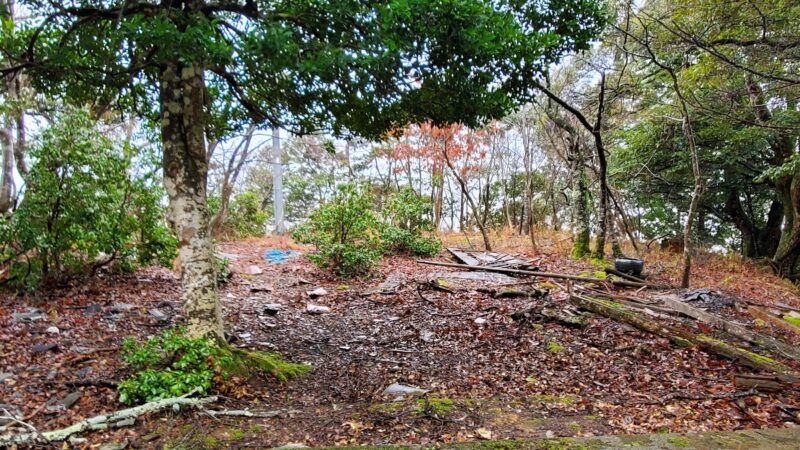
Built in the rugged mountainous region of Yamato-cho, this castle was a defensive structure that skillfully utilized the natural terrain. The castle’s baileys are arranged along the ridgeline, with the steep slopes serving as natural defenses.
History and Lord
The exact date of construction is unclear, but it is believed to have been built by Aso Koretada. The Aso clan was known as a powerful local lord in Higo Province and was also a family that inherited the position of chief priest of Aso Shrine.
Iwao Castle functioned as a defensive base within the Aso clan’s territory as part of their rule. It remained within the Aso clan’s sphere of influence throughout the Sengoku period and is thought to have survived for a certain period even after Toyotomi Hideyoshi’s conquest of Kyushu.
Currently, it is protected as a designated historical site of Yamato Town and is a valuable historical heritage site preserving the remains of a medieval mountain castle.
Iwao Castle in Tanba Province (Tanba City, Hyogo Prefecture)
Construction and the Era of the Wada Clan
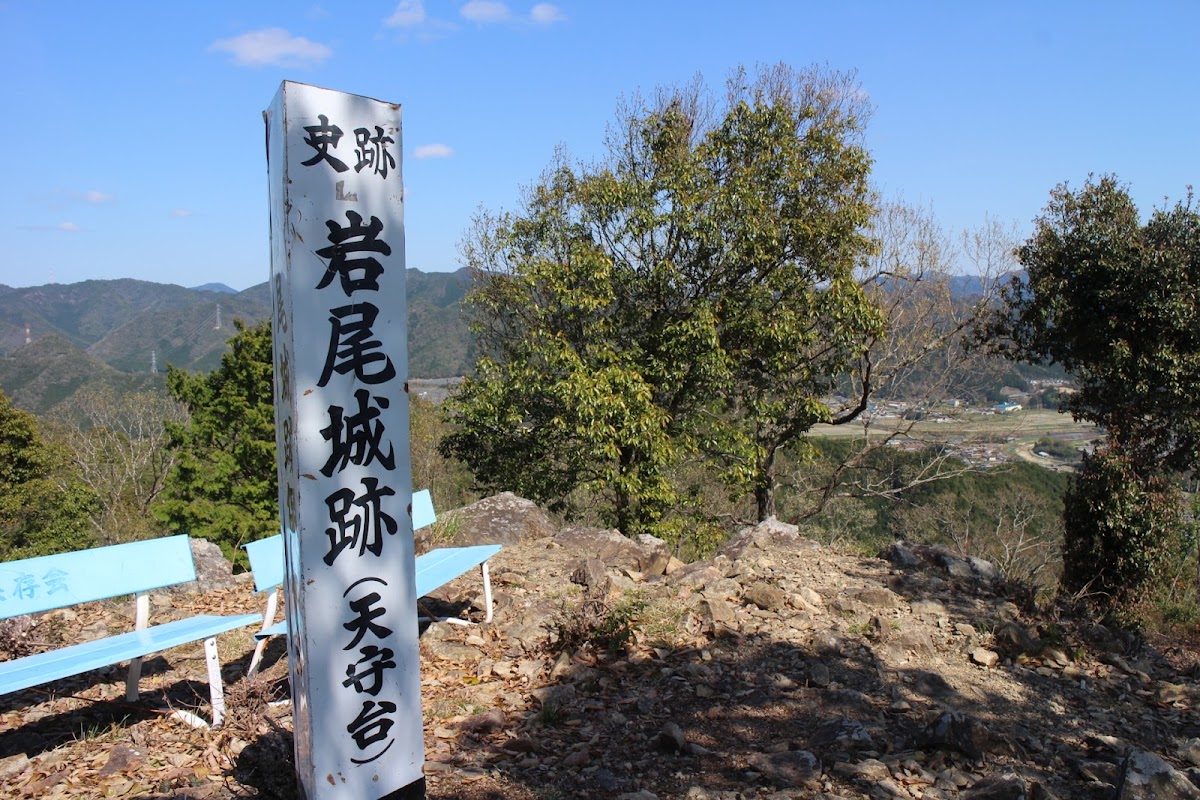
Iwao Castle in Tanba Province is located in present-day Wada, Sannan-cho, Tanba City, Hyogo Prefecture, and is a mountain castle built on the summit of Mt. Hebiyama, at an altitude of 358 meters. It is said that Iwao Castle was built in Eisho 13 (1516) by Wada Hyuga-no-kami Nariyori, the fifth head of the Wada clan.
The Wada clan was a powerful local family in Tanba Province, and they controlled the surrounding area from their base at Iwao Castle. Nariyori died of illness in Tenbun 13 (1548), and his son, Wada Sakuzemon-no-jo Morisue (Moriyoshi), inherited the position of castle lord.
Akechi Mitsuhide’s Conquest of Tanba and the Fall of Iwao Castle
In Tensho 7 (1579), Akechi Mitsuhide, acting on orders from Oda Nobunaga, launched a full-scale invasion of Tanba Province. Mitsuhide’s conquest of Tanba was extremely fierce, and various castles in Tanba, including Kuroi Castle, were captured one after another.
Iwao Castle also became a target of Mitsuhide’s army and fell after a fierce battle. This battle marked the end of the Wada clan’s rule, and Iwao Castle came under the control of the Oda clan.
Renovation of Iwao Castle by Sano Eiyu
In 1586 (Tensho 14), when Sano Eiyu was granted a fief of 3,750 koku from Kido in Omi Province, Iwao Castle underwent extensive renovations. Eiyu transformed the medieval mountain castle into a modern castle, constructing stone walls and improving the baileys.
During the Sano clan’s rule, Iwao Castle was developed as a modern castle, but it was abandoned in 1597 (Keicho 2). This is thought to be part of a castle reorganization that preceded the “One Castle Per Province” decree under the Toyotomi regime.
Structure and Remains
Iwao Castle is a multi-bailey mountain castle utilizing the ridgeline, with multiple baileys arranged around the main bailey. Of particular note are the stone walls remaining around the Nishinomaru (Western Bailey), which are thought to have been constructed during Sano Eiyu’s renovation of the castle into a modern structure.
The remaining structures, such as moats, earthworks, baileys, and stone walls, are still clearly visible today, making them valuable historical materials for understanding the castle structure of the Tanba region from the Sengoku period to the early modern period. In recent years, local volunteers have cleared trees around the stone walls of the Nishinomaru (western bailey), making the scale of the stone walls more apparent.
Although more than 400 years have passed since its abandonment, it has not undergone major alterations since its closure in 1597, thus retaining much of its original appearance and earning it the reputation of being “the finest mountain castle in Tanba.”
Iwao Castle in Shinano Province (Saku City, Nagano Prefecture)
Built by the Oi Clan
Iwao Castle in Shinano Province is a mountain castle located in Naruse Iwao, Saku City, Nagano Prefecture, and is a designated historical site of Nagano Prefecture. It was built in August of Bunmei 10 (1478) by Oi Yukitoshi (Zensho Yukitoshi) of the Nagatoro Oi clan, a branch of the Oi clan, a descendant of the Seiwa Genji Ogasawara clan.
Iwao Castle is situated on a strategic location on a cliff, bordered by the Chikuma River and Yukawa River to the north and south, boasting an elevation of approximately 660 meters and a relative height of approximately 25 meters. This geographical advantage made it an important military base in the Saku region.
The Oi clan held considerable power as a powerful local lord in the Saku region, controlling several castles, including Iwao Castle. The Oi clan’s rule continued after Oi Yukitoshi, and it remained an important base for the Oi clan until the time of Oi Sadataka.
Takeda Shingen’s Conquest and Sanada Yukitaka
In September 1543 (Tenbun 12), Takeda Shingen (then known as Harunobu) of Kai Province began his invasion of the Saku region. Shingen captured Iwao Castle, along with Oi Sadataka’s Nagakubo Castle, bringing the Saku region under Takeda control.
After capturing Iwao Castle, Shingen appointed Sanada Yukitaka (Yukitsuna) as the castle lord. Sanada Yukitaka was a prominent retainer of the Takeda clan and governed the Saku region from his base at Iwao Castle.
Interestingly, there is a legend that Sanada Masateru (Nobutsuna’s younger brother) and Sanada Masayuki (later lord of Ueda Castle), both sons of Sanada Yukitaka, were born at Iwao Castle. Sanada Masayuki later played an active role under both the Tokugawa and Toyotomi regimes and is known as the person who laid the foundation for the Sanada family.
The Battle of Iwao Castle and Yoda Nobuaki
In 1582, when Oda Nobunaga was killed in the Honnoji Incident, Tokugawa Ieyasu and Hojo Ujimasa engaged in a power struggle in Shinano Province after the fall of the Takeda clan. During this period of turmoil, Yoda Nobuaki (Nobunobu), a Tokugawa supporter, operated from one of his bases at Iwao Castle.
Yoda Nobutomo, a local lord of the Saku region, served Tokugawa Ieyasu and distinguished himself in battles against the Hojo clan. He is said to have ultimately died in battle near Iwao Castle. This battle is one of the important episodes in the history of Iwao Castle.
Structural Characteristics
Iwao Castle in Shinano Province is a mountain castle that made maximum use of the natural terrain of cliffs and rivers. Located on a plateau between the Chikuma River and the Yukawa River, it was a natural stronghold protected on three sides by steep cliffs.
The castle had multiple baileys, and its defenses were reinforced with moats and earthworks. Although the relative height was not particularly high at 25 meters, the surrounding rivers and cliffs formed a strong defensive line.
Structural Characteristics as a Mountain Castle
A common characteristic of the three Iwao Castles is that they are all mountain castles and feature defensive structures that skillfully utilize the natural terrain.
Ridge and Enclosure Arrangement
As a basic structure for mountain castles, the main enclosure (honmaru) and multiple enclosures (kuruma) are arranged along the ridgeline. Enclosures are flat, leveled areas used for building construction and troop garrisoning. Iwao Castle employs a linear arrangement, with enclosures connected along the ridgeline.
Moats and Earthworks
To prevent enemy intrusion, moats were constructed to cut across the ridgeline. Moats, by deeply digging into the ridge, are important defensive structures that hinder enemy advances. Earthworks were also built around the enclosures to enhance defensive capabilities.
Earthworks are earthen walls constructed by piling up earth, protecting against enemy arrows and bullets, and also serving as hiding places for defending soldiers. Clear remains of moats and earthworks can be found at all three Iwao Castles.
Construction of Stone Walls
In particular, at Iwao Castle in Tanba Province, stone walls were constructed during the renovation into a modern castle by Sano Eiyu. Stone walls are stronger than earthen ramparts and offer superior defensive capabilities. The stone walls remaining around the Nishinomaru (Western Bailey) are valuable relics that demonstrate the stone-laying techniques of the time.
As they illustrate the changes in castle structure during the transition from medieval mountain castles to modern castles, the stone walls of Iwao Castle hold significant value in castle history research.
Elevation and Relative Height
Elevation and relative height (height from the base) are indicators of a mountain castle’s defensive capabilities. Iwao Castle in Tanba Province is at an elevation of 358 meters, while Iwao Castle in Shinano Province is at an elevation of approximately 660 meters, each height reflecting the regional topography.
Regarding relative height, Iwao Castle in Shinano Province is relatively low at approximately 25 meters, but the surrounding rivers and cliffs acted as natural defensive walls, resulting in very high effective defensive capabilities.
Visitor Guide and Access Information
Iwao Castle, Higo Province (Yamato-cho, Kumamoto Prefecture)
Location: Yamato-cho, Kamimashiki-gun, Kumamoto Prefecture
Designation: Yamato-cho Designated Historic Site
Access: Accessible by car from the center of Yamato-cho. A mountain path is required to reach the castle.
Highlights: Remains of a medieval mountain castle, baileys, moats, etc.
Iwao Castle, Tanba Province (Tanba City, Hyogo Prefecture)
Location: Wada, Sannan-cho, Tanba City, Hyogo Prefecture
Elevation: 358 meters
Access: Wada Elementary School is a landmark. The entrance to the castle is behind Wada Elementary School. Since you will be passing through the school grounds, consideration for school personnel is necessary.
Climbing Time: Approximately 30-40 minutes on foot to the summit
Highlights: Stone walls of the Nishinomaru, moats, earthworks, and baileys. Recently renovated, the scale of the stone walls is now easier to appreciate.
Difficulty: A mountain castle that is relatively easy to climb for beginners to the elderly. The elevation is almost the same as Kuroi Castle ruins, but the hiking trail is well-maintained.
While Kuroi Castle ruins are famous among the castle ruins in Tanba City, Iwao Castle ruins are also highly regarded as “the best mountain castle in Tanba,” and are characterized by the fact that they have remained almost exactly as they were at the time of their abandonment in 1597.
Iwao Castle in Shinano Province (Saku City, Nagano Prefecture)
Location: Iwao, Naruse, Saku City, Nagano Prefecture
Elevation: Approximately 660 meters (relative height approximately 25 meters)
Designation: Nagano Prefecture Designated Historic Site
Access: Accessible from the Minami-Koya area of Saku City. Located on a plateau between the Chikuma River and the Yukawa River.
Highlights: Layout utilizing the cliff topography, baileys, moats, and earthworks. Popular among Sanada clan fans as a castle associated with Sanada Yukitaka.
Notes for Visitors
All Iwao Castles are mountain castles, and the following preparations and precautions are necessary for climbing:
- Clothing: Comfortable clothing, hiking boots or trekking shoes recommended
- Items to Bring: Drinking water, towel, insect repellent (summer)
- Weather: Be careful as the ground can be slippery in rainy weather or after rain
- Time: Plan with ample time to descend before sunset
- Manners: To protect the historical site, do not damage the remains, and take your trash with you.
Historical Episodes Surrounding Iwao Castle
Akechi Mitsuhide’s Conquest of Tanba
The fall of Iwao Castle in Tanba Province was part of Akechi Mitsuhide’s conquest of Tanba. Mitsuhide’s conquest of Tanba began in 1575 and was largely completed in 1579. During this process, major castles in Tanba Province, such as Kuroi Castle, Yagami Castle, and Iwao Castle, were successively captured.
In the Battle of Iwao Castle, Wada Morisue resisted by holding out, but ultimately the castle fell to Mitsuhide’s army. This victory allowed Mitsuhide to establish his control over Tanba Province and build the power base that would later lead to the Honnoji Incident.
The Sanada Clan and Iwao Castle
Iwao Castle in Shinano Province has deep ties to the Sanada clan. In addition to Sanada Yukitaka serving as the castle lord, the legend that Sanada Masayuki was born here holds special significance for Sanada clan fans.
Sanada Masayuki later built Ueda Castle and is known as a brilliant general who repelled the large Tokugawa army in the First and Second Battles of Ueda. The legend that Iwao Castle was Masayuki’s birthplace enhances the castle’s historical value.
Historical Background of the Abandoned Castle
Of the three Iwao Castles, the one in Tanba Province was abandoned in 1597 (Keicho 2). This is thought to be part of Toyotomi Hideyoshi’s castle reorganization policy.
During the Sengoku period, countless castles were built throughout Japan, but as the unification of the country progressed, a policy was implemented to abandon castles that were not essential for governance. The abandonment of Iwao Castle was also decided within this trend.
After its abandonment, Iwao Castle was left untouched without undergoing major alterations, resulting in the preservation of its castle structure from the late Sengoku period to the early modern period. This enhances the historical value of Iwao Castle today.
Summary
Iwao Castles were mountain castles that existed throughout Japan, and three in particular—Higo Province (Yamato-cho, Kumamoto Prefecture), Tanba Province (Tanba City, Hyogo Prefecture), and Shinano Province (Saku City, Nagano Prefecture)—still retain their remains today.
Iwao Castle in Higo Province served as a stronghold for the Aso clan, while Iwao Castle in Tanba Province has a history of successive lordships from the Wada clan to the Sano clan and its conquest of Tanba by Akechi Mitsuhide. Iwao Castle in Shinano Province was an important stronghold passed down from the Oi clan to the Takeda clan and then to Sanada Yukitaka.
All of these castles possess the unique structures of mountain castles, such as ridges, moats, earthworks, and baileys, and functioned as defensive facilities that skillfully utilized the natural terrain. In particular, Iwao Castle in Tanba Province, with its stone walls constructed during renovations to become a modern castle, is a valuable historical document illustrating the transitional castle structure from the medieval to the early modern period.
Currently, these Iwao Castles are protected as local historical sites and welcome visitors. As mountain castles where one can experience the history of the Sengoku period firsthand, and as regional historical heritage, Iwao Castles are cultural assets that should continue to be carefully preserved. A visit to Iwao Castles will be a fulfilling experience for castle enthusiasts, history buffs, and hiking lovers alike.