Iwao Castle (Tanba City, Hyogo Prefecture) Complete Guide | A Mountain Castle in the Sky that Tells the Story of the Transition from the Sengoku Period to the Early Modern Period
Iwao Castle, built on the summit of Mt. Hebiyama, a 358-meter-high mountain in Wada, Sannan-cho, Tanba City, Hyogo Prefecture, is a valuable mountain castle site that tells the story of the turbulent history from the Sengoku period to the Azuchi-Momoyama period. Its unique structure, a blend of medieval earthworks and early modern stone walls, embodies a transitional period in the history of Japanese castles, making it well worth a visit even for those who aren’t castle enthusiasts.
This article thoroughly explains the charm of this mountain castle in the sky, from its detailed history and notable remains to access information and surrounding tourist attractions.
The History of Iwao Castle | From the Wada Clan to the Sano Clan, and to its Abandonment
Construction and Rule by the Wada Clan (Eisho 13th Year – Tensho 7th Year)
The history of Iwao Castle begins in Eisho 13th year (1516) when Wada Hyuga-no-kami Tokiyori, the fifth head of the Wada clan, built the castle. The Wada clan traced its ancestry to Tani Mototsuna, who entered Tanba Province from Minami-Wada in Shinano Province as a jito (land steward) in Bunmei 3rd year (1471). They built their power as local lords ruling this region.
The Wada clan used Iwao Castle as their residence for generations, governing the Tanba Province region. However, the waves of the Sengoku period (Warring States period) relentlessly swept over this land. During the time of Wada Sakuzemon-no-jo Morisue, the son of Wada Tokiyori, Iwao Castle faced its fateful moment.
Akechi Mitsuhide’s Invasion of Tanba and the Fall of Iwao Castle (1579)
In 1579 (Tensho 7), Akechi Mitsuhide, acting on orders from Oda Nobunaga, began his full-scale conquest of Tanba Province. To pacify Tanba, Mitsuhide successively captured castles belonging to local lords. Iwao Castle became one of his targets and fell after a fierce attack by Akechi’s army. This marked the end of the Wada clan’s rule, bringing an end to approximately 60 years of their rule.
Akechi Mitsuhide’s invasion of Tanba was a crucial military operation in Oda Nobunaga’s unification of Japan, and the fall of Iwao Castle symbolized the end of the Sengoku period in Tanba Province.
Renovation of Iwao Castle into a Modern Fortress by Sano Eiyu (1586-1595)
Seven years after the castle’s fall, in 1586, Sano Shimosa-no-kami Eiyu was appointed to the castle from Kido in Omi Province with a stipend of 3,750 koku. Sano Eiyu was a retainer of Toyotomi Hideyoshi, and his arrival marked the establishment of a new system of rule under the Toyotomi regime.
Sano Eiyu’s greatest achievement with Iwao Castle was the large-scale renovation of the medieval mountain castle into a modern fortress. In addition to the existing earthen ramparts and defensive structures, he introduced a modern castle structure with entirely stone walls. This renovation transformed Iwao Castle not only into a military structure but also a symbolic building demonstrating the authority of the lord.
Sano Eiyu’s stone wall construction technique is the oldest known method, called Nozura-zumi, which involves stacking natural stones without any processing. While technically immature in some aspects, it possesses high historical value as a valuable relic representing the transitional period from the Sengoku period to the early modern period.
From a Castle Belonging to Maeda Gen’i to Abandoned (1595-1596)
In 1595 (Bunroku 4), Sano Eiyu was transferred to Kido in Omi Province and left Iwao Castle. Subsequently, Iwao Castle became a castle belonging to Maeda Gen’i, a senior retainer of Toyotomi Hideyoshi. Maeda Gen’i governed Tanba Province, and Iwao Castle functioned as one of his bases under his control.
However, this situation did not last long. In 1596 (Keicho 1), Iwao Castle was abandoned by order of Toyotomi Hideyoshi. One theory suggests it was built in 1597 (Keicho 2), but in any case, Iwao Castle ceased to exist after only about 80 years since its construction and just 10 years after the Sano clan’s renovation into a modern castle.
There are various theories as to the reason for its abandonment, but it is thought to be influenced by the historical context of the time, when mountain castles whose strategic importance had declined were successively abandoned as part of the Toyotomi regime’s castle reorganization policy.
Structure and Layout of Iwao Castle | Remains where Medieval and Early Modern Periods Intersect
Overall Layout and Main Enclosure
Iwao Castle is a mountain castle built around the summit of Hebiyama Mountain, skillfully utilizing the rugged terrain with a relative elevation difference of approximately 150 meters. The main enclosure, the center of the castle, is located at the summit, and multiple enclosures are arranged in a stepped fashion along the ridge extending south from there.
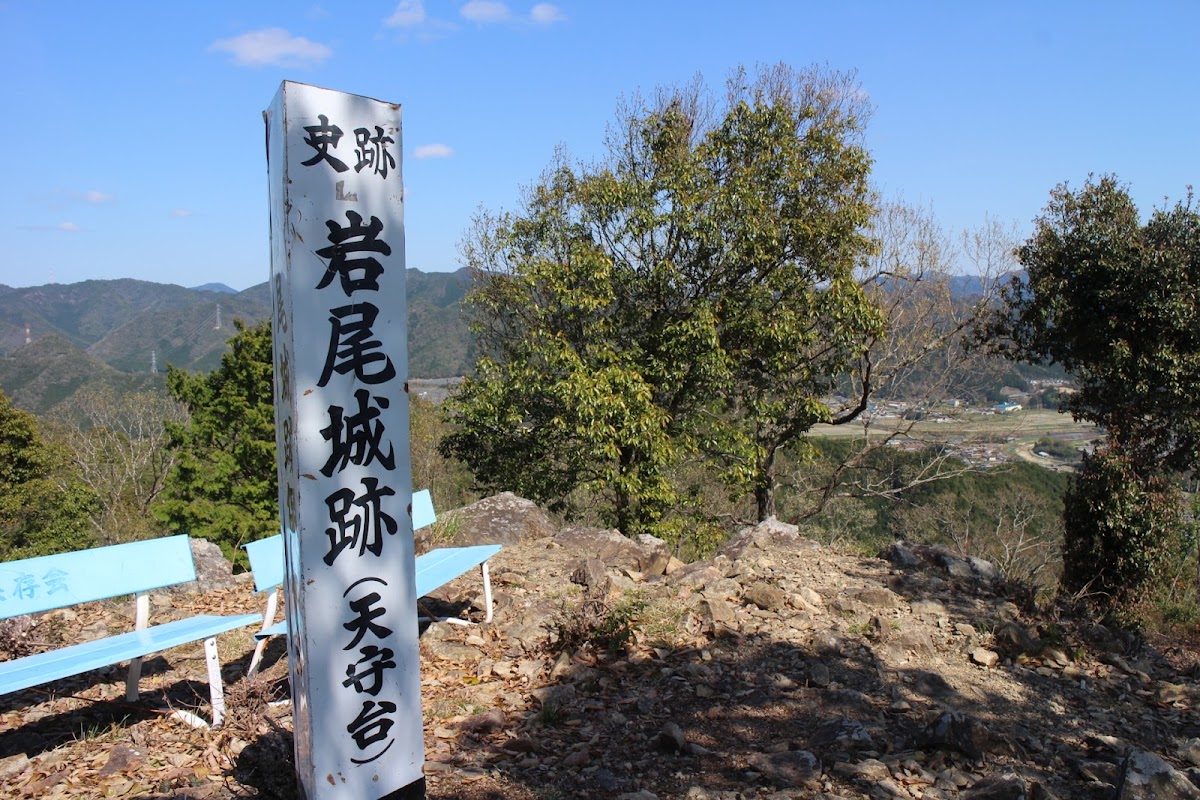
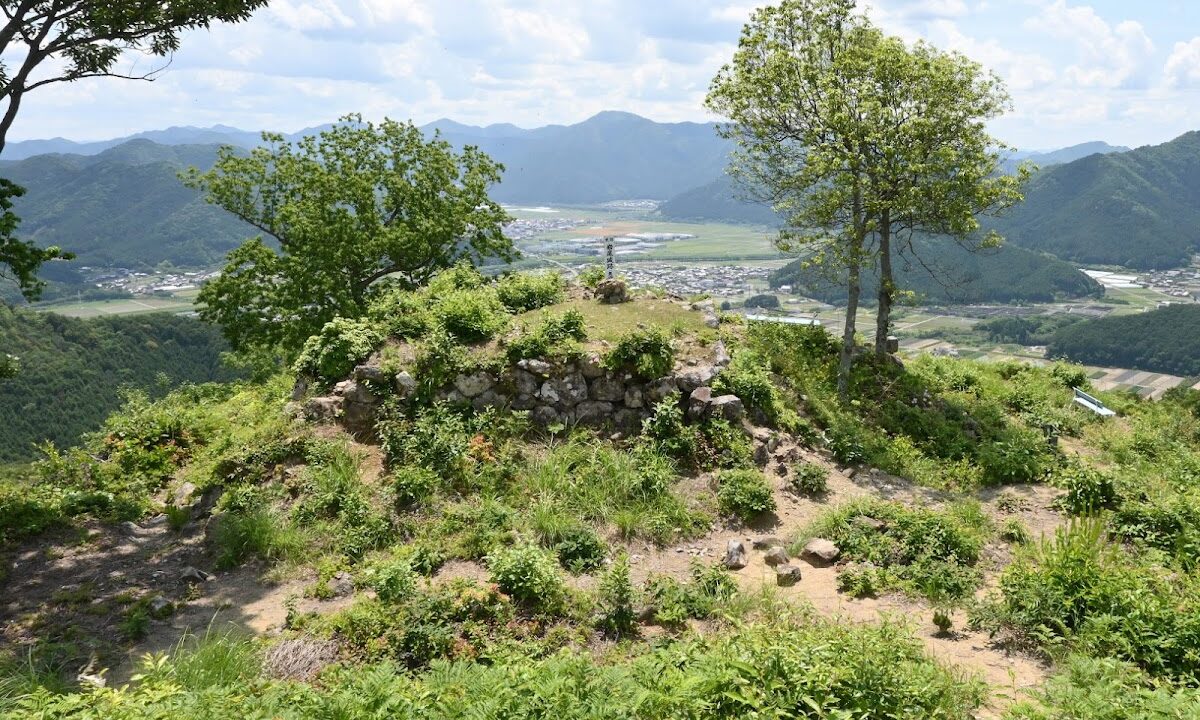
The main enclosure contains stone remains believed to be the castle tower base, symbolizing the modernization of the castle by Sano Eiyu. Although small in scale, this base showcased the latest castle construction techniques of the time.
Features of the Stone Walls | The Technique of Rough-Wood Construction
The greatest highlight of Iwao Castle is undoubtedly its rough-wood stone walls. The remaining stone walls, primarily in the main enclosure, are constructed with natural stones that have been stacked with minimal processing. This simple construction allows them to retain their original appearance even after more than 400 years.
The height of the stone walls varies depending on the location, but the highest points are approximately 3-4 meters. While the stacking method may appear rough, the skillful combination of large and small stones ensures stability, demonstrating the ingenuity of craftsmen in the early stages of stone wall construction.
Depending on the weather and lighting, the stone walls can appear to float, creating a fantastical landscape reminiscent of Takeda Castle, the “castle in the sky.” Especially in the early morning and evening when the light hits the stone walls at an angle, the unevenness of the stone walls is emphasized, allowing you to appreciate their three-dimensional beauty even more.
Earthworks and Moats | Remains of a Medieval Mountain Castle
Earthworks and moats that existed before the Sano clan’s renovation of the stone walls remain in good condition in various parts of the castle. These are remnants that show the characteristics of a medieval mountain castle from the Wada clan era, and by viewing them together with the stone walls, you can truly feel the changes that Iwao Castle experienced over time.
Moats are defensive structures dug to cut across the ridges, playing an important role in preventing enemy intrusion. Even today, moats several meters deep remain clearly visible, providing valuable information for understanding the defensive system of the time.
Earthworks were built surrounding the baileys, and in some places, earthen mounds more than 2 meters high can be seen. While they may seem less impressive than the stone walls, they are essential elements for understanding medieval castle construction techniques.
Layout of Enclosures and Main Road
The enclosures of Iwao Castle are arranged in a continuous line along the ridge extending south from the main enclosure. This southern route is thought to be the main road (the road serving as the main entrance) and served as the primary access route to the castle.
Each enclosure is arranged with elevation changes, allowing for overlooking of lower enclosures from higher ones. This was a defensive measure to ensure a defensive advantage, allowing defenders to throw arrows or stones from above when the enemy attacked.
The enclosures vary in size; the main enclosure measures approximately 30 meters east-west and 20 meters north-south. The second and third enclosures also have ample space and are thought to have been used for troop garrisoning and supply storage.
Well Remains and Living Facilities
Well remains have also been confirmed within the castle grounds, indicating that water supply was considered during sieges. Securing a water source was a matter of life and death for mountain castles, and the existence of a well is evidence that Iwao Castle functioned as a full-fledged military base.
The well remains are located along the path to the castle and can still be seen today as a depression. While the depth and structural details are unknown, the presence of a well near the mountaintop must have greatly enhanced the castle’s sustained defensive capabilities.
Highlights of Iwao Castle | Must-See Points for Castle Enthusiasts
View from the Keep Base
From the keep base remaining in the main enclosure, a spectacular view of the Tanba mountains unfolds. At an altitude of 358 meters, it is sufficient to overlook the surrounding plains and once played an important role in monitoring the territory and understanding enemy movements.
On clear days, it is sometimes possible to see beyond the Tanba mountain range to Kyoto. This excellent view is not only of military value but also a major attraction for modern visitors.
Harmony of Stone Walls and Nature
The stone walls of Iwao Castle, despite years of exposure to wind and rain, harmonize beautifully with the surrounding nature. The plants growing from the gaps in the walls and the moss-covered surfaces of the stones create a unique beauty where man-made structures and nature are integrated.
Especially during the seasons of fresh greenery and autumn leaves, the contrast between the stone walls and trees is striking, offering a photogenic landscape. The reason it’s often described as “like Takeda Castle” lies in this harmony between the stone walls and nature.
Contrast between Medieval and Early Modern Remains
It’s rare to find a single castle site where you can simultaneously observe the earthworks and moats of a medieval mountain castle and the stone walls of an early modern castle. Iwao Castle can be considered a valuable field museum where you can experience the technical and stylistic changes in the history of Japanese castles.
From earthen defensive structures to stone defensive structures. This change reflects not only technological innovation but also the political and social changes from the Sengoku period to the early modern period. Those interested in castles will gain a deeper understanding by observing this comparison firsthand.
Maintenance Status and Ease of Access
In recent years, local preservation societies and the local government have been working on maintenance, with regular mowing of grass on the castle paths and around the main enclosure. Areas that were once covered in thick vegetation are now more open, making it easier to observe the remains.
At an elevation of 358 meters, it’s almost the same as Kuroi Castle, but the climbing path is relatively gentle, making it possible for beginners and the elderly to climb with enough time. However, as it is still a mountain castle, appropriate equipment and physical condition are necessary.
Access and Visiting Guide | How to Get to Iwao Castle
Access to the Castle Entrance
The entrance to Iwao Castle is located behind Wada Elementary School. This is the most important landmark.
Access by Car:
- Approximately 15 minutes from the Kasuga Interchange on the Maizuru-Wakasa Expressway
- Take National Route 175 towards Wada, Sannan-cho
- Head towards Wada Elementary School (car navigation recommended)
- There are a few parking spaces around the elementary school (be careful during school events)
Access by Public Transportation:
- Approximately 10 minutes by taxi from Tanigawa Station on the JR Fukuchiyama Line
- Get off at the Wada bus stop on the Shinki Green Bus, then walk for about 10 minutes to the castle entrance
Castle Ascent Route and Estimated Time
Pass through the grounds of Wada Elementary School (it is advisable to inform the school on weekdays), and you will find a signpost at the back. The real mountain trail begins from here.
Standard Ascent Time:
- From the entrance to the main enclosure: Approximately 30-40 minutes
- Time spent exploring the main enclosure: 30-60 minutes
- Time spent descending: Approximately 25-30 minutes
- Total: Approximately 1 hour 30 minutes to 2 hours 30 minutes
The ascent path is well-maintained, but it is still a mountain trail. Particular caution is needed after rain, as it can become slippery.
Precautions and Preparations for Your Visit
Clothing and Equipment:
- Trekking shoes or non-slip shoes (essential)
- Long-sleeved shirt and long pants (to protect against insect bites and scratches from vegetation)
- Hat (for sun and protection from branches)
- Gloves (to protect hands on rocky areas)
- Drinking water (especially plenty in summer)
- Towel, insect repellent spray
Seasonal Precautions:
- Spring to Autumn: Insect repellent is essential due to the abundance of insects
- Summer: Visiting in the early morning or evening is recommended to prevent heatstroke
- Winter: Visiting in the morning is safer due to early sunset
- During and after rain: The path to the castle is slippery and dangerous; avoid these times
Other Precautions:
- Cell phone reception is generally available at the summit, but can be unreliable in some areas
- Use the restrooms around Wada Elementary School (there are none on the mountain)
- Always take your trash with you
- Do not climb on the stone walls to protect the ruins
Best Time to Visit
Iwao Castle has different charms in each of the four seasons, but the following times are especially recommended:
- Spring (April-May): Beautiful fresh greenery and mild weather. The best season to visit the castle.
- Autumn (October-November): The contrast between the autumn leaves and the stone walls is magnificent. The temperature is also suitable for visiting the castle.
- Early Morning (Year-Round): A sea of clouds may form, offering the possibility of enjoying a fantastical landscape.
Summer is best avoided due to the heat and numerous insects, but early mornings offer a relatively comfortable visit.
Nearby Tourist Spots and Attractions
Shin’enji Temple and Inari Shrine
There are several historical temples and shrines scattered around Iwao Castle. Shin’enji Temple is a temple associated with the Wada clan, and documents showing its relationship with the castle lord remain. The local Inari Shrine is also an interesting place to learn about the region’s history.
Kuroi Castle Ruins (Kasuga-cho)
Like Iwao Castle, Kuroi Castle Ruins, which fell during Akechi Mitsuhide’s invasion of Tanba, are located about 30 minutes away by car. This castle, known for Akai Naomasa (the “Red Demon of Tanba”), is also at roughly the same elevation of 356 meters, making it a recommended visit as part of a tour of Tanba’s mountain castles.
Tanba City Ueno Memorial Museum of Art
Located in Hikami-cho, Tanba City, this museum offers a glimpse into local art and culture. It’s perfect for a cultural break between castle ruin tours.
Roadside Station “Tanba Obaachan no Sato”
A roadside station offering fresh local produce and specialty products. Ideal for souvenir shopping, including Tanba black bean products and Tanba chestnut sweets. About 15 minutes by car from Iwao Castle.
Tanba Dinosaur Fossil Workshop “Chi-tan no Yakata”
An exhibition facility related to the “Tanba Dinosaur,” a dinosaur fossil discovered in Tanba City. If you’re visiting with family, you can enjoy a tour of the castle ruins as part of your visit.
Fun Facts to Know Before Visiting Iwao Castle
The Origin of the Mountain Name “Hebiyama”
The mountain on which Iwao Castle was built is called “Hebiyama” (Snake Mountain), but there are several theories about the origin of this name. Some say the mountain’s shape resembles a snake, while others tell of a legend that a giant snake once lived there. Various local legends remain.
Kido Jujobo and Sano Eiyu
Some historical records mention two names for the castle lord: “Kido Jujobo” and “Sano Shimosa-no-kami Eiyu,” which can be confusing. In fact, these are the same person; Kido Jujobo was his name after becoming a monk, while Sano Eiyu was his name as a warrior. He was also known as “Kido” because he was transferred from Kido in Omi Province.
Not one of the Continued Top 100 Japanese Castles, but a Hidden Gem
Iwao Castle is not included in the list of Japan’s Top 100 Castles or the Continued Top 100 Japanese Castles, but it is highly regarded among castle enthusiasts as a “hidden gem.” Its well-preserved stone walls, the coexistence of medieval and early modern remains, and the magnificent views make it just as appealing as the designated castles.
Archaeological Excavations and Future Preservation
Iwao Castle has undergone several archaeological excavations in the past, yielding artifacts such as ceramic fragments and iron objects. These are preserved as cultural properties of Tanba City and serve as valuable resources for understanding the life and battles of the time.
Currently, the local preservation society and the Tanba City Board of Education are working to preserve and utilize the remains. Regular grass cutting and the maintenance of information boards are being carried out to create a safe and comfortable environment for visitors.
Photo Spots at Iwao Castle | For the Photo Gallery
When visiting the castle ruins, there are several spots you should definitely photograph.
Stone Walls of the Main Enclosure (Front View)
As you approach the main enclosure from the path leading to the castle, the stone walls suddenly come into view. This is a must-see moment to capture with your camera. The simple beauty of the rough-hewn stonework is striking.
View from the Keep Platform
From the keep platform, you can enjoy a 360-degree panoramic view and photograph the magnificent scenery with the Tanba mountains in the background. The contrast between the blue sky and the mountain range on a clear day is particularly breathtaking.
Combination of Stone Walls and Trees
The contrast between the trees growing from the gaps in the stone walls and the forest spreading behind them is a unique subject for photographs at Iwao Castle. Because the scenery changes with the seasons, you’ll discover something new every time you visit.
Cross-Section of the Moat
Photographing the deeply cut moat from the side creates a picture that conveys the impressive defensive techniques of this medieval mountain castle.
Summary | Iwao Castle: A Valuable Mountain Castle Where You Can Experience the History of Tanba
Iwao Castle is a mountain castle that experienced a turbulent history in just 80 years, from its construction by the Wada clan to Akechi Mitsuhide’s invasion of Tanba, its renovation into a modern castle by Sano Eiyu, and finally its abandonment by order of Toyotomi Hideyoshi.
It is a valuable historical site where you can observe both the earthworks and moats of a medieval mountain castle and the stone walls of a modern castle simultaneously. As a field museum where you can experience a transitional period in the history of Japanese castles, it possesses high historical and academic value.
The view from the mountaintop at an altitude of 358 meters, the ancient atmosphere created by the rough-hewn stone walls, and the landscape in harmony with nature deeply impress visitors. While not as well-known as Takeda Castle, the “Castle in the Sky,” it is a hidden gem among castle enthusiasts, quietly gaining popularity as a place to quietly contemplate history.
When you visit Tanba City, be sure to stop by the Iwao Castle ruins and witness firsthand the transition from the Sengoku period to the early modern period. You’ll surely be moved by the historical voices that the stone walls seem to speak to you.
Climbing the castle requires proper preparation and physical fitness, but the sense of accomplishment upon reaching the summit and the view from there will more than reward your efforts. Iwao Castle is a mountain castle well worth visiting, offering a tangible experience of Tanba’s history.