Complete Guide to Ishiyama Castle (Oi Town, Fukui Prefecture) | Traces of Life Revealed by Archaeological Excavations and the History of the Wakasa Takeda Clan
Ishiyama Castle, located in Ishiyama, Oi Town, Oi District, Fukui Prefecture, is a mountain castle built on a mountaintop approximately 190 meters above sea level, offering a panoramic view of the Saburi River basin. From the Muromachi period to the Sengoku period, it was ruled by the Mutō clan, vassals of the Takeda clan, the shugo (military governor) of Wakasa Province. It is also known as “Kameyama Castle.” Recent archaeological excavations have revealed numerous features that distinguish it from typical mountain castles, attracting attention from history enthusiasts and researchers.
Historical Background of Ishiyama Castle
Relationship between the Wakasa Takeda Clan and the Mutō Clan
Essential to understanding Ishiyama Castle is the relationship between the Takeda clan, the shugo of Wakasa Province, and their vassal, the Mutō clan. Mutō Kōzuke-no-suke Tomomasu ruled the Saburi area as the castle lord. Mr. Mutō, as a senior retainer of the Wakasa Takeda clan, played a crucial role in the military and administrative affairs of this region.
Ishiyama was a strategically important transportation hub where several roads intersected, making it an ideal location for monitoring and governing the upper and middle reaches of the Saburi River. From the main citadel at the summit, a wide view of the surrounding area was possible, making it an extremely important military base.
The Siege of Ishiyama Castle by Oda Nobunaga and Akechi Mitsuhide
The most famous episode in the history of Ishiyama Castle is Oda Nobunaga’s invasion of Wakasa. The “Nobunaga Kōki,” a biography of Oda Nobunaga, records that Akechi Mitsuhide and Niwa Nagahide, acting on Nobunaga’s orders, attacked Ishiyama Castle.
This siege took place during Oda Nobunaga’s process of pacifying the Wakasa region, and the fall of Ishiyama Castle symbolized the decline of the Takeda clan’s power. The historical fact that Akechi Mitsuhide attacked this area is an important record for tracing Mitsuhide’s footsteps, which led to the Honnō-ji Incident.
The Site of the End of the Wakasa Takeda Clan
The Ishiyama Takeda Clan Ruins in Ishiyama, Ōi Town, are known as the site of the end of the Wakasa Takeda clan. Originally, it was the site of the castle of Mutō Tomomasu, a senior retainer of the Takeda family, and was a land deeply connected to the Takeda clan. After the fall of the Takeda clan, this area disappeared from the stage of history, but its remains still stand quietly in the mountains.
Characteristics of Ishiyama Castle Revealed by Archaeological Excavations
A Groundbreaking Discovery: Evidence of Permanent Residence
The most significant characteristic of Ishiyama Castle is the possibility of “permanent residence,” revealed by archaeological excavations. Typical mountain castles were temporary military facilities for sieges during wartime, and it was customary for occupants to live in residences at the foot of the mountain during peacetime.
However, at Ishiyama Castle, numerous daily life tools and artifacts have been unearthed from the mountaintop, suggesting a high probability that people lived on the mountaintop not only during wartime but also in peacetime. This discovery is considered groundbreaking in the study of mountain castles in the Wakasa region.
Artifacts Reveal the Reality of Daily Life
The excavation has unearthed artifacts that appear to have been used in daily life, such as fragments of pottery, iron products, and parts of millstones. These artifacts suggest that cooking and meals took place within the castle, confirming that it functioned not merely as a military facility but also as a living space.
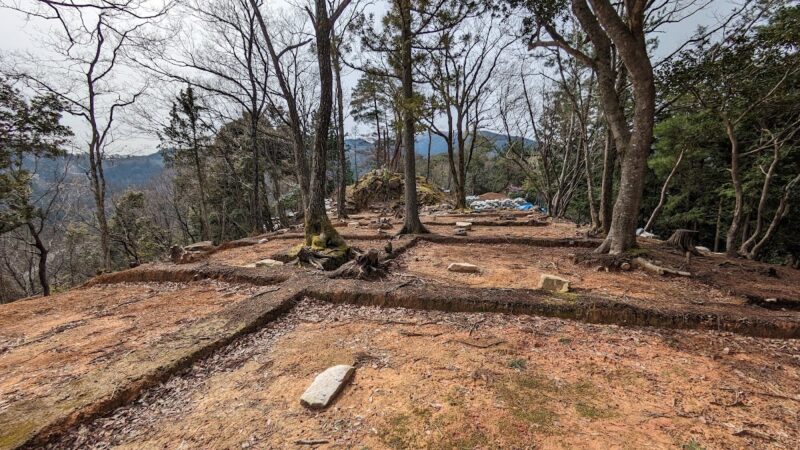
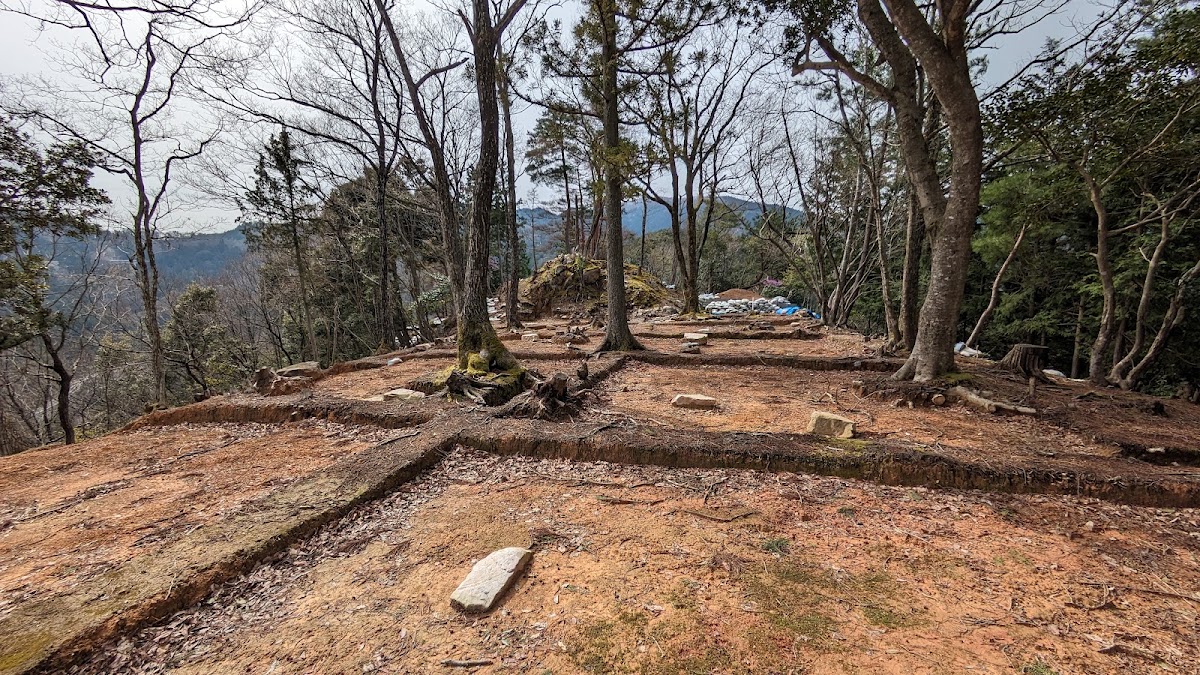
Of particular note is the arrangement of foundation stones. Foundation stones remain everywhere at the castle site, confirming the existence of multiple buildings. From the arrangement of these buildings, a planned castle structure centered around the main enclosure can be seen.
One of the Few Mountain Castles in the Prefecture to Have Been Excavated
Ishiyama Castle is one of the few mountain castles in Fukui Prefecture to have been excavated. While many mountain castles remain unexplored, Ishiyama Castle is undergoing continuous archaeological excavations. The Oi Town Board of Education, along with local residents, organizes excavation experience events.
These excavation experiences, primarily for families from the local Saburi district, provide participants with the opportunity to actually dig through the soil and become familiar with local historical sites. Such efforts play a crucial role in passing on the region’s historical heritage to future generations.
Structure and Remains of Ishiyama Castle
Three-Tiered Castle Layout
Ishiyama Castle has a three-tiered structure. Centered around the main enclosure at the top, the baileys are arranged in stages, skillfully utilizing the mountain’s topography.
From the main enclosure at an altitude of 190 meters, one can overlook the Saburi River basin, and it also functioned as a lookout post for early detection of enemy movements. This excellent view, allowing for panoramic views on clear days, remains an attractive viewpoint for modern hikers.
Moats and Defensive Structures
A notable defensive feature of Ishiyama Castle is the triple moat located on the eastern ridge. A moat is a dry ditch dug across a ridge, a crucial defensive structure designed to prevent enemy intrusion.
The triple moat demonstrates the castle’s high level of defensive awareness, indicating it functioned not merely as a lookout post, but as a full-fledged military base. Its location, approximately 120 meters above sea level, would also have been a significant obstacle for attackers.
Foundation Stones and Building Remains
Numerous foundation stones remain at the castle site, allowing for inferences about the building layout. The spacing and arrangement of the foundation stones suggest a relatively large building existed in the main enclosure, presumably the lord’s residence or other important facilities.
Foundation stones are also scattered throughout the three-tiered enclosures, suggesting the possibility of buildings with different functions being located in each. These remains quietly preserved within the forest, allowing visitors to imagine the castle’s former appearance.
The Position of Ishiyama Castle within the Castle Cluster of Oi Town
Ishiyama Castle Among 19 Castle Ruins in the Town
Nineteen castle ruins have been identified within Oi Town, and Ishiyama Castle is known as a particularly large and sturdily built castle among them. Along with Tachijo Castle, belonging to the Hongō clan in the Hongō district, also located within the town, it functioned as one of the two major regional strongholds.
In September 2023, a history lecture comparing Tachijo Castle and Ishiyama Castle was held, featuring expert commentary on the power dynamics between the Hongō and Mutō clans in Wakasa during the Sengoku period, and the characteristics of each castle.
As a Target for Castle Stamp Pilgrimage
In recent years, Ishiyama Castle has become a target for the Echizen/Wakasa Castle Stamp Pilgrimage, which has gained popularity nationwide. As a Sengoku period spot in Oi Town, it plays a role in promoting tourism and is attracting attention as a tourist resource visited by history enthusiasts and castle fans.
Many people collect castle stamps as a memento of their visit, and they serve as a way to raise awareness of the historical value of Ishiyama Castle.
Access and Climbing Guide to Ishiyama Castle
Access Methods
Access by Car
- Approximately 15 minutes by car from the Oi-Takahama Interchange on the Maizuru-Wakasa Expressway
- Head towards the Ishiyama area of Oi Town and proceed to the trailhead
- Parking space is limited, so advance confirmation is recommended except during events.
Public Transportation
- The nearest station is Wakasa-Hongo Station on the JR Obama Line, but a car or taxi is required from there.
- Route buses such as the Hongo Line also operate, but the number of services is limited, so advance confirmation is essential.
Time and Difficulty of Climbing the Castle
It takes approximately 20-30 minutes on foot from the trailhead to the Ishiyama Castle ruins. The following preparations are recommended for climbing the mountain trail:
- Comfortable walking shoes (trekking shoes are ideal)
- Drinking water
- Appropriate clothing for the season (the summit can be windy)
- Insect repellent (summer)
Although there is an elevation difference of 120 meters, it is possible to reach the castle with average physical fitness if you use the well-maintained hiking trail. However, caution is advised as the trail can become slippery after rain.
Points of Interest
View from the Main Enclosure
If the weather is good, a spectacular view of the Saburi River basin unfolds. Imagining the castle lords of the Sengoku period gazing at the same view evokes a sense of historical romance.
Observation of Foundation Stones
By observing the foundation stones remaining throughout the site, you can imagine the layout and scale of the buildings.
Confirmation of Moats
The triple moat on the eastern ridge is an important relic for understanding the castle’s defensive system.
Local Event: “Let’s Climb Ishiyama Castle”
In Oi Town, local residents organize events such as the “Let’s Climb Ishiyama Castle.” Guided tours allow participants to explore the castle ruins while listening to explanations from experts, providing a deeper understanding of Ishiyama Castle’s history.
Event information can be found on the Oi Town Tourism Association’s official website. Advance registration is often required, so early checking is recommended.
Ishiyama Castle and Surrounding Tourist Spots
Other Historical Spots in Oi Town
Tachijo Castle
The ruins of the Hongō clan’s castle in the Hongō district. Along with Ishiyama Castle, it is one of the town’s major castles, and a comparative visit is recommended.
Ishiyama Takeda Clan Ruins
A historical site known as the final resting place of the Wakasa Takeda clan. Visiting it along with Ishiyama Castle will provide a deeper understanding of the Takeda clan’s history.
Surrounding Castles
Takahama Castle
Located in the neighboring town of Takahama, this castle is an important base for understanding the castle network of the Wakasa region.
Obama Castle
The castle ruins of Obama City, which was the center of Wakasa Province. It is about a 30-minute drive from Ishiyama Castle.
The Charms of the Saburi Area
The Saburi area, where Ishiyama Castle is located, is a region where rich nature and history harmonize. The clear waters of the Saburi River, the rural landscape, and the surrounding mountains can be enjoyed in conjunction with exploring the castle ruins.
Experiencing local cuisine and the unique culture of the Wakasa region are also part of the enjoyment of a visit.
Current Status and Future Prospects of Ishiyama Castle Research
Ongoing Archaeological Excavations
The Oi Town Board of Education is leading ongoing archaeological excavations of Ishiyama Castle. New discoveries are made each time, gradually revealing the overall picture of the castle.
The characteristic of “permanent residence” is particularly rare nationwide and is highly valued academically. Further investigations are expected to reveal more detailed information about daily life and the castle’s transformation over time.
Preservation and Utilization Efforts
Local residents are actively engaged in preservation activities. Efforts are underway to protect and utilize the historical site, including the maintenance of hiking trails, the installation of information boards, and the holding of regular guided tours.
In Oi Town, castle ruins within the town, including Ishiyama Castle, are positioned as tourist resources, and efforts are being made to promote regional development by leveraging history. The issuance of castle stamps and the training of guides are also being carried out to improve services for visitors.
Movement Towards Digital Archiving
Data obtained from excavation surveys and information on unearthed artifacts are being digitized. This is expected to allow not only researchers but also general history enthusiasts to access the information online.
Precautions When Visiting Ishiyama Castle
Safety Precautions
- Avoid Solo Hiking: It is recommended to visit with multiple people if possible.
- Cell Phone Signal: There are areas in the mountains where the signal is weak.
- Check the Weather: Avoid climbing the castle in rainy or stormy weather.
- Wildlife: Pay attention to information on sightings of bears, wild boars, and other wildlife.
- Sunset Time: Allow ample time for your climb.
Manners and Rules
- Protection of Remains: Do not touch the remains such as foundation stones.
- Take Your Trash Home: To protect the natural environment, be sure to take your trash home with you.
- Consideration for Private Property: There is private property around the trailhead.
- No Open Fires: To prevent forest fires, the use of open fires is strictly prohibited.
Summary: The Historical Value of Ishiyama Castle
Ishiyama Castle in Ōi Town, Fukui Prefecture, is an important historical site indispensable to understanding the Sengoku period history of the Wakasa region. The historical facts that it was ruled by the Mutō clan, vassals of the Takeda clan (the shugo of Wakasa), and attacked by Akechi Mitsuhide, along with the characteristic of being “permanently inhabited” revealed by archaeological excavations, elevate this castle beyond a mere regional mountain castle.
Its location, offering a panoramic view of the Saburi River basin from its 190-meter-high summit, defensive structures such as triple moats, and the remaining foundation stones on the summit convey the castle-building techniques and strategic thinking of the time.
With ongoing archaeological excavations and the expectation of new discoveries, Ishiyama Castle is a valuable place where visitors can experience the history of Wakasa during the Sengoku period, thanks to preservation efforts by local residents and its utilization as a tourist resource.
Ishiyama Castle is a fascinating spot worth visiting not only for history enthusiasts, but also for hikers and those who want to experience local culture. When you visit Oi Town, be sure to stop by this historic mountain castle. The view of Wakasa from the mountaintop, while reflecting on the Sengoku period, will surely be an unforgettable experience.