Complete Guide to Ishida Castle (Fukue Castle) | History, Highlights, and Access Information for Japan’s Last Coastal Castle
What is Ishida Castle? – An Overview of Japan’s Last Coastal Castle
Ishida Castle (Ishida-jo) is a Japanese castle located in Ikeda-cho, Goto City, Nagasaki Prefecture, also known as Fukue Castle. Completed in 1863, this castle holds a historically extremely important position as the last castle built in Japan.
Currently, the Ishida Castle ruins are a Nagasaki Prefecture designated historical site, and the Goto family garden remaining within the castle grounds is designated as a national scenic spot. Furthermore, in 2017, it was selected as one of the Continued Top 100 Japanese Castles, attracting attention from castle enthusiasts and history fans.
Unique Structure as a Coastal Castle
The most distinctive feature of Ishida Castle is that it was Japan’s only coastal castle, surrounded by the sea on three sides. When it was built, Ishida Castle functioned as an outpost facing Fukue Port, with a complex measuring 291 meters east-west and 1346 meters in circumference, positioned to jut out into the sea. This location was chosen with the clear purpose of maritime defense during the late Edo period and preparation for the arrival of foreign ships.
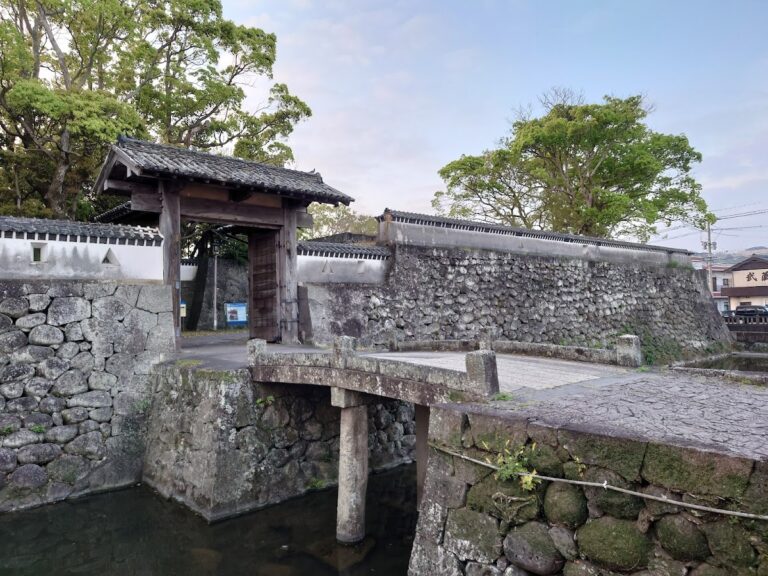
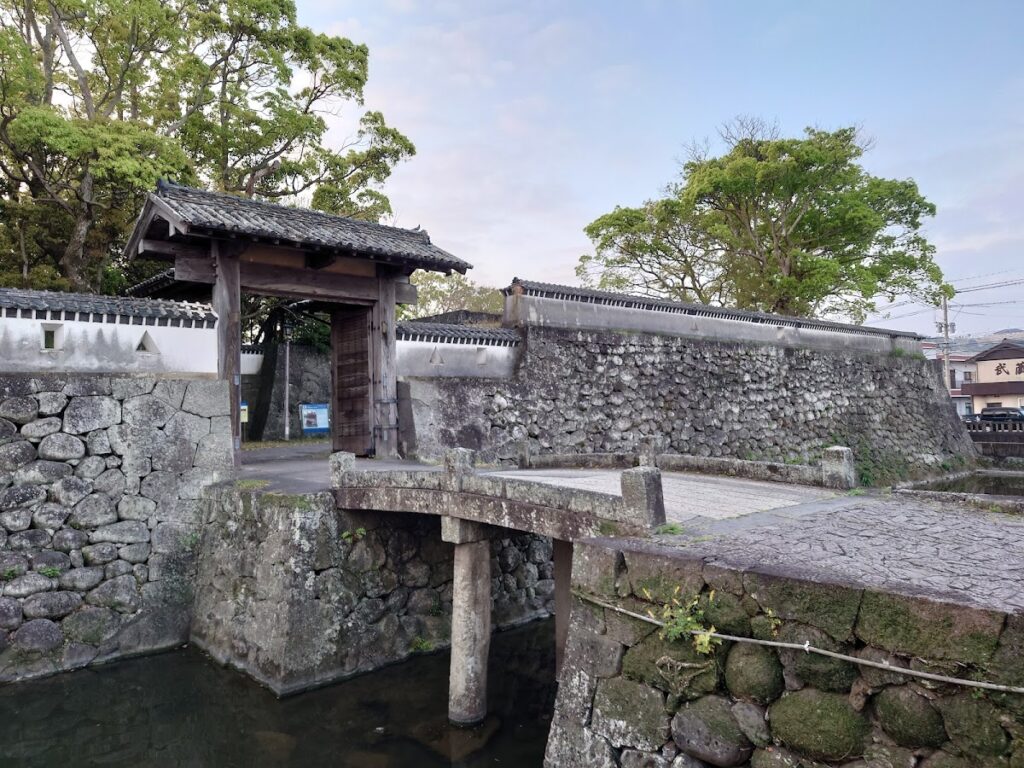
Currently, due to land reclamation, it is connected to the mainland and located in the central area of Goto City, but the remains of the original stone walls, main gate, and back gate (Kedashimon) allow us to imagine the former appearance of the sea castle.
History and Development of Ishida Castle – From the Goto Clan’s Residence to a Defense Base in the Late Edo Period
The Relationship Between the Goto Clan and Fukue
The Goto clan, who ruled the Goto Islands, were known as the Uku clan in the Middle Ages, but changed their surname to Goto in the early Edo period. In 1614, following the burning of their residence, Egawa Castle, they established a fortified residence in Ishida. This is the Ishida Jinya (fortified residence), which served as the Goto previous clan’s castle until the end of the Edo period.
History of Construction – Preparation for the Arrival of the Black Ships
In 1806 (Bunka 3), the Goto domain petitioned the shogunate for permission to build a castle, citing the need to defend against foreign ships. Initially, permission was denied. However, in 1849 (Kaei 2), during the time of the 30th lord of the Goto family, Goto Morinari, the shogunate finally granted permission for construction.
This was due to the breathless international tensions surrounding the arrival of Commodore Perry (1853), which made strengthening coastal defenses a pressing need throughout Japan. The Goto Islands, facing the East China Sea and located approximately 70 kilometers west of Nagasaki, were recognized as a crucial frontline for maritime defense due to their geographical importance.
A Castle Built Over 15 Years
Construction of Ishida Castle began in August 1849 (Kaei 2) and was completed in June 1863 (Bunkyu 3), after 15 years and 20,000 ryo in public funds. Completed during the reign of the last feudal lord, Goto Moritoku, the castle was designed without a main keep.
The castle grounds included fortifications (gun emplacements), a practical structure designed to withstand attacks from the sea. However, just nine years after its completion, in 1872 (Meiji 5), it was dismantled under the Meiji government’s decree abolishing castles, making it one of the shortest-lived castles in Japan.
Structure and Layout of Ishida Castle – A Defense System Unique to a Coastal Castle
Basic Structure of the Castle
Ishida Castle’s fortifications measured 291 meters east-west and had a circumference of 1346 meters, with a structure centered around the main enclosure. The castle was not designed with a main keep, instead emphasizing practical maritime defense.
Because three sides of the castle walls faced the sea, the main gate (Otemon) preventing intrusion from land and the back gate (Kede-mon), which served as an entrance to the sea, were crucial defensive points. Even today, magnificent stone walls remain, attesting to the high level of castle-building technology of the time.
Battery and Artillery Battery Placement
To prepare for maritime defense during the late Edo period, several batteries (artillery batteries) were installed within the castle grounds. These were intended to respond to the arrival of foreign ships and attacks from the sea, and defensive facilities were also positioned on the cape known as Jōtōbana.
Existing Remains
The main remains that can be confirmed at Ishida Castle today are as follows:
- Stone Walls: The sturdy stone walls remaining around the castle grounds retain a strong sense of their original appearance.
- Otemon Gate: The stone walls of the Otemon Gate, which functioned as the main gate on the land side.
- Uragamon (Kedashimon Gate): The remains of a gate that served as an entrance to the sea side.
- Stone Bridge: A stone bridge connecting the inside and outside of the castle.
- Moat Remains: Traces of a water moat remain in some areas.
The majority of the castle site is now occupied by public facilities such as Goto High School and a cultural center, and is integrated into the daily lives of the citizens.
Goto Family Garden (Shinji-ga-ike Garden) – A beautiful Japanese garden designated as a National Place of Scenic Beauty
History and Characteristics of the Garden
The Goto Family Garden remaining within Ishida Castle is officially designated as a National Place of Scenic Beauty under the name “Ishida Castle Goto Family Garden”. Also known as the “Shinji-ga-ike Garden,” this garden gets its name from the fact that the shape of the pond resembles the Japanese character for “heart” (心).
This garden was built during the Edo period as an annex to the residence of the Goto clan, and is a valuable cultural asset that preserves the style of a daimyo garden. Despite being located on the remote island of the Goto Islands, it exhibits sophisticated landscaping techniques comparable to those of daimyo gardens on the mainland.
Garden Components
The garden is a Japanese strolling garden with a pond, and consists of the following elements:
- Shinji-ga-ike: The central pond with a complex shoreline
- Stone Arrangement: Skillfully placed garden stones enhance the landscape
- Planting: Trees that display different expressions throughout the seasons
- Artificial Hill: An artificial hill that creates a three-dimensional landscape
Visiting Information
The Goto Clan Garden is still well-preserved and open to the public. As a valuable space where you can experience Edo-period daimyo culture, it is worth visiting in conjunction with Ishida Castle.
Highlights of Ishida Castle – Points to Visit
1. The Impressive Stone Walls
The most impressive feature of Ishida Castle is the magnificent stone walls surrounding the castle. These walls, representing the pinnacle of castle construction techniques from the late Edo period, are impressive in both height and scale, and are a popular spot for photography. The stone walls around the main gate are particularly well-preserved, retaining much of their original appearance.
2. The Main Gate and Back Gate (Kedashimon)
The main gate on the land side and the back gate (Kedashimon) on the sea side played important roles as entrances to the castle. While the gate structures are now gone, the stone walls and foundation stones allow us to imagine their original scale.
3. Jōtōbana and Traces of a Seaside Castle
Jōtōbana is a cape jutting out into the sea from the castle, which once served as a lighthouse. Although it has now been reclaimed, walking around this area allows us to appreciate the castle’s location as a seaside surrounded castle by the sea on three sides.
4. Goto High School and Cultural Center
Goto High School stands on the main keep of the castle ruins, and the Goto City Cultural Center is located in the second bailey. Stone walls remain within the school grounds, creating a unique landscape where historical atmosphere coexists with modern educational facilities.
5. Stone Bridge and Moat Remains
Part of the stone bridge that connected the castle grounds still exists, showcasing Edo period stone construction techniques. Furthermore, the partially remaining moat remains offer a glimpse into the castle’s former defensive system.
Ishida Castle as one of the Continued Top 100 Japanese Castles
Significance of Selection
On April 6, 2017, Ishida Castle was selected as one of the Continued Top 100 Japanese Castles by the Japan Castle Association. This is one of the 100 castles selected as the second installment following the Top 100 Japanese Castles.
Reasons for selection:
- Historical value as the last castle built in Japan
- Uniqueness as the only sea castle surrounded by the sea on three sides
- An important historical site demonstrating the coastal defense system of the late Edo period
- Well-preserved remains such as stone walls
These points were highly evaluated.
Stamp Locations
The stamps for the Continued Top 100 Japanese Castles are located at the Goto City Tourism Association and the Goto City Cultural Hall. For those who enjoy visiting castles, Ishida Castle is an important motivation to visit the Goto Islands.
Access Information and Practical Tourist Information
Access to Goto City
By Plane:
- Approximately 30 minutes from Nagasaki Airport to Fukue Airport
- Approximately 40 minutes from Fukuoka Airport to Fukue Airport
By Ferry:
- Approximately 1 hour 25 minutes by high-speed boat or 3 hours 10 minutes by ferry from Nagasaki Port to Fukue Port
Access to Ishida Castle
Ishida Castle Ruins are approximately a 15-minute walk or a 5-minute drive from Fukue Port. Located in the center of Goto City, access is relatively easy.
Estimated Time Required for Visiting
If you plan to thoroughly visit Ishida Castle Ruins and the Goto Family Garden, allow approximately 1 hour 30 minutes to 2 hours. Additional time will be needed if you include photography and exploring the surrounding area.
Nearby Tourist Attractions
When visiting Ishida Castle, we recommend also visiting the following nearby spots:
- Samurai Residence Street: A historical street with samurai residences from the Edo period.
- Myoshoin Temple: The family temple of the Goto clan.
- Fukue Town: A castle town dotted with historical buildings.
- Osezaki Lighthouse: A scenic spot near Japan’s westernmost point.
Points to Note and Manners When Visiting Ishida Castle
Precautions When Visiting
- Part of the castle ruins is part of the Goto High School grounds, so consideration is needed when entering during class hours.
- Climbing on or damaging the stone walls is strictly prohibited.
- Please take all your trash with you.
- The Goto Clan Garden is a cultural property, so please do not damage the plants or throw anything into the pond.
Photography
Photography is generally permitted at Ishida Castle ruins, but please be considerate of students’ privacy as school facilities are included. We also recommend checking in advance regarding the use of tripods in the garden. ## Preservation and Utilization of Ishida Castle – Passing it on to the Future
Preservation Activities as a Cultural Property
Nagasaki Prefecture and Goto City are actively working on the preservation and utilization of the Ishida Castle ruins. Regular maintenance, such as repairing the stone walls and mowing the grass, is carried out to maintain its value as a historical site.
Utilization as a Tourism Resource
Following its selection as one of the Continued Top 100 Japanese Castles, Ishida Castle is positioned as an important tourism resource for Goto City. Programs such as historical walking tours and guided tours are offered to allow tourists to gain a deeper understanding of the castle’s history.
Coexistence with the Community
The Ishida Castle ruins are an integral part of the living space for the citizens of Goto, and are used daily as schools and cultural facilities. This “coexistence of historical heritage and modern life” is a distinctive aspect of Ishida Castle.
The Historical Significance of Ishida Castle – Why is it Japan’s Last Castle?
The Castle Construction Boom of the Late Edo Period
During the Edo period, the shoginate strictly restricted new castle construction with the “One Castle Per Province” decree. However, due to the need to strengthen coastal defenses in the late Edo period, the renovation and construction of castles were permitted throughout the country. Ishida Castle was built as part of this trend.
In the Midst of Modernization
1863, the year Ishida Castle was completed, was a turning point as Japan rapidly moved towards modernization. Just five years later, in 1868, the Meiji Restoration occurred, and the feudal system came to an end. Ishida Castle, as the last castle of the samurai era, symbolizes this turning point in history.
The Front Line of Coastal Defense
The structure of a coastal castle, surrounded by the sea on three sides, is extremely rare for an Edo period castle. This design was intended to cope with the international situation in the late Edo period, particularly the pressure from the warships of the Western powers. Ishida Castle is a valuable historical site that conveys the external pressures Japan faced and the measures taken to address them.
Summary – Experience the Charm of Ishida Castle
Ishida Castle (Fukue Castle) holds an extremely important position in the history of Japanese castles as the last castle built in Japan and the only sea castle surrounded by the sea on three sides.
Constructed over 15 years amidst the tense international situation at the end of the Edo period, this castle served its purpose for only 9 years. However, its stone walls and gardens still allowed convey the appearance of that time, visitors to feel the romance of history.
With its location surrounded by the beautiful nature of the Goto Islands, its value as one of the Continued Top 100 Japanese Castles, and the Goto Clan Garden, a nationally designated scenic spot, Ishida Castle is full of many attractions. When visiting Nagasaki Prefecture, be sure to extend your trip and experience the history and scenery of this last sea castle in Japan.
Currently located in the heart of Goto City, Ishida Castle quietly continues to convey its history while harmonizing with the lives of the citizens. This example serves as a prime illustration of how historical heritage should be passed down to the present day.