Iihama Castle (Ena City, Gifu Prefecture) Complete Guide: A Mountain Castle of the Toyama Clan Remaining in the Site of Fierce Battles Between Oda and Takeda
What is Iihama Castle?
Iihama Castle is a mountain castle ruin located in Iihama, Iwamura-cho, Ena City, Gifu Prefecture. Existing from the Kamakura period to the end of the Sengoku period, this castle was an important base for the Iihama Toyama clan, a branch of the Toyama clan.
Built on a small hill approximately 530 meters above sea level and 20-30 meters above ground, this castle served as a subsidiary castle of Iwamura Castle and played an important role in coordinating with Naegi Castle and Akechi Castle. In particular, its proximity to Iwamura Castle, about 6 kilometers west, gave it extremely important strategic value as an outer defensive line for Iwamura Castle.
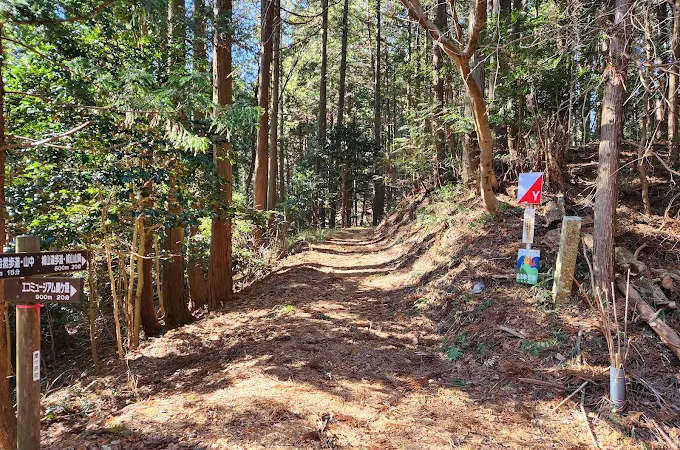
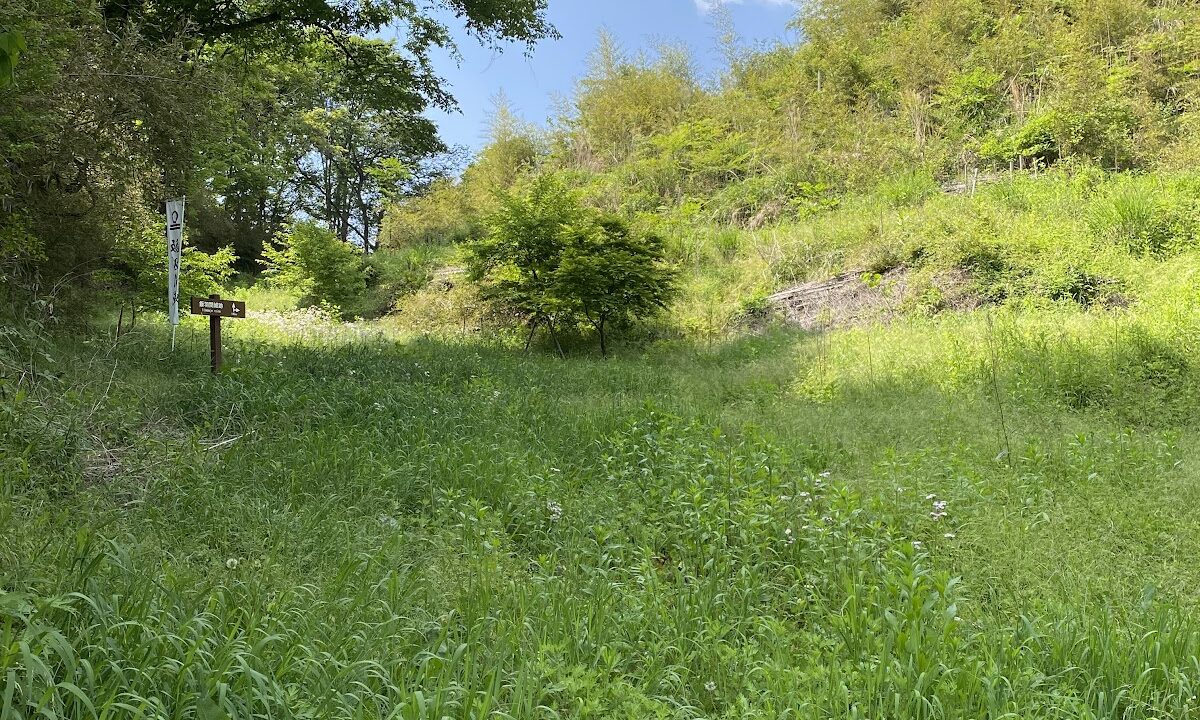
Currently, the castle ruins are maintained, and remains such as baileys and cliffs can be seen. Handmade information boards by local residents are placed throughout the site, making it easy for first-time visitors to understand the castle’s structure.
History of Iihama Castle
From the Kamakura Period to the Early Sengoku Period
Iihama Castle is said to have been built during the Kamakura period. The Iihama Toyama clan (also written as Iihama clan), a branch of the Toyama family that separated from the Iwamura Toyama clan, built the castle in this area and made it their residence for generations.
The Toyama clan were local lords who held power mainly in Ena District, Mino Province, and formed a castle network with Iwamura Castle as their main castle and several branch castles surrounding it. Iihama Castle functioned as a crucial stronghold, being the closest to Iwamura Castle.
Castle Lords during the Sengoku Period
With the arrival of the Sengoku period, Iihama Castle became the front line of the power struggle between Oda Nobunaga and the Takeda Shingen and Katsuyori father and son.
The castle lord at the time was Toyama Tomokatsu, but he was ordered by Oda Nobunaga to move to Naegi Castle. Subsequently, Tomokatsu’s son, Toyama Tomotada, became the lord of the castle. However, Tomotada also moved to Atera Castle, and his son, Toyama Tomonobu, then became the lord.
During this period, the area around Ena City and Nakatsugawa City in eastern Gifu Prefecture was a frontline zone where the forces of Oda Nobunaga and Takeda Shingen clashed, and Iihama Castle was also caught up in the fierce fighting.
The Fall of the Castle in 1574
The most important event in the history of Iihama Castle was the attack by Takeda Katsuyori in 1574.
That year, Takeda Katsuyori launched a large-scale invasion of the Toyama territory in eastern Mino, capturing Toyama castles one after another. While the so-called “18 Toyama Castles” fell one after another, Iihama Castle continued to resist until the very end.
The castle lord, Toyama Tomonobu, fought desperately, but ultimately the castle fell to the fierce Takeda forces. However, Tomonobu’s bravery was highly valued by Takeda Katsuyori, and he was spared execution. Furthermore, Katsuyori reportedly favored Tomonobu and granted him territory in Minowa, Ina District, Shinano Province.
This “Battle of Iihama Castle” occupies an important position in Sengoku period history as a battle symbolizing the fierce battle between the Oda and Takeda forces.
Iihama Castle After its Fall
While there are no clear records of what happened to Iihama Castle after its fall in 1574 (Tensho 2), it is believed to have come under the control of the Takeda clan. Subsequently, after the fall of the Takeda clan in 1582 (Tensho 10) and the turbulent period following the Honnoji Incident, Iihama Castle disappeared from the historical stage.
Structure and Layout of Iihama Castle
Overall Structure
Iihama Castle is a mountain castle skillfully built utilizing the tongue-shaped hilly terrain extending eastward. The castle’s layout employs a hybrid form of terraced and linear enclosures, maximizing the use of the terrain’s characteristics.
Although the castle grounds are relatively compact, the defensive structures are efficiently arranged within the limited space, suggesting it was a small but robust mountain castle.
Major Remains
Main Enclosure Site (First Enclosure)
The main enclosure site, located in the center of the castle, is still clearly visible as a geographical feature. While the flat enclosure area is not particularly large, it is believed to have housed the lord’s residence and command post. Clearly defined cliffs (artificially carved steep slopes) remain around the main enclosure, indicating its high level of defense.
Enclosure Group
Multiple enclosures are arranged around the main enclosure. Each enclosure is demarcated by elevation differences, indicating that each functioned as an independent defensive unit. The construction of defensive lines utilizing elevation differences between enclosures is a typical characteristic of mountain castles.
Cliffs and Earthworks
Cliffs can be seen throughout the castle grounds. The steep cliffs around the main keep, in particular, were high and served as an important defensive structure that made enemy intrusion difficult. Traces of earthworks also remain in some areas, allowing us to imagine the former defensive structure.
The Path to the Castle
The current path from the entrance to the castle grounds is thought to be a remnant of the main approach road at the time. The steep slopes characteristic of mountain castles were an important defensive element, allowing a small number of defenders to withstand a large number of enemies.
Geological Strata and Ancient Traces
One of the highlights of Iihama Castle is the geological strata and ancient traces that can be observed near the entrance. Walking around the castle allows you to see the exposed strata and learn about the geological characteristics of the region. This is an attraction separate from the castle ruins and is a factor that attracts visitors’ interest.
Highlights of Iihama Castle
Handmade Information Boards
One of the features of Iihama Castle is the handmade information boards installed both inside and outside the castle. These information boards, meticulously created by local residents, clearly explain the castle’s history, structure, and highlights, and are highly regarded by castle enthusiasts.
The information boards are placed at key points from the entrance to the main keep, ensuring that even first-time visitors can navigate without getting lost.
Castle Site Monument and Memorial Tower
Within the castle grounds stands a stone monument marking the site, indicating its former importance as a fortress. A memorial tower remains, commemorating those who perished during the castle’s fall, conveying the history of fierce battles.
View
From the castle ruins, you can enjoy panoramic views of the surrounding area. The former lords likely surveyed the area from this vantage point, keeping a watchful eye on enemy movements. Views of Iwamura Castle and Naegi Castle allow you to appreciate Iihama Castle’s place within the castle network.
Well-Preserved Remains
Although nearly 450 years have passed since the fall of Iihama Castle, its basic structures, such as the baileys and cliffs, are relatively well-preserved. In particular, the cliffs around the main keep remain clearly visible, allowing for a concrete image of the defensive structure at the time.
Access Information
Location
Near 2084 Iihama, Iwamura-cho, Ena City, Gifu Prefecture
Access by Car
- Approximately 20 minutes from the Ena IC on the Chuo Expressway
- Approximately 10 minutes by car from the Iwamura Castle Ruins
- There are several parking spaces near the entrance to the castle (please confirm availability)
Access by Public Transportation
- Approximately 10 minutes by taxi from Iwamura Station on the Akechi Railway
- Approximately 1 hour on foot from Iwamura Station (approximately 4 kilometers)
Precautions When Visiting the Castle
- As it is a mountain castle, comfortable clothing and shoes are recommended.
- Insect repellent is necessary during the summer months.
- While there are signposts, it is recommended to check the castle’s location on a map beforehand.
- The visit takes approximately 30 minutes to 1 hour.
- Caution is needed as the ground can be slippery during and after rain.
About the Castle Stamp
The castle stamp for Iihama Castle can be purchased at the following locations. Sales Locations
- Enaterasu
- Iwamura (within Iwamura Town Tourism Association)
Price
- 300 yen
Castle stamps have become popular in recent years amidst the castle boom, and many people collect them as souvenirs of their castle visits. The Iihama Castle stamp also features a design that evokes the castle’s history.
Nearby Tourist Spots
Iwamura Castle Ruins
Located approximately 6 kilometers from Iihama Castle, Iwamura Castle is a famous castle counted among Japan’s three greatest mountain castles. The magnificent stone walls built on a mountaintop at an altitude of 717 meters are breathtaking, and visiting both Iihama Castle and Iwamura Castle together allows for a deeper understanding of the Toyama clan’s castle network.
The Iwamura castle town has also been designated as an Important Preservation District for Groups of Traditional Buildings, and the Edo period townscape is well preserved.
Naegi Castle Ruins
Naegi Castle, located in Nakatsugawa City, is another castle closely related to Iihama Castle. This castle, to which Tomokatsu Toyama moved on the orders of Oda Nobunaga, has recently attracted attention as a “castle in the sky.” Its appeal lies in its stone walls utilizing massive rocks and the spectacular views from the mountaintop.
Akechi Castle Ruins
Akechi Castle was also part of the Toyama clan’s castle network, forming a defensive line in conjunction with Iihama Castle and Iwamura Castle. There is also a legend that it is the birthplace of Akechi Mitsuhide, attracting the attention of history enthusiasts.
Iwamura Historical Museum
The historical museum located in the castle town of Iwamura displays materials related to the Toyama clan and the Iwamura domain. You can learn about the history of the region, including Iihama Castle, and it is recommended to visit before or after visiting the castle ruins.
Iihama Castle Ratings and Visitor Reviews
On a castle enthusiast community site, the average rating for Iihama Castle is around ★★★☆☆ (2.58). The average visit time is about 32 minutes, and it is rated as a compact yet impressive castle ruin.
Visitors have offered the following comments:
- “The handmade signboards were helpful and made it easy to understand the castle’s structure.”
- “Visiting it together with Iwamura Castle helped me understand the Toyama clan’s castle strategy.”
- “Although small in scale, the remains such as the cliffs are well-preserved, which was satisfying.”
- “You can really feel the history of this castle, which was on the front lines of the battle between the Oda and Takeda clans.”
- “You can feel the enthusiasm of the local people for preserving the castle ruins.”
Iihama Castle and the Conflict between the Oda and Takeda
Indispensable to understanding the history of Iihama Castle is the power struggle between Oda Nobunaga and the Takeda father and son, Shingen and Katsuyori.
The Strategic Importance of Eastern Mino
The Ena region in eastern Gifu Prefecture was located at the crossroads of the spheres of influence of the Oda clan, who controlled Owari and Mino, and the Takeda clan, who controlled Kai and Shinano. Controlling this region held extremely important strategic significance for both forces.
The Position of the Toyama Clan
Initially, the Toyama clan served Oda Nobunaga, but Takeda Shingen’s invasion of eastern Mino Province placed them in a complicated position. Iwamura Castle fell into the hands of the Takeda clan, and the Toyama clan’s network of castles was fragmented.
The Resistance of Iihama Castle
During Takeda Katsuyori’s attack on the Toyama territory in 1574, Iihama Castle is recorded as the castle that continued to resist until the very end. While 18 Toyama castles fell one after another, the garrison of Iihama Castle, led by Toyama Tomonobu, continued to fight tenaciously.
This resistance had meaning beyond mere military action. It was also an act demonstrating the pride of the Toyama clan and their loyalty to the Oda clan.
Toyama Tomonobu After the Fall of the Castle
After the fall of the castle, Toyama Tomonobu, who had been taken prisoner, was spared by Takeda Katsuyori and further granted territory in Minowa, Ina District, Shinano Province. This was a decision made by Katsuyori, who highly valued Tomonobu’s military prowess.
Katsuyori’s attitude of recognizing and relying on Tomonobu, an enemy general, for his courage and loyalty, is an interesting episode that illustrates the values of warlords during the Sengoku period.
Significance of Visiting Iihama Castle
Iihama Castle is not a large mountain castle like Iwamura Castle or Naegi Castle, but it is an important historical site worth visiting.
Experiencing the Front Lines of History
Standing on the castle ruins, you can truly feel what the front lines of the conflict between the two great forces, Oda Nobunaga and Takeda Katsuyori, were like. Considering the role that a small mountain castle played in the larger flow of history is a valuable experience for understanding the history of Japanese castles.
Learning about Local History and Culture
Iihama Castle is an important historical site that tells the history of the Toyama clan, a local lord family. By learning about the history of local samurai groups, not just central daimyo, you can understand the diverse aspects of the Sengoku period.
Understanding the Castle Network
By visiting Iihama Castle along with Iwamura Castle, Naegi Castle, and Akechi Castle, you can understand the reality of the castle network during the medieval and Sengoku periods. You can learn firsthand how main castles and branch castles cooperated to build a regional defense system.
Respect for Local Preservation Activities
As exemplified by the handmade information boards at Iihama Castle, you can feel the enthusiasm of the local people for preserving the castle ruins. Learning that local castle ruins, not large-scale tourist destinations, are protected by the efforts of local people provides an opportunity to consider the importance of cultural property protection.
Model Course for Visiting Iihama Castle
We propose a model course for touring the castles of Ena City, centered around Iihama Castle.
Half-Day Course
- Visit Iwamura Castle Ruins (2 hours)
- Stroll through Iwamura Castle Town and Lunch (1 hour)
- Visit Iihama Castle Ruins (1 hour)
- Iwamura. Purchase a castle stamp here
One-Day Course
- Visit Naegi Castle Ruins (2 hours)
- Lunch in Nakatsugawa City
- Visit Iwamura Castle Ruins (2 hours)
- Stroll through Iwamura Castle Town
- Visit Iihama Castle Ruins (1 hour)
- Visit Akechi Castle Ruins (if time permits)
By following this course, you can gain a comprehensive understanding of the Toyama clan’s castle network and the history of Eastern Mino, which was the stage for the conflict between the Oda and Takeda clans.
Summary
Iihama Castle is an important mountain castle ruin remaining in Ena City, Gifu Prefecture. It served as the base of the Toyama clan from the Kamakura period to the Sengoku period, and is particularly notable for its resistance to the attack by Takeda Katsuyori in 1574, where it remained until the very end.
Although not large in scale, it played a crucial role as a subsidiary castle of Iwamura Castle, and its historical value as the front line of the power struggle between Oda Nobunaga and Takeda Katsuyori is extremely high.
Even today, the remains of the castle, such as the baileys and cliffs, are well-preserved, and handmade signboards by local residents warmly welcome visitors. Visiting this castle along with other nearby castle ruins, such as Iwamura Castle and Naegi Castle, will allow you to gain a deeper understanding of the history of eastern Mino during the Sengoku period.
For castle enthusiasts, those interested in the history of the Sengoku period, and anyone wanting to learn about the local history and culture, Iihama Castle is a historical site well worth visiting. Please do visit the castle ruins and reflect on the turbulent history that this small mountain castle has witnessed.