Ichinomiya Castle (Awa Province) Complete Guide: A Thorough Explanation of the History and Highlights of Tokushima’s Largest Mountain Castle
What is Ichinomiya Castle?
Ichinomiya Castle is a mountain castle located in Ichinomiya-cho, Tokushima City, Tokushima Prefecture, built during the Nanboku-cho period and the Sengoku period. It sits at the very tip of a branch ridge extending northeast from Higashi-Ryuo-zan (elevation 417m). The main keep is built on a mountain ridge at an elevation of 144.3m, with a relative height of approximately 120m from the base. Known as one of the largest mountain castles in Tokushima Prefecture, it was selected as one of the Continued Top 100 Japanese Castles (No. 176) in 2017.
Utilizing the natural fortifications on the south bank of the Akui River, this strong castle served as an important military base in Awa Province for approximately 300 years, from its construction during the Nanboku-cho period until its abandonment in the early Edo period. During the Sengoku period (Warring States period), Ichinomiya Castle was a battleground between the Miyoshi and Chosokabe clans, and fierce battles were fought for control of Awa Province.
History of Ichinomiya Castle
Construction and the Nanboku-cho Period
The most widely accepted theory regarding the construction date of Ichinomiya Castle is that it was built in 1338 (Engen 1/Ryakuō 1). It is believed that the Ichinomiya clan built the castle as a base in Awa Province during the turbulent Nanboku-cho period. City), the Ichinomiya (first-ranked shrine) of Awa Province, and were powerful local lords in the region.
During the Nanboku-cho period, Ichinomiya Castle functioned as a mountain castle that made maximum use of the natural terrain. By utilizing the steep terrain and the Ayukui River as a natural moat, it formed a strong fortress that could be defended even with a small force. The castle structure at this time was relatively simple, and significant modifications were made during the later Sengoku period.
Development during the Era of Ichinomiya Narisuke and the Sengoku Period
During the Sengoku period (Warring States period), Ichinomiya Castle underwent significant development under Ichinomiya Narisuke. As a powerful local lord in Awa Province, Ichinomiya Narisuke expanded his influence while maintaining relations with the Miyoshi clan. It is believed that large-scale renovations of the castle were carried out during this period, including the construction of stone walls and the improvement of the baileys.
During the Tensho era (1573-1592), Chosokabe Motochika, aiming to unify Shikoku, invaded Awa Province, and Ichinomiya Castle became the site of fierce battles. In 1582, the Chosokabe clan seized control of most of Awa Province, and Ichinomiya Castle also came under their rule. During this period, Ichinomiya Castle functioned as an important base for the Chosokabe clan’s control of Awa Province, and it is presumed that further improvements were made to the castle.
The Hachisuka Clan Era
In 1585, when the Chosokabe clan surrendered during Toyotomi Hideyoshi’s conquest of Shikoku, Awa Province was given to Hachisuka Iemasa. Hachisuka Iemasa built Tokushima Castle as his base, but Ichinomiya Castle continued to be maintained as an important subsidiary castle. As one of the nine castles of Awa, it played a role in the defense network centered around Tokushima Castle.
During the Hachisuka clan era, senior retainers of the Hachisuka clan were appointed as the lords of Ichinomiya Castle. Maintenance and management of the castle continued, and it acquired characteristics of a modern castle. However, with the arrival of peace in the Edo period, its military importance as a mountain castle declined.
Abandonment of the Castle
In 1638, with the enforcement of the Edo Shogunate’s “One Castle Per Province” decree, Ichinomiya Castle was officially abandoned. In the Tokushima Domain, only Tokushima Castle was preserved, and all other branch castles were demolished. After the castle’s abandonment, the buildings within the castle grounds were dismantled, and its function as a castle was completely lost.
However, the remains such as the stone walls and baileys were preserved, making it a valuable historical site that still vividly preserves the appearance of a mountain castle from the Sengoku period. Throughout the Edo period, the Ichinomiya Castle ruins were affectionately known as “Shiroyama” (Castle Mountain) by local residents, and its history has been passed down through generations.
Castle Structure and Highlights
Honmaru (Main Enclosure)
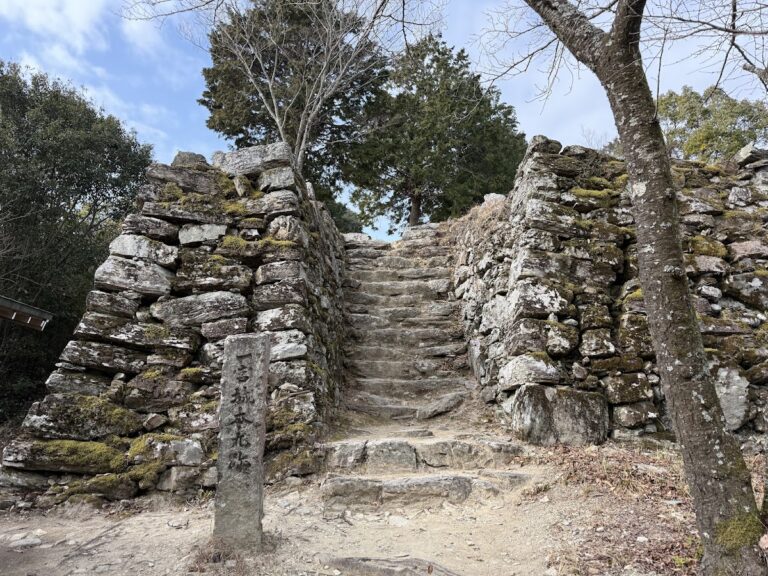
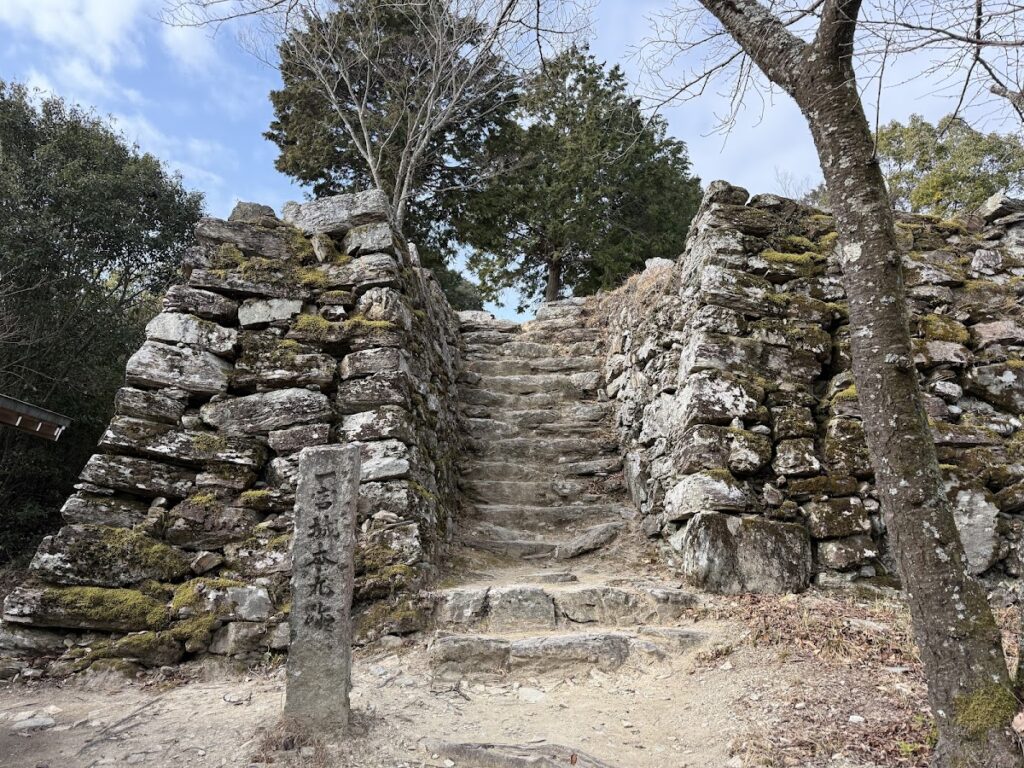
The Honmaru, the central part of Ichinomiya Castle, is located on the mountaintop at an altitude of 144.3m. Measuring approximately 40m east-west and 30m north-south, it boasts a sturdy structure surrounded by high stone walls. Some parts of the Honmaru’s stone walls reach a height of 3-5m, making it one of the most impressive remains of Ichinomiya Castle.
The interior of the Honmaru is relatively flat, and it is believed that the lord’s residence and other important buildings were once located there. Although currently covered with trees, the shape of the enclosure is clearly discernible. From the main enclosure, one can enjoy a panoramic view of Tokushima city and the Ayukui River basin, highlighting its strategically important location.
The stone walls of the main enclosure exhibit a mixture of rough-hewn and fitted stonework techniques, indicating that they were constructed at multiple times. The southern stone wall, in particular, is unusually well-preserved, providing valuable insight into the evolution of stonework techniques from the Sengoku period to the early modern period.
Oguramaru
Located east of the main enclosure, Oguramaru is the second most important enclosure. Slightly lower than the main enclosure, it played a crucial role in its defense. Oguramaru is also surrounded by stone walls, and although slightly smaller in scale than the main enclosure, it functions as an independent defensive stronghold.
A moat separates Oguramaru from the main enclosure, that even if Oguramaru were captured, ensuring entry into the main enclosure could be prevented. This moat is approximately 5 meters wide and 3 meters deep, and is still clearly visible today. The stone walls of Oguramaru are also well-preserved, making them an important historical site that demonstrates the complexity of Ichinomiya Castle’s defensive system.
Saizomaru
Saizomaru is a fortified enclosure located northwest of the main enclosure. While the origin of its name is uncertain, it was one of the castle’s important defensive strongholds. This enclosure has a relatively large area and is structured to accommodate many soldiers. From Saizomaru, the valley to the north could be monitored, allowing for early detection of enemy incursions.
Stone walls surround Saizomaru, and the northern wall in particular is technically advanced, built on a steep slope. Some parts of this wall reach over 4 meters in height, demonstrating the high level of stonework technology at Ichinomiya Castle. A depression believed to be the remains of a well has also been found inside Saizomaru, suggesting that facilities for siege warfare were in place.
Myojinmaru
Myojinmaru is a fortified enclosure located south of the main enclosure. It is believed to have been named after the shrine that was enshrined there. Myojinmaru was a key defensive enclosure on the south side of Ichinomiya Castle, playing a crucial role in preventing enemy incursions from the south.
A distinctive feature of this enclosure is the complex arrangement of its stone walls. The walls are built in a stepped pattern, limiting the attacker’s route and creating a structure advantageous to the defender. The stone walls of Myojinmaru are thought to be relatively recent, likely having been renovated during the time of the Chosokabe or Hachisuka clans.
Goten-i (Village Castle)
Apart from the castle at the mountaintop, there is the site of a residence called Goten-i at the foot of the mountain. Also known as a village castle, it served as the residence of the castle lord during peacetime and also functioned as a government office. The area around the current Ichinomiya Shrine and Dainichi-ji Temple is believed to be the site of this Goten-i.
Goten-i was located on flat land near the Ayukui River, a convenient location for securing water and daily life. Ichinomiya Castle adopted the typical use of medieval mountain castles: during wartime, the castle was fortified on the mountaintop, and during peacetime, the lord’s residence was located at the foot of the mountain. While most of the remains of the lord’s residence have been lost due to later development, traces remain in place names and subtle topography.
Defensive System
Ichinomiya Castle’s defenses were ingenious, making maximum use of the natural terrain. In addition to the steep slopes and the natural moat of the Ayukui River, multiple baileys were arranged in a stepped pattern, creating multiple lines of defense.
The access routes to the castle were limited, forcing the enemy to climb narrow mountain paths. Stone walls and earthworks were placed at key points along the access routes, securing advantageous positions for the defenders to attack from higher ground. Furthermore, trenches and vertical moats were constructed between each bailey, allowing each bailey to be individually defended.
The area below the stone walls is steep, making climbing extremely difficult. The combination of this steep slope and high stone walls significantly enhanced the defensive capabilities of Ichinomiya Castle. Furthermore, the layout of the baileys was designed for mutual support; even if one bailey was under attack, covering fire could be provided from other baileys.
Current Status and Preservation of the Remains
Although Ichinomiya Castle is not currently designated as a national historic site, it is protected as an important cultural property of Tokushima City. Major remains, such as stone walls, baileys, moats, vertical moats, and earthworks, are well-preserved.
Stone walls remain throughout the castle grounds, with a total length reaching several hundred meters. The presence of a mixture of stone walls employing different techniques, such as rough-hewn stonework and fitted stonework, makes them valuable resources for understanding the castle’s evolution. While some sections of the stone walls have collapsed, the overall state of preservation is good.
The shapes of the baileys are also clearly preserved, with more than 10 baileys identified, including the main bailey, Oguramaru, Saizomaru, and Myojinmaru. Although these enclosures are covered with trees, the terrain has been largely unaltered, and they largely retain their original appearance from the time of construction.
In recent years, local preservation societies and Tokushima City have been working to improve the access routes and install information signs. Regular mowing and tree felling have also improved the visibility of the remains, creating a more accessible environment for visitors.
Access to Ichinomiya Castle
By Public Transportation
From JR Tokushima Station, take the Tokushima City Bus bound for “Ichinomiya” and get off at the “Ichinomiya Fudasho-mae” bus stop. The journey takes approximately 30 minutes. From the bus stop, it’s about a 5-minute walk via Ichinomiya Shrine to the castle entrance, and about a 30-40 minute walk from the entrance to the main keep.
By Car
From the Tokushima Interchange on the Tokushima Expressway, it’s about a 15-minute drive via National Route 192 and Prefectural Route 1. There is free parking at Ichinomiya Shrine, from which you can access the castle. It takes approximately 30-40 minutes to walk from the parking lot to the main keep.
About the Ascent Route
The main ascent route to Ichinomiya Castle is the Ote-michi (main approach road) starting from Ichinomiya Shrine. While the trail is well-maintained, it features steep slopes typical of mountain castles, so comfortable shoes and clothing are necessary. Particular caution is needed during and after rain, as the path can become slippery.
Allow approximately 1 hour 30 minutes to 2 hours for the round trip ascent. There are rest areas along the way, but it is recommended to bring your own drinking water. Insect repellent is also necessary in summer, and warm clothing is required in winter.
Nearby Attractions
Ichinomiya Shrine
Located at the entrance to Ichinomiya Castle, Ichinomiya Shrine has long been a place of worship for the local community. It is said that the lord of Ichinomiya Castle also revered it, and it had a deep connection to the castle. The shrine grounds contain ancient trees hundreds of years old, giving a sense of historical significance.
Dainichi-ji Temple (No. 13 of the Shikoku 88 Temple Pilgrimage)
Dainichi-ji Temple, located near Ichinomiya Shrine, is known as the 13th temple of the Shikoku 88 Temple Pilgrimage. It is said to have been founded by Kobo Daishi and attracts many pilgrims. It is a famous temple that many people visit in conjunction with Ichinomiya Castle ruins.
Ayukui River
The Ayukui River, flowing north of Ichinomiya Castle, served as a natural moat for the castle. Currently known as a clear stream, it is bustling with people enjoying ayu (sweetfish) fishing in early summer. From the riverbank, you can see the mountain shape of Ichinomiya Castle ruins, appreciating the castle’s excellent location.
Information on the Continued Top 100 Japanese Castles Stamp
Ichinomiya Castle was selected as one of the Continued Top 100 Japanese Castles (No. 176) in 2017. The stamp is located at Tokushima City Library (1-24 Motomachi, Tokushima City). The library’s opening hours are 9:00 AM to 9:00 PM on weekdays and 9:00 AM to 5:00 PM on weekends and holidays (closed on Mondays, or the following day if Monday is a holiday).
The stamp is located near the counter on the first floor of the library, and anyone can freely get their stamp. However, you will need to bring your own stamp book. Bring the official guidebook for the Continued Top 100 Japanese Castles or prepare a stamp rally sheet.
The Charm and Visiting Points of Ichinomiya Castle
The greatest charm of Ichinomiya Castle is that it has remarkably well-preserved the appearance of a mountain castle from the Sengoku period. The remains such as stone walls and baileys are clearly visible, allowing you to experience the castle’s structure at that time. The stone walls, in particular, are impressive and a must-see for castle enthusiasts.
When visiting, it is recommended to first head to the main keep, and then proceed to Oguramaru, Saizomaru, and Myojinmaru in that order. By observing the layout of each bailey and the structure of the stone walls, you can understand the ingenuity of Ichinomiya Castle’s defensive system. Furthermore, the view from the main keep is magnificent, offering a panoramic view of Tokushima city and the surrounding mountains.
Climbing the castle requires physical stamina, but even beginners can reach it by using the well-maintained hiking trails. However, due to the steep slopes characteristic of mountain castles, it’s important to climb at a comfortable pace. You’ll be able to enjoy the beauty of nature throughout the seasons while reflecting on the romance of history—a truly luxurious experience.
Historical Significance of Ichinomiya Castle
Ichinomiya Castle is a castle that symbolizes the transition period from the medieval to the early modern period in Awa Province. Beginning with its construction during the Nanboku-cho period, it followed a typical trajectory in the history of Japanese castles, surviving the turbulent Sengoku period and eventually coming under the control of a modern daimyo.
In particular, its role as the stage for the battles between the Miyoshi and Chosokabe clans is crucial for understanding the political and military situation in Shikoku during the Sengoku period. The battle for Ichinomiya Castle was not merely a struggle for control of a single castle, but part of a larger struggle for control of Awa Province and, by extension, all of Shikoku.
Furthermore, the stone walls of Ichinomiya Castle are valuable historical materials that demonstrate the development of stonework techniques from the Sengoku period to the early modern period. The technical evolution from rough-hewn stonework to fitted stonework is rarely observed within a single castle, making it a significant site in castle research.
Summary
Ichinomiya Castle, as one of the largest mountain castles in Tokushima Prefecture, functioned as an important base in Awa Province for approximately 300 years, from the Nanboku-cho period to the early Edo period. It is a castle with many attractions, including a robust defensive system natural fortifications, well-preserved stone walls and baileys, and a history of fierce battles during the Sengoku period.
Having been selected as one of the Continued Top 100 Japanese Castles, it has attracted nationwide attention and is a popular spot not only for enthusiast castles but also for history buffs and mountain climbing enthusiasts. Visiting it in conjunction with nearby historical sites such as Ichinomiya Shrine and Dainichi-ji Temple will allow for a deeper understanding of the region’s history and culture.
When visiting Tokushima, be sure to visit the Ichinomiya Castle ruins and experience the appearance of a Sengoku period mountain castle. As you climb the steep mountain path and stand in the main keep surrounded by stone walls, the historical drama that once unfolded in this place will come alive before your eyes.