A Complete Guide to the History and Highlights of Arai Castle (Owariasahi City) | From the Mizuno Clan’s Residence to Asahi Castle
Arai Castle, located in Shiroyama-cho, Owariasahi City, Aichi Prefecture, is a medieval hilltop castle built by the Mizuno clan during the Muromachi period. Currently, it is maintained as Shiroyama Park, with a replica keep, “Asahi Castle,” erected there, and is a beloved symbol of the region. This article provides a detailed explanation of Arai Castle, from its history to its current highlights and access methods.
History of Arai Castle
Background of Construction and the Mizuno Clan
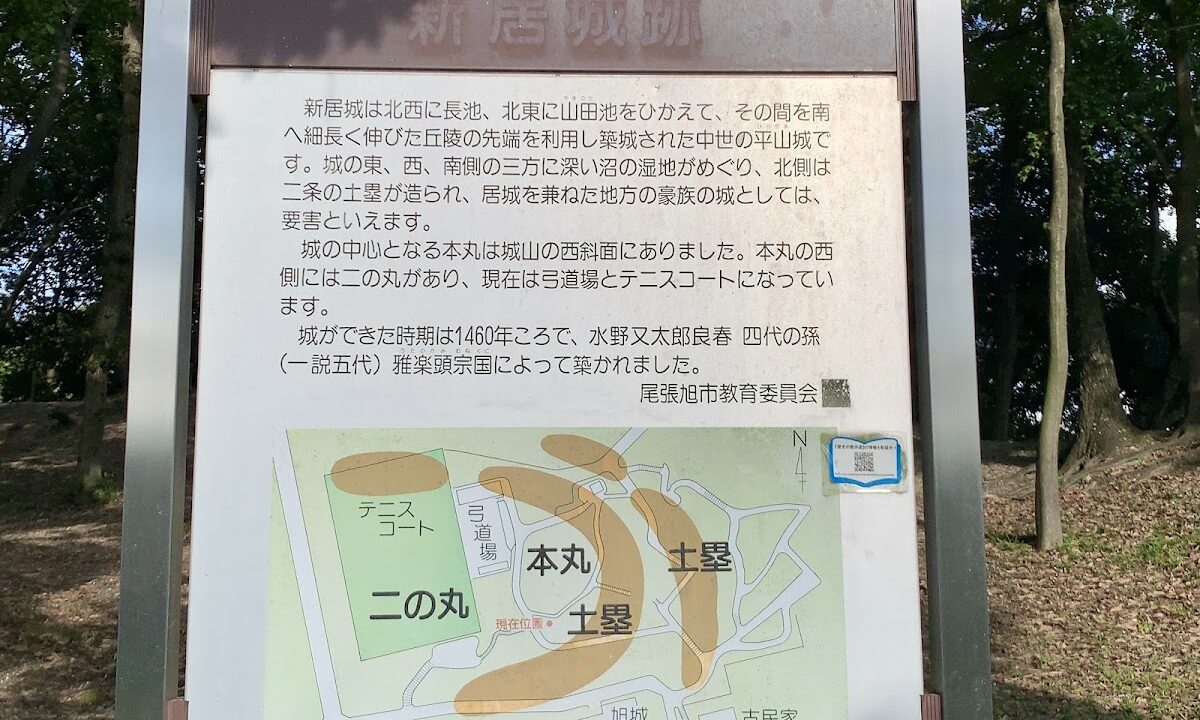
Arai Castle is believed to have been built around 1361 (Shohei 16th year of the Southern Court/Koan 1st year of the Northern Court). This castle played an important role as the residence of the Mizuno clan.
The Mizuno clan was originally a family deeply involved in the development of this region. It is said that Mizuno Matataro Yoshiharu pioneered the land of Niihama, and his descendant, Mizuno Uta-no-kami Munekuni, built Niihama Castle. Mizuno Yoshiharu is known as the founder of Owari Asahi’s development, and a bronze statue of him still stands in front of Owari Asahi Station on the Meitetsu Seto Line.
The Era of Mizuno Uta-no-kami Munekuni
Mizuno Uta-no-kami Munekuni used Niihama Castle as his base and wielded considerable influence in the surrounding area. According to legend, Munekuni fought and defeated the Ozeki clan, lords of Omori Castle. As a result, he is said to have brought 25 villages, including Omori Village and Niihama Village, under his control.
During this period, various local lords and warlords vied for power in Owari Province, and the Mizuno clan maintained its influence as one of them. Niihama Castle is thought to have functioned not merely as a residence, but as a base for regional control.
Castle History and Abandonment
While the detailed history of Niijo Castle is largely unknown due to limited historical records, it is believed to have survived as the residence of the Mizuno clan throughout the Sengoku period. The Mizuno clan is known for producing Oda-no-kata (Dentsuin), the mother of Tokugawa Ieyasu, and held considerable power across Owari and Mikawa provinces.
It is unclear how long the castle functioned, but it is presumed to have been abandoned by the Edo period. Currently, only a few remnants, such as earthworks, remain at the castle site.
Structure and Layout of Niijo Castle
Characteristics as a Hilltop Castle
Niijo Castle is classified as a hilltop castle. While its relative elevation is not particularly high, it was built slightly higher than the surrounding plains, securing a defensive advantage.
Like many medieval castles, it is believed that large-scale structures such as stone walls were not used, and the layout centered on earthworks and moats. There are no records of large structures like a castle tower existing, and it is presumed to have been a relatively simple structure centered around a residence.
Arrangement of Enclosures and Earthworks
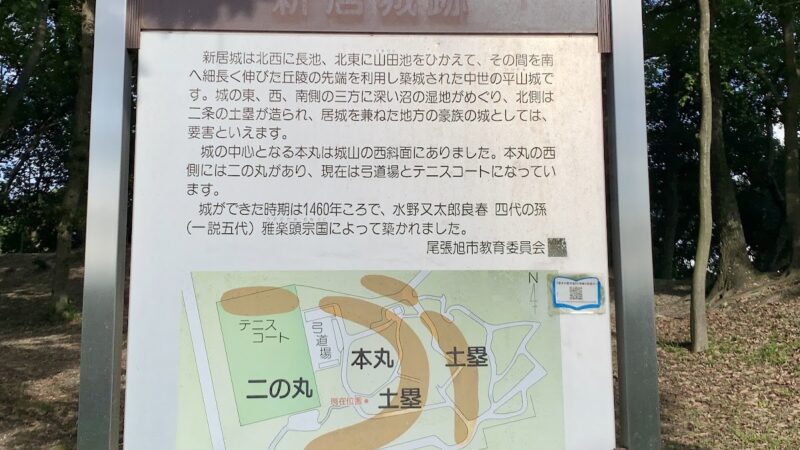
While the remains that can be confirmed today are limited, traces of enclosures (kuruwa) and earthworks remain in part. Many remains were lost during the development of Shiroyama Park, but the topography within the park still evokes the atmosphere of the time.
Earthworks played an important role as defensive structures of the castle, preventing enemy intrusion and clearly defining the boundaries within the castle. Although the earthworks of Niijo Castle are modest in height, they exhibit a typical structure of a medieval castle.
Current Status of Remains
Remaining Remains
The remains that can be confirmed today as part of Niijo Castle are mainly the following:
Earthworks: Partially remaining within Shiroyama Park. Approximately 1-2 meters high, they indicate part of the former defensive line. While some parts have been altered due to park development, there are also sections that are thought to be the original earthworks.
Terrain of the Enclosures: Traces of the enclosures can be seen in the park’s terrain. While not preserved in their complete form, the topography allows us to imagine the layout of the castle at the time.
Moat Remains: While clear moat remains are difficult to identify, the presence of depressions in the terrain suggests the possibility of a moat.
Preservation Status of the Remains
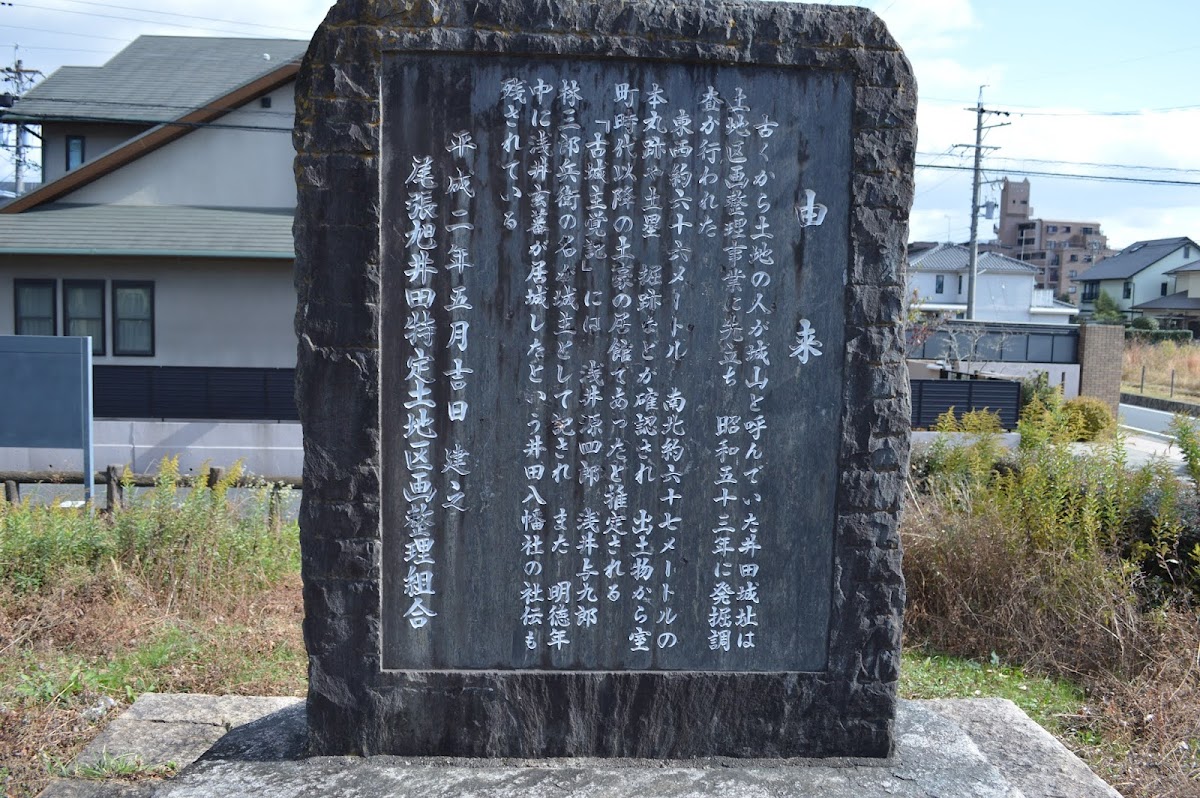
Many of the remains were lost when the park was developed as Shiroyama Park. However, the park’s maintenance and management have also protected some of the remaining structures. Owariasahi City has designated the Niijo Castle ruins as a regional historical heritage site and provides information to visitors through explanatory signs.
Stone monuments and explanatory signs are installed within the park, allowing visitors to learn about the history of Niijo Castle and the Mizuno clan. Although small in scale as a castle site, it is a valuable historical site for understanding local history.
About the Mock Castle Tower “Asahi Castle”
Construction History of Asahi Castle
Currently, a mock castle tower called “Asahi Castle” stands within Shiroyama Park. This building was constructed between 1977 and 1978.
Asahi Castle is not a historically accurate reconstruction of a castle keep, but a replica built as a tourist attraction. While there are no records of a castle keep existing at Niijo Castle, it was constructed as a symbol of the castle ruins and as a local tourist resource.
Architectural Features
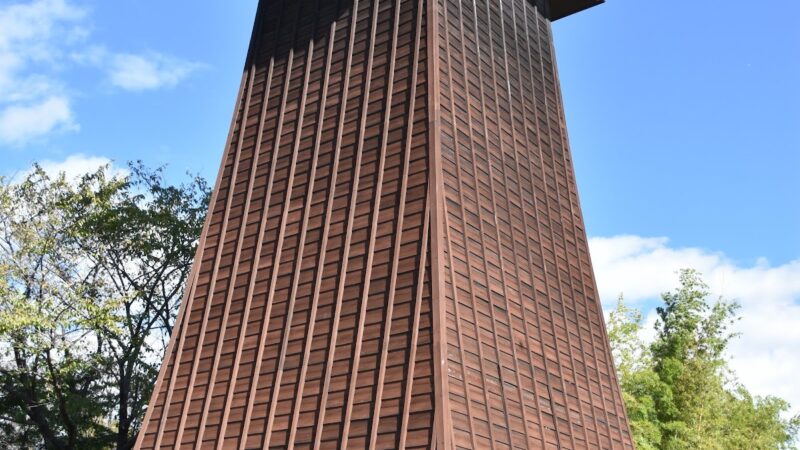
Asahi Castle is a four-story, four-tiered, multi-layered structure made of reinforced concrete (RC). Its exterior features a beautiful contrast between white walls and black tiles, mimicking the typical style of Japanese castle architecture.
It stands approximately 30 meters tall and is a landmark of Owariasahi City, visible from afar. The building is one of the replica castle keeps constructed during the tourism boom of the time, following the example of similar structures found throughout Japan.
Interior Facilities
Asahi Castle houses a restaurant and an observation deck.
Restaurant: While it was formerly in operation, prior confirmation of current operating status is recommended. It was a popular facility for enjoying meals within the castle grounds.
Observation Deck: The top floor features an observation deck offering panoramic views of Owariasahi city and the surrounding area. On clear days, you can even see the distant mountains, making it a popular spot for visitors.
Each floor of the building also has exhibition spaces related to the history of the castle and the region, allowing visitors to deepen their understanding of Niijo Castle and the Mizuno clan.
Current Status and Use of Asahi Castle
Asahi Castle is a beloved symbol of the region, but more than 40 years have passed since its construction, and the aging of the building is a concern. Currently, access to the interior may be restricted, so it is recommended to check the official information of Owariasahi City before visiting.
Exterior viewing and photography are freely permitted, making it a must-see spot when visiting Shiroyama Park. Especially during cherry blossom season, the combination of cherry blossoms and the castle tower creates a beautiful landscape.
Highlights of Shiroyama Park
Park Overview
Shiroyama Park is a public park developed around the ruins of Niijo Castle and is used as a place of relaxation for local residents. The spacious grounds feature playgrounds, open spaces, and walking paths, making it popular with families.
The park is free to use and open year-round. A parking lot is also available, making it easily accessible by car.
Seasonal Attractions
Spring: Known as a famous cherry blossom viewing spot, it attracts many visitors. The view of the cherry blossoms with Asahi Castle in the background is a perfect photo opportunity.
Summer: The lush shade of the trees provides a cool and pleasant environment for strolling.
Autumn: The autumn foliage is beautiful, allowing visitors to enjoy a historical walk in a tranquil atmosphere.
Winter: The air is clear, and the view from the observation deck is particularly excellent.
Other Highlights
The park features explanatory signs and monuments related to Niijo Castle, allowing visitors to learn about the castle’s history while strolling. There is also a monument to Mizuno Yoshiharu, offering insights into the region’s pioneering history.
The playground area is popular with children, making it a place where historical exploration and family leisure can be enjoyed simultaneously. This park offers a variety of uses, including picnics and sports activities in the open area.
Access Methods
Access by Public Transportation
Train:
- Get off at Owariasahi Station on the Meitetsu Seto Line, approximately 15 minutes on foot.
- Owariasahi Station is approximately 30 minutes from Sakae Station on the Nagoya Municipal Subway Higashiyama Line via the Meitetsu Seto Line.
Bus:
- You can use the community bus “Asapi-go” that runs within Owariasahi City.
- Get off at the “Shiroyama Park” bus stop.
- We recommend checking the bus schedule in advance.
Access by Car
Route from Major Roads:
- Approximately 5 minutes from the Omori Interchange on the Nagoya Second Ring Expressway.
- Accessible from National Route 363.
- Easily accessible from Prefectural Road 15 (Nagoya-Tajimi Line).
Car Navigation Settings:
- Address: Nagaike-shita, Shiroyama-cho, Owariasahi City, Aichi Prefecture
- Facility Name: Searchable by Shiroyama Park or Asahi Castle.
Parking Information
Shiroyama Park has a free parking lot.
- Number of Parking Spaces: Approximately 50
- Operating Hours: Same as park opening hours
- Fee: Free
- Notes: The parking lot may be full during peak seasons such as cherry blossom season.
The parking lot is located near the park entrance and is a few minutes’ walk from Asahi Castle.
Nearby Tourist Attractions
Mizuno Yoshiharu Statue in front of Owari-Asahi Station
A bronze statue of Mizuno Matataro Yoshiharu, who pioneered the Niihama area, stands in front of Owari-Asahi Station on the Meitetsu Seto Line. We recommend visiting this statue when you visit Niihama Castle. It’s located on the way from the station to Shiroyama Park, making it easily accessible on foot.
Surrounding Castles
The Owari region boasts numerous castle ruins, offering ample opportunities for castle tours:
- Omori Castle Ruins: A castle closely associated with Niijo Castle, and the residence of the Ozeki clan.
- Nagoya Castle: A representative Japanese castle located approximately 30 minutes away by car.
- Komakiyama Castle: A castle built by Oda Nobunaga, approximately 20 minutes away by car.
- Inuyama Castle: A castle with an existing keep designated as a National Treasure, approximately 30 minutes away by car.
Visiting these castles in combination will provide a deeper understanding of the castle history of Owari.
Other Highlights
- Aichi Prefectural Forest Park: A park rich in nature where you can enjoy hiking and barbecues.
- Skyward Asahi: A cultural facility in Owariasahi City, featuring an observatory and planetarium.
- Vimalakirti Pond: A tranquil pond, perfect for a stroll.
Points to Note and Recommendations for Visitors
Points to Note During Your Visit
- Current Status of Asahi Castle’s Interior: Check the latest information on the Owariasahi City official website before visiting. Interior access may be restricted due to deterioration.
- Confirming Remains: Remains such as earthworks are scattered throughout the park, but they are easy to miss without explanatory signs, so it’s a good idea to check their locations beforehand.
- Photo Spots: Asahi Castle can be photographed from various angles, but the views near the park entrance and from the cherry blossom avenue are especially recommended.
Best Time to Visit
- Cherry Blossom Season (Late March to Early April): The most popular time, allowing you to enjoy both cherry blossoms and castle sightseeing.
- Autumn Foliage Season (Mid-to-Late November): Relatively less crowded, allowing for a more relaxed visit.
- Weekdays: Quieter than weekends.
Estimated Time Required
- Exterior Viewing of Asahi Castle Only: Approximately 15 minutes
- Strolling Through the Entire Park: Approximately 30 minutes to 1 hour
- Thorough Viewing of the Ruins: Approximately 1 hour to 1 hour 30 minutes
- Viewing Including the Mizuno Yoshiharu Statue and Other Nearby Attractions: Approximately 2 hours
Historical Significance of Niijo Castle and the Mizuno Clan
The Mizuno Clan’s Position in Owari Province
The Mizuno clan was a powerful family that stretched from Owari to Mikawa Provinces, playing a significant role during the Sengoku period. They are particularly known for producing Oda-no-kata, the mother of Tokugawa Ieyasu.
Niijo Castle holds a significant place in the history of the Mizuno clan, as one of their main strongholds. The development, beginning with the pioneering efforts of Mizuno Yoshiharu, followed by the construction of the castle by Mizuno Uta-no-kami Munekuni, and its subsequent growth, is a classic example of regional development and samurai rule from the medieval to the Sengoku period.
Importance in Local History
Niijo Castle is an indispensable historical site when discussing the history of Owariasahi City. The region developed around this castle, laying the foundation for present-day Owariasahi City.
While the castle ruins are limited, they are still cherished today as an important historical heritage site that forms the identity of the region. The replica keep, “Asahi Castle,” although not based on historical fact, plays a role in stimulating local residents’ interest in history and fostering a love for their hometown.
Value in the Modern Age
Niijo Castle ruins possess multifaceted value not only as a historical heritage site, but also as a place of relaxation for citizens, an educational site, and a tourist resource. The development of Shiroyama Park has given more people the opportunity to easily experience history.
As a base for passing on the region’s history to future generations, and as a symbol of Owariasahi City, the Niijo Castle ruins will continue to play an important role.
Summary
Niijo Castle in Owariasahi City, Aichi Prefecture, is a medieval flatland castle built during the Muromachi period as the residence of the Mizuno clan. Currently, it is developed as Shiroyama Park, and a replica keep, “Asahi Castle,” has been erected.
While only traces of earthworks and baileys remain, it is preserved as an important historical site that tells the history of the region. The history of the area, from the development by Mizuno Yoshiharu to the construction of the castle by Mizuno Uta-no-kami Munekuni, tells the story of the region’s origins.
It is approximately a 15-minute walk from Owariasahi Station on the Meitetsu Seto Line, and easily accessible by car from the Nagoya Second Ring Expressway, with free parking available. The scenery is particularly beautiful during cherry blossom season, and it attracts many visitors throughout the year.
This spot is recommended not only for castle enthusiasts, but also for families and those who enjoy strolling around. As part of a tour of castles in the Owari region, or as a place to learn about local history, be sure to visit the Arai Castle Ruins and Shiroyama Park.