Complete Guide to the History and Highlights of Sannohe Castle | A Thorough Explanation of the Nanbu Clan’s Castle, a National Historic Site
What is Sannohe Castle?
Sannohe Castle is a Japanese castle ruin located in Umenai, Sannohe-cho, Sannohe-gun, Aomori Prefecture. Also known as “Tomegasaki Castle,” it functioned as the residence of the Nanbu clan from the Sengoku period to the early Edo period. It was designated a national historic site on March 15, 2022 (Reiwa 4), and is currently maintained as Shiroyama Park.
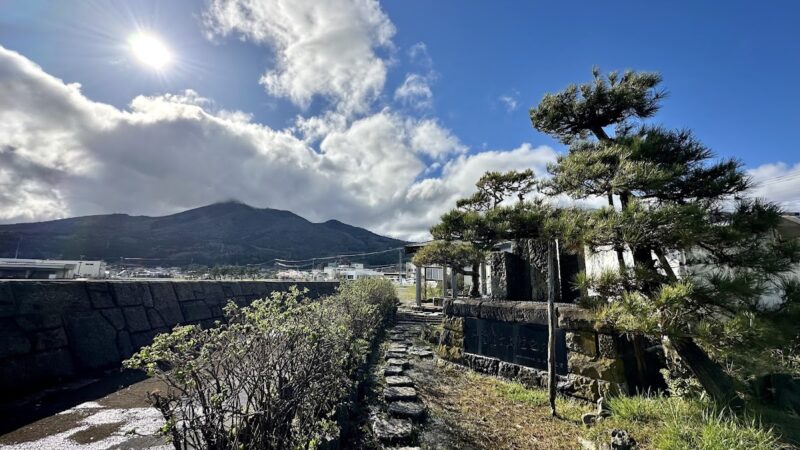
Sannohe Castle is a mountain castle built on a river terrace at the confluence of the Mabuchi River and Kumahara River, possessing a strong defensive structure that utilizes the natural terrain. It boasts a vast castle area extending approximately 1,200 meters east-west and 400 meters north-south, covering an area of approximately 40,000 square meters. The castle ruins retain well-preserved structures such as stone walls, moats, earthworks, and square enclosures, making it a valuable historical site that conveys the architecture of castles from the Sengoku period.
History of Mito Castle
Construction History and Nanbu Harumasa
The history of Mito Castle begins during the time of Nanbu Harumasa, the 24th head of the Nanbu clan. According to tradition, in 1539, Hon-Mito Castle (Seijuji-kan, present-day Nanbu Town, Aomori Prefecture), which had been the residence of the Nanbu clan, was destroyed by a rebellion and arson by his vassal, Akanuma Bichu. This incident prompted Harumasa to decide to construct a new castle.
During the Eiroku era (1558-1570), Harumasa began construction of a new castle on a hill called Tomegasaki. This site was located on a river terrace between two rivers, the Mabuchi River and the Kumahara River, and was a strategic location that made the most of the natural terrain. The cliffs formed by river erosion served as a natural defensive wall, providing ideal locational conditions that made enemy intrusion difficult.
The Era as the Nanbu Clan’s Residence
From the late Muromachi period to the early Edo period, Sannohe Castle played an important role as the headquarters of the Sannohe Nanbu family. Built in the mid-16th century, the castle was gradually expanded and improved, developing alongside the expansion of the Nanbu clan’s power.
The castle’s central area consisted of the main keep, second bailey, and third bailey, with the residences of retainers and the castle town surrounding them. The castle had a complex layout characteristic of mountain castles, with multiple baileys arranged in a stepped fashion. This arrangement constantly exposed attackers to defense from above, greatly enhancing the castle’s defensive capabilities.
Relocation to Morioka Castle and the Transformation of Sannohe Castle
The Keicho era marked a major turning point in the history of the Nanbu clan. During the time of Nanbu Toshinao, a plan was made to relocate the castle to a more expansive plain with greater potential for development. During the Keicho era, construction of Morioka Castle began, and the Nanbu clan’s base gradually shifted to Morioka.
Even after the Nanbu clan moved to Morioka, Sannohe Castle was not completely abandoned and continued to be maintained as an important base. It maintained its function as a castle until the Jokyo era (1684-1688), after which its role gradually diminished. Throughout the Edo period, Sannohe Castle remained recognized as a symbol of the Nanbu clan’s history and as an important historical site in the region.
Structure and Characteristics of Sannohe Castle
Layout Utilizing the Topography
The most distinctive feature of Sannohe Castle lies in its layout, which skillfully utilizes the natural topography of river terraces. The terrace surfaces, formed by long-term erosion by the Mabuchi River and Kumahara River, enabled a three-dimensional defensive system that took advantage of the difference in elevation.
The main part of the castle is located at the highest point of the terrace, with lower baileys arranged in stages from there. This difference in elevation allowed for a structure where upper baileys could support lower baileys, creating a multi-layered defensive system where, even if the enemy breached one bailey, a succession of defensive lines awaited them.
Remains of Stone Walls and Earthworks
One of the important remains that can still be seen at the Mito Castle ruins is the stone walls. Built from the Sengoku period to the early Edo period, these stone walls are valuable historical materials demonstrating the stonework techniques of the time. The stone walls were positioned around the main baileys and at the koguchi (entrances), serving to enhance the castle’s imposing presence and defensive capabilities.
Earthworks also remain in various places within the castle grounds. These earthworks, built by piling up earth, were used in combination with the stone walls to form an even stronger defensive line. The earthworks around the main bailey, in particular, are tall and wide, demonstrating the advanced castle-building techniques of the time.
Remains of Moats and Masugata (Square Enclosures)
The remains of moats, an essential part of a castle’s defensive system, are also well-preserved at Mito Castle. These moats, which functioned as dry moats, separated the baileys and limited enemy incursion routes. The depth and width of the moats varied depending on the location, with deeper and wider moats being placed in more important sections.
A masugata is a square-shaped space located in front of a castle gate, an important defensive structure designed to prevent enemy incursions. The masugata remains at Mito Castle concretely demonstrate the defensive philosophy of castle architecture during the Sengoku period, and are valuable resources for understanding how the area around the castle gate was designed at that time.
Highlights of Mito Castle Ruins Shiroyama Park
Mito Castle Onkokan Museum
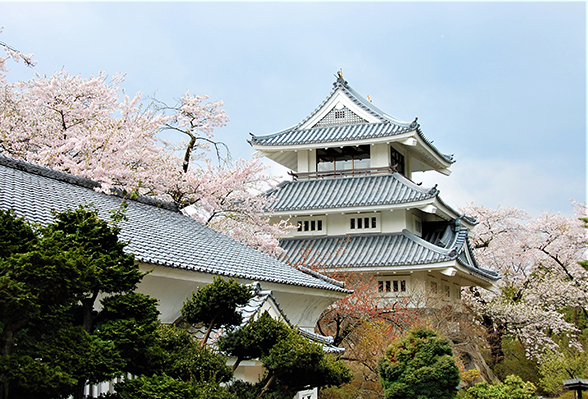
Located within Shiroyama Park, the Mito Castle Onkokan Museum exhibits materials related to the history of Mito Castle and the Nanbu clan. Inside, you can see a model of the castle, artifacts unearthed during archaeological excavations, documents and weapons related to the history of the Nanbu clan, allowing you to learn deeply about the history of Mito Castle and the Nanbu clan.
The museum building itself has an exterior modeled after a castle, making it a symbolic presence in Shiroyama Park. From the observation deck, you can enjoy a panoramic view of the town of Mito and the flow of the Mabuchi River, allowing you to relive the scenery that the former castle lords saw.
Shiroyama Park as a Cherry Blossom Viewing Spot
Mito Castle Ruins Shiroyama Park has been selected as one of “Japan’s 100 Best Historical Parks” and is particularly known as a cherry blossom viewing spot. In spring, approximately 1,600 cherry trees bloom, and the beautiful scenery created by the castle ruins and cherry blossoms attracts many tourists.
Several varieties of cherry trees are planted in the park, and because their blooming periods differ slightly, you can enjoy the cherry blossoms for an extended period. The trees are also illuminated at night, allowing for a magical viewing experience of the cherry blossoms after dark. Enjoying cherry blossoms at a historic castle site is a major attraction of Mito Castle Ruins Shiroyama Park.
Points to Observe the Remains
When visiting Shiroyama Park, be sure to observe the actual remains up close. Stone walls can be seen around the main keep and at the boundaries of the main enclosures, allowing you to directly see the stonework techniques of the time. The differences in stone size and stacking methods allow us to discern the castle’s construction period and traces of repairs.
The earthworks remain along the walking paths within the park, allowing us to appreciate their height and scale. While parts of the moat are now filled in, the topographical undulations are clearly recognizable, providing clues to imagining the castle’s former defensive system.
Information boards and panels are installed throughout the park, providing detailed explanations of the historical significance and highlights of each structure. By using these as a guide while exploring, you can gain a deeper understanding of the history of Mito Castle.
Significance of National Historic Site Designation
National Historic Site Designation in 2022
On March 15, 2022 (Reiwa 4), the Mito Castle ruins were officially designated as a National Historic Site. This designation signifies the government’s recognition of the Mito Castle ruins’ significant value in the history of Japanese castles.
Designation as a National Historic Site is not merely an honor; it also means receiving government support for the preservation and utilization of the castle ruins. Protective measures will be taken in accordance with the Cultural Properties Protection Law, and appropriate preservation, management, and maintenance will be promoted.
Historical Value of Mito Castle Ruins
The reason why Mito Castle Ruins were designated a National Historic Site is due to its high historical and academic value. Firstly, as the residence of the Nanbu clan, a powerful daimyo in the Tohoku region during the Sengoku period, it occupies an extremely important position in regional history.
Secondly, as a mountain castle built on a river terrace, it is an excellent example of a layout that skillfully utilizes the terrain, and is a valuable example of castle construction technology from the Sengoku period. The remains of stone walls, moat traces, earthworks, and masugata (square enclosures) are well preserved, allowing us to understand the castle structure of the time in detail.
Thirdly, it is important that it allows us to trace the changes during a period of great development in Japanese castles, from the late Muromachi period to the early Edo period. The series of events from the construction and expansion of Mito Castle to its relocation to Morioka Castle shows the changes in castles during the transition period from Sengoku daimyo to early modern daimyo.
Efforts Towards Preservation
Preservation Activities in Mito Town
Even before its designation as a National Historic Site, Mito Town has actively worked towards the preservation and utilization of the Mito Castle ruins. Continuous archaeological excavations have been conducted to advance the academic understanding of the castle’s structure and history.
Development as a Shiroyama Park is also progressing systematically, balancing the protection of the remains with the use of the park, creating an environment where visitors can learn about and enjoy history. A wide range of initiatives are being implemented, including the installation of information boards and explanatory panels, the development of walking paths, and landscaping management.
Future Prospects
With the designation as a National Historic Site, the preservation and utilization of the Mito Castle ruins have entered a new phase. It is expected that a more comprehensive preservation and development plan will be formulated and implemented with national support.
Specifically, this could include further archaeological excavations to clarify the overall structure of the castle, preservation and repair of important remains, and consideration of restoration and development. Furthermore, enriching the exhibits at the Mito Castle Museum and utilizing digital technology for new information dissemination will likely be considered.
Efforts to pass on the ruins of Sannohe Castle to future generations are continuing, with local residents, experts, and the government working together.
Access and Tourist Information
Access to Sannohe Castle Ruins
Sannohe Castle Ruins Shiroyama Park is approximately a 15-minute walk from Sannohe Station on the Aoimori Railway. The walk from the station involves a gentle uphill slope, but the route itself offers a charming atmosphere reminiscent of a castle town.
By car, it’s approximately 20 minutes from the Ichinohe Interchange on the Hachinohe Expressway, or approximately 40 minutes from the Hachinohe Interchange on the Tohoku Expressway. Shiroyama Park has a free parking lot with space for approximately 100 cars.
If using public transportation, you can take a Nanbu Bus from Hachinohe Station and get off within Sannohe town. It is recommended to check detailed timetables and routes in advance.
Information on Visiting the Sannohe Castle Museum
The Sannohe Castle Museum is usually open from 9:00 AM to 5:00 PM (last entry at 4:30 PM). The museum is closed on Mondays (or the following day if Monday is a public holiday) and during the New Year holidays. Admission is reasonably priced at 200 yen for adults and 100 yen for elementary and junior high school students.
In addition to a permanent exhibition on the history of Mito Castle, the museum also holds seasonal special exhibitions. The view from the observation deck is magnificent, and on clear days you can see as far as Mount Iwate.
Nearby Tourist Attractions
When visiting the Mito Castle ruins, we recommend also visiting the surrounding tourist attractions. Mito town has numerous temples and shrines associated with the Nanbu clan, allowing you to enjoy a historical walk.
The Seijuji-kan ruins (Hon-Mito Castle ruins) in Nanbu town are the site of the Nanbu clan’s residence before Mito Castle, and are an important place for understanding the history of Mito Castle. Furthermore, Hachinohe city has many historical sites related to the Nanbu clan, such as Kushihiki Hachimangu Shrine and Nejo Castle ruins, and visiting them together will allow you to gain a deeper understanding of the region’s history.
Points to Note When Visiting Mito Castle
Enjoying the Castle in Each Season
Mito Castle Ruins Shiroyama Park offers different scenery throughout the seasons. Spring brings cherry blossoms, summer brings lush greenery, autumn brings vibrant foliage, and winter brings snowscapes, each season offering its own unique charm.
The spring cherry blossom season, in particular, is bustling with tourists, and the “Mito Castle Cherry Blossom Festival” is held. During this time, the castle ruins are illuminated at night, creating a magical atmosphere.
The autumn foliage season is also not to be missed. The combination of the colorful autumn leaves adorning the castle ruins with the stone walls and earthworks creates a beautiful landscape where history and nature harmonize.
Precautions When Visiting
When visiting the castle ruins, it is recommended to wear comfortable walking shoes. The park has undulating terrain, and some uphill and downhill walking is necessary to view the remains.
The remains are valuable cultural assets, so please be careful not to climb on the stone walls or damage the earthworks. Please follow the instructions where information boards and fences are installed.
In the summer, it’s a good idea to bring insect repellent. On sunny days, a hat and sunscreen are also necessary. In winter, some walking trails may be impassable due to snow and ice, so it’s recommended to check beforehand.
Summary
Mito Castle is a mountain castle that played an important role as the residence of the Nanbu clan from the Sengoku period to the early Edo period. Built on a natural stronghold on a river terrace between the Mabuchi River and the Kumahara River, its remains, including stone walls, moat traces, earthworks, and masugata (square enclosures), are well-preserved.
Designated a National Historic Site in 2022, its historical value has been re-recognized, and further preservation and utilization are expected. Currently, it is maintained as Shiroyama Park and is particularly popular as a cherry blossom viewing spot.
At the Mito Castle Museum, you can learn about the castle’s history in detail, and you can observe the actual remains up close while strolling through the park. When you visit Aomori Prefecture, be sure to visit the ruins of Sannohe Castle and experience the history of the Nanbu clan and the castle culture of the Sengoku period. It’s a recommended tourist spot not only for history buffs but also for those who want to enjoy nature and scenery.