History and Highlights of Hasunuma Castle (Oyabe City, Toyama Prefecture) | From the Residence of the Yuza Clan, the Deputy Governor of Etchu Province, to the Final Resting Place of Shiina Yasutane
What is Hasunuma Castle?
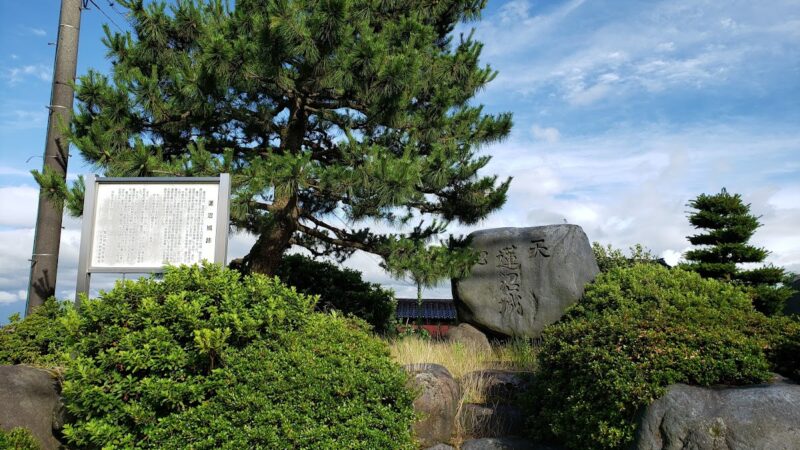
Hasunuma Castle was a flatland castle located in Hasunuma, Oyabe City, Toyama Prefecture. It was built in the first half of the Eikyo era (1429-1441) of the Muromachi period by the Yuza clan, who ruled Tonami County as deputy governors of the Hatakeyama clan, the governors of Etchu Province. While few remains today, a stone monument and information board near the Hasunuma Community Center serve as a reminder of its former prosperity.
During the Sengoku period, the castle town flourished to such an extent that it was called “Hasunuma 3,000 Houses,” and it functioned as an important base in Etchu Province. In particular, it is known as the place where Shiina Yasutane, who was driven out of Matsukura Castle by Uesugi Kenshin, met his end (although there are various theories), making it a castle that played an important role in the Sengoku history of Etchu Province.
History of Hasunuma Castle
Construction and the Era of the Yuza Clan
Hasunuma Castle is believed to have been built in the first half of the Eikyo era. It was developed as a residence by the Yuza clan (most likely Yuza Tokumori), who served as the deputy governor of Etchu Province under the Hatakeyama clan. The Yuza clan expanded their power primarily in Tonami County, using Hasunuma Castle as their base for regional control.
At that time, the area around Hasunuma Castle developed into a castle town known as “Hasunuma 3,000 Houses,” and flourished as one of the political and economic centers of Etchu. Backed by their authority as deputy governors, the Yuza clan led local samurai groups and played a crucial role in supporting the Hatakeyama clan’s rule over Etchu.
Turmoil of the Sengoku Period
With the arrival of the Sengoku period, Etchu became a fierce battleground, with the Uesugi clan, the Ikkō-ikki forces, and later the Oda and Maeda forces clashing. Hasunuma Castle was no exception, and was tossed about by the tides of the times.
Particularly from the mid-to-late 16th century, Etchu Province fell under the control of the Ikkō-ikki forces. The area around Hasunuma Castle was also strongly influenced by the Ikkō-ikki, and it is believed that the castle’s rulers changed hands repeatedly.
Shiina Yasutane and Hasunuma Castle
The most famous episode in the history of Hasunuma Castle is the legend concerning the end of Shiina Yasutane. Shiina Yasutane was a powerful warlord in Etchu Province, based at Matsukura Castle (present-day Uozu City), but lost it during Uesugi Kenshin’s invasion of Etchu.
While there are various theories, one suggests that Yasutane fled to Hasunuma Castle and committed suicide there. Faced with Uesugi Kenshin’s overwhelming military power, local forces in Etchu were forced to surrender or be destroyed one after another, but Shiina Yasutane’s end is recounted as an event symbolizing the tragedy of the Sengoku period in Etchu.
However, there are several theories regarding Yasutane’s death. Besides the theory that he committed suicide at Hasunuma Castle, there are also theories that he died elsewhere. While historical evidence is limited, there is no doubt that Hasunuma Castle was an important stage in Etchu Province during the Sengoku period.
Changes after the Tensho Period
During the Tensho period (1573-1593), Etchu Province came under the control of Sassa Narimasa, a vassal of Oda Nobunaga. In 1585, Maeda Toshiie, acting on orders from Toyotomi Hideyoshi, invaded Etchu to subdue Sassa Narimasa, who surrendered.
During this conflict, Maeda Toshiie built Imaisurugi Castle as a strategic base. Imaisurugi Castle was close to Hasunuma Castle, indicating the military importance of the region. After Maeda Toshiie’s pacification of Etchu, the military role of Hasunuma Castle declined, and it is believed to have eventually been abandoned.
During the Edo period, this region became part of the Kaga Domain and developed as a post town on the Hokuriku Highway. The site of Hasunuma Castle gradually transformed into farmland and residential areas.
Structure and Scale of Hasunuma Castle
Basic Structure of the Castle
Hasunuma Castle was a typical flatland castle, built near the present-day Hasunuma Community Center. According to a document from 1764 (Hōreki 14), the castle’s dimensions were as follows:
- East-West: Approximately 26 ken (approximately 47 meters)
- North-South: Approximately 36 ken (approximately 65 meters)
- Width of the Moat: Approximately 5 ken (approximately 9 meters)
The castle adopted the form of a square residence, surrounded by a moat. Analysis of cadastral maps confirms the existence of an earthen bridge on the west side, suggesting that the entrance was located on the west side.
Defensive Structures
Hasunuma Castle, being a flatland castle, lacked the ability to utilize elevation differences for defense like mountain castles. However, it possessed a defensive system consisting of moats and earthen ramparts. The moat, approximately 9 meters wide (5 ken), was a considerable size for its time and would have been a formidable obstacle.
The square-shaped residence style is a common castle design in the plains of Etchu Province, and was typical in size and structure for the residence of a samurai of the shugodai (deputy governor) class. Considering the existence of the castle town “Hasunuma Sanzenken” (Hasunuma 3,000 Houses), it is likely that while the castle itself was relatively compact, the surrounding area was home to the residences of retainers and townspeople.
Prosperity of the Castle Town
The expression “Hasunuma Sanzenken” is a symbolic phrase indicating the prosperity of the Hasunuma castle town at the time. While it’s uncertain whether there were actually 3,000 houses, it’s certain that a castle town with a considerable population existed.
As the power base of the Yuza clan and the political center of Tonami County in Etchu Province, Hasunuma is presumed to have been a vibrant economic hub, attracting not only samurai but also merchants and artisans. This prosperity speaks to the extent of the Yuza clan’s influence.
Current Status of Hasunuma Castle Ruins
Status of Remains
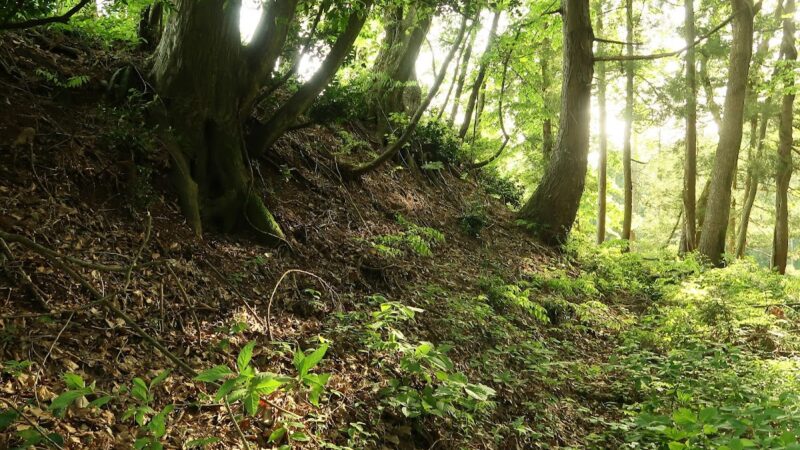
Currently, very few remains of Hasunuma Castle exist. Over the long years, the moats have been filled in, the earthworks leveled, and the castle site has been transformed into farmland and residential areas. No castle remains are visible on the surface, making it difficult to directly experience its former glory.
However, analysis of cadastral maps and ancient documents has provided some understanding of the castle’s location, size, and structure. A stone monument and information board have been erected at the site, indicating the former existence of Hasunuma Castle.
Stone Monument and Information Board
The stone monument and information board located near the Hasunuma Community Center play an important role in preserving the history of Hasunuma Castle for future generations. The information board details the castle’s history, size, and connection to Shiina Yasutane, providing visitors with an overview of Hasunuma Castle.
The presence of the stone monument is a testament to the local people’s commitment to preserving and passing on the history of Hasunuma Castle. In castle ruins where no remains exist, such monuments serve as a valuable means of conveying history.
Access and Visiting Information for Hasunuma Castle
Location
Address: Sakuraida, Hasunuma, Oyabe City, Toyama Prefecture
Landmark: Near Hasunuma Community Center
Transportation Access
By Car:
- Approximately 10 minutes from the Hokuriku Expressway “Oyabe IC”
- Approximately 15 minutes from the Tokai-Hokuriku Expressway “Fukumitsu IC”
- Approximately 5 minutes from the Noetsu Expressway “Oyabe-Higashi IC”
Oyabe City is located at a transportation hub where the Hokuriku Expressway, Tokai-Hokuriku Expressway, and Noetsu Expressway intersect, making it easily accessible by car.
By Public Transportation:
- Approximately 10 minutes by taxi from Ainokaze Toyama Railway’s “Isurugi Station”
- Alternatively, use a local bus (advance confirmation is recommended as the number of buses is limited).
Parking and Visiting Hours
Parking may be available at the Hasunuma Community Center, but this depends on the community center’s usage, so consideration is necessary. While the castle ruins themselves are always open for viewing, there are no remaining structures, so the main focus of the visit will be checking the stone monument and information board.
Estimated Visiting Time
If you only wish to view the stone monument and information board, 10-15 minutes is sufficient. Even including a stroll around the area and taking photos, the visit can be completed in about 30 minutes.
Nearby Tourist Spots
Imaishido Castle Ruins
Located about 10 minutes by car from Hasunuma Castle, Imaishido Castle Ruins was built in 1585 by Maeda Toshiie as a base for his campaign against Sassa Narimasa. It is a historical site that should be visited in conjunction with Hasunuma Castle to understand the history of Oyabe City. ### Kurikara Ancient Battlefield
Kurikara Pass, famous as the site of a fierce battle during the Genpei War, is located in the southern part of Oyabe City. Known as the stage for Minamoto no Yoshinaka’s “Fire Ox Strategy” in defeating the Taira army, it has been developed into a historical park.
Hanyu Gokoku Hachimangu Shrine
This ancient shrine, where Minamoto no Yoshinaka is said to have prayed for victory before the Battle of Kurikara, is a representative historical building of Oyabe City. It is approximately a 15-minute drive from the Hasunuma Castle ruins.
Crossland Oyabe
This complex centered around the 118-meter-tall Crossland Tower, a symbol of Oyabe City. The observation deck offers panoramic views of Oyabe city and the Tateyama mountain range, making it an ideal rest stop for tourists.
Historical Background of Oyabe City
Geographical Characteristics
Oyabe City is located in the western part of Toyama Prefecture, on the border with Ishikawa Prefecture, and has played an important role as a transportation hub since ancient times. Even today, the Hokuriku Expressway, Tokai-Hokuriku Expressway, and Noetsu Expressway intersect here, and the Shin-Takaoka Station of the Hokuriku Shinkansen is nearby, making it a region with excellent transportation access.
Historical Changes
From ancient times, it flourished as a key point on the Hokuriku Road, and in the Middle Ages, it developed under the rule of the Hatakeyama clan, the governors of Etchu Province. During the Sengoku period, it became the stage for battles between the Uesugi clan, the Ikkō-ikki rebels, and the Oda and Maeda forces, and Hasunuma Castle was at the center of these conflicts.
During the Edo period, it became part of the Kaga Domain and prospered as a post town on the Hokuriku Road. Isurugi, in particular, developed as a post town and is now the center of Oyabe City.
Modern Oyabe City
Present-day Oyabe City is a regional city with a population of approximately 30,000, and also serves as a commuter town for Takaoka City and Kanazawa City. The city is developing itself with the theme of a “fairytale town,” and public facilities modeled after Western castles and buildings are scattered throughout, creating a unique landscape.
Points to Note When Visiting Hasunuma Castle
Use Your Historical Imagination
Since there are almost no remains of Hasunuma Castle, at first glance it looks like an ordinary residential area or farmland. However, by observing the information on the signboards and the surrounding topography, you can imagine that a prosperous castle town called “Hasunuma Sanzenken” once stood here, and feel the romance of history.
Combine Your Visit with Other Historical Sites
Since visiting Hasunuma Castle alone takes too little time, we recommend combining your visit with other historical spots in Oyabe City and the surrounding area, such as the Imaishido Castle Ruins, the Kurikara Battlefield, and the Hanyu Gokoku Hachimangu Shrine. This will allow you to understand the Sengoku period history of Etchu Province in a more comprehensive way.
Photography
The stone monument and information board are important subjects to photograph as a memento of your visit to Hasunuma Castle. Furthermore, the surrounding rural landscape provides material for imagining the remnants of the former castle town. The rural scenery, which shows different expressions depending on the season, is also attractive.
Local Historical Materials
At the Oyabe City Library and the Local History Museum (located within Crossland Oyabe), you may be able to view materials related to the history of Hasunuma Castle and Oyabe City. Those who wish to learn more should visit these facilities.
Historical Significance of Hasunuma Castle
Base of the Etchu Shugodai
Hasunuma Castle was the residence of the Yuza clan, the shugodai (deputy governor) of the Hatakeyama clan, the shugo of Etchu Province, and was the political and military center of Tonami County. As a residence of a shugodai-class official, it is an important example that shows the reality of regional control.
Stage of Etchu History in the Sengoku Period
As the site of Shiina Yasutane’s final moments (there are various theories), and as the stage of conflict between the Ikko-ikki forces and the samurai forces, Hasunuma Castle is an indispensable presence in understanding the Sengoku history of Etchu. This castle symbolizes the historical changes in Etchu during the Sengoku period, encompassing Uesugi Kenshin’s invasion, the rise of the Ikkō-ikki rebellion, and its subsequent pacification by the Oda and Maeda forces.
Prosperity of the Castle Town
The prosperity of the castle town, symbolized by the expression “Hasunuma 3,000 houses,” is a valuable example of the development of a regional city from the medieval period to the Sengoku period. It speaks to the magnitude of the Yuza clan’s power and the economic importance of this region.
Summary
Hasunuma Castle was a flatland castle located in Oyabe City, Toyama Prefecture, built during the Eikyō era of the Muromachi period by the Yuza clan, the deputy governor of Etchu. It boasted a prosperous castle town known as “Hasunuma 3,000 houses” and functioned as the political and economic center of Tonami County in Etchu.
During the Sengoku period, it is known as the place where Shiina Yasutane, pursued by Uesugi Kenshin, met his end (though there are various theories), becoming a symbolic stage of the turmoil of the Sengoku period in Etchu. After Maeda Toshiie’s conquest of Etchu Province during the Tensho era, the castle lost its military significance and was eventually abandoned.
Currently, very few remains of the castle exist, but a stone monument and information board near the Hasunuma Community Center serve as reminders that an important castle once stood here. Because there are so few remains, it’s enjoyable to use your historical imagination and imagine its former glory based on the information on the sign and the surrounding terrain.
When visiting Oyabe City, why not visit the Hasunuma Castle ruins along with other nearby historical sites such as the Imaishido Castle ruins and the Kurikara battlefield, and experience the rich history of Etchu? With the development of expressways such as the Hokuriku Expressway, access is now excellent, making it an ideal region for a historical exploration trip.