Fujishima Castle (Tsuruoka City): History and Highlights | A Thorough Explanation of Yamagata Prefecture’s Flatland Castle Ruins
Overview of Fujishima Castle
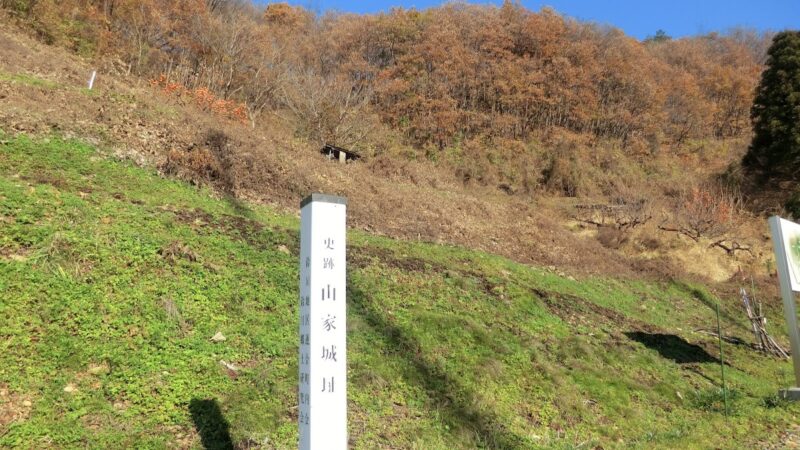
Fujishima Castle was a Japanese castle that once existed in Fujishima, Tsuruoka City, Yamagata Prefecture. It is currently protected as a Tsuruoka City designated historical site, and a Hachiman Shrine stands on the site of the main keep. Known as a typical flatland castle without a keep, its history is said to date back to ancient times.
The greatest feature of Fujishima Castle is its high level of perfection as a flatland castle built on a plain. The main keep was surrounded by an inner moat, and the outer moat had a defensive structure that cleverly utilized the natural Fujishima River. This layout, which took advantage of the geographical conditions, is a valuable historical site that conveys the techniques of castle construction from the medieval to early modern periods.
Location and Access
Location: Fujishima, Tsuruoka City, Yamagata Prefecture
Access:
- Approximately 5 minutes on foot (approx. 400m) east from JR Uetsu Main Line “Fujishima Station”
- It’s easy to find if you aim for the Hachiman Shrine on the site of the main keep
- Parking is available around the shrine if traveling by car
The current Fujishima area merged with Tsuruoka City, Haguro Town, Kushibiki Town, Asahi Village, and Atsumi Town on October 1, 2005, to form the new Tsuruoka City. However, the Fujishima Castle ruins are carefully preserved as a historical symbol of the region.
History of Fujishima Castle
Ancient Times: Connection to the Dewa Provincial Government
There are various theories about the origin of Fujishima Castle, but the oldest tradition dates back to the Wado era (708-714). This period is believed to be when the Dewa Provincial Government was established in Taira (Hiragata), and it has been suggested that Fujishima Castle may have functioned as a facility attached to the provincial government or as a defensive base.
Dewa Province was one of the provinces established during the Nara period, governing a vast area spanning present-day Yamagata and Akita prefectures. The tradition that its provincial capital was located near Hiragata indicates that this region was a politically and militarily important center from ancient times.
Ancient artifacts have been discovered around Fujishima Castle, archaeologically confirming that people lived there from ancient times. At that time, it played an important role in connecting the central government and the provinces, serving as a transportation hub between the inland areas and the Sea of Japan coast, with the Rokujurigoe Road being opened there.
Medieval Period: The Era of the Daiboji and Tosabayashi Clans
In the medieval period, Fujishima Castle was incorporated into the sphere of influence of the Daiboji clan, who ruled the Shonai region. The Daiboji clan was a powerful samurai family that held sway in the Shonai region from the Kamakura period to the Sengoku period, and their base was Daiboji Castle (later Tsurugaoka Castle) in present-day Tsuruoka City.
Fujishima Castle functioned as the residence of the Tosabayashi clan, a senior retainer of the Daiboji clan. The Tosabayashi clan were powerful vassals serving the Daiboji clan, and were responsible for governing and defending the surrounding area from their base at Fujishima Castle. It is believed that Fujishima Castle during this period was a fully developed fortress with the main keep at its center, surrounded by the second and third baileys.
Changes in Successive Castle Lords
The following clans are recorded as successive lords of Fujishima Castle:
- Hamuro clan: Considered to be the initial lords
- Kurita clan: Served as lords for a period during the medieval era
- Kido clan: Lords during the Sengoku period
- Tosabayashi clan: Most known as important retainers of the Daiboji clan
These clans inherited control of Fujishima Castle as times changed, and carried out development and management of the castle according to the needs of each era.
Changes in the Role of the Castle from the Early Modern Period Onward
With the end of the Sengoku period and the beginning of the Edo period, the military importance of Fujishima Castle gradually declined. The Shonai region came under the rule of the Sakai clan, and Tsurugaoka Castle (formerly Daiboji Castle) became the center of the domain, thus ending Fujishima Castle’s role as a subsidiary castle.
Throughout the Edo period, while its function as a castle was lost, it maintained its character as a regional center, and the town of Fujishima continued to develop as a transportation hub and agricultural center.
Structure and Characteristics of Fujishima Castle
Layout as a Flatland Castle
Fujishima Castle was a typical flatland castle, possessing a unique defensive system different from mountain castles and hill castles. Because it was built on a plain, defenses utilizing the natural terrain were limited, but instead, a strong defense was achieved by skillfully placing artificial moats and earthworks.
The basic structure of the castle was a double defensive system: the central main keep was surrounded by an inner moat, and the outside of that utilized the Fujishima River, a natural river, as an outer moat. This structure effectively prevented enemy incursions.
Structure of the Honmaru (Main Enclosure)
The Honmaru was the central area of the castle, and is now the grounds of the Hachiman Shrine. A raised earthen platform (dodan) was built within the Honmaru, on which the main buildings were located. Earthen ramparts surrounded it, and an inner moat (trench) separated it from other areas.
Although the Honmaru was relatively compact in size, it functioned as the central area where the lord’s residence and important facilities were concentrated. Parts of the earthen platform still remain today, allowing us to imagine the castle’s appearance in its heyday.
The Ninomaru and Sannomaru (Second and Third Enclosures)
The Ninomaru and Sannomaru were located outside the Honmaru. These areas housed the residences of retainers, barracks, and warehouses, and also functioned as a castle town.
Currently, the sites of the Ninomaru and Sannomaru are occupied by the school buildings and grounds of Yamagata Prefectural Shonai Agricultural High School. Some remnants of the castle era remain within the school grounds, and it is utilized both as an educational site and a historical heritage site. ### Moats and Water System
The moat system played a crucial role in the defense of Fujishima Castle. The inner moat was artificially excavated and completely surrounded the main keep. On the other hand, the outer moat utilized the Fujishima River, a natural river, achieving effective defense without requiring large-scale civil engineering works.
The Fujishima River still flows today, preserving the remnants of its role as the castle’s outer moat. It is believed that this river was used not only for defense but also for supplying water to the castle and as a transport route for goods.
Coordination with Subsidiary Castles
Fujishima Castle did not exist in isolation; it formed a regional defense network in cooperation with surrounding subsidiary castles. According to historical documents, the Furugori-kan castle was located upstream of the Fujishima River, and the Hiragata-kan castle downstream. These castles cooperated with each other to compensate for the weaknesses of a flatland castle.
The arrangement of these three castles formed a defensive line centered on the river, and Fujishima Castle’s defensive system as a flatland castle is considered “perfect.”
Current Fujishima Castle Site
Remaining Structures
The following remains are still present at the current Fujishima Castle site:
Main Enclosure Site: Preserved as the grounds of Hachiman Shrine, a portion of the earthen platform can be seen. Remnants of earthworks can be seen around the shrine, allowing us to imagine the scale of the castle in its heyday.
Moat Remains: A portion of the inner moat remains as a trench. However, about half of it has been filled in or destroyed due to urban development.
Earthworks: Part of the earthworks still exist around the main enclosure, providing valuable information for understanding the castle’s defensive structure.
Fujishima River: The natural river used as an outer moat still flows today, providing clues to understanding the castle’s location and environment.
Hachiman Shrine
Hachiman Shrine, located on the site of the main enclosure, is a central landmark when visiting Fujishima Castle. From the shrine grounds, you can feel the atmosphere of the former castle.
Hachiman Shrine plays an important role as a center of local faith, and many local residents visit for events such as the annual festival. It is a unique space where historical heritage and a place of worship are fused together.
Yamagata Prefectural Shonai Agricultural High School
Shonai Agricultural High School, built on the site of the second and third baileys, is a historic school founded in 1897 (Meiji 30). While part of the castle site was lost during the construction of the school building, remnants of the castle era are still partially preserved on the grounds.
As part of its local history education, the school also teaches about the history of Fujishima Castle, making it a good example of historical heritage and educational space coexisting.
Protection as a City-Designated Historic Site
Fujishima Castle ruins are protected as a designated historic site of Tsuruoka City. This ensures the preservation of the remaining structures and efforts are being made to pass on its historical value to future generations.
The city’s cultural property protection department conducts regular surveys and conservation activities, and installs explanatory signs and maintains the remains as needed.
Historical Significance of Fujishima Castle
Position in the History of Dewa Province
Fujishima Castle occupies an important position in the history of Dewa Province. As evidenced by its connection to the establishment of the provincial capital during the Wado era, this region was a political and military stronghold from ancient times.
Located on the route connecting the central government and Ezo (Hokkaido), it held strategic importance in the northern administration of the Ritsuryo state. The construction of the Rokujurigoe Road led to the development of transportation with the inland areas, and it functioned as a hub for the exchange of people, goods, and culture.
Role in the History of Castles in the Shonai Region
From the medieval to the early modern period, a network of castles centered around Tsurugaoka Castle (Daihoji Castle) was formed in the Shonai region. Fujishima Castle played an important role as a subsidiary castle within this network, contributing to regional governance.
Within the sphere of influence of the Daiboji clan, Fujishima Castle functioned as a base to strengthen the eastern defenses, and powerful vassals such as the Tosabayashi clan were stationed there. This castle layout was a strategic deployment designed to efficiently govern and defend the entire Shonai Plain.
Historical Value in the Study of Flatland Castles
Fujishima Castle, as a typical example of a flatland castle, holds significant historical value in the study of castles. In the Tohoku region, where mountain castles are common, Fujishima Castle, with its highly refined flatland structure, is a valuable example for studying the techniques and strategies of castle construction in plains areas.
In particular, the use of natural rivers as outer moats and the formation of a defensive network through coordination with subsidiary castles, are noteworthy features unique to flatland castles and have attracted attention in the study of castle history.
History and Culture of the Fujishima Region
The Era of the Dewa Provincial Government
The history of the Fujishima region dates back to the Nara period, when the Dewa Provincial Government is believed to have been located near Hiragata. A provincial capital (Kokufu) was the center of local administration under the Ritsuryo system, serving as a base where the provincial governor resided and governed the region.
While the tradition that the provincial capital was located in Hiragata has not been archaeologically confirmed, the ancient artifacts unearthed in this area and the origins of place names strongly suggest that it was an important region from ancient times.
The Rokujurigoe Road and a Key Transportation Hub
The Fujishima area was located at the starting point of the Rokujurigoe Road, which connected the Shonai Plain with the inland area (Murayama region). This road was a difficult route crossing rugged mountainous terrain, but it was used from ancient times to the early modern period as an important transportation route connecting the Sea of Japan side with the inland.
Culture, technology, and goods were brought to the Shonai region from the central government via this road, and conversely, products from Shonai were transported to the inland and central areas. Fujishima flourished as a key transportation hub and also functioned as a post town.
Agricultural Development
The Fujishima region, located in a corner of the Shonai Plain, is blessed with fertile soil and abundant water resources, and agriculture, primarily rice cultivation, has flourished there since ancient times. Even today, it is known as a production area for Shonai rice, and continues to produce high-quality rice.
The fact that Yamagata Prefectural Shonai Agricultural High School is located on the site of the castle symbolizes the deep connection between this region and agriculture.
Nearby Historical Spots
Tsurugaoka Castle (Tsuruoka Park)
Located approximately 10km west of Fujishima Castle, Tsurugaoka Castle was a thriving castle that served as the main castle of the Shonai Domain. Currently, it is maintained as Tsuruoka Park, and remnants such as moats and stone walls remain. Visiting both Fujishima Castle and Tsurugaoka Castle will allow for a deeper understanding of the history of castles in the Shonai region.
Chido Museum
The Chido Museum, located in Tsuruoka City, is a comprehensive museum introducing the history and culture of the Shonai region. It exhibits materials related to castles in Shonai, including Fujishima Castle, making it an essential facility for learning about the region’s history.
Sites of Kogori-kan and Hiragata-kan
The sites of Kogori-kan and Hiragata-kan, which were subsidiary castles of Fujishima Castle, also remain in the Fujishima area. While these remains are not as clearly defined as those of Fujishima Castle, they are important historical sites for understanding the castle network.
Points to Note When Visiting Fujishima Castle
Best Season for Visiting
Fujishima Castle ruins are open year-round, but the following times are particularly recommended:
Spring (April-May): The cherry blossoms around Hachiman Shrine are beautiful, making it the perfect season for strolling around the castle ruins.
Autumn (October-November): The autumn leaves are beautiful, and the rural landscape of the Shonai Plain is also colorful, making it easy to imagine the scenery of the past.
Summer (June-August): The greenery is lush, and the shapes of the earthworks and moats are easily discernible, but precautions against the heat are necessary.
Estimated Time Required
For a visit to the Fujishima Castle ruins, allow approximately 30 minutes to 1 hour. 30 minutes is sufficient for visiting the Hachiman Shrine and examining the surrounding remains; 1 hour is recommended for a more thorough examination of the ruins.
Photography Tips
- The combination of the Hachiman Shrine building and the earthworks
- Remaining traces of the moat
- The relative positions of the Fujishima River and the castle ruins
- The castle ruins viewed from beyond the Shonai Agricultural High School building
Taking photos from these angles will allow you to capture the distinctive features of Fujishima Castle.
Points to Note When Visiting
- Hachiman Shrine is a place of worship, so please observe proper etiquette when visiting.
- The grounds of Shonai Agricultural High School are educational facilities, so please refrain from entering without permission.
- Some parts of the ruins are located on private property, so caution is required when entering.
- There are few explanatory signs, so learning about the history beforehand will deepen your understanding.
Future Preservation and Utilization of Fujishima Castle
Preservation Challenges
Fujishima Castle ruins are protected as a city-designated historical site, but due to urbanization, some of the ruins have been lost. Preserving the remaining ruins and documenting the lost parts are future challenges.
In particular, regular maintenance is necessary for the preservation of the moats and earthworks, and the cooperation of local residents, the government, and experts is essential.
Potential for Utilization
Fujishima Castle ruins have potential for use in local history education and as a tourist resource. The following initiatives are expected:
- Providing information to visitors through enhanced explanatory and guide signs
- Displaying a restored version of the castle in its heyday using digital technology
- Integrating the site into local history learning programs
- Developing tourist routes in conjunction with surrounding historical sites such as Tsurugaoka Castle
Engagement with the Community
Fujishima Castle Ruins are a symbol of the region’s identity. For local people, it is an important place symbolizing the history of their hometown, and people gather around the Hachiman Shrine during festivals and local events.
Maintaining these ties with the local community while passing on the value of the site as a historical heritage to future generations is a crucial perspective in the preservation and utilization of Fujishima Castle Ruins.
Summary
Fujishima Castle is a historical flatland castle ruin remaining in Fujishima, Tsuruoka City, Yamagata Prefecture. It has ancient origins, with connections to the Dewa Provincial Office during the Wado era, and in the Middle Ages, it functioned as the residence of the Tosabayashi clan, important retainers of the Daiboji clan.
As a flatland castle without a main keep, it possessed a unique defensive system utilizing an inner moat and the Fujishima River as an outer moat, forming a defensive network in conjunction with surrounding subsidiary castles. Currently, a Hachiman Shrine stands on the site of the main keep, and the sites of the second and third baileys are now the grounds of Shonai Agricultural High School, but parts of the earthworks and moats still remain.
Protected as a Tsuruoka City designated historical site, Fujishima Castle ruins hold significant value in the history of Dewa Province, the history of castles in the Shonai region, and the study of flatland castles. Its convenient location within walking distance of JR Fujishima Station makes it a must-visit for anyone interested in the history of the Shonai region.
While it doesn’t perfectly retain its original form, the remaining ruins and surrounding environment allow one to imagine the castle’s former appearance. Visiting it along with other nearby historical sites such as Tsurugaoka Castle will provide a deeper understanding of the rich history of the Shonai region.