Hirata Castle (Nakatsu City, Oita Prefecture) Complete Guide | History, Highlights, and Access Information
Located in Yamakage-cho, Nakatsu City, Oita Prefecture, Hirata Castle is the site of a castle that functioned as an important base of operations in the Yamakuni River basin from the medieval period to the early modern period. Also known as “Matsutake Castle,” it is a historical site that was the residence of Kuriyama Toshiyasu (Kuriyama Zensuke), known as one of the Kuroda Twenty-Four Knights, and is still carefully preserved by the local community. This article provides a comprehensive introduction to Hirata Castle, including its detailed history, highlights of the existing remains, and access information.
Overview of Hirata Castle
Hirata Castle is a hilltop castle located in Hirata, Yamakage-cho, Nakatsu City, Oita Prefecture, built on a hill approximately 120 meters above sea level. The main enclosure is situated at a relative height of approximately 50 meters, strategically located overlooking the Yamakuni River basin. Protected as a designated historical site by Nakatsu City, this is a valuable historical site where remnants of the Kuroda-era stone walls and fortifications still remain.
The castle ruins are surrounded by the rich natural environment of Yabakei, making it a spot where visitors can enjoy both historical exploration and the scenery of the four seasons. It is also affectionately known locally as “Shirayone Castle,” and while there are various theories about the origin of this name, it is thought to be related to the castle’s appearance and location.
Basic Information on Hirata Castle
- Location: Hirata, Yamakage-machi, Nakatsu City, Oita Prefecture
- Castle Structure: Hilltop Castle
- Elevation: Approximately 120 meters
- Relative Height: Approximately 50 meters
- Construction Period: Kenkyu era (1190s)
- Builder: Nonaka Shigefusa
- Main Lords: Nonaka clan, Kuriyama Toshiyasu (Kuriyama Zensuke)
- Year of Abandonment: 1600 (Keicho 5)
- Designated Cultural Property: Nakatsu City Designated Historic Site
- Remains: Stone walls, baileys, moats
History of Hirata Castle
Construction and Rule by the Nonaka Clan
The history of Hirata Castle dates back to the Kenkyu era (1190s). It is believed that Hirata Castle was built by Nonaka Shigefusa (also known as Nonaka Shigefusa), the lord of Nagaiwa Castle, to strengthen his control over the Yabakei region. The Nonaka clan was a powerful local lord controlling the entire Yamakuni River basin, and Hirata Castle functioned as a branch castle of Nagaiwa Castle.
The Nonaka clan appointed family members and senior retainers as castle lords of Hirata Castle, making it their administrative center for the Yabakei region. Located at a strategic transportation hub utilizing the Yamakuni River’s water transport, it is thought to have played an important role economically and militarily. The Nonaka clan’s rule lasted for approximately 400 years, occupying a significant position in the medieval history of this region.
The Fall of Nagaiwa Castle and the Kuroda Clan’s Entry into Buzen Province
In 1587 (Tensho 15), with the completion of Toyotomi Hideyoshi’s conquest of Kyushu, the system of governance in Buzen Province underwent a major transformation. The following year, in 1588 (Tensho 16), Kuroda Yoshitaka (Kanbei, Josui) was granted six districts of Buzen Province and entered Nakatsu. The Nonaka clan, who resisted the Kuroda clan’s rule over Buzen, holed up in Nagaiwa Castle, but it eventually fell.
With the fall of Nagaiwa Castle, the Nonaka clan’s former territory was incorporated under the Kuroda clan’s control. To solidify their rule over Buzen Province, the Kuroda clan implemented a policy of placing important retainers in various locations. Hirata Castle would play a crucial role in this reorganization.
The Entry of Kuriyama Toshiyasu (Kuriyama Zensuke)
After the fall of Nagaiwa Castle, Kuroda Yoshitaka granted the former Nonaka territory to Kuriyama Toshiyasu (Kuriyama Zensuke), known as one of the Kuroda Twenty-Four Knights, and made Hirata Castle his residence. Kuriyama Toshiyasu was a warrior who achieved numerous military successes as a senior retainer of the Kuroda clan and played a vital role in supporting the Kuroda clan’s rule over Buzen Province.
Kuriyama Toshiyasu governed the Yabakei region from Hirata Castle and worked to stabilize the area. Toshiyasu’s governance was effective and became an important pillar of the Kuroda clan’s rule over Buzen Province. It is believed that Hirata Castle underwent some renovations during this period, and some of the remaining stone walls are thought to date back to the Kuroda era.
Kuriyama Daizen and the Kuroda Rebellion
Kuriyama Daizen (Kuriyama Toshiaki, later Kuriyama Daizen-no-suke Toshiaki), the son of Kuriyama Toshiyasu, spent his childhood at Hirata Castle. Kuriyama Daizen would later become a key figure in the Kuroda Rebellion, leaving his mark on history.
The Kuroda Rebellion was a family dispute within the Chikuzen Fukuoka Domain that occurred in 1632 (Kanei 9). It involved the chief retainer, Kuriyama Daizen, appealing to the shogunate against the misrule of Lord Kuroda Tadayuki. While the shogunate’s ruling allowed the Kuroda family to continue, Kuriyama Daizen was sent to the Morioka Domain in Mutsu Province. The fact that Kuriyama Daizen’s childhood memories included days spent at Hirata Castle is one of the factors that enhances the historical value of this castle.
Kuroda Clan’s Relocation and Abandonment
In 1600 (Keicho 5), Kuroda Nagamasa was transferred to Chikuzen Najima (later Fukuoka) with an increased stipend of 520,000 koku due to his military achievements in the Battle of Sekigahara. With the Kuroda clan’s relocation to Chikuzen, Hirata Castle ceased to function and was abandoned.
Hosokawa Tadaoki took control of Nakatsu in Buzen Province, and the Hirata Castle area came under the control of the Hosokawa clan, but the castle never regained its function. From then on, Hirata Castle quietly faded into history.
Structure and Layout of Hirata Castle
Hirata Castle possesses the typical form of a medieval mountain castle, yet it also has an interesting structure that retains traces of early modern renovations.
Main Enclosure and Enclosure Layout
The main enclosure, the heart of the castle, is located at the highest point of the hill, surrounded by multiple enclosures (kuruma). From the main enclosure, one can overlook the Yamakuni River basin, making it an ideal location for military surveillance.
The enclosures are arranged in a stepped pattern, following the terrain, exhibiting the topographical utilization characteristic of medieval castles. Cut slopes are provided between each enclosure, enhancing defensive capabilities.
Characteristics of the Stone Walls
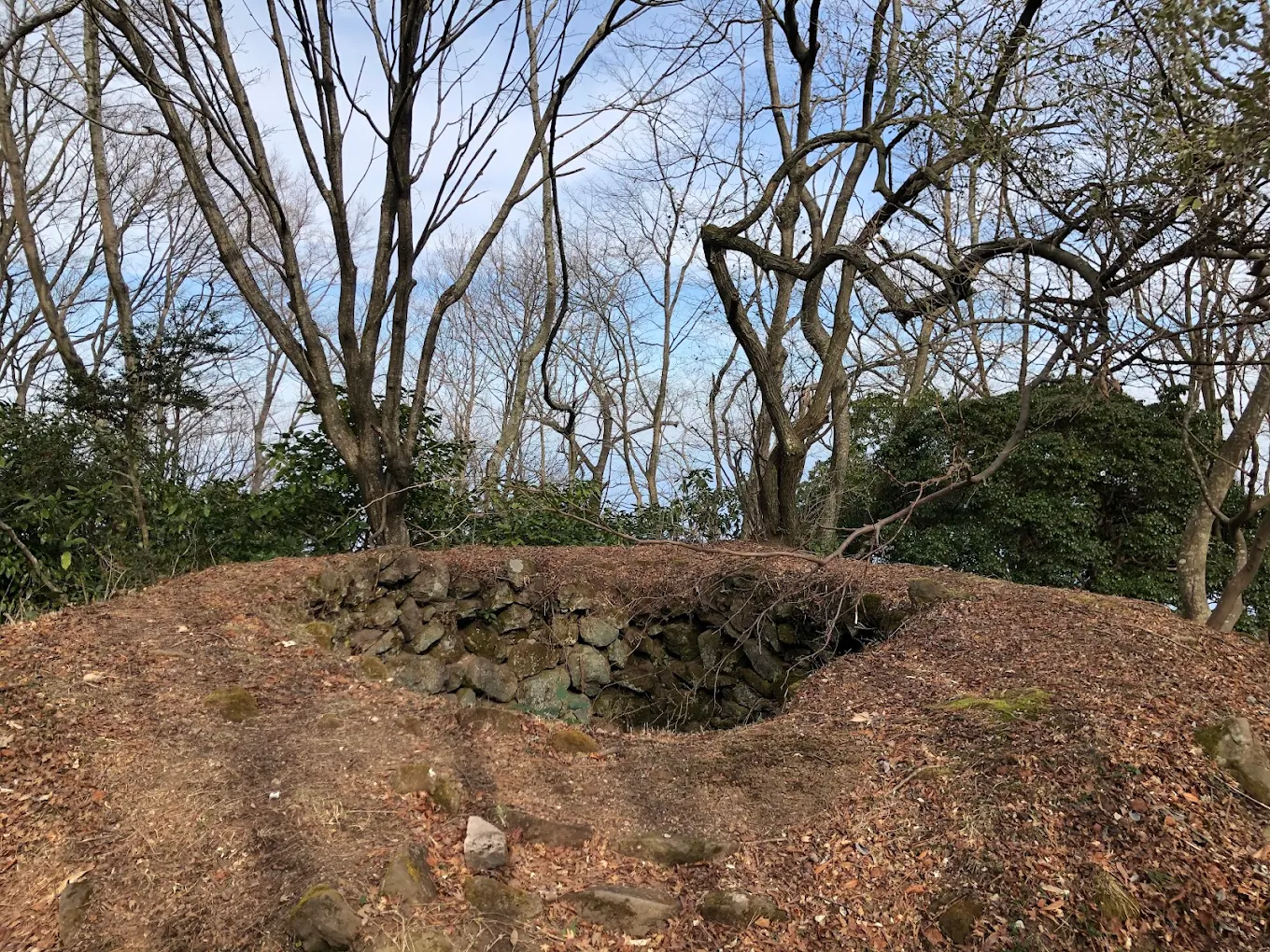
The remaining stone walls are believed to date from the Kuroda period and were constructed using the nozurazumi technique. While not large in scale, they are valuable relics demonstrating transitional techniques towards early modern castles.
Parts of the stone walls remain around the main enclosure, allowing observation of the skillful combination of natural stones. Although not completely intact, they are important historical documents for understanding the castle construction techniques of the time.
Moats and Defensive Structures
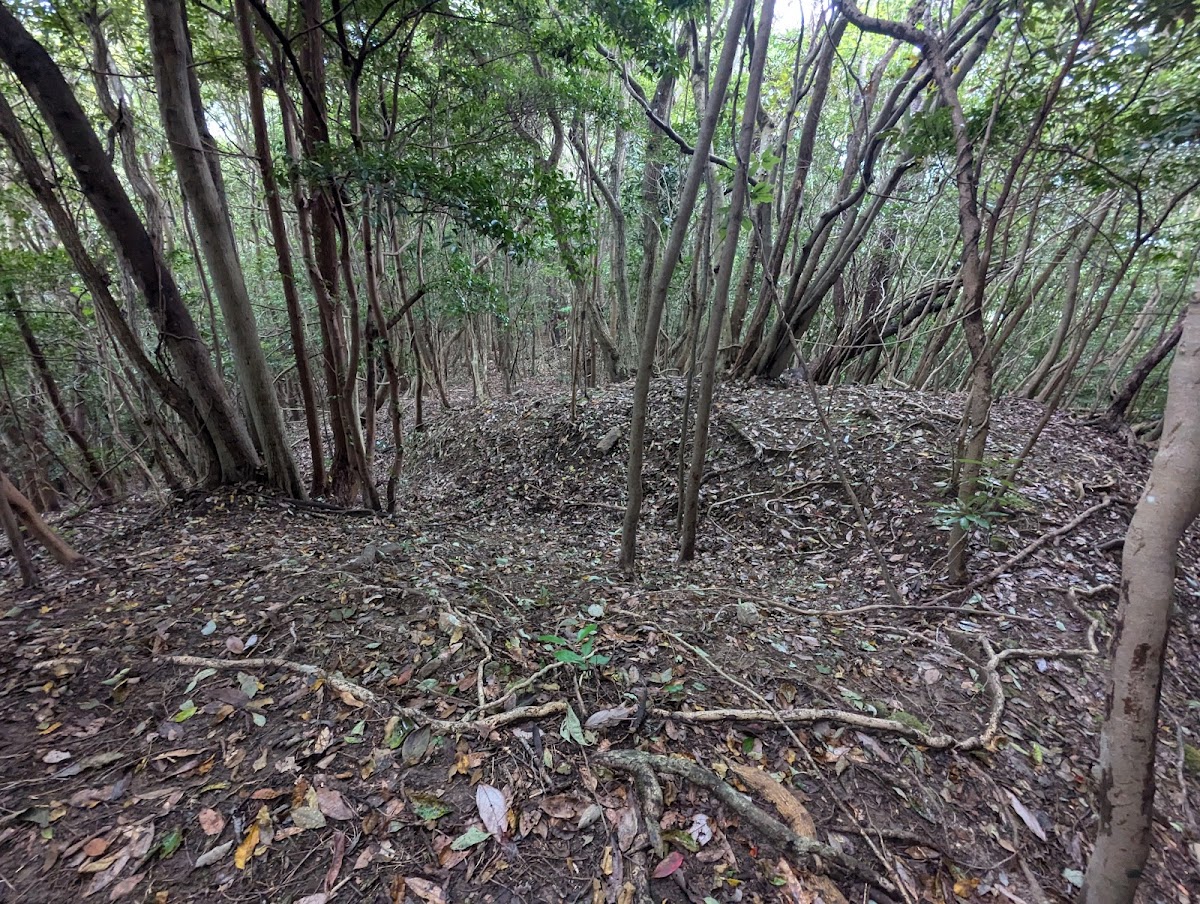
As defensive structures of the castle, moats cutting across the ridgeline have been identified. This is a typical defensive technique of a medieval mountain castle designed to prevent enemy intrusion. Multiple trenches are present, indicating a multi-layered defensive strategy.
Furthermore, traces of earthworks remain in some areas, suggesting they surrounded the bailey. These defensive structures are thought to have existed since the Nonaka clan era and were likely used continuously during the Kuroda period.
Highlights of Hirata Castle
Stone Wall Remains from the Kuroda Period
The greatest highlight of Hirata Castle is the remains of the stone walls constructed during the Kuroda period. Although not completely intact, the stonework techniques of the time can be directly observed around the main bailey. The simple, rough-hewn stone walls are valuable historical materials that tell the story of the changes in castle construction techniques during the transition to early modern castles.
The stones used in the walls appear to be natural stones quarried locally, reflecting the geological characteristics of the region. While some sections have collapsed over time, this also adds to the sense of historical significance.
Remains of Enclosures and Topography
Walking through the castle ruins, you can clearly see the remaining terraces and flat areas of the enclosures. The main enclosure and other enclosures are still clearly identifiable as part of the topography, allowing you to imagine the scale and structure of the castle at that time.
The view from the main enclosure is particularly magnificent, offering a panoramic view of the Yamakuni River basin and the mountains of Yabakei. This view truly makes you understand why Hirata Castle was chosen as a strategically important location.
Moats and Cut Slopes
The moats remaining along the ridge are important remains that allow you to experience the defensive thinking of a medieval mountain castle. The deeply excavated moats remain clearly visible, demonstrating the high level of civil engineering technology of the time.
The cut slopes between the enclosures are also relatively well-preserved, and their high level of defense can be understood from the height of the terraces. While some of these remains are covered with vegetation, careful observation allows you to imagine their original appearance.
Natural Environment and Scenery
Hirata Castle Ruins are surrounded by the rich natural beauty of Yabakei, making it a spot where you can enjoy both historical exploration and nature walks. The fresh greenery in spring and the vibrant autumn foliage are stunning, showcasing the beauty of each season.
The Yamakuni River flows around the castle ruins, allowing you to stroll while listening to the sound of the water. The harmonious blend of nature and history provides visitors with a quiet and moving experience.
Visitor Guide
Access
Access by Car
Hirata Castle Ruins are most easily accessible by car.
- Approximately 30 minutes from Nakatsu IC on the Higashi-Kyushu Expressway via National Route 212
- Approximately 20 minutes south from Nakatsu city center on National Route 212 towards Yabakei
- There is some parking space near the castle ruins, but please be careful when parking on the street.
Access by Public Transportation
- Take the Oita Kotsu bus bound for Morizumi Onsen or Kakisaka from JR Nippo Main Line Nakatsu Station
- Get off at the Hirata bus stop and walk for approximately 15 minutes
- Since the number of buses is limited, we recommend checking the timetable in advance.
Points to Note When Visiting
Hirata Castle Ruins are not a developed tourist facility, but a historical site that has been preserved. Please note the following points when visiting.
- We recommend wearing comfortable clothing and walking shoes.
- While there are guide signs within the castle ruins, some paths are unclear.
- Please be careful as the ground can be slippery during and after rain.
- Remember to bring insect repellent in summer and warm clothing in winter.
- Please take all your trash with you to help preserve the historical site.
- Please refrain from touching the stone walls and other remains.
Estimated Visit Time
A leisurely tour of the entire castle ruins takes approximately 1 to 1.5 hours. While a visit to the main enclosure area can be completed in about 30 minutes, we recommend allowing ample time for your visit.
Nearby Tourist Attractions
There are numerous tourist attractions in the Yabakei area surrounding Hirata Castle Ruins.
- Aonodomon: Approximately 10 minutes by car from Hirata Castle Ruins. A tunnel dug over 30 years by Zenkai, a representative tourist attraction of Yabakei.
- Rakanji Temple: One of Japan’s three great temples with 500 Arhats. An ancient temple built on the mountainside.
- Yabakei Dam: A scenic spot also known for its cherry blossoms.
- Nagaiwa Castle Ruins: The main castle site of the Nonaka clan, which has historical ties to Hirata Castle.
- Nakatsu Castle: A water castle built by Kuroda Kanbei. Approximately 30 minutes by car.
Map
Hirata Castle Ruins are located in Hirata, Yabakei-machi, Nakatsu City, Oita Prefecture. The specific location is as follows:
Address: Hirata, Yamakuni-machi, Nakatsu City, Oita Prefecture
Location Information:
- Latitude: Approximately 33°32’N
- Longitude: Approximately 131°10’E
The castle ruins are located on a hillside slightly off National Route 212. There are signs along the national highway, so it’s best to use those as landmarks. Searching for “Hirata Castle Ruins” or “Hirata Castle Site” on a car navigation system or smartphone map app will show the approximate location.
Located on the west bank of the Yamakuni River, surrounded by the mountains of Yamakuni, it’s situated in a rich natural environment, and the surrounding topography provides valuable insight into the location of a Sengoku period castle.
Hirata Castle and the Kuroda Twenty-Four Knights
The relationship with the Kuroda Twenty-Four Knights is essential when discussing the history of Hirata Castle. The Kuroda Twenty-Four Knights is a term referring to 24 brave generals who served Kuroda Yoshitaka (Kanbei) and his son Nagamasa. Kuriyama Toshiyasu was one of the most important warriors among them.
Profile of Kuriyama Toshiyasu (Kuriyama Zensuke)
Kuriyama Toshiyasu, commonly known as Zensuke, was a hereditary retainer of the Kuroda clan and distinguished himself in numerous battles. Not only was he highly skilled in martial arts, but his governing abilities were also highly regarded, which is likely why he was appointed lord of Hirata Castle, an important stronghold.
Toshiyasu participated in Kuroda Yoshitaka’s Kyushu campaign, making a significant contribution to the establishment of the Kuroda clan’s rule in Buzen Province. After making Hirata Castle his residence, he demonstrated his skills in governing the Yabakei region, achieving regional stabilization.
Position within the Kuroda Twenty-Four Knights
The Kuroda Twenty-Four Knights included other famous warriors such as Goto Mototsugu (Goto Matabei) and Mori Tomonobu (Mori Tahei). Kuriyama Toshiyasu, as a member of this group, played a crucial role in the development of the Kuroda clan.
In particular, in the administration of Buzen Province, the Kuroda Twenty-Four Generals stationed throughout the region were key to governance. Kuriyama Toshiyasu’s appointment to Hirata Castle demonstrates the strategic importance of the region and the high level of trust placed in him.
The Relationship Between the Kuroda Rebellion and Hirata Castle
The Kuroda Rebellion, instigated by Kuriyama Daizen, is one of the most famous family disputes of the early Edo period. Hirata Castle is where Kuriyama Daizen, the central figure in this rebellion, spent his childhood, and in that sense, Hirata Castle is a place that tells the history of the Kuroda Rebellion.
Overview of the Kuroda Rebellion
In 1632 (Kanei 9), Kuriyama Daizen, a chief retainer of the Chikuzen Fukuoka Domain, appealed to the shogunate about the misgovernment of Lord Kuroda Tadayuki. This marked the beginning of the Kuroda Rebellion. Daizen submitted a detailed complaint to the shogunate detailing Tadayuki’s misconduct and the disorder in the domain’s administration, and demanded his removal from power. The shogunate’s ruling allowed the Kuroda family to continue, but Kuriyama Daizen was placed under the custody of the Nanbu family of Morioka Domain in Mutsu Province. This incident became a major topic of discussion at the time and would be recounted for generations to come.
Childhood at Hirata Castle
Kuriyama Daizen’s childhood at Hirata Castle was during the time when the Kuroda clan ruled Buzen Province. Life at Hirata Castle under his father Toshiyasu’s rule is thought to have had a significant influence on Daizen’s character development.
His days at Hirata Castle, surrounded by the nature of Yabakei, and his experience of witnessing his father’s rule firsthand may have formed the foundation for his later involvement in domain administration as a chief retainer. In that sense, Hirata Castle is an important place for understanding the background of the historical event known as the Kuroda Incident.
Cultural Value of Hirata Castle
The Hirata Castle ruins are protected as a Nakatsu City designated historical site and are an important cultural property of the region.
Historical Value
Hirata Castle is a valuable historical site that illustrates the realities of local governance during the transition from the medieval to the early modern period. It holds significant historical importance as a place that tells the story of the shift from medieval rule by the Nonaka clan to early modern rule by the Kuroda clan.
Furthermore, it is valuable from a biographical perspective as it was the residence of Kuriyama Toshiyasu, one of the Kuroda Twenty-Four Knights, and the place where Kuriyama Daizen, known for the Kuroda Rebellion, spent his childhood.
Archaeological Value
The remains of the castle, such as stone walls, baileys, and moats, are important resources for studying castle construction techniques from the Sengoku period to the early Edo period. In particular, the stone walls from the Kuroda period are a valuable example of the technological transition to early modern castles.
Further detailed excavation surveys are likely to yield even more insights, and its academic value is considered high.
Value as a Regional Culture
Hirata Castle ruins symbolize the history of Nakatsu City, especially the Yabakei region. It is a beloved landmark for residents, serving as an important element in shaping the local identity.
Including its local name, “Hakumai Castle,” it also possesses educational value in passing on the region’s history and culture to future generations. It is utilized as a site for local history study, and its multifaceted value as a cultural asset is recognized.
Preservation and Future of Hirata Castle Ruins
Hirata Castle Ruins are preserved as a historical site by Nakatsu City, but currently, no extensive restoration work has been carried out. Its value is preserved as a historical site quietly standing amidst nature.
Current State of Preservation
The castle ruins are basically preserved in their natural state, and no large-scale restoration or reconstruction has been undertaken. Therefore, the remains are preserved in a form close to nature, but on the other hand, some parts of the remains are obscured by overgrown vegetation.
Occasional cleaning activities are carried out by local volunteers and history enthusiasts, and the historical site is being protected by the community.
Future Outlook
For medieval castles in rural areas like Hirata Castle, preservation prioritizing historical value is considered more desirable than large-scale tourism development. Excessive development could damage the remains, so it is hoped that preservation in its current near-natural state will continue.
On the other hand, improving the level of signage and developing walking paths to ensure a safe environment for visitors is a challenge for the future. Appropriate use that does not diminish its historical value is required.
Summary
Hirata Castle is a valuable medieval castle site remaining in Yamakage-cho, Nakatsu City, Oita Prefecture. It possesses multi-layered historical value, beginning with its construction by the Nonaka clan, its history as the residence of Kuriyama Toshiyasu (one of the Kuroda Twenty-Four Knights), and as the childhood home of Kuriyama Daizen, known for the Kuroda Rebellion.
The remaining stone walls and baileys from the Kuroda era are valuable relics that convey the castle-building techniques and regional governance practices of the time. Nestled amidst the rich natural beauty of Yabakei, the Hirata Castle ruins quietly tell a story of history, making it a worthwhile spot for history enthusiasts.
When visiting Nakatsu City, why not also visit the Hirata Castle ruins, along with other major tourist attractions such as Nakatsu Castle? Spending time reflecting on the history from the Sengoku period to the early Edo period in this tranquil castle site, far removed from the hustle and bustle, is sure to be a memorable experience.