Hashitani Castle (Hyogo Prefecture) Complete Guide | A Thorough Explanation of the Kinugasa Clan’s Mountain Castle Remains at the Site of the Fierce Battle of Miki
What is Hashitani Castle? A Sengoku Period Mountain Castle Remaining in Kobe City, Hyogo Prefecture
Hashitani Castle is a medieval mountain castle located in Teratani, Hashitani-cho, Nishi-ku, Kobe City, Hyogo Prefecture. Also known as “Kinugasa Castle,” it is known as the residence of the Kinugasa clan, who ruled this region from the mid-Kamakura period to the Sengoku period.
Although the current Nishi-ku, Kobe City, is administratively part of Settsu Province, historically it was part of Harima Province, and was a strategically important location on the border between Harima and Settsu. Situated at a key point on the Saigoku Kaido road, it played an important role as a “border castle” and a branch castle of Miki Castle.
Built on a hill approximately 140 meters above sea level and 40 meters above ground, Hashitani Castle still retains well-preserved remains such as baileys, earthworks, trenches, and dry moats, making it a valuable historical site that conveys the appearance of a mountain castle from the Sengoku period.
History of Hashitani Castle | The Rise and Fall of the Kinugasa Clan and the Battle of Miki
From the Kamakura to the Muromachi Period | The Establishment and Development of the Kinugasa Clan
The exact construction date of Hashitani Castle is unknown, but it is believed that the Kinugasa clan, the lords of the castle, ruled this region as jitō (land stewards) managing the Hashitani manor around the mid-Kamakura period (13th century).
During the Muromachi period, they belonged to the Akamatsu clan, a powerful shugo daimyo (provincial governor) of Harima Province, and played an active role in wars such as the Ōnin War (1467-1477). It is said that they received the surname “Kinugasa” for these achievements. The Kinugasa clan expanded their power from their base in the Hazutani River basin, strengthening their territory’s defenses by strategically placing several branch castles along the Hazutani River, including Jogatani Castle, Fukutani Castle, Iketani Castle, Sugano Castle, Tomokiyo Castle, and Takawa Castle.
Sengoku Period | Subordination to the Bessho Clan, Lords of Miki Castle
With the arrival of the Sengoku period, the Kinugasa clan became subservient to the Bessho clan, a powerful local lord in eastern Harima Province. The Bessho clan was based at Miki Castle (present-day Miki City, Hyogo Prefecture) and wielded considerable influence in eastern Harima Province. Hazutani Castle was located approximately 9.9 kilometers from Miki Castle and played an important role as a branch castle protecting the western side of Miki Castle.
Tensho 6 (1578) | Outbreak of the Battle of Miki
In Tensho 6 (1578), the situation in Harima Province changed dramatically. When Hashiba Hideyoshi (later Toyotomi Hideyoshi), acting on orders from Oda Nobunaga, advanced into Harima Province to conquer the Mori clan in the Chugoku region, Bessho Nagaharu, the lord of Miki Castle, who had initially sided with the Oda, suddenly rebelled.
This divided Harima Province into two factions, the Oda and the Bessho, leading to fierce fighting. This battle became a protracted conflict known as the “Battle of Miki” or the “Siege of Miki.”
Kinugasa Norikage’s Decision | Fighting on the Bessho Side
Kinugasa Norikage, the lord of Hashitani Castle at the time, chose to follow his lord, Bessho Nagaharu, and stand against Hashiba Hideyoshi’s army on the Bessho side. Along with the Ogawa clan of Ogawa Castle and the Majima clan of Fukuchu Castle, who also sided with the Bessho, he continued to resist Hideyoshi’s forces.
Hashitani Castle was a strategic point controlling the Saigoku Kaido road and located on the border with Settsu Province, making it an obstacle for the Oda forces in their siege of Miki Castle. Therefore, Hideyoshi dispatched forces led by Oda Nobusumi (Oda Nobunaga’s nephew) and Akashi Norizane to attempt to capture Hashitani Castle.
Tensho 8 (1580) | Fall of Hashitani Castle
The Battle of Miki lasted for over two years, and Miki Castle was completely besieged. Food supplies ran out, and the castle fell into a tragic situation with many dying of starvation. On January 17, Tensho 8 (1580), Bessho Nagaharu committed suicide in exchange for the lives of his soldiers, and Miki Castle fell.
Immediately after the fall of Miki Castle, on February 25, Tensho 8, Hashitani Castle also fell to an attack by Hashiba Hideyoshi’s army. While detailed records of the castle lord Kinugasa Norikage’s final moments are not available, it is believed that with this fall, Hashitani Castle was abandoned, and the history of the Kinugasa clan came to an end.
Hashitani Castle’s Layout and Structure | A Typical Form of a Sengoku Period Mountain Castle
Overall Layout | A Castle on a Ridge Extending North-South
Hashitani Castle is built on the ridge of a hill extending from north to south. The castle grounds are long and narrow from north to south, and the main baileys—the third bailey, the second bailey, and the main bailey—are arranged in a continuous, linear layout.
The ridge of the hill is cut in a horseshoe shape, and the surrounding area is demarcated by a moat, preventing enemy intrusion. This layout represents a typical form of mountain castle in the Harima region during the Sengoku period, demonstrating a defensive system that skillfully utilized the terrain.
Third Bailey | The Entrance to the Castle Grounds Where Manpuku-ji Temple Stands
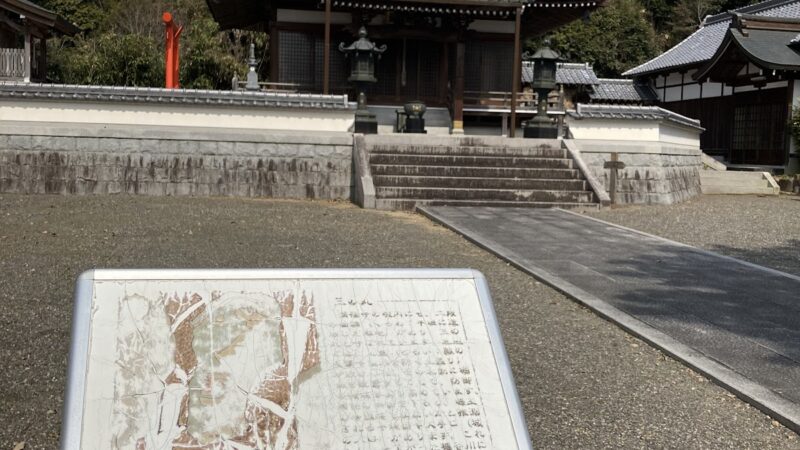
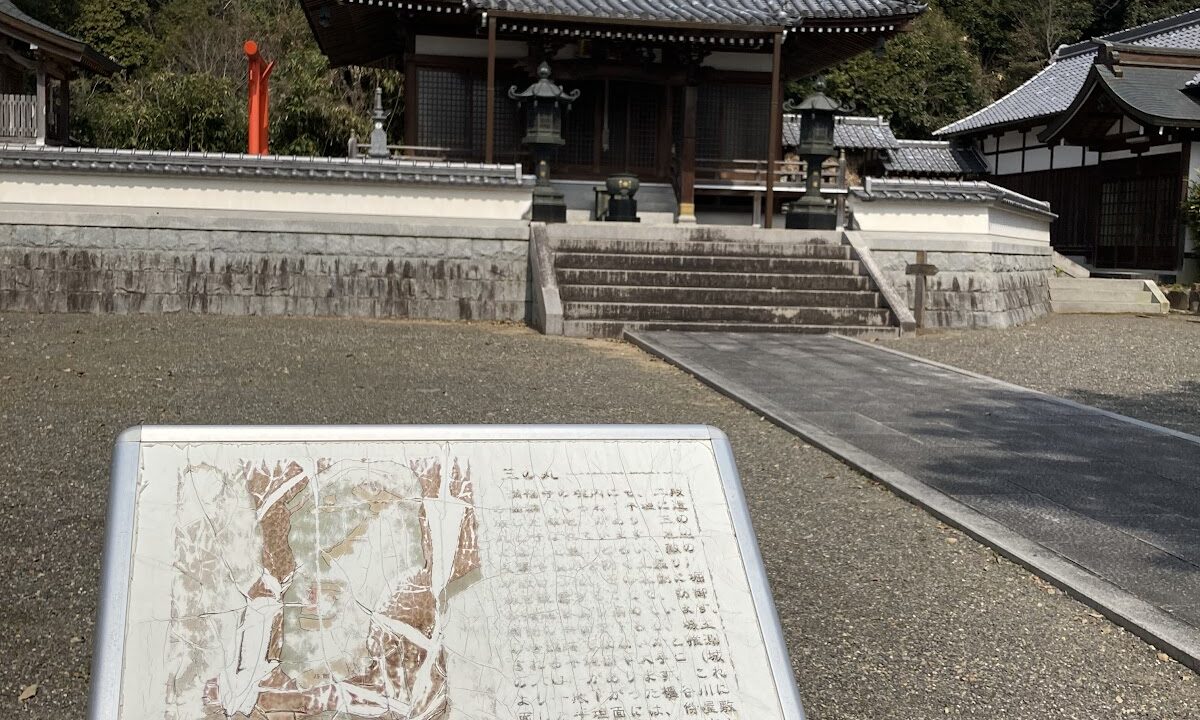
Currently, Manpuku-ji Temple stands on the site of the third bailey. This third bailey is located at the northernmost point of the castle grounds and serves as the entrance to the castle. Within the grounds of Manpuku-ji Temple, some remnants of the former castle remain, and an explanatory sign indicating that it is a castle site has been installed. The area from the third bailey to the second bailey to the south is separated by a high earthen rampart and a large moat. This moat was a crucial part of the castle’s defenses and played a vital role in hindering enemy advances.
Second Bailey | A Main Enclosure Long from North to South
The second bailey is located south of the third bailey, beyond the large moat. The second bailey is long from north to south and is one of the relatively large, flat areas within Hashitani Castle. It is believed to have housed facilities for garrisoning soldiers and storing supplies.
An earthen rampart surrounds the second bailey, and parts of it can still be clearly seen today. A moat also exists between the second bailey and the main bailey, creating a multi-layered defensive structure.
Main Bailey | The Castle’s Center and Watchtower Base
Further south of the second bailey, at the innermost part of the castle grounds, is the main bailey. It is believed to have been the location of the lord’s residence and command post, and was the central bailey of Hashitani Castle. A distinctive feature of the main enclosure is the raised northwest corner, which is believed to have functioned as a watchtower base or observation post. This elevated position offered a panoramic view of the surrounding terrain, making it ideal for monitoring enemy movements.
While the main enclosure is not particularly large, this is likely a design choice typical of mountain castles, prioritizing maximum defensive capabilities within the limited terrain.
Moats and Dry Moats | Key Defensive Structures
The core of the defensive system at Hashitani Castle lies in the moats and dry moats that separate each enclosure. Moats, created by deeply digging and cutting through the ridge, limited enemy incursion routes, facilitating defense.
At Hashitani Castle, clear moats can be seen between the third and second enclosures, and between the second and main enclosures. These moats still retain their depth today, demonstrating the advanced civil engineering techniques of the Sengoku period.
Furthermore, a dry moat surrounded the enclosure, which was also an important defensive structure to prevent enemy approaches. Dry moats are moats that do not hold water, and because securing water was difficult in mountain castles, such dry moats were commonly used.
Earthworks | Defensive Walls Surrounding the Enclosures
Earthworks were built around the edges of each enclosure. These earthworks are walls made by piling up earth and functioned as defensive walls to protect castle soldiers from enemy arrows and firearms.
The earthworks of Hashitani Castle remain well-preserved today, and the high earthworks between the third and second enclosures are particularly impressive. These earthworks reach several meters in height and are valuable remains that demonstrate the level of castle construction technology at the time.
Current Status of Hashitani Castle | Well-Preserved Remains
Preservation Status of Remains
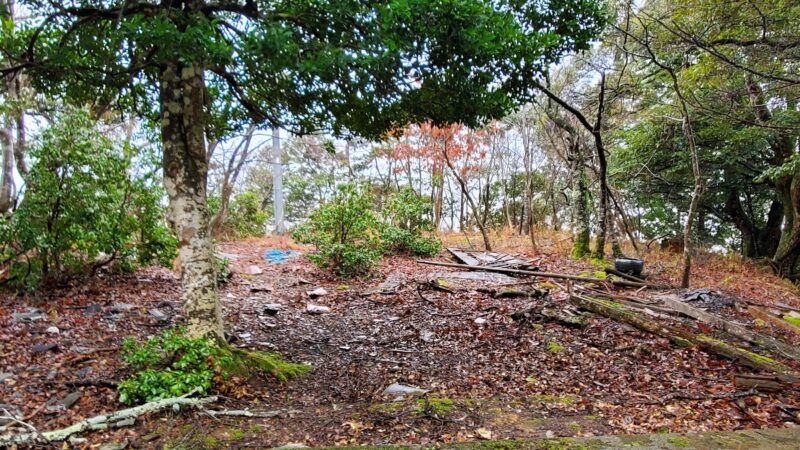
More than 440 years have passed since the fall of Hashitani Castle, but because it has been protected as a forest, the castle remains are preserved in relatively good condition. The main remains, such as baileys, earthworks, trenches, and dry moats, are clearly visible, making this a valuable historical site where you can experience the appearance of a mountain castle from the Sengoku period.
In particular, the depth of the trenches and the height of the earthworks retain their original form well, making it a fascinating site for castle enthusiasts and history buffs.
Excavated Artifacts | What Kawarake Tells Us About Life at the Castle
Excavations at Hashitani Castle have yielded artifacts such as kawarake (a type of earthenware). These excavated items are displayed in the collection and exhibition room of the Kobe City Buried Cultural Properties Center, providing clues to the daily life and rituals at Hashitani Castle.
Kawarake are unglazed earthenware vessels used as tableware, as well as in Shinto rituals and ceremonies. The kawarake excavated from Hashitani Castle are important materials that show that the castle was not merely a military facility, but also a place where the lord and his retainers lived.
Access to Hashitani Castle | Visitor Guide
Access by Public Transportation
Hashitani Castle can be accessed by public transportation.
Nearest Station: Kobe Municipal Subway Seishin-Yamate Line, “Seishin-Chuo Station”
Bus: Take a Shinki Bus from Seishin-Chuo Station and get off at the “Teratani” bus stop (approximately 15-20 minutes).
Walking: Approximately 5 minutes on foot from the Teratani bus stop to Manpuku-ji Temple (site of the third bailey).
You can enter the castle ruins from the grounds of Manpuku-ji Temple. It takes approximately 10-15 minutes on foot from Manpuku-ji Temple to the main bailey.
Access by Car
Nearest Interchange: Approximately 20-30 minutes from the Sanyo Expressway “Miki-Higashi Interchange” or the Daini-Shinmei Expressway “Okuradani Interchange”.
Parking space is limited around Manpuku-ji Temple, so it is recommended to check parking locations in advance before visiting.
Points to Note When Visiting
- Since the castle ruins are located in a forest, please wear comfortable shoes and clothing.
- Don’t forget insect repellent in summer and warm clothing in winter.
- Please observe proper etiquette when visiting, so as not to damage the remains.
- Be careful as the ground can be slippery during and after rain.
- Visiting in a group is safer than visiting alone.
Related Historical Sites Around Hashitani Castle
Miki Castle Ruins (Miki City, Hyogo Prefecture)
Located approximately 9.9 kilometers east of Hashitani Castle, Miki Castle was the residence of Bessho Nagaharu and the main battlefield of the Battle of Miki. It is currently maintained as Uenomaru Park, with remnants of stone walls and the remains of the castle tower still visible. Visiting both Hashitani Castle and Miki Castle will allow for a deeper understanding of the overall picture of the Battle of Miki.
Ogawa Castle Ruins (Kita Ward, Kobe City)
Like Hashitani Castle, this was the residence of the Ogawa clan, who fought on the Bessho side in the Battle of Miki. Ogawa Castle was also a mountain castle, and remains such as earthworks and moats still exist. The Ogawa clan and Kinugasa Norikage, lords of Hashitani Castle, were allies and fought together against the forces of Hashiba Hideyoshi.
Akashi Castle (Akashi City, Hyogo Prefecture)
Located approximately 10.1 kilometers south of Hashitani Castle, Akashi Castle is a modern castle built in the early Edo period. Although it is from a different era than Hashitani Castle, it is an interesting historical site for comparing the evolution of castle architecture in the same Harima and Settsu regions.
Branch Castles in the Hazutani River Basin
Around Hashitani Castle, along the Hazutani River, several branch castles built by the Kinugasa clan were scattered. These include Jogatani Castle, Fukutani Castle, Iketani Castle, Sugano Castle, Tomokiyo Castle, and Takawa Castle. These branch castles formed a defensive network centered on Hashitani Castle and are important historical sites indicating the Kinugasa clan’s sphere of influence. Remains can still be seen at some of the castle sites today.
Historical Significance of Hashitani Castle | Its Role as a Border Castle
A Strategic Point on the Saigoku Kaido Road
The Hashitani region, where Hashitani Castle is located, was a strategic point on the Saigoku Kaido (Sanyo Road), which connected Kyoto and Kyushu. The Saigoku Kaido was an important transportation route from ancient times, and the area was bustling with the movement of people and goods. Hashitani Castle was positioned to control this road, and it is believed that it gained economic and military advantages by controlling this key transportation point.
The Border Between Harima and Settsu Provinces
Another important role of Hashitani Castle was its function as a “border castle,” located on the border between Harima and Settsu provinces. During the Sengoku period, border regions were the front lines where different forces clashed, and such border castles were considered particularly important.
Hashitani Castle served as a branch castle of Miki Castle, playing a role in protecting the western edge of the Bessho clan’s sphere of influence in eastern Harima. It was a strategically valuable castle, serving as a bulwark against invasions from the Settsu region and as a base for advances into the Settsu region.
Role in the Battle of Miki
In the Battle of Miki, Hashitani Castle was an obstacle to Hashiba Hideyoshi’s army besieging Miki Castle. As long as Hashitani Castle remained in the hands of the Bessho clan, Hideyoshi could not achieve a complete siege of Miki Castle, nor could he freely use the Saigoku Kaido road.
Therefore, Hideyoshi dispatched Oda Nobusumi and others to capture Hashitani Castle, and by capturing it immediately after the fall of Miki Castle, he achieved complete control of eastern Harima. The fall of Hashitani Castle was one of the important events in the final stages of the Battle of Miki.
Attractions of Visiting Hashitani Castle | Points of Interest for History Fans
Well-Preserved Remains of a Sengoku Period Mountain Castle
The greatest attraction of Hashitani Castle is the well-preserved remains of a Sengoku period mountain castle. The main remains, such as baileys, earthworks, trenches, and dry moats, are clearly visible, allowing visitors to directly experience the castle-building techniques and defensive philosophies of the Sengoku period.
The large trench and high earthworks between the third and second baileys are particularly impressive, giving a real sense of the castle’s formidable defenses at the time. From the remains of the watchtower base in the northwest corner of the main bailey, one can overlook the surrounding terrain, allowing one to appreciate the castle’s strategic location.
Experiencing the History of the Battle of Miki
Hashiya Castle played a crucial role in the Battle of Miki, an important battle of the Sengoku period. Visiting the castle ruins allows you to experience firsthand the campaign of Hashiba Hideyoshi against the Chugoku region, the resistance of the Bessho clan, and the Sengoku history of Harima Province.
The history of Lord Kinugasa Norikage, who remained loyal to his lord Bessho Nagaharu and fought to the end, is a valuable story that conveys the way of life of a Sengoku samurai. Standing on the castle ruins, you can reflect on the battle that took place over 440 years ago.
A Historic Site in a Quiet Mountain Forest
Hashiya Castle is not a tourist destination; it is a historical site quietly nestled in a peaceful mountain forest. It is rarely crowded with tourists, allowing visitors to leisurely explore the castle ruins and immerse themselves in history.
The experience of strolling through the castle ruins amidst a rich natural environment, listening to the birdsong, is exceptional for castle enthusiasts. You can also enjoy the changing seasons, from the fresh greenery of spring to the vibrant autumn foliage.
Current Status and Future Challenges of Hashiya Castle Research
While the basic layout and historical background of Hashiya Castle are clear, detailed archaeological excavations have been limited, leaving many aspects unexplained.
In particular, further research is needed regarding the castle’s construction date, renovations at various stages, the layout of buildings within the castle, and the detailed structure of the lord’s residence. Furthermore, there is a lack of historical records regarding the final moments of Kinugasa Norikage and the detailed circumstances of the castle’s fall, leaving many points unclear.
Further detailed surveys and archaeological excavations are expected to shed more light on the true nature of Hashitani Castle. Comprehensive research into its relationship with surrounding subsidiary castles and the medieval history of the entire Hashitani region is also desirable.
Summary | Hashitani Castle: A Valuable Historical Site Conveying the Sengoku Period History of Harima
Hashitani Castle is a Sengoku period mountain castle located in Nishi-ku, Kobe City, Hyogo Prefecture. It was the residence of the Kinugasa clan, who ruled the Hashitani region from the Kamakura period to the Sengoku period. Located at a strategic point on the Saigoku Kaido road and on the border between Harima and Settsu provinces, it played an important role as a subsidiary castle of Miki Castle.
During the Battle of Miki, which began in 1578, the castle lord, Kinugasa Norikage, fought on the Bessho side against Hashiba Hideyoshi’s army, loyal to his lord, Bessho Nagaharu. However, on February 25, 1580, shortly after the fall of Miki Castle, Hashitani Castle also fell and was abandoned.
Even today, the remains of the castle, including baileys, earthworks, trenches, and dry moats, are well-preserved, making it a valuable historical site that conveys the appearance of a mountain castle from the Sengoku period. Accessible by Kobe Municipal Subway and bus, it is a castle ruin well worth visiting for history buffs and castle enthusiasts.
By visiting Hashitani Castle, you can experience the Battle of Miki, a crucial event in Sengoku history, and reflect on the Sengoku period in Harima. The castle ruins, nestled in a quiet mountain forest, are a special place that evokes a sense of historical romance. Why not visit Hashitani Castle and feel the atmosphere of the Sengoku period?