Hasedo Castle (Yamagata Prefecture) Complete Guide | A Thorough Explanation of the Fierce Battlefield and Highlights of the Keicho Dewa Campaign
What is Hasedo Castle?
Hasedo Castle is a mountain castle located in Hasedo, Yamagata City, Yamagata Prefecture, at an elevation of 229m and a relative height of approximately 90m. It is also known as “Kamegajo” (Turtle Castle), a name derived from the mountain’s resemblance to a turtle’s shell.
As an important subsidiary castle of Yamagata Castle, the residence of Mogami Yoshiaki, it was located approximately 7km southwest of the Yamagata Basin and played a crucial role in the defense of Yamagata Castle. It is known as the site of the fierce battle of the Keicho Dewa Campaign (Battle of Hasedo Castle) in 1600, and is sometimes referred to as the “Sekigahara of Dewa” or the “Sekigahara of the North.”
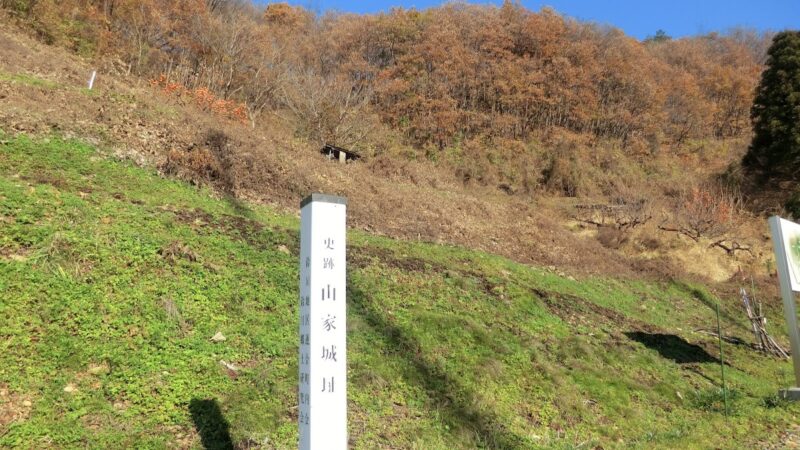
Currently, the site is maintained as Hasedo Castle Ruins Park, and the entire mountain is a historical site, with well-preserved remains such as earthworks, baileys, dry moats, and gates. From the mountaintop, you can enjoy a panoramic view of Yamagata city and the ruins of Yamagata Castle, making it a popular spot not only for history buffs but also for hikers.
History of Hasedo Castle
From Construction to the Sengoku Period
The exact date of Hasedo Castle’s initial construction is unclear, but its first documented appearance is in Eisho 11 (1514). In that year, the name of Hasedo Castle appears in records of Date Tanemune’s invasion of Yamagata.
During the Sengoku period, it came under the control of the Mogami clan and functioned as an important subsidiary castle responsible for the southern defense of Yamagata Castle. Due to its geographical location on the edge of the Yamagata Basin, it served as the final line of defense against invasions from the south.
Keicho Dewa Campaign (Battle of Hasedo Castle)
Hasedo Castle first appeared on the historical stage during the Keicho Dewa Campaign in September of Keicho 5 (1600). This battle was an important battle that unfolded in the Tohoku region around the same time as the Battle of Sekigahara.
Background of the Battle
During the Battle of Sekigahara, Uesugi Kagekatsu, who sided with the Western Army, invaded the territory of Mogami Yoshiaki, the Eastern Army, under the command of his senior retainer, the brilliant strategist Naoe Kanetsugu. The Uesugi army attacked in two directions, from the Yonezawa and Shonai areas, capturing many castles in the Mogami territory.
Details of the Fierce Battle
On September 15th, 1600 (Keicho 5), a massive Uesugi army of approximately 20,000 men, led by Naoe Kanetsugu, advanced on Hasedo Castle. In response, the castle lord, Shimura Izunokami Mitsuyasu, defended the castle with only a little over 1,000 soldiers.
The difference in troop strength was more than 20 times. The Uesugi army established its headquarters on Sugayama Mountain and launched a fierce attack, but the Mogami army, centered around Shimura Mitsuyasu, fought valiantly, demonstrating an impregnable defense. With the arrival of reinforcements from Sakenobe Hidetuna and others, a fierce battle ensued for approximately half a month. The Outcome of the Battle
On September 30th, upon receiving news of the Western Army’s defeat at Sekigahara, Naoe Kanetsugu decided to retreat. However, this retreat was fierce, with a brutal battle unfolding between the pursuing Mogami army and the Uesugi army serving as the rearguard. Maeda Keijiro and Naoe Kanetsugu himself fought valiantly as the rearguard, and the Uesugi army is said to have successfully retreated under remarkable control.
This battle established Hasedo Castle’s reputation as a “strong fortress” throughout Japan.
After the Edo Period
After the Keicho Dewa Campaign, Hasedo Castle remained under the control of the Mogami clan, but its role ended with the Mogami clan’s downfall in 1622. It was subsequently abandoned, losing its function as a castle, but its remains have been well preserved.
Today, it is preserved and maintained as an important historical site of Yamagata City, and is enjoyed by many people as a castle ruins park.
Structure and Layout of Hasedo Castle
Overall Structure
Hasedo Castle has the structure of a typical medieval mountain castle, with multiple baileys arranged around the mountaintop at an altitude of 229m. The layout, which skillfully utilizes the mountain’s terrain, is a highly defensive design.
Taking advantage of the steep terrain characteristic of mountain castles, the structure maximized the use of natural fortifications, allowing even a small number of defenders to withstand a large army. The fact that its defensive capabilities were proven in the actual Keicho Dewa Campaign is a noteworthy example in the history of castles.
Major Remains
Main Bailey (Honmaru)
The main bailey, located at the mountaintop, is the central part of the castle. It is believed that the lord’s residence and command post were located here. Flat land remains today, and traces of earthworks can be seen around it. From the main bailey, one can see a panoramic view of Yamagata city and Yamagata Castle, indicating its military surveillance function.
Bailey Group
Multiple baileys are arranged in a stepped pattern around the main bailey. These enclosures formed stages of defense, serving to progressively prevent enemy incursions. Clear elevation changes between each enclosure demonstrate the typical structure of a medieval mountain castle.
Earthworks
Earthworks remain throughout the castle. The earthworks around the main enclosure, in particular, are relatively well-preserved, providing insight into the defensive structures of the time. These earthworks not only prevented enemy incursions but also acted as shields against arrows and firearms.
Dry Moats
Dry moats were constructed between enclosures or around the castle’s perimeter. These moats were crucial defensive structures that obstructed enemy movement and made attacks difficult. The clearly visible dry moats demonstrate the advanced civil engineering techniques of the time.
Gate Entrances
Multiple gate entrances (koguchi) to the castle can also be identified. These gate entrances were strategically important defensive points, strategically placed to most effectively prevent enemy incursions. It is presumed that defensive structures, such as masugata gate entrances, were employed.
Highlights of Hasedo Castle
Historical Highlights
The site of a fierce battle in the Keicho Dewa Campaign
The greatest highlight of Hasedo Castle is undoubtedly its historical value as the site of a fierce battle known as the “Sekigahara of Dewa.” Walking through the castle grounds, you can imagine the valiant efforts of the thousand defenders led by Shimura Mitsuyasu against a massive army of 20,000.
From the main enclosure at the mountaintop, you can see Sugayamayama (the site of the Uesugi army’s main camp) on the opposite bank, allowing you to truly feel the battle situation at the time.
Well-preserved remains
The well-preserved remains of this medieval mountain castle are another major attraction. Earthworks, baileys, dry moats, and gates are clearly visible, making it a valuable learning site for castle enthusiasts. The height of the earthworks and the depth of the dry moats, in particular, give a real sense of the castle’s defensive capabilities at the time.
Scenic Highlights
View of Yamagata City
From the mountaintop, you can enjoy a panoramic view of Yamagata City. In particular, you can see towards the Yamagata Castle ruins (Kasumiga Castle), allowing you to understand the important position of Hasedo Castle as a subsidiary castle of Yamagata Castle. On a clear day, you can see the entire Yamagata Basin, and this view has been selected as one of the “Yamagata Landscape Stories.”
Nature in Every Season
Hasedo Castle, which has been developed as a castle ruins park, allows visitors to enjoy nature in every season. The fresh greenery in spring and the autumn leaves are beautiful, making it a popular hiking course. This space, where nature and history blend together, offers visitors healing and learning.
Related Historical Sites in the Surrounding Area
Sugayama Mountain (Site of the Uesugi Army Headquarters)
Sugayama Mountain, located across from Hasedo Castle, is where Naoe Kanetsugu established his headquarters. From here, the Uesugi army attacked Hasedo Castle. It is still possible to visit, and you can confirm its location relative to Hasedo Castle.
Mogami Yoshiaki Historical Museum
The Mogami Yoshiaki Historical Museum, located in Yamagata City, features detailed exhibits on Mogami Yoshiaki and the Keicho Dewa Campaign. Visiting before or after your visit to Hasedo Castle will provide a deeper understanding.
Access and Visiting Information for Hasedo Castle
Access Methods
Access by Car
- Approximately 30 minutes by car from JR Yamagata Station
- Approximately 20 minutes from Yamagata Zao IC on the Yamagata Expressway
- Dedicated parking available (free, large buses can park)
The parking lot is located near the entrance to the castle ruins park, and you can walk up to the castle from there.
Access by Public Transportation
- Take a bus from JR Yamagata Station and get off at the “Hasedo” bus stop, then walk for approximately 15 minutes
- By taxi, approximately 30 minutes from Yamagata Station
Public transportation services are limited, so it is recommended to check the timetable in advance.
Visit Information
Basic Information
- Location: Hasedo, Yamagata City, Yamagata Prefecture
- Opening Hours: Always open (Nighttime visits are not recommended)
- Admission Fee: Free
- Estimated Time Required: Approximately 1-2 hours (from ascent to sightseeing)
Regarding the Ascent
The ascent path is well-maintained, but as it is a mountain castle, there are some steep slopes and stairs. Comfortable shoes and clothing are recommended. Particular caution is needed after rain, as the ground can become slippery.
The summit is approximately 20-30 minutes on foot. There are rest areas along the way, so you can ascend at your own pace.
Points to Note During Your Visit
- Information boards are placed throughout the site, allowing you to read explanations of the ruins as you explore.
- To enjoy the view from the mountaintop, it is recommended to visit on a day with good weather.
- Spring to autumn is the best season to visit, but it is also possible to visit in winter (be careful during snowy conditions).
Contact Information
- Yamagata City Parks and Green Spaces Division: 023-641-1212 (ext. 530)
- Yamagata City Tourism Association: 023-647-2266
People Related to Hasedo Castle
Shimura Izunokami Mitsuyasu
He was a samurai who distinguished himself in the Keicho Dewa Campaign as the lord of Hasedo Castle. His achievement of defending the castle against a 20,000-strong army for half a month with only a little over 1,000 soldiers is particularly noteworthy among Sengoku period warlords. He enjoyed the deep trust of Mogami Yoshiaki and played a crucial role as a key figure in the defense of Yamagata Castle.
Mogami Yoshiaki
A Sengoku period daimyo of Dewa Province and lord of Yamagata Castle. Hasedo Castle was an important branch castle of his. During the Keicho Dewa Campaign, he skillfully countered the Uesugi army’s invasion with clever strategies, ultimately defending his territory. By siding with the Eastern Army (Tokugawa side), he established a solid position as a daimyo with a domain of 570,000 koku after the war.
Naoe Kanetsugu
A senior retainer of Uesugi Kagekatsu and a wise general known for his helmet bearing the character “愛” (ai, meaning love). During the Keicho Dewa Campaign, he led an invasion of Mogami territory but was thwarted by the strong defenses of Hasedo Castle. He is also known for his brilliant command during the retreat and for his valiant efforts as the rearguard.
Uesugi Kagekatsu
Successor to Uesugi Kenshin and daimyo of Aizu with a domain of 1.2 million koku. During the Battle of Sekigahara, he sided with the Western Army and ordered Naoe Kanetsugu to invade Mogami territory. Following the defeat at the Battle of Hasedo Castle and the Western Army’s defeat at Sekigahara, the domain was reduced to 300,000 koku in Yonezawa after the war.
Sakenobe Hidetuna
A senior retainer of the Mogami clan, he participated in the Battle of Hasedo Castle as reinforcements, fighting bravely alongside Shimura Mitsuyasu. Known as “Sakenobe Echizen-no-kami,” he is highly regarded as a courageous warrior.
Cultural Value of Hasedo Castle
Significance in Castle History
Hasedo Castle, while possessing a typical structure of a medieval mountain castle, is a valuable example that demonstrated its defensive capabilities in actual combat. In castle research, it is noteworthy as a tactical success story where a small number of defenders held off a large army.
Due to the excellent state of preservation of the remains, it also holds significant value as research material for medieval mountain castles. The arrangement of earthworks, baileys, and dry moats provides valuable information for understanding the castle construction techniques and defensive philosophies of the time.
Importance in Regional History
The Keicho Dewa Campaign is one of the most important events in the history of Yamagata. As a result of this battle, Yamagata was protected from the ravages of war, and the rule of the Mogami clan continued. Hasedo Castle, as a symbolic representation of this period, plays a crucial role in shaping the region’s historical consciousness.
As the site of an important battle that unfolded in Tohoku at the same time as the Battle of Sekigahara, often referred to as the “Sekigahara of Dewa,” it holds significant value within the context of Japanese history as a whole.
Utilization as a Tourism Resource
Currently, Hasedo Castle Ruins Park is an important tourist resource in Yamagata City. It is popular not only with history buffs but also with people who enjoy hiking and nature walks, contributing to the promotion of local tourism.
Yamagata City is committed to the preservation and utilization of historical heritage, including Hasedo Castle, and is continuously maintaining signposts and the castle’s access routes.
How to Enjoy Visiting Hasedo Castle
Historical Exploration Course
For castle enthusiasts and history buffs, a course that allows you to carefully observe the remains is recommended. Starting from the parking lot, follow the access route, checking the earthworks and dry moats of each enclosure as you make your way to the summit. At the summit, you can observe the structure of the main enclosure and confirm the location of Sugayama (the site of the Uesugi army’s main camp) on the opposite bank, allowing you to vividly imagine the battle situation at the time.
Detailed explanations are provided on the information boards, so reading them carefully while you explore will lead to a deeper understanding.
Hiking Course
For those who want to enjoy nature and get some light exercise, this is a recommended hiking course. The path to the castle is well-maintained, and you can reach the summit with a moderate amount of exercise. It is especially beautiful in the seasons of fresh greenery in spring and autumn foliage, allowing you to fully enjoy a space where nature and history blend together.
Photo Spot
The view from the summit is an excellent photo spot. Photos with Yamagata city and the Yamagata Castle ruins in the background will be a memorable memento of your visit. The well-preserved earthworks and dry moats are also attractive subjects for photography.
The light in the early morning and evening is beautiful, and you can take wonderful photos, especially on a clear autumn day.
Combining with nearby sightseeing
Combining a visit to Hasedo Castle with other sightseeing spots in Yamagata City will make for a more fulfilling trip.
- Mogami Yoshiaki Historical Museum: Learn more about the historical background of Hasedo Castle.
- Yamagata Castle Ruins (Kasumigajo Park): Visit the ruins of Mogami Yoshiaki’s castle to understand its relationship with its subsidiary castles.
- Yamagata City Local History Museum: Learn about the general history of Yamagata.
- Zao Onsen: Relax in the hot springs after sightseeing.
Resources and Information on Hasedo Castle
Books and Documents
For those who want to learn more about Hasedo Castle and the Keicho Dewa Campaign, the following resources are available:
- Detailed descriptions can be found in the Yamagata City History and Yamagata Prefecture History.
- It is featured as an example of a medieval mountain castle in specialized books on castles.
- It is described in detail in the chapter on the Keicho Dewa Campaign in books dealing with battles of the Sengoku period.
Internet Information
- Yamagata City Official Website: Basic information and the latest visitor information.
- Castle information sites such as Kojodan: Visitor reviews and photos.
- Yamagata Prefecture Tourism Website: Combining with surrounding tourist information
Obtaining information on site
Information boards within the castle ruins park provide detailed explanations of the castle’s history and structure. Pamphlets and detailed materials are also available at the Yamagata City Tourism Association and the Mogami Yoshiaki Historical Museum.
Summary
Hasedo Castle (Yamagata City, Yamagata Prefecture) is a historically significant mountain castle that was the stage of the Keicho Dewa Battle, often called the “Sekigahara of Dewa.” In 1600, it earned its place in history as an impregnable fortress, defended for half a month by over 1,000 defenders led by Shimura Mitsuyasu against a 20,000-strong Uesugi army led by Naoe Kanetsugu.
Currently, the site is maintained as a castle ruins park, with remnants such as earthworks, baileys, dry moats, and gates preserved in good condition. From the mountaintop, you can enjoy a panoramic view of Yamagata city and the Yamagata Castle ruins, making it an attractive spot for both historical exploration and hiking.
Access is relatively easy, about a 30-minute drive from Yamagata Station, and there is a dedicated parking lot. When visiting Yamagata, be sure to visit Hasedo Castle and experience its beautiful scenery and valuable historical heritage while reflecting on the fierce battles of the Sengoku period.
Hasedo Castle, with its typical medieval mountain castle structure, proved its defensive capabilities in actual battle and is a must-see historical site for castle enthusiasts. Even those unfamiliar with history can enjoy a light hike in a rich natural environment while learning about Japanese history.
Why not visit Hasedo Castle and experience the history and culture of Yamagata?