
Complete Guide to Hamamatsu Castle | A Thorough Explanation of the History, Structure, and Highlights of Tokugawa Ieyasu’s Castle of Success
What is Hamamatsu Castle?
Hamamatsu Castle is a Japanese castle located in Motoshiro-cho, Chuo-ku, Hamamatsu City, Shizuoka Prefecture. It is widely known as the castle where Tokugawa Ieyasu spent 17 years, from the age of 29 to 45, and is a historically important castle nicknamed the “Castle of Success.” Built on a river terrace on the eastern edge of the Mikatagahara Plateau, it is a highly defensible castle that skillfully utilizes the natural terrain formed by the Tenryu River.
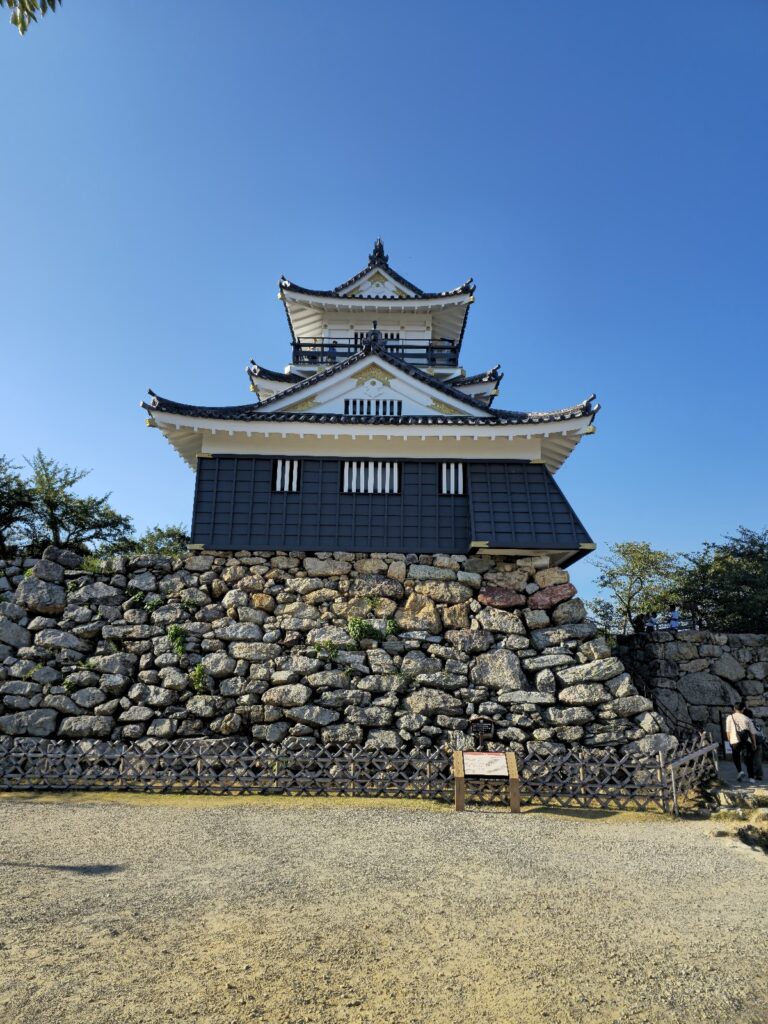
The current Hamamatsu Castle is developed as Hamamatsu Castle Park, centered around the castle tower, which was rebuilt in reinforced concrete in 1958. The original stone walls remain in good condition, and in particular, the unique stone walls, known as “Nozurazumi” (rough-stone masonry), which are made by stacking natural stones as they are, are highly valued as valuable relics that convey the castle-building techniques of the Sengoku period.
Located in the heart of Hamamatsu City and easily accessible from Hamamatsu Station (approximately a 20-minute walk), Hamamatsu Castle is a popular tourist spot that attracts many visitors throughout the year. The interior of the castle tower is open to the public as a historical museum, featuring extensive exhibits on the life of Ieyasu, the history of Hamamatsu Castle, and the development of the castle town of Hamamatsu.
History of Hamamatsu Castle
Imagawa, Kira, and Iio Clan Eras
The origins of Hamamatsu Castle lie in “Hikuma Castle,” built by Miyoshi Tametora during the Eisho era (1504-1520). Hikuma Castle, strategically located in Totomi Province, played a crucial role throughout the Sengoku period.
In the mid-16th century, it came under the control of the Imagawa clan, who ruled Suruga and Totomi, and was governed by the Iio clan. Iio Tsunetatsu served Imagawa Yoshimoto, but after Yoshimoto’s death at the Battle of Okehazama in 1560, the Imagawa clan’s power rapidly declined.
Subsequently, the Iio clan came into conflict with Imagawa Ujizane and continued their resistance from Hikuma Castle. However, when Tokugawa Ieyasu began his invasion of Tōtōmi Province in 1568, Hikuma Castle was captured by Ieyasu’s army.
The Ieyasu Era
In 1570, Tokugawa Ieyasu moved his base from Okazaki Castle to Hikuma Castle. At this time, Ieyasu renamed the castle “Hamamatsu Castle” and began large-scale expansion and renovation work. Ieyasu chose this location to prepare for an invasion by the Takeda clan from the west.
Ieyasu used Hamamatsu Castle as his base and, in 1572, faced Takeda Shingen in the Battle of Mikatagahara. Although Ieyasu suffered a crushing defeat in this battle, he retreated to Hamamatsu Castle and waited for an opportunity to counterattack. Shingen’s death from illness the following year temporarily diminished the threat of the Takeda clan.
In the Battle of Nagashino in 1575, using Hamamatsu Castle as a rear base, Ieyasu defeated Takeda Katsuyori’s army, solidifying his control over Totomi and Mikawa provinces. Afterward, Ieyasu continued to expand his power from Hamamatsu Castle, spending 17 years there before moving to Sunpu Castle in 1586.
These 17 years were a crucial period for Ieyasu, marking his growth from a minor lord in Mikawa to a powerful daimyo in the Tokai region. His experience at Hamamatsu Castle laid the foundation for his later unification of Japan.
From the Edo Period Onward
After Ieyasu moved to Sunpu, Hamamatsu Castle was successively assigned to various fudai daimyo (hereditary feudal lords). While the castle lords changed frequently, many of them later held important positions in the Edo shogunate, such as Rōjū (senior councilor) or Kyoto Shoshidai (Kyoto Deputy), leading to Hamamatsu Castle becoming known as a “castle of advancement.”
Throughout the Edo period, Hamamatsu Castle continued to function as an important fortress protecting a strategic point on the Tōkaidō road. The castle town also continued to develop and flourished as a post town.
After the Meiji Restoration, Hamamatsu Castle was abolished under the castle demolition decree, and many buildings were demolished. The keep was also lost in the early Meiji period, leaving only the stone walls and some remnants. In 1958 (Showa 33), the keep was rebuilt with donations from citizens, and it remains to this day.
Hamamatsu Castle as a Castle of Advancement
The reason Hamamatsu Castle is called a “castle of advancement” is that many of its successive lords during the Edo period rose to important positions in the shogunate. This phenomenon is not a coincidence, but rather a result of the recognition of Hamamatsu Castle’s strategic importance and the governing abilities cultivated there.
The Rise of Successive Castle Lords
The successive lords of Hamamatsu Castle include the following individuals:
- Horio Yoshiharu: From a retainer of Toyotomi Hideyoshi, he served Tokugawa Ieyasu and later became the first lord of the Izumo-Matsue Domain.
- Mizuno Tadakuni: As a senior councilor known for the Tenpo Reforms, he led reforms in the shogunate’s administration.
- Inoue Masanari: As a senior councilor, he participated in shogunate politics and was involved in important policy decisions.
These castle lords, after gaining experience as lords of Hamamatsu Castle, went on to play active roles in the central government of the shogunate. Hamamatsu Castle’s strategic location on the Tokaido road and its experience governing such an economically and militarily important region were highly valued by the shogunate.
Ieyasu’s Own Rise to Power
Another reason why Hamamatsu Castle is called the “Castle of Success” is that during the 17 years Tokugawa Ieyasu spent there, he began his path from a minor lord of Mikawa to a ruler of Japan. During his time at Hamamatsu Castle, Ieyasu experienced fierce battles with the Takeda clan, honed his skills in governing his territory, and laid the foundation for his later unification of Japan.
When Ieyasu entered Hamamatsu Castle, he was a young warrior of 29, but by the time he moved to Sunpu at the age of 45, he had grown into a powerful daimyo controlling five provinces. This dramatic growth is what makes Hamamatsu Castle a symbolic “Castle of Success.”
Structure of Hamamatsu Castle
Layout and Overall Structure
Hamamatsu Castle is a flatland castle that skillfully utilizes a river terrace located on the eastern edge of the Mikatagahara Plateau. The castle grounds extend approximately 500 meters east-west and 450 meters north-south, with a central main enclosure (Honmaru) surrounded by the second and third baileys (Ninmaru and Sannomaru), creating a linear layout.
The eastern side of the castle is a steep cliff, forming a natural stronghold. This topographical feature gave Hamamatsu Castle exceptionally strong defenses against attacks from the east. Conversely, the western side, with its relatively gentle terrain, was further fortified with multiple baileys.
The castle town spread out to the south and west of the castle and also functioned as a post town on the Tokaido road. The urban planning, encompassing both the castle and the surrounding town, was founded during the time of Ieyasu and continued to develop throughout the Edo period.
Tenshu-Kuruwa (Main Keep Bailey)
The Tenshu-Kuruwa is the central part of the Honmaru, located at the highest point of Hamamatsu Castle. The main keep and gate were situated here, making it a symbolic space of the castle. The currently reconstructed keep stands on this Tenshu-Kuruwa.
The stone walls of the castle keep enclosure are built using the “nozurazumi” technique, where natural stones are stacked as they are. While these walls may appear fragile at first glance due to the many gaps, they actually offer excellent drainage and are highly resistant to earthquakes. The height of the walls varies depending on the location, reaching approximately 12 meters at their highest point.
From the castle keep enclosure, one can enjoy a panoramic view of Hamamatsu city, and it is said that in the past, one could even see as far as Suruga Bay. Even today, the observation deck of the castle keep offers a 360-degree view of Hamamatsu city, and on clear days, Mount Fuji can be seen.
Castle Keep
The Hamamatsu Castle keep is believed to have been a three-story watchtower-type structure. A watchtower-type keep is a style of castle keep commonly seen from the Sengoku period to the Azuchi-Momoyama period, where a watchtower was placed on top of a lower-story building.
The current castle keep was rebuilt in 1958 using reinforced concrete and is not a historically accurate reconstruction, but rather a so-called “mock keep.” However, it was built on the original stone walls and is a beloved symbol of Hamamatsu Castle for the citizens.
The interior of the castle tower has four floors, and each floor contains exhibits on the life of Ieyasu and the history of Hamamatsu Castle. The remains of a well remain in the basement, indicating its important role as a water source during sieges.
Castle Tower Gate
The castle tower gate was an important gate protecting the entrance to the castle keep enclosure. It was restored in 2014 and is now one of the highlights of Hamamatsu Castle.
The restored castle tower gate was reproduced as faithfully as possible based on the results of archaeological excavations, old photographs, and historical documents. It is a wooden structure in the style of a turret gate. Stone walls line both sides of the gate, creating a highly defensive structure.
The restoration of the castle tower gate has made the flow of movement to the castle keep enclosure clearer, allowing visitors to experience the atmosphere of the castle in its heyday. Upon passing through the gate and entering the castle grounds, visitors are greeted by magnificent stone walls and a towering keep, leaving a strong impression.
Honmaru and Ninomaru
The Honmaru was located in the center of the castle and encompassed a vast area including the castle tower. The Honmaru housed the lord’s residence and government offices, functioning as the political and military center of the castle. The current Honmaru site has been developed into a park, serving as a place of relaxation for citizens.
The Ninomaru was located south of the Honmaru and housed the residences of senior retainers and barracks. A moat separated the Ninomaru from the Honmaru, strengthening its defenses. Currently, public facilities such as the city hall and art museum are built on the site of the Ninomaru.
Uzumimon
The Uzumimon (buried gate) was a passageway-like gate built within the stone walls, a crucial element of Hamamatsu Castle’s defense system. To prevent enemy intrusion, the passageway was narrow and winding, designed to be defended by a small number of soldiers. Even today, the remains of the buried gate can be seen, showcasing the defensive ingenuity of the time. Walking through the dimly lit passageway surrounded by stone walls, you can experience the tension of the Sengoku period.
Hamamatsu Castle’s Stone Walls
The stone walls of Hamamatsu Castle are one of the castle’s greatest highlights. Built from the Sengoku period to the early Edo period, these walls are highly valued as valuable relics that demonstrate the evolution of castle construction techniques.
Characteristics of Nozura-zumi (Wild Stone Stacking)
Much of Hamamatsu Castle’s stone walls were built using a technique called “Nozura-zumi.” Nozura-zumi is a method of stacking natural stones with little to no processing, a technique widely used during the Sengoku period.
While Nozura-zumi stone walls may appear irregular and rough at first glance, they actually have many advantages. Because there are gaps between the stones, they have excellent drainage, preventing rainwater from accumulating inside the wall. Furthermore, during earthquakes, the stones move appropriately, absorbing the impact and preventing collapse.
The stone used in the stone walls of Hamamatsu Castle is mainly andesite and granite quarried from the local Mikatagahara Plateau. These stones are hard and resistant to weathering, and have remained in good condition even after more than 400 years.
Changes in Stone Wall Construction Methods
Upon closer observation of the stone walls of Hamamatsu Castle, it becomes clear that the construction method differs depending on the location. This indicates differences in the construction period and the history of renovations.
The stone walls built during the time of Ieyasu primarily utilize the “nozurazumi” (rough-stone masonry) method, using relatively small stones. On the other hand, in sections renovated during the Edo period, the “uchikomihagi” (fitted stone masonry) technique, using larger stones and a somewhat more orderly construction, can be seen.
Observing these differences in the stone walls allows us to decipher the history of Hamamatsu Castle’s construction, making it a very interesting experience for castle enthusiasts.
Preservation and Restoration of Stone Walls
After more than 400 years, some parts of the stone walls of Hamamatsu Castle have collapsed or loosened. In Hamamatsu City, continuous preservation and restoration projects are being carried out to pass on these valuable cultural assets to future generations.
The restoration work employs a “disassembly and repair” method, where each fallen stone is recorded and returned to its original position. This process ensures structural safety while preserving the original appearance of the stone walls as much as possible.
Hamamatsu Castle Keep Exhibition Contents
The reconstructed keep is open to the public as a historical museum dedicated to Hamamatsu Castle and Tokugawa Ieyasu. Each floor features comprehensive exhibits, allowing visitors to learn about the history of Hamamatsu Castle and the life of Ieyasu.
1st Floor: Ieyasu’s Time at Hamamatsu Castle
The first floor focuses on the 17 years Ieyasu spent at Hamamatsu Castle. Important events in Ieyasu’s life, such as his defeat at the Battle of Mikatagahara, his subsequent comeback, and his victory at the Battle of Nagashino, are explained using panels, models, and armor.
Of particular note is the “Portrait of Tokugawa Ieyasu at the Battle of Mikatagahara” (a replica), believed to depict Ieyasu immediately after his defeat at the Battle of Mikatagahara. This portrait, depicting Ieyasu with a frown, is said to be a reminder of his own failures and is a valuable historical document illustrating Ieyasu’s character.
2nd Floor: The History of Hamamatsu Castle and its Castle Town
The 2nd floor introduces the history of Hamamatsu Castle from its construction to the present day. Models showing the castle’s structure and layout, artifacts unearthed during archaeological excavations, and old maps are on display, allowing visitors to understand how Hamamatsu Castle has evolved.
Furthermore, the development of the castle town of Hamamatsu is explained in detail. The town’s prosperity as a post town on the Tokaido road, its industrial development, and cultural formation are presented with abundant materials.
3rd Floor: Successive Castle Lords and the Castle of Success
The 3rd floor displays the successive castle lords of the Edo period and the reasons why Hamamatsu Castle came to be known as the “Castle of Success.” Portraits of the castle lords, family trees, and related documents are on display, providing detailed explanations of each lord’s achievements and positions.
4th Floor: Observation Deck
The top floor, the 4th floor, is an observation deck offering 360-degree views of Hamamatsu city. Below lies the greenery of Hamamatsu Castle Park, and in the distance, the city of Hamamatsu. On clear days, you can even see Mount Fuji and the Southern Alps.
The view from the observation deck evokes a sense of historical romance, allowing you to imagine that Ieyasu himself may have surveyed his territory from this very spot.
Basement: Well Remains
In the basement of the castle tower, the remains of an old well remain. This well played a crucial role as a valuable water source during sieges. The well is approximately 11 meters deep, and water still flows from it today.
The well remains are an important historical site demonstrating the practical functionality of Hamamatsu Castle, indicating that the castle was not merely a symbol of authority, but was designed with actual combat in mind. ## Highlights of Hamamatsu Castle Park
Hamamatsu Castle, including its surrounding area, is developed as “Hamamatsu Castle Park,” providing not only castle ruins but also a place of relaxation for citizens where they can enjoy the changing seasons.
Japanese Garden
Hamamatsu Castle Park features a beautiful Japanese garden. It’s a pond-centered strolling garden with seasonal flowering trees and shrubs, offering different scenery depending on the time of year.
It’s particularly beautiful during the cherry blossom season in spring, the fresh greenery in early summer, and the autumn foliage season, attracting many citizens and tourists. There’s also a tea house within the garden, offering a peaceful retreat.
Cherry Blossom Spot
Hamamatsu Castle Park is also known as one of Hamamatsu City’s leading cherry blossom spots. Approximately 360 Somei Yoshino cherry trees are planted in the park, creating a magnificent tunnel of cherry blossoms in spring.
During the cherry blossom season, the trees are illuminated at night, allowing visitors to enjoy the magical sight of cherry blossoms after dark. The scenery created by the stone walls, cherry blossoms, and castle tower is a quintessential spring sight in Hamamatsu.
Hamamatsu City Museum of Art
Adjacent to Hamamatsu Castle Park is the Hamamatsu City Museum of Art. It houses and displays a wide range of artworks, including works by artists associated with Hamamatsu, as well as Japanese paintings, Western paintings, and sculptures.
Visiting the museum in conjunction with a visit to Hamamatsu Castle will provide a more enriching cultural experience.
Sakuza Kuruwa Ruins
To the north of the park are the ruins of a fortified enclosure called “Sakuza Kuruwa.” This is said to be the site of the residence of Honda Sakuzaemon Shigetsugu, a retainer of Ieyasu, and is now a plaza.
From Sakuza Kuruwa, you can view the stone walls of Hamamatsu Castle from a different angle, which helps in understanding the overall layout of the castle.
Access Information
Access by Train
From JR Hamamatsu Station
- Walking: Approximately 20 minutes
- Bus: Take the Enshu Railway Bus from Hamamatsu Station North Exit Bus Terminal and get off at “Hamamatsu Castle Park Entrance,” then walk approximately 5 minutes.
- Using the city loop bus “Gurutto Bus” is also convenient.
Access by Car
Tomei Expressway
- Approximately 30 minutes from Hamamatsu IC
- Approximately 30 minutes from Hamamatsu Nishi IC
Shin-Tomei Expressway
- Approximately 40 minutes from Hamamatsu Hamakita IC
Parking
Hamamatsu Castle Park has the following parking lots:
- Hamamatsu Castle Park Parking: 55 regular cars, 8 buses
- Municipal Motoshiromachi Parking: Underground parking lot, 247 regular cars
Due to congestion on weekends, holidays, and during cherry blossom season, we recommend using public transportation.
Opening Hours and Admission Fees
Castle Tower
- Opening Hours: 8:30 AM – 4:30 PM (Last entry 4:20 PM)
- Closed: December 29th – 31st
- Admission Fee:
- Adults (High school students and older): 200 yen
- Junior high school students and younger: Free
- 70 years and older: Free (Proof required)
- Persons with disabilities: Free
Castle Gate
- Opening Hours: Same as the Castle Tower
- Admission Fee: Free
Hamamatsu Castle Park
- Free entry
Nearby Tourist Attractions
Hamamatsu City Museum of Art
This museum, adjacent to Hamamatsu Castle Park, primarily exhibits works by artists associated with Hamamatsu. Regular special exhibitions are also held, making it ideal to visit in conjunction with a visit to Hamamatsu Castle.
Motoshiromachi Toshogu Shrine
A shrine located near Hamamatsu Castle, dedicated to Tokugawa Ieyasu. It is said to have been built on the site of Ieyasu’s residence when he was at Hamamatsu Castle, and is also known as the “Shrine of Success.”
Hamamatsu City Museum of Musical Instruments
Located near Hamamatsu Station, this is Japan’s only public museum of musical instruments. Approximately 1,300 musical instruments from around the world are on display, making it a facility unique to Hamamatsu, a city known for its musical instruments.
Hamamatsu Festival Hall
This exhibition facility is related to the Hamamatsu Festival, held every May. Life-sized kites and festival floats are on display, allowing visitors to learn about Hamamatsu’s traditional culture.
Tips for Enjoying Hamamatsu Castle
Recommended Time to Visit
Hamamatsu Castle can be visited throughout the year, but the best times are:
- Spring (late March to early April): The cherry blossoms are in full bloom, making it the most beautiful time. Nighttime illuminations are also held.
- Autumn (November): The autumn leaves are beautiful, and the weather is mild, making it ideal for a stroll. – Early Summer (May): The fresh greenery is beautiful, and with the Hamamatsu Festival underway, the entire city is bustling with activity.
Estimated Time Required
Please allow the following times for visiting Hamamatsu Castle:
- Main Tower Only: 30-45 minutes
- Main Tower + Stone Walls & Main Gate: 60-90 minutes
- Entire Hamamatsu Castle Park: 90-120 minutes
- Sightseeing Including Surrounding Facilities: Half a Day to a Full Day
Photography Tips
Recommended photography spots at Hamamatsu Castle include:
- Angle Looking Up at the Main Tower from Near the Main Gate: You can capture both the stone walls and the main tower together.
- View from the Sakusa Kuruwa: You can capture the entire stone wall.
- Main Tower from the Japanese Garden: You can beautifully photograph the main tower reflected in the pond.
- The Castle Tower During Cherry Blossom Season: The combination of cherry blossoms and the castle tower is a spectacular sight.
Guided Tours
Hamamatsu Castle offers free guided tours by volunteer guides (advance reservations required). These tours provide detailed explanations of the castle’s history and highlights, making them ideal for those who want to understand Hamamatsu Castle more deeply.
Summary
Hamamatsu Castle is a historical fortress where Tokugawa Ieyasu began his path to becoming the ruler of Japan, and continues to inspire hope in many as the “Castle of Success.” The original stone walls remain well-preserved, and the reconstructed castle tower features extensive exhibits.
With its layout utilizing the river terraces of the Mikatagahara Plateau, its rough-hewn stone walls, and its restored castle gate, there are plenty of sights to see, making it a tourist spot enjoyable not only for castle enthusiasts but also for history buffs and families.
The surrounding environment, developed as Hamamatsu Castle Park, is also wonderful, allowing visitors to enjoy the changing seasons while reflecting on the history of the Sengoku period. When you visit Hamamatsu, be sure to stop by Hamamatsu Castle and trace the footsteps of Ieyasu during his 17 years there.
Its convenient location in the heart of Hamamatsu City is also a major draw; being within walking distance of Hamamatsu Station makes it easy to incorporate into your sightseeing plans. There are also plenty of other attractions nearby, such as the Hamamatsu City Museum of Art and Motoshiro-cho Toshogu Shrine, ensuring a fulfilling Hamamatsu sightseeing experience.
