Complete Guide to Fukushima Castle: A Thorough Explanation of History, Structure, Remains, and Visiting Points
What is Fukushima Castle?: The Existence of Two Castles
The name “Fukushima Castle” refers to two different castles in the history of Japanese castles. One is Fukushima Castle in Shinobu District, Mutsu Province, located in Fukushima City, Fukushima Prefecture, and the other is Fukushima Castle in Echigo Province, located in Joetsu City, Niigata Prefecture. Both castles were flatland castles that played an important role in the early modern period, and each has its own unique historical background and characteristics.
This article provides a comprehensive and detailed explanation of these two Fukushima Castles, including their construction history, castle structure, historical changes, existing remains, and current visiting points. It aims to be a valuable source of information for castle enthusiasts and those interested in local history.
Fukushima Castle in Fukushima City, Fukushima Prefecture: Overview and Location
Basic Information and Geographical Characteristics
Fukushima Castle in Fukushima City, Fukushima Prefecture, was a flatland castle located in Shinobu District, Mutsu Province. The area where the Fukushima Prefectural Government building currently stands is the site of the former castle, and the area around the prefectural government building corresponds to the castle grounds of the time. The Abukuma River and Arakawa River flow to the east and south of the castle, and these rivers served as a natural fortification, acting as an outer moat.
Despite being a flatland castle, it featured a highly defensible structure that skillfully utilized the terrain, and functioned as the political and military center of Shinobu County. It can be said to be an important castle that formed the foundation of the current Fukushima City center.
Alternative Names and Changes in Name
Fukushima Castle has been known by several names throughout history. Until the Sengoku period, it was also called Daibutsu Castle and Suginome Castle. These names are thought to have originated from the castle’s location and the surrounding place names.
The name “Fukushima Castle” became established when Kimura Yoshikiyo changed the name when he moved his residence. One theory suggests that this renaming was modeled after Gamo Ujisato’s renaming of Aizu-Kurokawa Castle to Aizu-Wakamatsu Castle, and it is thought to have been a naming choice that reflected the castle’s new character as a modern castle.
Fukushima Castle in Fukushima City, Fukushima Prefecture: Prehistory and Construction Process
Shinobu District in the Sengoku Period
The area where Fukushima Castle was built was known as Shinobu District during the Sengoku period and was a strategic point where the forces of the Date and Ashina clans intersected. During the time of Sugime Castle, it is believed to have functioned as a small regional base.
After Toyotomi Hideyoshi’s siege of Odawara in 1590, the Tohoku region underwent significant political upheaval. During this period, Date Masamune was transferred from Yonezawa to Iwadeyama, and Gamo Ujisato took control of Aizu.
The Settlement of Oshu and Kimura Yoshikiyo’s Entry into the Castle
In 1591, Toyotomi Hideyoshi’s Settlement of Oshu established a system of control over this region. Kimura Yoshikiyo, a guest general of Gamo Ujisato, initially entered Omori Castle, but later moved his residence to Sugime Castle, which had a more favorable location.
At this time, Kimura Yoshikiyo changed the castle’s name to “Fukushima Castle.” This renaming was not merely a change of name, but is thought to have been intended to give the castle a new character as a modern castle. A strong theory suggests that this was modeled after Gamo Ujisato’s renaming of Aizu Kurokawa Castle to Aizu Wakamatsu Castle, and it can be said that this naming symbolized the new system of control under the Toyotomi regime.
From the Uesugi Clan to the Date Clan
In 1598, when Uesugi Kagekatsu entered Aizu, Fukushima Castle also came under his control. However, after the Battle of Sekigahara in 1600, the Uesugi clan was demoted and transferred to Yonezawa, and the Gamo clan once again took control of Aizu.
Subsequently, in 1627, the Kato clan entered Aizu, and in 1643, the Matsudaira clan (Hoshina clan) took control of Aizu. During this period, Fukushima Castle maintained its function as a branch castle of the Aizu Domain and as a base for Shinobu County.
Establishment of the Fukushima Domain and its Function as the Domain’s Government Office
In 1643, the Honda clan, descendants of Honda Tadakatsu, entered Fukushima, and the Fukushima Domain was officially established. This made Fukushima Castle the political and administrative center of the Fukushima Domain.
Subsequently, in 1682, the Hotta clan took control, and in 1700, the Itakura clan took control. The Itakura clan ruled the Fukushima Domain until the end of the Edo period, and Fukushima Castle continued to function as the center of the domain’s administration.
Fukushima Castle, Fukushima City, Fukushima Prefecture: Structure and Layout
Characteristics as a Flatland Castle
Fukushima Castle is a typical flatland castle, employing a defensive system centered on moats and earthen ramparts, rather than utilizing elevation differences like mountain castles. The Abukuma River and Arakawa River, flowing to the east and south of the castle, functioned as natural outer moats, achieving high defensive capabilities despite being on flat land.
Layout and Castle Arrangement
Fukushima Castle’s layout was a typical early modern castle structure, with the main keep at the center and the second and third baileys arranged around it. The area around the current Fukushima Prefectural Office corresponds to the site of the main keep, with samurai residences and merchant districts surrounding it.
The castle area is estimated to be approximately 500 meters east-west and 700 meters north-south, functioning as a medium-sized castle. The various baileys, demarcated by moats and earthen ramparts, are thought to have been arranged according to the functions of the domain’s administration. ### Defensive Structures and Earthworks
The main defensive structures of Fukushima Castle were earthworks and moats. Unlike castles that extensively used stone walls, the structure centered on earthworks is a characteristic often seen in castles in the Tohoku region.
The earthworks reached a height of several meters, and it is presumed that walls and turrets were built on top of them. The moats drew water from the Abukuma River and Arakawa River, maintaining a constant water level to enhance defensive capabilities.
Fukushima Castle in Fukushima City, Fukushima Prefecture: Changes Since the Meiji Era
Abandonment of the Castle and Dismantling of the Castle Structure
After the Meiji Restoration, the Fukushima Domain was abolished in 1871 (Meiji 4) with the abolition of the feudal domains and establishment of prefectures, and Fukushima Castle was also abandoned. As castles throughout the country were dismantled according to the Meiji government’s policy, Fukushima Castle was no exception.
The castle structures were gradually demolished, the moats were filled in, and the land was either sold to private individuals or used as government property. During this process, the castle’s appearance was almost completely lost.
Construction of the Fukushima Prefectural Government and the Current State of the Castle Ruins
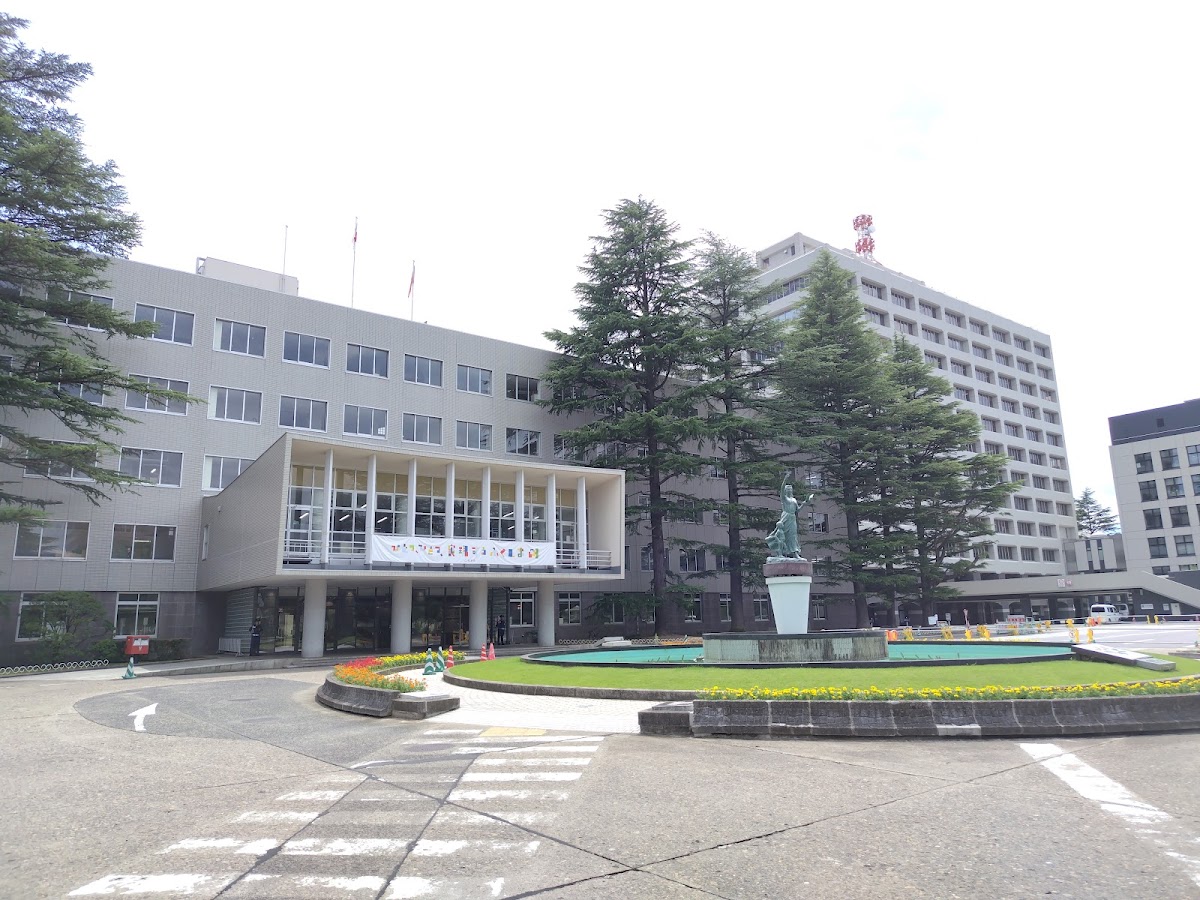
In 1876 (Meiji 9), when Fukushima Prefecture was established, the prefectural government building was constructed on the site of the former Fukushima Castle’s main keep. This gave the castle ruins a new role as the center of prefectural administration.
Currently, the Fukushima Prefectural Government and its surrounding facilities occupy most of the castle ruins, making it difficult to imagine the castle’s former appearance. However, traces of the former castle structure can be found in place names and road layouts.
Fukushima Castle in Fukushima City, Fukushima Prefecture: Existing Remains
Remaining Earthworks
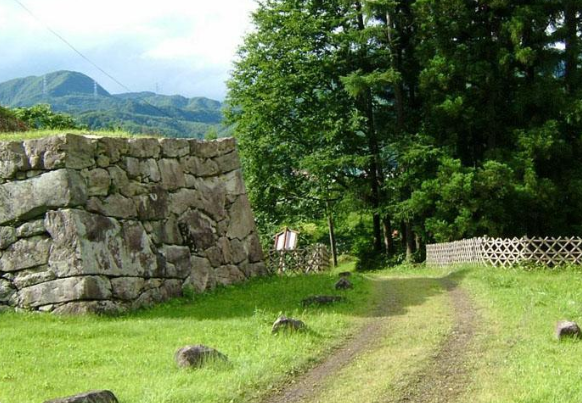
The most important remains of Fukushima Castle are a portion of the earthworks remaining behind the Fukushima Prefectural Government. These earthworks are part of the castle’s defensive facilities and are valuable physical evidence of Fukushima Castle’s existence.
The earthworks remain at a height of approximately 2-3 meters, providing clues to its former size. However, due to surrounding development, the area has been significantly altered and does not retain its original form completely.
Traces Remaining in Place Names and Town Layout
Although there are few remains of the castle itself, traces of the castle town era can be seen in the surrounding place names and town layout. Place names such as “Oyama,” “Omachi,” and “Kamimachi” reflect the structure of the castle and castle town.
Furthermore, traces suggesting the location of former moats and earthworks remain in the arrangement of roads and the shape of the plots. Using these as clues, we can imagine the appearance of the castle in its heyday.
Archaeological Excavations and Excavated Artifacts
In recent years, archaeological excavations have been conducted intermittently in conjunction with redevelopment and construction around the prefectural office. These investigations have unearthed remains of moats, buildings, and artifacts such as ceramics, gradually revealing the structure of the castle and the lifestyle of the people who lived there.
The excavated ceramics include Hizen-style porcelain and Seto/Mino-style pottery, confirming the position of Fukushima Castle within the Edo period’s distribution network.
Fukushima Castle in Joetsu City, Niigata Prefecture: Overview and Background of Construction
A New Base in Echigo Province
Fukushima Castle in Joetsu City, Niigata Prefecture, is a flatland castle built in 1607 (Keicho 12) by Hori Hideharu and his son Tadatoshi. It was located near the present-day Kojyo Elementary School (2-chome, Minato-machi, Joetsu City).
This castle was planned as a new capital of Echigo Province, integrating the functions of Kasugayama Castle, its castle town, and even the medieval Echigo provincial capital. Built on flat land, its design emphasizes not only military functions but also port and economic functions.
The Hori Clan’s Rule of Echigo and Relocation from Kasugayama Castle
In 1598 (Keicho 3), when Uesugi Kagekatsu was transferred to Aizu, Hori Hideharu entered Echigo as the lord of Kasugayama Castle. The Hori clan initially used Kasugayama Castle as their base of operations in Echigo Province. However, as a mountain castle, Kasugayama Castle proved inconvenient as a governing center in the early modern period, and a plan was made to relocate to flat land.
The Role of Chief Retainer Hori Kanemitsu Naomasa
The construction of Fukushima Castle was spearheaded by Hori Kanemitsu Naomasa, a chief retainer of the Hori clan. It is said that Naomasa designed Fukushima Castle as a castle that could fully utilize its military and port functions on flat land.
Taking advantage of its location near the Sea of Japan, the castle aimed to function as a hub for both maritime and land transportation. This demonstrates the shift in the role of castles in the early modern period from mere military bases to centers of economy and trade.
Fukushima Castle in Joetsu City, Niigata Prefecture: Structure and Scale
Scale as a Castle for Echigo Province
Fukushima Castle was a magnificent castle built on the scale of a castle for the entire province of Echigo. It was a full-fledged early modern castle with a main keep, second bailey, and third bailey, and its scale reflected the importance of Echigo Province.
The castle grounds extended approximately 600 meters east-west and 800 meters north-south, and were defended by a vast moat and earthen ramparts. It is presumed that the castle boasted impressive structures such as a keep and turrets, befitting a daimyo’s residence.
Integration with Port Functions
The most distinctive feature of Fukushima Castle is that it was designed as a castle that could fully utilize the functions of a port. Taking advantage of its location near the Sea of Japan, port facilities were developed in the castle town, functioning as a hub for maritime traffic.
This facilitated the transportation of goods and military deployments, contributing to the economic development of Echigo Province. It can be considered an advanced attempt in early modern castle planning.
Fukushima Castle in Joetsu City, Niigata Prefecture: Abandoned after only 7 years
Matsudaira Tadateru’s Appointment and the Construction of Takada Castle
In 1609 (Keicho 14), Matsudaira Tadateru, the sixth son of Tokugawa Ieyasu, replaced the Hori clan and was appointed to Echigo Province. Tadateru was married to Goro-hime, the daughter of Date Masamune, and held an important position within the Tokugawa family.
Tadateru decided to build a new castle, Takada Castle, instead of Fukushima Castle, as his base of operations in Echigo Province. Takada Castle was planned as a fortress located further inland and at a strategic transportation hub.
Reasons and Circumstances for the Abandonment
In 1614 (Keicho 19), when Takada Castle was completed, Fukushima Castle was abandoned after only 7 years. Several reasons can be considered for this rapid abandonment.
Firstly, Takada Castle had a more strategically superior location. Secondly, it was judged that a more stable system of rule could be established by shifting the political center inland while maintaining Fukushima Castle’s port functions. Thirdly, Matsudaira Tadateru may have intended to demonstrate his authority by building his own castle.
After its abandonment, the buildings of Fukushima Castle were dismantled, and it is believed that some of the materials were reused in the construction of Takada Castle.
Fukushima Castle, Joetsu City, Niigata Prefecture: Remains and Current Status
The Current State of Fukushima Castle Site
The Fukushima Castle site is located in the area around present-day Minatomachi, Joetsu City. The name of Kojō Elementary School indicates that a castle once stood on this site.
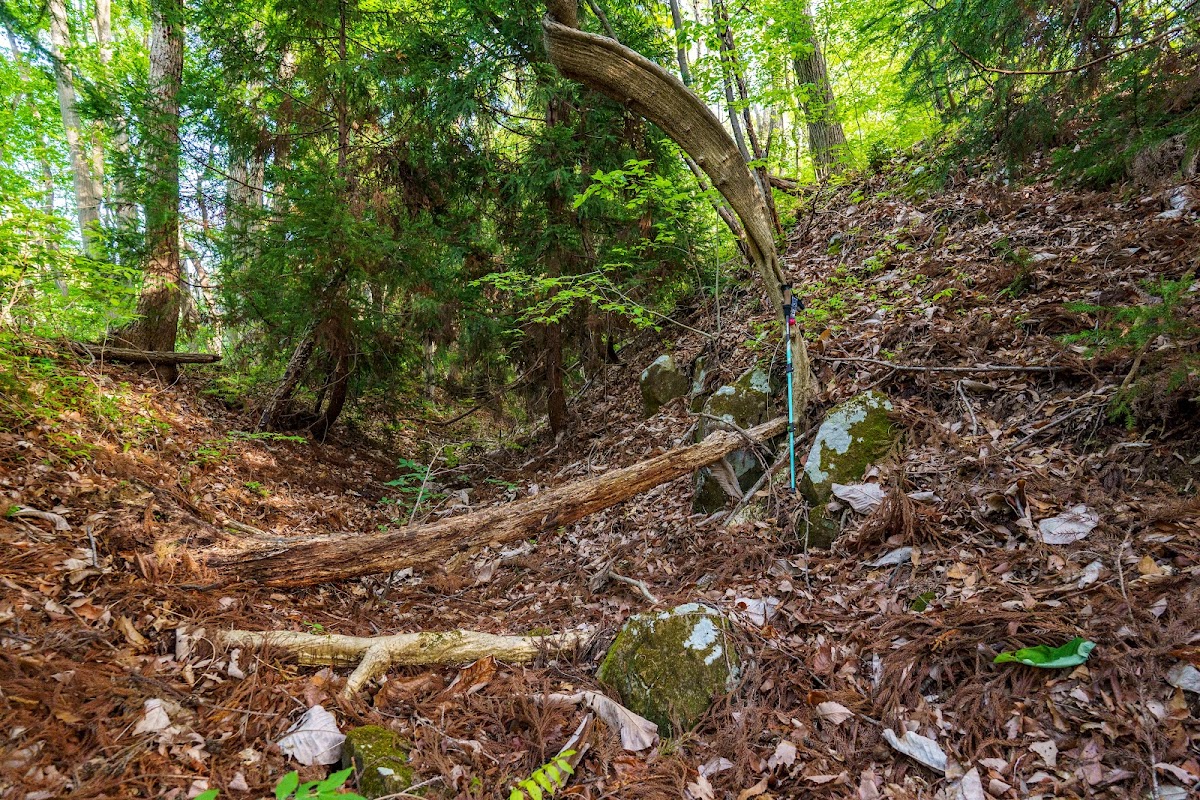
While most of the castle site has been lost due to urbanization, some traces of earthworks and moats remain. Furthermore, place names such as “Kojō” (古城) and “Shiroyama” (城山) remain, conveying the existence of the castle in its heyday.
Fukushima Castle Museum and Exhibits
Joetsu City has a Fukushima Castle Museum, which exhibits materials related to the history and structure of Fukushima Castle. Through artifacts unearthed during archaeological excavations and reconstructed models of the castle, visitors can learn about the appearance of Fukushima Castle in its heyday.
The museum provides detailed explanations of the Hori clan’s rule over Echigo Province and the circumstances leading to Matsudaira Tadateru’s construction of Takada Castle, making it an important facility for understanding the early modern history of Echigo Province.
Results of Archaeological Excavations
Recent archaeological excavations have confirmed the remains of moats and building foundations of Fukushima Castle. These investigations are revealing the specific structure of the castle, which was not apparent from documentary records alone.
In particular, the discovery of remains indicating a connection to port facilities provides important evidence that Fukushima Castle was planned not merely as a military base, but as an economic and distribution hub.
Historical Significance of the Two Fukushima Castles
Reflecting Early Modern Castle Policies
The two Fukushima Castles, one in Fukushima City, Fukushima Prefecture, and the other in Joetsu City, Niigata Prefecture, are both important examples reflecting early modern castle policies. They symbolize the changes of the era, such as the transition from mountain castles to flatland castles during the Sengoku period, and the functional shift from military bases to political and economic centers.
Both castles utilize natural rivers as outer moats, while their design, incorporating artificial moats and earthworks for defense, exhibits typical characteristics of flatland castles.
Role as a Center for Regional Control
Fukushima Castle (Fukushima Prefecture) served as the administrative center of the Fukushima Domain, encompassing Shinobu District, and played a central role in regional control. On the other hand, Fukushima Castle (Niigata Prefecture), planned as the capital of Echigo Province, was short-lived, its functions being succeeded by Takada Castle.
These examples provide valuable historical evidence of how early modern daimyo positioned and utilized castles for the purpose of governing their territories.
Impact on Castle Town Formation
Both castles significantly influenced the formation of their castle towns. The central part of Fukushima City developed based on the castle town of Fukushima Castle, and its influence can still be seen in the current urban structure.
In Joetsu City, despite Fukushima Castle’s short lifespan, it is believed to have had a certain influence on the subsequent formation of the Takada castle town.
Fukushima Castle Visitor Guide
Access to Fukushima Castle Ruins in Fukushima City, Fukushima Prefecture
Location: Sugitsuma-cho, Fukushima City, Fukushima Prefecture (around Fukushima Prefectural Government Office)
Access:
- Approximately 15 minutes on foot from JR Fukushima Station
- Immediately after alighting at “Prefectural Government Office” bus stop on the Fukushima Kotsu bus
- Approximately 15 minutes by car from Fukushima-Nishi IC on the Tohoku Expressway
Points to Note During Visit:
- Remains of earthworks behind the Fukushima Prefectural Government Office
- Imagine the past from the surrounding place names and town layout
- Be mindful that the Prefectural Government Building is located on the site of the main keep
Access to Fukushima Castle Ruins in Joetsu City, Niigata Prefecture
Location: 2-chome, Minato-machi, Joetsu City, Niigata Prefecture (around Kojyo Elementary School)
Access:
- Approximately 10 minutes by car from Naoetsu Station on the Echigo Tokimeki Railway Myoko Hanema Line
- Approximately 20 minutes by car from Joetsu IC on the Hokuriku Expressway
Points to Note During Visit:
- Learn about history at the Fukushima Castle Museum
- Imagine the castle grounds from the topography around Kojō Elementary School
- Realize the location close to the Sea of Japan
Related Historical Sites in the Surrounding Area
Around Fukushima City:
- Ōmori Castle Ruins: The castle first occupied by Kimura Yoshikiyo
- Shinobu Mountain: A symbol of Fukushima City and a historical site of mountain worship
Around Jōetsu City:
- Kasugayama Castle Ruins: Famous as the residence of Uesugi Kenshin
- Takada Castle Ruins: A castle built by Matsudaira Tadateru after the abandonment of Fukushima Castle
- Kasugayama Castle Ruins Story Museum: A facility where you can learn about the history of the Uesugi and Hori clans
Summary: Fukushima Castle Tells the Story of Japanese Castle History
The two castles called Fukushima Castle, while each having a different history in a different region, symbolize the role and transformation of castles in early modern Japan.
Fukushima Castle in Fukushima City, Fukushima Prefecture, functioned as a base for regional control from the Sengoku period through the Edo period, forming the foundation of present-day Fukushima City. Fukushima Castle in Joetsu City, Niigata Prefecture, was built under a grand vision to serve as the capital of Echigo Province, albeit for a short period of only seven years, demonstrating new possibilities for early modern castles.
Although much of the remains of both castles have been lost, we can still imagine their former glory through the remaining earthworks, the results of archaeological excavations, and intangible traces such as place names and town layouts. Visiting these castle ruins will be a valuable opportunity to understand Japanese history and the origins of the region.
For castle enthusiasts, comparing the two castles will allow you to appreciate the diversity and regional characteristics of early modern castle policies. Furthermore, for those interested in local history, Fukushima Castle will provide important clues to understanding the origins of the area.