Nagurumi Castle: The Complete Picture of the Historic Mountain Castle That Decided Toyotomi Hideyoshi’s Odawara Campaign
Nagurumi Castle is a Sengoku period mountain castle located in Shimotsu, Minakami-machi, Tone-gun, Gunma Prefecture. This castle is known for playing an extremely important role in Japanese history, and was the stage for the “Nagurumi Castle Incident,” which directly triggered Toyotomi Hideyoshi’s Odawara campaign and ultimately his unification of Japan. Built on a terrace overlooking the confluence of the Tone River and the Akatani River, it is a natural stronghold and is now a designated historical site of Gunma Prefecture, attracting many history enthusiasts.
Location and Geographical Characteristics of Nagurumi Castle
Nagurumi Castle is a hill castle built on the edge of a river terrace on the west bank of the Tone River. Located at an altitude of approximately 440 meters, it is a natural stronghold with the Tone River to the east and the Akatani River to the west. The castle’s location, with steep cliffs on both sides, offered a geographical advantage that made enemy incursions difficult.
This location also held significant military importance. Situated approximately 3 kilometers south of Numata Castle, and overlooking the Mikuni Highway (present-day National Route 17), it controlled a crucial transportation hub connecting Kōzuke Province (Gunma Prefecture) and Echigo Province (Niigata Prefecture). For the Sanada clan, it was a vital base on the communication route between Shinshu Ueda and Numata, and for the Hōjō clan, it was a strategically important location holding the key to controlling northern Kōzuke Province.
History and Development of Nagurumi Castle
Muromachi Period: Construction of a Residence by the Nagurumi Clan
The origins of Nagurumi Castle date back to the Muromachi period. It is believed to have begun when the Nagurumi clan, thought to be a branch of the Numata clan, built a residence on this site. At that time, it is presumed to have functioned more as a residence for a local lord than as a full-fledged castle. The Numata clan was a powerful local lord in northern Kōzuke Province, and the fact that their branch, the Nagurumi clan, ruled this strategically important area speaks to its strategic importance.
Sengoku Period: The Era of the Takeda Clan and Sanada Masayuki
During the Eiroku era (1558-1570), Uesugi Kenshin captured Numata Castle, and the Numata region came under the control of the Uesugi clan.
In 1579, Sanada Masayuki, a vassal of Takeda Katsuyori, advanced into the Nagurumi area at his lord’s command. Sanada Masayuki largely renovated his existing residence and built Nagurumi Castle as a full-fledged mountain castle. During this period, Sanada Masayuki also controlled Numata Castle, and Nagurumi Castle functioned as an important subsidiary castle of Numata Castle. The construction of the castle by Sanada Masayuki was not merely the construction of a defensive structure. He adopted a refined design employing a linear layout, arranging the main enclosures—the outwork, third enclosure, second enclosure, main enclosure, and secondary enclosure—in a straight line. This demonstrates Sanada Masayuki’s high level of castle-building skill and is a typical example of a Sengoku period mountain castle that made maximum use of limited terrain.
The Tensho-Jingo War and the Issue of Numata Territory’s Ownership
In 1582, following the fall of Oda Nobunaga in the Honnoji Incident and the downfall of the Takeda clan, the Tensho-Jingo War erupted, a fierce conflict between the Hojo, Tokugawa, and Uesugi clans over the former Takeda territory. Sanada Masayuki, through skillful diplomatic strategies, navigated this turbulent period and maintained control of the Numata territory.
In 1585 (Tensho 13), a peace agreement was reached between Tokugawa Ieyasu and Hojo Ujinao, raising the issue of the ownership of the Numata territory. Sanada Masayuki, despite being a Tokugawa vassal, refused to cede the Numata territory, leading to continued tension with the Hojo clan.
The Nagurumi Castle Incident: A Turning Point in the Unification of Japan
In October 1589 (Tensho 17), an event that would significantly alter Japanese history occurred. This was the “Nagurumi Castle Incident.”
At the time, Toyotomi Hideyoshi was attempting to bring the Hojo clan of the Kanto region under his control as the final step in unifying Japan. Hideyoshi’s ruling established a peace agreement where Numata Castle, east of the Tone River, was Hojo territory, and Nagurumi Castle, west of the river, was Sanada territory. However, Inomata Kuninori, the Numata Castle lord under the Hojo clan, launched a surprise attack on Nagurumi Castle and seized it.
It is said that Suzuki Shigenori (a vassal of the Sanada clan), the lord of the castle, was driven out, and the wife of Nakayama Kurobei, the castle deputy, committed suicide. While there are various theories regarding the details of this incident, one theory suggests that Sanada Masayuki cleverly provoked the Hojo clan and trapped Inomata Kuninori.
Toyotomi Hideyoshi was furious upon learning of this incident. It was a clear violation of the “General Peace Edict” (a decree prohibiting private warfare) that Hideyoshi had issued, and the Hojo clan’s agreement actions in breaking the peace were unforgivable. Hideyoshi immediately ordered Hojo Ujimasa and his son Ujinao to go to Kyoto, but the Hojo clan refused, leading to the decision to launch the Siege of Odawara in 1590.
The Nagurumi Castle Incident was a decisive event that gave Toyotomi Hideyoshi a legitimate justification for his campaign against the Hojo clan. Events at this small mountain castle triggered the siege of Odawara, involving an army of over 200,000 men, ultimately leading to the downfall of the Hojo clan and Toyotomi Hideyoshi’s unification of Japan.
Nagurumi Castle After the Siege of Odawara
Following the Hojo clan’s downfall in the Siege of Odawara in 1590, Sanada Masayuki was granted control of the Numata territory. However, in the same year, Sanada Masayuki was transferred to Ueda, and Sanada Nobuyuki (Nobuyuki) took over Numata Castle. It is believed that Nagurumi Castle had fulfilled its purpose and was abandoned after a short period of just over 10 years.
Afterward, Nagurumi Castle disappeared from the forefront of history, but its remains have been preserved in excellent condition, conveying the appearance of a Sengoku period mountain castle to this day.
Layout and Remains of Nagurumi Castle
The most distinctive feature of Nagurumi Castle is its multi-bailey layout. The clearly visible remains today reveal the high level of Sanada Masayuki’s castle-building skills.
Umadashi (Horse Outpost)
The Umadashi is a defensive structure located at the southernmost point of the castle. It was an important facility that not only prevented enemy intrusion but also functioned as a base for sorties from the castle. The Umadashi of Nagurumi Castle is crescent-shaped and protected by a moat and earthen rampart. This shape is one of the characteristics of the Takeda-style castle construction, showing that Sanada Masayuki utilized his experience as a vassal of the Takeda clan.
Sankaku (Third Enclosure)
Located north of the Umadashi is the Sankaku. Measuring approximately 40 meters east-west and 30 meters north-south, it served as the first line of defense for the castle. A deep moat separates the Sankaku from the Nikaku, creating a structure that hindered enemy intrusion. Archaeological excavations have confirmed building remains and post holes in the Sankaku, suggesting the presence of soldiers’ quarters and watchtowers.
Second Enclosure (Nikaku)
Located north of the third enclosure (Sankuru), the second enclosure measures approximately 50 meters east-west and 40 meters north-south, and is one of the core enclosures of Nagurumi Castle. It is believed that the lord’s residence and the residences of senior retainers were located within the second enclosure. A moat was also constructed between the second enclosure and the main enclosure (Honkuru), employing a multi-layered defensive structure.
Main Enclosure (Honkuru)
The main enclosure (Honkuru), the heart of Nagurumi Castle, was built on the highest point, measuring approximately 45 meters east-west and 35 meters north-south. From the main enclosure, one could overlook the Tone River and surrounding roads, making it an ideal location for a military command post. Earthen ramparts surrounded the main enclosure, and in some places, their height remains more than 2 meters.
The remains of a well have also been confirmed within the main enclosure, indicating that facilities for siege warfare were in place. Furthermore, the remains of foundation stones for a building have been discovered, suggesting the existence of a high-ranking building.
Sasakuruwa
Located north of the main enclosure, Sasakuruwa is the northernmost enclosure of Nagurumi Castle. The origin of the name “Sasakuruwa” is unclear, but one theory suggests it comes from “Sasakuruwa,” meaning a small enclosure. It is believed to have functioned as a lookout point and a defensive structure against incursions from the north.
Moats and Earthworks
The core of Nagurumi Castle’s defensive system lies in the moats and earthworks that separate each enclosure. The moats are over 5 meters deep in some places, forming a strong barrier that physically prevented enemy incursions. The earthworks surround the enclosures, reaching heights of 2-3 meters in some sections. These remains are still well-preserved today, allowing visitors to appreciate the castle-building techniques of the Sengoku period.
Archaeological Excavations and Excavated Artifacts
Since the Heisei era, multiple archaeological excavations have been conducted at Nagurumi Castle. These investigations have confirmed the remains of buildings, post holes, wells, and pits. The excavated artifacts include ceramic fragments, iron products, coins, and roof tile fragments, providing valuable information about the castle’s actual state.
Of particular note is the discovery of high-quality ceramics such as Tenmoku tea bowls and celadon. These are thought to have been used by someone of the castle’s lord’s class, indicating that Nagurumi Castle was not merely a military facility but a fortress of a certain status.
Sanada Masayuki and Nagurumi Castle
Indispensable to understanding Nagurumi Castle is the existence of its builder, Sanada Masayuki. Sanada Masayuki is known as a brilliant strategist who served Takeda Shingen and Katsuyori, and was a rare individual who survived as a minor daimyo after the fall of the Takeda clan through skillful diplomatic strategies.
Sanada Masayuki built Nagurumi Castle in 1579 (Tensho 7), making it his base for governing the Numata territory. While Masayuki’s castle-building techniques were based on the Takeda style, they also show unique ingenuity in skillfully utilizing the terrain. The design, which maximized defensive capabilities within the limited terrain, including the interconnected layout, deep moats, and the placement of barbicans, demonstrates Masayuki’s military talent.
Masayuki Sanada’s involvement has also been pointed out in the Nagurumi Castle Incident. According to one theory, Masayuki provoked the Hojo clan into attacking Nagurumi Castle, giving Toyotomi Hideyoshi a pretext to attack the Hojo, thereby solidifying his control over the Numata territory. While the veracity of this is uncertain, it is a story that has been passed down as an episode illustrating Masayuki’s strategic genius.
Current Status and Development of Nagurumi Castle Ruins
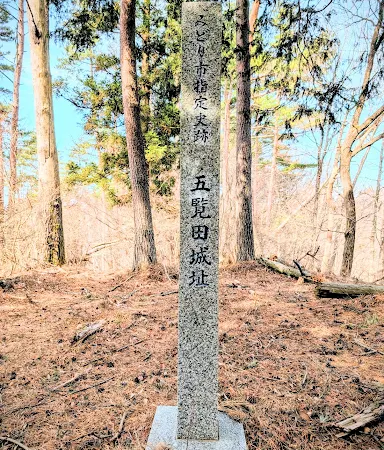
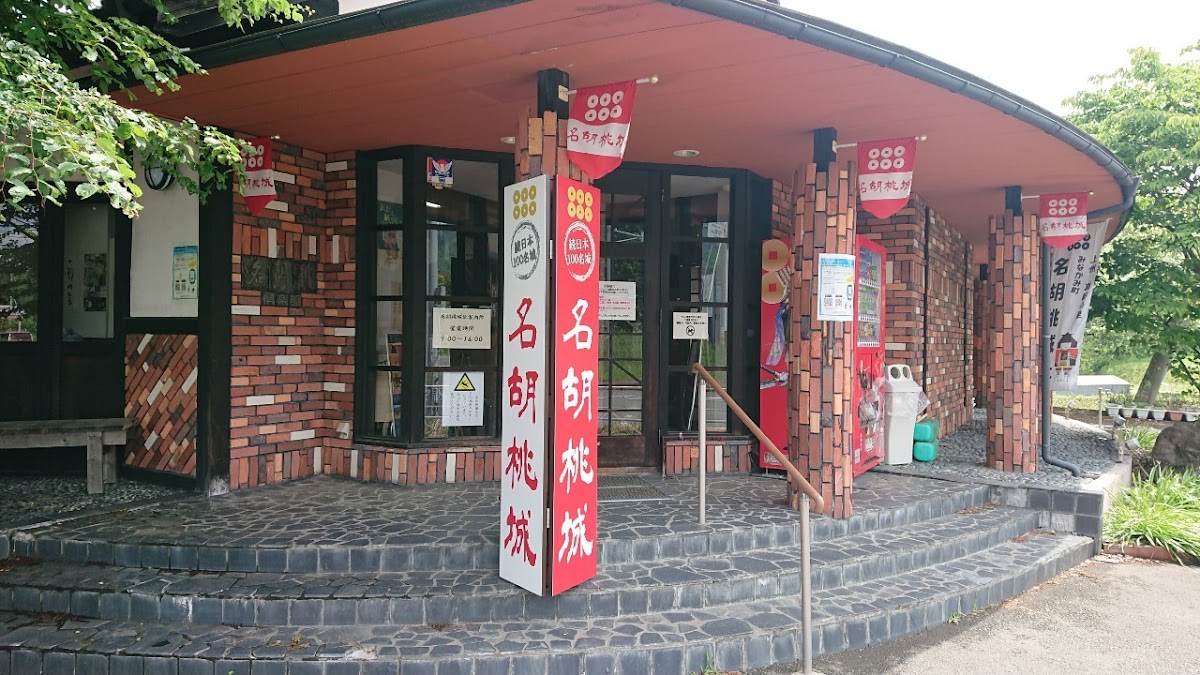
The current Nagurumi Castle ruins are a Gunma Prefecture designated historical site and are open to the public. At the entrance facing National Route 17, there is the “Nagurumi Castle Ruins Information Center,” where you can receive detailed explanations about the castle’s history and remains. The information center displays replicas of excavated artifacts, layout maps, and explanatory panels, making it ideal for gaining background knowledge before visiting. A walking path is maintained within the castle grounds, allowing visitors to explore the site from the horse enclosure to the main enclosure and the surrounding enclosures. Each enclosure has an explanatory sign, providing information about its role and historical background. The remains are well-preserved, allowing for clear observation of the moats, earthworks, and enclosure shapes.
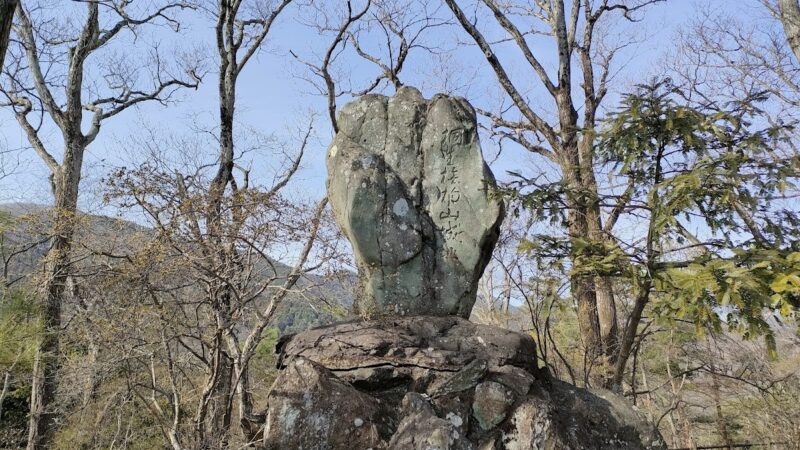
The view from the main enclosure is particularly magnificent, offering a panoramic view of the Tone River flowing below, the city of Numata on the opposite bank, and the distant mountains of Tanigawa-dake. Experiencing this view will give you a real sense of the strategic importance of Nagurumi Castle.
In recent years, guided tours by the local volunteer group “Minakami Town Historical Guide Association” have been offered, allowing for a deeper understanding of Nagurumi Castle’s history. The guides possess extensive knowledge not only of the castle’s history but also of the Sanada clan’s relationship with the Numata region and the details of the Nagurumi Castle Incident, providing a significantly deeper understanding than a solo visit.
Access and Tourist Information
Access to Nagurumi Castle Ruins are relatively easy.
Access by Car:
- Approximately 6 minutes from the Tsukiyono Interchange on the Kan-Etsu Expressway
- Located along National Route 17, with ample free parking available.
Access by Public Transportation:
- Approximately 7 minutes by taxi from Jōmō-Kōgen Station on the Jōetsu Shinkansen
- Approximately 10 minutes by taxi from Gokan Station on the JR Jōetsu Line
Nagurumi Castle Ruins Information Center:
- Opening Hours: 9:00 AM – 5:00 PM (may vary seasonally)
- Closed: Tuesdays, New Year holidays
-Admission Fee: Free
- Address: 3462-2 Shimotsu, Minakami-machi, Tone-gun, Gunma Prefecture
When visiting, we recommend wearing comfortable shoes and clothing. There are slopes and stairs within the castle ruins, and the ground can be particularly slippery after rain. Remember to bring insect repellent in the summer and warm clothing in the winter.
Related Historical Sites in the Surrounding Area
When visiting Nagurumi Castle, we recommend also visiting the surrounding historical sites associated with the Sanada clan.
Numata Castle Ruins
Numata Castle, located approximately 3 kilometers north of Nagurumi Castle, was the castle of Sanada Nobuyuki (Nobuyuki). It is now developed as Numata Park, with some of the stone walls and moats remaining. It is also known as a cherry blossom viewing spot, attracting many visitors in spring.
Iwagutsu Castle Ruins
Iwagutsu Castle, which Sanada Masayuki used as a base for his advance into Numata, is located in Higashiagatsuma Town, approximately 30 kilometers southwest of Nagurumi Castle. Built on a sheer rocky mountain, it was known as an impregnable fortress.
Ueda Castle
Ueda Castle, built by Sanada Masayuki and his son Nobushige (Yukimura), is located in Ueda City, Nagano Prefecture. Although it’s about a two-hour drive from Nagurumi Castle, it’s well worth a visit as the Sanada clan’s base.
The Impact of Nagurumi Castle on Japanese History
Nagurumi Castle, a small mountain castle used for only a little over ten years, had an immeasurable impact on Japanese history. Without the Nagurumi Castle Incident, Toyotomi Hideyoshi’s Odawara Campaign might have unfolded differently, and the timing of the unification of Japan might have been different as well.
The fall of the Hojo clan after the Odawara Campaign meant that the Kanto region became Tokugawa Ieyasu’s territory, paving the way for the establishment of the Edo Shogunate. Furthermore, the actions of the various daimyo who participated in this battle influenced the East-West division at the subsequent Battle of Sekigahara.
For the Sanada clan, the Nagurumi Castle Incident was also a crucial turning point. The incident solidified the Sanada clan’s control over the Numata territory, allowing the Sanada family, despite being a minor daimyo, to survive the Sengoku period. It can be said that Sanada Nobushige (Yukimura), who later distinguished himself in the Siege of Osaka and was praised as “Japan’s greatest warrior,” was greatly influenced by the skillful strategies demonstrated by his father, Masayuki, at Nagurumi Castle.
Preservation of Nagurumi Castle and Future Challenges
Nagurumi Castle ruins are protected as a Gunma Prefecture designated historical site, but appropriate preservation and management are still required. In recent years, the value of castle historical sites has been re-recognized, and many tourists are visiting, but there are concerns about the resulting damage to the remains.
Minakami Town has formulated a preservation and utilization plan for Nagurumi Castle ruins, aiming to balance the protection of the remains with tourism. Regular mowing, tree management, and maintenance of walking paths are carried out, and the environment of the castle ruins is maintained with the cooperation of local residents and volunteers.
Future challenges include clarifying the actual state of the castle through more detailed archaeological excavations, preserving excavated artifacts and improving exhibition facilities, and recreating its appearance in its heyday using digital technology. Furthermore, the establishment of a wider regional tourist route through collaboration with other castles associated with the Sanada clan (such as Numata Castle, Iwagutsu Castle, and Ueda Castle) is also anticipated.
Summary: A Small Castle Changed Japanese History
Nagurumi Castle, though small for a mountain castle of the Sengoku period, is an extremely important castle that marked a turning point in Japanese history. The castle’s multi-bailey layout, a culmination of Sanada Masayuki’s castle-building techniques, its natural fortifications, and above all, its role as the stage for the historical event known as the Nagurumi Castle Incident, have forever etched its name in history.
Today, visiting the Nagurumi Castle ruins allows you to feel the spirit of the Sengoku period from the well-preserved remains. Looking down at the Tone River from the main bailey and imagining the view seen by Sanada Masayuki and his soldiers will be a valuable experience that evokes a sense of historical romance.
When visiting Minakami Town in Gunma Prefecture, be sure to visit the Nagurumi Castle ruins. You can experience firsthand the moment when a small mountain castle dramatically changed the course of Japanese history. Nagurumi Castle is an irreplaceable historical heritage site that tells the story of the end of the Sengoku period, Toyotomi Hideyoshi’s unification of Japan, and the strategic brilliance of the Sanada clan.