Dewa Maruoka Castle, Tsuruoka City (Yamagata Prefecture) Complete Guide: History, Highlights, and Access Information
What is Dewa Maruoka Castle?
Dewa Maruoka Castle is a flatland castle located in Maruoka-cho, Tsuruoka City, Yamagata Prefecture. It is currently maintained as Maruoka Castle Historical Park and designated as a historical site of Yamagata Prefecture. As an important castle ruin that tells the history of the Shonai region from the Sengoku period to the early Edo period, it attracts attention from castle enthusiasts and history lovers.
The greatest feature of Dewa Maruoka Castle is that the remains such as earthworks, moats, and gardens are well-preserved. Although no buildings remain, it is a valuable historical site that allows us to understand the basic structure of a castle and conveys the history of the region to the present day.
History of Dewa Maruoka Castle
Construction History and Changes in Castle Lords
Dewa Maruoka Castle functioned as an important branch castle in the Shonai region during the Sengoku period. This region was part of Dewa Province and was a battleground for the power struggles of Sengoku-era daimyo such as the Mogami and Uesugi clans.
While there are various theories regarding the castle’s construction date, it is believed to have been built by a local lord in the Shonai region during the mid-to-late Sengoku period. Initially, it functioned as the residence of a local powerful family or minor lord, and was one of the military strongholds in the Shonai Plain.
The Era of the Mogami and Uesugi Clans
From the late 16th to the early 17th century, Dewa Maruoka Castle became embroiled in the power struggle between the Mogami and Uesugi clans. The Mogami clan, based in Yamagata, sought to expand their influence into the Shonai region. Meanwhile, the Uesugi clan aimed to expand their power from Echigo to southern Dewa Province, resulting in fierce conflict between the two.
During this period, Dewa Maruoka Castle served as an important branch castle and a base for regional control. The castle’s lords changed over time, reflecting the political situation of the region.
The Edo Period and the Abandonment of the Castle
During the Edo period, the Shonai region came under the control of the Shonai Domain. The Mogami clan was dispossessed of their domain in 1622, and the Sakai clan subsequently became the lords of the Shonai Domain. The Sakai clan governed the Shonai region from Tsurugaoka Castle, with Dewa Maruoka Castle serving as a subsidiary castle.
However, due to the Edo shogunate’s “One Castle Per Province” decree, its military importance gradually declined. While the exact date of its abandonment is unclear, it is believed that the castle lost its function from the early to mid-Edo period.
Even after its abandonment, traces of the castle remained in the land divisions and topography, and the name “Maruoka Castle” was passed down by the local people.
Structure and Layout of Dewa Maruoka Castle
Characteristics as a Flatland Castle
Dewa Maruoka Castle is a typical flatland castle, built on the flat terrain of the Shonai Plain. Rather than utilizing natural fortifications like mountain castles, this castle was designed to enhance its defenses through artificial earthworks and moats.
Flatland castles are well-suited to strategic locations and controlling plains, and Dewa Maruoka Castle was built in a position to control regional transportation routes. Because it was built on flat ground, it offered excellent visibility throughout the castle grounds, allowing for early detection of enemy movements.
Structure of Earthworks
One of the most important remains of Dewa Maruoka Castle is its earthworks. Earthworks remain in various parts of the castle grounds today, providing valuable clues to understanding the castle’s structure at the time.
The earthworks are arranged to surround the outer perimeter of the castle, and while their height varies depending on the location, some are several meters high. The tops of the earthworks are flat, suggesting the presence of defensive passages and fences.
The construction techniques of the earthworks reveal characteristics of castle building technology from the Sengoku period to the early Edo period. Techniques such as rammed earth construction and earthworks are important evidence of the level of civil engineering technology at the time.
Moat Layout
Dewa Maruoka Castle still retains the remains of a water moat. Moats played a crucial role in the castle’s defense, serving as a physical barrier against enemy intrusion.
The moats that can be seen today remain in only a portion of the castle grounds, providing clues to their original size and shape. The Shonai Plain is a water-rich area, making it relatively easy to draw water into the moats.
While the width and depth of the moats vary by location, it is estimated that the main defensive lines had moats over 10 meters wide. The combination of moats and earthworks created an effective defensive system.
Garden Remains
A notable feature of Dewa Maruoka Castle is the presence of garden remains. While gardens were not uncommon in castles from the Sengoku period to the early Edo period, examples of garden remains at regional branch castles are limited.
The garden is thought to have been adjacent to the lord’s living space, and traces of ponds and stonework remain. The existence of the garden indicates that this castle was not merely a military facility, but also functioned as the living space of the castle lord.
The style of the garden is influenced by the samurai culture and tea ceremony culture of the time, and is thought to reflect the lord’s refinement and aesthetic sense.
Highlights of Dewa Maruoka Castle
Maruoka Castle Historical Park
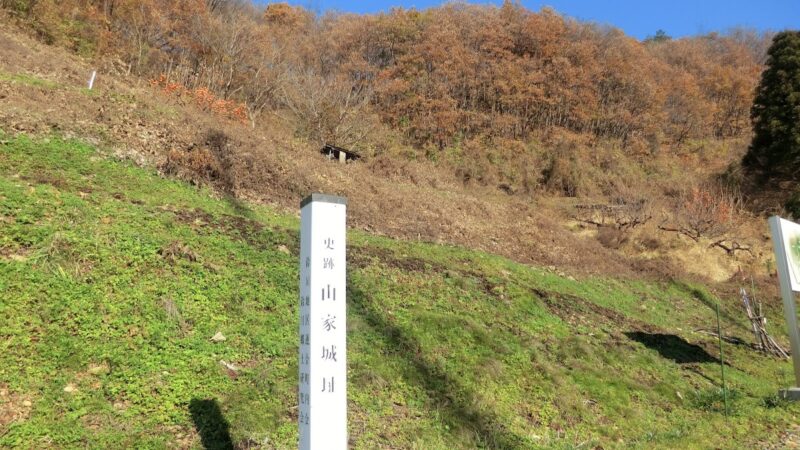
Currently, the site of Dewa Maruoka Castle has been developed into Maruoka Castle Historical Park and is open to the public. The park has well-maintained walking paths, creating a pleasant environment for sightseeing.
Information boards are installed within the park, allowing visitors to learn about the castle’s history and structure. The locations of earthworks and moats are clearly marked, allowing visitors to imagine the castle’s structure as it was at the time.
In spring, cherry blossoms bloom, and in autumn, the autumn leaves are beautiful, making it an attractive spot to enjoy the changing seasons while exploring history.
Remains of Earthworks and Moats
Visiting the site in person allows you to experience the height of the earthworks and the scale of the moats. You’ll be able to feel the actual power and presence of the castle, something that can’t be conveyed through photographs and documents alone.
There are places where you can climb the earthworks, and by looking out over the castle grounds from atop the ramparts, you can experience the perspective of the castle’s soldiers at the time. By examining the surrounding terrain and views, you can understand why the castle was built in this location.
Parts of the moat remains still hold water, allowing you to imagine its appearance at the time. By observing the cross-section of the moat, you can confirm the depth of the excavation and its relationship to the earthworks.
Exploring the Garden Ruins
The garden ruins are preserved in a corner of the park, and you can imagine what the garden looked like in its heyday from the stonework and the undulations of the terrain. Imagining the warlords of the Sengoku period contemplating while gazing at this garden evokes a sense of historical romance.
The area around the garden is a quiet environment, and we recommend taking your time to explore it. This is a place where you can truly appreciate the unique characteristics of Dewa Maruoka Castle, which combines not only castle ruins but also the cultural aspect of its garden.
Surrounding Historical Landscape
The area surrounding Dewa Maruoka Castle retains traces of settlements and roads from that time. While its function as a castle town is thought to have been limited, people’s living spaces extended adjacent to the castle.
Exploring the surrounding area allows you to understand the relationship between the castle and the local community. There’s also the enjoyment of deciphering history from place names and topography, offering a deeper experience of historical exploration.
Historical Connections with Surrounding Castles
Relationship with Tsurugaoka Castle
Understanding Dewa Maruoka Castle is crucial to understanding its relationship with Tsurugaoka Castle. Tsurugaoka Castle was the central castle where the Shonai Domain’s administrative office was located, situated in the present-day center of Tsuruoka City.
Dewa Maruoka Castle functioned as a subsidiary castle of Tsurugaoka Castle, playing a part in the defense network of the Shonai region. The distance between the two castles was approximately 5 kilometers, suggesting a system of mutual cooperation for regional defense.
Tsurugaoka Castle is now maintained as Tsuruoka Park, with remnants such as moats and stone walls remaining. Visiting Dewa Maruoka Castle in conjunction with these castles allows for a comprehensive understanding of the castle network in the Shonai region.
Oura Castle and Yokoyama Castle
Near Dewa Maruoka Castle, there were other castles such as Oura Castle and Yokoyama Castle. These castles each played an important role in the defense system of the Shonai region.
Oura Castle is located approximately 6 kilometers from Dewa Maruoka Castle and served as a defensive base along the Sea of Japan coast. Yokoyama Castle is approximately 5.8 kilometers away and was positioned to control inland transportation routes.
The network connecting these castles supported the security of the Shonai region.
Fujishima Castle and Hiragata Manor
Fujishima Castle is located approximately 8 kilometers from Dewa Maruoka Castle, and Hiragata Manor is approximately 8.5 kilometers away. These castles also played important roles in the history of the Shonai region.
Visiting the castles of the Shonai region allows for a three-dimensional understanding of the region’s history from the Sengoku period to the Edo period.
Access Information
Access by Public Transportation
When visiting Dewa Maruoka Castle by public transportation, the nearest station is Tsuruoka Station on the JR Uetsu Main Line. The distance from Tsuruoka Station to Maruoka Castle Historical Park is approximately 10 kilometers.
From Tsuruoka Station, you can use buses or taxis. If using Shonai Kotsu buses, take a bus bound for Maruoka, get off at the nearest bus stop, and then walk. Since bus services are limited, it is recommended to check the timetable in advance.
If using a taxi, it takes approximately 15 minutes from Tsuruoka Station. The fare is approximately 2,000 to 3,000 yen one way.
Access by Car
Access by car is the most convenient. It takes approximately 15 minutes from the Tsuruoka Interchange on the Yamagata Expressway.
From the center of Tsuruoka City, you can access the castle via national and prefectural roads. Entering “Maruoka Castle Historical Park” or “Maruoka-cho, Tsuruoka City” into your car’s navigation system will guide you to your destination.
The park has a parking lot, which is free to use. However, parking spaces are limited, so be aware of potential crowds.
Estimated Visiting Time
A thorough visit to Maruoka Castle in Dewa Province takes approximately 30 minutes to 1 hour. To examine the remains of the earthworks and moats, explore the garden ruins, and stroll around the surrounding area, you will likely need about 1 hour.
If you plan to take photographs or learn more about the history, we recommend spending more time.
Precautions for Visiting
Maruoka Castle Historical Park is an outdoor historical site and is affected by the weather. Wear appropriate footwear as the ground can be slippery in rainy weather.
In summer, the sun is strong, so we recommend bringing a hat and sunscreen. In winter, there may be snow, so warm clothing is necessary.
The park may have limited facilities such as vending machines and restrooms. It is recommended to prepare in advance before visiting.
History and Tourism of Tsuruoka City
Central City of the Shonai Region
Tsuruoka City, Yamagata Prefecture, has developed as the central city of the Shonai region. Surrounded by mountains on three sides, the Shonai Plain stretches out before it, blessed with a rich natural environment.
The snowmelt from the foothills nourishes the land, creating fertile soil. Therefore, agriculture thrives, and it is known as one of Japan’s leading rice-producing areas. Shonai rice, in particular, is highly regarded nationwide.
Historical Facilities of Tsuruoka City
Besides Dewa Maruoka Castle, Tsuruoka City has many other historical facilities. Tsuruoka Park (formerly Tsurugaoka Castle), Chido Museum, and Shonai Shrine are just a few examples of the many facilities that convey the history of the Shonai Domain.
The city also has educational institutions such as Yamagata Prefectural Tsuruoka Minami High School and Yamagata Prefectural Tsuruoka Technical High School, as well as cultural facilities such as the Tsuruoka City Cultural Hall. Advanced research facilities, such as the Tsuruoka Town Campus of Keio University’s Institute for Advanced Biosciences, are located in the area.
Nearby Tourist Attractions
There are many tourist attractions around Tsuruoka City. Yunohama Onsen, facing the Sea of Japan, is a popular hot spring resort along the coast. Atsumi Onsen is also a historic hot spring area that attracts many tourists.
The Dewa Sanzan (Mt. Haguro, Mt. Gassan, and Mt. Yudono) are known as sacred sites of Shugendo (mountain asceticism), and Mt. Haguro, with its national treasure five-story pagoda, is particularly famous.
Kamo Aquarium is a world-famous aquarium known for its jellyfish exhibits. Tsuruoka City is also known as a filming location for the movie “Departures.”
Preservation and Utilization of Dewa Maruoka Castle
Value as a Historic Site
Dewa Maruoka Castle is designated as a historical site of Yamagata Prefecture and is protected as an important cultural property of the region. The remains, such as earthworks, moats, and gardens, are invaluable resources for studying castle architecture from the Sengoku period to the early Edo period.
Despite being a regional subsidiary castle, the fact that such well-preserved remains exist is rare, giving it high academic value.
Local History Education
Maruoka Castle Historical Park is also used as a site for local history education. It is used by many people, including local elementary and junior high school students for local history studies and history enthusiasts for research.
The provision of information boards and explanatory panels creates an environment where visitors can learn independently. It plays an important role in passing on local history to future generations.
Future Challenges and Prospects
The preservation and utilization of the historical site requires continuous efforts. Preservation measures to prevent deterioration of the remains, as well as daily maintenance such as mowing and tree management, are crucial.
Utilizing it as a tourist resource is also a challenge. Collaboration with surrounding tourist spots, strengthening information dissemination, and improving access are needed.
It is hoped that local residents, the government, and researchers will cooperate to protect the value of Dewa Maruoka Castle and pass it on to future generations.
Information for Castle Enthusiasts
Records of Castle Visits
Within the castle enthusiast community, Dewa Maruoka Castle is recognized as a target for “castle visits.” Websites such as Kojodan (Castle Visitors’ Group) share visitor ratings, photos, and castle notes (highlights).
The average rating is around 3.00, and the average visit time is about 36 minutes. The number of visitors is around 110 (as of the time of data), making it a relatively less-visited, hidden gem of a castle.
Photography Tips
Dewa Maruoka Castle is also an attractive subject for photography. There are various subjects to photograph, such as the ridges of the earthworks, the surface of the moat, and the stonework of the garden.
You can enjoy the changing scenery of the seasons: cherry blossoms in spring, fresh greenery in summer, autumn leaves, and snowscapes in winter. The changes in light in the early morning and at dusk are also beautiful, so visiting at different times of the day is recommended.
Taking photos from the top of the earthworks allows you to capture a panoramic view of the entire castle grounds. Photographing the earthworks across the moat provides an impressive representation of the castle’s defensive structure.
Related Books and Materials
For those who wish to learn more about Dewa Maruoka Castle, the following resources may be helpful:
- Books on castles in Yamagata Prefecture
- Local history books dealing with the history of the Shonai region
- Specialized books on castle research
- Materials from local museums and libraries
The Chido Museum and Tsuruoka City Library have extensive collections of materials on the history of the Shonai region. Checking these materials before your visit will lead to a deeper understanding.
Summary
Dewa Maruoka Castle is a valuable castle ruin remaining in Tsuruoka City, Yamagata Prefecture. The remains, including the earthworks, moats, and gardens, are well-preserved, conveying the history from the Sengoku period to the early Edo period.
Dewa Maruoka Castle has walked hand in hand with the history of the region, passing through the eras of the Mogami clan, the Uesugi clan, and the Sakai clan of the Shonai Domain. Currently, the site is maintained as Maruoka Castle Historical Park, making it a historical spot easily accessible to everyone.
When visiting Tsuruoka City, be sure to visit Dewa Maruoka Castle. You’ll have a valuable experience feeling the romance of history amidst the rich natural beauty of the Shonai Plain. Visiting it along with nearby Tsurugaoka Castle and other castles will give you a comprehensive understanding of the castle network in the Shonai region.
Dewa Maruoka Castle offers a variety of ways to enjoy yourself, from historical walks and photography to nature observation. Why not embark on a journey to explore the history of Shonai?