Chausuyama Castle (Bizen Province) Complete Guide: A Thorough Explanation of History, Remains, and Access
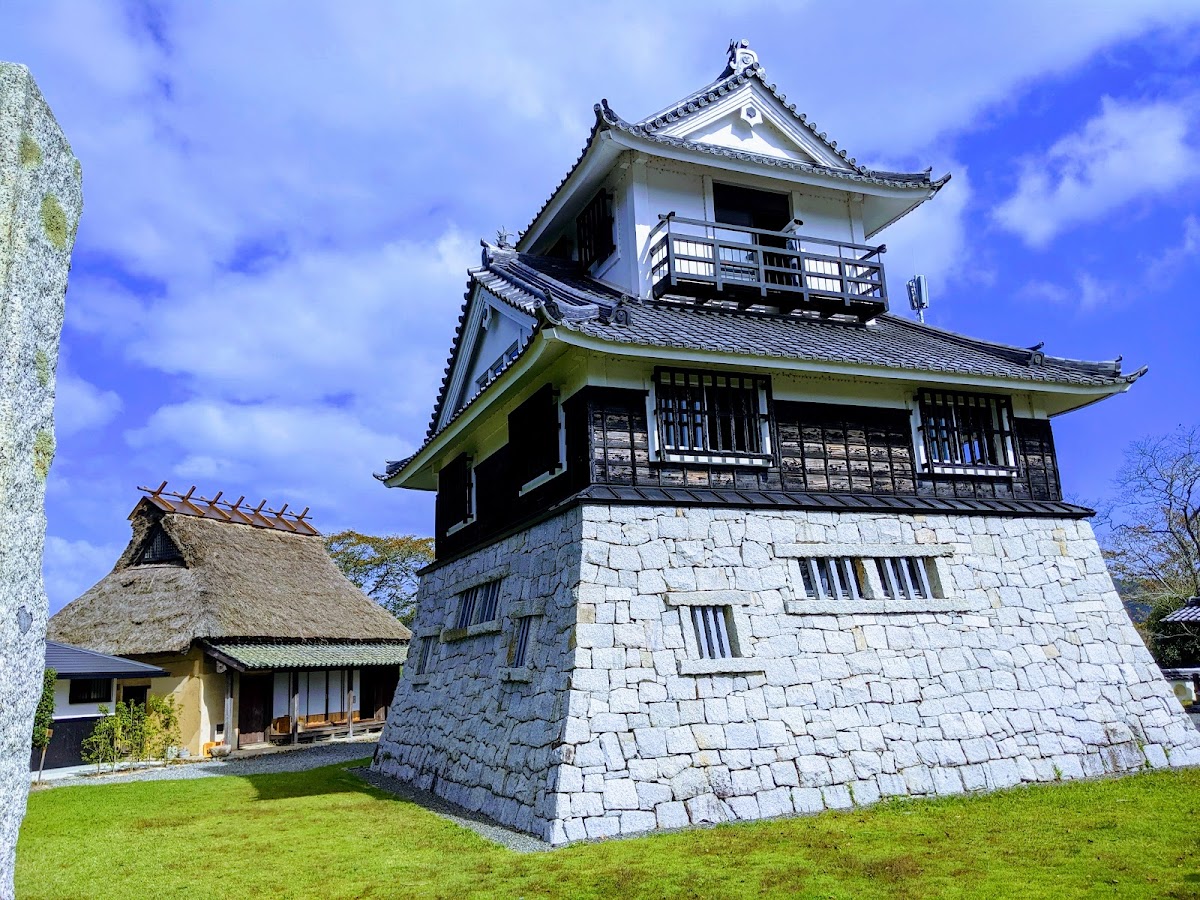
Located in Susai, Akaiwa City, Okayama Prefecture, Chausuyama Castle was a mountain castle that played an important role in the border region between Bizen and Mimasaka Provinces during the Sengoku period. Currently, it is maintained as Shiroyama Park, and is a tourist spot where visitors can enjoy panoramic views of the town of Susai from an observation deck with a replica castle tower.
This article provides a comprehensive explanation of this Bizen Province mountain castle, covering its history from construction to its fall, its castle structure, highlights, and access methods.
##Table of Contents
- Overview of Chausuyama Castle
- History of Chausuyama Castle
- Castle Structure and Remains
- Replica Keep and Castle Mountain Park
- Highlights of Chausuyama Castle
- Access and Visiting Information
- Related Historical Sites in the Surrounding Area
Overview of Chausuyama Castle
Chausuyama Castle (Chousuyama-jo) was a Japanese mountain castle located in Shūzō, Akaiwa City, Okayama Prefecture. It was officially known as “Shūzō Chausuyama Castle” and was built at a strategically important location near the border between Bizen Province and Mimasaka Province.
Basic Information
- Location: Shūzō, Akaiwa City, Okayama Prefecture
- Castle Structure: Mountain Castle
- Construction Period: Estimated to be the beginning of the Tenbun era (around 1532-1555)
- Builder: Sasabe Kanjirō (vassal of the Urakami clan)
- Main Lord: Sasabe clan
- Abandonment Period: Tenshō 7 (1579)
- Remains: Enclosures, vertical moats, trenches, earthworks, dry moats, pit dwelling remains
- Designated Cultural Property: Akaiwa City Designated Historic Site
- Current Status: Developed as Shiroyama Park, with a replica keep.
Chausuyama Castle, as its name suggests, is built on the eastern ridge of a mountain shaped like a tea grinder (a tool for grinding tea). Its elevation is relatively low, making it one of the easier mountain castles to climb.
History of Chausuyama Castle
Background and Period of Construction
While there are no clear records regarding the exact construction date of Chausuyama Castle, it is believed to have been built around the beginning of the Tenbun era (1532-1555). This period coincides with the time when the Urakami clan was expanding its power in Bizen Province.
The builder is believed to be Sasabe Kanjirō, a retainer of Urakami Muneaki. The Urakami clan was a powerful family of shugodai (deputy governors) in Bizen Province from the Muromachi period to the Sengoku period, and Chausuyama Castle functioned as an important branch castle protecting the Urakami clan’s sphere of influence.
Role in the Sengoku Period
Located on the border between Bizen and Mimasaka Provinces, Chausuyama Castle was a strategically important point for monitoring the transportation routes between the two provinces and defending the territory. The Shūzō area had long been known as a key transportation hub, and this castle served as a base for controlling the region.
During the period when the area was under the influence of the Urakami clan, Chausuyama Castle was ruled by the Sasabe clan, who were responsible for governing and defending the surrounding region. While a medium-sized mountain castle, it boasted a robust structure designed for actual combat, with numerous defensive features such as vertical moats and trenches.
The Capture and Fall of Chausuyama Castle by Ukita Naoie
The most important event in the history of Chausuyama Castle was its fall in 1579. In that year, the forces of Ukita Naoie, who was rapidly expanding his power in Bizen Province, attacked Chausuyama Castle.
Ukita Naoie, a vassal of the Urakami clan, gradually built up power surpassing his lord’s, ultimately destroying the Urakami clan and becoming the de facto ruler of Bizen Province. It is believed that Chausuyama Castle fell to Naoie’s skillful stratagems and military strength, and the Sasabe clan, who ruled the castle, were also destroyed.
The Abandoned Castle and its Aftermath
After its fall in 1579 (Tensho 7), Chausuyama Castle was abandoned. The Ukita clan had established Okayama Castle as the center of Bizen Province, and the Shūzō area became a rear area, so it is thought that the need to maintain Chausuyama Castle diminished.
Afterward, the castle ruins were left neglected for a long time, but in the Showa era, they began to attract attention as a local historical heritage site. Currently, it is protected as a designated historical site of Akaiwa City and has been developed into Shiroyama Park.
Castle Structure and Remains
Characteristics of the Layout
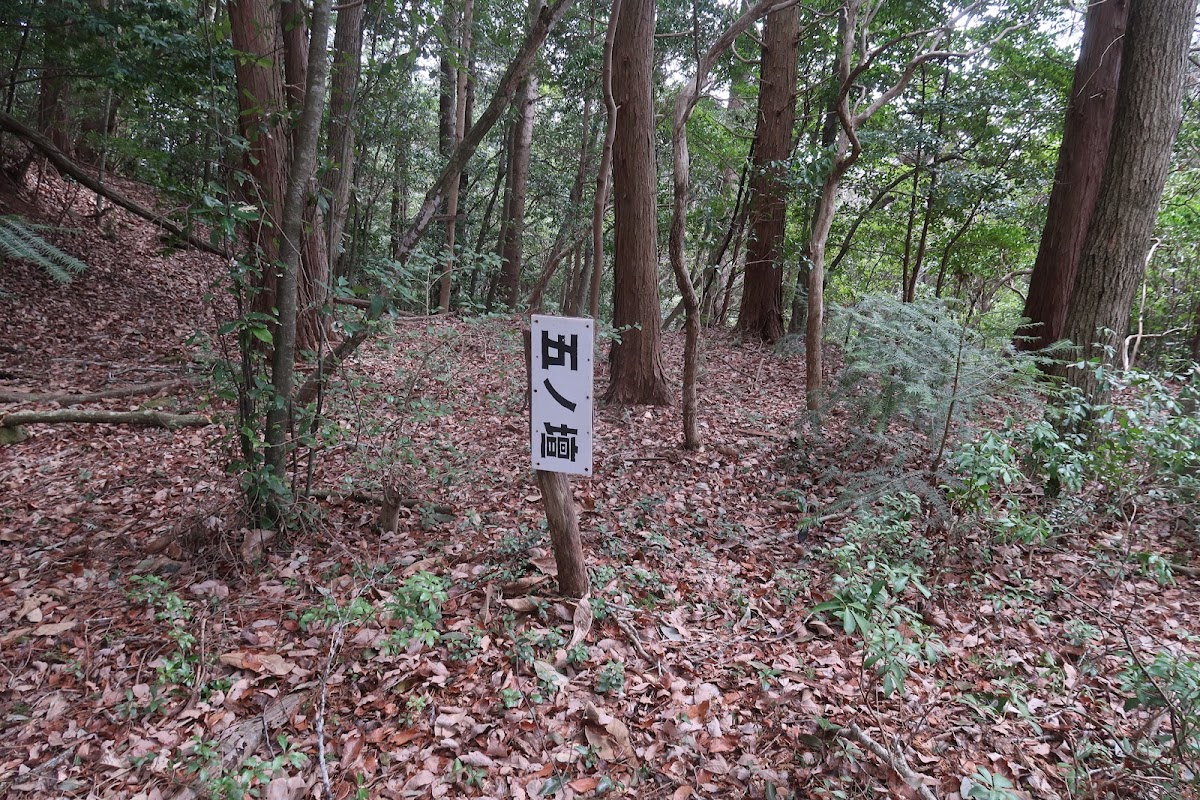
Chausuyama Castle is a multi-bailey mountain castle built on the eastern ridge of Chausuyama Mountain. Multiple baileys are arranged around the main bailey, and defensive structures such as trenches blocking the ridge and vertical moats protecting the slopes are skillfully placed.
Although the castle is of medium size, its layout is practical, considering its strategic location on the border between Bizen and Mimasaka Provinces. The defensive structure, which makes maximum use of the terrain, is considered a typical example of mountain castle construction techniques from the Sengoku period. ### Main Enclosure (Enclosure I)
The main enclosure is the central enclosure of the castle, and a replica keep currently stands there. A large pit dwelling remains have been identified within this enclosure, and these have also been restored. These pit dwellings may have been used as warehouses or guard posts for soldiers.
The size of the main enclosure is standard for a mountain castle, and it is thought to have housed the lord’s residence and command post. Traces of earthworks remain around the enclosure, indicating its defensive capabilities.
Vertical Moats
One of the distinctive features of Chausuyama Castle is the vertical moats. These moats, dug vertically along the slope, served to hinder enemy lateral movement and limit attack routes.
Multiple vertical moats have been identified within the castle grounds, particularly concentrated in directions considered to be major invasion routes. Even today, their traces can be discerned from the topography, making them a highlight of mountain castle exploration.
Horikiri (Moat)
Horikiri are moats dug across ridges, serving to prevent enemy intrusion and also to demarcate the castle grounds. At Chausuyama Castle, horikiri are located at the points separating the main enclosure from other enclosures.
The depth and width of the horikiri vary depending on the location, but all are clearly structures intended for defense. These remains are still well-preserved today and are valuable resources for understanding the castle’s structure at the time.
Earthworks and Dry Moats
Traces of earthworks remain around the main and secondary enclosures. Earthworks are earthen walls built by piling up earth, serving to defend against attacks from arrows and stones.
Dry moats (moats without water) have also been identified, functioning as obstacles to prevent enemy approach. This defensive system, combining earthworks and dry moats, is a common feature of mountain castles from the Sengoku period.
Layout of the Enclosures
The main enclosure is at the center, with multiple secondary enclosures (enclosures II, III, etc.) arranged in a stepped pattern. Each enclosure is thought to have been used as a soldier’s encampment or a storage area for supplies.
By utilizing the elevation differences between the enclosures, the structure allowed for support from higher enclosures to lower ones, enabling efficient defense. This interconnected enclosure layout is a rational design that maximizes the use of the limited terrain.
The Mock Keep and Shiroyama Park
Construction of the Mock Keep
A mock keep was constructed at the Chausuyama Castle ruins during the Showa era. This keep is not based on historical evidence, but was built as a tourist facility with an observation deck.
The actual Chausuyama Castle did not have a keep. Mountain castles of the Sengoku period typically did not have tall structures like keeping, consisting only of practical enclosures and defensive facilities. However, this mock keep has become a local symbol and is used by many visitors as an observation deck.
View from the Observation Deck
From the reconstructed castle tower, you can enjoy a panoramic view of the town of Shūzō. Below lies the current urban area of Shūzō, and in the distance, you can see the flow of the Yoshii River and the landscape of the Bizen Plain.
On a clear day, you can visually understand the topography of the border region between Bizen and Mimasaka provinces, which Chausuyama Castle once monitored, and truly appreciate the strategic importance of this castle.
Development of Shiroyama Park
Currently, the site of Chausuyama Castle has been developed into Shiroyama Park. Walking paths are maintained within the park, allowing visitors to easily enjoy a stroll through the mountain castle.
Information boards are also installed within the park, allowing visitors to learn about the castle’s history and structure. There is also a reconstructed exhibit of a pit dwelling, providing a visual understanding of the castle’s facilities at the time.
In spring, cherry blossoms bloom, making it a popular spot for local cherry blossom viewing. It is used by local residents and history enthusiasts as a place to enjoy both historical exploration and nature walks.
Highlights of Chausuyama Castle
Observation Points for the Remains
The main highlight of a visit to Chausuyama Castle is the well-preserved remains of this medieval mountain castle. Paying attention to the following points will allow you to understand the castle more deeply:
Observation of Vertical Moats: The vertical moats carved into the slope are still clearly visible. By observing how multiple vertical moats are arranged and how they formed defensive lines, you can understand the intentions of the castle’s builder.
Structure of Moats: Moats that cut off ridges are essential for the defense of mountain castles. By observing the depth and width of the moats and the height of the earthworks on both sides, you can appreciate the strength of the defense.
Arrangement of Enclosures: By walking and observing the arrangement of the enclosures, from the main enclosure to the secondary enclosure, you can understand the overall layout of the castle in three dimensions. Pay attention to the differences in size and shape of each enclosure.
Restored Pit Dwelling Structures
The large pit dwelling structures discovered in the main enclosure have been restored, making this a valuable exhibit for understanding the castle’s facilities at the time. These pits are believed to have been used as warehouses or soldiers’ quarters.
Viewing the restored pits allows visitors to contemplate the realities of daily life and military activities at the mountain castle.
Experiencing the Historic Landscape
The view from Chausuyama Castle is almost identical to the view seen by the castle lords during the Sengoku period (except for the presence or absence of buildings). The geographical conditions, including the topography of the surrounding area, the flow of the Yoshii River, and the arrangement of the surrounding mountains, have remained unchanged since that time.
By gazing at this landscape and imagining the historical context of the Sengoku period, such as the conflict between the Urakami and Ukita clans and the border disputes between Bizen and Mimasaka provinces, a deeper historical experience becomes possible.
Seasonal Charms
Shiroyama Park offers different charms throughout the four seasons. In spring, cherry blossoms bloom; in summer, lush forests; in autumn, vibrant autumn leaves; and in winter, the clear air allows for panoramic views. A visit combining historical exploration and natural observation is highly recommended.
Access and Visiting Information
Location
709-0805 Okayama Prefecture, Akaiwa City, Shūzō
Access by Public Transportation
By JR:
- Get off at Seto Station on the JR Sanyo Main Line
- Take the Uno Bus bound for Shūzō from the station and get off at the Shūzō bus stop
- Approximately 15 minutes on foot from the bus stop to the entrance of Shiroyama Park
Access by public transportation is somewhat inconvenient, so using a private car is recommended if possible.
Access by Car
If using the Sanyo Expressway:
- Approximately 15 minutes from the Sanyo Interchange
- Proceed along National Route 374 towards Mimasaka, and follow the signs in the Shūzō area.
From Okayama City:
- Head north on National Route 53, passing through Akaiwa city center to Shūzō.
- Approximately 40 minutes.
Parking
There is a free parking lot at Shiroyama Park. There is space for several regular cars. It may get crowded on holidays and during cherry blossom season, so we recommend visiting with plenty of time to spare.
Ascent Route
A walking path leads from the parking lot to the main enclosure (reconstructed keep), taking approximately 10-15 minutes on foot. It is relatively easy to climb for a mountain castle, and you can visit even in light clothing, but we recommend wearing comfortable shoes.
Visiting Hours
Shiroyama Park is open at all times, and admission is free. Please follow the on-site instructions regarding entry into the reconstructed castle tower.
The estimated time required for a visit is 1-2 hours if you carefully observe the remains. 30 minutes is sufficient if you only wish to enjoy the view.
Points to Note When Visiting
- As it is a mountain castle, the ground can become slippery during and after rain.
- Insect repellent is recommended during the summer months.
- Please bring your own drinking water (there are no vending machines on site).
- To protect the remains, please refrain from entering areas other than the designated walking paths.
Nearby Facilities
Akaiwa City Central Library: You can view materials related to the history of Akaiwa City. Detailed information about Chausuyama Castle is also available.
Historical Sites in the Shūzō Area: In addition to Chausuyama Castle, Shūzō has many other historical sites such as burial mounds and temples. If you have time, we recommend visiting them as well.
Related Historical Sites in the Surrounding Area
Castles of Bizen Province
When visiting Chausuyama Castle, exploring the surrounding castles of Bizen Province will allow you to gain a deeper understanding of the region’s Sengoku period history.
Okayama Castle: The central castle of Bizen Province, built by Ukita Naoie and his son Hideie. It was Naoie’s base after conquering Chausuyama Castle. Located in the center of Okayama City, a reconstructed keep now stands.
Tenjin-yama Castle: The main castle of the Urakami clan and the residence of the main family of Chausuyama Castle. Located in Okayama City, the remains of a large mountain castle remain.
Border Region with Mimasaka Province
Chausuyama Castle is located near the border between Bizen and Mimasaka Provinces, and was on the front lines of the power struggle between the two provinces. Many castles were also built on the Mimasaka side, and visiting these will give you a real sense of the tension in the border region.
History of the Shūzō District
The Shūzō district is home to numerous historical sites dating from ancient to medieval times. Historical sites such as Kofun period ruins and medieval temples and shrines are scattered throughout the area, indicating its importance even before the construction of Chausuyama Castle.
By referring to materials from local history museums and local history research societies, you can learn more about the history of Shūzō.
Summary
Chausuyama Castle is an important mountain castle indispensable to understanding the Sengoku period history of Bizen Province. Built by the Sasabe clan, vassals of the Urakami clan, and conquered by Ukita Naoie, this castle is a symbol of the shifts in power in Bizen Province during the Sengoku period.
Currently, it is maintained as Shiroyama Park, where visitors can enjoy the view from a replica keep and learn about the realities of Sengoku period mountain castles through remains such as vertical moats and trenches. Because it is a relatively easy mountain castle to climb, it is a recommended spot for a wide range of castle enthusiasts, from beginners to advanced climbers.
Chausuyama Castle is an important mountain castle indispensable to understanding the history of Bizen Province during the Sengoku period. When you visit Okayama Prefecture, be sure to stop by Chausuyama Castle and experience the history of Bizen Province during the Sengoku period. From the observation deck overlooking the town of Shūzō, you can experience the view that the former castle lords once saw, making history feel even more tangible.