Atagi Honjo Castle (Wakayama Prefecture) Complete Guide: History and Highlights of the Base of the Atagi Clan, Leaders of the Kumano Naval Force
What is Atagi Honjo Castle?
Atagi Honjo Castle is a medieval flatland castle located in Atagi, Shirahama-cho, Nishimuro-gun, Wakayama Prefecture. It functioned as the residence of the Atagi clan, naval lords based in the southern part of the Kii Peninsula, and was built at a strategic point for water transport: the confluence of the Hiki River and the Atagi River. On March 10, 2020, it was designated a national historic site as the “Atagi Clan Castle Site,” and is highly regarded as an extremely important historical site for understanding the realities of naval lords in the Kii region.
Atagi Honjo Castle is not a standalone castle, but rather forms part of the Atagi Clan Castle Group along with Hachimanyama Castle, Nakayama Castle, Doi Castle, and Yogaiyama Castle, and these together supported the Atagi clan’s territorial control. The Ataka Castle complex, a combination of the main residence (Ataka Honjo) during peacetime and a group of mountain castles (Yamashiro) serving as fortifications during times of conflict, is a typical example of a medieval castle complex.
History of Ataka Honjo Castle
Origins of the Ataka Clan and Migration to Kii Province
The Ataka clan was a samurai family bearing the Tachibana surname, originally based in Awaji Province. During the early Nanboku-cho period, they are said to have resided in Yura, Awaji Province, after their service in suppressing pirates on Numashima Island in Awaji Province at the command of Ashikaga Takauji. Later, during the turbulent Nanboku-cho period, they moved from Awaji to Kii Province, establishing their power base in the Hiki River basin.
The reason for their migration to Kii is that the southern part of the Kii Peninsula was a strategically important region, a hub for maritime traffic connecting the east and west of the archipelago, and a base for the Kumano naval force. As a naval lord playing a key role in the Kumano naval force, the Ataka clan advanced their control over maritime traffic and regional dominance.
Construction and Development during the Kyoroku Era
The exact construction date of Ataka Honjo Castle is uncertain, but it is said to have been built by Ataka Kawachi-no-kami during the Kyoroku era (1528-1532). However, since the Ataka clan is believed to have migrated to Kii Province in the early Nanboku-cho period, the Kyoroku era records may refer to large-scale renovations or expansions of the castle.
Throughout the Muromachi period, the Ataka clan maintained their power as influential local lords in southern Kii Province. By controlling the water transport on the Hiki River and participating in maritime traffic as part of the Kumano naval force, they established their economic and military base.
The Ataka Clan during the Sengoku Period
With the arrival of the Sengoku period, Kii Province found itself in a complex political situation. It became a region where diverse forces competed, including the Hatakeyama clan, religious forces such as Negoro-ji Temple and the Saika-shu, and the Yukawa clan, who served as the deputy governor of Kii Province. The Ataka clan, while caught up in these inter-power conflicts, also strived to maintain their own sphere of influence.
The Ataka clan strengthened their control over their territory by developing the surrounding mountain castles, centered around their main base, Ataka Honjo Castle. Mountain castles such as Hachimanyama Castle and Yogaiyama Castle functioned as defensive strongholds in times of emergency, and in cooperation with Ataka Honjo Castle, they played a role in regional security.
The Tensho Invasion of Kishu and the End of the Ataka Clan
The fate of the Ataka clan was sealed by Hashiba Hideyoshi’s invasion of Kishu in 1585. A large army, led by Hideyoshi’s younger brother, Hashiba Hidenaga, invaded Kii Province, suppressing various forces in Kii, primarily the Negoro-ji Temple and the Saika-shu.
It is believed that the Ataka clan was forced to surrender during this invasion of Kishu. Although detailed historical records are scarce, it is believed that the Ataka clan lost its status as an independent force during Hideyoshi’s unification of Japan, and Ataka Honjo Castle was abandoned. Subsequently, this region was incorporated into the Toyotomi regime, and later, during the Edo period, under the control of the Kishu Tokugawa family.
Structure and Characteristics of Ataka Honjo Castle
Location and Layout
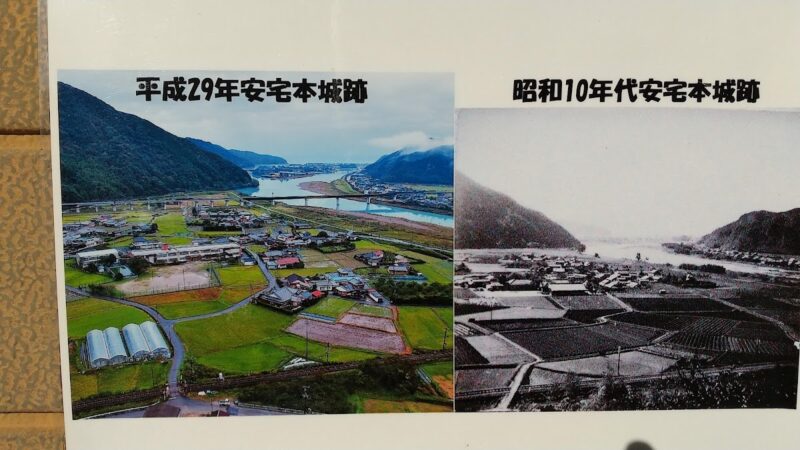
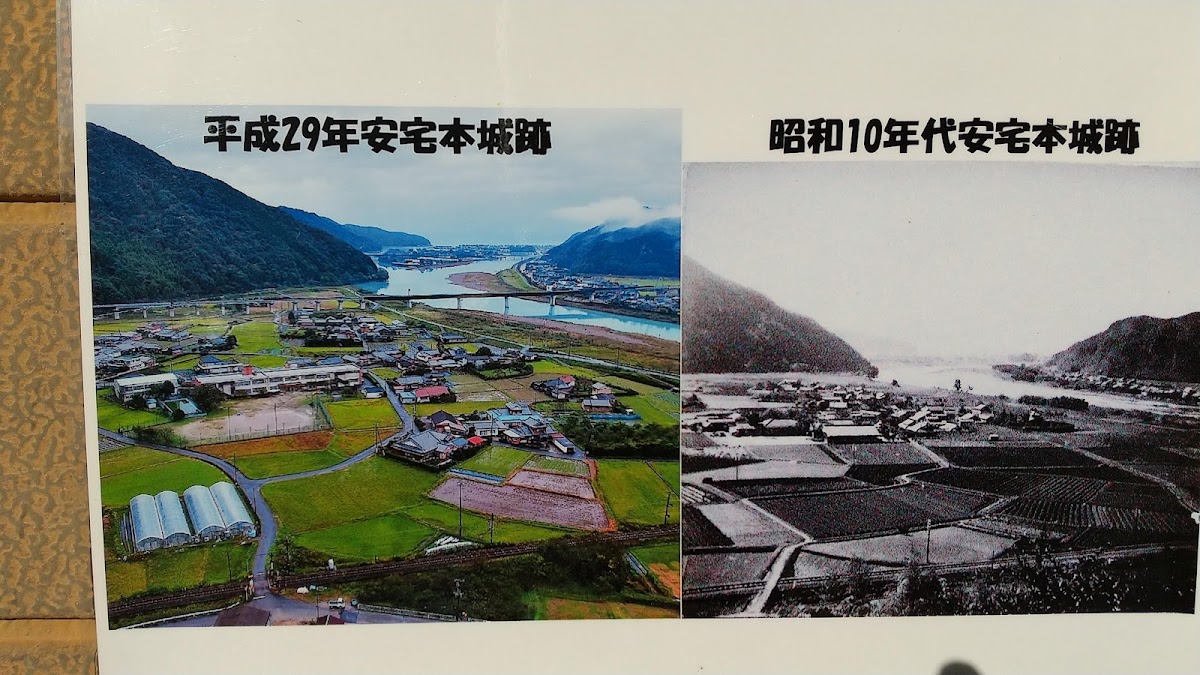
Ataka Honjo Castle is a flatland castle built on a delta formed at the confluence of the Hiki River and the Ataka River. This location offered excellent water transport, making it suitable for the transportation of goods and military operations using rivers. The terrain surrounded by rivers also functioned as a natural moat, providing advantageous defensive conditions.
The current Ataka Honjo Castle site is believed to be the main residence site in the residential area to the south, with evidence of a moat surrounding it. The area where houses now stand to the north is also thought to be part of the residence site, suggesting that it was a considerably large residence.
Current State of the Remains
While most of the remains of Ataka Honjo Castle have been lost due to years of development, several important traces remain. Most notably, the remains of a well are a valuable historical site that conveys the lifestyle of the time, as it was an essential facility for a medieval residence.
The remains of the moat that surrounded the castle are now filled in and cannot be clearly confirmed, but their original location can be estimated from the topography and land boundaries. Regarding defensive structures such as stone walls, given its nature as a flatland castle, it is highly likely that no large-scale structures were constructed.
Characteristics as a Residence of a Naval Lord
The most distinctive feature of Ataka Honjo Castle lies in its character as a residence of a naval lord. Its location at the confluence of rivers was suitable for anchoring boats and gathering fleets, indicating its function as a base for the Kumano naval force.
Medieval naval lords needed to balance land-based territorial management with maritime activities. Ataka Honjo Castle served as a base supporting both, acting as both the administrative and economic center during peacetime and a launching base for naval operations. Such amphibious castles are a unique form created by the geographical conditions of the southern Kii Peninsula.
Relationship with the Ataka Clan Castle Group
Composition of the Castle Group
Ataka Honjo Castle forms the core of the “Ataka Clan Castle Group,” which consists of multiple castles built by the Ataka clan for territorial control. The following five castles are designated as National Historic Sites:
- Ataka Clan Residence (Ataka Honjo Castle): The base of operations during peacetime
- Hachimanyama Castle: A mountain castle located approximately 1.5 km northeast of Ataka Honjo Castle
- Nakayama Castle: A mountain castle located north of Ataka Honjo Castle
- Doi Castle: The site of a residence used by the Doi clan
- Yogaiyama Castle (Umatani Castle): The highest-altitude fortified castle
In addition to these, the Ono Castle ruins, Katsuyama Castle ruins, and Omukai Dejo Castle are also thought to be part of the Ataka Clan Castle Group.
Coordinated System of Flatland and Mountain Castles
The Ataka clan’s castle complex exhibits a typical medieval castle system, where the flatland castle, Ataka Honjo, and several mountain castles are organically interconnected. In peacetime, administrative and economic activities were conducted at Ataka Honjo, which had convenient transportation access, while in wartime, the mountain castles were used for defense.
In particular, Hachimanyama Castle, being the closest mountain castle to Ataka Honjo, is thought to have played an important role as an emergency refuge. Yogaiyama Castle, being the highest in elevation and overlooking the entire territory, is believed to have functioned as a final stronghold.
Reality of Territorial Control
The arrangement of the castle complex reveals the reality of the Ataka clan’s territorial control. Each castle was strategically located in key locations along the Hiki River basin, fulfilling multiple functions: controlling river traffic, governing surrounding villages, and defending against external enemies.
Furthermore, the inclusion of castles granted to family members and vassals, such as Doi Castle, indicates that the Ataka clan organized their vassal groups and divided and governed their territory. This type of castle network-based rule was a common form of governance among local lords during the Sengoku period (Warring States period).
Highlights of Ataka Honjo Castle
Current Situation
The Ataka Honjo Castle site is currently occupied by private houses and residential land, making it difficult to see clear remains of the castle. However, with its designation as a National Historic Site, information boards have been installed, providing clues to imagine its former appearance.
Visitors can understand why a naval lord’s residence was built in this location by reading the explanations on the boards and observing the topography at the confluence of the Hiki River and Ataka River. By observing the river flow and surrounding terrain, it is a valuable place to experience the relationship between medieval water transport and castles.
Well and Moat Remains
The well remains at the Ataka Honjo Castle site are important relics that convey the life of a medieval residence. Wells were essential not only for securing drinking water but also for firefighting. By examining the existing well remains, one can reflect on the daily lives of the people of that time.
The moat that surrounded the castle is now filled in, but its traces can be estimated from the subtle undulations of the terrain and the boundaries of the land. For avid castle enthusiasts, observing the topography offers the pleasure of imagining the castle’s layout in its heyday.
Surrounding Castles and Fortifications
If you visit Ataka Honjo Castle, we highly recommend visiting the surrounding castles and fortifications as well. Hachimanyama Castle, in particular, is close to Ataka Honjo Castle and its remains as a mountain castle are relatively well-preserved. Visiting both flatland and mountain castles will give you a deeper understanding of the Ataka clan’s castle system.
By visiting each castle and fortification, you can get a real sense of how the Ataka clan controlled the territory and how the castles and fortifications were arranged. If you have enough time, it would be a good idea to spend a whole day visiting the entire group of castles and fortifications.
Access and Visiting Information for Ataka Honjo Castle
Location
Address: Ataka, Shirahama-cho, Nishimuro-gun, Wakayama Prefecture
Ataka Honjo Castle ruins are located in the Hiki River basin in Shirahama-cho. It is located approximately 15 km northeast of the center of Shirahama Town, famous for its Shirahama Onsen hot springs.
Access
Access by Car:
- Approximately 30 minutes from the Nanki-Shirahama Interchange on the Hanwa Expressway via National Route 42.
- There is no designated parking area, so please park in a location that does not inconvenience the surrounding area.
Access by Public Transportation:
- Approximately 20 minutes on foot from Kii-Hiki Station on the JR Kisei Main Line.
- Bus services are limited, so it is recommended to check the timetable in advance.
Precautions During Visits
The Ataka Honjo Castle Ruins are located on private land and in an area with houses, so please observe the following points when visiting:
- Respect the living space of the residents and visit quietly.
- Do not trespass on private property.
- Limit your visit to the area around the information boards.
- When taking photographs, be careful not to include houses in your shots.
- Please take all your trash with you.
Estimated Visiting Time
15-30 minutes is sufficient for a visit to the Ataka Honjo Castle Ruins alone. However, if you plan to visit the surrounding castle complex as well, it’s best to allow half a day to a full day.
The Ataka Clan and the Kumano Navy
Historical Role of the Kumano Navy
The Kumano Navy was a medieval naval force based in the southern part of the Kii Peninsula. They were deeply involved in guarding the Kumano Sea Route, the pilgrimage route to the Kumano Sanzan shrines, and in maritime traffic from the Seto Inland Sea to the Pacific Ocean. The Ataka clan is known as a powerful naval lord who played a key role in this Kumano Navy.
Medieval maritime traffic had diverse aspects, including not only the transport of goods, but also maritime security by force, acts of piracy, and even naval activities in military operations. The Kumano Navy was involved in all of these activities, and sometimes participated in military operations at the command of the Imperial Court or the Shogunate.
The Ataka Clan’s Naval Activities
As evidenced by the legend that the Ataka clan moved to Kii after their achievements in suppressing pirates in Awaji, they were originally a family with considerable naval power. Even after relocating to Kii Province, it is believed that the Ataka clan maintained and developed their naval power, operating in the sea area from the mouth of the Hiki River to the Kumano Sea.
The fact that Ataka Honjo Castle was built at the confluence of rivers is precisely because its function as a base for naval activities was emphasized. Ships that traveled up the river would load and unload supplies at Ataka Honjo Castle, and when it was time to sortie, fleets would be formed from here and head out to sea.
Control of Maritime Transportation and Economic Base
The economic base of the Ataka clan, as naval lords, lay in their control of maritime transportation. By collecting tolls from passing ships and engaging in trade activities themselves, they secured income sources that did not rely solely on agricultural production.
Furthermore, guarding ships carrying pilgrims on their journeys to Kumano was also an important source of income. Maritime transportation in the Middle Ages was fraught with the danger of pirates, and the existence of a navy that could guarantee safe voyages was indispensable. It is believed that the Ataka clan gained economic benefits by providing security for maritime traffic.
Significance of National Historic Site Designation
Historic Site Designation in 2020
The Ataka clan castle ruins (five castle sites including Ataka Honjo) were designated a National Historic Site on March 10, 2020. This designation signifies the recognition of its historical value as a valuable group of ruins that demonstrates the reality of naval lords in the southern Kii Peninsula.
The following points were evaluated as reasons for the Historic Site designation:
- A rare example showing the activities of naval lords from the Kamakura period to the Sengoku period
- Abundant historical materials and good state of preservation
- Important for understanding the political situation and territorial control of the Kii Peninsula
- A typical example of a medieval castle system combining flatland and mountain castles
Academic Value
The academic value of the Ataka clan castle complex is evaluated not only as a mere castle ruin, but also as a clue to elucidating diverse aspects of medieval society. The Ataka clan’s unique existence as naval lords, their relationship with maritime traffic and land control, the medieval distribution economy, and the daily lives of local lords make them a multifaceted subject of research.
In particular, the relatively abundant amount of documentary evidence concerning the Ataka clan is significant. By combining archaeological remains with documentary evidence, a more concrete historical picture can be constructed.
Future Preservation and Utilization
With the designation as a national historic site, further preservation and utilization of the Ataka clan’s castle complex is expected. Shirahama Town is proceeding with a plan to develop the historic site, considering improvements to information boards and the development of viewing paths.
Furthermore, utilization as a resource for local history education and tourism is also an important issue. Efforts are needed to convey the value of the Ataka clan’s castle complex to a wider audience through the fascinating themes of the Kumano naval force and medieval maritime traffic.
Things to Know Before Visiting Ataka Honjo Castle
Related Historical Facilities
When visiting Ataka Honjo Castle, visiting the surrounding historical facilities will deepen your understanding:
- Shirahama Town Historical and Folk Museum: A facility where you can learn about materials related to the Ataka clan and the history of the region.
- Hachimanyama Castle Ruins: A mountain castle most closely related to Ataka Honjo Castle.
- Kumano Sanzan: Religious facilities deeply connected to the Kumano naval force.
References and Information Sources
For those who want to learn more about the Ataka clan and Ataka Honjo Castle, the following information sources are helpful:
- Historical Site Guidebook published by the Shirahama Town Board of Education
- Exhibitions and research reports from the Wakayama Prefectural Museum
- “Wakayama Prefectural History,” Medieval Period
- Specialized books and papers on castle research
Best Season for Visiting
Ataka Honjo Castle Ruins is an outdoor historical site with no facilities, so there are few restrictions on the time of year to visit. However, you should consider the following points:
- Spring/Autumn: Mild weather, ideal for visiting
- Summer: Heat protection and insect repellent are necessary
- Winter: The relatively mild southern Kii Peninsula is accessible even in winter
- Rainy Season: Be careful of rising river levels
Summary
At first glance, Ataka Honjo Castle may appear to be a historical site with few remaining structures. However, understanding its historical background and the unique existence of a naval lord reveals the importance of this flatland castle.
Its location at the confluence of the Hiki River and Ataka River, its function as a base for the Kumano naval force, its coordination system with surrounding mountain castles, and its long history spanning from the Kamakura period to the Sengoku period—all of these factors make Ataka Honjo Castle more than just a castle ruin.
With its designation as a National Historic Site, further research and development are expected at Ataka Honjo Castle. Through the fascinating theme of a medieval naval lord, it is a valuable historical site where one can feel the diversity and richness of Japanese history.
When visiting Shirahama, don’t just enjoy the hot springs and swimming; be sure to also visit this historical site. Standing there, gazing at the flow of the river, and imagining the naval lords who once operated from this base is one of the great pleasures of exploring history.