
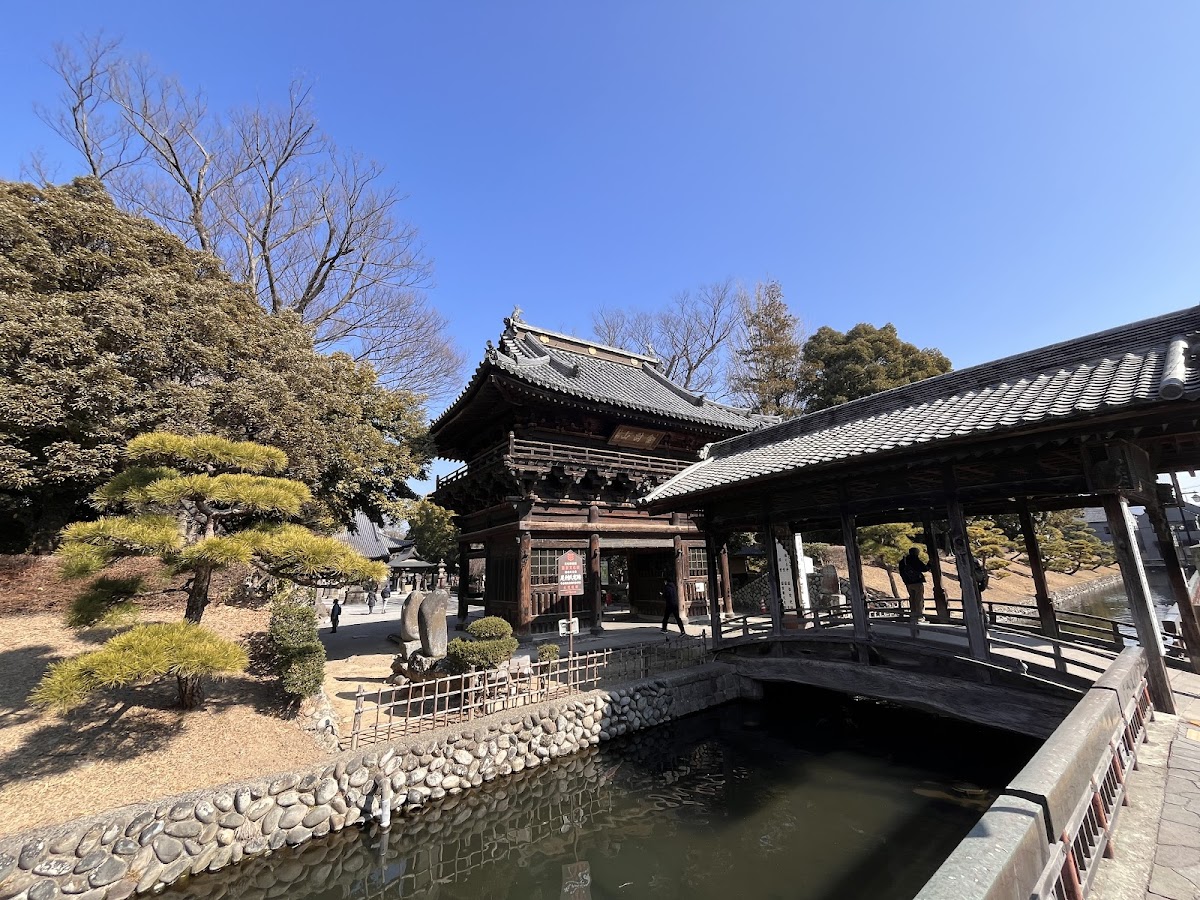
Instructions for completing the Ashikaga family residence (Manpa-dera Temple) | Japan’s 100 most famous castles: history, light points and communication information
Is this the Ashikaga family home? Japan’s Top 100 Great Castles: Origin of Samurai Residences
Ashikaga family residence Located in Ashikaga City, Tochigi, from the end of the Heian period to the beginning of the Long Empire. Built at the end of the 12th century, the residence of the Minamoto Ashikaga clan. The Minamoto Ashikaga clan is the ancestor of Takauji Ashikaga, the founder of the Muromachi shogunate.
Today, it is the main temple of the Dainichi sect of the Shingon sect, Manpaji Temple, designated as a national historical monument, and famous as the Ashikaga family residence site. In addition, it has been reviewed as one of Japan’s 100 Great Castles (ranked 15th), which is why it is considered to be a typical samurai residence of the current era, as well as its appearance and admiration, as well as rare historical historical records.
This is a four-sided architectural square residence of the castle river, which is one of the largest in size of the local owner’s residence, and the history and history of the medieval samurai life space. There are many important cultural treasures preserved in the residence, including the main hall, which is designated as a comprehensive national treasure. Those who love the history of the castle and the construction of the castle are the ones who love the history of the castle.
History of Ashikaga residence | Descendants of the Ashikaga clan and the Muromachi Shogunate
Origin of the Ashikaga clan, Yokyo-style construction
The founder of the Ashikaga clan is Minamoto no Kuni, and the others are the children of Minamoto family. Founded in Ashikaga no Kuni, Shimotsuke Province (now Ashikaga City, Tochigi), this is the base of the Ashikaga clan. His son, Ashikaga, was the chief householder of the Ashikaga clan, and the second householder, Ashikaga, was recognized as the Ashikaga clan’s second householder and lived in the late Heian period (at the end of the 12th century), when the Ashikaga residence was located and the residence was completed.
Ashikaga was a powerful vassal of the shogunate, and was also a member of the shogunate, and was married to Tokimasa Hojo (sister of Masako Hojo). In 1196, he built a private Buddha Hall in his residence and dedicated a statue of the Dainichi Nyorai Buddha. This is the origin of Mannaji Temple.
Ashikaga family home from the ancient times
During the reign, Ieyakazu Ashikaga was the main point of the Ashikaga clan. The first generation was associated with Ashikaga, and the first was Ashikaga’s son, Ashikaga Yasushi, and the Ashikaga family’s temple was founded.
The house is in the form of a ladder, north length 223 meters, south length 211 meters, east length 175 meters, west length 206 meters. The building was built in a typical long square housing format, with a large gate on all sides, and a four-circle construction with an earthen wall and a castle river. These types of styles are typical of the samurai housing of the ancient times, and have the function of defense and Japanese residence.
Muromachi era Takauji Yoashikaga
The most famous person from Ashikaga Tatei appeared during the Muromachi era. Takauji Ashikaga is one of the most important figures in the history of Japan, and is believed to have been translated into the Kyoto Shogunate, supported by the Kenmu Restoration, and established by the Muromachi Shogunate.
Takauji Takauji himself was active in Kyoto, lived for a long time in his Ashikaga residence, but his work was centered on the Japanese spirit of the Ashikaga clan, and it is an important place for direct observation. The Muromachi shogunate’s Shogun’s military capital was preserved, and the residence was created by the Ashikaga clan’s Manku-ji temple, which was completed in 1995.
From time to time to the time of the war
During the war period, the Ashikaga clan’s power declined, and after the establishment of the Eastern region, the Hojo clan, the Uesugi clan, and other feudal princes competed. Ashikaga Takumi’s original residence has disappeared, but its function as a military fortress, and its main religious site, Manku-ji Temple, still exists.
During the Edo era, the Tokugawa shogunate respected the Ashikaga clan’s Muromachi shogunate family, and the Mankuji temple was established and protected. During this period, the construction of the temple was completed, and the foundation of the construction of the temple was completed.
Summary of Ashikaga residence | Typical home
Is this your home?
Ashikaga Takutei is a typical representative of the “Hoki Kyoki” style. A square (or rectangular) house was built by a medieval samurai on flat land, and was built around four walls of an earthen castle.
Various types of construction were adopted during the post-Heian period until the end of the Heian period when the military was established, and the local bases were used to control samurai operations. The terrain of the castle is different from the mountainous area, which is defensive, and the fort is not the same, but the residence is built on flat land.
Land quality city wall
The greatest highlight of the Ashikaga family’s residence is the perfectly preserved ruins of the castle. The construction site’s earthen wall height is 3-4 meters, the floor height is approximately 10 meters, and the construction has been completed for a long time using advanced civil engineering technology.
护城川 10-15 rice, now you have water, clear land has been reserved and its original appearance. It is the source of water for daily life, which has the ability to drain water from the middle of the city and the surrounding water, and has defensive functions. ### Four gates
The temple gates are uniformly arranged on four sides: east, west, north, and south. However, since the construction of Shinji Temple, its position has basically remained unchanged.
- South Gate (Drum Gate): The true gate, also the most honorable castle gate.
- Eastern Gate: Convenient access to Ashikaga Station.
- West Gate: Passage to Ashikaga School.
- North Gate: Near the back gate.
Possessing the castle’s uniform demand, reaching the talent of the bridge on the riverside of the castle, and manifesting the defensive design features.
Bannaji Ryoten | National Treasure and Important Cultural Treasure House
National Treasure: Main Hall
The main shrine is the central construction of the 37 temples on Wan Island and has been designated as a National Treasure. The current main hall was built in the late Yunan period, from 1299 to 1305, and its construction style was fused with the Zen sect (Tang Dynasty) and Japan’s architecture style.
The main hall is built in the style of Hiroya, has been opened for five years, and has four tile walls. The main image dedicated to the shrine is a seated statue of Dainichi Nyorai. Its pillars and beams are arranged in a Japanese-style structure, and it is representative of the most important constructions of the time, and is one of the most important constructions in the history of construction.
Important cultural goods construction
Outside the main hall, there are 37 temples on Wanda Island, and more Important cultural goods.
Caillou: After the Jianyu Dynasty, this is a typical cirque-bottomed cairn tower. The temple is designated as an important cultural property, and the envoy is located in the Chikuwa Industrial District, where the building is located at a very high level.
Construction: In the middle of the Kenyu Muromachi period, the construction style of Zen Buddhism was put on hold. Inside the hall, there is a circulation system (circulation), and it is a circulation system for visitors.
Mido: Early in the Jianyu Jiang Dynasty, the tomb of Ashikaga and Kane. Its structure is similar to that of a tomb.
The natural environment of the Ginkakusayo temple
The temple has a 650-year-old silver apricot tree, designated as a Tochigi Natural Monument. Autumn, the appearance of this beautiful golden yellow color attracts a lot of tourists and people who love movies.
In addition, there are many kinds of Japanese shrubs planted in the temple grounds, and visitors can enjoy the different scenery throughout the year: maple blossoms in spring, green leaves in early summer, and red-leafed scallions in autumn.
Yoashikaga School’s Dictionary | Martial Arts and Academic Equilibrium
A five-minute journey from the Ashikaga clan’s residence to the Ashikaga school. The Ashikaga school, the oldest school in Japan, was founded in the early Heian period and reached its peak in the Muromachi period.
Ashikaga school history
关于Ashikaga school’s establishment, written in Japanese. One kind of law is to understand that it is a national religion in the Nara period; one kind of law is to be understood as being established in Ono-no-mura village in the early Heian period; Announcing the most accurate history of history, the Ashikaga Gakudo Uesugi school was established in the middle of the Muromachi era, and from that time on, an educational system centered on Confucian thought was fully established.
Established, Ashikaga Gakudo is the 16th generation in its heyday, with more than 3,000 students, and is highly regarded as the “largest and most prestigious university in the eastern part of Japan.”
Samurai education system
The Ashikaga family’s residence and the Ashikaga Gakudo’s military conquest of the enemy were connected to the secret system of the samurai and the Gakudo. The Ashikaga clan is not only a branch of a powerful samurai army, but also a family with a deep culture and Japanese studies. Muromachi Shogunate’s generals were protected, Zen Buddhism culture, Japanese Gozan literature, and Kyoto Toyama cultural flourishing was promoted.
The root of the spirit of martial arts and education that flourished in the Ashikaga area lies in the people’s appreciation. At the same time, I visited the Ashikaga family home, and also visited the Ashikaga school, and then I went deeper into understanding the Ashikaga family culture.
Selected Japan’s 100 Famous Castles
The Ashikaga House was selected as the 15th member of the “Japan’s 100 Greatest Castles” selected by the Japan Castle Association in 2006.
Reason for admission
Reasons for choosing the Ashikaga family as one of Japan’s 100 most famous castles:
- History meaning: This is the place where the Ashikaga clan, the founders of the Muromachi shogunate, lived.
- Preservation from a long time ago: The square housing construction system of the ancient times has been perfectly preserved, and the Hijikata engineering process Wakashiro Kawaya still exists.
- Building construction: Pending completion of important cultural works, comprehensive national treasure class Seiden.
- Cultural Scenery: Works as a religious place, plays an important role in the production of food, and serves as the cultural center of the area.
Japan Hyakjo Seal Point
Japanese Hundred Castle Insho Rank Ubanna Temple Seiden Entertainment Song. Opening time is 9:00 am to 4:00 pm, no charge**. A personal seal book can be read immediately, and this is a thought for the next trip.
In addition, there are also seals provided by nearby Taiping Museums (travel center), which can be used from time to time during the opening period.
Transportation information and actual travel expenses
Riding the car
Convenient transportation to the Ashikaga domain residence in Ietomi-cho, Ashikaga City, Tochigi Prefecture, and convenient public transportation.
- From JR LineAshikaga Station**Walking time approximately 10 minutes
- From Tobu Ikusaki LineAshikaga City Station**Walking time approximately 10 minutes
Both the train station and the train station are within the walking distance, and the train station has a history of walking routes, and you can visit the Ashikaga clan’s residence and the Ashikaga School. From Tokyo, from JR Ueno Station to Takasaki Line/Two Hair Line, or from Tokyo to Asakusa Station, limited express train, approximate demand 1:30 to 2:00.
Driving and parking
As a result, the car departs from “Ashikaga IC” or “Ota Kiryu IC” on the eastbound expressway, and the approximate demand is 15 minutes.
Kanyu bus stop, Manpaji temple parking lot, but nearby passenger bus stop available for use:
- Taiping Airport Passenger parking area: Free of charge, approximately 40 cars
- Ashikaga City Bus Stop: Tolls, multiple stops
- Nearby parking lot
At the end of the period of travel, the parking lot was available, and the public transportation tools were also designed.
Reference information
- Land: 2220 Yatomi-cho, Tochigi Ashikaga City
- Visit time: Free admission to the garden (Visit time to the main hall: 9:00 am to 4:00 pm)
- Gate ticket: Garden exemption (internal charge for visiting the Seiden)
- Telephone: 0284-41-2627 (Manwaji Temple)
- Text: Ashikaga City Government Culture Guide 0284-20-2228
Zhoukan Scenic Spot
When I visited the Ashikaga clan’s residence, I recommended the following scenic spots:
- Ashikaga School: 5 minutes walk, Japan’s oldest school
- Aiji Shrine: 15 minutes walk, famous Aiba Shrine
- Ashikaga Flower Park: Approximately 15 minutes by car, the name of the purple wisteria flower park.
- Kurita Beauty Museum: Distance approximately 10 minutes by car, purchase available at Imari Hot Pot Island
Best tour time and tour strategy
Seasonal charm
Spring season (March to May): The interior of the temple is full of maple flowers, green in nature, and beautiful scenery. During the golden period from late April to early May, the number of visitors is endless.
Summer (June to August): Enjoy the cleanliness of the temple grounds. However, during the height of summer, the white sky is scorching hot, and the construction is clear in the evening or by the evening.
Autumn (September to November): Huge silver apricots and lush golden leaves, magnificent scenery, this is the most beautiful season in the area. Best viewing time: Mid-late November. Autumn leaf and earth quality castle wall / 护城川交聉轉, made up of a completely beautiful picture book.
Winter season (December to February): The most special taste of the snowy winter season. At this time, the number of visitors was small, and the feeling of calmness and calmness was overwhelming.
Shot point
- Xinanmen View Main Hall
- Kanjikujo River View Toronwa Temple Temple Garden
- Coupling image of Yoseiden with Ginkyoushu
- The construction of a temple near the east gate and a reflection of the river river
Travel time
- Tourist temple garden: 30 minutes to 1 hour
- Visit inside the main hall: 1:00 p.m. to 1:30 p.m.
- All members of the Yosikaga school visit: 2nd to 3rd class
- Inclusive circumferential all-sky journey: 4 o’clock to 6 o’clock
Ashikaga Tatei Cultural Heritage Designation Information
national culinary history
On October 12, 1922 (Taisho 11), the Ashikaga residence was designated as a National Museum of History, and the name was “Ashikaga residence site”. The designated area includes a total of 40,000 square meters of land, including a total of 40,000 square meters of land.
National Treasure
- Banmanji Main Hall: Designated August 29, 1950
Important cultural goods (construction goods)
- Banmanji Jinrou: Designated August 1, 1908
- Banmanji Kodo: Designated April 17, 1914
- Banmanji Mausoleum: Designated June 11, 1966
- Banmanji Hoto: Designated on August 7, 2013
Other cultural goods
- Temple bell (Important cultural goods, craft goods)
- Silver apricot tree (Tochigi-designated natural monument)
- Various types of Japanese paintings of Buddha statues (city-designated cultural goods)
Preservation and use of Ashikaga domain residence
Preservation and management planning
Jointly established by Ashikaga City and Cultural Center “Ashikaga Domain Residence Site Preservation Plan”. We have established the “Management Account” to ensure that the history of the protection industry has been successfully utilized. After completing the summary of the survey, the protection of the Hijikata construction process, the castle, the river, etc., the protection of the scenery after the construction and construction damage management.
In addition, we will periodically open and excavate the archeology, and we will show you the details of the address. This is currently a futuristic exhibition.
Yosha district’s connection system
Manshichiji Temple is currently an important religious site, and is also the center of local beliefs. The temple has many activities throughout the year, a comprehensive New Year’s visit, a variety of Buddhist ceremonies, and a core corner of the local community’s costumes.
In addition, the core elements of the promotion of tourism in Ashikaga City are Manshichi Temple, `Ashikaga School'', and Ashika Shrine'', also known as `Ashikaga’s Three Great Victories”, attracting hundreds of thousands of visitors every year.
The construction of Manshichiji Temple is an important religious site, which is also the center of local beliefs. ## Summary |Experience the charm of Ashikaga family home
Ashikaga Family Residence (Bangoji Temple) is an important historical site in Japan’s medieval history. The area has been preserved as a typical samurai residence of the historical period, a comprehensive national treasure, a rare cultural treasure within the Seiden, and a place where the Muromachi shogunate was built, and the foundation of the Ashikaga clan, with important historical significance. This is a unique history of the first generation of small elements jointly constructed.
During the journey, the temples and gardens of the castles, rivers, and temples were covered with earth, and the spirit of the samurai of the ancient times came. The majestic and magnificent National Treasure Main Hall is now on display, displaying the charm of medieval architecture. In addition, visit nearby Ashikaga schools, learn about the culture of the Ashikaga clan, and learn about the culture.
The work is one of Japan’s top 100 famous castles, and it is also Tochigi’s representative historical tourist attraction, and the Ashikaga clan’s residence is a profound history of the world’s richest cultural foundations. An important chapter in the history of Japanese history, where you can see and feel the love of your life.
Convenient transportation, free entry to the temple area, which also attracts people. When I went to Tokyo, I was able to go to Tokyo for a day, and I didn’t use it at the end of last week. The charm of the Ashikaga clan’s mansion, the only real talent of physical exploration.
--765x450.png)