Ashikaga Clan Residence (Tochigi Prefecture) Complete Guide | The Charm of the Kamakura Samurai Residence Ruins and National Treasure Architecture Remaining at Bannaji Temple
What is the Ashikaga Clan Residence? | The Historical Value of a Samurai Residence Selected as One of Japan’s Top 100 Castles
The Ashikaga Clan Residence (Ashikaga-shi Yakata) is the site of a samurai residence built from the late Heian period to the early Kamakura period, located in Ietomi-cho, Ashikaga City, Tochigi Prefecture. As the base of the Minamoto clan, ancestors of Ashikaga Takauji, who founded the Muromachi Shogunate, it is a valuable historical site that conveys the development of Japan’s samurai society.
Currently, it is the head temple of the Shingon sect, “Bannaji Temple,” forming a unique landscape where the temple and the castle ruins are integrated. Designated as a national historic site as “Ashikaga Clan Residence Ruins (Bannaji Temple),” and selected as one of Japan’s Top 100 Castles, it is widely known as a historically and culturally valuable remains.
Basic Information on the Ashikaga Clan Residence
Location: 2220 Ietomi-cho, Ashikaga City, Tochigi Prefecture
Alternate Names: Ashikaga Clan Residence Site, Banna-ji Temple
Castle Structure: Flatland Castle (Square Residence)
Construction Period: Late Heian Period to Early Kamakura Period (Late 12th Century)
Builder: Ashikaga Yoshikane
Major Remains: Earthworks, Moat, Main Hall (National Treasure), Bell Tower, Sutra Hall (Important Cultural Property)
Designated Cultural Properties: National Historic Site, National Treasure (Main Hall), Important Cultural Properties (Bell Tower, Sutra Hall, etc.)
Admission Fee: Free (Free entry to the grounds)
Access: Approximately 10 minutes on foot from Ashikaga-shi Station on the JR Ryomo Line and Tobu Isesaki Line
History of the Ashikaga Clan Residence | From a Prestigious Minamoto Clan to the Muromachi Shogunate
The Origins of the Ashikaga Clan and the Construction of Their Residence
The Ashikaga clan was a prestigious samurai family descended from the Seiwa Genji clan. The Ashikaga clan’s origins are traced back to Minamoto no Yoshiyasu, a grandson of Minamoto no Yoshiie, who, in the late Heian period, ruled Ashikaga Manor in Shimotsuke Province (present-day Ashikaga City, Tochigi Prefecture) and adopted the name “Ashikaga.”
The Ashikaga clan residence was built by Ashikaga Yoshikane, the second head of the Minamoto-descended Ashikaga clan. Yoshikane was the third son of Minamoto no Yoshiyasu and a powerful retainer who distinguished himself in the pursuit of the Taira clan and the conquest of Oshu in response to Minamoto no Yoritomo’s uprising. Having gained Yoritomo’s deep trust, Yoshikane built a private Buddhist hall within the moat of his residence in 1196 (Kenkyu 7) and invited the monk Rishin to be its founding abbot. This marked the beginning of Banna-ji Temple.
The Transformation into Banna-ji Temple
Initially, the Ashikaga clan residence functioned as the Ashikaga clan’s home. However, after Yoshikane built a private Buddhist hall, it gradually took on the character of a clan temple. In his later years, Yoshikane became a monk and adopted the name “Banna,” and thus the temple came to be known as “Banna-ji Temple.”
The Ashikaga clan flourished as a powerful vassal family throughout the Kamakura period. In the Muromachi period, Ashikaga Takauji established the Muromachi Shogunate, and the Ashikaga clan became the rulers of Japan as the shogunate family. However, the Ashikaga clan residence, their base of operations, had already been developed as Banna-ji Temple, the clan temple, and continued to play an important role as the spiritual center of the Ashikaga clan.
Transformations After the Sengoku Period
With the decline of the Muromachi Shogunate, the Ashikaga clan’s power also waned, but Banna-ji Temple continued to be maintained as the Ashikaga clan’s clan temple. During the Edo period, it received the patronage of the Tokugawa Shogunate, and its development as a temple progressed.
Despite being affected by the anti-Buddhist movement of the Meiji era, the temple was protected as a temple associated with the Ashikaga clan, and in 1922 (Taisho 11), it was designated a national historic site as the “Ashikaga Clan Residence Site.” The main hall is believed to have been built in 1299 (Shoan 1), and in 2013 it was designated a national treasure.
Characteristics of the Ashikaga Clan Residence | Typical Structure of a Samurai Residence in the Kamakura Period
Layout of a Square Residence
The most distinctive feature of the Ashikaga Clan Residence is that it preserves the typical style of a samurai residence from the Kamakura period. The outer edge of the residence is an irregular trapezoid, approximately 223m north, 211m south, 175m east, and 206m west, and is surrounded on all four sides by earthen ramparts and a moat.
This scale as a square residence is among the largest for a local lord, indicating the important position the Ashikaga clan held in the Kamakura Shogunate. The remains of a samurai residence from the 12th-13th centuries, preserved in their complete form, are rare nationwide and are considered to have extremely high historical value.
Earthworks and Moat Defensive Structures
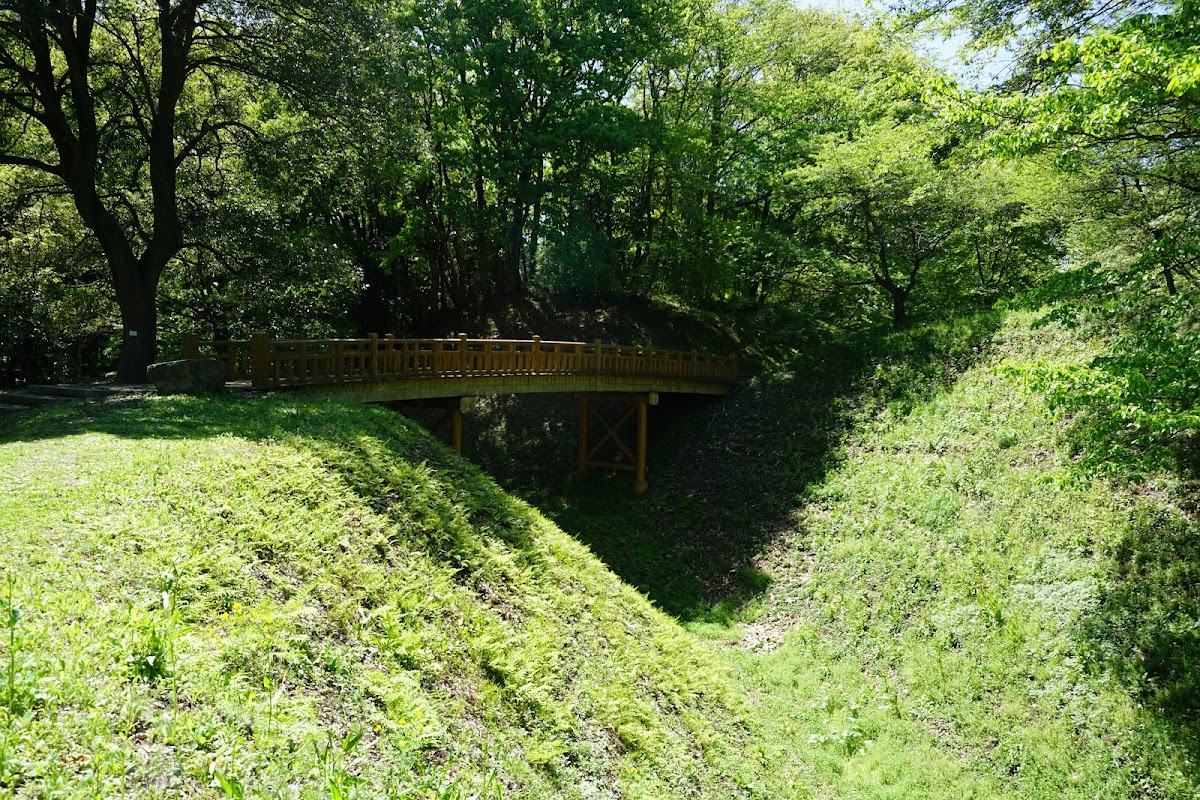
The earthworks surrounding the residence are approximately 3-4 meters high and 15-20 meters wide, clearly demonstrating the defensive function of a samurai residence of that time. Outside the earthworks is a moat approximately 20-30 meters wide, which is still preserved with water today.
This moat served not only as a defensive structure but also as a symbolic representation of the residence’s grandeur. The water in the moat is drawn from the Watarase River system, and clean water still flows through it today.
Four Gates and Entrances
The Ashikaga residence has gates on the east, west, north, and south sides, each of which still functions as an entrance to Banna-ji Temple.
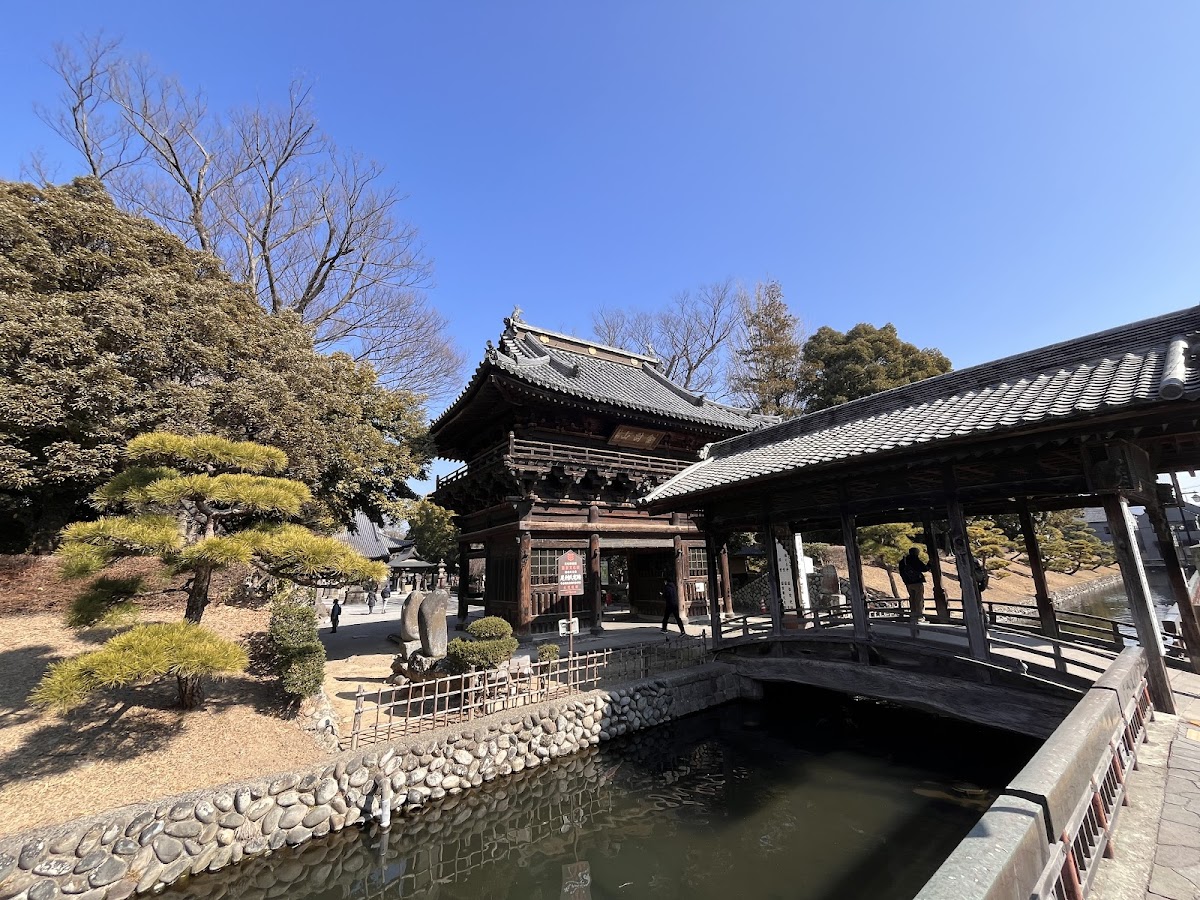
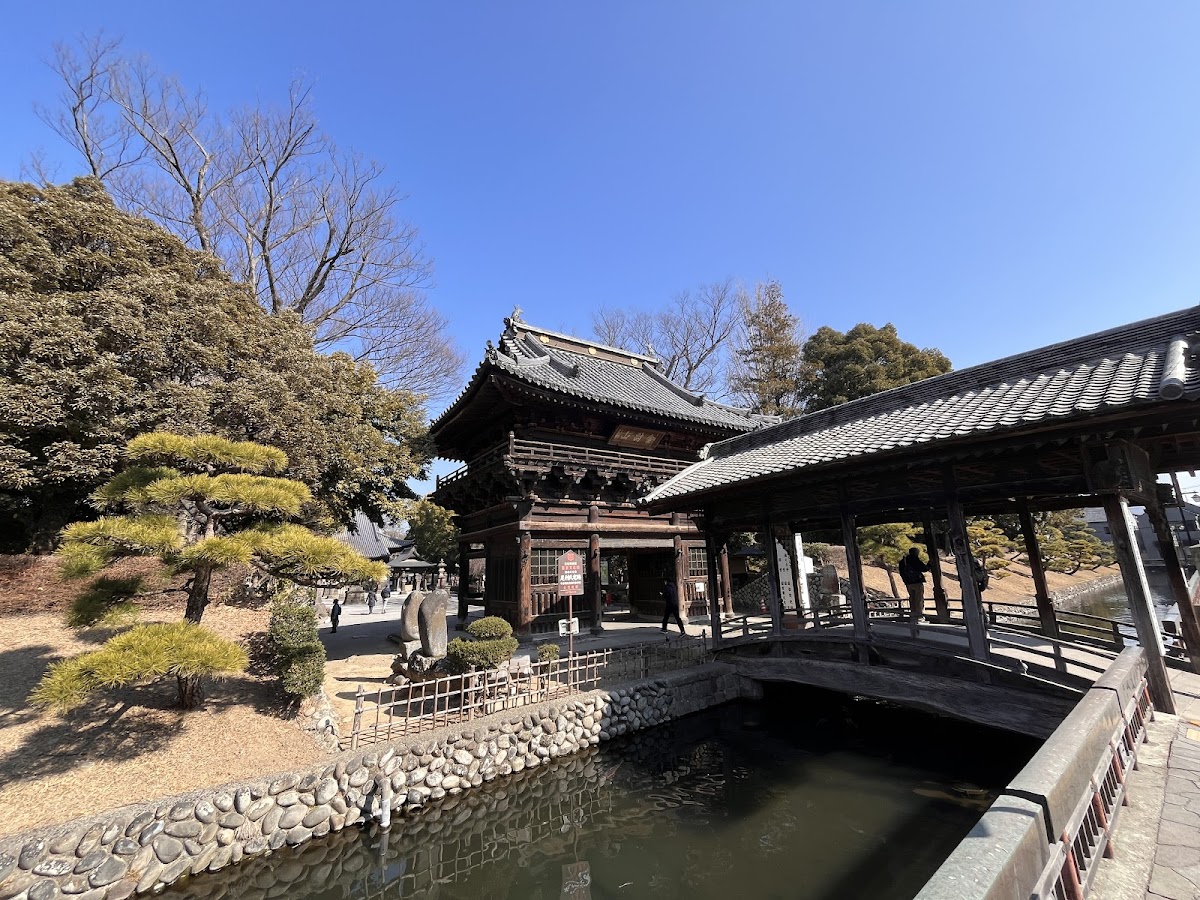
- South Gate (Romon Gate): The most prestigious gate, serving as the main entrance, a two-story gatehouse.
- East Gate: Used as a service gate.
- West Gate: Equivalent to a back gate.
- North Gate: Functioned as a rear gate.
These gates combine the defensive function of a samurai residence with the grandeur of a temple.
Highlights of the Ashikaga Residence | National Treasure Architecture and Historical Remains
National Treasure: Banna-ji Temple Main Hall
The greatest highlight of the Ashikaga Residence is the Banna-ji Temple Main Hall, designated a National Treasure in 2013. Built in 1299 (Shoan 1), this building holds extremely important historical value as a representative example of Kamakura period esoteric Buddhist temple architecture.
The main hall boasts a hipped roof, tiled roof, and an impressive size of five bays on the front and five bays on the sides. Inside, the principal image of Dainichi Nyorai is enshrined, creating a solemn atmosphere befitting a Shingon Buddhist temple.
It has well preserved its original form, showcasing the finest architectural techniques of the Kamakura period in its detailed carvings and joinery. The beauty of the roof’s curve and eaves, in particular, embodies the aesthetic sensibilities of Japanese architecture.
Important Cultural Property: Bell Tower
The bell tower is believed to have been built in the late Kamakura period and is designated as a National Important Cultural Property. It is a bell tower with a skirt-like base, characterized by its well-proportioned and beautiful form. The bell inside the bell tower is also from the Kamakura period, making it a cultural property of high historical value.
The bell tower is located east of the main hall and adds an important accent to the landscape of the temple grounds.
Important Cultural Property: Issaikyo-do (Sutra Hall)
The Issaikyo-do is a building for housing Buddhist scriptures and is believed to have been built in the mid-Muromachi period. This magnificent building, with its pyramidal roof and tiled roof, houses a revolving octagonal sutra repository.
It is believed that rotating this repository once grants the same merit as reciting the entire Buddhist canon, making it a beloved feature for worshippers. The building itself is designated a National Important Cultural Property, a fine example of Muromachi period sutra repository architecture.
The Great Ginkgo Tree and the Temple Grounds’ Nature
Within the grounds of Banna-ji Temple stands a large ginkgo tree estimated to be approximately 550 years old. This tree is designated a natural monument of Tochigi Prefecture, and in autumn, its magnificent yellow foliage attracts many worshippers and tourists.
Although it suffered damage from a lightning strike in the past, partially burning down, it has maintained its vitality and remains a beloved symbol of the temple grounds. Standing approximately 30 meters tall with a trunk circumference of about 8 meters, this giant tree is a living witness to the history of the Ashikaga clan.
The Pagoda and Other Buildings on the Temple Grounds
The temple grounds contain various buildings from different eras, including the Pagoda, a mausoleum, a Fudo Hall, and an Ebisu Hall. The Pagoda, rebuilt in the mid-Edo period, adds a beautiful touch of vermilion to the grounds.
These buildings showcase architectural styles from the Kamakura period to the Edo period, giving the entire temple grounds the appearance of a historical museum of Japanese architecture.
Remains of Earthworks and Moats
Even though the temple grounds have been renovated, the earthworks and moats from the samurai residence are well-preserved. Walking around the grounds allows you to walk on top of the earthworks, and from outside the moat, you can view the entire residence.
In particular, the view of the gate tower and moat from the Taiko Bridge in front of the South Gate strongly retains the atmosphere of a Kamakura-period samurai residence and is a popular photo spot.
Cultural Properties and Buddhist Statues of the Ashikaga Clan Residence
Buddhist Statues Housed in the Main Hall
The main hall of Banna-ji Temple houses numerous Buddhist statues, including the principal image, a seated statue of Dainichi Nyorai (Vairocana Buddha). These statues were created between the Heian and Kamakura periods and are known as masterpieces of esoteric Buddhist art.
In particular, the seated statue of Dainichi Nyorai is a historically significant statue, said to have been placed there by Ashikaga Yoshikane when he built his private Buddha hall, and represents the form of Dainichi Nyorai of the Vajradhatu Mandala.
Treasures Associated with the Ashikaga Clan
Banna-ji Temple preserves many relics and treasures donated by successive generations of the Ashikaga clan. Items associated with Ashikaga Takauji, Ashikaga Yoshimitsu, and other successive shoguns of the Muromachi Shogunate are valuable historical materials that convey the glory of the Ashikaga clan to this day.
Some of these treasures can be viewed during special exhibitions.
Tourist Attractions Around the Ashikaga Clan Residence
Ashikaga School | Japan’s Oldest School
Located right next to the Ashikaga Clan Residence, Ashikaga School is a historical site known as Japan’s oldest school. Believed to have been founded in the early Heian period or Kamakura period, it flourished as the “University of Bando” from the Muromachi period to the Sengoku period.
The Ashikaga Clan Residence and Ashikaga School are two major historical sites in Ashikaga City, and we recommend visiting them together. By visiting both, you can experience the Ashikaga clan’s spirit of excelling in both literary and martial arts, and the high level of culture in medieval Ashikaga.
Location: 2338 Shohei-cho, Ashikaga City, Tochigi Prefecture
Admission Fee: 420 yen for adults, 210 yen for high school students
Opening Hours: 9:00 AM – 4:30 PM (until 5:00 PM from April to September)
Orihime Shrine
Orihime Shrine, a symbol of Ashikaga City, is a beautiful vermilion-painted shrine situated on the mountainside of Orihimeyama. From the shrine building, reached by climbing 229 stone steps, you can enjoy a panoramic view of Ashikaga city.
Known as a god of matchmaking, it attracts many visitors praying for success in love. It is also a popular spot for night views.
Ashikaga Flower Park
Ashikaga Flower Park, a representative tourist spot in Ashikaga City, is particularly famous for its wisteria. The large wisteria tree, over 150 years old, and the 80-meter-long tunnel of white wisteria are truly spectacular.
During the spring wisteria season, the “Fuji no Hana Monogatari ~Daifuji Matsuri~” (Wisteria Flower Story ~Great Wisteria Festival~) is held, attracting many tourists from all over Japan. In winter, the illumination event “Garden of Light Flowers” is also held.
Location: 607 Sakama-cho, Ashikaga City, Tochigi Prefecture
Opening Hours: Varies by season (Please check the official website)
Admission Fee: Varies by season (Varies depending on the wisteria blooming status)
Access and Tourist Information for Ashikaga Clan Residence
Access by Train
- Approximately 10 minutes on foot from JR Ryomo Line “Ashikaga Station”
- Approximately 10 minutes on foot from Tobu Isesaki Line “Ashikaga-shi Station”
Both stations are within walking distance of the Ashikaga Clan Residence, and along the way, you can enjoy historical sites such as Ashikaga School, making for a pleasant historical stroll.
Access by Car
- Approximately 10 minutes from the Ashikaga IC on the Kita-Kanto Expressway
- Approximately 30 minutes from the Sano-Fujioka IC on the Tohoku Expressway
There is free parking for visitors near Banna-ji Temple (capacity of approximately 40 cars). It can get crowded during peak tourist seasons and weekends, so using public transportation is also recommended.
Visiting Information
Visiting Hours: Grounds are freely accessible (Main Hall interior: 9:00 AM – 4:00 PM)
Admission Fee: Free
Closed Days: None
Estimated Time Required: Approximately 30 minutes to 1 hour (2-3 hours including Ashikaga School)
Recommended Time to Visit
The Ashikaga Clan Residence shows different expressions in each season, but the following times are particularly recommended.
- Spring (April): Cherry blossoms bloom, making the temple grounds vibrant.
- Autumn (Mid-to-late November): The large ginkgo tree’s leaves turn golden, dyeing the temple grounds in a golden hue.
- New Year’s Visit (January 1st-3rd): The temple is bustling with many worshippers, allowing visitors to experience the solemn atmosphere of the New Year.
Gourmet Information Around Ashikaga Clan Residence
Ashikaga Soba
Ashikaga City has long been known as a soba (buckwheat noodle) producing area, and there are many soba restaurants in the city. Many long-established soba restaurants are scattered around Bannaji Temple, where you can enjoy authentic handmade soba after visiting the temple.
Potato Yakisoba
A famous local specialty of Ashikaga City is “potato yakisoba.” This unique dish, which includes potatoes in yakisoba, is served at many restaurants in the city.
Ashikaga Shumai
Ashikaga Shumai is gaining attention as a new local specialty of Ashikaga City. There are various variations using local ingredients, making it a great spot for a food tour.
Ashikaga Clan Residence as a Photo Spot
Taiko Bridge in front of the South Gate
The Taiko Bridge in front of the South Gate (Romon Gate) is a representative photo spot for the Ashikaga Clan Residence. The combination of the vermilion bridge spanning the moat and the towering Romon Gate beyond strongly retains the atmosphere of a samurai residence from the Kamakura period.
Especially during the autumn ginkgo tree’s autumn foliage season, the contrast between the golden ginkgo leaves and the vermilion gate is beautiful, attracting many photographers.
Main Hall and the Giant Ginkgo Tree
An angle that allows you to photograph the National Treasure Main Hall and the 550-year-old giant ginkgo tree together is also popular. Especially during the autumn foliage season, the yellow ginkgo leaves enhance the imposing appearance of the Main Hall, creating a magnificent landscape.
View from the Earthen Embankment
Looking down at the temple grounds from the top of the earthen embankment, one can grasp the overall layout of the square-shaped residence. The orderly arrangement of the main hall and other buildings conveys the appearance of a well-planned samurai residence.
Summary | Historical Value and Modern Significance of the Ashikaga Clan Residence
The Ashikaga Clan Residence (Banna-ji Temple) is a valuable historical site that preserves the appearance of a samurai residence built from the late Heian period to the early Kamakura period in excellent condition. As the base of the Ashikaga clan, who founded the Muromachi Shogunate, it played an important role in Japanese history, and its historical value is immeasurable.
The layout of the square-shaped residence, the defensive facilities of earthen embankments and moats, and the group of valuable buildings including the National Treasure main hall form a unique landscape where the samurai culture and Buddhist culture of the Kamakura period are fused.
Even today, Banna-ji Temple, the head temple of the Shingon Dainichi sect, welcomes many worshippers and tourists. While maintaining its value as a historical heritage site, it also functions as a living place of faith in the modern age.
When visiting Ashikaga City, be sure to visit both the Ashikaga Clan Residence (Banna-ji Temple) and the adjacent Ashikaga School together. Experience the spirit of both literary and martial arts established by the Ashikaga clan, and the cultural heritage of medieval Japan. You will surely feel the weight of history that has continued since the 12th century and the power of tradition that still thrives today.
.png)