Akechi Castle (Ena City, Gifu Prefecture) Complete Guide: History, Remains, and Access Information for Shirataka Castle
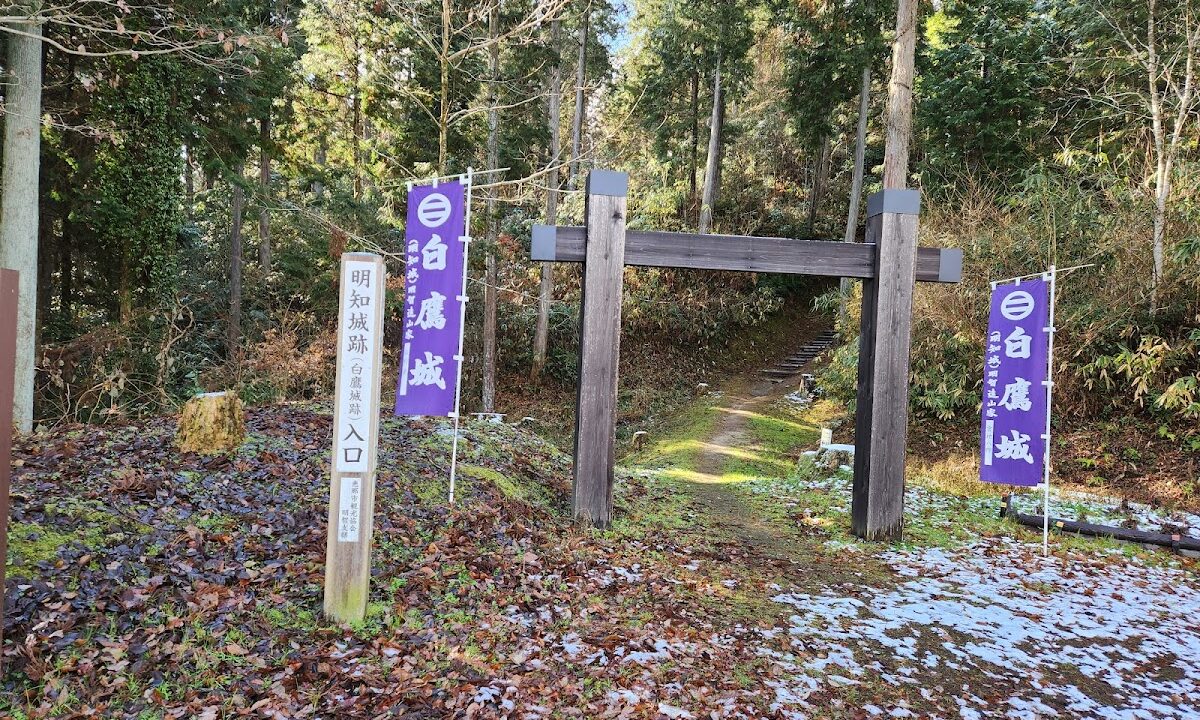
Akechi Castle, located in Akechi-cho, Ena City, Gifu Prefecture, is a Sengoku period mountain castle also known as “Shirataka Castle.” Situated on the summit of Shiroyama Mountain at an altitude of 530 meters, it boasts a scale second only to Iwamura Castle, one of Japan’s three greatest mountain castles, in southern Ena City, and remains standing today as a Gifu Prefecture designated historical site.
This article comprehensively introduces information you should know before visiting Akechi Castle, from its historical background to its highlights and access methods.
Basic Information and Location of Akechi Castle
Akechi Castle is located on the east side of Akechi-cho, Ena City, Gifu Prefecture, built on the summit of a mountain commonly known as “Shiroyama.” It is approximately 80 meters above ground level, with an altitude of approximately 530 meters, and is strategically located near the border between Mino Province and Shinano Province. Located approximately 8 kilometers southwest of Iwamura Castle, it is one of the important mountain castles in Ena City, preserving the region’s history to this day. The castle ruins are now maintained as a park with walking trails, making it popular not only with history enthusiasts but also with hikers.
Difference between Akechi Castle and Akechi Castle
“Akechi Castle” and “Akechi Castle” are often confused, but they are actually different castles. Akechi Castle is located in Akechi-cho, Ena City, Gifu Prefecture, while the other Akechi Castle (Akechi Nagayama Castle) is located in Seta Nagayama, Kani City, Gifu Prefecture. Both are traditionally believed to be the birthplace of Akechi Mitsuhide, but there is no definitive historical evidence, and historical debate continues.
This article focuses on Akechi Castle (Shirataka Castle) in Ena City.
The History of Akechi Castle: From the Residence of the Toyama Clan to its Abandonment
Construction and the Toyama Clan
Regarding the construction of Akechi Castle, there is a tradition that it was built in 1247 by Toyama Kageshige. Toyama Kageshige is said to be the son of Toyama Kageaki, the lord of Iwamura Castle, one of Japan’s three great mountain castles, and became the ancestor of the Akechi Toyama clan.
The Toyama clan was one of the “Seven Toyama Families,” a samurai family that wielded power from eastern Mino Province to Shinano Province. “Toyama no Kinsan,” a famous magistrate of the Edo period, is also said to be a member of this Toyama family.
The Battle for Control in the Sengoku Period
During the Sengoku period, Akechi Castle, located on the border between Mino and Shinano Provinces, was a strategic stronghold and the stage for battles between the Takeda and Oda clans. In particular, as Takeda Shingen advanced his invasion of eastern Mino, Akechi Castle attracted attention as an important base. From the Eiroku era (1558-1570) to the Tensho era (1573-1592), the Akechi Toyama clan, while caught between the Takeda and Oda clans, continued to maintain Akechi Castle as their residence. It is believed that during this period, the castle’s defensive capabilities were strengthened, and distinctive structures such as the ridged vertical moats were constructed.
Relationship with Akechi Mitsuhide
Akechi Castle is also known for the legend that it is the birthplace of Akechi Mitsuhide. However, Akechi Castle in Kani City has a similar legend, and no definitive evidence has yet been found to determine which is true.
The airing of the NHK Taiga drama “Kirin ga Kuru” (The Kirin Comes) has brought renewed attention to the castle as a place associated with Akechi Mitsuhide, attracting many history enthusiasts.
Abandoned Castle
Akechi Castle is believed to have been abandoned in 1615 due to the “One Castle Per Province” decree. During the nationwide castle reorganization by the Edo Shogunate, Akechi Castle, like many other mountain castles, ceased to serve its purpose.
Structure and Layout of Akechi Castle
Basic Structure of the Castle
Akechi Castle is a typical medieval mountain castle that skillfully utilizes the natural terrain. The main keep (Honmaru) is located at the summit, surrounded by a series of smaller enclosures (Kuruwa), including the second, third, and outer baileys (Demaru).
The Honmaru site is located at the highest point of the castle mountain, offering panoramic views of the surrounding area. The remains of the second and outer baileys are also well-preserved, making them valuable historical sites for understanding the castle’s structure at the time.
Major Enclosures
Honmaru Site: The central part of the castle, believed to be the location of the lord’s residence. Currently, it is a flat area, and parts of the surrounding earthworks can still be seen.
Ninmaru Site: The second most important enclosure after the Honmaru, strategically located for defense.
San-no-maru Ruins: This is a fortified enclosure that formed an even outer defensive line.
Demaru Ruins: This fortified enclosure was located in a position projecting from the main enclosure, and is thought to have served to divert enemy attacks from the flank.
Stone Walls and Earthworks
At Akechi Castle, some remains of stone walls can be confirmed. The stonework is relatively large for a medieval mountain castle, indicating the process of strengthening the castle’s defenses.
In addition, earthworks surrounded the main fortified enclosures, and even today, earthworks about 1-2 meters high remain in good condition.
Highlights of Akechi Castle: The Charm of the Unejo Tatebori Group
What are Unejo Tatebori Groups?
The greatest highlight of Akechi Castle is the “Unejo Tatebori Groups” (ridged vertical moats) that surround the main fortified enclosures. These are multiple vertical trenches (ditches running vertically) dug parallel to the slope, serving as defensive structures to prevent enemy intrusion.
The ridged vertical trenches are a castle construction technique that developed in the late Sengoku period. They make it difficult for enemy soldiers to move horizontally as they climb the slope, and make it easier for the defenders to attack from above. The ridged vertical trenches at Akechi Castle are well-preserved and are valuable remains for learning about Sengoku period castle construction techniques.
Moats and Cut Slopes
Several trenches (ditches cutting across ridges) can be seen within the castle grounds, functioning as defensive lines separating the baileys. Cut slopes (artificially carved steep slopes) are also visible in various places, allowing observation of a skillful combination of natural terrain and artificial modification.
Views
From the main keep site, you can enjoy a panoramic view of Ena city and the surrounding mountains. On a clear day, you can see the distant Central Alps mountain range, allowing you to imagine what the castle lords of the Sengoku period saw from this spot.
The Relationship Between Akechi Castle and Iwamura Castle
When discussing Akechi Castle, it’s essential to understand its relationship with the nearby Iwamura Castle. Iwamura Castle is a famous castle, counted among Japan’s three greatest mountain castles, and is also known for the legend of its female lord.
Both castles were ruled by a branch of the Toyama clan, forming the Toyama clan’s sphere of influence in eastern Mino Province. While Iwamura Castle was a strategic point in northern Ena City, Akechi Castle is thought to have played a role in strengthening the defenses of the south.
Located approximately 8 kilometers from Iwamura Castle, it’s recommended to visit both castles together when enjoying a castle tour. Iwamura Castle is known for its magnificent stone walls, while Akechi Castle is characterized by its earthen remains, such as the ridged vertical moats. Comparing these two castles, each with its own distinct charm, will lead to a deeper understanding.
Current Status and Development of Akechi Castle Ruins
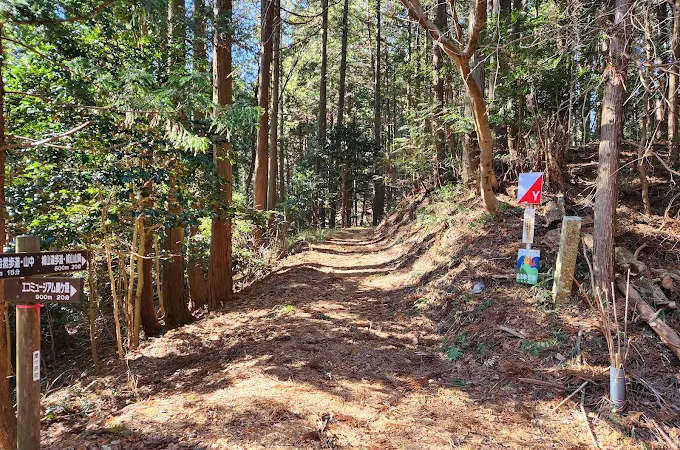
Akechi Castle Ruins are protected as a Gifu Prefecture designated historical site and are currently developed as a park. A walking path has been established, making it relatively easy to climb to the main keep site.
Although the path to the castle is well-maintained, there are steep slopes characteristic of mountain castles, so comfortable walking shoes are recommended. The climb takes approximately 20-30 minutes, and the descent takes approximately 15-20 minutes. Even with a leisurely visit, you can see the main remains in about an hour.
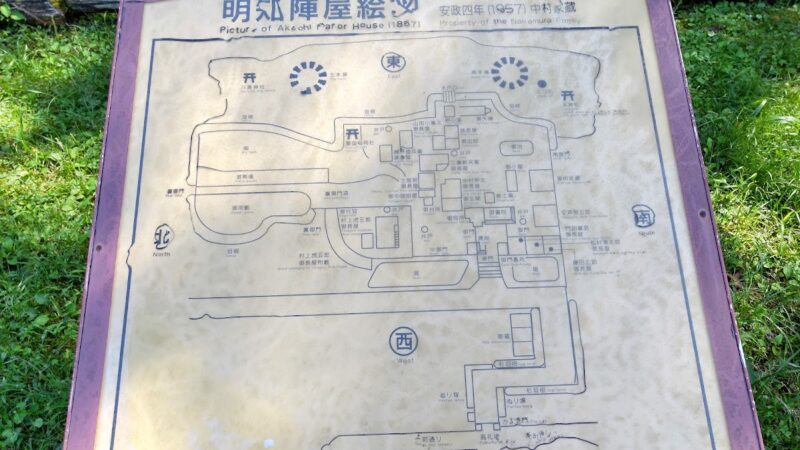
Information boards are installed at the castle ruins, indicating the locations of the main enclosures and remains. However, detailed explanations are limited, so learning about the historical background beforehand will make for a more fulfilling visit.
Access Information
Access by Car
Access to Akechi Castle is most convenient by car. From the Ena Interchange on the Chuo Expressway, it’s about 20 minutes via National Route 363 towards Akechi Town.
There is a parking space at the foot of the castle mountain, from which you can walk to the castle. When searching using a car navigation system, it’s best to search for “Akechi Castle Ruins” or “Shiroyama, Akechi-cho, Ena City.”
Access by Public Transportation
If using public transportation, the nearest station is Akechi Station on the Akechi Railway. It’s about a 30-minute walk from the station to the castle ruins. There are several historical sites related to Akechi Mitsuhide scattered around Akechi Station, so walking around and exploring the area is a great way to enjoy the history.
Parking Information
There is free parking space at the foot of the castle hill. Since the number of spaces is limited, we recommend arriving early on weekends and during peak tourist seasons.
Best Season to Visit
Akechi Castle offers beautiful scenery throughout the seasons, but here are some particularly recommended times to visit:
Spring (April-May): The fresh greenery is beautiful, and the mild weather makes it ideal for visiting the castle.
Autumn (October-November): The autumn foliage is magnificent, and the view from the main keep ruins becomes even more beautiful.
Winter (December-February): The air is clear and offers great views, but caution is needed when there is snow.
Summer (June-August): The greenery is lush, and many people visit seeking coolness, but precautions against the heat and insects are necessary.
Nearby Tourist Attractions
Iwamura Castle Ruins
As mentioned above, Iwamura Castle, one of Japan’s three great mountain castles, is a must-see. Located about 20 minutes by car from Akechi Castle, the magnificent stone walls are breathtaking.
Japan Taisho Village
Akechi Town is home to “Japan Taisho Village,” a popular tourist facility that recreates the streetscape of the Taisho era. Enjoy the retro atmosphere that spreads around Akechi Station.
Historical Sites Associated with Akechi Mitsuhide
Akechi Town has numerous historical sites associated with Mitsuhide, including the well where he was given his first bath and the tombs of successive generations of the Akechi family. Visiting these sites in conjunction with a visit to Akechi Castle will allow you to experience history more deeply.
Ena Gorge
Ena Gorge, a representative scenic spot of Ena City, is also located about 30 minutes by car from Akechi Castle. The view from the sightseeing boat is beautiful in every season, making it possible to combine castle visits with nature sightseeing.
Points to Note When Visiting Akechi Castle
Clothing and Equipment
As it is a mountain castle, the following equipment is recommended.
- Comfortable walking shoes (trekking shoes or sneakers)
- Comfortable clothing
- Drinking water
- Insect repellent and hat in summer
- Warm clothing in winter
Safety Precautions
- Be careful as the ground can be slippery in rainy weather or after rain.
- Be especially careful if you are with small children, as there are some steep slopes.
- If visiting alone, inform family or friends of your destination before entering the castle.
Manners
- As this is a historical site, do not damage the remains.
- Always take your trash with you.
- Collecting plants is prohibited.
- No open flames.
Resources for Learning More About Akechi Castle
For those who wish to learn more about Akechi Castle, we recommend using the following resources.
Ena City Board of Education
The Ena City Board of Education stores materials and research reports related to the Akechi Castle ruins. If you would like more detailed information, please contact them.
Cultural Property Information of Gifu Prefecture
The Gifu Prefecture official website publishes information on the Akechi Castle Ruins, a prefecturally designated historical site.
Castle-Related Books
Books dealing with castles in Mino Province and specialized books on mountain castles of the Sengoku period contain detailed layout maps and historical analyses of Akechi Castle.
Cultural Value of Akechi Castle
The Akechi Castle Ruins are recognized as a Gifu Prefecture designated historical site, acknowledging their historical and academic value. They are particularly important in the following respects:
- Materials on Castle Construction Techniques: Defensive facilities, including the ridged vertical moats, are valuable examples for understanding castle construction techniques of the Sengoku period.
- Witness to Local History: An important historical site that tells the history of the Toyama clan and the Sengoku period history of eastern Mino Province.
- Scenic Value: It is an important element in forming the historical landscape of Ena City.
- Educational Value: It is utilized as a site for local history education and as a tourist resource.
Akechi Castle and “Toyama no Kinsan”
The Toyama clan, who ruled Akechi Castle, are believed to be related to “Toyama no Kinsan” (Toyama Kinshiro Kagemoto), a famous magistrate of the Edo period. Kinsan was a real person who served as the Edo North Magistrate, and is famous in historical dramas for his cherry blossom tattoo.
The Toyama clan had a wide distribution of branches from Mino Province to Mikawa Province, and the Akechi Toyama clan was one of its branches. Kinsan’s Toyama family is said to be a branch of the Toyama clan of Mikawa Province, but both families are proudly passed down in the region as descendants of the same Toyama clan.
Future Preservation and Utilization of Akechi Castle
In recent years, balancing the preservation of historical heritage with tourism utilization has become a nationwide challenge. The following initiatives are expected for the Akechi Castle ruins:
Preservation Activities
- Regular surveys of the remains and monitoring of their preservation status
- Protection of the remains through vegetation management
- Improvement of explanatory signs and information boards
Potential for Utilization
- Tourism promotion spurred by historical dramas such as “Kirin ga Kuru”
- Utilization for local history education
- Implementation of castle tour events and guided tours
- Virtual restoration using digital technology
In Ena City, Akechi Castle, along with Iwamura Castle, is positioned as an important historical asset of the region, and appropriate preservation and utilization are being promoted.
Summary: Rediscovering the Charm of Akechi Castle
Akechi Castle (Shirataka Castle), located in Ena City, Gifu Prefecture, is a mountain castle from the Sengoku period that flourished as the residence of the Toyama clan. It is a historical site with multifaceted appeal, including distinctive remains such as the ridged vertical moat system, the legend of Akechi Mitsuhide’s birthplace, and its historical connection to Iwamura Castle.
Climbing to the 530-meter-high Shiroyama mountain and overlooking the Ena region from the site of the main keep, you can feel the presence of the castle lords who lived during the Sengoku period. The well-preserved remains are a valuable educational tool that conveys the castle-building techniques and strategies of that era.
Visiting it together with Iwamura Castle will give you a deeper understanding of the Toyama clan’s sphere of influence and the Sengoku history of eastern Mino Province. Furthermore, combining it with historical sites related to Akechi Mitsuhide scattered throughout Akechi town, as well as the Taisho Village, will allow you to enjoy a fulfilling historical sightseeing experience.
Akechi Castle is not a large-scale fortress, but it is a valuable cultural asset that quietly continues to tell the history of the region. When visiting Ena City, why not visit this hidden gem of a castle and feel the spirit of the Sengoku period?
The stone walls and earthworks, surrounded by the greenery of Shiroyama mountain, and the series of ridged vertical moats are the culmination of the wisdom and hard work of Sengoku warlords from over 500 years ago. We, living in the present day, have a responsibility to carefully preserve these legacies and pass them on to future generations.
We hope that your visit to Myochi Castle will open a new door to history for you.