Akashi Castle Complete Guide | A Thorough Explanation of its 400-Year History, Existing Three-Story Turrets, and Highlights
What is Akashi Castle?
Akashi Castle (Akashi-jo) is one of Japan’s 100 Famous Castles, located in Akashi City, Hyogo Prefecture. Also known as “Kishun-jo,” it was built in 1619 (Genna 5) by Ogasawara Tadamasa (later Tadazane), the first lord of the Akashi Domain. Located north of JR Akashi Station, it boasts a prime location easily visible from the station platform and is now a popular recreational area for citizens as Hyogo Prefectural Akashi Park.
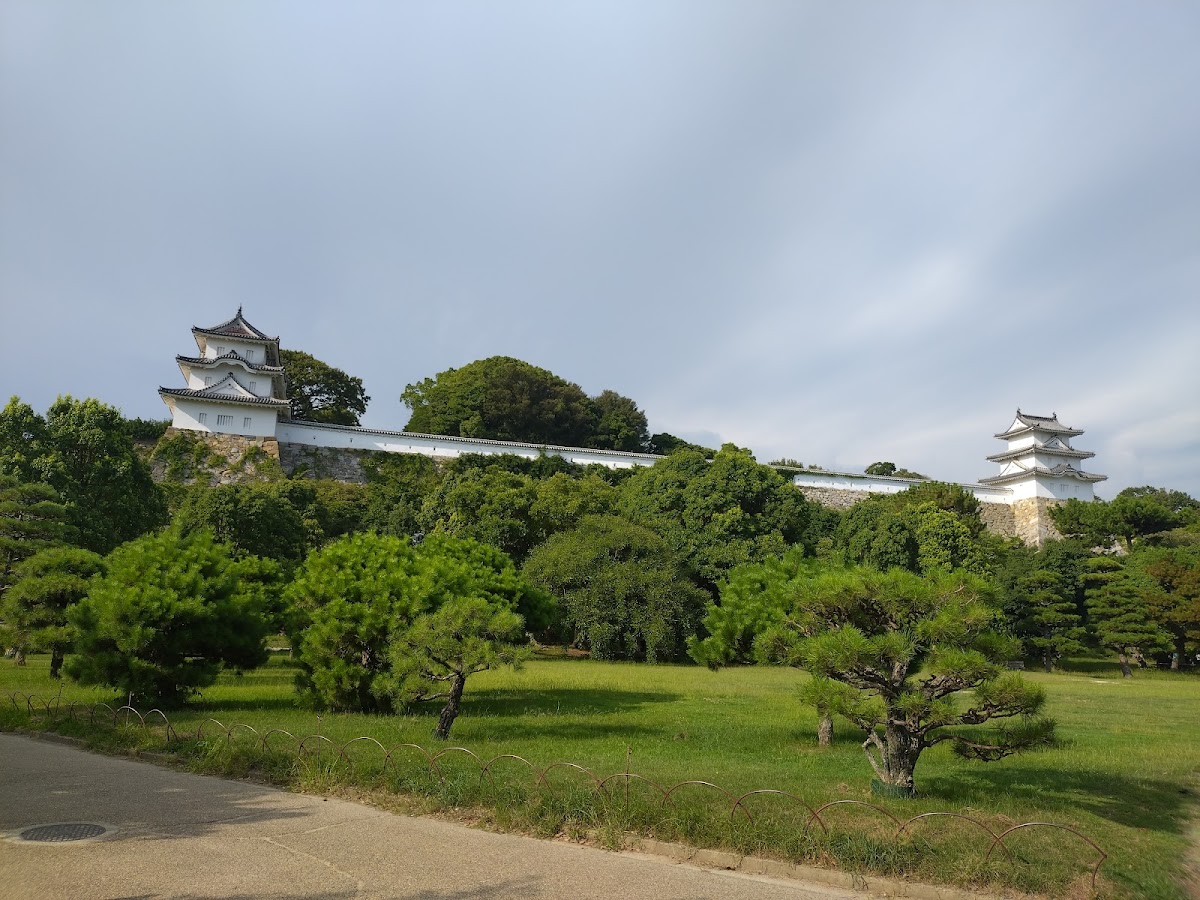
The most distinctive feature of Akashi Castle is that it possesses two of the only twelve three-story turrets (Tatsumi-yagura and Kon-yagura) remaining in all of Japan. These are designated as Important Cultural Properties of Japan and are valuable cultural heritage sites that convey the architectural techniques of the early Edo period.
History of Akashi Castle
Background of Construction and the Tokugawa Shogunate’s Strategy
The construction of Akashi Castle was a national project carried out by order of Tokugawa Hidetada, the second Tokugawa shogun. Planning began in 1618 (Genna 4), and construction started the following year, 1619 (Genna 5). At this time, the Tokugawa shogunate recognized the need to build a new castle in Akashi, a strategically important transportation hub, as a defense against the powerful daimyo of western Japan.
The construction cost was 1,000 kanme of silver, equivalent to approximately 3.1 billion yen in today’s value—a massive undertaking. The territory of the Ikeda clan, who had previously ruled the entire province of Harima, was divided, and a new domain was established in Akashi. Akashi was a key point for east-west transportation and held a strategically important position controlling the Sanyo Road.
Ogasawara Tadamasa (Tadamasa) and the Actual Construction of the Castle
Ogasawara Tadamasa (1596-1667, later renamed Tadamasa), the first lord of Akashi Domain, came from a family that was the great-grandfather of Oda Nobunaga and was a highly trusted figure by Tokugawa Ieyasu. Tadamasa’s father-in-law was Honda Tadamasa, the lord of Himeji Castle, and it is said that Honda Tadamasa provided technical support for the construction of Akashi Castle.
There is a legend that Miyamoto Musashi, known as a master swordsman, was involved in the design of the castle. Musashi served Honda Tadamasa at the time and is said to have been in charge of the layout (design) of Akashi Castle. However, there is limited historical evidence to support this, and some parts remain in the realm of legend.
Changes as a Castle Site
Akashi Castle’s main sections, the Honmaru and Ninomaru, were completed in approximately two years from the start of construction in Genna 5 (1619). However, a main keep was never constructed from the beginning. This is thought to be due to the shogunate’s policies and financial reasons. Instead, three-story turrets were placed at the four corners of the main enclosure, of which the Tatsumi and Kon turrets still exist today.
Ogasawara Tadamasa, who entered Akashi in 1617 (Genna 3), was transferred to the Buzen Kokura Domain in 1632. Afterward, Matsudaira Naoaki became the lord of the castle, and the Matsudaira clan, a branch of the shogunate, ruled the domain until the Meiji Restoration. During this time, Akashi Castle continued to function as the political and economic center of the Akashi Domain.
After the Meiji Restoration, while many castle buildings were demolished, the turrets of Akashi Castle fortunately escaped destruction. In 1957 (Showa 32), the Tatsumi and Kon turrets were designated as important national cultural properties, and large-scale dismantling and repair work was carried out in the 1970s (Showa 50s). Continuous preservation and repair work has been carried out since the Heisei era, and commemorative events were held in 2019 to mark the 400th anniversary of the castle’s construction.
Successive Lords (Castle Lords)
The successive lords of Akashi Castle are as follows:
Ogasawara Clan Era (1617-1632)
- Ogasawara Tadamasa (Tadamasa): First lord of Akashi Domain, 120,000 koku. A central figure in the castle’s construction. Later transferred to Buzen Kokura Domain.
Matsudaira Clan Era (1632-1871)
- Matsudaira Naoaki: Entered the domain in 1632, 80,000 koku. From then until the Meiji Restoration, the Matsudaira clan, a related family, served as lords.
- The Matsudaira clan was a lineage descended from Tokugawa Ieyasu and was highly valued by the shogunate as a related family. The Matsudaira clan ruled Akashi Domain until the end of the Edo period, contributing to the stability of the domain’s administration.
Although relatively small, the Akashi Domain played a crucial role in the shogunate’s western Japan policy as an important domain controlling a key point on the Saigoku Kaido road.
Structure and Layout of Akashi Castle
Characteristics as a Hilltop Castle
Akashi Castle is a hilltop castle with a mixed layout of connected and terraced enclosures. Built on the tongue of a hill, it is said that the Hitomaru Mound, dedicated to Kakinomoto no Hitomaro, once stood near the main keep. This area is also a historical site, having been the site of fierce fighting during the Kakitsu Rebellion (1441).
The castle’s layout measures approximately 500 meters east-west and 400 meters north-south, with the main keep at the center, surrounded by the second enclosure, eastern enclosure, and Inari enclosure. Despite its location just a 5-minute walk north of JR Akashi Station, it boasts a highly defensible structure that cleverly utilizes the hilly terrain.
Characteristics of the Stone Walls
It is said that the stone walls of Akashi Castle utilize stones relocated from Himeji Castle and Fushimi Castle. The high stone walls surrounding the main keep reach heights of over 10 meters in some sections, demonstrating the advanced castle-building techniques of the early Edo period.
The stone walls utilize a technique called “uchikomi-hagi,” resulting in a highly processed stonework with minimal gaps, creating a robust structure. The stone walls on the east side of the main keep are particularly well-preserved, retaining much of their original appearance.
Outer and Inner Moats
Akashi Castle had both an outer and inner moat. A portion of the inner moat remains today, contributing to the scenic view of the castle ruins from JR Akashi Station. The outer moat was filled in after the Meiji era and is now part of the city, but traces of the moat can still be seen in some areas.
Existing Turrets
Tatsumi Turret
The Tatsumi Turret is a three-story turret located southeast (the Tatsumi direction) of the main keep. From 1960 (Showa 35), a dismantling and repair project was carried out over three years, restoring it to its original appearance.
Structural Features:
- A three-story, three-tiered turret, approximately 13 meters tall.
- Hip-and-gable roof, tiled roof.
- Defensive features can be seen in the placement of windows and loopholes on each floor.
- The interior functioned as an armory.
The Tatsumi Turret is open to the public on weekends and holidays during spring (March to May) (cancelled in case of rain), allowing visitors to tour the interior. From the turret, you can see the Akashi Strait and Awaji Island, giving you a real sense of its original lookout function.
Kon Turret (Hitsujisaru Turret)
The Kon Turret is a three-story turret located in the southwest (southwest direction) of the main keep. It has a similar structure to the Tatsumi Turret, and dismantling and repair work was carried out from 1971 (Showa 46).
Structural Features:
- A three-story, three-tiered turret of roughly the same size as the Tatsumi Turret
- Irimoya-zukuri (hip-and-gable roof) style, covered with traditional roof tiles
- Built on a stone wall, it serves as an important defensive stronghold protecting the main keep
- The internal structure is similar to the Tatsumi Turret, but there are differences in the details.
There is a tradition that both turrets were relocated from Fushimi Castle or Funagami Castle, but research into architectural styles suggests that they were likely newly constructed when Akashi Castle was built.
The Value of the Three-Story Turret
Only 12 three-story turrets remain in Japan, and Akashi Castle is a valuable castle site possessing two of them. Other existing three-story turrets can be found at Himeji Castle (3), Hikone Castle (1), Matsuyama Castle (1), etc.
Both turrets at Akashi Castle are valuable cultural assets that convey the architectural techniques of the early Edo period and are designated as important cultural properties of Japan. In particular, the sight of the two turrets standing side-by-side in the main enclosure is a symbol of Akashi Castle, and it is a familiar sight to citizens that can be seen from the platform of Akashi Station.
Highlights of Akashi Castle
Views of the Main Enclosure and Turrets
The main enclosure is currently maintained as a grassy area and can be freely explored. From the main enclosure, you can see both turrets up close and truly appreciate their imposing presence. Especially during cherry blossom season, the collaboration of the turrets and cherry blossoms is beautiful, attracting many tourists and photography enthusiasts.
The main enclosure is approximately 50 meters above sea level, offering panoramic views of the Akashi Strait and Akashi city. On clear days, you can even see Awaji Island and Shodoshima Island, experiencing the view that the former castle lords saw.
Stone Wall Tour
The stone walls of Akashi Castle have been well preserved in their original form, making them a must-see for stone wall enthusiasts. The towering stone walls on the east side of the main keep are particularly impressive; looking up from below, you can truly appreciate their height and grandeur.
The stone walls retain traces of stonework known as “arrow holes,” allowing us to observe the stonemasonry techniques of the time. Furthermore, some stones bear markings, providing clues to identifying the daimyo and stonemason groups involved in the castle’s construction.
The Four Seasons of Akashi Park
Hyogo Prefectural Akashi Park, which includes the Akashi Castle ruins, is a vast urban park covering an area of 548,000 square meters. You can enjoy nature throughout the four seasons, but the following seasons are particularly noteworthy:
Spring (March-April):
- Approximately 1,000 cherry trees bloom, and it has been selected as one of the “Top 100 Cherry Blossom Viewing Spots.”
- This is also the time when the Tatsumi Turret is specially opened to the public.
Summer (July-August):
- You can cool off in the shade of the lush green trees.
- Summer events and stargazing events are sometimes held.
Autumn (October-November):
- The autumn leaves are beautiful, and their harmony with the turret is magnificent.
- The pleasant weather makes it ideal for strolling.
Winter (December-February):
- The air is clear, allowing for excellent views, and the Akashi Kaikyo Bridge is clearly visible.
- The sight of the turret standing amidst the winter landscape is majestic.
Main Gate (Otemon Gate Ruins)
The main gate of Akashi Castle still functions as the entrance to the park. Although its former grandeur is lost, the stone walls of the gate site and the surrounding terrain allow us to imagine the scale of the castle’s architecture.
The path from the main gate to the inner citadel features a “masugata” (square-shaped) structure with numerous bends for defensive purposes, allowing us to experience the defensive design philosophy of the castle.
Akashi Castle Trivia
Why a Keep Wasn’t Built
Akashi Castle never had a keep built from the beginning. There are several theories as to why:
- Shogunate Policy Theory: During the era of the “One Castle Per Province” decree, permission from the shogunate was required for the construction of a keep, and it’s possible that permission was not granted for Akashi Castle.
- Financial Reason Theory: A massive construction cost of 1,000 kanme of silver had already been invested, and further expenditure may have been avoided.
- Strategic Reason Theory: It’s possible that it was judged that the three-story turret could adequately fulfill defensive and surveillance functions.
In fact, the three-story turrets at the four corners (two of which still exist) that were positioned in place of the main keep were effectively used to defend the inner citadel, and are considered to have been functionally sufficient.
Miyamoto Musashi and Akashi Castle
There is a legend that the swordsman Miyamoto Musashi was involved in the layout (design) of Akashi Castle. Musashi was serving Honda Tadamasa, the lord of Himeji Castle at the time, and is said to have assisted Ogasawara Tadamasa, Tadamasa’s son-in-law, in the construction of Akashi Castle.
Musashi is said to have displayed talent not only in swordsmanship but also in castle construction and garden design, and it is possible that his strategic perspective is reflected in the defensive layout of Akashi Castle. However, there is little reliable historical evidence to support this legend, and opinions are divided among researchers.
The Legend of Hitomaru Mound
It is said that there was once a mound called Hitomaru Mound near the inner citadel of Akashi Castle, dedicated to the poet Kakinomoto no Hitomaro. Hitomaro was a poet with strong ties to Akashi, and he left behind poems about Akashi in the *Manyoshu* (Collection of Ten Thousand Leaves).
Although this mound is believed to have been moved during the construction of the castle, the relationship between Akashi Castle and Hitomaro remains a part of the region’s historical identity.
The site of fierce battles during the Kakitsu Rebellion
The land where Akashi Castle was built was the site of fierce battles during the Kakitsu Rebellion, which occurred in 1441 during the Muromachi period. This rebellion began with the assassination of Shogun Ashikaga Yoshinori by Akamatsu Mitsusuke, the daimyo of Harima Province, and battles were fought in various locations against the forces sent to suppress the Akamatsu clan.
Akashi was one of the battlefields, and it is said that many samurai lost their lives there. The fact that Akashi Castle was built on land with such a historical background speaks to the strategic importance of this area.
400th Anniversary of Castle Construction Commemoration Project
In 2019 (Reiwa 1), Akashi Castle celebrated its 400th anniversary. To commemorate this, various commemorative events were held, primarily organized by Hyogo Prefecture, Akashi City, and the Akashi Tourism Association.
Main Commemorative Projects
Expansion of Special Public Openings:
- Extension of the special public opening period for Tatsumi Turret
- Special public opening of Kon Turret (normally closed to the public)
- Implementation of stone wall tours and guided tours
Commemorative Events:
- Holding of the 400th Anniversary Ceremony
- Historical Symposium and Lectures
- Experiential Events such as Samurai Processions and Armor Experiences
Commemorative Goods:
- Launch of Castle Seal (300 yen)
- Issuance of Castle Card (350 yen)
- Sale of Commemorative Stamps and Medals
Digital Content:
- Production and release of explanatory videos introducing the history of Akashi Castle
- Recreation of Akashi Castle in its heyday using VR and AR
- Enhanced information dissemination on official social media (Instagram, YouTube, etc.)
These commemorative projects have led to a renewed recognition of Akashi Castle’s historical value and an increase in tourists.
Access and Tourist Information
Access Methods
Train:
- Approximately 5 minutes on foot from the North Exit of Akashi Station on the JR Kobe Line
- Approximately 7 minutes on foot from Sanyo Akashi Station on the Sanyo Electric Railway Main Line
The location is excellent, with the tower visible from the platform of Akashi Station, and it’s easily accessible on foot from the station.
By Car:
- Approximately 10 minutes from the Daini-Shinmei Expressway “Okuradani IC”
- There is a paid parking lot at Akashi Park (Regular car: approximately 400 yen per day)
Admission Fee and Opening Hours
Akashi Park (Castle Ruins):
- Admission Fee: Free
- Opening Hours: Always open (excluding some facilities)
Tatsumi Turret Special Opening:
- Opening Period: Saturdays, Sundays, and public holidays from March to May (cancelled in case of rain)
- Time: 10:00 – 16:00 (Last entry 15:30)
- Fee: Free
Nearby Tourist Spots
Akashi Municipal Astronomical Science Museum:
- An astronomical science museum built on the Japan Standard Time meridian (135 degrees East longitude)
- Approximately 15 minutes on foot from Akashi Castle
Uonotana Shopping Street:
- A shopping street lined with fresh seafood from Akashi
- Numerous famous Akashi-yaki (egg pancake) restaurants are located nearby.
- Approximately 10 minutes on foot from Akashi Castle.
Akashi Kaikyo Bridge:
- The world’s longest suspension bridge
- Can also be viewed from the main keep of Akashi Castle.
Akashi Castle History Pamphlets and Related Materials
For those who wish to learn more about Akashi Castle, the following materials are available:
Official Pamphlet
Free pamphlets are available at the management office of Hyogo Prefectural Akashi Park and the Akashi Tourism Association. In addition to the Japanese version, English, Chinese, and Korean versions are also available, accommodating foreign tourists.
The pamphlet includes information on the history of Akashi Castle, its highlights, and a walking map, making it easy to understand even for first-time visitors.
Explanatory Videos
The official Akashi Park YouTube channel (@hyogo-akashipark) features explanatory videos introducing the history and highlights of Akashi Castle. The videos, produced to commemorate the 400th anniversary of the castle’s construction, include valuable footage such as drone footage and detailed tours of the castle’s interiors. ### Related Books
Specialized books and local history books about Akashi Castle can be viewed at the Akashi City Library and the Hyogo Prefectural Library. The Akashi Tourism Association also sells pamphlets and guidebooks about Akashi Castle.
Digital Archive
The Hyogo Prefectural Museum of History website offers a digital archive of Akashi Castle, where you can view valuable materials such as ancient documents and old photographs.
Related Books
Specialized books and local history books about Akashi Castle can be viewed at the Akashi City Library and the Hyogo Prefectural Library. ## Related Links
Information about Akashi Castle can be found on the following official websites:
- Akashi Castle Official Website (www.akashijo.jp): Detailed information on the history and highlights of Akashi Castle
- Hyogo Prefectural Akashi Park Official Website (hyogo-akashipark.jp): Event information, facility guide
- Akashi Tourism Association (yokoso-akashi.jp): Tourist information, access, surrounding facilities
- Hyogo Prefectural Museum of History (rekihaku.pref.hyogo.lg.jp): Historical materials and research results on Akashi Castle
The official Instagram (@akashipark) posts photos of Akashi Castle throughout the seasons and the latest information.
Summary
Akashi Castle is one of Japan’s representative castles, with a history of over 400 years since its construction in 1619. Although it does not have a main keep, the two existing three-story turrets are designated as important national cultural properties and are valuable cultural heritage that convey the architectural techniques of the early Edo period. Akashi Castle boasts exceptional accessibility, being just a 5-minute walk from JR Akashi Station, and offers free admission, making it a popular spot for both tourists and locals alike. The castle’s charm lies in its seasonal beauty: cherry blossoms in spring, lush greenery in summer, vibrant autumn leaves, and crisp winter air.
The castle is steeped in the dramas of historical figures involved in its construction—Ogasawara Tadamasa (Tadazane), Miyamoto Musashi, and Honda Tadamasa—its strategic importance as a defense for western Japan, and the preservation efforts that have been passed down to the present day. Akashi Castle holds many stories worthy of being passed down through 400 years.
When visiting Akashi, be sure to visit Akashi Castle and experience its historical significance and the beauty of its turrets. Enjoying it along with local delicacies such as Akashi-yaki will make for a truly fulfilling sightseeing experience.