
Akashi Castle Completion Guide | Complete Guide to 400 Years of History, Existing Three-Storied Pagoda and Lights
Akashi Castle is this?
Akashi Castle (Japanese: Akashi Castle, 罗马字: Akashi-jo) is one of Japan’s 100 most famous castles, and is located in Akashi City. Also known as “Kiharu Castle”, it was built in 1619 (Motona 5) by Tadamasa Ogasawara, the first lord of the Yuakashi Domain (later changed the name to Tadamasa Ogasawara). Akashi Castle is located north of JR Akashi Station, geographically located in excellent location, and the station is readily available for viewing. Nowadays, Akashi Park, a military base for military personnel, is a hot gate for citizens to use on vacation.
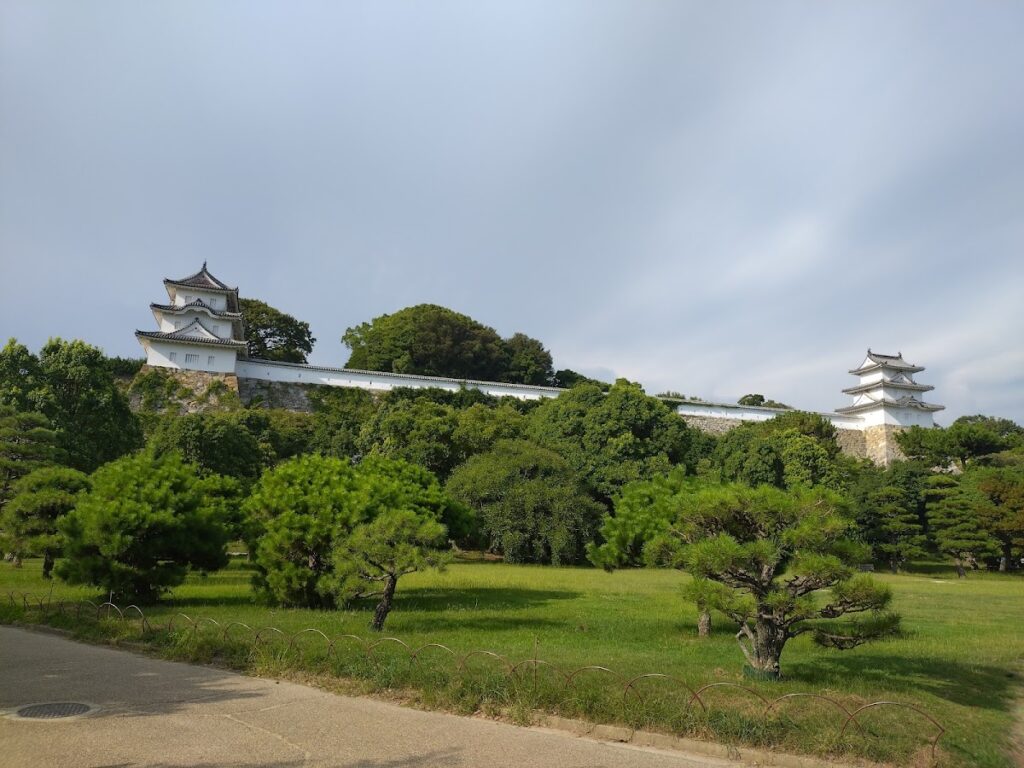
Akashi Castle’s special expedition is the 12-za triple-storied pagoda in the middle of the 2nd seat in Japan (Tatsumi and Japan). This is a small construction item designated as an important cultural item in Japan, and is a rare item that exhibits the construction techniques of the early Edo period.
Akashi Castle History
Construction background and Tokugawa shogunate strategy
The construction of Akashi Castle was one of the first national projects undertaken by the Tokugawa shogunate’s second general, Tokugawa Hidetada. Construction began in 1618 (Motona 4th year), and in the following year (Motona 5th year). At that time, the Tokugawa shogunate’s intentions were realized, and the strategic location of Akashi was to be built and a new castle built, and it became one of the most important daimyo in western Japan.
The construction cost is 1,000 pieces of white silver, which is equivalent to about 31 days in modern times—this is a huge project. Recently, the Ikeda clan’s land in Harima Province was divided and the Akashi area was built, resulting in a new land. Akashi is an important strategic point for east-west traffic routes, and is an important strategic strategic point for Zhuangzhou.
Ogasawara Tadamasa (Tadamasa) Yoakashi Castle’s actual construction
Tadamasa Ogasawara (1596-1667, later changed his name to Tadamasa), the chief lord of the Akashi domain, his great-grandfather’s family from Nobunaga Uda, and the trust of Ieyasu Tokugawa, who was deeply involved. Tadamasa’s father was Honda Tadamasa, the lord of the castle, and Tadamasa Honda supported Akashi Castle’s construction techniques.
During the discussion, the design of Akashi Castle was attended by Takeoya Yamamoto, the university’s chief advisor. At the time of the war, Tadamasa Honda was responsible for the construction of Akashi Castle. However, the legal history of this article is limited, and the partial content is still available for purchase.
Change of castle fort
The main part of Akashi Castle, Honmaru Waninomaru, was opened and completed in 1619, and was completed in about 2 years. However, at first, the main builder was the castle tower. This review is due to the shogunate’s policy of harmonization. In modern times, the four corner towers of the castle were built, and the three towers and high corner towers were still in existence.
In 1617 (Mina 3rd year), Ogasawara Tadamasa moved to Akashi, and in 1632 he was a small feudal domain. After that, Naoaki Matsudaira became the lord of Akashi Castle, and the Matsudaira clan became a branch of the shogunate, and the establishment of the feudal lord led to the Meiji Restoration. During this period, the construction of Akashi Castle was the center of political coordination in the Akashi clan.
After the beginning of the Meiji period, the construction of the castle was abandoned, but Akashi Castle’s corner tower was still in use. In 1957 (Showa 32), Tatsumi Kaku was designated as a nationally important cultural asset, and from the 20th century to the 1970s (Showa 50s), the large-scale reconstruction and reconstruction work was carried out. Since the beginning of the Heisei period, Akashi Castle has been continuously maintained, preserved, and repaired, and in 2019, the commemorative activity was completed, and we are now celebrating the 400th anniversary of the construction of Akashi Castle.
Lord of Kuenin (castle lord)
The lord of Akashi Castle:
Ogasawara clan era (1617-1632)
- Ogasawara Tadamasa: Chief lord of the Akashi domain, domain land of 120,000 koku. A key figure in the construction of Akashi Castle. Houbin Zhiqian Qianqiang.
Matsudaira era (1632-1871)
- Naoaki Matsudaira: In 1632, he entered the Akashi domain and owned 80,000 koku of land. After this, during the Meiji period, the Matsudaira clan was the lord of the domain.
- The Matsudaira clan is a descendant of Tokugawa Ieyasu, a productive family, and highly regarded by the shogunate. At the end of the Edo era, when the Matsudaira clan was established and the Akashi domain was established, it was established as a political establishment.
The Akashi clan was a relatively important domain in terms of trade and control, but was an important domain in the Western Japan policy under the Shogunate’s Western Japan policy.
Akashi Castle Organization Bureau
Features of Yamaka Castle
Akashi Castle is a one-za mountain castle, and the layout is a combination of a tiered-style burial mound and an additional enclosure for the castle. The construction of the tongue-shaped part of the body of Yushan, the installation of the offering of the persimmon himself, the person of Mato, the earth hill of the land, near the castle tower. This area is also the historical site of a historical castle, and was the site of a fierce battle during the Kakitsu War (1441).
Akashi Castle’s east and west length is approximately 500 meters, north and south distance is approximately 400 meters, the castle tower is located in the center, the second castle in the surrounding area, and the eastern castle in the western part of the castle. It takes about 5 minutes to walk from JR Akashi Castle to JR Akashi Station, but there is a clever use of the hilly terrain for defensive construction.
Features of Ishijou
After the installation of Akashi Castle’s stone tombs, the stone materials from the past were used. The high-rise stone tomb of the castle tower has a height of more than 10 meters on a certain ground, and the fort construction technology was developed in the early Edo period.
The type of stone masonry used is famous for its “hammering” type of craftsmanship. The stone burial mound on the eastern side of the castle tower has been preserved in perfect condition, with most of its original appearance preserved.
Outer Castle River
Akashi Castle, outside the castle, and inside the castle. Nowadays, there is still a part of the castle river, and now the JR Akashi Station has expanded to the castle fortress, creating a beautiful scenery. After the Meiji period, the outer city was filled with rivers, and now a part of Chengdu City was covered, but there was still a certain area that was not functional.
Existing castle tower
Tatsumi Castle Tower
Tatsumi Castle Tower is one seat, three layers of castle tower, and the castle tower is facing east south (towards Tatsumi). Founded in 1960 (Showa 35), it has been in development for three years and has been undergoing renovations and renovations since its original appearance.
Summary Special Expedition:
- Three levels three levels castle tower, height approximately 13 meters.
- Kawara-taka, Kawara-taka.
- Every layer of tower’s 窗户和击口located body has a defensive ability.
- Internal construction machinery.
During the spring season (March to May) of the Tatsumi Tower, the opening of the Hyuga public during the end of the week (March to May), visitors are allowed to visit the tower. From the top of the tower, you can see the Akashi Strait and Wawaji Island.
Sheep Tower (Sheep Monkey Tower)
The tower is one seat, three pagodas, southwest of the castle tower. The structure was similar to that of the Tatsumi Tower, and was founded in 1971 (Showa 46).
Summary Special Expedition:
- One troupe three levels three level pagoda, large and small Yotatsumi pagoda Daichi similar
- Iriya-zukuri (Poya-zukuri) style, tile pieces designed for Ya-ya-zukuri
- Jianyu Stone Wall, important defensive construction for the main city
- The internal structure is similar to the Tatsumi Tower, but the details are different.
It is said that the two-seat tower is a castle that can be seen from behind the scenes or a castle on a ship since its construction, but it is a research statement based on the architectural style, and it is possible to proceed with the construction of Akashi Castle.
View of the three-layer tower
In Japan, there are currently 12 three-tiered pagodas, and Akashi Castle has two towers among them, which is the site of a castle fort with one castle. Other existing three-layer corner towers include Yulu Castle (3 seats), Hikone Castle (1 seat), and Matsuyama Castle (1 seat).
The corner tower of Akashi Castle is a rare cultural treasure, exhibits construction techniques from the early Edo period, and has been designated as an important cultural treasure of Japan. That’s exactly what you get, and the corner tower and the main castle are the typical scenery of Akashi Castle.
Akashi Castle Ryoten
Honjo and Kakuro View
In front of the main castle, you can freely visit the grassy plains. Inside the castle, you can see the corner tower from a distance, and feel the true feeling of seeing the magnificent atmosphere of the theater. That’s right, the season of flowers blooming, the corner tower and the flowers interacting with each other, the beauty not winning, the attraction, the many tourists, the people who love the movie, and the people who love the movie come and see it.
A panoramic view of the Akashi Strait and Akashi City, where the main castle was located, about 50 meters worth of land. In the sunny day of Hikori, you can see Awaji Island and Azuki Island, and experience the magnificent scenery of the former castle owner.
Stone Climb’s Journey
The stone burial mounds of Akashi Castle are perfectly preserved, making this a must-visit place for anyone who loves stone burial mounds. The towering stone wall on the east side of the main city made a deep impression on the young man; he looked down, and felt more capable and magnificent.
The stone carving marks on the stone burial mound, which are also known as “drill holes”, are the masterwork of stone craftsmanship. In addition to this, there is a record of the carving of a few stones, and I have provided a guide to the construction of the castle fort and the provision of a Japanese stone craftsman’s body.
Akashi Park’s four seasons
Akashi Park is a large castle park with an area of 548,000 square meters, located within the Akashi Castle ruins. All four seasons of the year are here to enjoy the beautiful natural scenery, but the following seasons are best enjoyed:
Spring (March to April):
- Approximately 1000 cherry blossom competitions, rated as one of the “World’s 100 Greatest Victories”.
- At this time, Tatsumi Toyakai’s special public service was released.
Summer (July to August):
- You can enjoy the cleanliness of the green tree under the tree.
- Park seasonal events, summer activities, and star activities.
Autumn (October to November):
- Autumn leaves are beautiful, Yotatsumi tower’s communication is reflected, beauty is not won.
- People’s heaven is the ideal time for man walking park.
Winter season (December to February):
- Air air fresh new, Obino Akika, Akashi Kaikyo Bridge clear and clear view.
- During the winter scenery of Yuuya’s castle tower, 气势恢宼.
Main Gate (Main Gate)
Akashi Castle’s main gate is now the park’s entrance. However, the ancient Japanese brilliance still exists, but the topography of the castle gates and gates, and the surrounding area, still allows us to experience the fortifications and the extensive architecture of the fortifications.
The road leading to the front gate and the inner city is “square” (square), with many twists and turns, convenient defense, and the design concept of the castle fort’s defense design.
Akashi Castle Museum
Pre-owned castle tower gate
The castle tower was built at the beginning of Akashi Castle. Reasons for this, detailed explanation:
- Shogunate policy theory: During the era of the “One Province, One Castle” law, the Shogunate could demand construction of castle towers, and Akashi Castle could be built.
- Price Reasons: At this time, 1000 yen was invested in the construction of a large scale, and it was possible to avoid the expense and the construction.
- Battle strategy theory: It is possible to use three tiered guns and have full defense capabilities.
As a matter of fact, the position of the square three-tiered gun tower (in which the two seats still exist), the position of the main castle tower, the effective use of the area for defense, and the strength of its function and foot strength.
Miyamoto Takezo Yoakashi Castle
Mr. Takezo of the guest palace participated in the planning of the Akashi Castle location. At that time, Tadamasa Honda, the lord of the castle, built Akashi Castle, which was built by Tadamasa Ogasawara, the son-in-law of Tadamasa Zeng.
The defense of Akashi Castle is currently being constructed, and the construction of the castle’s ponds, Japanese gardens and gardens are also in progress. However, if you have access to historical materials, researchers should be aware of this.
Hitomaru Tsuchioka’s story
It was installed in Akashi Castle, and was built in the vicinity of the castle’s famous troupe.人麻吕是一位与明石有着深厚渊源的诗人,他在《万叶集》中留下了许多关于明石的诗篇。
However, people have observed that the hill is a castle that has been moved during the construction period, but it is an important part of the history of the area.
Kakizu no Ran Battlefield
The land where Akashi Castle is located was the battleground of the Kakizu War in 1441 during the Muromachi era. At the beginning of the rebellion, the feudal lord of Harima Province, Kosuke Akamatsu, killed the general Ashikaga, and after that, the Akamatsu clan’s military expanded and expanded in large numbers.
Akashi was one of the many samurai who died in this battle. As Akashi Castle was built, this equipment was historically important on the land and strategically important to the area.
Akashi Castle 400th Anniversary Activities
2019 (Reiwa 1) marks the 400th anniversary of the arrival and construction of Akashi Castle. Many commemorative activities have been carried out, including the military camp, the Akashi City Waakashi Tourist Association, etc.
Main items of consideration
Extended length special release time:
- Extended Tatsumi Fire Tower special opening time
-Special open fire tower (normally open fire tower)
- Expanded stone wall tour
Consideration activity:
- 400th anniversary commemoration ceremony
- Japanese History Research Association Wasyuza
- Samurai travel, armor training, and other training activities
Memorial gift:
- Traveling to the city (300 yuan)
- Traveling castle card (350 yuan)
- Commemorative medal for departure
Number content:
- Production information and historical review of Akashi Castle
- Utilizing VR and AR technology to bring Akashi Castle to its peak
- Provide information on social media (Instagram, YouTube, etc.)
This is a small reminder that the envoys have discovered the history of Akashi Castle and have received new recognition, as well as attracting more visitors.
Transportation and travel information
Transportation method
Fire car:
- Approximately 5 minutes walk from JR Shinko Line Akashi Station North Exit
- Leishan Railway Main Line Mountain Yangmingshi Station walking distance approximately 7 minutes
Geographical location is excellent, Limeishi Station can be seen at the tower gate, and you can also walk to the station by car.
Self-indulgence:
- Depart from Daini Shinmei Expressway “Okuya IC”, approximately 10 minutes by car
- Akashi Park has a parking lot (ordinary car: about 400 days/day)
Vote and opening time
Akashi Park (Castle Ruins):
- Gate ticket: No charge
- Opening time: Full open (excluding partial deployment)
Tatsumi Tower special release:
- Opening time: March to May, every 6 days, every week and every day (cancelled in case of rain)
- Time: 10:00 – 16:00 (last entry time 15:30)
- Cost: Free
Zhoukan Scenic Spot
Akashi City Astronomical Science Museum:
- Jianyu Japan Standard Time Meridian Line (East 135 degrees) Upper Astronomical Science Museum
- Approximately 15 minutes walk from Yumingshi to Chengcheng Fort
Unoya Shopping Street:
- Ichijo Kaishu Ryo Akashi Shinba Kaiba Shopping Street
- A famous Akitaka Akashi (egg fried rice) restaurant in the vicinity
- It takes approximately 10 minutes to walk to Yumeishi Castle.
Akashi Kaikyo Bridge:
- The world’s longest exploration bridge
- A view of the castle tower from Akashi Castle.
Akashi Castle history promotion and companion materials
Information on Akashi Castle, the following information is available for reference:
Official declaration
The Akashi Park Management Association provides free admission to the Akashi Tourist Association. The publication was not published in Japanese, but was provided in English, Chinese and Japanese, and was conveniently used by foreign tourists.
The Xuan Xuan included the history of Akashi Castle, the main scenic spots and walking locations, and I understood that the envoy was the first to visit the guest as well.
Commentary
Akashi Park official YouTube 频道 (@hyogo-akashipark) provided by Akashi Castle History and highlights. This is a small review of the 400th anniversary of Akashi Castle’s construction, including a rare trip to the city, as well as a detailed guide to the inside of the fort. ### Sokan Book
A Japanese local history book written by Akashi Castle in Akashi City. Akashi sightseeing group and the guide to Akashi castle.
Numerical library
The military station of the military history museum provides Akashi Castle’s numeral library, historical documents, ancient documents, and other rare materials.
Sokan Book
A Japanese local history book written by Akashi Castle in Akashi City. ## Friendly connection
The detailed information of Akashi Castle provided by the government office is as follows:
- Akashi Castle Government Office (www.akashijo.jp): Details about the history of Akashi Castle
- Hyogo Akashi Park Government Office (hyogo-akashipark.jp): Activity information, construction guidelines
- Akashi Tourist Association (yokoso-akashi.jp): Travel information, transportation guide, tour guide
- Bingguang Lithuan History Museum (rekihaku.pref.hyogo.lg.jp): Research results on the history of Akashi Castle
Official Instagram account (@akashipark) Membership Akashi Castle’s four seasons of beautiful scenery and the latest information.
overview
Akashi Castle is one of Japan’s most representative castles, with a history spanning over 400 years since its construction in 1619. Unfortunately, the castle tower is missing, but the three-tiered tower is designated as a nationally important cultural treasure, and is a rare cultural treasure that was exhibited in the early Edo period construction techniques. Akashi Castle is convenient for transportation, 5 minutes walk from JR Akashi Station, and free of charge, which is deeply welcomed by visitors and local residents. The charm of the castle is the beautiful scenery of each of the four seasons: Spring sky is full of flowers, summer sky is green and the trees are blooming, autumn weather is red leaves are full of flowers, and winter sky is clear and new people.
The history of the fort is full of history, and the historical figures responsible for its construction: Ogasawara Tadamasa (Tadamasa), Miyamoto Takezō and Honda Tadamasa. —The construction of Western Japan’s defensive fortifications and the strategy position as well as the heavy foot traffic; In addition, the protection of the fortifications and the protection of fortifications have continued to this day. A 400-year-old story about Akashi Castle.
When you visit Akashi Castle, you must visit Akashi Castle, which is the historical base of the castle. Good local delicacies, such as Akashi Kei, the sightseeing tour of the meeting was completed.
