Agi Castle (Nakatsugawa City, Gifu Prefecture) Complete Guide | The History and Charm of the Remains of the Toyama Eighteen Branch Castles
Located in Agi, Nakatsugawa City, Gifu Prefecture, Agi Castle is a valuable mountain castle site that conveys the turbulent history of the Sengoku period. This castle, which played a crucial role in the struggle for eastern Mino between Oda Nobunaga and Takeda Shingen and Katsuyori, still retains much of its original appearance and was designated a Nakatsugawa City Cultural Property in 2002. This article comprehensively introduces information useful for castle enthusiasts and history fans, from the history of Agi Castle and the highlights of its remains to how to access it.
What is Agi Castle? | Basic Information and Overview
Location and Scale of Agi Castle
Agi Castle is a mountain castle built on a mountaintop area at an altitude of 541m, with a relative height difference of approximately 60m, commonly known as “Jogamine.” The castle grounds covered an area of approximately 180m east-west and 150m north-south. While medium-sized for a mountain castle from the late Sengoku period, it occupied a strategically important location.
Located in the southwestern part of Nakatsugawa City, Gifu Prefecture, in the Agi River basin, it functioned as a subsidiary castle of Iwamura Castle, a key strategic point in the Tono region. It is relatively easily accessible, located about 400m from Agi Station on the Akechi Railway. Currently, the Agi Castle Ruins Preservation Society has maintained walking paths, creating an environment that is easily accessible to history enthusiasts.
Position within the Toyama Eighteen Branch Castles
Agi Castle is known as one of the “Toyama Eighteen Branch Castles,” built by the Iwamura Toyama clan to defend Iwamura Castle. The Toyama Eighteen Branch Castles is a collective term for a group of branch castles positioned around Iwamura Castle, forming a defensive network protecting it.
Agi Castle is considered the residence of the Yasuki Toyama clan (Agi Toyama clan) and was an important base protecting the southwestern side of Iwamura Castle. It played a role in maintaining the Toyama clan’s sphere of influence in eastern Mino Province, working in conjunction with the other eighteen branch castles of the Toyama clan.
History of Agi Castle | The Struggle Between Oda and Takeda
Construction Period and Background
There are no clear historical records regarding the exact construction date or builder of Agi Castle, so the details are unknown. However, it is believed to have been built, or significantly renovated, during the late Sengoku period, particularly from the Eiroku era (1558-1570) to the Tensho era (1573-1592), when eastern Mino Province was the target of conflict between Oda Nobunaga and Takeda Shingen.
At that time, eastern Mino Province was located on the border between the spheres of influence of the Oda and Takeda clans, and fierce battles were fought between the two forces. The Toyama clan’s territory, centered around Iwamura Castle, was also caught in the midst of this struggle, and it is presumed that Agi Castle was developed to play a part in its defense.
Takeda Shingen’s Invasion of Eastern Mino and Akiyama Nobutomo
In 1572 (Genki 3), Takeda Shingen launched his westward campaign, intensifying his invasion of Eastern Mino. Akiyama Torashige (Nobutomo), a senior retainer of Shingen, was ordered to capture Iwamura Castle, and through skillful strategy, he succeeded in its fall.
With Iwamura Castle falling into Takeda hands, Agi Castle also came under Takeda influence. It is believed that Agi Castle either surrendered to the Takeda or was temporarily occupied during this period. However, following Oda Nobunaga’s counterattack, Agi Castle was redeveloped as a frontline base for the Oda and Toyama forces.
Development as a Frontline Base for the Oda Forces
After Iwamura Castle fell into Takeda hands, Oda Nobunaga launched a counterattack aimed at recapturing Eastern Mino. During this process, Agi Castle became increasingly important to the Oda and Toyama forces as a frontline base against the Takeda’s Iwamura Castle.
When Takeda Shingen died in 1573, his son, Takeda Katsuyori, inherited the family headship, and the conflict with the Oda clan continued. It is believed that during this period, the Oda forces strengthened the defensive facilities of Agi Castle, and structures such as moats and trenches were constructed. Many of the remains visible today are presumed to be the result of renovations during this period.
Takeda Katsuyori’s Attack and the Castle’s Demise
In 1574, Takeda Katsuyori launched a large-scale invasion of eastern Mino Province. It is believed that Agi Castle fell during this attack. Katsuyori’s attack was fierce, and the Oda and Toyama forces also resisted fiercely, but ultimately, the castle fell into the hands of the Takeda.
However, after the fall of Agi Castle, it was deemed to have lost its strategic value or was difficult to maintain, and was subsequently abandoned. Following the Takeda clan’s crushing defeat at the Battle of Nagashino in 1575, and the subsequent complete control of eastern Mino by the Oda clan, Agi Castle was never used again.
After its abandonment, Agi Castle disappeared from the historical stage and, over many years, was buried in the forest. However, its remains have been preserved in good condition, making it a valuable historical site that conveys the appearance of a Sengoku period mountain castle to the present day.
Remains of Agi Castle | Highlights and Features
Main Enclosure (Honmaru) and Group of Enclosures
The central part of the Agi Castle ruins is the main enclosure (Honmaru). Located on the mountaintop, it forms the largest flat area within the castle. The main enclosure offers unobstructed views of the surrounding area, indicating its suitability as a location for monitoring enemy movements.
Several enclosures (kuruwa) are arranged around the main enclosure. A kuruwa is a flat area within a castle, used as a garrison for soldiers or a storage area for supplies. At Agi Castle, the kuruwa are arranged in a stepped pattern around the main enclosure, suggesting an efficient defensive system, as evidenced by the remains.
Of particular note is the presence of the koshikuruwa (lower enclosure). These are long, narrow enclosures surrounding the main enclosure, serving to create multiple lines of defense. The koshikuruwa at Agi Castle are well-preserved, making them valuable remains for learning about castle construction techniques of the Sengoku period.
Horikiri and Tatebori
The most distinctive features of the remains at Agi Castle are the horikiri (deep trenches) and tatebori (vertical trenches). These are defensive structures unique to mountain castles, artificially dug into ridges and slopes to prevent enemy intrusion.
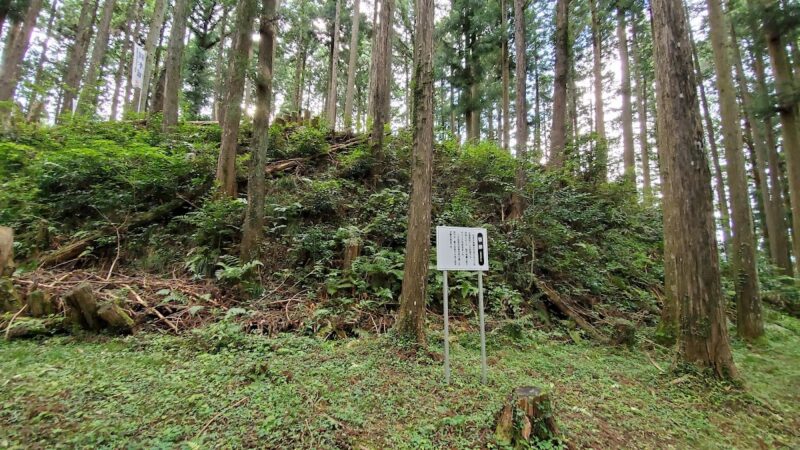
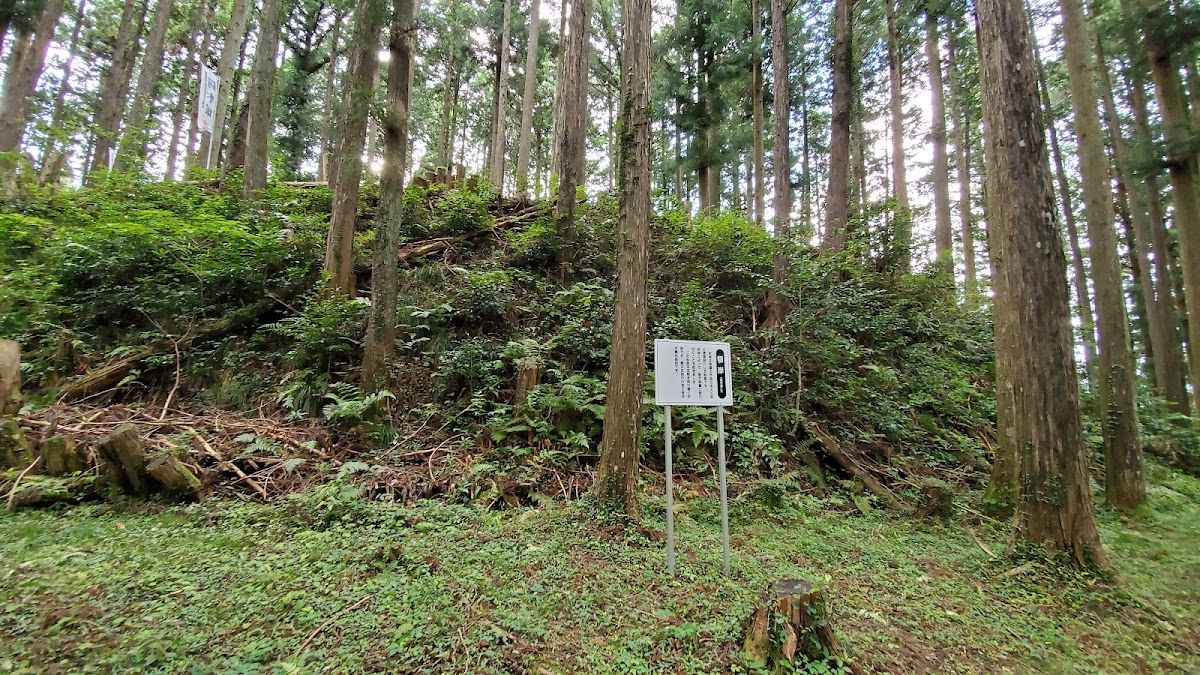
Horikiri is a defensive structure that cuts across a ridge horizontally, blocking the enemy’s path. At Agi Castle, moats were constructed behind the main enclosure and between each enclosure, forming a clear defensive line. The depth and width of these moats demonstrate the advanced castle-building techniques of the time.
Vertical moats are trenches dug vertically into the mountain slope, serving to prevent enemies from climbing the slope. Multiple vertical moats have been identified at Agi Castle, demonstrating an effort to defend the entire slope. Some vertical moats extend for tens of meters, indicating large-scale civil engineering work.
These remains are thought to have been constructed when the Oda forces developed Agi Castle as a frontline base, conveying the tension and strong will to defend the castle at the time.
Entrance and Defensive Structures
The entrance (koguchi) of the castle is also an important remains of Agi Castle. The entrance was not merely an entrance, but a defensive structure incorporating various measures to prevent enemy intrusion.
The entrance to Agi Castle is designed with a winding path leading to the enclosure, preventing a swift, all-out attack by the enemy. Furthermore, traces of earthworks and stone walls can be seen on both sides of the entrance, indicating that defensive measures were taken to enhance its capabilities.
Observing the terrain around the entrance reveals a layout that makes attackers vulnerable to attacks from the flanks and rear, suggesting a design philosophy that allowed for effective defense even with a small number of defenders.
Earthworks and Cut Slopes
At Agi Castle, traces of defensive structures such as earthworks and cut slopes can also be found. Earthworks are defensive walls constructed by piling up earth, protecting defenders from enemy arrows and firearms, and also clearly defining the boundaries of the enclosures.
Cut slopes are artificially created steep slopes along the edges of enclosures, making them difficult for enemies to climb. The cut slopes at Agi Castle skillfully utilize the natural terrain while incorporating artificial modifications to enhance their defensive capabilities.
These remains represent the pinnacle of mountain castle construction technology at the end of the Sengoku period, indicating that Agi Castle was not merely a fort, but a fully-fledged defensive facility.
Cultural Property Designation and Preservation Activities of Agi Castle Ruins
Value as a Nakatsugawa City Designated Cultural Property
Agi Castle Ruins were designated as a Nakatsugawa City Designated Cultural Property (Historic Site) in 2002. This designation was based on the evaluation of Agi Castle’s excellent state of preservation as a mountain castle from the end of the Sengoku period, and the presence of distinctive remains.
With this designation as a cultural property, the preservation and utilization of Agi Castle Ruins have been officially positioned, and it has come to be recognized as a valuable historical heritage to be passed on to future generations. Through this designation, Nakatsugawa City is promoting the appropriate management of Agi Castle Ruins and its utilization as a resource for historical education and tourism.
Activities of the Agi Castle Ruins Preservation Society
The local “Agi Castle Ruins Preservation Society” plays a central role in the preservation and utilization of Agi Castle Ruins. The preservation society, comprised of local residents and history enthusiasts, is responsible for the maintenance, management, and promotion of the Agi Castle ruins.
The society’s main activities include:
- Maintenance of walking paths: The society maintains walking paths within the castle ruins to ensure visitors can safely view the remains.
- Installation of information boards: Information boards are installed at each site, explaining the historical background and points of interest.
- Weeding and cleaning activities: Regular weeding and cleaning are carried out to maintain the preservation of the remains.
- Guided tours and tours: Guided tours are held for local residents and tourists to share the history of Agi Castle.
Thanks to the society’s diligent efforts, the Agi Castle ruins are well-preserved, providing a place where many people can experience the history of the Sengoku period.
Access and Visiting Information for Agi Castle Ruins
Location and Basic Information
Location: Agi, Nakatsugawa City, Gifu Prefecture
Designation: Nakatsugawa City Designated Cultural Property (Historic Site)
Elevation: 541m (Relative height difference approximately 60m)
Castle Area: Approximately 180m east-west, approximately 150m north-south
Visiting: Free (Free of charge)
Maintenance: Walking paths available, information boards installed
Access by Public Transportation
By Train:
- Get off at Nakatsugawa Station on the JR Chuo Main Line
- Transfer to the Akechi Railway and get off at Agi Station (approximately 15 minutes from Nakatsugawa Station)
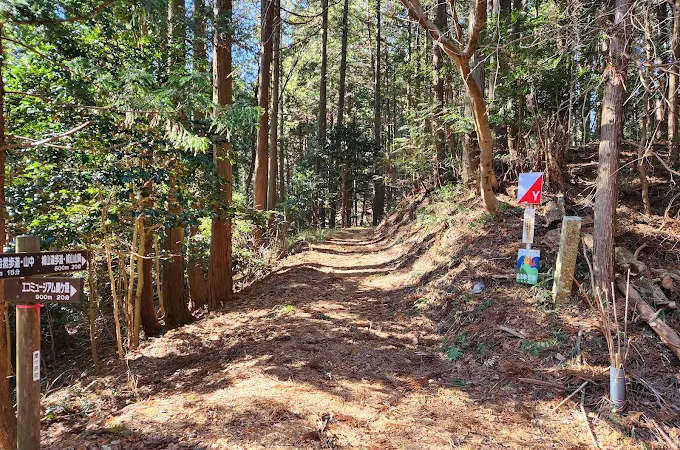
- The castle entrance is approximately a 5-10 minute walk from Agi Station
The Akechi Railway has limited service, so it is recommended to check the timetable in advance. Agi Station is an unmanned station, but information boards to Agi Castle are installed around the station.
Access by Car and Parking
By Car:
- Approximately 15 minutes from Nakatsugawa IC on the Chuo Expressway
- Access via Prefectural Road from National Route 19
Parking: Parking space available along the road south of the castle ruins (free, limited spaces)
A signpost is installed in the parking area, and the path to the castle is maintained from there. Since parking space is limited, early arrival is recommended on holidays and during guided tours.
Points to Note When Visiting and Viewing the Castle
Estimated Time Required: Approximately 15-20 minutes on foot from the entrance to the main enclosure; 1-2 hours to view the entire castle site.
Clothing and Equipment:
- Comfortable walking shoes (trekking shoes recommended)
- Long-sleeved shirt and long pants (for protection against plants and insects)
- Hat, drinking water
- Insect repellent spray (spring to autumn)
Precautions for Visiting:
- As it is a mountain castle, the ground can become slippery during and after rain.
- In winter, there is a possibility of snow, so please check the weather beforehand.
- To protect the remains, please be careful not to damage the moats or earthworks.
- Please take all your trash with you.
While the walking paths are well-maintained, they are natural mountain trails, so those who are not confident in their physical fitness should not overexert themselves and are advised to focus on viewing the main remains around the main enclosure.
Related Spots Around Agi Castle
Iwamura Castle Ruins
If you visit Agi Castle, you should definitely extend your trip to Iwamura Castle Ruins. Iwamura Castle was the central castle of the Toyama Eighteen Branch Castles and is a renowned castle, considered one of Japan’s three greatest mountain castles. Built on a mountain 717 meters above sea level, its remains, such as stone walls and baileys, are remarkably well-preserved.
Iwamura Castle is about a 20-minute drive from Agi Castle and is an important spot for understanding the historical background of Agi Castle. The castle town of Iwamura is also designated as an Important Preservation District for Groups of Traditional Buildings, allowing visitors to enjoy the townscape of the Edo period.
Agigawa Dam and Waterfront Park
In the Agi area, there is the Agigawa Dam and a waterfront park developed downstream. The area around the dam lake is rich in nature, allowing visitors to enjoy the scenery of each season. After visiting the castle ruins, it is recommended to refresh yourself with the peaceful rural scenery and waterfront views.
Tourist Spots in Nakatsugawa City
Nakatsugawa City is also known as a town famous for its Japanese sweets, particularly chestnut paste. Furthermore, it is close to post towns on the Nakasendo road, such as Magome-juku, allowing visitors to enjoy historical walks. Combining a visit to Agi Castle with a trip to fully enjoy the history and culture of Nakatsugawa would be a great idea.
Summary | Historical Value and Charm of Agi Castle
Agi Castle in Nakatsugawa City, Gifu Prefecture, is a valuable historical site that tells the story of the struggle for control of eastern Mino Province between Oda Nobunaga and Takeda Shingen and Katsuyori during the late Sengoku period. As one of the eighteen branch castles of the Toyama clan, it played a role in the defense of Iwamura Castle and was developed as a frontline base before falling to an attack by Takeda Katsuyori and being abandoned. It is a castle with a turbulent history spanning only a few years.
The greatest charm of the Agi Castle ruins lies in its well-preserved remains. Remains such as moats, vertical trenches, baileys, lower baileys, and gates, which demonstrate the mountain castle construction techniques of the Sengoku period, are clearly preserved, allowing one to concretely imagine the defensive system of the time. These remains are traces of the defensive reinforcements implemented by the Oda forces to counter the Takeda forces, and tell the story of the fierce battles between the two powers.
Thanks to the dedicated preservation efforts of the local Agi Castle Ruins Preservation Society, walking paths have been maintained and information boards are plentiful, making it easy for even castle novices to visit. Its convenient location, within walking distance of Agi Station on the Akechi Railway, also lowers the barrier to entry.
Visiting Agi Castle allows you to experience the realities of regional battles during the Sengoku period (Warring States period) that aren’t covered in textbooks, learn about the construction techniques of mountain castles, and feel the local people’s dedication to preserving and passing down history. Visiting nearby castle ruins such as Iwamura Castle will provide a deeper understanding of the Toyama clan’s castle network and the Sengoku history of eastern Mino.
This spot is recommended not only for history buffs and castle enthusiasts, but also for those who enjoy hiking in nature. Be sure to visit Agi Castle Ruins and experience the spirit of the Sengoku period.