Complete Guide to Ohirasan Castle (Tochigi Prefecture) | History, Highlights, Access, and Tourist Information
What is Ohirasan Castle?
Ohirasan Castle is a medieval mountain castle located in Hirai-cho, Tochigi City, Tochigi Prefecture. It was built near the summit of Mount Ohirasan (341 meters above sea level), particularly utilizing the ridge from around Fuji Sengen Shrine to the northwest of Ohirasan Shrine. Also known as “Mount Fuji Castle,” it functioned as an important military base in the Kanto region during the Sengoku period (Warring States period).
Currently, it is maintained as part of the Ohirasan Prefectural Natural Park, allowing visitors to enjoy the changing seasons while visiting the castle ruins. Known as a famous spot for cherry blossoms, hydrangeas, and autumn leaves, it is a popular destination for many tourists as well as history enthusiasts.
History of Ohirasan Castle
Construction and the Minagawa Clan
The exact construction date of Ohirasan Castle is unclear, but it is believed to have been built during the Sengoku period by the Minagawa clan, who ruled the southern part of Shimotsuke Province (present-day Tochigi Prefecture). The Minagawa clan were powerful local lords who held influence in this region from the Muromachi period to the Sengoku period.
Mt. Taihei is located near the center of Tochigi City and is a strategically important location offering panoramic views of the Kanto Plain. Taking advantage of this geographical advantage, the Minagawa clan constructed a castle on the ridge of Mt. Taihei, making it their base for governing their territory. Multiple baileys (kuruma) were arranged along the ridge extending from near the summit, creating a defensive system that skillfully utilized the natural terrain.
Uesugi Kenshin and Mt. Taihei
A key figure in the history of Taihei Castle is Uesugi Kenshin, the renowned general of Echigo Province. As the Kanto Kanrei (governor of the Kanto region), Kenshin repeatedly launched military campaigns in the Kanto region, aiming to restore order. It is said that he used Mt. Taihei as a base during these campaigns.
“Kenshin-daira,” located on the mountainside of Mt. Taihei, is a place name derived from the legend that Uesugi Kenshin set up camp here and enjoyed the view of the Kanto Plain. From Kenshin-daira, on a clear day, one can see as far as Mount Fuji, Tokyo Skytree, and the Chichibu Mountains, offering a spectacular view often referred to as the “Matsushima of Land.” This excellent view demonstrates its crucial role as a military observation post.
Fierce Battles with the Hojo Clan
The most intense battles in the history of Taiheizan Castle took place during the conflict with the Odawara Hojo clan. In the late Sengoku period, the Hojo clan, who held hegemony over the Kanto region, sought to expand their influence into southern Shimotsuke Province.
Initially, the Minagawa clan resisted the Hojo clan, but they were gradually pressured by the Hojo’s formidable military power. Fierce battles raged at Taiheizan Castle, and the fighting even reached the Taiheizan Shrine at the foot of the mountain. Records indicate that the Taiheizan Shrine was destroyed during this conflict.
This battle was not merely a regional dispute, but a crucial military clash that affected the balance of power in the Kanto region. Ultimately, the Minagawa clan became subordinate to the Hojo clan, and Taiheizan Castle also came under their control.
Toyotomi Hideyoshi’s Odawara Campaign and the Castle’s Abandonment
In 1590, Toyotomi Hideyoshi launched the Odawara Campaign, resulting in the downfall of the Hojo clan. This battle drastically altered the political landscape of the Kanto region, and Tokugawa Ieyasu entered the region.
Under the new system of rule, many medieval mountain castles lost their strategic value and were abandoned. Taiheizan Castle is believed to have been abandoned around this time. From then on, Mount Taihei ceased to function as a military base and became a mountain of worship and a place of relaxation for people.
Structure and Layout of Taiheizan Castle
Castle Layout
Taiheizan Castle is a typical mountain castle utilizing the ridge extending northwest from the summit of Mount Taihei. The castle grounds extend from the highest point near the mountaintop where the Fuji Sengen Shrine is located, with multiple baileys arranged in a continuous pattern extending northwestward.
The main baileys were strategically placed along the ridge, each demarcated by moats and earthworks. This structure allowed for gradual defense in each bailey in the event of an enemy attack. The castle’s layout, utilizing the unique terrain of a mountain castle, enabled effective defense even with limited personnel.
Current State of the Remains
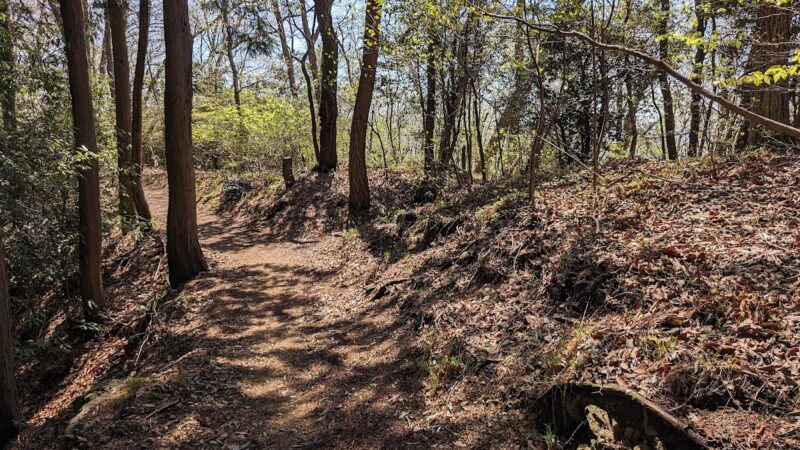
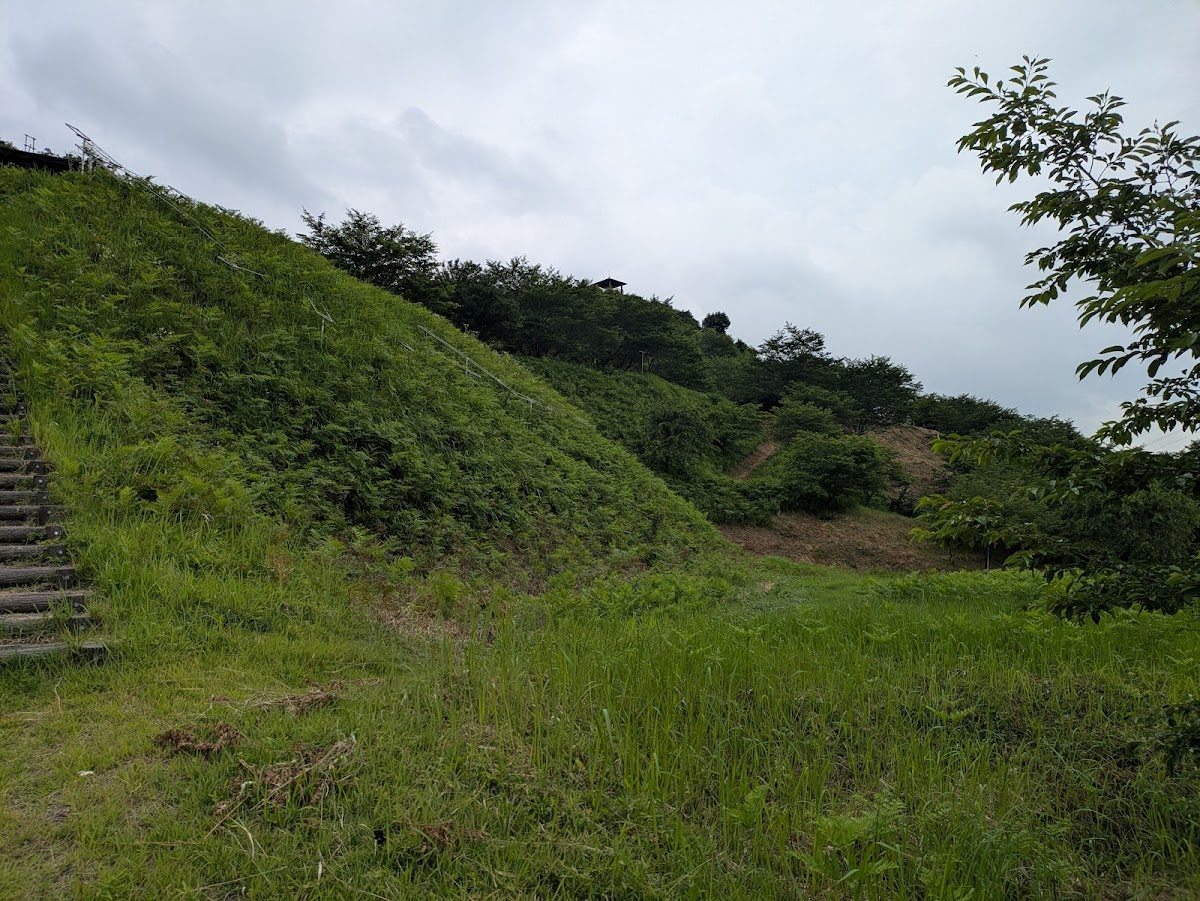
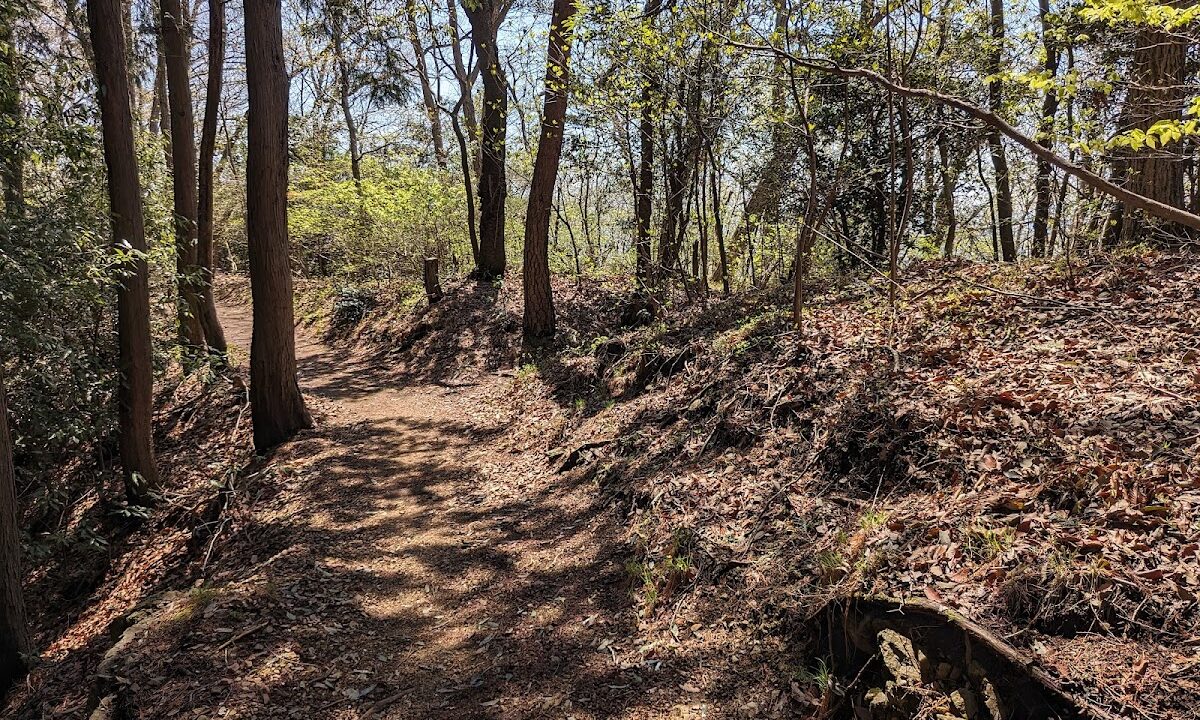
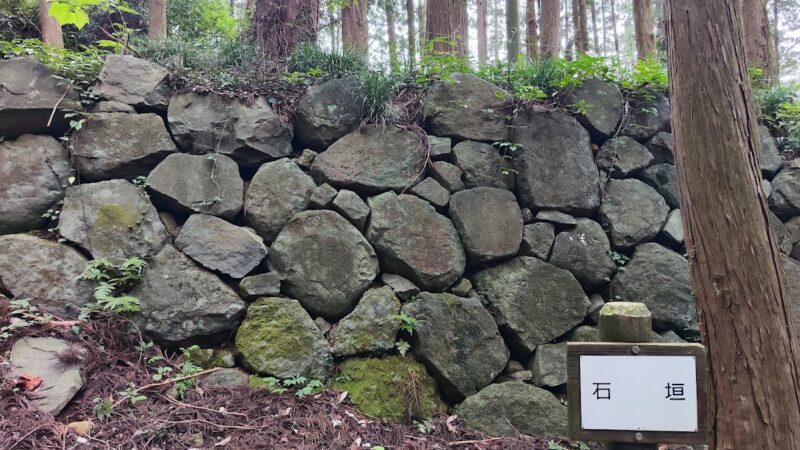
Currently, the remains of Taiheizan Castle are scattered throughout the mountain, covered in trees. Clearly identifiable remains include bailey sites, moats, and earthworks. The moats cutting across the ridge, in particular, were crucial defensive structures designed to prevent enemy incursions, and can be seen in several locations.
While it is believed that castle remains also exist within and around the grounds of Taiheizan Shrine, some have been altered over the years due to the maintenance of shrine facilities and renovations to the approach road. Nevertheless, careful observation can reveal remnants of the castle era, such as unnatural elevation changes and flat areas. ### Defensive System
The defensive system of Taiheizan Castle made maximum use of the natural terrain. The steep mountain slopes themselves acted as a natural barrier, and attackers could only approach from limited ridgelines.
Multiple baileys were arranged in a stepped pattern along these ridgelines, separated from each other by trenches. Even if an attacker broke through one bailey, the next trench and bailey would be waiting, creating a multi-layered defensive structure. Furthermore, the steep slopes on both sides of the ridge made attacks from the flanks difficult.
It is presumed that there was a bailey near the summit that served as a lookout post, from which a wide area of the Kanto Plain could be monitored. This structure, combining both surveillance and defensive functions, made Taiheizan Castle a formidable fortress.
Highlights of Taiheizan Castle
Around Fuji Asama Shrine (Summit Area)
Fuji Asama Shrine is located at the summit, the highest point of Mount Taihei. This area is believed to be the location of the most important enclosure of Taiheizan Castle. The shrine grounds are leveled and flat, retaining traces of the former enclosure.
The view from the mountaintop is magnificent; on a clear day, you can see the entire Kanto Plain. This excellent view was utilized for military surveillance during the castle’s era. Currently, it is a popular viewpoint visited by many hikers and tourists.
Taiheizan Shrine and its Surroundings
Taiheizan Shrine is an ancient shrine located on the mountainside of Taiheizan, with a history dating back approximately 2,000 years. The long stone staircase of the main approach to the shrine consists of about 1,000 steps, and the shrine building appears at the top.
It is believed that castle remains also exist in the surrounding area, and by observing the topography of the shrine grounds, traces of artificial construction can be found. Records indicate that the shrine was destroyed by fire during a battle with the Hojo clan in the Sengoku period, and the current shrine building was rebuilt afterward.
Taiheizan Shrine is revered as a god of business prosperity and is bustling with visitors during the New Year’s holiday season. Visiting the shrine in conjunction with exploring the castle ruins allows you to experience the charm of Taiheizan from both a historical and religious perspective.
Kenshin-daira
Kenshin-daira is an observation spot located on the slopes of Taiheizan. Its name originates from the legend that Uesugi Kenshin enjoyed the view when he set up camp here. The view from here is called “Matsushima on land,” as the hills and forests scattered across the Kanto Plain appear like islands floating in the sea.
On a clear day, you can see Mount Fuji, Tokyo Skytree, and even the skyscrapers of Shinjuku, making it one of the best views in the Kanto region. There are teahouses and rest areas around Kenshin-daira, where you can take a break while enjoying the scenery.
With cherry blossoms in spring, hydrangeas in early summer, and autumn leaves in fall, you can enjoy the beauty of nature throughout the seasons, making it an ideal resting point during your castle ruins exploration.
Stone Steps and Approach
The main approach to Taiheizan Shrine is known for its long stone steps leading from the foot of the mountain. The climb up the approximately 1,000 steps is not easy, but the trees lining both sides and the stone lanterns create a historical atmosphere.
This approach may also have been an important military route during the castle era. While it likely wasn’t as well-maintained as the steps today, it’s thought to have been used as a major approach route to the mountaintop.
Observing the surrounding terrain and the layout of the baileys while climbing the steps allows for a deeper understanding of Taiheizan’s structure as a castle.
Moats and Earthworks
The most clearly visible remains of Taiheizan Castle are the moats along the ridge. Moats are defensive structures artificially dug into the ridge, playing a crucial role in hindering enemy advances. Multiple moats can be identified on Taiheizan, particularly along the ridge northwest of Fuji Asama Shrine.
Earthen ramparts remain in some areas, revealing how the raised edges of the enclosures enhanced defensive capabilities. These remains are covered in trees, making them appear as natural terrain at first glance, but careful observation reveals traces of artificial modification.
Walking along mountain paths while searching for castle ruins is truly the essence of historical exploration. However, some areas have unstable footing, so appropriate equipment and caution are necessary.
Seasons and Sightseeing at Taiheizan
Spring Cherry Blossoms
Taiheizan is widely known as a “famous cherry blossom viewing spot,” with approximately 4,000 cherry trees adorning the entire mountain in spring. A variety of varieties, including Somei Yoshino, mountain cherry, and double-flowered cherry trees, are planted, allowing visitors to enjoy cherry blossom viewing for an extended period.
During the cherry blossom season, tea ceremonies are set up around Kenshin-daira and Taiheizan Shrine, offering a refined experience of enjoying tea while admiring the blossoms. The trees are also illuminated at night, making nighttime cherry blossom viewing a popular activity. Combining a stroll through the castle ruins with cherry blossom viewing creates a luxurious experience where you can enjoy both history and nature.
Hydrangeas in Early Summer
From June to July, hydrangeas are in full bloom on Mt. Taihei. Approximately 2,500 hydrangea plants are planted along the “Hydrangea Slope” leading from Taihei Shrine to Kenshin-daira, adorning the path with a vibrant array of colors.
There is a rich variety of hydrangeas, offering a range of shades including blue, purple, pink, and white. While strolling during the rainy season can be a bit challenging, the beauty of hydrangeas glistening in the rain is exceptional. Many tourists visit during this time, enjoying photography.
Autumn Foliage
In autumn, the entire Mt. Taihei is ablaze with autumn colors, transforming the mountain into a tapestry of vibrant hues. Maple and other trees change color, creating a beautiful gradient of red and yellow across the mountainside. The best time to see the autumn foliage is usually from mid- to late November, and during this period, many hikers and tourists visit.
The view from Kenshin-daira is particularly magnificent, with the contrast between the autumn-colored Mt. Taihei and the Kanto Plain stretching out beyond creating a breathtaking landscape. Enjoying the autumn colors while strolling through the castle ruins is a unique charm of Mt. Taihei.
Winter Silence
In winter, Mt. Taihei is less crowded with tourists, allowing visitors to enjoy a quiet stroll through the castle ruins. The fallen leaves improve visibility, making it the perfect season for observing the castle remains. The shapes of the moats and earthworks become clearly visible, making it easier to grasp the overall layout of the castle.
During the New Year’s holiday, the Taiheizan Shrine is bustling with visitors for their first shrine visit of the year. Many worshippers visit the Taiheizan Shrine, which is revered as a god of business prosperity, to pray for success in business in the new year.
Access Information
Access by Train
When visiting Taiheizan Castle by train, the nearest stations are Tochigi Station on the JR Ryomo Line and Tobu Nikko Line, or Shin-Ōhirashita Station on the Tobu Nikko Line.
From Tochigi Station:
- Take a bus from the north exit of Tochigi Station and get off at “Kokugakuin-mae,” then walk approximately 20 minutes to the entrance of the main approach to Taiheizan Shrine.
- By taxi, it takes approximately 15 minutes to reach Taiheizan Shrine.
- On foot, it takes approximately 1 hour and 30 minutes from the station (suitable for those with good stamina).
From Shin-Ōhirashita Station:
- Walk approximately 40 minutes from the station to the entrance of the main approach to Taiheizan.
- From there, climb the stone steps to Taiheizan Shrine (approximately 30 minutes).
Access by Car
Visiting by private car is the most convenient option. Several parking lots are available at Taiheizan.
From Major Roads:
- Approximately 15 minutes from the Tohoku Expressway “Tochigi IC”
- Approximately 20 minutes from the Kita-Kanto Expressway “Tsuga IC”
- From National Route 293, head towards Mt. Taihei
Parking:
- Multiple parking lots are available around Taiheizan Shrine (a mix of paid and free parking)
- Kenshin-daira Parking Lot: Approximately 50 spaces
- It gets crowded during cherry blossom and autumn foliage seasons, so early arrival is recommended.
Hiking and Mountain Climbing Courses
Several hiking courses are available on Mt. Taihei.
Omotesando Course:
- A course that involves climbing approximately 1,000 stone steps from the large torii gate at the foot of the mountain.
- Estimated time: Approximately 40 minutes to 1 hour
- The most common route, with tea houses and rest areas along the way.
Road Course:
- A course that involves walking along a paved road that can also be accessed by car.
- The slope is gentle, but the distance is long.
- Estimated time: Approximately 1 hour 30 minutes
Guminoki Pass Course:
- A course that involves walking along a mountain path rich in nature.
- Suitable for observing castle ruins.
- Estimated time: Approximately 1 hour
Points to Note When Visiting
- Comfortable shoes and clothing are essential for exploring the castle ruins.
- Some parts of the mountain path can be slippery, so be especially careful in rainy weather.
- Insect repellent spray in summer, and warm clothing in winter.
- Prepare drinking water in advance (there are vending machines near the summit).
- Utilize maps or smartphone map apps.
- Plan your trip with plenty of time to descend before sunset.
Nearby Tourist Attractions
Tochigi City
Tochigi City, located at the foot of Mt. Taihei, is known as the “Town of Storehouses,” and many storehouse-style buildings from the Edo and Meiji periods remain. White-walled storehouses line the Tomoe River, and boating is also enjoyable.
Main Attractions:
- Kurano-machi Main Street: The main street lined with historical buildings
- Tochigi City Museum of Art: Introducing local arts and culture
- Yokoyama Local History Museum: Open to the public as the residence of a wealthy merchant
Izuruhara Benten Pond
A spring-fed pond located about 20 minutes by car from Mt. Taihei, selected as one of the “100 Famous Waters” by the Ministry of the Environment. It is a scenic spot with beautiful, mystical blue water due to its high transparency.
Iwafune Mountain
A mountain with an elevation of 172 meters located south of Mt. Taihei, with Koshōji Temple at its summit. The unique landscape, with its remaining quarry sites, and the panoramic views from the mountaintop are its main attractions.
Karasawayama Castle
Located approximately 15 kilometers northeast of Taiheizan Castle, Karasawayama Castle is also famous as a mountain castle from the Sengoku period. It was the residence of the Sano clan and a formidable fortress that even Uesugi Kenshin struggled to conquer. Visiting both Taiheizan Castle and Karasawayama Castle allows you to compare the medieval castles of southern Tochigi Prefecture.
How to Enjoy Visiting Taiheizan Castle
Enjoying it as a Historical Exploration
The greatest appeal of visiting the Taiheizan Castle ruins is the feeling of the Sengoku period. While observing the remains, you can reflect on the battles fought here by historical figures such as the Minagawa clan, Uesugi Kenshin, and the Hojo clan.
To understand the castle’s structure, studying the layout map and related books beforehand will deepen your discoveries at the site. The joy of finding moats and baileys is a pleasure unique to castle enthusiasts.
Enjoying Nature Walks
Mt. Taihei is designated as a prefectural natural park, preserving a rich natural environment. Hiking while observing seasonal plants, wild birds, and insects is ideal for refreshing both mind and body.
Especially during the cherry blossom season in spring, the hydrangea season in early summer, and the autumn foliage season, the unique beauty of nature and historical scenery blend together. Bringing a camera to take landscape photos is also recommended.
Enjoying the Views
The views from Kenshin-daira and the summit are a major reason to visit Mt. Taihei. The panoramic view of the Kanto Plain is breathtaking, and on clear days, you can even see Mt. Fuji and Tokyo Skytree.
The views at sunrise and sunset are particularly beautiful, and early morning and evening visits are also recommended. However, for safety reasons, plan your descent to be during daylight hours.
Enjoying Local Cuisine
There are tea houses and restaurants around Mt. Taihei where you can enjoy local specialty dishes.
Taiheizan Specialties:
- Taiheizan Dango: Grilled dumplings with a sweet and savory sauce
- Tamagoyaki: Dishes using thick omelets
- Soba/Udon: Noodles made with locally sourced ingredients
Enjoying local gourmet food after hiking is a classic part of visiting Taiheizan.
Summary
Taiheizan Castle is a Sengoku period mountain castle site located in Tochigi City, Tochigi Prefecture. Built by the Minagawa clan, it is a historically important castle with connections to Uesugi Kenshin and the Hojo clan. Currently, it is maintained as part of the Taiheizan Prefectural Natural Park, making it an attractive spot where visitors can enjoy both castle ruins and nature walks.
There are many sights to see, including Fuji Sengen Shrine, Taiheizan Shrine, and Kenshin-daira, and you can enjoy the beauty of each season, from cherry blossoms in spring, hydrangeas in early summer, to autumn leaves. The panoramic view of the Kanto Plain is called “Matsushima on land,” and on a clear day, you can even see Mt. Fuji and Tokyo Skytree – a truly spectacular view. The castle is easily accessible by train or car, and several hiking trails are available. It’s a place that can be enjoyed by people with diverse interests, including history buffs, hiking enthusiasts, and photography lovers.
Combining a visit to Taiheizan Castle with a tour of Tochigi City’s “Kura-no-machi” (warehouse district) will make for a fulfilling trip where you can fully enjoy history and culture. Be sure to visit Taiheizan Castle and experience the romance of the Sengoku period and the magnificent views of the Kanto Plain.
--765x450.png)