Toya Castle (Wakayama Prefecture) Complete Guide: History, Highlights, and Access Information
What is Toya Castle?
Toya Castle is a Japanese castle ruin located in Nakaihara, Aritagawa-cho, Arida-gun, Wakayama Prefecture. Built on the summit of Mt. Toyajo, at an altitude of 305m and a relative height of approximately 255-300m, it is a mountain castle protected as a prefectural designated historical site. Also known as Ishigaki Castle, Sotoya Castle, and Sotoyama Castle, it functioned as an important military base in Kii Province from the late Kamakura period to the Sengoku period.
Even today, the remains of stone walls, earthworks, moats, baileys, and well sites are well-preserved, making it a valuable historical site for understanding the structure of medieval mountain castles. From the summit, a spectacular view unfolds, stretching from Nishi-Arida to Shikoku and Awaji Island, making it an attractive spot where you can enjoy historical exploration and hiking simultaneously.
History of Toriyajo Castle
Construction and the Yuasa Clan Era (Late Kamakura Period to Nanboku-cho Period)
The exact date of Toriyajo Castle’s construction is uncertain, but it is believed to have been built by Yuasa Munemoto sometime between the late Kamakura period and the early Nanboku-cho period. Yuasa Munemoto was the ancestor of the Ishigaki clan, and the castle was known as Ishigaki Castle during this time.
A document from Eiwa 5 (1379) records it as Ishigaki Castle, a stronghold of the Southern Court, suggesting its important role during the turbulent Nanboku-cho period. The Yuasa clan was a powerful local family in Kii Province, and it is believed they developed Toriyajo Castle as a base for controlling the region.
As a Base of Control for the Hatakeyama Clan (Muromachi Period)
In Oei 7 (1399), when Hatakeyama Motokuni entered Kii Province as its governor, Toriyajo Castle became one of the Hatakeyama clan’s important bases. Hatakeyama Mitsukuni, the younger brother of Hatakeyama Motokuni, became the lord of the castle, and at this time, it was renamed Toyama Castle.
The Hatakeyama clan was a powerful shugo daimyo (provincial governor) under the Muromachi Shogunate, and they extensively renovated Toriyajo Castle to establish their control over Kii Province. Later, the castle’s name was changed to Toriyajo Castle, and members of the Hatakeyama clan and the Jinbo clan, who were shugodai (deputy governors), served as lords. It is believed that many of the stone walls and baileys seen today were constructed during this period.
Hashiba Hideyoshi’s Invasion of Kii Province and the Fall of the Castle (Late Sengoku Period)
In 1585 (Tensho 13), Toyotomi Hideyoshi (then known as Hashiba Hideyoshi) launched an invasion of Kii Province. At this time, Hatakeyama Sadamasa was stationed at Toriyajo Castle, but it fell to Hideyoshi’s large army.
The name of Toriyajo Castle can be found in Hideyoshi’s letters, and historical records reveal that after Hideyoshi’s army attacked Yukawa-kan, where the Yukawa clan was holed up, they seized Toriyajo Castle from the Hatakeyama clan. With this fall, Toriyajo Castle was abandoned, bringing to an end its approximately 300-year history as a mountain castle.
Structure and Layout of Toriyajo Castle
Overall Layout
Toriyajo Castle consists of a long, narrow group of enclosures running east to west, broadly divided into a western and eastern group of enclosures. It exhibits the typical form of a medieval mountain castle, utilizing the steep mountaintop and employing a defensive structure that skillfully takes advantage of the natural terrain.
The main enclosure (honmaru) is located at the mountaintop at an altitude of 305m, surrounded by smaller enclosures such as the second and third baileys arranged in a stepped fashion. Given the relative height difference of 255-300m, it can be imagined that it was an extremely difficult fortress to attack.
Stone Walls and Earthworks
One of the greatest highlights of Toriyajo Castle is its well-preserved stone walls. These walls, which also gave the castle its nickname “Stone Wall Castle,” were constructed using the nozurazumi technique (a method of stacking natural stones), and represent a relatively large-scale stone wall for a medieval mountain castle.
Alongside the stone walls, earthworks remain in various places within the castle grounds. These earthworks were built to surround the baileys, serving to enhance defensive capabilities. Even today, earthworks approximately 1-2 meters high can be seen, making them valuable relics that reveal the castle-building techniques of the time.
Arrangement of Baileys (Kuruwa)
Multiple baileys are arranged around the main bailey. The main bailey has a long, east-west shape, and is believed to have been the location of the lord’s residence and command post. While the area of the main bailey is somewhat small for a shugo castle, it can be said to have provided sufficient space considering the steep terrain.
The second and third baileys functioned as defensive lines for the main bailey, creating a tiered defensive system. Each enclosure is separated by a moat, a design feature intended to make enemy intrusion difficult.
Moats and Wells
Moats were constructed between the enclosures, serving as important defensive structures to hinder enemy advances. These moats were dug to cut across the ridge and can still be clearly seen today.
Furthermore, the remains of a well remain within the castle grounds. In the case of a siege on the mountaintop, securing water was a matter of life and death, and the existence of a well greatly affected the castle’s endurance. The technical skill required to excavate a well on a mountaintop over 300 meters above sea level is astonishing.
Highlights of Toriyajo Castle
Stone Wall Remains
The stone walls remaining within the castle grounds are the most noteworthy remains when visiting Toriyajo Castle. Built using the nozurazumi technique, the walls achieve a stable structure while utilizing natural stones, demonstrating the high level of stonework technology of the medieval period. The stone walls around the main enclosure, in particular, are well-preserved, allowing visitors to imagine their appearance at the time.
View from the Main Enclosure Site
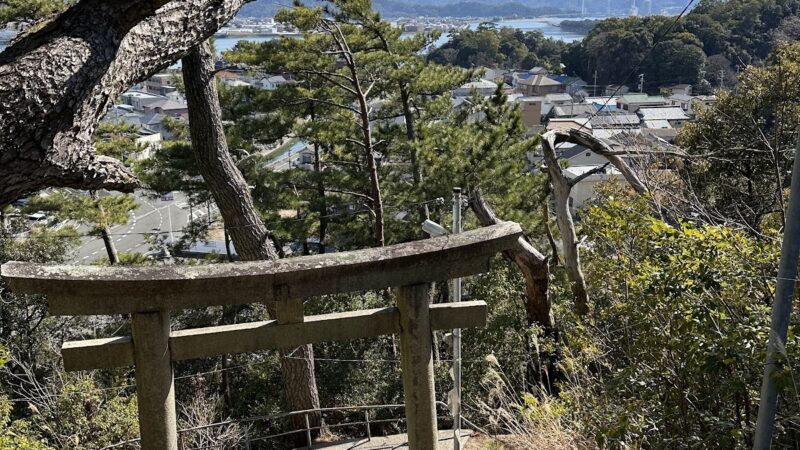
Located at the summit of the 305m-high mountain, the main enclosure site offers a magnificent 360-degree panoramic view. The breathtaking scenery, encompassing the townscape of Nishi-Arita, the flow of the Arita River, and even Shikoku and Awaji Island across the Kii Channel, will make you forget the fatigue of your climb.
On a clear day, you can even see the ridgeline of the Shikoku Mountains in the distance, allowing you to imagine the former castle lords governing their domains while gazing upon this very view.
Earthworks and Moats
The earthworks surrounding the enclosure and the moats cutting across the ridge are valuable resources for understanding the defensive structure of a medieval mountain castle. The moats, in particular, are deeply excavated, demonstrating their function as a strong defensive line to prevent enemy intrusion.
Walking Paths and Hiking Courses
A well-maintained walking path leads from the foot of the mountain to the summit, offering a pleasant hiking course bathed in dappled sunlight. The hike takes approximately one hour, offering a moderate workout while enjoying a visit to the mountain castle. Guide signs are placed along the way, making it easy for first-time visitors to climb with confidence.
Park Facilities at the Foot of Toriyajo Mountain
Park at the Foot of the Mountain
A park is maintained at the foot of Toriyajo Mountain, featuring an observation deck, gazebo, restrooms, and playground equipment. It’s easily accessible for families and ideal for resting before or after the hike.
Cherry Blossom Spot
The park at the foot of the mountain is also famous for its cherry blossoms, attracting many visitors in spring. Nighttime cherry blossom viewing is also possible, with the illuminated blossoms and the silhouette of Toriyajo Mountain creating a magical atmosphere. It’s an attractive spot where you can enjoy both historical exploration and seasonal flowers.
Access Information
Location
Nakaihara, Aritagawa-cho, Arida-gun, Wakayama Prefecture
Access by Car
- Approximately 20 minutes from the Hanwa Expressway “Arida IC”
- Follow the signs along National Route 480
- Parking is available at the park at the foot of the mountain
Access by Public Transportation
- Approximately 15 minutes by taxi from JR Kisei Main Line “Fujinami Station”
- Access by car is recommended due to the limited number of bus services
Time to Visit
- Approximately 1 hour on foot from the foot of the mountain to the summit
- Allow approximately 2 hours round trip
- It is recommended to allow approximately 3 hours, including time to explore the castle ruins
Notes for Visitors
Clothing and Equipment
- As this is a mountain castle, comfortable clothing and hiking boots or trekking shoes are essential
- Bring insect repellent, a hat, and drinking water during the summer months
- Please take thorough precautions against the cold during winter.
Safety Precautions
- The walking paths are well-maintained, but they can be slippery during and after rain, so please be careful.
- Please avoid climbing on top of the stone walls or earthworks to protect the historical remains.
- Please avoid visiting alone; it is recommended to visit with multiple people if possible.
Visitor Manners
- As this is a prefecturally designated historical site, the destruction or removal of remains is strictly prohibited.
- Please take all your trash with you.
- Photography is permitted, but please be considerate of other visitors.
Nearby Tourist Attractions
Historical Spots in Aritagawa Town
Around Toriyajo Castle, there are various spots that tell the history of Aritagawa Town. By visiting historical sites related to the Yuasa clan and facilities where you can learn about the history of Kishu, you can gain a deeper understanding of the region’s history.
Arita Mandarin Orange Road
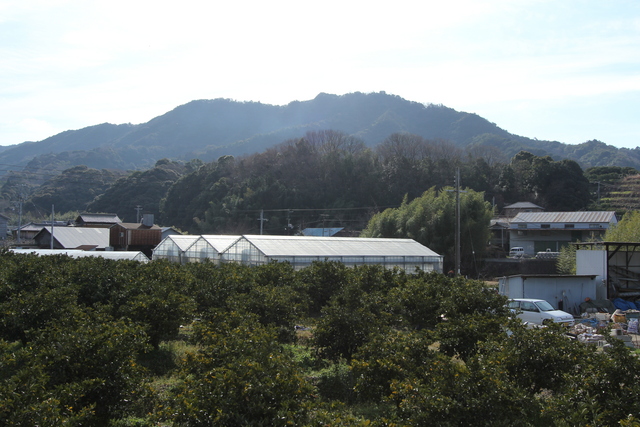
Aritagawa Town is known as one of Japan’s leading mandarin orange producing areas. When visiting Toriyajo Castle, we recommend stopping by the surrounding mandarin orange orchards and direct sales shops. Especially during the harvest season (October to December), you can purchase fresh mandarin oranges.
Nature of the Arita River
Don’t miss the beautiful nature of the clear Arita River. A promenade is maintained along the river, allowing you to enjoy the scenery of each season. From cherry blossoms in spring, to fresh greenery in summer, and autumn leaves, it shows a different face depending on the season you visit.
Reasons to Visit Toriyajo Castle
Historical Value
Toriyajo Castle is an important historical site that tells the history of Kii Province from the medieval period to the Sengoku period. The changes in castle lords, from the Yuasa clan to the Hatakeyama clan, clearly show the changes in the power structure of Kii Province, making it a valuable example for studying Japanese history.
Excellent State of Preservation
Despite more than 400 years having passed since the castle was abandoned, the remains such as stone walls, earthworks, and moats are well-preserved. This is a testament to the castle’s location on a mountain and the local preservation efforts, offering a valuable opportunity to see and understand the structure of a medieval mountain castle firsthand.
Harmony with Nature
The fact that you can enjoy historical exploration and hiking simultaneously is a major attraction of Toriyama Castle. You can fully enjoy both castle ruins and nature walks, from walking along the trails bathed in dappled sunlight to the spectacular views from the mountaintop and the changing seasons.
Easy Access
While the elevation of 305m and relative height of approximately 255-300m might seem daunting, the well-maintained trails allow you to reach the summit in about an hour. No serious mountaineering equipment is required, making it an easily accessible mountain castle experience.
Summary
Toriyama Castle (Aridagawa Town, Wakayama Prefecture) is an important mountain castle site that tells the story of the medieval history of Kii Province. Also known as Ishigaki Castle and Toyama Castle, this castle began construction by Yuasa Munemoto and developed as a base for the Hatakeyama clan, the shugo (military governor) of Kii Province. For approximately 300 years, it served as a stage for the history of Kii Province until its fall in 1585 during Hashiba Hideyoshi’s invasion of Kii.
The remains of the stone walls, earthworks, moats, and baileys at the 305m-high mountaintop are well-preserved, making them valuable resources for understanding the structure of medieval mountain castles. The stone wall remains, in particular, are impressive and a must-see for castle ruin enthusiasts.
From the mountaintop, a spectacular panoramic view unfolds, stretching from Nishi-Arita to Shikoku and Awaji Island, making it an attractive spot for combining historical exploration and hiking. A park has also been developed at the foot of the mountain, and it is known as a famous cherry blossom viewing spot.
Access is relatively easy, and the mountaintop can be reached in about an hour via well-maintained walking trails. When you visit Wakayama Prefecture, be sure to stop by Toriyajo Castle Ruins and experience both the history and nature of Kii Province. This precious heritage site, protected as a prefectural designated historical site, continues to convey the spirit of medieval Japan to visitors.