Complete Guide to Kii-Tanabe Castle (Wakayama Prefecture): History, Remains, and Access
What is Kii-Tanabe Castle?
Kii-Tanabe Castle (Kii-Tanabe-jo) was a flatland castle located in Kamiyashiki, Tanabe City, Wakayama Prefecture. Also known as Kinsui-jo, Minatomura Castle, and Minato Castle, it was built on a strategic location adjacent to the sea, facing the left bank of the Aizu River estuary and the Kumano Sea.
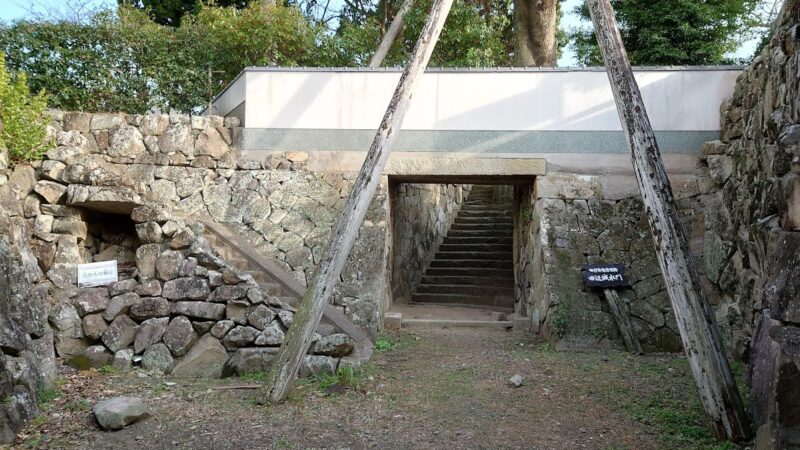
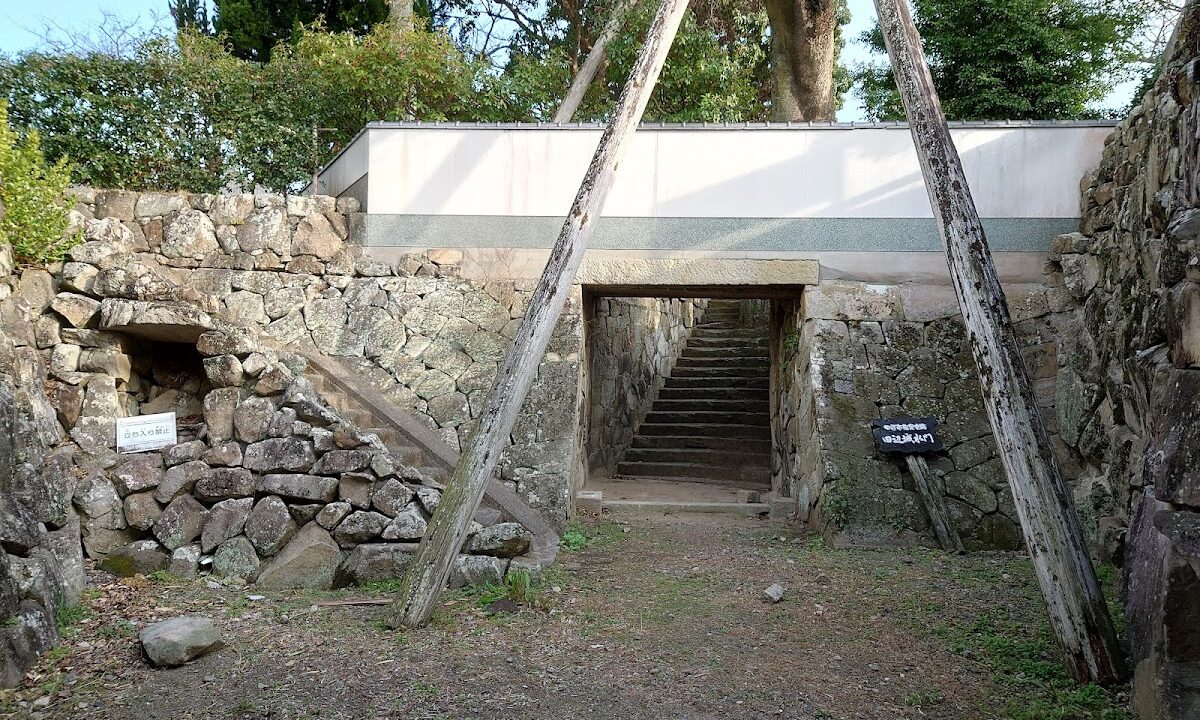
Located at the southwestern edge of present-day Tanabe city, it functioned as the administrative center of the Tanabe Domain during the Edo period, ruled by the Ando clan, who were chief retainers of the Kishu Tokugawa family. The castle remained in operation until the Meiji Restoration, but now only a few remains—stone walls and a sluice gate—remain. This sluice gate is protected as a Tanabe City designated historical site and is a valuable cultural asset that conveys the atmosphere of the past.
History of Kii-Tanabe Castle
Construction during the Asano Clan Era (Keicho Period)
The history of Kii-Tanabe Castle begins in 1606 (Keicho 11). After the Battle of Sekigahara, Asano Tomochika, a chief retainer of Asano Yukinaga who was appointed to Kii Province, built Minato Castle on the left bank of the Aizu River estuary. During this period, the Asano clan ruled Kii Province with a domain of 370,000 koku, and Tanabe held a crucial position as a key point on the Kumano Kodo pilgrimage route.
Asano Tomochika was known as a master castle builder, and he recognized the geographical importance of this location when constructing the castle. Its location facing the sea made it a vital point for maritime traffic, and controlling Tanabe, which flourished as a gateway to the Kumano pilgrimage, was extremely important for governing southern Kii Province.
The One Castle Per Province Decree and the Transformation into a Fortified Residence
In 1615 (Genna 1), the Edo Shogunate issued the One Castle Per Province Decree, which meant that all castles in Kii Province except Wakayama Castle were subject to demolition. Minato Castle, too, was formally treated as a “fortified residence” rather than a “castle” under this decree. However, it is believed that it effectively maintained its function as a castle.
During this period, Minato Castle was temporarily reduced in size, but it was never completely demolished. This can be seen as evidence that the geographical importance of Tanabe was recognized.
The Arrival of the Kishu Tokugawa Family and the Ando Clan
In 1619 (Genna 5), Tokugawa Yorinobu, the tenth son of Tokugawa Ieyasu, became the lord of Kishu Province with a domain of 555,000 koku. Accordingly, Ando Naotsugu was appointed as Yorinobu’s chief retainer and stationed in Tanabe.
Ando Naotsugu ruled over a domain of 38,000 koku and rebuilt and expanded Minato Castle, re-establishing it as Tanabe Castle. This construction project transformed the castle into a full-fledged flatland castle, digging inner and outer moats and rebuilding the stone walls. The Ando clan, as important retainers of the Kishu Tokugawa family, held a position of governing the Tanabe domain.
The Ando Clan’s Rule
From Ando Naotsugu onward, the Ando clan served as lords of Tanabe Castle for approximately 250 years, until the Meiji Restoration. Successive heads of the Ando clan were responsible for the administration of the Tanabe domain and dedicated themselves to the development of the castle town.
Under the Ando clan’s rule, Tanabe also developed as a commercial city. As a post town on the Kumano Kodo pilgrimage route and a hub for maritime transport, it bustled with people coming and going. Samurai residences and merchant districts formed within the castle town, fostering a unique Tanabe culture.
From the End of the Edo Period to the Meiji Restoration
During the end of the Edo period, the Tanabe Domain followed the Kishu Tokugawa family and sided with the shogunate. During the Boshin War, it submitted to the new government forces and avoided major conflict.
In 1871 (Meiji 4), the Tanabe Domain was abolished with the abolition of the feudal domains and the establishment of prefectures, and Tanabe Castle was also abandoned. In the early Meiji period, the castle buildings were dismantled, and the moats were gradually filled in. The land of the castle site was sold to private individuals, and urbanization progressed.
Structure and Layout of Kii-Tanabe Castle
Basic Structure of the Castle
Kii-Tanabe Castle was a flatland castle that took advantage of its location at the mouth of the Aizu River, a location blessed with water transport. It utilized the terrain facing the sea and river, functioning as a natural stronghold.
The castle layout was a concentric type, with the main keep at the center, and the second and third baileys arranged around it. A double moat system, consisting of an inner and outer moat, surrounded the castle grounds, enhancing its defensive capabilities. Water from the Aizu River and the sea was drawn into the moats, giving it the characteristics of a water castle.
Main Enclosure and Major Buildings
The main enclosure housed the lord’s residence, the Goten, and served as the administrative center. Although a keep was not constructed, defensive structures such as turrets and gates were strategically placed.
According to records, several turrets were built within the castle grounds, and their imposing presence was a beloved symbol of the town of Tanabe. The castle’s appearance, especially when viewed from the sea, is said to have been particularly beautiful, befitting its alternative name, Kinsui Castle.
Function of the Water Gate
The existing water gate played a crucial role in both the castle’s defense and water transport. Connecting the Aizu River to the inner moat, this gate regulated the water level of the moat and allowed small boats to enter and exit.
The stone-built water gate demonstrates high technical skill and is a valuable historical relic for understanding the level of castle construction technology at the time. This sluice gate, with its arched opening, is designed to combine practicality and aesthetic appeal.
Existing Remains
Tanabe Castle Sluice Gate Ruins
The most important existing remains of Kii Tanabe Castle are the sluice gate ruins. This stone sluice gate, facing the Aizu River, is protected as a Tanabe City Designated Historic Site.
The sluice gate is constructed of stone walls and has a sturdy arched opening. It was designed to accommodate fluctuations in the Aizu River’s water level, demonstrating the high level of civil engineering technology during the Edo period. Its current appearance along the Aizu River is a valuable reminder of the castle’s former glory.
The area around the sluice gate has been maintained, and information boards have been installed, making it a place where visitors can learn about history. The exquisite craftsmanship of the stonework is particularly impressive when viewed up close.
Remains of Stone Walls
Besides the sluice gate, a small portion of the stone walls remains. These stone walls provide clues to the scale and construction techniques of the castle at the time.
The stones used are believed to have been quarried locally, and techniques such as rough-hewn stonework and fitted stonework are evident. The way the stones are stacked reveals the level of skill at the time of the Ando family’s renovation.
Kinshui Park and the Surrounding Castle Ruins
Part of the castle ruins has been developed as Kinshui Park. Information boards are installed within the park, allowing visitors to learn about the former layout and history of the castle.
Although small, the park is a popular place for local residents to relax. Cherry trees are planted there, making it a popular spot for cherry blossom viewing in spring. It’s also an ideal resting spot when visiting the castle ruins.
Exhibits such as Shachi-gawara (mythical sea creature roof tiles)
Facilities within Tanabe City display artifacts such as shachi-gawara (mythical sea creature roof tiles) excavated from Tanabe Castle. These tiles are valuable historical materials that tell the story of the castle’s magnificent architecture.
The design and manufacturing techniques of the Shachi roof tiles demonstrate the high level of skill of the craftsmen of the time. Furthermore, the patterns and inscriptions carved into the tiles provide clues to unraveling the castle’s history.
Access Information
Access by Train
The nearest station is JR Kisei Main Line “Kii-Tanabe Station”. From the station, you can access the Tanabe Castle Water Gate Ruins in the following ways:
- On foot: Approximately 20-30 minutes (approximately 1.1 km)
- By bus: Take the Meiko Bus bound for “Ogihama,” get off at the “Ogihama” bus stop, and walk for approximately 5 minutes.
Kii-Tanabe Station is a major station where the Limited Express “Kuroshio” also stops, making it convenient to access from Osaka and Shingu. There is a tourist information center in front of the station where you can obtain information about Tanabe Castle and surrounding tourist attractions.
Access by Car
- Approximately 10 minutes from the Hanwa Expressway “Nanki Tanabe IC”
- Via National Route 42 towards the city center
Parking
There is no dedicated parking lot for the sluice gate ruins, but the following parking lots are located nearby:
- Ogihama Park Parking Lot (Free, approximately 5 minutes on foot)
- Tanabe City Municipal Parking Lot (Paid)
Since the area around the castle ruins is a residential area, it is recommended to avoid street parking and use public parking lots.
Location
Near 3-chome, Kamiyashiki, Tanabe City, Wakayama Prefecture 646-0031
Highlights and Visitor Guide
Points to Note When Visiting the Sluice Gate Ruins
When visiting the sluice gate ruins, please pay attention to the following points.
- Stonework Techniques: You can observe the intricate construction of the stone walls.
- Arch Structure: Beautiful arches demonstrating the high level of civil engineering technology during the Edo period.
- Positional Relationship with the Aizu River: A design philosophy that balanced water transport and defense.
- Information Board Explanation: Detailed explanations about the castle’s history and structure are provided.
Photo Spots
The following angles are recommended for photography:
- A panoramic view of the sluice gate from the opposite bank of the Aizu River
- A close-up of the arch section of the sluice gate
- A close-up showing the texture of the stone walls
- A composition combining the surrounding townscape and the sluice gate
Especially on sunny mornings, the lighting is excellent for taking beautiful photos.
Estimated Visit Time
30 minutes to 1 hour is a good guideline for visiting the sluice gate ruins and surrounding area. If you plan to carefully read the information board and explore the surrounding area, allow about 1 hour.
Best Seasons to Visit
Tanabe Castle Ruins are open year-round, but the following seasons are especially recommended:
- Spring (late March to April): Cherry blossom season; the cherry blossoms in Kinshu Park are beautiful.
- Autumn (October to November): Mild weather, perfect for strolling.
- Winter (December to February): Fewer tourists, allowing for a more relaxed visit.
Nearby Tourist Attractions
Ogihama Beach
Ogihama Beach, within walking distance of Tanabe Castle Ruins, is a beautiful white sand beach. It’s a popular swimming beach in the summer and enjoyable for strolling throughout the year. It’s an ideal spot to visit in conjunction with a tour of the castle ruins.
Tokei Shrine (Tanabe City Designated Cultural Property)
This shrine has a legend that during the Genpei War, Kumano Betto Minato Shoji Tanzo decided which side to support—the Minamoto or the Taira—through a cockfight. It is located about a 15-minute walk from the Tanabe Castle ruins.
Minakata Kumagusu Memorial Museum
This facility introduces the achievements of Minakata Kumagusu, a world-renowned naturalist. It’s a valuable place to learn about a great figure from Tanabe, and is about a 10-minute drive from the castle ruins.
Historical Buildings in Tanabe City
The city of Tanabe, which developed as a castle town, is dotted with old townhouses and merchant buildings. Strolling around and searching for traces of the past is one of the pleasures of visiting.
The Position of Tanabe Castle in Kii Province
The Kishu Tokugawa Family and the Attached Chief Retainer System
The Kishu Tokugawa family, as one of the three main branches of the Tokugawa family, held a status second only to the Tokugawa shogunate. The Ando family, who ruled the Tanabe domain, held the special position of attached chief retainer of the Kishu domain.
An attached chief retainer was a figure who received treatment similar to a daimyo, but was positioned as a vassal of the main domain. The Ando clan ruled over a territory of 38,000 koku and, while possessing their own group of retainers, remained subordinate to the lord of the Kishu domain.
A Key Point on the Kumano Road
Tanabe was an important base on the Kumano Road (Kumano pilgrimage route). Pilgrims to the Kumano Sanzan shrines split into the Nakahechi and Ohechi routes at Tanabe, making it a thriving transportation hub since ancient times.
Tanabe Castle, by controlling this transportation hub, played a crucial role in governing southern Kii Province. It also functioned as a base for maritime transportation and prospered as a center for the collection and distribution of goods.
Relationship with Nearby Castles
Besides Tanabe Castle, several other castles existed within Kii Province.
- Wakayama Castle: The main castle of the Kishu Tokugawa family
- Shingu Castle: A branch castle of the Kishu Domain ruled by the Mizuno clan
- Hiki Hachimanyama Castle: A medieval mountain castle
These castles, along with Tanabe Castle, formed a defense network for Kii Province. It is believed that Tanabe Castle, in particular, cooperated with Shingu Castle in the governance of the Kumano region.
Cultural Value of Tanabe Castle
Importance in Local History
Tanabe Castle is an indispensable part of the history of Tanabe City. The development of Tanabe as a castle town revolved around this castle.
The current road layout in Tanabe city center shows remnants of the castle town era. Some historical urban structures, such as samurai residences and merchant districts, are preserved.
Origin of the Name “Kinshu Castle”
There are several theories about the origin of the alternative name “Kinshu Castle,” but the most plausible is that it was named after the beautiful scenery facing the sea and river.
“Nishiki” means beautiful textiles, and “Mizu” represents the sea and rivers. It is said that the castle, surrounded by the blue sea of Kumano-nada and the clear waters of the Aizu River, was so beautiful, like brocade, that it was given this elegant name.
Efforts for Preservation and Utilization
Tanabe City is undertaking various initiatives to pass on the historical value of Tanabe Castle to future generations.
- Preservation, maintenance, and regular upkeep of the sluice gate ruins
- Enhancing historical explanations through the installation of information boards
- Utilization in local school education for learning local history
- Promotional activities as a tourist resource
Through these activities, the history of Tanabe Castle is being passed down as a source of local pride.
Points to Note When Visiting Tanabe Castle
Precautions for Visitors
- The area around the sluice gate ruins is a residential area. Please be considerate of the neighbors regarding noise, etc.
- The stone walls and sluice gate are valuable cultural assets. Please do not climb on them or damage them.
- There are some uneven areas along the Aizu River. We recommend wearing comfortable shoes for your visit.
- As there are no detailed explanations other than those on the information boards, researching the history beforehand will enhance your enjoyment.
Use of Nearby Facilities
- Please use public facilities such as Ogihama Park for restrooms.
- Vending machines and convenience stores are located around Kii-Tanabe Station.
- A tourist information center is located in front of Kii-Tanabe Station, where you can obtain detailed information.
Summary: The Charm of Kii-Tanabe Castle
Although only a few remains of Kii-Tanabe Castle exist today, it is an important castle for understanding the history of Wakayama Prefecture, particularly the governing system of the Kishu Tokugawa family.
Starting with its construction by the Asano clan, and serving as the center of the Tanabe Domain ruled by the Ando clan for 250 years, this castle played a central role in the region’s politics, economy, and culture. It is a castle with multifaceted charm, possessing geographical importance as a key point on the Kumano Kodo road, its characteristics as a water castle facing the sea and river, and the scenic value indicated by its beautiful alternative name, Kinsuijo (Nishikisui Castle).
The remaining sluice gate and stone walls are precious historical relics that evoke the castle’s former glory, inspiring visitors with a sense of historical romance. When visiting Tanabe City, be sure to stop by these historic castle ruins and reflect on the history of Kishu.
While Tanabe boasts many tourist attractions, including the Kumano Kodo pilgrimage route and hot springs, adding Tanabe Castle Ruins to your list of places to visit will allow you to discover even deeper charms of Tanabe.