Complete Guide to Nakawada Castle (Kanagawa Prefecture): Exploring the Izumi Chikahira Incident and Historical Remains of the Kamakura Period
What is Nakawada Castle?
Nakawada Castle is the site of a Kamakura period castle located in Izumi-cho, Izumi-ku, Yokohama City, Kanagawa Prefecture. Currently, it is maintained as Izumi Central Park and serves as a place of relaxation for citizens, but it was once the residence of Izumi Kojiro Chikahira (also written as Chikahira), a retainer of the Kamakura Shogunate.
Izumi Chikahira is a figure who left his mark on history as a central figure in the “Izumi Chikahira Incident,” which occurred during the political turmoil of the early Kamakura period. Nakawada Castle, the site of his residence, is an important historical site that tells the story of the power struggles within the Kamakura Shogunate, attracting attention from castle enthusiasts and history buffs.
Even today, remains such as earthworks and dry moats can be seen, making it a valuable historical site that allows us to imagine what a samurai’s residence looked like during the Kamakura period.
History of Nakawada Castle
Izumi Chikahira and the Construction of Nakawada Castle
Izumi Chikahira, the lord of Nakawada Castle, was a samurai who served as a retainer of the Kamakura Shogunate. The Izumi clan held power as local samurai in Sagami Province, and Chikahira established his residence in this area. While Chikahira’s exact birth and death dates are unknown, he is recorded as a figure who was active in the early Kamakura period.
This region, the base of the Izumi clan, was a strategically important location, a key transportation hub connecting Kamakura and key points in Sagami Province. It is believed that Chikahira utilized this advantageous location to build his residence and expand his power.
The Izumi Chikahira Incident (1213)
An essential event in discussing the history of Nakawada Castle is the “Izumi Chikahira Incident,” which occurred in 1213 (Kenryaku 3). This incident was a significant historical event that drastically altered the power structure of the Kamakura Shogunate.
After the death of Minamoto no Yoritomo, the Hojo clan began to seize power as regents in the Kamakura Shogunate. In particular, the second regent, Hojo Yoshitoki, effectively monopolized power by making the third shogun, Minamoto no Sanetomo, a puppet. This situation fueled a growing movement among the shogunate’s vassals to overthrow the Hojo clan.
Izumi Chikahira planned to support Senjumaru (later known as Kugyo), the orphaned son of Minamoto no Yoriie, and assassinate Hojo Yoshitoki to reclaim real power in the shogunate. Chikahira appealed to many vassals to plot an anti-Hojo conspiracy, but the plan was discovered before it could be uncovered.
Upon the discovery of the conspiracy, Chikahira fled to Shinano Province. He is said to have maintained his power from Iiyama Castle in Shinano and continued his resistance against the Hojo clan.
This incident further strengthened the Hojo clan’s power and solidified the foundation of the regency system in the Kamakura Shogunate. The Izumi Chikahira Incident, along with the Wada Rebellion (1213), is recorded in history as an important event in the process of the Hojo clan’s establishment of power.
The Subsequent History of Nakawada Castle
Detailed records of what happened to Nakawada Castle after Izumi Chikahira’s escape are scarce. It is unclear whether Chikahira’s family continued to reside there, or whether it was confiscated by the Hojo clan.
Records from the Sengoku period onward are also scarce, and it is believed that Nakawada Castle was a castle that functioned primarily during the Kamakura period. Subsequently, the area developed into an agricultural region, and the remains of the castle gradually disappeared.
In modern times, amidst urban development, its historical value was re-recognized, and some of the remains were preserved when the area was developed into Izumi Central Park.
Structure and Remains of Nakawada Castle
Castle Layout and Scale
Nakawada Castle is a flatland castle with a typical samurai residence style from the Kamakura period. The area around the current Izumi-Chuo Park corresponds to the former castle grounds. While relatively small in scale, it possessed a structure with defensive capabilities.
Kamakura period residences were not large-scale defensive structures like the castles of the later Sengoku period; rather, they were generally residences surrounded by earthen ramparts and moats, serving as places for daily life. It is presumed that Nakawada Castle followed this style.
Existing Earthen Ramp
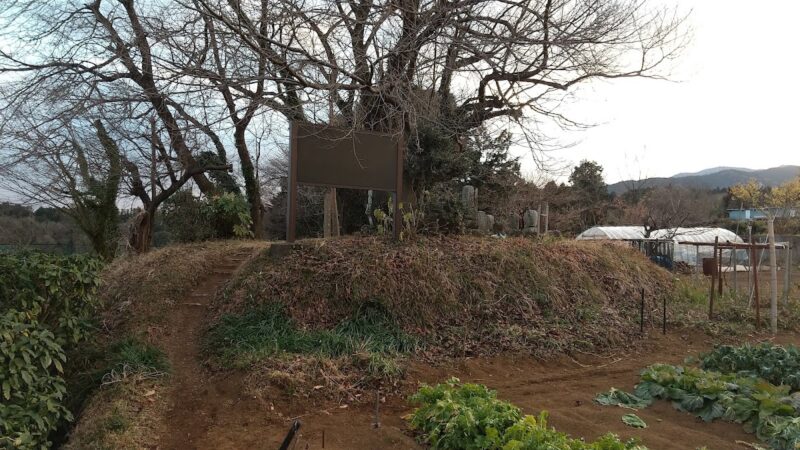
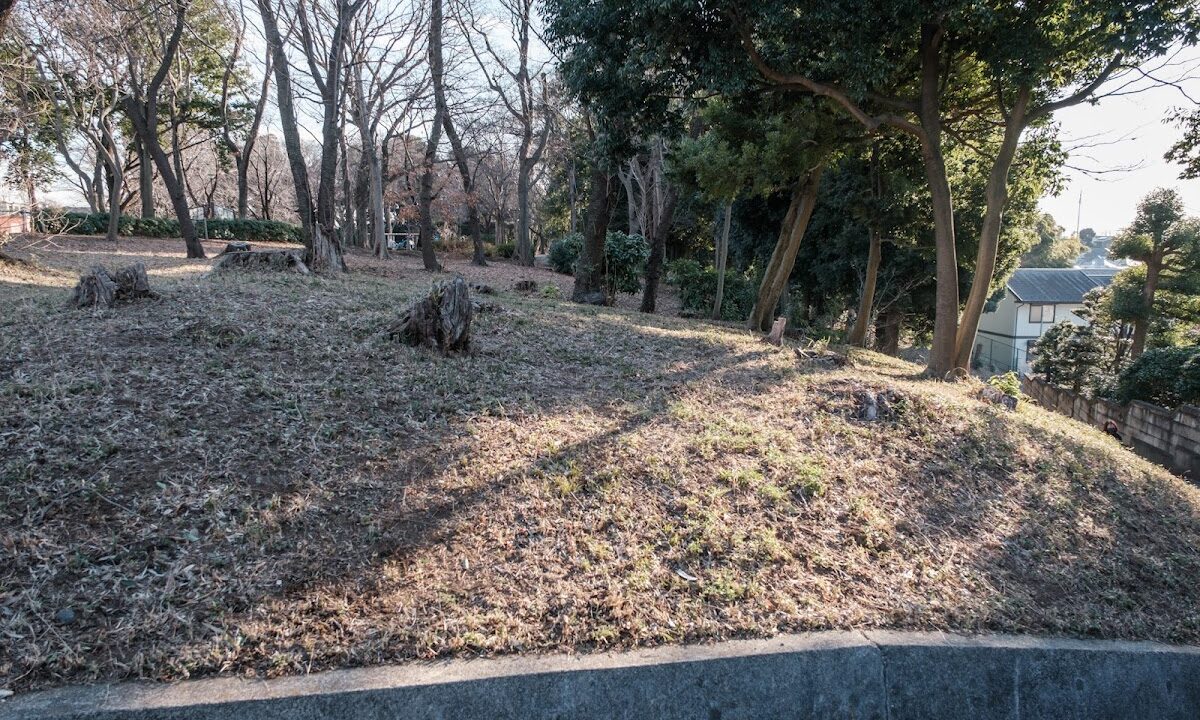
The most important remains of Nakawada Castle are the earthen ramparts. Within Izumi-Chuo Park, a portion of the earthen ramparts that surrounded the former castle still remains and can be seen.
The ramparts are approximately 2-3 meters high and were constructed by piling up earth, utilizing the natural terrain. As a valuable example of Kamakura period civil engineering technology, it is relatively well-preserved.
When the area was developed as a park, the importance of these ramparts was recognized, and they were preserved as much as possible, maintaining their original form. Currently, information boards have been installed to help visitors understand their historical value.
Traces of a Dry Moat
Traces of a dry moat, an important defensive structure alongside the earthworks, can also be found within the park. A dry moat is a moat dug outside the earthworks, and it is a dry moat that does not hold water.
Currently, parts of the moat remain as part of the park’s topography, allowing us to infer the former location and size of the moat. Although not preserved in its complete form, it provides valuable clues that allow us to imagine what it was like in the past based on the topography’s undulations.
The dry moat is estimated to have been about 2-3 meters deep, and in combination with the earthworks, it served to prevent enemy intrusion.
Layout of the Residence
It is believed that the residence of Izumi Chikahira was located within the area surrounded by the earthworks and dry moat. During the Kamakura period, samurai residences typically consisted of a group of buildings including a main hall, a samurai’s quarters, and stables.
Unfortunately, no building remains exist, but research into the building layout and structure is progressing through archaeological excavations. It is hoped that more detailed information will be revealed in the future.
Highlights of Nakawada Castle
Strolling through Izumi Central Park
The site of Nakawada Castle is now developed as Izumi Central Park, allowing visitors to enjoy both historical exploration and nature walks. The park is well-maintained, offering a valuable opportunity to appreciate the changing seasons while viewing the remains of the Kamakura period.
The park also features playgrounds and open spaces, making it a popular recreational spot for locals. Even those uninterested in history can relax in this naturally rich environment.
Observing the Earthworks and Dry Moats
For castle enthusiasts, the biggest highlight is undoubtedly the existing earthworks and dry moats. By carefully observing these remains, using the information boards as a guide, you can understand the defensive system of the Kamakura period castle.
There are also areas where you can walk along the top of the earthworks, allowing you to experience the view from the watchtowers of the time. Observing the surrounding terrain and considering the strategic significance of why the castle was built in this location is also a fascinating experience.
Castle Ruins Monument and Information Board
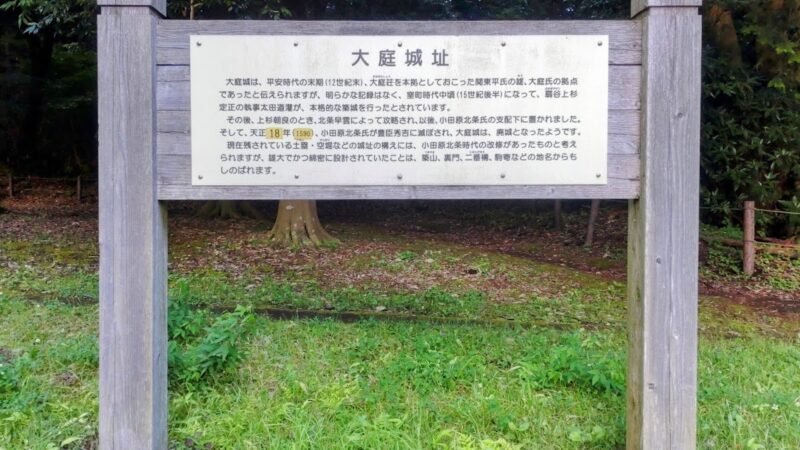
An information board explaining the history of Nakawada Castle is installed within the park. It provides detailed explanations about the Izumi Chikahira Incident and information about the castle’s structure, helping visitors deepen their understanding.
A castle ruins monument has also been erected, making it a popular spot for commemorative photos. Many castle enthusiasts take pictures there as a memento of their visit to this historical site.
Related Historical Sites in the Surrounding Area
Nearby, several historical sites associated with Izumi Chikahira are scattered, and visiting them together will allow for a deeper understanding of the history.
Chofuku-ji Temple is a temple said to have been founded by Izumi Chikahira as a martial arts dojo. Located within walking distance of Nakawada Castle, it allows visitors to reflect on Chikahira’s faith and passion for martial arts. Historical materials are also displayed on the temple grounds, making it well worth a visit.
Suga Shrine is a shrine said to have been established by Izumi Chikahira as the guardian deity of Nakawada Castle. It is believed to have played an important role as the guardian shrine of the castle, and even today it attracts the faith of the local community. From the shrine grounds, you can overlook the former castle area and understand the relative positions of the castle and the shrine.
Visiting these related historical sites will deepen your understanding of Nakawada Castle and Izumi Chikahira.
Access and Visiting Information
Access by Public Transportation
Nakawada Castle Ruins (Izumi Chuo Park) is relatively easy to access using public transportation.
If using trains and buses:
- Approximately 15 minutes on foot from Izumi-Chuo Station on the Sotetsu Izumino Line
- Take a bus from Tateba Station on the Yokohama Municipal Subway Blue Line and get off at “Izumi Chuo Park-mae” bus stop.
It is within walking distance from the nearest station, and the route is relatively easy to follow, so even first-time visitors can arrive without getting lost. The path from the station to the park is flat and passes through a residential area, making it easy to walk.
Access by Car and Parking
If visiting by car, Izumi Chuo Park has a dedicated parking lot. Parking Information:
- Izumi Chuo Park Parking Lot (Free)
- Capacity: Approximately 30 cars
- Operating Hours: Same as the park’s opening hours
The parking lot may be crowded on weekends and holidays, so we recommend considering using public transportation. There are also several paid coin-operated parking lots in the surrounding area.
Access from Major Roads:
- Approximately 10 minutes from National Route 1
- Approximately 15 minutes from the Yokohama Shindo “Totsuka IC”
Points to Note When Visiting
Nakawada Castle Ruins are maintained as a park, so you can generally visit freely. However, please note the following:
- Visit during the park’s opening hours (it may be closed at night)
- Be careful not to damage the remains such as earthworks
- Always take your trash with you
- Be considerate of other park users
The estimated time required for a visit is approximately 30 minutes to 1 hour if you carefully observe the remains. If you plan to visit related historical sites in the surrounding area, it’s best to allocate about half a day.
Best Time to Visit
Nakawada Castle Ruins can be visited year-round, but each season offers a different charm.
Spring (March-May): During cherry blossom season, the park is beautiful with cherry blossoms, allowing you to enjoy both cherry blossom viewing and castle ruins at the same time. The weather is mild, making it ideal for a stroll.
Summer (June-August): The greenery is lush, and while the ruins may be covered by trees, you can enjoy the beauty of the fresh green leaves. However, precautions against the heat and insects are necessary.
Autumn (September-November): The autumn foliage is beautiful, and the weather is pleasant, making it the best time to visit. Observing the ruins becomes easier.
Winter (December-February): As the leaves have fallen from the trees, this is the best time to observe the shape of the ruins. However, warm clothing is necessary.
Comparison with Other Castles in Kanagawa Prefecture
Comparison with Castles of the Kamakura Period
Several castle sites from the Kamakura period, contemporary with Nakawada Castle, remain in Kanagawa Prefecture.
Kinugasa Castle is known as the base of the Miura clan and is larger in scale and has a more complex layout than Nakawada Castle. Comparing it to other castles of the Kamakura period, both belonging to samurai retainers, reveals interesting differences.
Wada Castle is known as the residence of Wada Yoshimori and belonged to a warrior who was active around the same time as Izumi Chikahira. Wada Yoshimori, known for the Battle of Wada, and Izumi Chikahira, known for the Izumi Chikahira Incident, share the commonality of being destroyed due to conflict with the Hojo clan.
By comparing these castles, we can gain a deeper understanding of the power of the samurai retainers of the Kamakura period and their relationship with the Hojo clan.
Differences from Castles of the Sengoku Period
Kanagawa Prefecture also has many famous castles from the Sengoku period.
Odawara Castle is a large-scale castle that developed as the base of the Later Hojo clan, possessing elements of early modern castles such as stone walls and a keep. It differs significantly in structure and scale from earthen castles of the Kamakura period like Nakawada Castle.
Tamanawa Castle is a castle built by the Hojo clan during the Sengoku period, featuring a complex layout and robust defensive structures. It allows for a comparison of the differences between castles that evolved from Kamakura-period residences to full-fledged military fortresses of the Sengoku period.
Ishigakiyama Castle is a castle built by Toyotomi Hideyoshi during the siege of Odawara, famous as a “one-night castle” constructed in a short period. The difference between the early modern castle technology using stone walls and the earthen rampart defenses of Nakawada Castle demonstrates the evolution of castle construction technology over time.
Through these comparisons, we can understand the position of Nakawada Castle in the history of Japanese castles and the unique castle culture of the Kamakura period.
Tourist Attractions Around Nakawada Castle
Historical Sites in Izumi Ward
Izumi Ward in Yokohama City, where Nakawada Castle is located, also has other interesting historical sites.
Izumi Ward History Museum allows you to learn about the history and culture of Izumi Ward. It also exhibits materials about Nakawada Castle and Izumi Chikahira, and visiting before or after your visit will deepen your understanding.
Along the Izumi River, there are scattered remains of old settlements and historical sites, making it an enjoyable walking course. You can feel the history of the region in a rich natural environment.
Nearby Castles
When visiting Nakawada Castle, we recommend also visiting other nearby castles.
Okazu Castle is located about 3 kilometers from Nakawada Castle and is also in Izumi Ward, Yokohama City. It is a castle from the Sengoku period, allowing for a comparison with a castle from a different era than Nakawada Castle.
Oba Castle is a castle located in Fujisawa City, which played an important role in Sagami Province from the medieval period to the Sengoku period. The castle boasts impressive remains and is quite remarkable.
Kozukue Castle is located in Kohoku Ward, Yokohama City, and is one of the Continued Top 100 Japanese Castles. Its well-preserved remains make it a must-see spot for castle enthusiasts.
Visiting these castles over a day or several days allows you to experience the diversity and historical depth of castles in Kanagawa Prefecture.
Food and Shopping
Near Nakawada Castle, there are local restaurants and shopping facilities.
Sotetsu Life Izumi Chuo is a shopping center located near the nearest station, convenient for dining and shopping. It can be used for rest and meals after your visit.
Local restaurants offer Yokohama’s unique cuisine, with a diverse range of options from Chinese to Japanese food.
Research and Preservation Activities of Nakawada Castle
Archaeological Surveys
Several archaeological surveys have been conducted on Nakawada Castle. Surveys conducted during park development collected detailed data on the structure of earthworks and moats.
Although the number of excavated artifacts is small, fragments of pottery and some everyday tools from the Kamakura period have been discovered, providing clues to the lifestyle of that time. Further discoveries are expected through continued investigations.
Preservation and Development Efforts
Yokohama City has designated the Nakawada Castle ruins as an important historical heritage site and is working on its preservation and utilization. When developing the site as Izumi Central Park, the preservation of the remains was given top priority, and the policy was to retain the original form as much as possible.
Efforts are also being made to provide information to visitors, such as installing information boards and improving explanatory materials. Regular cleaning and preservation activities are also carried out in cooperation with local residents.
Educational Use
Local schools are using Nakawada Castle as teaching material, providing opportunities to learn about local history. Activities such as field trips for elementary school students and visits to the castle ruins as part of history studies for junior high school students are conducted.
Through such educational use, efforts are being made to pass on history to the next generation and to foster a sense of attachment to the community.
Tips for Enjoying Nakawada Castle
Recommended Prior Study
To enjoy Nakawada Castle more deeply, we recommend studying the Izumi Chikahira Incident and the history of the Kamakura period beforehand.
The Azuma Kagami contains a description of the Izumi Chikahira Incident, providing detailed information about the situation at the time. A modern Japanese translation is also available, making it easy to read even for those unfamiliar with history.
Basic knowledge of the life of samurai in the Kamakura period and the Gokenin system will make it easier to understand the meaning of the castle’s structure and layout.
Photography Tips
Photographing at the Nakawada Castle ruins is important for documenting the remains. Consider the following points when taking photos:
- Angles that show the cross-section and height of the earthworks
- Viewpoints that show the depth and width of the dry moats
- Photographs from a position that provides an overview of the entire castle area
- Documentary photographs that include both the information board and the remains
Recording the seasonal changes in the landscape is also worthwhile. By photographing the castle ruins in all four seasons—the cherry blossoms of spring, the fresh greenery of summer, the autumn leaves, and the bare trees of winter—you can document their charm from multiple perspectives.
Suggested Castle Tour Routes
Starting from Nakawada Castle, we propose efficient routes for visiting castles in Kanagawa Prefecture.
1-Day Course (Kamakura Period Castle Tour):
Morning: Nakawada Castle → Okazu Castle
Afternoon: Kinugasa Castle → Wada Castle
2-Day Course (Tracing the History of Kanagawa Prefecture’s Castles):
Day 1: Nakawada Castle → Kozukue Castle → Oba Castle
Day 2: Tamanawa Castle → Odawara Castle → Ishigakiyama Castle
By following these routes, you can systematically understand the history of Kanagawa Prefecture’s castles, from the Kamakura period to the Sengoku period and into the early modern period.
Summary: The Historical Value of Nakawada Castle
Although not large in scale, Nakawada Castle was a crucial historical site, playing a vital role in the power struggles of the Kamakura Shogunate. The Izumi Chikahira Incident was a significant event in the Hojo clan’s power-building process, and Nakawada Castle, the residence of its central figure, is a historically highly valuable site.
The remaining earthworks and dry moats are invaluable historical materials that convey the castle-building techniques and samurai lifestyles of the Kamakura period. In the increasingly urbanized city of Yokohama, the preservation of such historical heritage as a park, cherished by citizens, demonstrates the region’s cultural richness.
While Kanagawa Prefecture boasts many famous castles like Odawara Castle, Kamakura-period castle ruins like Nakawada Castle are essential for understanding the history of Japanese castles. Although lacking large stone walls or a keep, the simple defensive structures of earthworks and moats convey the honest attitude of the samurai and the spirit of the era.
The current site of Nakawada Castle, now developed as Izumi Chuo Park, is a valuable spot where you can enjoy both historical exploration and nature walks. Visiting it along with the nearby Chofuku-ji Temple and Suga Shrine will allow you to gain a deeper understanding of the life of Izumi Chikahira, a warrior, and the turbulent history of the Kamakura period.
For castle enthusiasts, those interested in Japanese history, and those wanting to learn about local history, Nakawada Castle is a historical site well worth visiting. Within the bustling city of Yokohama, a place where history from over 800 years ago quietly breathes – that is Nakawada Castle.
Next time you visit Kanagawa Prefecture, why not stop by the Nakawada Castle site and experience the historical romance of the Kamakura period? Amidst the greenery of Izumi Chuo Park, you can imagine the scenery Izumi Chikahira saw and feel the weight of history.