The History and Remains of Oshihata Castle (Narita City, Chiba Prefecture): From the Hataya Clan’s Residence to the Fall of the Hojo Clan
Oshihata Castle was a medieval castle located in Oshihata, Narita City, Chiba Prefecture. Known as the largest castle in Narita City, it played a crucial role as the base of the Hataya clan, a powerful warlord in the Shimosa region during the Sengoku period. This article provides a detailed explanation of Oshihata Castle, from its historical background to the activities of the Hataya clan, its lords, its structure, and its current state.
Overview and Location of Oshihata Castle
Oshihata Castle is a flatland castle built in the Oshihata district of Narita City, Chiba Prefecture. Located on the Shimosa Plateau, in a corner of the Kanto Plain, it is approximately 5 kilometers northeast of Narita city center. This location was a strategically important transportation hub in Shimosa Province during the medieval period, making it an ideal strategic base for governing the surrounding area.
Regarding the castle’s scale, it is considered the largest medieval castle to exist within Narita City, and it is believed to have been fully developed during the period when the Hataya clan expanded its power. The current Oshihata area is farmland and residential, making it difficult to directly see any traces of the former castle. However, the topography and place names allow us to infer what it was like at the time.
The History of the Hataya Clan and the Relocation to Oshihata Castle
Origin as a Branch of the Osuga Clan
The Hataya clan, lords of Oshihata Castle, were originally samurai connected to the Osuga clan. The Osuga clan was a powerful branch of the Chiba clan, holding influence in the Shimosa region, and the Hataya clan operated under their control. The Hataya clan, centered around Hataya Etchu-no-kami, initially had Hataya Castle as their base, but as their power expanded, they are believed to have moved their residence to the larger Oshihata Castle.
Relocation of Base from Hataya Castle to Oshihata Castle
The Hataya clan’s relocation from Hataya Castle to Oshihata Castle was driven by the expansion of their territory and the strengthening of their governing system. Oshihata Castle, with its larger grounds than Hataya Castle, was a necessary facility for accommodating their growing vassal group and enabling more efficient management of their domain. This relocation symbolizes the Hataya clan’s growth from a mere branch of the Osuga clan to an independent force.
Independence from the Osuga Clan
After establishing Oshihata Castle as their base, the Hataya clan became independent from the Osuga clan and began operating as an independent force. This independence is closely related to the changing political situation in the Shimosa region during the Sengoku period. As the Chiba clan’s power relatively declined, its subordinate samurai groups began to forge their own paths, and the Hataya clan, in turn, increased their autonomy within this trend.
Relationship with the Chiba and Hojo Clans
Subordination to the Chiba Clan
Even after gaining independence from the Osuga clan, the Hataya clan maintained their relationship with the Chiba clan, a prestigious family in Shimosa Province. The Chiba clan was a powerful samurai group in Shimosa dating back to the Heian period, and their network in the Kanto region extended extensively. By becoming a subordinate of the Chiba clan, the Hataya clan was able to stabilize their position in the region and gain access to a broader political network.
Activities as a Direct Vassal of the Hojo Clan
In the late Sengoku period, as the influence of the Later Hojo clan (Odawara Hojo clan), which became the largest power in the Kanto region, extended to Shimosa Province, the Hataya clan chose to submit to the Hojo clan. This choice led to the Hataya clan being highly valued as direct vassals of the Hojo clan and participating in military operations throughout the region.
Of particular note is their participation in Hojo Ujinao’s attack on Numata Castle in Kozuke Province (present-day Kōzuke Province). Numata Castle was an important stronghold located in what is now Numata City, Gunma Prefecture, and was the site of fierce battles between the Hojo clan and the Uesugi and Sanada clans. The participation of the Hataya clan in this expedition indicates that they had enjoyed considerable military strength and trust from the Hojo clan.
The Siege of Odawara and the Downfall of the Hataya Clan
Toyotomi Hideyoshi’s Expansion into the Kanto Region
In 1590, Toyotomi Hideyoshi, on the verge of unifying Japan, launched an attack to eliminate the Later Hojo clan, his final obstacle. This was the so-called “Siege of Odawara.” Hideyoshi mobilized an army of over 200,000 men, besieging Odawara Castle and successively capturing Hojo-controlled castles throughout the Kanto region.
Oshihata Castle and the End of the Hataya Clan
The Hataya clan, who had served as direct vassals of the Hojo clan, met their fate along with the Hojo clan during the Siege of Odawara. While detailed records of how Oshihata Castle fell are unavailable, it is believed that continued resistance against the large Toyotomi army was impossible.
With the surrender of Odawara Castle and the downfall of the Hojo clan, the Hataya clan, their direct retainers, also disappeared from the historical stage. Oshihata Castle was abandoned and is presumed to have been used as farmland from the Edo period onward.
Structure and Scale of Oshihata Castle
Largest Castle in Narita City
Oshihata Castle is considered the largest castle in Narita City, but detailed records of its specific layout (castle design) and structure are unavailable. However, the description of “largest” suggests it was of considerable size and possessed defensive facilities such as multiple baileys (kuruwa: sections within the castle), moats, and earthworks.
Characteristics as a Hilltop Castle
Built on the Shimosa Plateau, Oshihata Castle is classified as a hilltop castle. A Hirayama castle is a castle built on a hill or slightly elevated area in a plain, and is a common type of castle found in medieval castles in the Kanto region. Being built on slightly higher ground than the surrounding area enhanced its defensive capabilities and offered the advantage of overlooking the territory.
Presumed Castle Structure
Since no clear remains are left at the site, the detailed structure of Oshihata Castle is unknown. However, by comparing it with castles in the Shimosa region from the same period, some inferences are possible. It is likely that multiple baileys were arranged around a central main enclosure (honmaru), and that it was defended by dry moats and earthworks. Furthermore, the residence of the castle lord, the Hataya clan, as well as the residences of their retainers and warehouses, would have existed within the castle grounds.
Current Status of Oshihata Castle Site
Loss of Remains Due to Farmland Conversion
Currently, almost the entire Oshihata Castle site is farmland, and very few castle remains can be confirmed. Over the long years since the Edo period, land development has progressed, resulting in the leveling of former moats and earthworks, transforming the area into flat farmland. This is a common phenomenon among flatland castles and hill castles throughout Japan, and in areas particularly suited to agriculture, such as the Kanto Plain, many castle sites have been repurposed as farmland.
Memories of the Castle Remaining in Place Names
Although the remains have been lost, the place name “Oshibata” itself conveys that a castle once stood here. Furthermore, there is a possibility that local elders still retain legends about the castle, making it an important site for local history research.
Presence of Markers and Information Boards
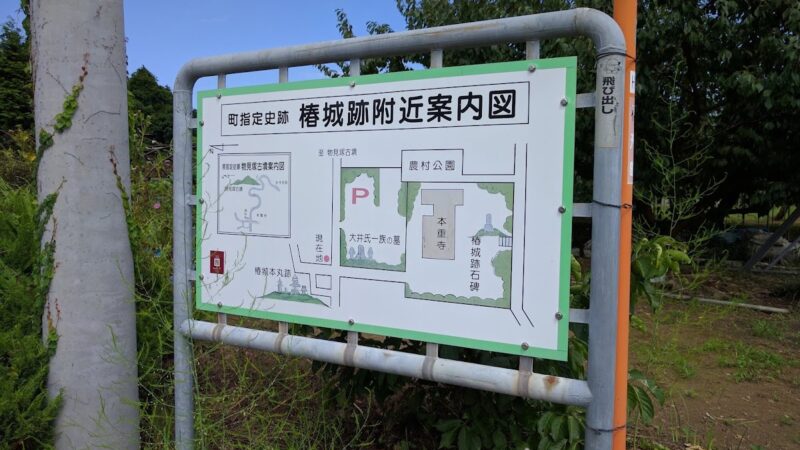
Many castle sites have markers and information boards to indicate their historical value, but whether such maintenance has been done at the Oshibata Castle site varies depending on visitor reports. Details regarding the designation and protection status as a cultural property by Narita City can be confirmed by contacting the Narita City Board of Education, etc.
Access and Visiting Information for Oshihata Castle
Location
Oshihata Castle Ruins are located in the Oshihata district of Narita City, Chiba Prefecture. While the specific address is Oshihata, Narita City, there is no clearly designated “castle ruins park” or similar facility. Therefore, when visiting, it is recommended to search for “Oshihata, Narita City” using a map app and check the surrounding terrain.
Access by Public Transportation
The nearest stations are Narita Station or Keisei Narita Station on the JR Narita Line and Keisei Line. From the station, you will need to use a local bus or taxi. However, since the Oshihata district is far from the city center, access by public transportation is somewhat inconvenient. When planning a visit, it is recommended to check the bus timetable in advance or consider renting a car.
Access by Car
If traveling by car, it is approximately 15 minutes from the Narita Interchange on the Higashi-Kanto Expressway. However, there is no dedicated parking lot around the castle ruins. Therefore, avoid street parking or trespassing on private property. Use nearby public facilities or park within walking distance. ### Points to Note When Visiting
Since the Oshihata Castle ruins are on privately owned farmland, it is necessary to be considerate of the landowner when visiting. Avoid trespassing on farmland and limit your visit to viewing from roads or public roads. It is also important to be considerate of farming activities, such as refraining from visiting during busy seasons.
Surrounding Castles and Related Historical Sites
Hataya Castle
Hataya Castle, the base of the Hataya clan before they moved to Oshihata Castle, also existed within Narita City. When visiting Oshihata Castle, visiting the Hataya Castle ruins, the roots of the Hataya clan, will allow you to gain a deeper understanding of the Hataya clan’s expansion of power.
Medieval Castles Around Narita
In addition to Oshihata Castle, numerous medieval castles existed around Narita City. The Shimosa region was an area where samurai groups, centered around the Chiba clan, were active, and castles were built in various locations. By visiting the surrounding castle ruins, such as Narita Castle, Teradai Castle, and Funagata Castle, you can experience the power dynamics of Shimosa Province during the Sengoku period.
Naritasan Shinshoji Temple
Although not directly related from a historical perspective, Naritasan Shinshoji Temple, a representative tourist spot in Narita City, also functioned as an important religious facility during the time when Oshihata Castle existed. It is worth visiting in conjunction with castle tours to learn about the region’s historical background.
Historical Significance of Oshihata Castle
Clues to Understanding Shimosa Province in the Sengoku Period
The history of Oshihata Castle provides important clues to understanding the complex political situation in the Shimosa region during the Sengoku period. The actions of the Hataya clan, who, while under the umbrella of the prestigious Chiba clan, became independent from the Osuga clan and ultimately became direct vassals of the Hojo clan, demonstrate how samurai of that time chose their lords and tried to maintain their power in order to survive.
Impact of the Siege of Odawara
Toyotomi Hideyoshi’s siege of Odawara was a major event that drastically altered the political landscape of the entire Kanto region. The downfall of Oshihata Castle and the Hataya clan is one episode in this historical turning point, illustrating the fate of small and medium-sized local forces within the larger current of national unification.
Importance of Local History Research
Carefully investigating the history of small and medium-sized local castles like Oshihata Castle, in addition to famous large castles, is essential for a more comprehensive understanding of Japanese medieval history. The grand currents of history are shaped by the accumulation of countless such small histories.
Current Status and Challenges of Oshihata Castle Research
Limitations of Historical Sources
Historical sources concerning Oshihata Castle are limited, leaving many questions unanswered regarding the detailed structure of the castle and the specific activities of the Hataya clan. It is hoped that further information will be revealed through the discovery of new historical documents and archaeological investigations.
Possibility of Archaeological Excavation
Although the Oshihata Castle site is currently farmland, there is a possibility of archaeological excavation if land use changes in the future. There is a high probability that castle remains are preserved underground, and it is expected that valuable information can be obtained through such investigations. ### Utilization as a Local Historical Asset
Narita City boasts nationally renowned tourist resources such as Naritasan Shinshoji Temple and Narita Airport, but its local medieval historical sites are not yet fully utilized. By leveraging historical assets like Oshihata Castle for local tourism and education, Narita City can showcase new attractions.
Summary: Oshihata Castle Tells the Story of Shimosa in the Sengoku Period
Oshihata Castle, a medieval castle located in Narita City, Chiba Prefecture, is an important historical site that conveys the lives of samurai in the Shimosa region during the Sengoku period. The history of the Hataya clan, local samurai who became independent from the Osuga clan, then served the Chiba clan, and finally became direct retainers of the Hojo clan, ultimately perishing in the Siege of Odawara, is a typical example of the trajectory of samurai who lived through the turbulent Sengoku period.
Although the castle’s remains are now lost, its historical value remains undiminished. As the largest castle in Narita City and an important historical site for understanding the Sengoku period history of the Kanto region, Oshihata Castle will continue to be a subject of research and preservation.
Visiting castle ruins is not just about sightseeing; it’s also an opportunity to deeply understand the history and culture of the land. When you visit the Oshihata Castle ruins, why not reflect on the history of the castle that once stood here and the people who lived there? You’ll surely feel a closer connection to the history of Shimosa Province during the Sengoku period, and indeed, to the history of Japan.