Masuo Castle (Kashiwa City, Chiba Prefecture) Complete Guide: Thorough Explanation of Remains, History, and Access
Masuo Castle (Masuo-jo) is a Japanese castle located in Masuo, Kashiwa City, Chiba Prefecture, dating from the medieval period to the Sengoku period. Currently, it is maintained as the “Masuo Castle Ruins Comprehensive Park,” a place of recreation for citizens. However, the remains, such as earthworks, dry moats, and gates, are well-preserved, making it a valuable historical site for learning about the castle structure of the Sengoku period.
This article comprehensively explains information about Masuo Castle, from its historical background and castle structure to details of existing remains and access methods.
Overview of Masuo Castle
Masuo Castle is located along a tributary of the Otsu River, which flows into Lake Teganuma. It was built on the eastern edge of a plateau with a relative elevation difference of approximately 15 meters, separated north and south by a valley. The castle ruins are located on a peninsula-shaped plateau jutting northeast from the Masuo settlement, cleverly utilizing the natural terrain.
Basic Information
- Location: Masuo, Kashiwa City, Chiba Prefecture
- Alternate Names: None in particular
- Castle Structure: Hilltop Castle
- Builder: Soma Moritane (early period), Hirakawa Wakasa-no-kami (Sengoku period)
- Construction Period: Kamakura period (early), renovated during the Sengoku period
- Year of Abandonment: Estimated to be around Tensho 18 (1590)
- Remains: Earthworks, dry moats, gate, baileys, watchtower base
- Designated Cultural Property: Not designated
- Current Status: Masuo Castle Ruins Comprehensive Park
History of Masuo Castle
Founded in the Kamakura Period
The origins of Masuo Castle date back to the Kamakura period. According to the “Higashi-Katsushika County History,” it is said that Soma Moritane, the son of Soma Tanemura, a member of the Soma clan (a branch of the Chiba clan), inherited his deceased mother’s territory and established his castle in this area. It is believed that Masuo Castle functioned as one of the important strongholds within the Soma clan’s sphere of influence during this period.
The Soma clan, a powerful branch of the Chiba clan, possessed vast territories in Shimosa Province (present-day northern Chiba Prefecture) and established branch castles throughout the region. It is highly probable that Masuo Castle was built as part of this branch castle network.
Under the Takagi Clan’s Rule during the Sengoku Period
During the Sengoku period, Masuo Castle came under the control of the Takagi clan, whose base was Kogane Castle (present-day Matsudo City). The Takagi clan was a branch of the Chiba clan and a powerful daimyo family that wielded considerable influence in northwestern Shimosa Province.
It is said that the lord of Masuo Castle was Hirakawa Wakasa-no-kami, a vassal of the Takagi clan. While historical records are scarce and many details of Hirakawa Wakasa-no-kami’s life remain unclear, his entrustment of Masuo Castle as a senior retainer of the Takagi clan suggests he was a highly trusted individual.
Strategic Significance of Location
An old road ran along the west and south sides of Masuo Castle, giving it a crucial strategic position as a control point for both roads. It is believed to have played a role in monitoring and controlling transportation routes around Lake Teganuma, functioning as an important branch castle within the Takagi clan’s castle network centered around Kogane Castle.
Several other medieval castles and fortifications existed in the Kashiwa City area, including Hanai Castle and Matsugasaki Castle, and it is presumed that Masuo Castle formed a regional defense system in conjunction with these.
Relationship with the Hojo Clan and Abandonment
During the late Sengoku period, the Takagi clan was subordinate to the Later Hojo clan, who ruled the Kanto region. In 1590, when Toyotomi Hideyoshi attacked Odawara, many castles in the Kanto region that belonged to the Hojo clan fell or surrendered one after another. While there are no clear records regarding the exact date of Masuo Castle’s abandonment, it is believed to have been demolished during the Siege of Odawara. Kogane Castle was also abandoned around the same time, and it is presumed that Masuo Castle met a similar fate.
After its abandonment, Masuo Castle remained neglected for a long period. However, in recent years, efforts have been made to preserve and utilize the castle ruins, resulting in the current Masuo Castle Ruins Comprehensive Park.
Structure of Masuo Castle
Masuo Castle is a relatively small castle complex based on two enclosures, east and west. However, it possesses a sophisticated structure that showcases the castle-building techniques of the Sengoku period. Despite its small size, it boasts excellent defensive capabilities, making it a highly valuable historical site for studying Sengoku period castle structures.
Basic Layout
Masuo Castle was built on the edge of a hill extending to the east, and is centered around two enclosures (kuruma) arranged east and west. The eastern side is the main enclosure (honmaru), and the western side is the second enclosure (ninomaru). The main and second enclosures are located at roughly the same elevation. Taking advantage of its location on the eastern edge of a plateau, the castle is a natural stronghold protected on three sides by steep slopes. The north and south are separated by valleys, making it difficult to attack.
Structure of the Main Enclosure (Honmaru)
The main enclosure is the central part of the castle, located on the east side. High earthen ramparts surround the main enclosure, and the ramparts from the north to the west are particularly well-preserved. The ramparts reach a maximum height of approximately 3 meters in some places, clearly demonstrating their function as defensive structures.
A small lower enclosure (koshikuruwa) is attached to the east of the main enclosure, and it is thought to have functioned as a forward position to prevent attacks on the main enclosure. This lower enclosure is located at a lower level than the main enclosure, utilizing the difference in elevation for defensive purposes.
The interior of the main enclosure is relatively flat, providing a suitable space for building structures. It is presumed that the lord’s residence and important facilities were located here.
Characteristics of the Second Enclosure
The second enclosure is an enclosure adjacent to the west of the main enclosure, built at roughly the same elevation. The second enclosure is larger than the main enclosure, and it is possible that it housed living quarters for retainers or storage facilities for supplies.
Earthwork surrounds the second enclosure, indicating that it had an independent defensive function. A koguchi (gateway) is located between the second enclosure and the main enclosure, allowing movement between the two enclosures.
Structure of the Koguchi
One of the most noteworthy remains of Masuo Castle is the koguchi located between the main enclosure and the second enclosure. The koguchi was not only the entrance to the castle but also a crucial area that required the strongest defenses.
The koguchi of Masuo Castle is not a simple opening; it shows ingenuity in bending the earthwork to make enemy intrusion difficult. Such a sophisticated koguchi structure is valued as evidence of the advancements in castle construction technology during the late Sengoku period.
Around the main gate, a raised earthen embankment, likely a watchtower base, can be observed. It is believed that a watchtower was built here to monitor and defend the gate.
Dry Moats and Earthen Embankments
The dry moats are a crucial defensive feature of Masuo Castle. They surrounded the enclosure, physically preventing enemy intrusion. Some of the dry moats are still clearly visible today, and their depth and width suggest the high level of defense at the time.
The earthen embankments were constructed by piling up the soil excavated from the dry moats, forming a defensive line with the moats. It is presumed that fences or walls were built on top of the embankments, creating a barrier that was difficult for attackers to overcome.
The earthen embankment on the north side of the main enclosure is particularly high and well-preserved, making it a valuable historical site for directly observing the castle construction techniques of the time.
Characteristics of Castle Construction Techniques
Although Masuo Castle is a small castle, it exhibits many examples of castle construction techniques from the Sengoku period. The design philosophy clearly demonstrates the effective placement of artificial defensive structures while making maximum use of the natural terrain.
In particular, the arrangement of the earthworks and the structure of the gates show ingenious designs designed to restrict enemy movements and create a battle advantage for the defenders. Such sophisticated structures indicate that it was more than just a local lord’s residence, but a full-fledged Sengoku period castle.
Highlights of Existing Remains
The current Masuo Castle site, developed as Masuo Castle Ruins Comprehensive Park, preserves Sengoku period remains in excellent condition. We will introduce the highlights, focusing on the “Forest Walking Zone” where you can stroll while observing the castle remains.
Earthworks of the Main Enclosure
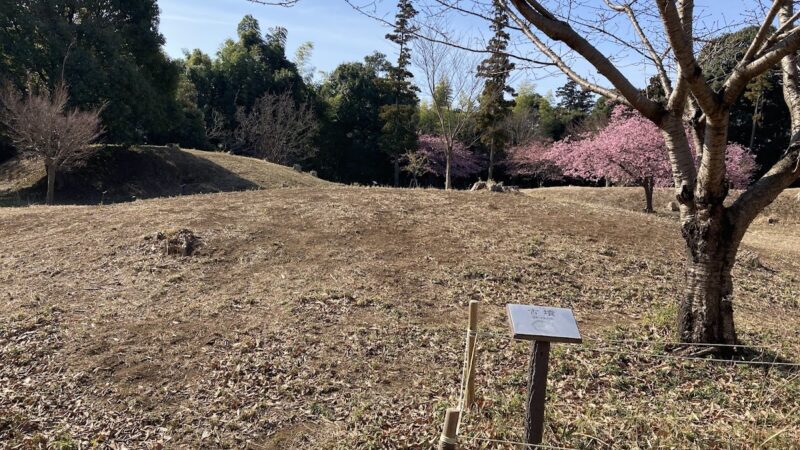
The first thing you’ll notice when visiting the castle ruins is the high earthworks surrounding the main enclosure. The earthworks, especially those from the north to the west, are quite tall, giving you a real sense of the scale of the defensive facilities at the time. You can also walk on top of the earthworks, allowing you to understand the castle’s structure from a viewpoint overlooking the interior of the enclosure.
Earthworks of the Main Enclosure
The first thing you’ll see when visiting the castle ruins is the high earthworks surrounding the main enclosure. The earthworks, especially those from the north to the west, are tall, giving you a real sense of the scale of the defensive structures at the time. Although vegetation grows on the surface of the earthworks, their shape is clearly preserved, retaining much of their original appearance from the time of construction. Observing the cross-section of the earthworks reveals traces of rammed earth construction (a technique of stacking and compacting soil) in some areas.
Remains of the Dry Moat
The dry moats surrounding the baileys are also an important feature of Masuo Castle. Some of the moats retain their depth, and looking up at the earthworks from the bottom allows one to appreciate their high defensive capabilities.
The dry moats are not simply ditches; their width, depth, and cross-sectional shape are carefully designed. The angles and depths were calculated to prevent easy ascent by enemies, demonstrating the high level of castle-building technology during the Sengoku period.
Structure around the Entrance
The entrance between the main bailey and the second bailey is the most technically sophisticated structure at Masuo Castle. The earthworks are curved to form the entrance, making it not just a simple entrance but a structure with defensive functions.
Earthen ramparts jut out on both sides of the main gate, creating a structure that allows for flanking attacks on enemies passing through. This defensive technique, known as “yokoyagakari” (flanking fire), was widely adopted in castles during the Sengoku period (Warring States period).
Traces of a Watchtower Base
Earthen rises, believed to be watchtower bases, can be seen around the main gate and in parts of the ramparts. It is thought that wooden watchtowers were built here to monitor the surroundings and attack enemies.
From the watchtower base, one could overlook the entire enclosure and the main gate, indicating its strategic importance for defense. Although currently covered with trees, the view would have been unobstructed in the past, allowing for a panoramic view of distant areas.
Lower Enclosure
The small lower enclosure located below the east side of the main enclosure is another important structure to note. Situated at a lower level than the main enclosure, it functioned as a forward position to prevent attacks on the main enclosure.
Although the lower enclosure is small in area, the defensive structure utilizing the difference in elevation between it and the main enclosure is clearly observable. Even in small castles, it appears that a multi-layered defensive system was constructed.
Topography within the Enclosures
The interiors of the main and second enclosures are relatively flat, indicating that the ground was leveled for building placement. Although currently covered with grass and trees, it is imagined that the lord’s residence, warehouses, and soldiers’ quarters once stood here.
Walking within the enclosures, one can perceive subtle undulations and elevation changes, hinting at the ingenuity used for building placement and drainage.
Facilities at Masuo Castle Ruins Comprehensive Park
The Masuo Castle ruins are now maintained as Masuo Castle Ruins Comprehensive Park, balancing the preservation of historical heritage with its function as a place of recreation for citizens. The park is divided into three zones, each offering a different experience.
Forest Walking Zone
This area preserves castle remains, allowing visitors to stroll while observing earthworks, dry moats, and gates. Enjoy a historical walk in a quiet environment surrounded by natural forest.
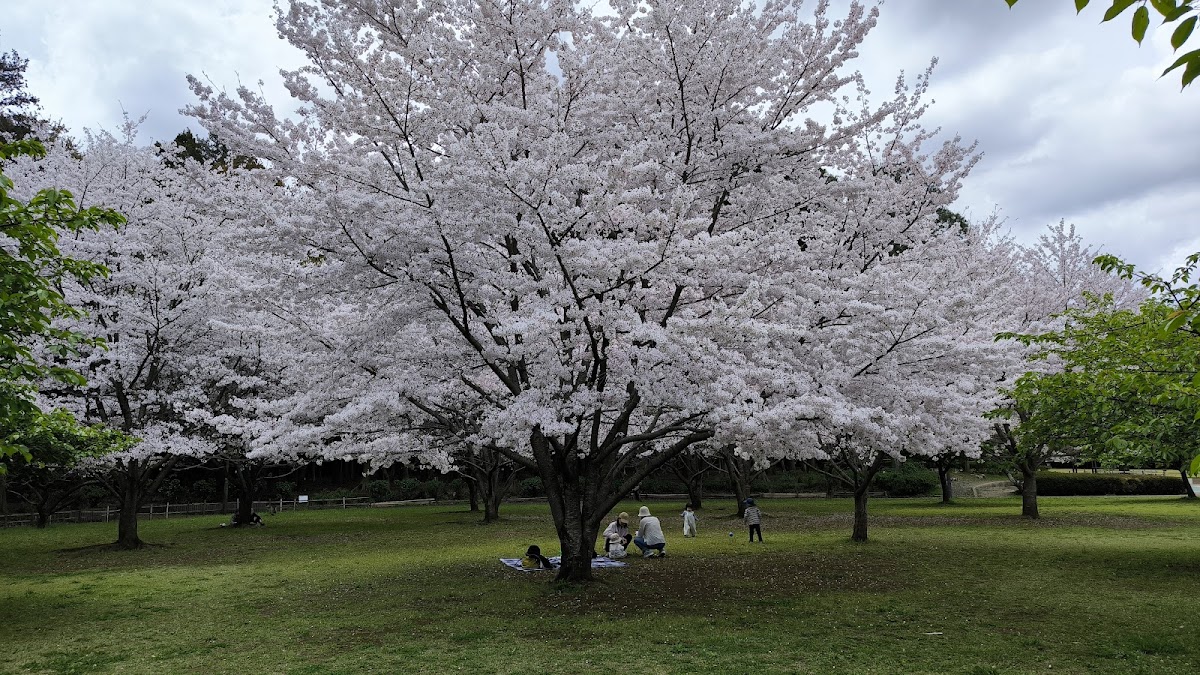
With well-maintained walking paths and information boards, even those unfamiliar with castle ruins can easily understand the location and significance of the remains while exploring. Cherry blossoms in spring and autumn leaves in fall offer beautiful scenery, allowing visitors to enjoy the changing seasons.
Forest and Hill Adventure Zone
This recreation area features athletic facilities and a barbecue area. Families can enjoy outdoor activities here.
The athletic facilities are popular with children, and the area is bustling with families on weekends. The barbecue area requires reservations, allowing visitors to enjoy a barbecue in nature.
Aquatic Life Zone
This area features a spring, providing a place to observe aquatic life. Various aquatic creatures, such as medaka fish and dragonflies, inhabit the area, making it a valuable site for nature observation and environmental education.
A stream and pond are maintained, allowing children to safely interact with aquatic life. Different creatures can be observed depending on the season, making it a valuable place for nature education.
Access and Visiting Information
Access by Train
- Nearest Station: Masuo Station, Tobu Urban Park Line (Tobu Noda Line)
- From the Station: Approximately 20 minutes on foot
From Masuo Station to the castle ruins park, you can access it on foot through a residential area. There are signs along the way, so you won’t get lost.
Access by Car
- Joban Expressway: Approximately 15 minutes from Kashiwa Interchange
- Parking: Available (Free)
The park has a parking lot, making it convenient to visit by car. However, it can get crowded on holidays, so visiting earlier in the day is recommended.
Visiting Hours and Fees
- Opening Hours: Always open (Varies by facility)
- Admission Fee: Free
- Closed Days: None (Varies by facility)
The castle ruins area is always open and can be freely visited. If you wish to use facilities such as the barbecue area, advance reservations and usage fees may be required. ### Points to Note During Your Visit
- To protect the remains, please avoid any actions that could damage the earthworks or dry moats.
- There are many insects in the forested areas, so insect repellent is recommended during the summer.
- The ground can be slippery during and after rain, so please be careful.
- When observing the castle remains, comfortable clothing and shoes are recommended.
Nearby Attractions
There are other medieval castle ruins scattered around Masuo Castle.
- Hanai Castle Ruins: Another medieval castle in Kashiwa City
- Matsugasaki Castle Ruins: Castle ruins around Lake Teganuma
- Kogane Castle Ruins: The main castle of the Takagi clan (Matsudo City), which was the main castle of Masuo Castle
Visiting these castle ruins together will help you understand the medieval castle network in this region.
Historical Value and Modern Significance of Masuo Castle
Value in Castle Research
Although not large in scale, Masuo Castle holds high academic value as a typical example of a regional castle from the Sengoku period (Warring States period). Basic defensive structures such as earthworks, dry moats, and gatehouses remain well-preserved, making it a valuable site for directly observing the castle construction techniques of the time.
In particular, the structure of the gatehouse and the arrangement of the earthworks show advancements in castle construction techniques from the late Sengoku period, attracting attention from castle researchers. It is also introduced in detail in Mr. Sosei Nishimata’s book, “How to Explore Sengoku Castles from the Tokyo Metropolitan Area,” and is highly regarded as a teaching material for studying Sengoku castles.
Position in Regional History
Masuo Castle is an important historical site for understanding the distribution of power in the northwestern part of Shimosa Province during the Sengoku period. It functioned as part of the Takagi clan’s branch castle network centered around Kogane Castle, and is indispensable for considering the medieval history of this region.
The area around Lake Teganuma has long been a transportation hub, and Masuo Castle was a strategic base controlling these transportation routes. The castle’s location and structure allow us to understand the transportation routes and local political situation of the time.
Preservation and Utilization Efforts
The Masuo Castle ruins have been developed into a park, achieving both the preservation of historical heritage and its use as a place of recreation for citizens. In the Kashiwa City area, where residential development is progressing, it is a valuable example of a well-preserved Sengoku period castle site.
Information boards are installed within the park, explaining the remains. Regular tours and study sessions are also held by local history enthusiasts, functioning as a place for local history education.
Potential as a Tourism Resource
Masuo Castle is an attractive destination for history enthusiasts and castle fans. It is easily accessible from the Tokyo metropolitan area, making it a convenient day trip.
Against the backdrop of the recent castle and history boom, the number of visitors to Masuo Castle is increasing. The sale of “castle stamps” has also begun, and many people are visiting as part of castle tours.
Further development and information dissemination have the potential to enhance its value as a local tourism resource.
Points to Note When Visiting Masuo Castle
Recommended Sightseeing Route
Here’s a recommended route for efficiently visiting Masuo Castle.
- From the Park Entrance to the Main Enclosure: First, climb to the main enclosure and observe the surrounding earthworks.
- Exploring the Main Enclosure: Check the topography inside the enclosure.
- Observing the Gate: Carefully observe the gate between the main enclosure and the second enclosure.
- Visiting the Second Enclosure: Check the size of the second enclosure and its earthworks.
- Observing the Dry Moat: Descend to the bottom of the dry moat and look up at the earthworks.
- Checking the Lower Enclosure: Check the lower enclosure located east of the main enclosure.
This route allows for a visit of approximately 30 minutes to 1 hour.
Useful Items to Bring
- Books on Castles: Having castle layout maps and explanatory materials will deepen your understanding.
- Camera: For recording the ruins and creating memories.
- Insect Repellent: Essential in summer.
- Drinks: Especially in summer, to prevent heatstroke.
- Comfortable Walking Shoes: For walking on dirt paths and slopes.
Best Time to Visit
Masuo Castle can be visited throughout the year, but each season has its own unique characteristics.
- Spring (March-May): Beautiful cherry blossoms and mild weather. The best season for visiting.
- Summer (June-August): The greenery is dense, and the ruins may be difficult to see. Insect countermeasures are essential due to the abundance of insects.
- Autumn (September-November): Beautiful autumn foliage and pleasant weather. Another recommended time, along with spring.
- Winter (December-February): The leaves have fallen from the trees, making the ruins easier to observe. Ideal for Historical Research
Summary
Masuo Castle is a valuable Sengoku period castle ruin remaining in Kashiwa City, Chiba Prefecture. Though small in scale, it boasts a sophisticated structure, and its remains, such as earthworks, dry moats, and gates, are well-preserved.
From its founding by the Soma clan in the Kamakura period, to its development under the Takagi clan during the Sengoku period, and finally its abandonment during Toyotomi Hideyoshi’s siege of Odawara, Masuo Castle witnessed the history of northwestern Shimosa Province.
Currently, it is maintained as Masuo Castle Ruins Comprehensive Park, serving as both a historical heritage site and a place of recreation for citizens. Centered around the “Forest Walking Zone” where you can observe the castle ruins, the park also features athletic facilities and barbecue areas, offering a variety of ways to enjoy yourself.
It’s approximately a 20-minute walk from Masuo Station on the Tobu Urban Park Line, and also accessible by car, making it a perfect day trip from the Tokyo metropolitan area. This spot is recommended for a wide range of people, including those interested in Sengoku period castles, those who want to enjoy historical walks, and families looking for outdoor activities. Visiting Masuo Castle allows you to experience firsthand the castle-building techniques of the Sengoku period and the history of the region. When you visit Kashiwa City, be sure to stop by Masuo Castle Ruins Park.