Complete Guide to Tsurunuma Chashi: A Thorough Explanation of the Ainu Fort Ruins Remaining in Urausu Town, Hokkaido
What is Tsurunuma Chashi?
Tsurunuma Chashi is an Ainu fort ruin (chashi ruin) located in Urausu Town, Kabato District, Hokkaido. “Chashi” means “fence” or “fort” in the Ainu language, and it is an important cultural heritage site with over 500 confirmed locations throughout Hokkaido.
Tsurunuma Chashi is one of the chashi built in the Ishikari River basin, and is thought to have functioned as a defensive facility or ceremonial site in the Ainu society of the Ishikari region. Even today, the remains such as earthworks and dry moats are well-preserved, making it a valuable historical site for understanding Ainu culture.
Historical Background of Chashi
Chashi were mainly built throughout Hokkaido from the 15th to the 18th centuries. Their purposes were diverse, serving different roles depending on the region and community, such as defensive facilities, watchtowers, sacred sites, and meeting places. Tsurunuma Chashi is presumed to have been one of these multi-purpose facilities.
Because the Ainu people did not have a written language, detailed records of the Chashi (fortified settlements) were passed down through Japanese documents and oral tradition. Therefore, it is difficult to determine the exact construction dates and purposes of individual Chashi. However, archaeological investigations and topographical analyses are gradually revealing their characteristics.
History of Tsurunuma Chashi
Haukase and Ainu Society in the Ishikari Region
Tsurunuma Chashi is presumed to have been built by Haukase, an Ainu chieftain of the Ishikari region. Haukase was a powerful chieftain who is believed to have held influence in the Ishikari River basin around the 17th century, and played an important role in the Ainu society of this region.
The Ishikari River is the longest river in Hokkaido and has long been an important transportation route and living area for the Ainu people. Many kotan (settlements) were formed along the river, and the region prospered as a place rich in fishing resources such as salmon and trout. It is thought that Haukase governed this rich region and managed trade and, at times, conflicts with other groups.
Construction Period and Purpose
The exact construction date of Tsurunuma Chashi is unclear, but based on the form of the remains and its location, it is estimated to have been built around the 16th or 17th century. This period saw increased contact with the Japanese and intensified power struggles within Ainu society.
The locations of chashi were strategically chosen, often selecting terrain suitable for defense and surveillance, such as high ground overlooking the surrounding area or locations facing rivers. Tsurunuma Chashi also meets these location requirements, and it is highly likely that it was built to monitor traffic in the Ishikari River basin and defend against external enemies.
Relationship with the Japanese
From the 17th century onward, as the influence of the Matsumae Domain began to extend to the Ishikari region, the relationship between the Ainu people and the Japanese became more complex. While economic ties through trade strengthened, conflicts over resources and cultural friction also arose.
It is believed that some chashi were reinforced as defensive structures amidst these tense relations with the Japanese. While the exact role of Tsurunuma Chashi is unclear, it is an important archaeological site for understanding the history of contact between the Japanese and Ainu in the Ishikari region.
Structure and Remains of Tsurunuma Chashi
Topography and Location
Tsurunuma Chashi is located in a hilly area, built on a high ground overlooking the surrounding area. This location is advantageous for both defense and surveillance, fulfilling the typical conditions for a chashi (fortified settlement).
The layout, which skillfully utilizes the natural terrain, demonstrates the Ainu people’s advanced civil engineering skills and ability to recognize terrain. By using steep slopes and natural cliffs as outer walls, and combining them with artificial earthworks and moats, they constructed an effective defensive system.
Characteristics of Earthworks
Clear traces of earthworks can still be seen at Tsurunuma Chashi. Earthworks are earthen walls designed to prevent enemy intrusion and are the main defensive structure of a chashi.
The height and size of the earthworks are thought to reflect the importance of the chashi and the power of its builders. Although the earthworks of Tsurunuma Chashi are partially damaged, many sections retain their original form, providing important clues to understanding the structure at the time.
The construction method for the earthworks was generally by excavating soil from the surrounding area and piling it up. The ditches dug during this process functioned as dry moats, forming a double line of defense.
Structure of the Dry Moat
Dry moats are important facilities that enhance defensive capabilities in combination with earthworks. At Tsurunuma Chashi, dry moats were dug along the outside of the earthworks, serving to make it difficult for enemies to approach.
The depth and width of the dry moats varied depending on the location, but it is estimated that some sections reached over 2 meters in depth. While some parts have become shallower due to burial and weathering, sections remain that are clearly recognizable as part of the topographical undulations.
The dry moats served not only as defensive structures but also as a boundary separating the inside from the outside of the Chashi. It has been suggested that this boundary may have held symbolic meaning, separating the sacred and secular areas during ceremonies and gatherings.
Other Remains
Besides the earthworks and dry moats, there is a possibility that various other remains existed at Tsurunuma Chashi. While wooden structures such as wooden fences and watchtowers have decayed and disappeared, traces of post holes and foundation stones can sometimes be found.
Furthermore, it is believed that residential facilities, warehouses, and ritual facilities were located within the Chashi, but it is difficult to confirm clear traces from the surface. More information may be obtained if detailed archaeological investigations are conducted.
Highlights of Tsurunuma Chashi
Well-Preserved Earthworks
The greatest highlight of Tsurunuma Chashi is the earthworks, which are in relatively good condition. The shape of the earthworks, which can be clearly recognized even after several hundred years, speaks to the high level of civil engineering skills of the Ainu people.
Walking along the earthworks allows you to experience their height and width, helping to understand the actual defensive system of the time. In particularly well-preserved sections, it is possible to observe the cross-sectional shape and construction methods of the earthworks.
Topography of the Dry Moat
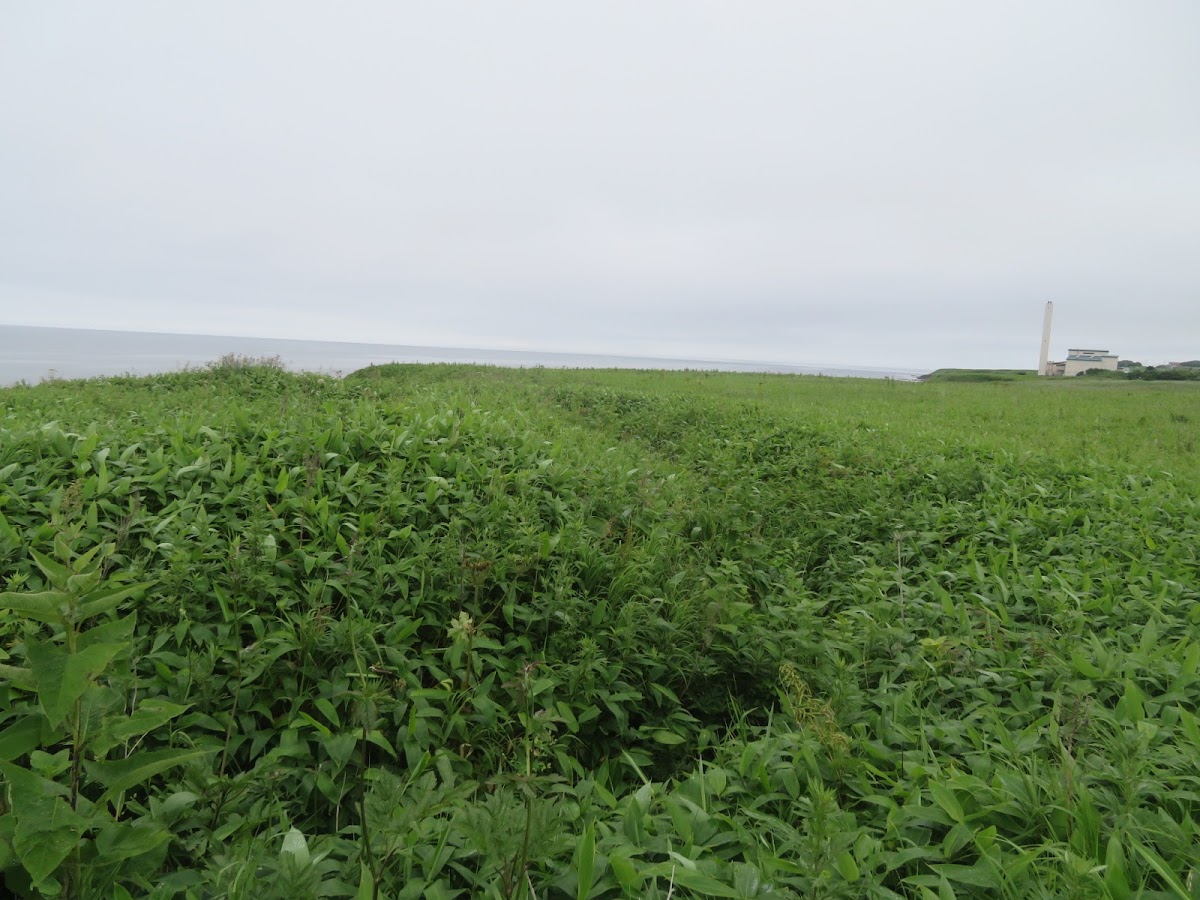
The topography of the dry moat, which extends along the earthen rampart, is also an important point of interest. Although much of it is now covered with vegetation, the traces of the dry moat can still be traced as undulations in the terrain.
By observing the arrangement of the dry moat, one can understand the overall layout and defensive plan of the Chashi (fortified settlement). Clues to the strategies of the time, such as the direction from which attacks were anticipated and the location of the main entrances, are etched into the terrain.
Surrounding Landscape
From Tsurunuma Chashi, one can enjoy panoramic views of the surrounding landscape. The vast plains of the Ishikari River basin and the distant mountains can be seen, giving a real sense of why the Chashi was built in this location.
Considering its function as a lookout post, this excellent view was a crucial factor. The wide field of vision was strategically significant for early detection of approaching enemies, issuing warnings to allies, and monitoring the movement of trading ships.
Harmony with the Natural Environment
The current Tsurunuma Chashi is surrounded by nature, allowing visitors to enjoy the scenery of each season. It displays different expressions with each season: fresh greenery in spring, deep green in summer, vibrant autumn leaves, and snowscapes in winter.
This natural environment evokes the culture of the Ainu people, who lived in harmony with nature. The Chashi is not merely a military facility, but also a symbol of Ainu culture, where people lived in harmony with nature and appreciated its blessings.
Access Information
Location
Address: Tsurunuma, Urausu-cho, Kabato-gun, Hokkaido
Tsurunuma Chashi is located a short distance from the town center of Urausu. The surrounding area is a quiet region with extensive farmland and forests.
Access by Car
From Sapporo:
- Head north on National Route 275 towards Urausu Town.
- Travel time: Approximately 1 hour 30 minutes.
- Parking: There is no dedicated parking lot, so you will need to park in a safe location nearby.
From Asahikawa:
- Head south on National Route 275 towards Urausu Town.
- Travel time: Approximately 1 hour.
Access by car is the most convenient, but we recommend checking the exact location using a car navigation system or smartphone map app before visiting.
Access by Public Transportation
Public transportation access is limited. The nearest station is Urausu Station on the JR Hakodate Main Line, but the distance from the station to the Chashi is considerable, making walking impractical.
We recommend taking a taxi or renting a car. There are few rental car offices around Urausu Station, so it is more reliable to rent a car in Sapporo or Asahikawa before visiting.
Important Notes for Visitors
Important: The area around Tsurunuma Chashi is private property. Please pay close attention to the following points when visiting.
- Respect for Private Property: Do not trespass on private property without permission.
- Protection of Remains: Walk carefully to avoid damaging the earthworks and dry moats.
- Take Your Trash Home: Always take your trash with you.
- Protection of Flora and Fauna: Do not harm or collect wild animals or plants.
- Safety Assurance: Wear appropriate footwear as some areas have uneven ground.
We recommend contacting the Urausu Town Board of Education in advance to confirm whether visits are permitted and to check for any precautions.
Best Time to Visit
Spring (April-June): After the snow melts, the season of fresh greenery. The terrain is easy to observe.
Summer (July-August): Vegetation can grow thick, making the remains difficult to see. Insect repellent is necessary.
Autumn (September-November): Beautiful autumn foliage and mild weather. Ideal season for visiting.
Winter (December-March): Snow cover obscures the ruins. Winter visits are not recommended.
Nearby Tourist Information
Urausu Town Highlights
Urausu Town Local History Museum: A facility where you can learn about the history and culture of Urausu Town. It also has exhibits on Ainu culture, making it ideal for preparation before visiting Tsurunuma Chashi.
Kaminai Farm: A vast farm where you can enjoy agricultural experiences and meals.
Hot Spring Facilities: There are also day-trip hot spring facilities near Urausu Town, perfect for refreshing yourself after your visit.
Nearby Chashi Sites
Several other Chashi sites exist in the Ishikari River basin.
Taigan Chashi (Ebetsu City): A large Chashi site located in the lower reaches of the Ishikari River. A nationally designated historical site.
Bibai Chashi (Bibai City): The remains of a Chashi (fortified settlement) within Bibai City.
Visiting these Chashi together will allow you to gain a deeper understanding of Ainu culture in the Ishikari region.
Accommodation
Since there are few accommodations in Urausu Town, we recommend considering accommodation in neighboring cities and towns.
- Iwamizawa City: Approximately 30 minutes by car. Plenty of hotels and business hotels.
- Takikawa City: Approximately 40 minutes by car. Abundant accommodations.
- Sapporo City: Approximately 1 hour 30 minutes by car. Wide range of accommodation options.
Significance of Ainu Culture and Chashi
Types and Functions of Chashi
Chashi can be broadly divided into the following types:
Cliffside Chashi: A type that utilizes cliffs or steep slopes. Excellent for defense.
Hilltop Chashi: A type built on the tip of a hill. Suitable for lookout.
Isolated Hill Chashi: A type utilizing an entire isolated hill. Often large in scale.
While a detailed investigation is needed to determine the classification of Tsurunuma Chashi, its topographical features allow for inference.
The Role of Chashi in Ainu Society
Chashi were not merely military facilities; they played diverse roles in Ainu society.
Defensive Facilities: Forts defending against attacks from other groups.
Watchtowers: Bases for monitoring transportation routes and gathering information.
Sacred Sites: Sacred places for rituals and ceremonies.
Meeting Places: Meeting places for important community decisions.
Symbols of Authority: Symbols indicating the power of the chief or the strength of the group.
These functions were interrelated, and it is believed that a single chashi fulfilled multiple roles simultaneously.
The Value of Chashi in Modern Times
Chashi are valuable legacies that convey the history and culture of the Ainu, the indigenous people of Hokkaido. In Ainu culture, where written records are scarce, physical evidence such as Chashi (fortified settlements) provides crucial clues to understanding history.
In 2021, the Jomon archaeological sites of Hokkaido and northern Tohoku were registered as a World Heritage Site, and there are also movements toward registering Ainu cultural heritage as a World Heritage Site. Chashi form the core of such cultural heritage, and their preservation and utilization are essential.
Preservation and Challenges of Tsurunuma Chashi
Current Status of Preservation
Tsurunuma Chashi is not currently designated as a historical site by the national or local government, but it is recognized as a valuable cultural asset of the region. However, because it is located on private land, public preservation and management are difficult.
The remains, such as earthworks and dry moats, are gradually being damaged by natural weathering and changes in vegetation. Furthermore, there is a risk of the site being lost due to surrounding development and changes in land use.
Efforts Towards Preservation
The Urausu Town Board of Education and local history research groups are engaged in documentation, preservation, and public awareness activities regarding Tsurunuma Chashi. Through regular on-site surveys, we assess the condition of the remains and consider preservation measures as needed.
We also strive to protect the site while gaining the understanding and cooperation of local residents and landowners. It is crucial to widely publicize its value as a cultural property and raise awareness of its preservation throughout the community.
Future Challenges
To preserve Tsurunuma Chashi for future generations, the following challenges exist:
Detailed Academic Investigation: Clarifying the structure and history of the Chashi through excavation and surveying.
Historic Site Designation: Formally designating it as a cultural property by the national, prefectural, or town government to ensure legal protection.
Preservation and Maintenance: Preventing damage to the remains and creating an environment where visitors can safely visit.
Public Relations and Utilization: Utilizing it as an educational program and tourism resource to deepen understanding of Ainu culture.
Regional Collaboration: Building a broad cultural heritage network by collaborating with surrounding Chashi sites and related archaeological sites.
To address these challenges, cooperation between the government, researchers, local residents, and the Ainu people is essential.
Significance of Visiting Tsurunuma Chashi
Visiting Tsurunuma Chashi has meaning beyond simply visiting a historical site.
Understanding Ainu Culture
By actually visiting the chashi and observing its topography and remains, you can experience the life and culture of the Ainu people firsthand. It offers a unique on-site experience that cannot be obtained from books or exhibitions.
Re-experiencing History
Imagining the history of people living, sometimes fighting, and performing rituals in this place hundreds of years ago allows for a time-traveling experience that connects the past and the present.
Harmony Between Nature and Culture
The structure of the chashi, which skillfully utilizes the natural terrain, demonstrates the Ainu people’s view of nature and their technological prowess. You can learn about a culture that lived in harmony with nature.
Awareness of Cultural Heritage Protection
By actually visiting the site, you can realize the importance of protecting cultural heritage. It provides an opportunity to consider what each of us can do to preserve valuable heritage like Tsurunuma Chashi for future generations.
Related Learning Resources
Books
“Ainu Chashi and Their World”: A comprehensive study of Chashi (fortified settlements). Detailed records and analyses of Chashi in various locations.
“History of Hokkaido”: An overview of Hokkaido’s history from ancient to modern times. A comprehensive chapter on Ainu history.
“Basic Knowledge of Ainu Culture”: Clearly explains Ainu language, beliefs, and lifestyle.
Museums and Archives
National Ainu Museum (Upopoy): A national facility located in Shiraoi Town. Offers comprehensive learning of Ainu culture.
Hokkaido Museum: A comprehensive museum located in Sapporo City. Extensive exhibits on Hokkaido’s history and culture.
Urausu Town Local History Museum: Exhibits local historical materials. Information on Tsurunuma Chashi is also available.
Online Resources
Hokkaido Cultural Resources Database: Allows searching for information on cultural properties within Hokkaido.
Ainu Culture Promotion and Research Organization: Publishes research findings and materials related to Ainu culture.
Summary
Tsurunuma Chashi is a valuable cultural heritage site of the Ainu people remaining in Urausu Town, Hokkaido. Believed to have been built by Haukase, a powerful chief of the Ishikari region, this chashi (fortified site) has relatively well-preserved remains such as earthworks and dry moats, making it an important historical site for learning about Ainu culture.
When visiting, please be mindful that it is private property and take care not to damage the remains. It is recommended to contact the Urausu Town Board of Education in advance to confirm whether visits are permitted and what precautions to take.
Visiting Tsurunuma Chashi allows you to learn about the history and culture of the Ainu people and their way of life in harmony with nature. It will also be an opportunity to realize the importance of protecting cultural heritage and passing it on to future generations.
To understand the history of Hokkaido and cultivate a respect for diverse cultures, please visit Tsurunuma Chashi.