Complete Guide to Sakura Chashi (Otaru City, Hokkaido) | History, Access, and Highlights Explained in Detail
What is Sakura Chashi?
Sakura Chashi is an Ainu historical site located on Boyodai in Otaru City, Hokkaido. “Chashi” means “fortress,” “mansion,” or “fenced enclosure” in the Ainu language. While approximately 500-700 chashi sites have been identified throughout Hokkaido, Sakura Chashi is known as a rare and valuable site within Otaru City.
Currently, the site of Sakura Chashi has been developed as “Boyo Higashi Park.” Although the original structures no longer remain, an explanatory sign reading “Asari Ruins, Sakura Chashi, and Sakuramachi Plateau Ruins” is installed within the park, conveying that this area was an important historical site of Ainu culture.
Historical Background of Chashi
Chashi are facilities built by the Ainu people throughout Hokkaido from the 16th to the 18th centuries. This period corresponds to the Sengoku and Edo periods in Honshu, Japan, and is an extremely important group of archaeological sites for understanding the social structure and culture of the Ainu people.
While there are various theories regarding the purpose of the Chashi, it is believed to have primarily served the following functions:
- Military defensive facility: A fort to defend against attacks from external enemies
- Place of ritual and ceremony: A place for religious ceremonies and gatherings
- Watchtower: A facility for monitoring the surrounding area
- Trading post: A place for interaction and trade with the Wajin (Japanese) and other Kotan (settlements)
History of the discovery and investigation of Sakura Chashi
Sakura Chashi was scientifically identified in 1957 (Showa 32). Investigations by archaeologists in Otaru City confirmed that this site was a Chashi.
Construction period and purpose
Sakura Chashi is estimated to have been constructed around the 17th century. This period was a time when contact with the Wajin (Japanese from Honshu) increased, and trade and cultural exchange became active. Based on its location and structure, Sakura Chashi is believed to have primarily functioned as a center for trade and exchange with the Japanese.
The Otaru region has long possessed a natural harbor and was a key point for maritime traffic. Located on a hill along the Asari River, Sakura Chashi was strategically situated overlooking the sea and river, making it a suitable location for monitoring trading ships and managing goods.
Structure and Characteristics of Sakura Chashi
Geographical Location
Sakura Chashi is located near the Asari Interchange of the Sapporo-Otaru Expressway, along the road that crosses the Asari River and heads towards Boyodai. The hill behind Boyo Higashi Park, where the cliff along the river makes a large curve, is the former site of Sakura Chashi.
This location has the following characteristics:
- View from a high vantage point: Overlooking the Asarigawa River and the surrounding area
- Natural defense: Natural fortifications formed by the river and cliffs
- Transportation hub: Near a transportation route connecting the inland and coastal areas
Current Status of Remains
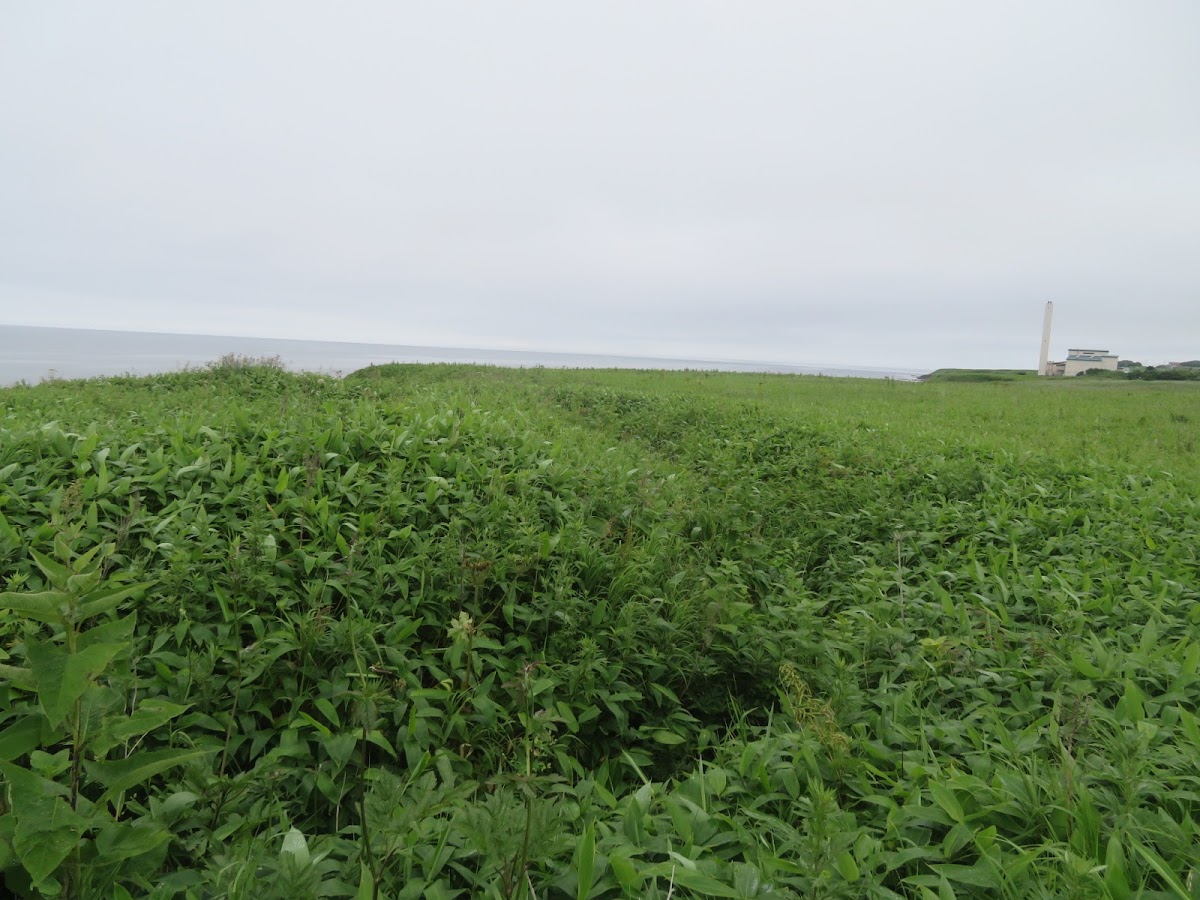
Unfortunately, very little remains of Sakura Chashi exist today. During the process of developing the site into a park, the structures of the former chashi were lost. Even visiting the site, it is not possible to see typical castle remains such as earthworks or moats.
However, explanatory signs are installed within Boyo Higashi Park, allowing visitors to learn about the historical importance of this site. From the park’s topography and surrounding environment, it is possible to imagine that an important facility for the Ainu people once stood here.
Current Status of Boyo Higashi Park
Park Overview
Boyo Higashi Park, the site of Sakura Chashi, has been developed as a place of relaxation for local residents. The park has the following facilities and features:
- Ground-like plaza: Climbing up from the main entrance, you’ll find an open space resembling a small ground.
- Forest and green space: A forest-like landscape unfolds at the back of the park, maintaining a rich natural environment.
- Walking trail: A walking trail is maintained that circles the park.
Points to note when visiting
When visiting Boyo Higashi Park, please note the following:
Parking: There is no dedicated parking lot for the park. Visitors will need to park on the street or use nearby public parking lots. However, as it is a residential area, consideration should be given to avoiding disturbing nearby residents.
Toilet facilities: It is recommended to check the park’s toilet facilities in advance.
Visiting hours: The park is generally open 24 hours a day, but because it is adjacent to a residential area, early morning and late-night visits should be avoided.
Access Methods
Access by Car
Sakura Chashi (Boyo Higashi Park) is most easily accessible by car:
- Via the Sapporo-Otaru Expressway: Exit at Asari IC
- Cross the Asari River: Head towards Asari River from the IC exit
- Towards Boyodai: Follow the road along the river; the park is located at a large curve.
Address: Boyodai, Otaru City, Hokkaido
Access by Public Transportation
When using public transportation:
- From JR Otaru Station: Take a local bus towards Boyodai (approximately 20-30 minutes)
- Walking from the bus stop: A few minutes’ walk from the nearest bus stop
Public transportation is limited, so it is recommended to check the timetable in advance.
Highlights and How to Enjoy Sakura Chashi
Experiencing History
Although the ruins themselves no longer exist, the significance of visiting Sakura Chashi lies in reflecting on the history etched into this land. Imagine the 17th century, when the Ainu people interacted with the Japanese and cultivated their own unique culture in this place.
By carefully reading the explanatory signs and observing the Asari River and the surrounding topography, you will understand why the chashi was built in this location.
Enjoying the Surrounding Scenery
From Boyo Higashi Park, you can enjoy views of Otaru city and the Asari River. Especially on a clear day, the view from this hilltop is magnificent and ideal for photography.
The natural environment surrounding the park is also attractive, showing different expressions depending on the season. Enjoy the beauty of each season: fresh greenery in spring, lush forests in summer, autumn leaves in fall, and snowscapes in winter.
Birdwatching
Some visitors have reported sightings of wild birds, such as the Black Woodpecker, around the park. Because the natural environment is well-preserved, you may be able to enjoy birdwatching.
Chashi Culture in Hokkaido
Distribution of Chashi
500 to 700 chashi sites have been identified in Hokkaido, particularly concentrated in the eastern region, especially around the Nemuro Peninsula. Approximately 30 chashi sites have been identified on the Nemuro Peninsula alone, and the “Nemuro Peninsula Chashi Sites” are designated as a national historic site (the only example in Japan of an Ainu cultural site designated as a national historic site).
On the other hand, in central Hokkaido, such as Otaru City, the number of chashi sites is relatively small, making Sakura Chashi a valuable and rare example.
Types of Chashi
Chashi are classified into several types based on their structure and location:
- Cliff-faced type: Utilizing the flat surface on top of a cliff
- Isolated hill type: Built on an isolated hill
- Hilltop type: Utilizing the tip of a hill
- Climbtop type: Built on the top of a hill
Sakura Chashi, located on a high ground along the Asari River, could potentially be classified as either a cliff-faced or hilltop type.
History of Otaru City and Ainu Culture
The Relationship Between Otaru and the Ainu
The name Otaru itself is said to originate from the Ainu word “Ota-oru-nai” (river in the sandy beach). This indicates that Ainu people have lived in this region since ancient times.
Otaru saw increasing Japanese settlement from the Edo period onwards, and in the Meiji era, it rapidly developed as a base for the development of Hokkaido. In the process, many traces of Ainu culture were lost, but ruins like Sakura Chashi are precious witnesses that convey to the present day the rich culture of the Ainu people once existed in this land.
History of the Asari District
The Asari district, where Sakura Chashi is located, is in the eastern part of Otaru City, where the Asari River flows into Ishikari Bay. This area has long been a transportation hub, an important route connecting the inland and coastal areas.
Although development as a residential area is progressing, much of the natural environment remains, making it a region where history and modernity coexist.
Nearby Tourist Attractions
When visiting Sakura Chashi, you can also enjoy nearby tourist attractions:
Tourist Attractions in Otaru City
- Otaru Canal: A representative tourist attraction of Otaru (approximately 15-20 minutes by car)
- Otaru Music Box Museum: A music box specialty shop housed in a historical building
- Kitaichi Glass: Exhibition and sale of glass crafts
- Otaru City Museum: Exhibits on Otaru’s history and railways
Around the Asari District
- Asarigawa Onsen: A hot spring resort known as Otaru’s inner sanctuary
- Asarigawa Onsen Ski Resort: Enjoy skiing and snowboarding in winter
Best Season to Visit Sakura Chashi
Spring (April-June)
This is a beautiful season with fresh greenery as the snow melts. It’s ideal for strolling through the park, and you can enjoy the chirping of wild birds. However, be careful as the ground may be slippery immediately after the snow melts.
Summer (July-August)
The greenery is lush, and on sunny days, the contrast between the blue sky and the green is beautiful. However, it’s also a time when insects are abundant, so insect repellent is recommended.
Autumn (September-November)
The autumn foliage is beautiful, making it ideal for photography. The temperature is pleasant, making it perfect for a stroll.
Winter (December-March)
You can enjoy the tranquil scenery covered in snow, but the ground can be slippery, and heavy snowfall can make walking in the park difficult. Proper equipment and caution are necessary when visiting during winter.
What to Bring When Visiting Sakura Chashi
To ensure a comfortable visit to Sakura Chashi, it’s recommended to bring the following:
- Camera: For taking photos of explanatory signs and surrounding scenery
- Comfortable Walking Shoes: Suitable shoes for walking around the park
- Drinks: Hydration is especially important in summer
- Insect Repellent: For visits in summer
- Binoculars: For birdwatching and enjoying the scenery
- Notebook: If you wish to record the contents of the explanatory signs
Comparison of Sakura Chashi with Other Chashi Sites
Differences from the Nemuro Peninsula Chashi Sites
Compared to the Nemuro Peninsula Chashi Sites, the only nationally designated historical site in Japan, Sakura Chashi differs in the following ways:
- Preservation Status: While the earthworks and moats of the Nemuro Peninsula Chashi sites are relatively well-preserved, Sakura Chashi has almost no remaining structures.
- Scale: While 24 chashi (fortified settlements) are concentrated on the Nemuro Peninsula, Sakura Chashi is one of the few examples within Otaru City.
Period: Both were constructed between the 16th and 18th centuries, but Sakura Chashi is specifically dated to the 17th century.
Other Archaeological Sites in Otaru City
Like Sakura Chashi, the Sakuramachi Plateau Site is also known as part of the “Asari Site.” Together, these form an important group of historical sites that show traces of Ainu culture in the Asari area.
Preservation of Sakura Chashi and Future Challenges
Current Challenges
Sakura Chashi faces the challenge of lacking the visual impact of typical castle ruins due to the scarcity of remaining structures. Furthermore, its development as a park makes it difficult to fully recognize its historical value.
Cultural Property Value
Currently, Sakura Chashi is not a designated cultural property, but as a valuable Ainu cultural site within Otaru City, its historical value should be highly appreciated. The installation of explanatory signs plays an important role in passing on the history of this area to future generations.
Future Prospects
As the importance of Ainu culture is being re-recognized, the value of sites like Sakura Chashi may also be re-evaluated. New forms of information provision are expected, such as the installation of more detailed explanatory panels and the use of digital technology to reconstruct its former appearance.
Summary: The Significance of Visiting Sakura Chashi
Although the remains of Sakura Chashi itself no longer exist, it is an important site for understanding the history of Hokkaido and Ainu culture. Visiting this site offers the following benefits:
- Understanding Ainu Culture: You can experience firsthand the rich culture of the Ainu people that once existed in Otaru, a modern port city.
- The Layers of History: An opportunity to consider how the same land has changed over time.
- Rediscovering the Region: You can learn about a lesser-known side of Otaru, a famous tourist destination.
- Awareness of Cultural Heritage Preservation: Even without visible remains, it fosters an awareness of the importance of cherishing historically valuable places.
Sakura Chashi is not a flashy tourist spot, but it is a worthwhile place to visit for those interested in Hokkaido’s history, those who want to learn about Ainu culture, and those who want to discover the deeper charm of Otaru.
In the tranquil environment of Boyo Higashi Park, why not reflect on the lives of the Ainu people who once lived here? You will surely feel the quiet presence of 17th-century history within the modern landscape of Otaru.