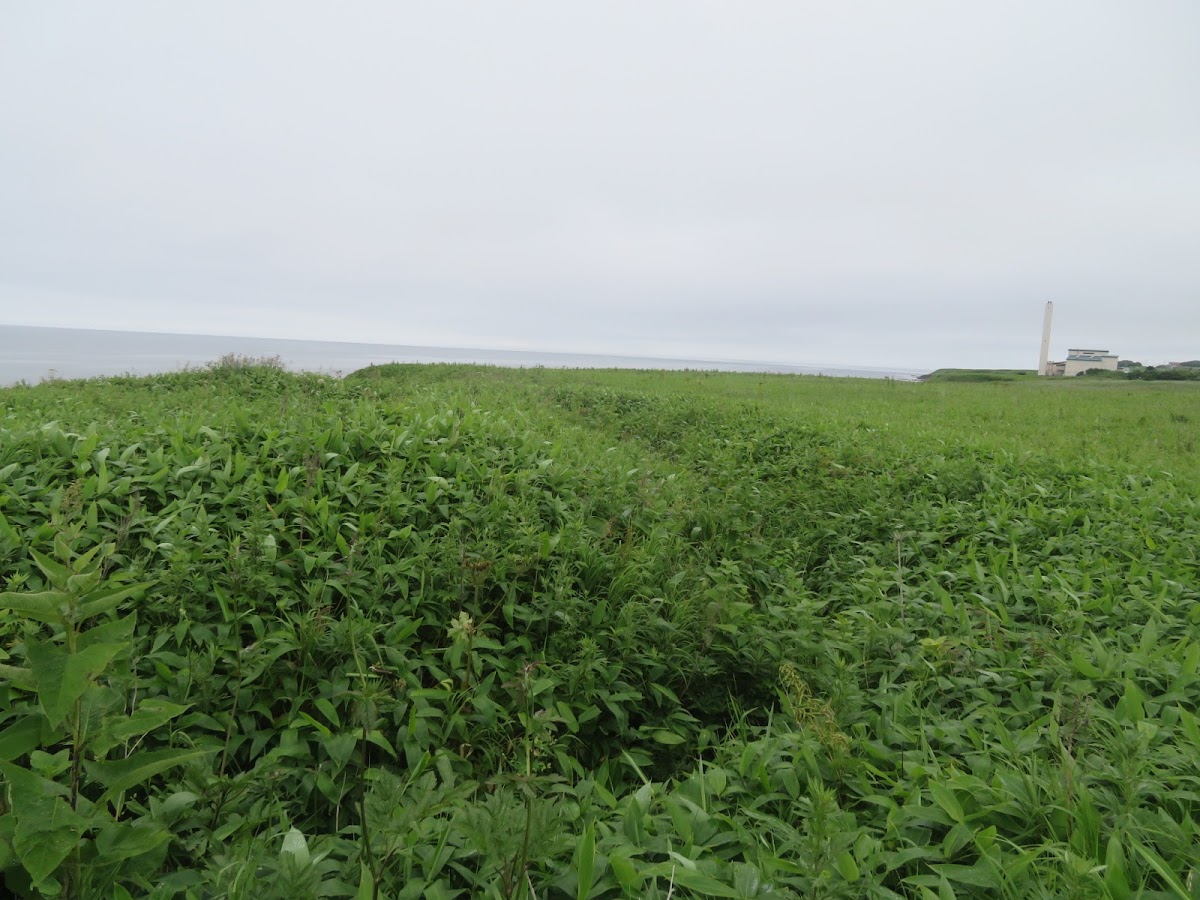
Menachashi (Hokkaido): A Complete Overview of the Archaeological Site Telling the History of the Ainu People
Overview
Chashi are archaeological sites built by the Ainu people throughout Hokkaido from the 16th to the 18th centuries. This word, meaning “fence enclosure” in the Ainu language, refers to important cultural heritage sites with diverse roles, going beyond mere military facilities such as “forts” or “castles.”
To date, more than 500 chashi sites have been identified in Hokkaido, and their distribution is mainly spread from southern to eastern Hokkaido. They are particularly concentrated in the Nemuro Peninsula, the Kushiro River basin, and the Hidaka region, where they developed in close relation to Ainu kotan (villages).
These sites, including Menachashi, provide valuable clues to understanding the transitional period of Ainu culture (13th to 18th centuries), when pottery and stone tools were replaced by iron tools, and pit dwellings were replaced by post-and-beam dwellings.
Historical Background and Appearance of Chashi
Relationship between the Formation of Ainu Culture and Chashi
Ainu culture is believed to have its origins in the Satsumon culture (7th-12th centuries), which was influenced by Honshu culture, and the maritime Okhotsk culture (5th-9th centuries). However, archaeological artifacts and sites from the formative period of Ainu culture are very scarce, and the detailed process is still being researched.
It is thought that the construction of Chashi began in earnest around the 16th century, a period that coincided with increased trade with the Japanese and a time of significant social change. The “Tsugaru Ittōshi,” a history book compiled by the Hirosaki Domain during the Kyōhō era, already contains records of Chashi, indicating that they were a significant presence even then.
Shakushain’s Rebellion and Chashi
Shakushain’s Rebellion, which occurred in 1669, is an important event in the history of Chashi. In this conflict, Shakushain, the chief of the Ainu people of the Hidaka region, rose up against the oppression of the Japanese, and records show that various chashi (fortified settlements) were actually used as military bases.
This historical event led to the widespread understanding of chashi as “Ainu fortresses,” but later research has revealed that the uses of chashi were more diverse and complex.
Structure and Classification of Chashi
Basic Structure
Many chashi are built by skillfully utilizing natural terrain such as hills and plateaus jutting out into the sea, rivers, or lakes. Their structural characteristics are as follows:
Moat (Hori): A ditch dug to demarcate the area around the chashi, sometimes several meters wide and exceeding 6 meters in width. At the Yukuepira Chashi site (Rikubetsu Town), the semi-circular moat reaches approximately 100 meters in length, 6 meters in width, and 3 meters in depth, making it one of the largest in Hokkaido.
Earthworks: These are earthen embankments created by piling up the soil excavated from trenches. They served to enhance defensive capabilities and clearly define the boundaries of the area.
Enclosures (Kuruwa): These are flat areas surrounded by trenches and earthworks. They come in various forms, from single enclosures to multi-enclosure structures with multiple enclosures connected together. Large structures like Yukuepirachashi, with three interconnected enclosures, also exist.
Classification of Chashi
Chashi are classified into several types based on their location and structure:
Cliff-faced Type: This is the most common type, built on plateaus facing cliffs along the coast or riverbanks. Natural cliffs are used as defensive walls, with trenches and earthworks only on the inland side. Chashineshuma (meaning “rocky area that is a chashi”), believed to have been located on Hiyoriyama in Otaru, is considered a typical cliff-faced type, utilizing the topography of a cliff with a good view where a lighthouse stood.
Hilltop Type: Built on the top of a hill, surrounded and demarcated by a moat. It is believed that its function as a lookout post was prioritized.
Hill Tip Type: Built on the tip of a hill, similar to the cliff-face type, but utilizing a more prominent terrain.
Flatland Type: Built on flat land, less numerous than other types, with clearly defined demarcation by moats and earthworks.
Isolated Hill Type: Utilizing an entire hill isolated from its surroundings, resulting in a highly defensible structure.
Uses of Chashi: Unraveling Diverse Functions
A Shift from the Traditional “Fortress Theory”
Initially, Chashi were understood as “Ainu fortresses.” However, recent excavations and research have revealed various facts that cannot be explained by this simplistic interpretation.
Many Chashi are far too small to be used for combat, and many have insufficient defensive structures. Furthermore, research into Ainu oral traditions and legends reveals numerous instances suggesting uses different from those of fortresses.
Chashi as a Place of Ritual
Recent research strongly suggests that the essential role of chashi was as a “place for communicating with the gods.” For the Ainu people, chashi functioned as sacred sites, important places where various rituals and ceremonies were performed.
Archaeological excavations have unearthed artifacts believed to have been used in rituals, supporting the idea that chashi were religious and spiritual centers. It is presumed that during certain seasons or important events, the people of the kotan (village) would gather at the chashi to perform rituals of prayer and gratitude to the kamuy (gods).
Place of Charanke (Negotiation)
In Ainu society, charanke (negotiation/discussion) was an important method of decision-making. Chashi were also used as public spaces for inter-tribal negotiations and important decisions.
The very name of the “Tsurugadai Charanke Fort Ruins” located in Kushiro City indicates that this chashi (fortified settlement) was used as a charanke (a type of fortified settlement). The chashi, with its flat and wide enclosure, was structured to accommodate many people gathering for discussion.
Lookout Post and Resource Management Base
Many chashi are located on high ground with good views, and also functioned as lookout posts to monitor the surrounding area. In particular, chashi along the sea and rivers are thought to have served as bases for monitoring the upstream migration of important marine resources such as salmon and managing fishing activities.
The large number of chashi distributed along the Nemuro Strait is not unrelated to the region’s abundant marine resources. As lookout posts for resource management, chashi held economic importance.
Function as a Battlefield
As social conditions changed over time, and especially as relations with the Japanese became more tense, chashi came to be used as actual battlefields. Records show that Chashi (ancient Ainu fortifications) functioned as military bases during historical conflicts, such as the Shakushain Rebellion.
In other words, it is believed that Chashi, starting as places of religious rites, gradually took on diverse roles in response to changing social conditions over time.
Major Chashi Sites
Nemuro Peninsula Chashi Sites (National Historic Site)
Nemuro City is a region in Hokkaido with a particularly high concentration of Chashi sites, with 32 Chashi sites confirmed within the city. Of these, 24 are designated as a National Historic Site under the name “Nemuro Peninsula Chashi Sites,” and in 1983, it was the first site in Japan to be inscribed on UNESCO’s Tentative List of World Heritage Sites.
The Chashi sites on the Nemuro Peninsula are closely related to Nemuro’s rich marine resources, which are closely linked to Nemuro’s status as “the city closest to the rising sun,” and are thought to have had a strong character as bases for managing fishing activities such as salmon and trout. The construction period is estimated to be around the 16th to 18th centuries, corresponding to the peak of Ainu culture.
Kushiro River Basin Chashi Sites (National Historic Site)
Approximately 40 Chashi sites have been identified along the Kushiro River, including those in the lake and marsh areas. The “Kushiro River Basin Chashi Sites” was designated as a national historic site to integrate the Tsurugadai Charanke Fort and Mosiriya Fort sites in Kushiro City, along with nine other Chashi sites located in Kushiro Town, Shibecha Town, and Teshikaga Town, with the aim of comprehensively preserving and utilizing these sites.
The Kushiro River basin was an important transportation route connecting the inland and coastal areas, and also a rich river where salmon migrated upstream. These Chashi sites are believed to have functioned as key points for river transportation and bases for resource management.
Yukuepira Chashi Site (Rikubetsu Town, National Historic Site)
Located in Tomamu, Rikubetsu Town, the Yukuepira Chashi site is an Ainu period archaeological site built approximately 450 years ago and designated a National Historic Site on September 8, 1987.
“Yukuepira” means “deer-eating cliff” in the Ainu language, and it is presumed to have been a place associated with hunting activities, such as deer. It is one of the chashi scattered along the Toshibetsu River, which flows along the border between Tokachi and Kushiro, and has a large structure with three interconnected enclosures on a hilltop facing a steep cliff.
The central semi-circular moat is approximately 100 meters long, 6 meters wide, and 3 meters deep, making it one of the largest chashi sites in Hokkaido. This large scale suggests that this chashi played a central role in the region.
Chashi Sites in Shinhidaka Town
The Hidaka region is one of the areas where chashi (fortified settlements) are densely distributed, and several chashi sites have been confirmed in Shinhidaka Town. This area is also the site of Shakushain’s rebellion and holds historical significance.
Many of the chashi in the Hidaka region were built on coastal terraces facing the Pacific Ocean, and are thought to have been closely related to the utilization of marine resources.
Chashikotsu in Otaru
Several chashi sites (chashikotsu) have also been confirmed in Otaru City. “Chashikotsu” means “site of a chashi” in the Ainu language.
Of particular note is Chashineshuma on Hiyoriyama. The Ainu place name “chasi-ne-suma” means “rocky area that is a chashi.” The location where the lighthouse now stands offers excellent views, and the coastline is a sheer cliff, suggesting it was a strategically advantageous location for defense.
The Chashi in the Otaru region likely functioned as a base for managing marine resources in Ishikari Bay and trade routes with the inland areas.
Distribution and Regional Characteristics of Chashi
Concentrated Distribution in Eastern Hokkaido
More than 500 Chashi sites in Hokkaido are distributed from southern to eastern Hokkaido, but are particularly concentrated in the eastern region. The Nemuro Peninsula, Kushiro River basin, Tokachi region, and Hidaka region are major distribution areas.
This distribution pattern is deeply related to the fact that these regions were blessed with abundant marine resources (especially salmon and trout). Salmon migrated in large numbers up the rivers of eastern Hokkaido, including along the Nemuro Strait, sometimes called the “sacred land of salmon,” and were an important food source for the Ainu people.
Relationship with Kotan
The distribution of Chashi is presumed to have been closely related to Kotan (villages). Many Chashi were built on high ground visible from the Kotan, making them a daily sight.
In some cases, multiple chashi (fortified settlements) may have corresponded to a single kotan (Ainu village), and each chashi may have had a different function. For example, it is thought that chashi dedicated to rituals, chashi for watchtowers, and chashi for charanke (a type of Ainu ritual) coexisted within the same area.
Spread to Sakhalin and the Northern Territories
Chashi were built not only on the main island of Hokkaido, but also in Sakhalin and the Northern Territories. This indicates that the Ainu people’s activities extended over a wide area, and that the cultural tradition of chashi was widely shared.
Research Status and Challenges
Results of Archaeological Excavations
Recent archaeological excavations have greatly advanced our understanding of chashi. Artifacts indicating their use in various ceremonies and traces of daily life have been discovered, making it clear that chashi were not merely military facilities.
The excavated artifacts also include trade goods such as iron tools, ceramics, and glass beads, suggesting that chashi may have been associated with trade activities. Furthermore, remains such as hearths and postholes have been confirmed, gradually shedding light on the specific activities that took place within the Chashi.
Remaining Mysteries
However, many mysteries remain regarding the Chashi:
Identification of Builders: It is difficult to identify specific individuals or groups who built each Chashi.
Accurate Construction Dates: The construction period of many Chashi is only a rough estimate, roughly “around the 16th to 18th centuries,” and more precise dating remains a challenge.
Period of Use: Many details regarding the actual use of each Chashi—such as how long they were used, whether it was continuous or intermittent—are unknown.
Structural Changes: It is difficult to trace in detail how the structure and function of the Chashi changed over time.
Efforts for Preservation and Utilization
At the Chashi sites designated as national historic sites, efforts are being made to balance preservation and utilization. There are movements to consolidate and designate Chashi (fortified settlements) that span multiple municipalities, such as the Kushiro River Basin Chashi Sites, aiming for integrated preservation and utilization.
Educational use is also being promoted, with opportunities to visit Chashi sites being provided as part of local school education and lifelong learning. Furthermore, their use as a tourist resource is being considered, positioning them as important sites for deepening understanding of Ainu culture.
Understanding Chashi and Ainu Culture
Key to Unraveling the History of the Ainu People
Chashi are extremely important physical evidence for unraveling the history of the Ainu cultural period, for which written records are scarce. The structure of the Chashi and the excavated artifacts allow us to glean insights into the transitional period from pottery and stone tools to iron tools, and from pit dwellings to post-and-beam dwellings.
In addition, the distribution and location of the Chashi allow us to infer the living areas, economic activities, and social organization of the Ainu people at that time.
Witnesses to the History of Relations with the Japanese
The 16th to 18th centuries, the period in which the Chashi were built, was a time of increased contact and trade with the Japanese, but also a time of deepening conflict. The structural changes and distribution shifts of the Chashi are thought to reflect this complex history of relations.
Understanding the actual role of the Chashi in historical events, including Shakushain’s Rebellion, is crucial for understanding the history of relations between the Ainu people and the Japanese.
Significance in the Modern Era
In 2019, the “Act on the Promotion of Measures to Realize a Society Where the Pride of the Ainu People is Respected” (Ainu Policy Promotion Act) was enacted, legally clarifying that the Ainu people are the indigenous people of Japan.
In this context, the value of the Chashi is being re-recognized as an important heritage symbolizing the identity and cultural pride of the Ainu people. The preservation, research, and utilization of the Chashi are of great importance for the inheritance and development of Ainu culture and for the realization of a multicultural society.
Summary
The Chashi sites throughout Hokkaido, including Menachashi, are invaluable legacies that convey the rich history and culture of the Ainu people to the present day. While once simply understood as “Ainu fortresses,” recent research has revealed that they were complex facilities with diverse uses, including places of worship, charanke (ritual sites), lookout posts, and resource management centers.
With over 500 Chashi sites confirmed throughout Hokkaido, each holds its own unique history and story. There is much to learn from the Chashi, from their structures that skillfully utilize natural terrain, to their distinctive regional distribution patterns, and the life of the time revealed by excavated artifacts.
Continued investigations and research will gradually unravel the mysteries of the Chashi. Furthermore, it is our important responsibility as modern people to properly preserve these sites and pass them on to future generations. It is essential to deepen our understanding of Ainu culture through the Chashi and contribute to the realization of a society that respects diversity.