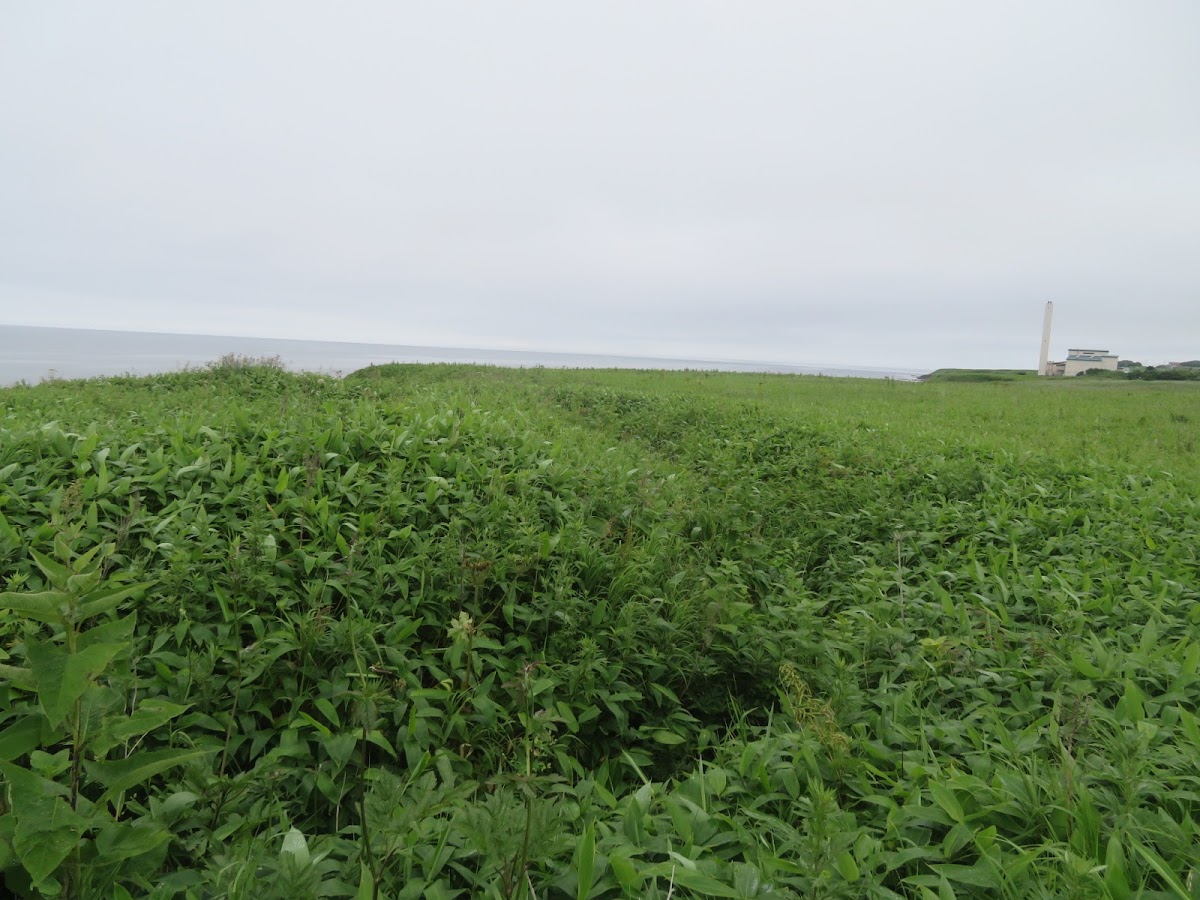
Yui Chashi (Hokkaido) Complete Guide: A Thorough Explanation of the History and Highlights of the Ainu Cultural Site
What is Yui Chashi?
Yui Chashi is an Ainu-era chashi (fortified site) located in Nibutani, Biratori-cho, Saru-gun, Hokkaido. “Yui” means “place with cold water” in the Ainu language, reflecting the natural environment of the region. Currently located near the Nibutani Dam, it has been restored and developed as “Yui Chashi Park” and is open to the public.
A chashi is a general term for facilities built by the Ainu people that served functions such as forts, ceremonial sites, and meeting places. While approximately 500 chashi sites have been identified in Hokkaido, Yui Chashi is known as an important site where detailed archaeological excavations have been conducted and numerous artifacts have been unearthed.
Historical Background of Yui-chashi
Saru River Comprehensive Development Project and Archaeological Excavations
Yui-chashi became widely known through archaeological excavations conducted in conjunction with the Saru River Comprehensive Development Project (within the Nibutani Dam construction site) from the 1970s to the 1980s. Prior to the dam construction, a full-scale archaeological excavation was conducted by the Hokkaido Archaeological Center.
The excavations were conducted intensively in the early 1980s, and the results were published in March 1986 as “Hokkaido Archaeological Center Survey Report No. 26.” This report includes the results of surveys of the Yui-chashi site, as well as the Poromoi-chashi site and the Nibutani site, and serves as fundamental material for the study of Ainu culture in the Saru River basin.
Nibutani Dam Construction and the Fate of the Chashi
The Nibutani Dam construction was a large-scale project aimed at flood control and water utilization in the Saru River basin. This construction plan threatened to submerge several Chashi (fortified settlement) sites in the surrounding area. While the Poromoi Chashi site was destroyed by the dam construction, Yuoi Chashi, located on the left bank of the Nibutani Dam and outside the submersion zone, was fortunately preserved.
Excavation surveys revealed numerous artifacts at Yuoi Chashi, providing valuable information about the lifestyle and trade practices of the Ainu period. Based on these findings, the site was developed into a park and now serves as an important tourist and educational resource for conveying the region’s history and culture.
Structure and Characteristics of Yuoi Chashi
Typical Example of a Hilltop Chashi
Yuoi Chashi is a type of Chashi known as a “hilltop Chashi.” Hilltop Chashi are built on the tip of plateaus or hills, characterized by their clever use of natural terrain. Yuoichashi is located on a plateau jutting out into the Saru River, a strategically important site surrounded on three sides by steep slopes.
The remains mainly consist of the following elements:
- Flat surface: A plaza-like space that forms the center of the chashi
- Moat: A ditch-like defensive structure that demarcates the base of the plateau
- Earthwork: An earthen embankment created by piling up the excavated soil from the moat
This structure provides excellent defensive and surveillance advantages, preventing intrusion from the land side while maintaining a view of the river.
Realities of Life as Seen from Excavated Artifacts
A variety of artifacts were unearthed during the excavation. The main artifacts unearthed include the following:
- Pottery Fragments: Pottery with patterns characteristic of the Ainu cultural period
- Stone Tools: Stone arrowheads, stone axes, whetstones, etc.
- Iron Products: Iron tools such as knives and nails
- Glass Beads: Ornaments believed to be trade goods
- Animal Bones: Traces of animals used for food
These artifacts indicate that Yui-chashi functioned not merely as a defensive structure, but also as a place for daily life. The presence of iron products and glass beads, in particular, believed to have been brought from Honshu, suggests that the Ainu people possessed a wide-ranging trade network.
Highlights of Yui-chashi
Development Status of Yui-chashi Park
Currently, Yui-chashi has been developed as “Yui-chashi Park,” and is open to the public for free viewing. The park is equipped with the following facilities and amenities:
- Information Boards: Detailed information boards explaining the history and structure of the Chashi (fortified settlement).
- Walking Paths: Viewing paths carefully designed to avoid damaging the remains.
- Observation Space: A viewpoint offering panoramic views of the Saru River and the surrounding landscape.
The park is accessible from right next to the Nibutani Dam embankment. You can park your car in the dam’s parking lot and visit on foot. Descending across the embankment, you will arrive at the Chashi site on a plateau jutting out into the river.
Exhibits at the Saru River History Museum
When visiting Yui Chashi, we highly recommend also visiting the nearby Saru River History Museum. This facility (free admission) displays photographic panels documenting the excavation of Yui Chashi, a reconstructed model of the ruins, and replicas of excavated artifacts.
Museum of History Exhibits:
- Excavation Records: Photographs and drawings from the time of the excavation
- Restoration Model: A detailed model that allows you to understand the three-dimensional structure of the Chashi (fortified site)
- Excavated Artifacts: Exhibits of actual artifacts or replicas
- Explanation of Ainu Culture: Explanations of the function of the Chashi and the lifestyle of the time
By gaining background knowledge at the Museum of History before visiting the actual Chashi site, you will gain a deeper understanding and appreciation.
Collaboration with the Nibutani Ainu Culture Museum
Across the road from Yui Chashi, to the south, is the Nibutani Ainu Culture Museum. This museum has a rich collection of traditional Ainu daily life tools, clothing, and ceremonial objects, making it an essential facility for understanding Ainu culture as a whole.
By visiting all three facilities—Yui Chashi, the Sarugawa Museum of History, and the Nibutani Ainu Culture Museum—you can comprehensively learn about Ainu culture, from its material aspects to its spiritual aspects.
Access and Visiting Information
Location and Transportation
Location: 24 Nibutani, Biratori-cho, Saru-gun, Hokkaido
Access by Car:
- Approximately 2 hours 30 minutes from Sapporo (via National Route 453 and National Route 237)
- Approximately 1 hour 30 minutes from Tomakomai (via National Route 235 and National Route 237)
- Approximately 4 km along the Saru River on National Route 237 from Biratori Town Hall
Public Transportation:
- Approximately 1 hour 30 minutes by Donan Bus “bound for Biratori” from JR Tomakomai Station
- Get off at “Nibutani” bus stop, approximately 5 minutes on foot
Notes for Visitors
- Visiting Hours: Open year-round (24 hours)
- Admission Fee: Free
- Estimated Time Required: Approximately 30 minutes to 1 hour (2 to 3 hours including surrounding facilities)
- Parking: Use the Nibutani Dam parking lot (free).
Best Time to Visit
Considering Hokkaido’s climate, the following times are especially recommended:
- Spring (May-June): Beautiful fresh greenery and mild weather.
- Summer (July-August): High percentage of sunny days, ideal for sightseeing.
- Autumn (September-October): Beautiful autumn foliage, ideal for photography.
Winter (November-April) has snow cover and slippery ground, so adequate equipment and caution are necessary when visiting.
Related Sites and Chashi in the Surrounding Area
Poromoi Chashi Site
Like Yuoi Chashi, this chashi was excavated as part of the Saru River Comprehensive Development Project. Unfortunately, it was submerged due to dam construction, but detailed records remain in the excavation report. Poromoi Chashi, like Yuoi Chashi, is a hilltop-type chashi, and its close proximity suggests some kind of relationship between the two.
Nibutani Site
Numerous other archaeological sites exist around Yuoi Chashi besides the Chashi itself. The Nibutani site is a complex site spanning the Jomon, Satsumon, and Ainu culture periods, telling the long history of this region. Excavations have yielded artifacts from each period in a stratigraphic manner, providing valuable information about the changes in human activity in the Saru River basin.
Other Chashi in Biratori Town
Several other Chashi sites have been confirmed in Biratori Town besides Yuoi Chashi:
- Shiunkotsu Chashi
- Saruba Chashi
- Ponkankan Chashi
These Chashi sites suggest the range of Ainu activity in the Saru River basin and the existence of a Chashi network. Those interested can visit these sites in conjunction with Yuoi Chashi to gain a better understanding of the overall distribution of Chashi in the region.
Cultural Value of Yui Chashi
Importance as an Archaeological Site
Yui Chashi is officially registered as an archaeological site of Hokkaido, and efforts are being made to protect and utilize it. The excavation report is also published in the “National Archaeological Site Report Directory” (operated by the Nara National Research Institute for Cultural Properties), making it accessible online to researchers and the general public alike.
The academic value of this site lies in the following points:
- A typical example of a hilltop-type chashi: The structure is well-preserved, serving as a standard research resource.
- Abundant excavated artifacts: Provides concrete evidence of daily life during the Ainu cultural period.
- Evidence of trade: The presence of artifacts indicating interaction with Honshu (mainland Japan).
- Detailed records: Excavation was conducted using scientific methods, and detailed reports remain.
As an Entry Point to Understanding Ainu Culture
Yui Chashi serves as an important entry point to understanding Ainu culture. Through the concrete structure of a chashi, one can gain insight into the history, life, and worldview of the Ainu people. The Nibutani area, in particular, is a region dedicated to the transmission and preservation of Ainu culture, and Yui-chashi is one of its core cultural resources.
In recent years, with the registration of the Jomon archaeological sites in Hokkaido and northern Tohoku as a World Heritage Site, interest in Hokkaido’s prehistoric culture has increased. Ainu culture is positioned as a successor culture, and the value of sites like Yui-chashi is being re-evaluated.
Research and Preservation Efforts
Ongoing Research
The excavation of Yui-chashi was completed in the 1980s, but research has continued since then. Research institutions, including the Hokkaido Archaeological Center, are conducting detailed analyses of excavated artifacts and comparative studies with other chashi (ancient Ainu sites).
In recent years, the following new research methods have been introduced:
- 3D Laser Surveying: Precise three-dimensional recording of archaeological remains
- Remote Sensing: Non-destructive exploration of underground remains
- Precise Dating: Advanced radiocarbon dating methods
- DNA Analysis: Extraction of genetic information from excavated human and animal bones
Conservation Activities in Collaboration with the Community
In Biratori Town, efforts are being made to actively preserve and utilize Ainu cultural heritage, including Yui-chashi. Local residents, educational institutions, and the government are collaborating to carry out the following activities:
- Regular Cleaning and Maintenance Activities: Environmental conservation by local volunteers
- Educational Programs: Local history learning at local elementary and junior high schools
- Guide Training: Training personnel to convey accurate information to tourists
- Event Hosting: Various events where visitors can experience Ainu culture
Through these efforts, Yui-chashi is not merely an archaeological site, but a “living cultural heritage” deeply rooted in the community.
Visitor Reviews and Experiences
Reviews from Castle Enthusiasts
Yuoichashi is gaining attention within the community of castle and castle ruin enthusiasts. Websites such as “Kojodan” (Castle Attack Group) feature visitor photo submissions and reviews, with an average rating of ★★★☆☆ (3.00).
Visitors have provided comments such as:
- “It’s interesting because its structure is completely different from castles on Honshu.”
- “The surrounding natural environment is beautiful, making it enjoyable to stroll around.”
- “Viewing it in conjunction with the exhibits at the Sarugawa Historical Museum deepens understanding.”
- “It’s easily accessible and easy to visit.”
On the other hand, some suggestions for improvement include “The state of preservation of the remains is somewhat unclear” and “More detailed explanations would be helpful.”
Recommended Visiting Route
Based on the experiences of those who have actually visited, the following visiting route is recommended:
- Sarugawa Historical Museum (30 minutes): Gain background knowledge
- Yuoichashi Park (30-40 minutes): View the actual ruins
- Nibutani Dam Observation Deck (10 minutes): Get a panoramic view of the overall topography
- Nibutani Ainu Culture Museum (1-2 hours): Learn about Ainu culture in general
Following this route, you can have a fulfilling learning experience in approximately 2.5-3.5 hours.
Summary: What Yuoichashi Tells Us
Yuoichashi is a valuable cultural heritage built by the Ainu people, the indigenous people of Hokkaido. Detailed archaeological excavations were conducted in conjunction with the Nibutani Dam construction project, revealing its historical value along with numerous artifacts.
Currently, Yuoichashi is maintained as a park and is freely accessible to everyone. Surrounded by the beautiful nature of the Saru River, reflecting on the history and culture of the Ainu people in this location will be a valuable experience for us living in the modern age.
When visiting Hokkaido, don’t just focus on sightseeing in cities like Sapporo and Hakodate; be sure to also visit cultural heritage sites like Yuoichashi. There, you’ll find an invaluable learning opportunity to discover a part of the diverse history and culture of the Japanese archipelago.
The Nibutani district of Biratori Town is one of Japan’s leading areas for the transmission and preservation of Ainu culture. Starting with Yuoichashi, experiencing the rich cultural heritage of this region and deepening your understanding of the history and present of the Ainu people will be of great significance in modern Japan, which aims for a multicultural society.