Nanbu Clan Oshamanbe Jinya (Hokkaido): A Thorough Explanation of a Historical Site for the Guarding of Ezo (present-day Hokkaido) during the Late Edo Period
What is the Nanbu Clan Oshamanbe Jinya?
The Nanbu Clan Oshamanbe Jinya is the site of a military facility from the late Edo period, located in Oshamanbe-cho, Yamakoshi-gun, Hokkaido. Its official name is also known as the “Oshamanbe Jinya Site,” and it was built by the Morioka Domain (Nanbu Clan) during the Ansei era (1854-1860) at the end of the Edo period.
This jinya was one of the security bases established in Ezo (present-day Hokkaido) by various Tohoku domains under the orders of the shogunate as part of northern defense against Russia’s southward expansion policy. Currently preserved as a nationally designated historical site, it is an important cultural asset that tells the story of the tense international situation at the end of the Edo period and the history of Japan’s northern border defense.
Basic Information on the Jinya (Fortified Residence)
- Location: Oshamanbe, Oshamanbe-cho, Yamakoshi-gun, Hokkaido
- Year of Construction: Ansei 2 (1855)
- Building Domain: Morioka Domain (Nanbu Domain)
- Designation: National Historic Site (Designated May 1, 1934)
- Area: Approximately 2 hectares
Historical Background of the Construction of the Nanbu Domain’s Oshamanbe Jinya
Northern Crisis and Ezo Guard in the Late Edo Period
In the mid-19th century, Japan faced unprecedented external pressure. The approach of Russia from the north, in particular, posed a serious threat to the shogunate.
Perry’s Arrival and Demands for Opening the Country
Perry’s arrival in 1853 (Kaei 6) marked a major turning point, forcing Japan to open its doors to the world. Around the same time, Russia also dispatched Admiral Putyatin, seeking trade with Etorofu Island and Nagasaki. This double external pressure made it urgent for the shogunate to strengthen its defense system in Ezo (Hokkaido).
Direct Control of Ezo in 1854
In 1854 (Ansei 1), the shogunate made Ezo, which had previously been entrusted to the Matsumae Domain, a directly controlled territory, and embarked on full-scale development and defense. This policy shift established the “Northern Front Guard” system, ordering the Tohoku domains to guard Ezo.
Nanbu Domain’s Ezo Guard Responsibility
In 1855 (Ansei 2), the Morioka Domain (Nanbu Domain) was ordered by the shogunate to guard the coast of Funka Bay from Muroran to Oshamanbe. The domain dispatched approximately 1,000 samurai to undertake the defense of this vast coastline.
Strategic Importance of Oshamanbe
Oshamanbe was a crucial transportation hub connecting Funka Bay on the Pacific side and the Sea of Japan side. This location, whose name derives from the Ainu word “O-samam-pet” (a river whose mouth lies horizontally), was chosen as an important defensive base to prevent inland invasions.
Structure and Characteristics of the Nanbu Domain’s Oshamanbe Camp
Camp Layout and Arrangement
The Nanbu Domain’s Oshamanbe Camp is a military facility with a typical late Edo period camp layout. Built on flat land, it has a rectangular layout and the following characteristics:
Earthworks and Moat
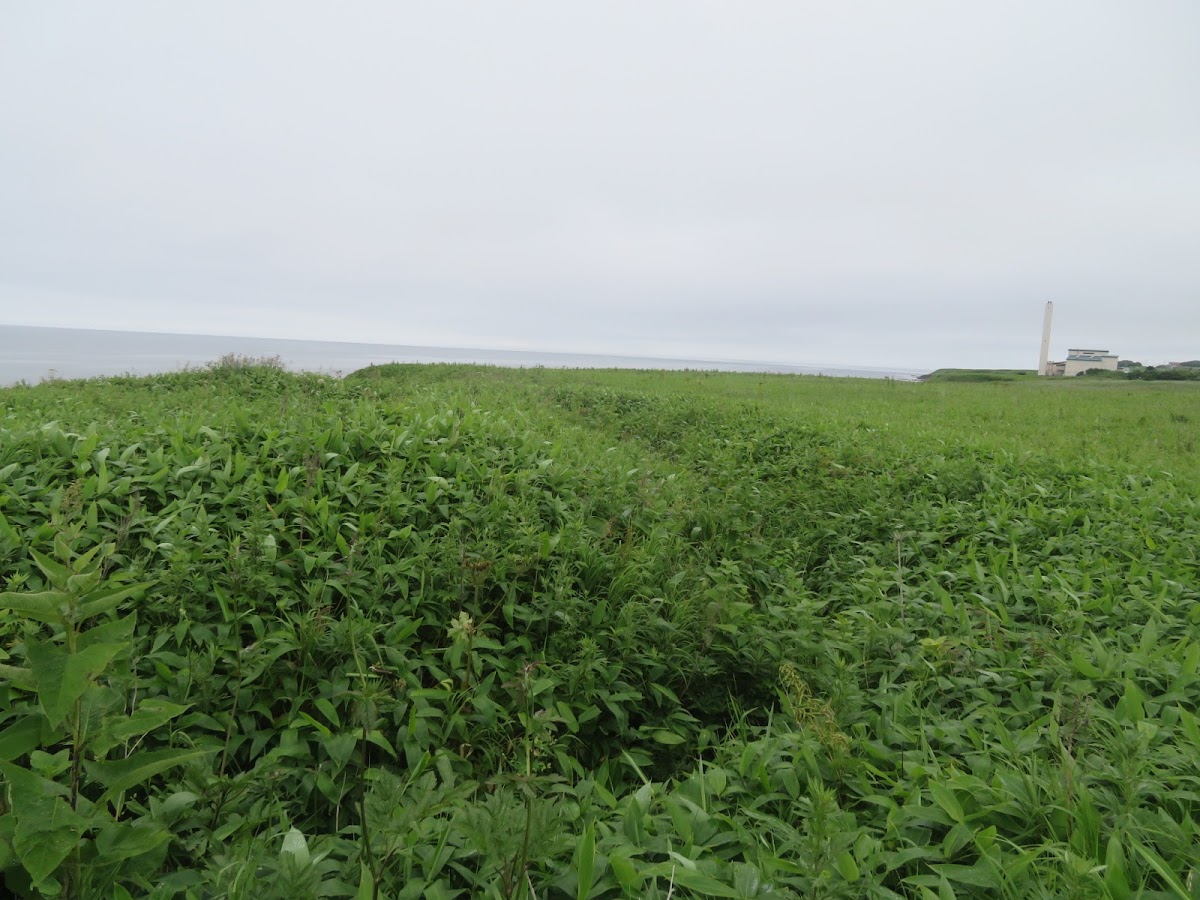
The camp was surrounded by earthworks, with a moat encircling the outside. The earthworks were approximately 2 meters high, and the moat approximately 6 meters wide, functioning as a defensive structure to prevent enemy intrusion. Even today, parts of the earthworks and moat remain in good condition, allowing us to imagine its appearance at the time.
Gates and Entrance
The camp had gates on the east, west, north, and south sides. The south gate, in particular, which served as the main gate, had a masugata entrance (square-shaped entrance) design, a feature designed to prevent direct enemy advances. This structure inherits the tradition of Japanese castle architecture that has continued since the Sengoku period.
Layout of Facilities within the Encampment
Various facilities necessary for security and administration were arranged within the encampment.
Offices and Residences
The encampment magistrate’s office was located in the center, where security was commanded and controlled. Surrounding it were residences for samurai, barracks, and armories. These buildings were made of wood and are thought to have been constructed to withstand the harsh climate of Hokkaido.
Wells and Living Facilities
Several wells were dug within the encampment to secure drinking water. Furthermore, living facilities such as food storage, kitchens, and baths were also provided in preparation for long-term garrisons.
Construction Techniques and Characteristics
The construction of the Nanbu Domain’s Oshamanbe Encampment utilized the traditional civil engineering techniques of the Nanbu Domain.
Fortress Techniques of the Morioka Domain
The Nanbu Domain, which built Morioka Castle, possessed advanced stonework techniques. However, the Oshamanbe encampment primarily utilized earthworks. This is thought to be due to the need for rapid construction and consideration of the harsh winter freezing conditions in Hokkaido.
Utilization of Topography
The encampment was built on a river terrace of the Oshamanbe River, utilizing the natural terrain for defense. The river was used as a natural moat, creating an efficient defensive system.
Nanbu Domain’s Ezo (Hokkaido) Guard Activities
Guard System and Daily Life
The Nanbu Domain guarded a wide area from Muroran to Kuromatsunai, centered around Oshamanbe.
Troop Deployment
Approximately 200 samurai were stationed at the encampment at all times, and detachments were stationed at surrounding guard posts. Guard duty was carried out on a rotating basis, with troops regularly dispatched from Morioka.
Coastal Guard
The main task was monitoring the coastline. The samurai patrolled the coast daily, preparing for the approach of foreign ships. Watchtowers were erected, and the sea was monitored 24 hours a day.
Regional Governance and Development
The Nanbu Domain not only focused on security but also on regional governance and development.
Relationship with the Ainu People
There were Ainu kotan (settlements) around Oshamanbe, and the Nanbu Domain gathered regional information through interaction with the Ainu people. A relationship of mutual dependence was established through trade and the provision of labor.
Industrial Promotion
The domain also strived to promote fishing and forestry. They attempted to cover part of the security costs through the management of salmon and herring fishing and timber harvesting.
Period and End of Security Operations
The Nanbu Domain’s security operations in Oshamanbe lasted for approximately seven years, from 1855 (Ansei 2) to 1862 (Bunkyu 2).
Guard Duty Lifted
In 1862 (Bunkyu 2), due to a change in the shogunate’s policy, the guard duties of the Tohoku domains in Ezo (Hokkaido) were lifted. This was due to the shogunate’s financial difficulties and changes in the domestic situation (the intensification of the Sonno Joi movement). The Nanbu domain withdrew, and its encampment was abolished.
Current Status and Preservation of the Nanbu Domain’s Oshamanbe Encampment
History of Historic Site Designation and Preservation
National Historic Site Designation
On May 1, 1934 (Showa 9), the site of the Nanbu Domain’s Oshamanbe Encampment was designated a national historic site. This was because it was valued as a precious historical site that conveys the history of northern defense during the late Edo period.
Preservation and Development Project
Oshamanbe Town has been working on the preservation and utilization of the historic site. The earthworks and moats have been preserved, information boards have been installed, and walking paths have been developed, creating an environment where visitors can learn about history.
Remains Observed at the Site
Currently, the following remains are found at the Jinya (fortified residence) site:
Earthworks and Moats
The earthworks and moats surrounding the Jinya are the best-preserved remains. The earthworks on the north and east sides, in particular, maintain a height of approximately 2 meters, giving a real sense of the original scale. The moats are also clearly visible, clearly demonstrating their function as defensive structures.
Gate Remains
The remains of gates on all four sides can be identified as topographical features. The southern gate, in particular, retains traces of a square-shaped enclosure, indicating it was the main entrance to the Jinya.
Well Remains
Several well remains remain within the Jinya site. Some are buried, but their locations have been identified and markers have been installed.
Results of Archaeological Excavations
Previous archaeological excavations have revealed the detailed structure of the Jinya.
Confirmation of Building Remains
Based on foundation stones and posthole traces, the layout of buildings such as offices and barracks has been reconstructed. The buildings were primarily simple structures with post-and-beam construction.
Excavated Artifacts
Ceramics, iron products, and coins were unearthed, revealing details about the daily lives of the samurai. Artifacts particularly characteristic of the Nanbu Domain prove that this encampment was indeed operated by the Morioka Domain.
Historical Significance of the Nanbu Domain’s Oshamanbe Encampment
Position in the History of Northern Defense
The Nanbu Domain’s Oshamanbe Encampment holds significant importance in the history of Japan’s northern defense.
National Defense System in the Late Edo Period
This encampment concretely illustrates the national defense challenges faced by Japan on the eve of opening its borders, and the countermeasures taken. The guarding of Ezo (Hokkaido) by the Tohoku domains symbolizes the mobilization system based on the domain, a characteristic of the Edo period military system.
Prehistory of Hokkaido Development
Prior to the full-scale development of Hokkaido after the Meiji Restoration, the guarding activities in the late Edo period laid the foundation for the expansion of Japanese into Hokkaido. The development of the area around the encampment and the construction of roads were carried over to later pioneering projects.
Significance in the History of the Morioka Domain
For the Nanbu Domain, guarding Ezo (Hokkaido) was a significant burden, but it also presented an opportunity to demonstrate the domain’s capabilities.
Financial Burden
Guarding incurred enormous costs, straining the domain’s finances. Dispatching troops, transporting supplies, and maintaining the encampment required several thousand ryo annually, severely impacting the domain’s economy.
Experience of the Samurai
On the other hand, the experience in Ezo provided the samurai with new perspectives. Contact with different cultures, life in undeveloped areas, and practical experience in coastal defense are thought to have influenced the domain’s response during the late Edo and Meiji Restoration periods.
Comparison with Other Ezo Encampments
During the late Edo period, various domains in the Tohoku region built encampments throughout Ezo.
Sendai Domain Shiraoi Jinya
The Jinya (fortified residence) built by the Sendai Domain in Shiraoi was established at the same time as the Nanbu Domain’s Oshamanbe Jinya. The Shiraoi Jinya was larger in scale and planned as a more permanent facility.
Akita Domain Monbetsu Jinya
The Jinya built by the Akita Domain in Monbetsu was also a similar security base. These multiple Jinya worked together to create a system for defending the coastline of Ezo (Hokkaido).
Similarities and Differences
All Jinya were defensive facilities based on earthworks and moats, and their structures were similar. However, there were differences in scale and facilities due to the financial resources and technology of each domain. The Nanbu Domain’s Oshamanbe Jinya represents a standard form as a medium-sized Jinya.
Visitor Guide: Visiting the Oshamanbe Jinya Site of the Nanbu Clan
Access
Public Transportation
- Approximately 15 minutes on foot from Oshamanbe Station on the JR Hakodate Main Line
- Oshamanbe Station is a major station where express trains between Hakodate and Sapporo stop.
By Car
- Approximately 1 km from Oshamanbe town center, along National Route 5
- Parking is available at public facilities near the Jinya site.
Points to Note
Observing the Earthworks
Walk around the Jinya site and check the condition of the earthworks and moats. The northeast area, in particular, is well-preserved, allowing you to appreciate the scale of the defensive facilities at the time.
Checking the Gate Sites
Visit the gate sites on all four sides to understand how the Jinya’s entrances were arranged. The square-shaped structure of the South Gate site is a particularly noteworthy point.
Surrounding Environment
Observing the Oshamanbe River and the surrounding topography from the Jinya (fortified residence) site helps understand why this location was chosen for the Jinya.
Notes for Visitors
- Access to some areas of the historical site, such as earthworks and moats, is restricted for protection.
- While walking paths are maintained, they can be slippery in rainy weather, so caution is advised.
- Visiting may be difficult during winter (November to April) due to snow.
Related Facilities
Oshamanbe Town Local History Museum
Located within walking distance of the Jinya site, it displays materials related to the Nanbu clan’s security and excavated artifacts. Visiting before your visit will give you a deeper understanding of the Jinya’s history.
Oshamanbe Onsen (Hot Springs)
Oshamanbe is also known as a hot spring resort. After visiting the historical site, you can relax and unwind in the hot springs.
Educational Value of the Nanbu Clan Oshamanbe Jinya
Use in School Education
The Nanbu Clan Oshamanbe Jinya site is used in local history education.
Social Studies Field Trips
Elementary and junior high schools in Oshamanbe Town and neighboring areas visit the Jinya site as part of social studies classes to learn about local history and the international situation at the end of the Edo period. Seeing the actual historical site helps solidify textbook knowledge into concrete images.
Local History Learning
Through the history of the Jinya, students learn about the important role their region played in Japanese history, fostering pride in their hometown.
Potential as a Tourism Resource
Historical Tourism Hub
Oshamanbe Town is working to promote historical tourism centered around the Jinya site. It has become a valuable destination for tourists interested in the history of the late Edo period and Hokkaido history.
Collaboration with Wider-Area Tourism
Taking advantage of its location, which allows tourists visiting Hakodate and Sapporo to stop by on their journey, it is positioned as part of a historical tourism route in southern Hokkaido.
Challenges and Prospects for Preservation and Utilization
Current Challenges
Deterioration of Remains
The earthworks and moats are gradually deteriorating due to natural weathering. Regular preservation and maintenance are necessary, but financial constraints remain a challenge.
Improving Recognition
Despite being a nationally designated historical site, its nationwide recognition is not high. Strengthening information dissemination is needed.
Future Prospects
Utilization of Digital Technology
Attempts are being considered to recreate the appearance of the Jinya (fortified residence) as it was at the time, using AR (augmented reality) and VR (virtual reality) technologies. If visitors can see the buildings and figures of the samurai as they were in the past through smartphones and tablets, the historical site will become even more appealing.
Development of Experiential Programs
The development of participatory programs, such as events to experience life at the Jinya and workshops to learn about security activities during the late Edo period, is anticipated.
Deepening Research
Further excavations and documentary research are expected to reveal more about the detailed structure of the Jinya and the actual security activities. Analysis of historical documents from the Nanbu Domain may uncover new historical facts.
Summary: The Nanbu Domain’s Oshamanbe Jinya Tells Memories of the Late Edo Period
The Nanbu Domain’s Oshamanbe Jinya is a valuable historical site that conveys the international crisis Japan faced at the end of the Edo period and its response. The history of the Shogunate and various domains cooperating to defend the northern border against the external pressure of Russia’s southward expansion symbolizes the eve of Japan’s modernization.
The fact that samurai from the Morioka Domain left their hometowns to engage in guard duties in the harsh land of Hokkaido speaks to the sense of responsibility and dedication of the samurai of that time. At the same time, this guard activity placed a heavy burden on the domain’s finances, demonstrating the limitations of the shogunate system.
Today, the earthworks and moats of the jinya site, standing quietly, are the footprints of people who lived through a turbulent era. By visiting this historical site, we can feel a living history that cannot be learned from textbooks.
The remains of the Nanbu clan’s Oshamanbe encampment in Oshamanbe town are a source of local pride and, as a historical heritage site for all of Japan, an important cultural asset that should be passed down to future generations. When you visit Hokkaido, why not stop by this small historical site and reflect on the defense of the northern frontier during the late Edo period?