Kamuy Chashi Historical Park (Toyoura Town, Hokkaido) Complete Guide | A Journey Through Ainu Cultural Heritage and Breathtaking Scenery
Located along the coast of Toyoura Town, Hokkaido, Kamuy Chashi Historical Park is a valuable historical site that conveys the history and culture of the Ainu people. Situated on a hill overlooking Uchiura Bay (Funka Bay), the park, centered around the remains of a chashi (fortress) that once functioned as a “fortress of the gods,” is attracting attention as one of Hokkaido’s leading tourist spots where visitors can enjoy both historical romance and breathtaking scenery.
This article comprehensively introduces information you should know before visiting Kamuy Chashi Historical Park, including its historical value, highlights, access methods, and surrounding tourist information.
What is Kamuy Chashi? Meaning in Ainu and Historical Background
Etymology and Meaning of “Kamuy Chashi” in Ainu
The name “Kamuy Chashi” comes from the Ainu words “kamuy” meaning “god” and “chashi” meaning “fortress” or “fence.” A direct translation would be “Fortress of the Gods,” indicating that this land was sacred to the Ainu people.
The Ainu people believed that gods (kamuy) resided in nature, and high ground and capes with good views were considered particularly important locations, both spiritually and strategically. Kamuy Chashi is a prime example of such a place.
What is a Chashi? Characteristics of Ezo-style forts
A chashi is a term referring to defensive structures and ceremonial sites built by the Ainu people. Over 500 chashi sites have been identified throughout Hokkaido, and their forms and uses are diverse. The main classifications are as follows:
- Hilltop Chashi: Utilizing the tip of a cape or hill (Kamui Chashi is of this type)
- Climbtop Chashi: Built on the top of a hill
- Flatland Chashi: Built by digging a trench in flatland
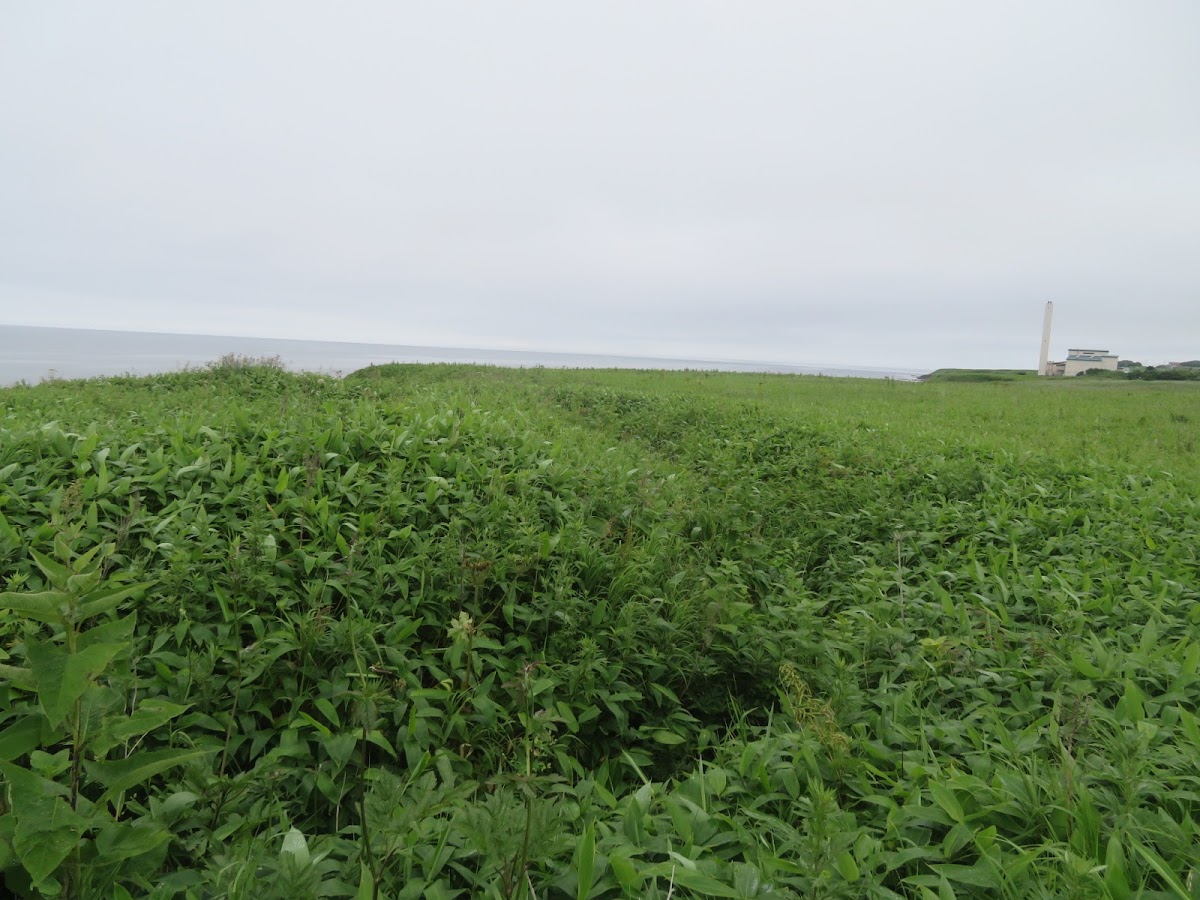
Kamui Chashi is a typical hilltop chashi built on the tip of Chatsuzaki, which juts out into Uchiura Bay, cleverly utilizing the terrain surrounded by the sea on three sides. A trench measuring 16m long, 5m wide, and 3m deep was dug on the landward side, clearly indicating its defensive function.
Historical Role of Kamui Chashi
Unfortunately, detailed records do not exist regarding when, by whom, and for what purpose Kamui Chashi was built. However, its location and structure suggest the following uses:
- Watchtower/Surveillance Function: Monitoring ships navigating Uchiura Bay and movements on the opposite shore
- Defense Base: A fort built to defend against attacks from external enemies
- Ritual Site: A place for performing sacred ceremonies
- Trading Hub: A key point for maritime traffic
It is believed that the construction of Chashi (fortified settlements) flourished particularly during the 15th to 17th centuries, a period of intense trade and conflict with the Japanese. Kamuy Chashi likely played a significant role within this historical context.
Highlights of Kamuy Chashi Historical Park
Experience Climbing 135 Steps
A visit to Kamuy Chashi Historical Park begins with climbing 135 steps from the parking lot. Each step is well-maintained, and slowly ascending them allows you to reflect on the hardships and aspirations of the Ainu people who once protected this land.
Along the way up the stairs, you can observe the surrounding natural environment. The experience of climbing while engaging all five senses—the vegetation that changes with the seasons, the sound of the sea breeze, the chirping of birds—is a luxurious time that cannot be experienced in urban areas.
Even those who are not confident in their physical strength can climb without difficulty by taking breaks along the way. At the top of the stairs, a breathtaking view awaits, making you forget the effort.
Ainu Architectural Techniques as Seen in the Remains of a Moat
The most noteworthy historical site in the park is the remains of a moat, 16 meters long, 5 meters wide, and 3 meters deep. This moat was dug to prevent intrusion from the land, demonstrating the high level of civil engineering technology of the time.
Digging a moat of this size in an era when metal tools were limited required extraordinary effort. Built using wooden tools and stone implements, and constructed over a long period of time and with many people, this moat is a testament to the organizational strength and technical skills of the Ainu people.
Even today, the shape of the moat remains clearly visible, and seeing its depth and width firsthand allows you to appreciate its function as a defensive structure. ### Spectacular Views from the Observation Deck Overlooking Funka Bay
The greatest attraction of Kamuy Chashi Historical Park is the panoramic view of Funka Bay from the observation deck. On a clear day, the horizon of Uchiura Bay stretches out before you, and you can see as far as the mountains on the opposite shore.
Scenic Spots:
- Daytime View: The contrast between the sparkling blue sea and sky is beautiful.
- Sunset: The horizon, dyed orange, is breathtakingly beautiful.
- On a Clear Day: You can even see distant mountains such as Mt. Komagatake and Mt. Usu.
Wooden walkways and gazebos are provided, allowing you to enjoy the scenery at your leisure. Combined with its atmospheric location on a hilltop, it gives visitors a quiet sense of awe.
Attractiveness as a Railway Photography Spot
Kamui Chashi Historical Park is actually a popular spot among railway enthusiasts, especially “railway photographers.” The Hakodate Main Line runs below the park, making it an excellent location for photographing the coastline and trains simultaneously.
From the elevated vantage point, you can capture trains running against the backdrop of the blue sea, offering different perspectives depending on the season and time of day. Many enthusiasts visit specifically to coincide with the passing of express trains, enjoying the unique scenery where history, nature, and modern transportation merge.
Value as a Nationally Designated Cultural Property “Pirikanoka”
What is Pirikanoka?
“Pirikanoka” is an Ainu word meaning “beautiful form,” and it is a collective term for a group of cultural properties designated as part of the “Space Symbolizing Ethnic Coexistence to Promote the Revival of Ainu Culture,” a project initiated by the Agency for Cultural Affairs in 2017.
Kamuychashi Historical Park is one of the valuable historical sites designated as “Pirikanoka.” This designation recognizes the importance of its preservation and utilization by the nation, and it is expected to play a role as a base for passing on Ainu culture to future generations.
The Most Remaining Original Chashi Site in Southern Hokkaido
The remarkable feature of Kamuy Chashi is that its original form as a chashi (fortified settlement) has been preserved almost entirely. While many chashi sites have been lost or significantly altered due to development and natural erosion, Kamuy Chashi retains the shape of its moat and overall topography as it was in the past.
Therefore, it has extremely high archaeological and historical value and is an important resource for Ainu cultural research. By actually visiting the site, you can experience firsthand the lives and strategies of the people of that time, something that cannot be learned from textbooks or documents.
Access to Kamuy Chashi Historical Park
Location and Basic Information
Address: Rebunka, Toyoura-cho, Abuta-gun, Hokkaido
Opening Hours: Open 24 hours (however, nighttime visits are not recommended for safety reasons)
Admission Fee: Free
Parking: Available (Free)
Access by Car
The most convenient way to access Kamuy Chashi Historical Park is by car.
- From Sapporo: Approximately 2 hours via National Routes 230 and 276
- From Hakodate: Approximately 2 hours and 30 minutes via National Routes 5 and 37
- From Toyako Onsen: Approximately 30 minutes via National Route 37
There are signs along National Route 37; follow the road towards the sea from there to reach the parking lot. The parking lot is not large, but it is usually not crowded.
Access by Public Transportation
If using public transportation, the nearest station is Rebun Station on the JR Hakodate Main Line.
- From Rebun Station: Approximately 15-20 minutes on foot
Walk from the station towards the coast, cross National Route 37, and continue towards the sea. However, since this line has infrequent service, it is recommended to check the timetable in advance.
Points to Note When Visiting
- Attire: Comfortable clothing and walking shoes are essential as you will be climbing stairs.
- Weather: Due to its coastal location, it is often windy; bringing a light jacket or cardigan is recommended.
- Season: Snow and ice are possible during winter; caution is advised when visiting.
- Restrooms: There are no restrooms in the park; it is recommended to use the facilities beforehand.
Combination Plans with Nearby Tourist Attractions
Tourist Attractions in Toyoura Town
When visiting Kamuy Chashi Historical Park, we recommend also visiting other tourist attractions in Toyoura Town.
Specialties of Toyoura Town:
- Toyoura Strawberries: Known as one of Hokkaido’s leading strawberry-producing areas, strawberry picking is available from June to July.
- Scallops: Fresh scallops raised in Funka Bay are exquisite.
- Pork: Toyoura Town is also a thriving pig farming area, and “Toyoura Black Pork” is famous.
Collaboration with Toyako-Usu Geopark
Kamui Chashi Historical Park is located within the Toyako-Usu Geopark area. A geopark is an initiative that utilizes geologically valuable natural heritage for protection, education, and tourism. The Toyako-Usu Geopark was the first in Japan to be certified as a World Geopark in 2009.
Nearby Geopark Spots:
- Lake Toya: A beautiful caldera lake and hot spring resort town
- Mount Usu: A powerful landscape as an active volcano
- Showa Shinzan: A new mountain formed by the 1943 eruption
By combining these spots, you can create a fulfilling travel plan that allows you to deeply understand Hokkaido’s nature and history from both Ainu culture and geological perspectives.
Recommended Sightseeing Routes
Day Trip Plan:
- Morning: Depart from Toyako Onsen
- 10:00: Visit Kamuy Chashi Historical Park (1-hour stay)
- 11:30: Seafood lunch in Toyoura Town
- 13:00: Strawberry picking at Toyoura Strawberry Farm (seasonal)
- 15:00: Cafe time by Lake Toya
- 16:30: Return home
1-Night, 2-Day Plan:
Day 1: Stay at Toyako Onsen and visit Mt. Usu and Showa Shinzan
Day 2: Visit Kamuy Chashi Historical Park in the morning, purchase local products from Toyoura Town, and return home
Visitor Reviews and Experiences
Evaluation of the Beauty of the Scenery
Many visitors praise the view of Funka Bay from Kamuy Chashi Historical Park. The beauty of the site, especially at sunset, is often described with phrases like “moving” and “breathtaking,” and it has become a representative tourist spot in Toyoura Town.
Many reviews mention its “scenic location along the coast” and “perfect for drives and dates,” making it a popular spot for couples and families.
Interest in Historical Value
Visitors interested in history and culture have commented that it is “a valuable place to experience Ainu culture” and that “seeing the remains of the caves allowed me to imagine the lives of the people at that time.”
In particular, those who understand the value of this historical site, which remains in its original form, have given it praise such as “the finest Chashi (fortified settlement) site in southern Hokkaido” and “I was surprised by its excellent state of preservation.”
Points to Note When Visiting (Based on Personal Experience)
On the other hand, many visitors advise bringing a jacket or cardigan because “it can be windy,” and “the stairs are long and steep, so those without physical stamina should be careful.”
Regarding winter, some say that “the view is spectacular on sunny days outside of winter,” indicating that choosing the right time to visit is important.
Learning about Ainu Culture at Kamuy Chashi Historical Park
History and Culture of the Ainu People
The Ainu people were an indigenous people who inhabited Hokkaido, Sakhalin, the Kuril Islands, and northern Honshu. They possessed their own language (Ainu), culture, and religion, and built a lifestyle in harmony with nature.
Visiting historical sites like Kamuy Chashi is a valuable opportunity to learn about the history and culture of the Ainu people. It is valuable not only as a tourist spot, but also as an educational place to understand Japan’s diverse cultural background.
Ainu Social Structure as Seen from Chashi
The existence of Chashi indicates that Ainu society was not simply a hunter-gatherer society, but possessed a certain level of organization and social structure. To build and maintain defensive structures, the following social functions were necessary:
- Leadership and decision-making mechanisms
- Organization and mobilization of labor
- Transmission and sharing of technology
- Interaction with the outside world and response to conflict
Kamuy Chashi provides important evidence of the existence of such a society.
Ainu Culture in the Modern Age
In 2020, the “Upopoy (National Ainu Museum and Park)” opened in Shiraoi Town, Hokkaido, accelerating efforts to revive and pass on Ainu culture. Historical sites like Kamuychashi Historical Park are important resources that form the foundation of such cultural revival.
Deepening each visitor’s understanding of Ainu culture will lead to its transmission and development.
Summary: The Charm of Kamuychashi Historical Park
Kamuychashi Historical Park is a valuable historical site that conveys the history and culture of the Ainu people to the present day, and at the same time, it is one of Hokkaido’s leading tourist spots where you can enjoy the spectacular view of Funka Bay.
Reasons to Visit:
- Historical Value: The finest preserved Chashi (fortified settlement) site in southern Hokkaido, featuring the nationally designated cultural property “Pirikanoka.”
- Spectacular Views: A panoramic view of Funka Bay from the observation deck, especially beautiful at sunset.
- Easy Access: As part of the Toyako-Usu Geopark, it’s easy to combine with other nearby sightseeing.
- Educational Value: An opportunity to learn about and deepen your understanding of Ainu culture.
- Free to Visit: Free admission makes it easy to visit.
Climbing the 135 steps one by one and standing in the place once called the “Fortress of the Gods” allows visitors to simultaneously feel the weight of history and the beauty of nature. When visiting Hokkaido, be sure to include Kamuy Chashi Historical Park in your itinerary and experience the spirit of Ainu culture and the spectacular views of Funka Bay.
Kamuychashi Historical Park is a fascinating place that won’t disappoint, whether you’re visiting Toyoura Town or the Lake Toya area, or as a destination for those interested in Ainu culture and Hokkaido’s history. Enjoy a special time immersed in history and nature at this atmospheric park perched on a hill.