Nagaiwa Castle (Oita Prefecture) Complete Guide | History, Remains, and Access Information for Kyushu’s Oldest Mountain Castle
What is Nagaiwa Castle?
Nagaiwa Castle is a medieval mountain castle site located in Kawaraguchi, Yamakage-machi, Nakatsu City, Oita Prefecture. Built on Mt. Ogiyama (530 meters above sea level) and its surrounding peaks, near the border with Fukuoka Prefecture, it is a large-scale mountain castle designated as an Oita Prefecture Historic Site.
Founded in 1198 by Nonaka Shigefusa, the first head of the Nonaka clan, it served as the residence of 22 generations of the Nonaka clan, a powerful family that ruled Shimoge District for 390 years. Until its capture by Kuroda Nagamasa’s large army in 1588, it underwent repeated expansions and renovations throughout the Nanboku-cho and Sengoku periods, developing into one of Kyushu’s largest and most complex mountain castles.
What is particularly noteworthy is its structure, which makes extensive use of stone walls and ramparts. Many unique defensive structures remain, such as stone towers with gunports and ascending stone walls, earning it the nickname “Unusual Castle.” It is highly regarded by castle enthusiasts and historians as an extremely important historical site in the study of medieval mountain castles.
History of Nagaiwa Castle
Establishment of the Nonaka Clan and Construction of Nagaiwa Castle
The history of Nagaiwa Castle dates back to the early Kamakura period, specifically to Kenkyu 9 (1198). It began when Nonaka Shigefusa, the younger brother of Utsunomiya Nobufusa, the governor of Buzen Province, was granted Nonaka-go in Shimoge District (present-day Yamakage-cho, Nakatsu City), and adopted the name Nonaka.
Shigefusa built a castle on Ogiyama in Kawaraguchi, which became the origin of Nagaiwa Castle. Initially, it is believed to have been a relatively simple mountain castle, but as the Nonaka clan expanded its power as a powerful local family, the castle was also expanded.
Expansion and Renovation during the Nanboku-cho Period
During the Nanboku-cho period (14th century), fierce battles were fought in Kyushu. The Nonaka clan sided with the Southern Court and significantly strengthened the defensive capabilities of Nagaiwa Castle in preparation for battle against the Northern Court forces. It is believed that basic defensive facilities such as stone walls and moats around the main keep were constructed during this period.
Having survived the turmoil of the Nanboku-cho period, the Nonaka clan established themselves as a powerful local family in Buzen Province, and Nagaiwa Castle became increasingly important as a base for controlling Shimoge District.
Development during the Sengoku Period
With the arrival of the Sengoku period, Nagaiwa Castle underwent further large-scale expansion and renovation. To cope with the development of firearms, the latest castle-building techniques of the time were introduced, such as the installation of gunports in stone towers and the construction of gun emplacements.
Particularly noteworthy is the presence of “climbing stone walls.” This is a valuable historical site demonstrating the possibility that a technique of building stone walls along mountain slopes, a technique believed to have become widespread after Toyotomi Hideyoshi’s invasion of Korea, may have been used even before that time.
The Nonaka clan ruled this area for 390 years, spanning 22 generations, and through continuous improvements, Nagaiwa Castle grew into one of the most formidable mountain castles in Kyushu.
Battles with the Kuroda Clan and the Fall of the Castle
In 1587, following Toyotomi Hideyoshi’s conquest of Kyushu, Kuroda Yoshitaka (Kanbei) was granted a domain of 120,000 koku in Buzen Province. Initially, the Nonaka clan showed a willingness to submit to the Kuroda clan, but when Utsunomiya Shizufusa (Shiroi clan), another powerful local lord in Buzen, rebelled against the Kuroda clan, the Nonaka clan also joined him.
In 1588, a large army of 3,500 men led by Kuroda Nagamasa besieged Nagaiwa Castle. Lord Nonaka Shigekane relied on the castle’s strength and waged a siege, but due to the overwhelming difference in troop numbers and the prolonged siege, the castle finally fell.
This battle marked the end of the Nonaka clan, bringing to a close the 390-year history of Nagaiwa Castle. Afterward, Nagaiwa Castle was abandoned and never used throughout the Edo period.
Structure and Remains of Nagaiwa Castle
Overall Structure
Nagaiwa Castle is a large-scale, multi-bailey mountain castle built around Mount Ogiyama (530 meters above sea level), utilizing multiple spurs and valleys. The main area alone boasts a vast layout, approximately 600 meters east-west and 400 meters north-south, with numerous baileys.
The castle is broadly divided into areas such as the main castle (the central bailey), the outer baileys, and the remains of the encampment, each separated by moats and trenches. By skillfully utilizing the mountainous terrain and strategically placing stone ramparts and walls, multiple lines of defense were constructed against attackers.
Main Enclosure and Stone Ramp
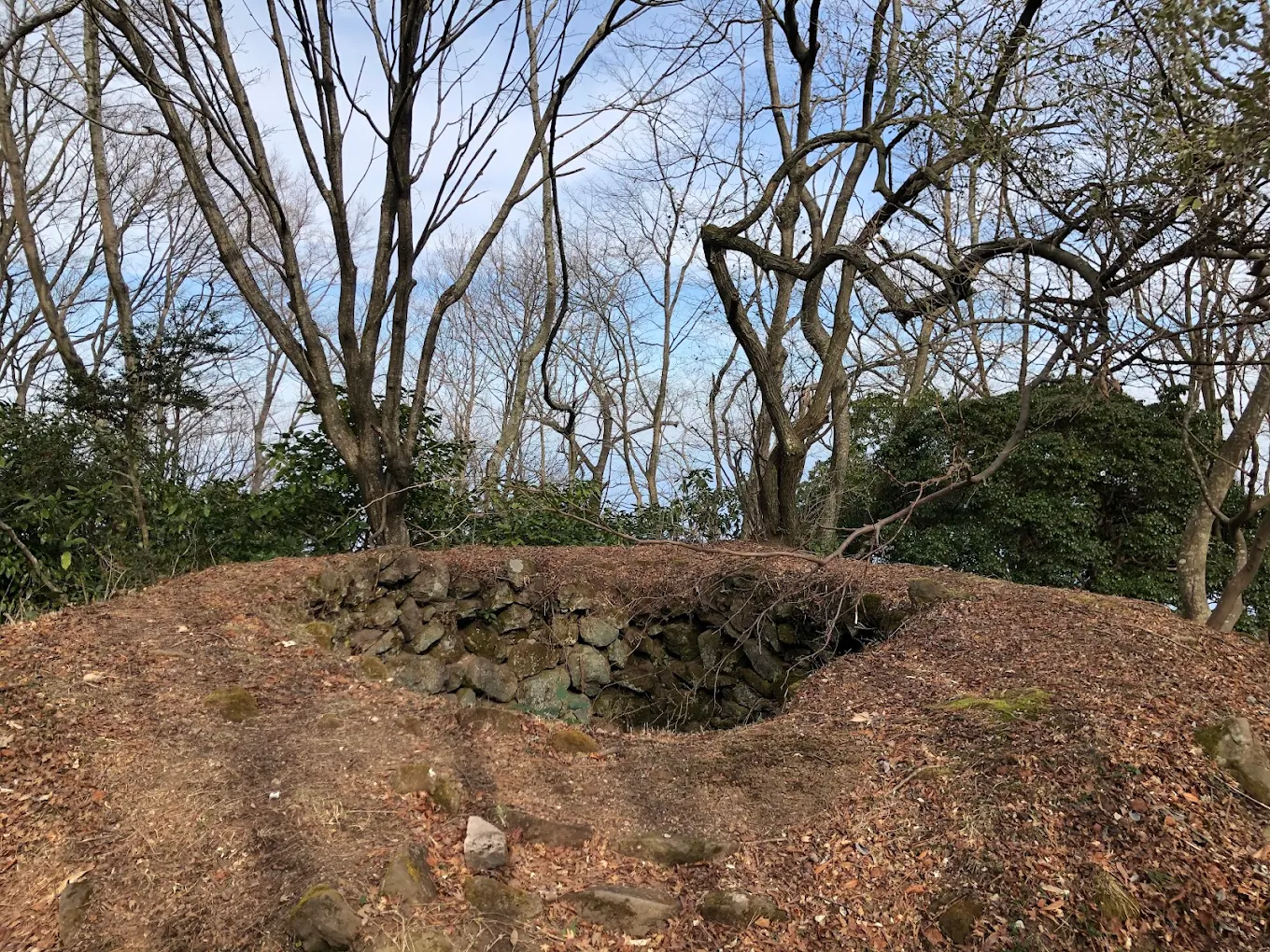
The main enclosure (honmaru), the heart of Nagaiwa Castle, is located on the summit of Mount Ogiyama. On the north side of the main enclosure, a stone rampart several meters high is constructed; its scale and technology are exceptional for a medieval mountain castle.
The stone rampart was constructed by artificially stacking stones while utilizing the natural bedrock, and stone paving was laid in the gaps of the rock face. It is believed that this stone rampart served not only a defensive function but also a symbolic role in demonstrating the castle’s grandeur.
From the main enclosure, one can see the surrounding mountains and valleys, making it an excellent position for early detection of enemy movements.
Stone Turrets and Gunports
One of the most distinctive features of Nagaiwa Castle is its stone turrets (ishizumi yagura). Oval and arch-shaped gun emplacements were constructed on top of sheer cliffs, and their stonework was equipped with gunports (holes for firing guns).
Such stone turrets with gunports are extremely rare in medieval mountain castles, demonstrating advanced fortification techniques adapted to the age of firearms. The shape of the gun emplacements was also carefully calculated, ensuring a wide field of fire while being difficult to defend against enemy attacks.
Ascending Stone Walls
Another noteworthy feature of Nagaiwa Castle is the “ascending stone walls.” This technique involves constructing stone walls that ascend the mountain slope, serving to prevent attacks from the enemy’s flanks and ensuring communication between enclosures.
While ascending stone walls are generally considered a technique that became widespread after Toyotomi Hideyoshi’s invasion of Korea (1592-), the ascending stone walls at Nagaiwa Castle may have existed even earlier, making them important historical documents in the history of fortification technology.
Ichino-kido Gate and Defensive Structures
A gate called “Ichino-kido” (first gate) is located at the main entrance to the castle. This gate is fortified with stonework, effectively preventing intruders from entering.
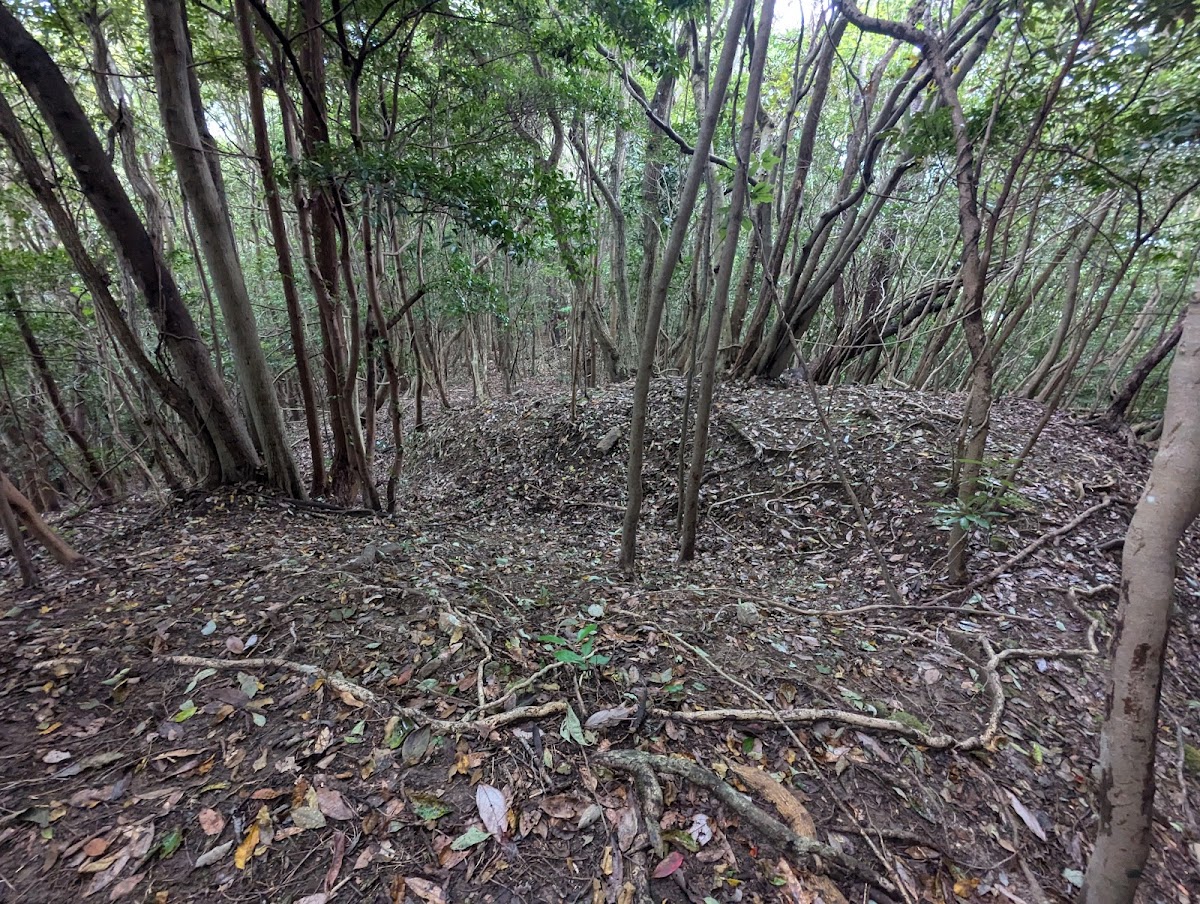
Numerous trenches and vertical moats are dug around the gate to hinder enemy attacks. The trenches, in particular, are deep and sharp, serving to divide enemy forces advancing along the ridges.
Outworks and Fortification Sites
Several outworks are positioned around the main castle. These functioned as forward bases protecting the main castle, playing a role in detecting and intercepting enemy attacks early.
The fortification site is believed to be where castle soldiers were stationed during peacetime, and consists of a series of relatively flat enclosures. Traces of stone and earthworks can be seen here, suggesting that daily defensive measures were not neglected.
Water Sources and Living Facilities
One of the most important facilities in a mountain castle is a water source. Nagaiwa Castle has traces of multiple wells and water storage facilities, indicating that water was secured in preparation for a long siege.
Furthermore, a flat area within the castle grounds is believed to be the site of buildings, suggesting the location of living facilities such as warehouses and barracks.
Cultural Value of Nagaiwa Castle
Oita Prefecture Designated Historic Site
The Nagaiwa Castle ruins have been designated an Oita Prefecture Designated Historic Site in recognition of their historical and academic value. As a representative example of a medieval mountain castle in Kyushu, and as a valuable historical site conveying the 390-year history of the Nonaka clan, efforts are being made to preserve and utilize it.
Importance in Medieval Mountain Castle Research
Nagaiwa Castle occupies an extremely important position in the research of medieval mountain castles. The castle is particularly highly valued academically for the following reasons:
- Stone Wall and Stone Fortification Techniques: Despite being a medieval mountain castle, it employs large-scale stonework techniques.
- Existence of Ascending Stone Walls: A valuable example suggesting the possibility of ascending stone walls predating the Korean invasions.
- Stone Turret with Gunports: An advanced defensive structure demonstrating adaptation to the firearms age.
- Evidence of Long-Term Use: The remains reveal the process of expansion and renovation over 390 years.
Due to these characteristics, Nagaiwa Castle is also known as a “unique castle” and attracts considerable interest among castle researchers.
Significance in Local History
Nagaiwa Castle is an important historical site that illustrates the reality of medieval regional governance in Shimoge District, Buzen Province. It provides valuable evidence of how the Nonaka clan, a local powerful family, ruled the region and maintained their power over a long period.
Access Information to Nagaiwa Castle
Location
Address: Kawaraguchi, Yamakage-machi, Nakatsu City, Oita Prefecture
Nagaiwa Castle ruins are located in the mountains of Yamakage-machi, in the southern part of Nakatsu City. It is close to the border with Fukuoka Prefecture and situated in a naturally rich mountainous area.
Access by Public Transportation
From JR Nakatsu Station:
- Take the Oita Kotsu Hokubu Bus bound for “Kakisaka” or “Morizumi Onsen” (approximately 90 minutes)
- Get off at the “Kawaraguchi” bus stop and walk approximately 40 minutes to the castle entrance.
*Since the number of buses is limited, it is recommended to check the timetable in advance.
Access by Private Car
From Nakatsu City:
- Head south on National Route 212 for approximately 30km (about 40 minutes)
- To Kawaraguchi area, Yabakei Town
Parking:
- There are several parking spaces near the castle entrance (unpaved)
- Access for large vehicles is difficult
About Climbing the Castle
Climbing Time: Approximately 60-90 minutes one way (varies depending on physical fitness and experience)
Difficulty Level: For advanced climbers (serious mountain castle climbing)
Precautions:
- Serious mountain climbing equipment is necessary (hiking boots, gloves, drinking water, etc.)
- There are many steep slopes and rocky areas, and dangerous spots
- Extra caution is needed during rainy weather and winter
- Avoid climbing alone; group climbing is recommended
- Beware of wild animals such as bears
- There are areas where cell phone signals are weak
Points to Note When Visiting
Estimated Time Required: Approximately 3-4 hours round trip (including time spent viewing the ruins)
Best Season: Spring (April-May), Autumn (October-November)
Attire: Long-sleeved shirt, long pants, hat, and hiking boots are essential
Items to Bring: Drinking water, snacks, map, compass, first-aid kit, bear bell
Precautions When Visiting Nagaiwa Castle
Safety Precautions
Nagaiwa Castle is a full-fledged mountain castle that remains in its natural state, untouched by tourism. Therefore, appropriate preparation and caution are necessary when visiting.
Dangerous Areas:
- Numerous sheer cliffs and precipices
- Unstable footing around stone ramparts
- Risk of slipping and falling on steep slopes
- Possibility of fallen trees and rockfalls
Recommendations:
- Accompany someone experienced in exploring mountain castles
- Conduct physical training beforehand
- Check the weather (avoid rainy or windy conditions)
- Inform family and friends of your destination
- Plan with ample time to spare
Request for Protection of Historical Remains
Nagaiwa Castle Ruins are a valuable cultural asset. Please cooperate with the following points when visiting:
- Do not climb on stone walls or ramparts
- Do not damage the ruins
- Always take your trash with you
- Do not collect plants
- Do not enter areas other than designated routes
Choosing the Right Time to Visit
Times to Avoid:
- Rainy Season (June-July): Slippery and dangerous
- Mid-Summer (July-August): Risk of heatstroke, dense undergrowth
- Snowy Season (December-February): Extremely dangerous due to freezing and snow cover
Recommended Time:
- Spring (April-May): Beautiful fresh greenery, stable weather
- Autumn (October-November): Stunning autumn foliage, less dense undergrowth
Nearby Tourist Attractions
Yabakei
Yabakei Town, where Nagaiwa Castle is located, is the heart of Yabakei, one of Japan’s three great scenic spots. Scenic spots known for their unique rock formations and autumn foliage, such as Kyoshuho and Hitome Hakkei, are scattered throughout the area.
Aonodomon (Blue Grotto)
A representative tourist attraction of Yabakei. This tunnel, said to have been dug over 30 years by the Edo period monk Zenkai, is designated a national historical site. Approximately 20 minutes by car from Nagaiwa Castle.
Nakatsu Castle
A flatland castle built by Kuroda Yoshitaka (Kanbei), and the base of the Kuroda clan who captured Nagaiwa Castle. Located in the city of Nakatsu, the castle tower (reconstructed) and stone walls can be viewed. Visiting in comparison to the history of Nagaiwa Castle would be interesting.
Rakanji Temple
A famous temple in Yabakei, and one of Japan’s three great temples with 500 Arhats. The 500 Arhats statues enshrined in a cave are breathtaking. Approximately 15 minutes by car from Nagaiwa Castle.
The Charm of Nagaiwa Castle
Uniqueness as a “Strange Castle”
Nagaiwa Castle is called a “strange castle” because of its unique structure. It boasts a complex array of distinctive remains not found in other medieval mountain castles, including stone ramparts, climbing stone walls, and stone turrets with gunports, making it a castle that embodies the pinnacle of castle-building technology.
Historical Romance
The castle’s history, as the residence of the Nonaka clan for 390 years and 22 generations, tells the story of the rise and fall of local powerful families. Although it ultimately succumbed to the large army of Kuroda Nagamasa, its formidable defenses suggest fierce battles were fought there.
Harmony with Nature
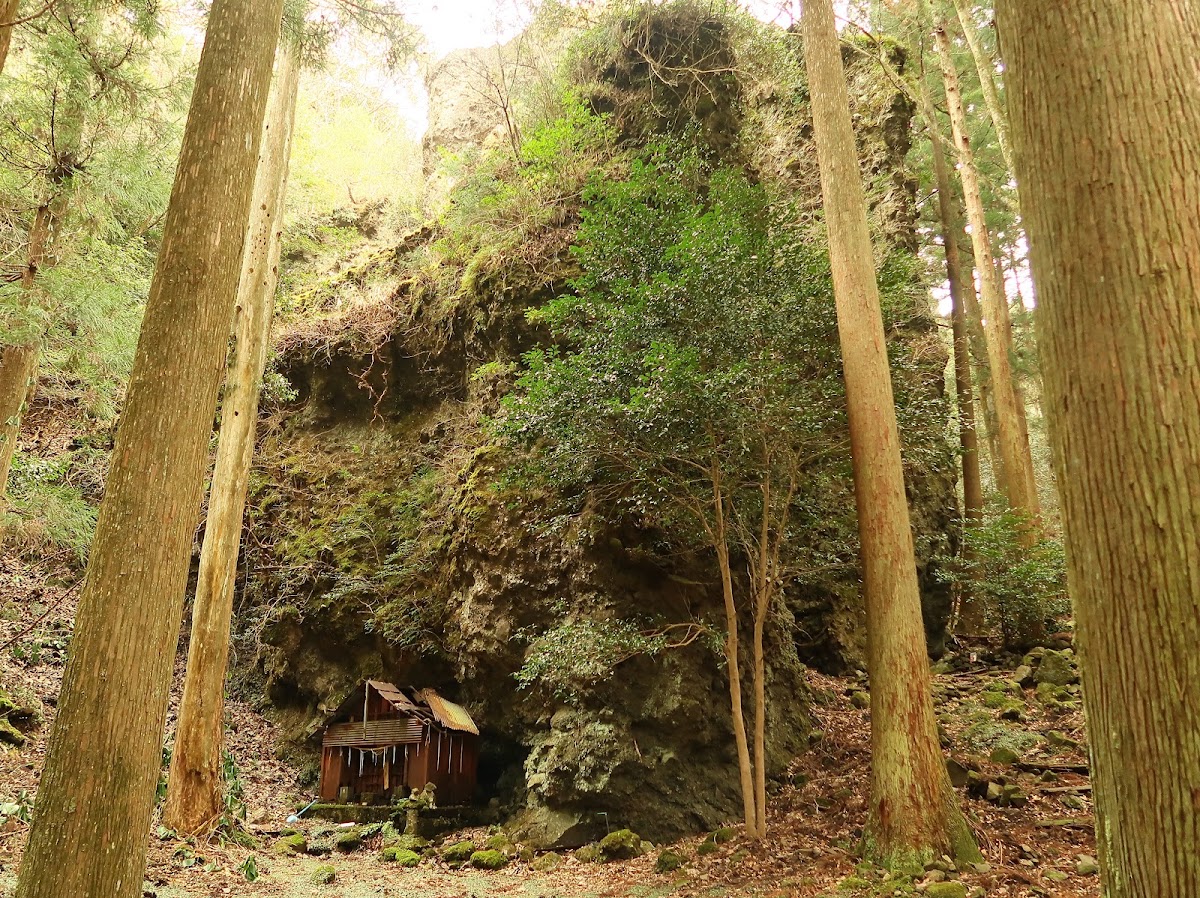
Nagaiwa Castle is a mountain castle that makes maximum use of the natural terrain. By combining natural strongholds such as bedrock, steep slopes, and valleys with artificial defensive structures, it achieved an impregnable fortress. Exploring the remains allows one to appreciate the wisdom and ingenuity of the medieval castle builders.
A Mountain Castle Experience with a Sense of Accomplishment
Climbing Nagaiwa Castle is by no means easy, but that’s precisely why the sense of accomplishment upon reaching the summit is exceptional. The experience of climbing the steep slopes while sweating, touching the stone walls, and gazing out at the surrounding mountains from the main keep will be an invaluable one for castle enthusiasts.
Summary
Nagaiwa Castle (Nakatsu City, Oita Prefecture) is one of the oldest mountain castles in Kyushu, built in 1198 by Nonaka Shigefusa and serving as the residence of 22 generations of the Nonaka clan for 390 years. Built on Mt. Ogiyama at an altitude of 530 meters, it is a large-scale, multi-bailey mountain castle, and is also known as a “strange castle” due to its unique remains, including stone walls, climbing stone walls, and stone turrets with gunports.
Until its fall in 1588 to Kuroda Nagamasa’s large army, Nagaiwa Castle underwent repeated expansions and renovations throughout the Nanboku-cho and Sengoku periods, developing into a castle of exceptional scale and complexity for a medieval mountain castle. Currently protected as a designated historical site of Oita Prefecture, it is highly valued as an extremely important site in the study of medieval mountain castles.
Visiting the castle requires proper mountaineering equipment and a certain level of physical fitness, but it offers a great sense of accomplishment and a fascinating glimpse into history. Please take sufficient safety precautions and experience the magnificent remains of Nagaiwa Castle, which bears the marks of 390 years of history.