Complete Guide to Tsuyama Castle | A Thorough Explanation of History, Highlights, Access, and Cherry Blossom Spots
Tsuyama Castle (Tsuyama-jo), located in Tsuyama City, Okayama Prefecture, is one of Japan’s 100 Famous Castles and is a flatland castle also known as “Kakuzan Castle.” Built over 13 years by Mori Tadamasa, the youngest brother of Mori Ranmaru (who perished with Oda Nobunaga in the Honnoji Incident), this magnificent castle is known as a masterpiece showcasing the pinnacle of early modern castle construction technology. Currently, it is maintained as Kakuzan Park and attracts many tourists as a cherry blossom viewing spot, selected as one of “Japan’s 100 Best Cherry Blossom Spots.”
History of Tsuyama Castle
From Kakuzan Castle to Tsuyama Castle: Pre-Construction History
On Kakuzan, where Tsuyama Castle was built, the Yamanaka clan had already constructed Kakuzan Castle during the Muromachi period. Built on a hill approximately 50 meters high, this castle was abandoned during the turmoil of the Ōnin-Bunmei War (1467-1477) and remained in ruins for a long time.
Construction by Mori Tadamasa
Mori Tadamasa, who distinguished himself in the Battle of Sekigahara (1600) fighting on the Eastern Army’s side, was appointed lord of Tsuyama in 1603 (Keichō 8) as the lord of Mimasaka Province with a domain of 186,500 koku. Mori Tadamasa was the youngest brother of Mori Ranmaru, who died in the Honnō-ji Incident, and a warrior descended from the Mori family, known as favored retainers of Oda Nobunaga.
Tadamasa renamed Tsuruyama to “Tsuyama” and began construction in 1604 (Keichō 9). It took approximately 13 years to complete, and the magnificent modern castle was finally finished in 1616 (Genna 2). This year, coincidentally, was also the year of Tadamasa’s death, and the castle became a culmination of his life’s work.
Scale and Structure of Tsuyama Castle
At the time of its completion, Tsuyama Castle was a massive fortress with a five-story, five-tiered keep and one basement level, surrounded by 77 turrets. It is said that the number of turrets, including the outer bailey, surpassed even Himeji Castle and Hiroshima Castle. The unique structure, known as “Hifumi-dan” (one-two-three tiers), with the main bailey, second bailey, and third bailey arranged in a tiered fashion, was designed to maximize defensive capabilities.
From the Mori Clan to the Matsudaira Clan
The Mori clan lasted for four generations, but in 1697 (Genroku 10), the fourth head, Mori Nagashige, died young from illness, and without an heir, the Mori family line ended. Subsequently, Matsudaira Nobutomi of the Echizen Matsudaira family was appointed as the lord of Tsuyama Domain with a stipend of 100,000 koku, and from then until the Meiji Restoration, nine generations of the Matsudaira family served as lords of Tsuyama Domain.
The Meiji Restoration and the Abolition of the Castle
In 1873 (Meiji 6), due to the decree abolishing castles, all the buildings of Tsuyama Castle were demolished. The five-story keep, numerous turrets, palaces, and other architectural masterpieces of early modern castles were sadly lost. However, the stone walls were spared from destruction and can still be seen today, displaying their magnificent form.
Highlights of Tsuyama Castle
The Impressive High Stone Walls
The greatest highlight of Tsuyama Castle is undoubtedly the magnificent stone walls, boasting a height of approximately 45 meters. The “one-two-three tiers” structure, where the main keep, second bailey, and third bailey are arranged in a stepped fashion, creates a breathtaking landscape where the stone walls appear to be layered upon layer.
The stone walls employ a sophisticated technique called “sangi-zumi,” where stones of varying lengths are combined alternately at the corners to enhance strength. The curves of the stone walls are also magnificent, forming an elegant curve known as the “fan-shaped slope.”
Restored Bitchu Turret
In 2005 (Heisei 17), to commemorate the 400th anniversary of the castle’s construction, the Bitchu Turret was restored in wood. This turret was a special structure used as part of the main palace, and its interior included tatami-matted rooms, functioning as the lord’s living quarters.
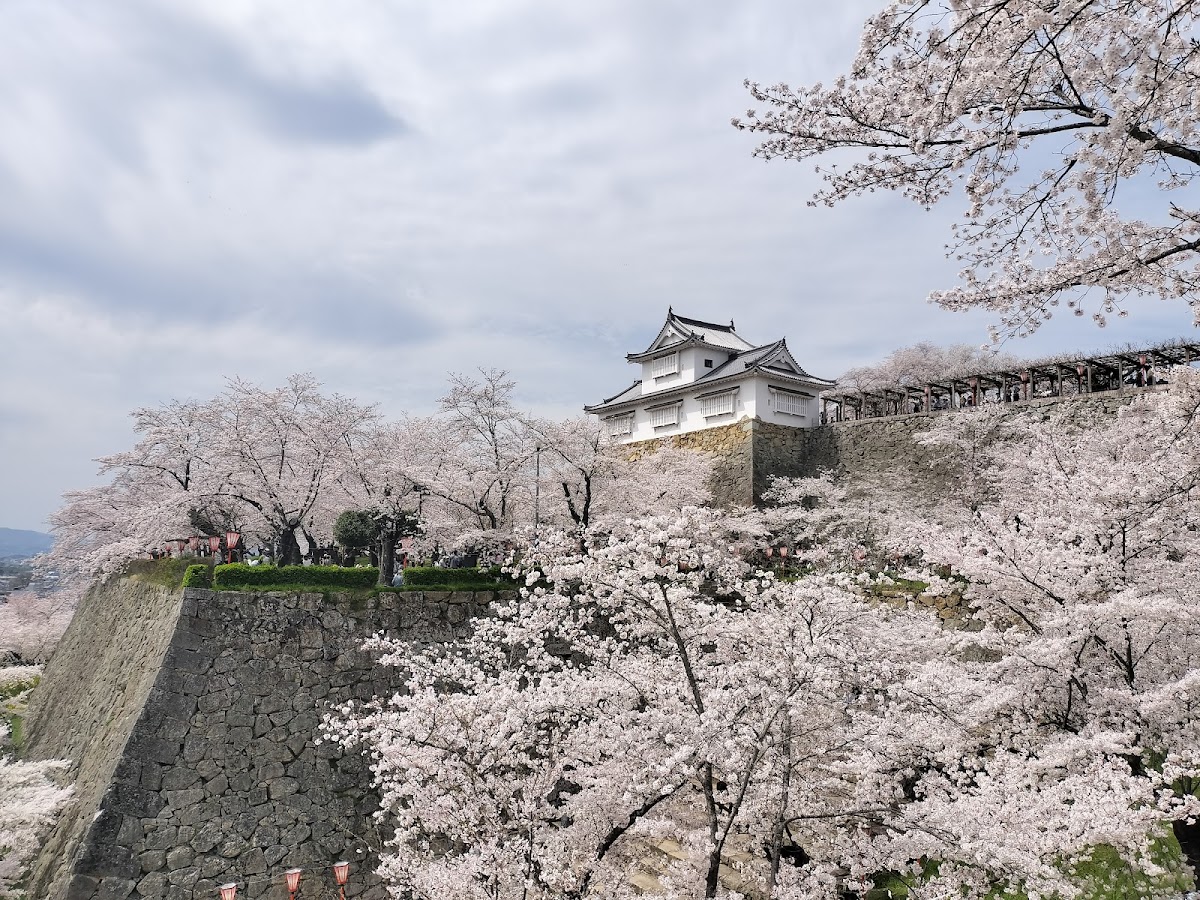
The Bitchu Turret has a two-story, two-tiered structure, and visitors can tour the interior (for a fee). Inside, there are exhibits recreating life in the period, making it a valuable facility for learning about the internal structure of castle architecture. The contrast between the white walls and black tiles is beautiful, and its appearance atop the stone walls evokes the grandeur of its former glory.
Masugata Koguchi and Defensive Structures
Tsuyama Castle features multiple Masugata koguchi (square-shaped gate entrances). A Masugata is a defensive structure consisting of two gates with a square space in between. This design allows for attacks from all four sides in the event of an enemy invasion, demonstrating a design focused on actual combat.
The stone walls incorporate numerous bends called “ori,” a technique designed to eliminate blind spots. Furthermore, features such as stone drops and loopholes, designed for siege warfare, can be seen throughout the castle.
View from the Main Keep
From the main keep ruins, you can enjoy a panoramic view of Tsuyama city. Located in the center of the Tsuyama Basin, the view from Tsuyama Castle is magnificent, allowing you to experience the scenery seen by the castle’s former lords. On clear days, you can even see the distant Chugoku Mountains, highlighting the castle’s strategic location in Mimasaka Province.
Front and Back Middle Gates
The stone walls of the Front and Back Middle Gates, the main entrances to the main keep, are a highlight. The stone walls of the Front Middle Gate ruins, in particular, are impressively high and awe-inspiring, overwhelming visitors. The gate’s foundation stones remain, allowing one to imagine the scale of the once massive gate.
One of Japan’s Top 100 Cherry Blossom Viewing Spots
Tsuyama Castle and Cherry Blossoms
Tsuyama Castle is one of Western Japan’s leading cherry blossom viewing spots, selected as one of “Japan’s Top 100 Cherry Blossom Viewing Spots.” The castle ruins, now developed as Tsuruyama Park, are planted with approximately 1000 Somei Yoshino cherry trees, offering a magnificent cherry blossom landscape in spring.
Best Time to See Cherry Blossoms and Blooming Season
The best time to see the cherry blossoms at Tsuyama Castle is usually from early to mid-April. The contrast between the stone walls and the cherry blossoms is beautiful, and especially around the main keep, the cherry blossoms bloom so profusely that they cover the stone walls, creating a fantastical landscape.
At night, the castle is illuminated, allowing visitors to enjoy the cherry blossoms after dark. The combination of the illuminated stone walls and cherry blossoms creates a different, ethereal beauty compared to the daytime, attracting many photography enthusiasts.
Cherry Blossom Festival
During the cherry blossom season, the “Tsuyama Cherry Blossom Festival” is held, featuring numerous stalls and a lively atmosphere. Special events are also held during the festival, making it Tsuyama City’s largest spring tourist event.
Tsuyama Castle Photo Spots and Scenic Viewpoints
Recommended Photo Spots
Panoramic View of the Stone Walls from the Third Bailey
From the Third Bailey area, you can photograph the entire overlapping stone wall. This is the best photo spot to appreciate the “one-two-three tier” structure.
Bitchu Turret and Stone Walls
The point where you can photograph the Bitchu Turret in the main bailey together with the stone wall is a representative composition of Tsuyama Castle. Photos with a blue sky in the background are particularly stunning.
View of the City from the Main Keep
From the site of the main keep, a panoramic view of Tsuyama city unfolds, allowing you to take photos that convey the vastness of the castle town.
Photography During Cherry Blossom Season
During cherry blossom season, we recommend taking photos combining the stone walls and cherry blossoms. Especially at dusk or when the castle is lit up at night, you can take fantastic photos.
Tourist Spots Around Tsuyama Castle
Tsuyama Local History Museum
Located within walking distance of Tsuyama Castle, the Tsuyama Local History Museum features exhibits on the history and culture of Tsuyama. You can learn about materials related to Tsuyama Castle, the history of the Mori and Matsudaira clans, and the development of the castle town of Tsuyama. A reconstructed model of Tsuyama Castle is also on display, allowing you to see its magnificent appearance in its heyday.
Joto Townscape Preservation District
The Joto district, located east of Tsuyama Castle, is an important traditional building preservation district where the townscape of the Edo period is preserved. White-walled merchant houses and townhouses line the streets, conveying the atmosphere of the former castle town. This is a popular spot where you can feel the history while strolling around.
Shurakuen Garden
This is a daimyo garden built in 1657 by Mori Nagatsugu, the second lord of the Tsuyama Domain. It is a strolling garden said to be modeled after the Sento Imperial Palace in Kyoto, and you can enjoy the beautiful scenery of each season. It is located about a 15-minute walk from Tsuyama Castle.
Tsuyama Railway Museum
This railway museum, adjacent to JR Tsuyama Station, preserves valuable railway heritage such as a roundhouse and turntable. It is a facility that can be enjoyed not only by railway fans.
Access, Parking, and Opening Hours
Location
135 Yamashita, Tsuyama City, Okayama Prefecture 708-0022 (within Tsuruyama Park)
Access by Train
- Approximately 15 minutes on foot from JR Tsuyama Station
- Approximately 5 minutes by taxi from JR Tsuyama Station
- Immediately after alighting at “Tsuyama Castle (Tsuruyama Park)” on the Tsuyama City Loop Bus “Gongo Bus” from JR Tsuyama Station
Access by Car
- Approximately 15 minutes from the Chugoku Expressway “Tsuyama IC”
- Approximately 15 minutes from the Chugoku Expressway “Innosho IC”
- Approximately 25 minutes from the Yonago Expressway “Kuse IC”
Parking
There are several parking lots around Tsuruyama Park:
- Tsuruyama Park Tourist Parking (Free, approximately 30 spaces)
- Tsuyama Tourist Center Parking (Paid)
- Coin-operated parking lots in the surrounding area
During peak seasons such as cherry blossom season, parking lots may be full, so we recommend using public transportation.
Opening Hours and Admission Fees
Opening Hours
- April to September: 8:40 AM to 7:00 PM
- October to March: 8:40 AM to 5:00 PM
- During the Cherry Blossom Festival: 7:30 AM to 10:00 PM
Closed Days
- December 29th to 31st
Admission Fee
- Adults: 310 yen
- Elementary and Junior High School Students: Free
- Admission fee includes a visit to the interior of the Bitchu Turret
Group Discount
- Discounts available for groups of 30 or more
Estimated Time Required
To thoroughly explore Tsuyama Castle, allow approximately 1.5 to 2 hours. A leisurely stroll while admiring the stone walls, including a visit to the interior of the Bitchu Turret, will allow ample time to enjoy your visit.
Hotels and Accommodations near Tsuyama Castle
Hotels near Tsuyama Station
Hotels near JR Tsuyama Station are convenient as a base for sightseeing at Tsuyama Castle. Tsuyama Castle is within walking distance from the station, and there are many restaurants nearby.
Main Hotels
- The Shiroyama Terrace Tsuyama Annex (The closest luxury hotel to Tsuyama Castle)
- Alpha-One Tsuyama
- Tsuyama Central Hotel
- Green Hills Tsuyama
Hot Spring Ryokans
There are hot spring resorts such as Yunogo Onsen and Okutsu Onsen around Tsuyama, and a plan to visit Tsuyama Castle while staying at a hot spring ryokan is also recommended. It’s about a 30-40 minute drive.
Tsuyama Castle: Knowledge and Evaluation from Castle Fans
Value as one of Japan’s Top 100 Castles
Tsuyama Castle is selected as the 67th of “Japan’s Top 100 Castles.” Castle enthusiasts highly appreciate the following aspects:
- Scale and Technique of the Stone Walls: A group of stone walls representing the peak of early modern castle construction technology.
- High Defensiveness: Practical design including a masugata koguchi (square-shaped gate) and many angled stone walls.
- Historical Value: The history of its construction by Mori Tadamasa and its importance as a base for controlling Mimasaka Province.
- Restored Structures: Recreation of the atmosphere of the time through the wooden restoration of the Bitchu Yagura (Bitchu Turret).
Points for Attacking the Castle
Points for castle enthusiasts visiting Tsuyama Castle:
- Observation of the Stone Walls: Observe the stacking methods and differences in slope of the stone walls in various places.
- Understanding the Layout: Understand the 123-tier structure and defensive mechanisms.
- Interior View of the Bitchu Yagura: Understand the structure of the turret’s interior and its palace function.
- Comparison with Old Photographs: Confirm the appearance of the castle in its heyday at the Tsuyama Local History Museum.
- Stamp Collection: The 100 Famous Castles stamp is located at the Bitchu Turret reception.
Preservation and Maintenance Plan
Tsuyama City is actively working on the preservation and maintenance of Tsuyama Castle, and is proceeding with long-term plans such as the wooden reconstruction of the buildings. A restoration plan following the Bitchu Turret is also being considered, and it is expected that the castle will come even closer to its original appearance in the future.
Tips for Enjoying Tsuyama Castle
Best Season to Visit
Spring (Early to Mid-April)
While it is the busiest time during cherry blossom season, you can see Tsuyama Castle at its most beautiful. Visiting early in the morning or on weekdays is recommended.
Early Summer (May to June)
The fresh greenery is beautiful, and it’s a relatively less crowded season, making it a hidden gem.
Autumn (November)
The autumn leaves are beautiful, and the contrast with the stone walls is magnificent.
Winter (December to February)
There are fewer tourists, allowing for a more leisurely visit. Tsuyama Castle covered in snow also has a unique charm.
Clothing and Items to Bring
- Comfortable walking shoes (due to many stone steps)
- Hat and sunscreen (summer)
- Warm clothing (winter)
- Camera (many photo spots)
- Drinks (especially summer)
Model Courses by Duration
1-Hour Course
Main Gate → Third Bailey → Second Bailey → Main Bailey → Exterior of Bitchu Turret → Departure
2-Hour Course
Main Gate → Third Bailey → Second Bailey → Main Bailey → Interior of Bitchu Turret → Observation of various stone walls → Departure
Half-Day Course
Tsuyama Castle → Tsuyama Local History Museum → Stroll through Joto Town → Lunch
Summary
Tsuyama Castle is a masterpiece of early modern castle architecture, built by Mori Tadamasa over 13 years. Although the buildings were lost due to the Meiji-era castle demolition decree, the magnificent stone walls still convey its former grandeur. With its restored Bitchu Turret, cherry blossoms (selected as one of Japan’s Top 100 Cherry Blossom Viewing Spots), and panoramic views of Tsuyama city, there’s no shortage of attractions.
Tsuyama Castle, with its historical value as one of Japan’s Top 100 Castles and its beautiful scenery throughout the seasons, is a popular spot not only for castle enthusiasts but also for tourists and photography lovers. When visiting northern Okayama Prefecture, be sure to visit Tsuyama Castle and experience the history and culture of Mimasaka Province.
Its convenient location, within walking distance of JR Tsuyama Station, is another attractive feature, allowing you to create a fulfilling travel plan by combining it with a stroll through the surrounding castle town or a visit to a hot spring. Experience the splendor of Japanese castle culture at Tsuyama Castle, which shows different faces in each season: cherry blossoms in spring, fresh greenery in summer, autumn leaves in fall, and snowscapes in winter.