Shirai Castle (Shibukawa City, Gunma Prefecture) Complete Guide: History and Highlights from a Strategic Sengoku Period Site
What is Shirai Castle?
Shirai Castle is a flatland castle located in Shirai, Shibukawa City, Gunma Prefecture, that existed from the Muromachi period to the early Edo period. Built on a tongue-shaped plateau of a river terrace jutting out at the confluence of the Tone River and Agatsuma River, it boasts a vast scale of approximately 800 meters east-west and 1,200 meters north-south.
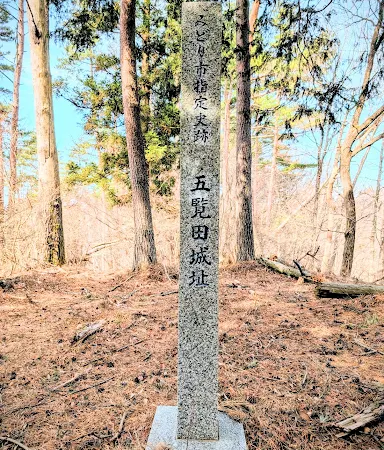
Currently preserved as a Shibukawa City designated historical site, the remains, centered around the main keep, are well-preserved. As an important historical site for discussing the history of castles in the Kanto region during the Sengoku period, it attracts attention from history enthusiasts and castle fans.
History of Shirai Castle
Construction and the Rise of the Shirai Nagao Clan
There are various theories regarding the construction date of Shirai Castle, but the most plausible theory is that it was built around the mid-15th century by Nagao Kagenaka (Masakane). Nagao Kagenaka was a senior retainer of the Yamanouchi Uesugi clan and served as a chief retainer. He is considered the ancestor of the Shirai Nagao clan, which was based in Shirai.
The basis for estimating the castle’s construction period is the striking resemblance between the structure of the projection on the east side of the main enclosure’s entrance and the main enclosure structure of Musashi Isobe Castle (Honjo City, Saitama Prefecture), where the Uesugi army was stationed during the Kyōtoku Rebellion (1454-1482). This structural similarity suggests that both castles were built around the mid-15th century, during the time of Nagao Kagenaka’s rule.
On the other hand, there is also a tradition that Nagao Kagehiro, a retainer of the Uesugi family, the shugo (military governor) of Kōzuke Province, was granted the land of Shirai in 1258 (Kōgen 1) during the Kamakura period and built the castle as his residence. However, most of the remaining structures are thought to date from the Muromachi period or later.
The Prosperity of the Shirai Nagao Clan in the Muromachi Period
During the Muromachi period, the Shirai Nagao clan rose to prominence as a powerful samurai family within the Yamanouchi Uesugi clan. Nagao Kagenaka, in particular, enjoyed the deep trust of the Yamanouchi Uesugi clan, the Kanto Kanrei (governor of the Kanto region). While serving as their chief retainer, he also held the positions of Shugodai (deputy governor) of Kozuke and Musashi provinces, wielding immense influence in the Kanto region.
The Shirai Nagao clan, as important retainers serving the Yamanouchi Uesugi clan for generations, maintained their power from Shirai Castle, playing a crucial role in the politics and military affairs of Kanto. Shirai Castle was not merely a residence, but functioned as the political and military center of northern Kozuke Province.
The Sengoku Period and the Relationship with Uesugi Kenshin
During the Sengoku period, the Shirai Nagao clan became vassals of Uesugi Kenshin of Echigo Province. Uesugi Kenshin inherited the position of Kanto Kanrei and repeatedly launched military expeditions into the Kanto region, with the Shirai Nagao clan acting as a vital support force.
Shirai Castle was strategically located between the two major rivers, the Tone River and the Agatsuma River, making it a crucial base for advances from Echigo Province into the Kanto region. It is believed that Shirai Castle also functioned as a supply base during Uesugi Kenshin’s Kanto campaigns.
After Uesugi Kenshin’s Death and Subordination to the Hojo Clan
When Uesugi Kenshin died suddenly in 1578, the Otate Rebellion erupted over the succession. Amidst this turmoil, the Shirai Nagao clan changed course and chose to submit to the Hojo clan, who were expanding their power as the dominant force in the Kanto region.
This decision was based on a pragmatic assessment of the changing balance of power in Kanto and the need to preserve the Shirai Nagao clan’s territory. By joining the Hojo clan, the Shirai Nagao clan was able to temporarily secure a stable position.
The Siege of Odawara and the Fall of Shirai Castle in 1590
In 1590, when Toyotomi Hideyoshi began his siege of Odawara, Shirai Castle played a crucial role as a key strategic point in the defense of northern Kanto. The Shirai Nagao clan, who had been loyal to the Hojo clan, prepared for a siege under the command of their head, Nagao Masakage (son of Norikage).
In late April of the same year, the northern army forces led by Maeda Toshiie and Uesugi Kagekatsu, who had captured Matsuida Castle in Kozuke Province, attacked Shirai Castle. Facing the large Toyotomi army, Shirai Castle fought a fierce battle, but the northern citadel was captured, and on May 15th, Nagao Masakage decided to surrender.
With this fall, the Shirai Nagao clan’s rule over Shirai Castle, which had lasted for approximately 130 years, came to an end. After the Siege of Odawara, Shirai Castle was incorporated into the Toyotomi regime’s administrative system.
Shirai Castle and the Shirai Domain in the Edo Period
During the Edo period, Shirai Castle was occupied by several daimyo (feudal lords) in succession. Of particular note is the period when Ii Naotaka, who later became the lord of the Hikone Domain, resided there. Ii Naotaka enjoyed the deep trust of Tokugawa Ieyasu and is believed to have resided at Shirai Castle from around 1601 (Keicho 6) to 1602 (Keicho 7), after the Battle of Sekigahara.
Subsequently, the following lords were appointed to Shirai Castle:
- Honda Yasushige: Entered the castle during the Keicho era
- Matsudaira Yasunaga: Entered the castle during the Genna era
- Nishio Tadanaga: Entered the castle during the Kan’ei era
The Shirai Domain continued to exist as a small domain, but after Honda Yasushige was transferred in 1616 (Genna 2), Shirai Castle gradually lost its military importance. From the mid-Edo period onward, it is believed to have effectively become a ruined castle, losing its function as a fortress.
Structure and Layout of Shirai Castle
Overall Layout
Shirai Castle is located north of the confluence of the Agatsuma River and the Tone River, built on a plateau extending south along the Agatsuma River. The western side is a cliff facing the Agatsuma River, forming a natural stronghold.
The castle’s layout unfolds in a linear fashion from south to north, with the main enclosure (Honmaru) at the southernmost point, and the structure is as follows:
- Honmaru (Southernmost point)
- Ninokuruwa
- Sannomaru
- Hokuruwa
- Sōkuruwa (Northernmost point)
These enclosures are clearly demarcated by dry moats, creating a highly defensible structure. Fortified entrances (koguchi) were provided for movement between each enclosure, ensuring a strict defensive system.
Structure of the Honmaru
The Honmaru is the core enclosure of Shirai Castle, where the most important defensive facilities were concentrated. A distinctive feature of the main enclosure (Honmaru) is the projection on the east side of the gate. As mentioned earlier, this structure is similar to that of the main enclosure of Musashi Igo Castle and is an important surviving example of castle construction techniques from around the mid-15th century.
The gate on the north side of the main enclosure is a masugata-mon (square-shaped gate) style, and parts of the stone wall still remain today. This stone wall is particularly well-preserved within Shirai Castle, making it a valuable surviving example of the castle construction techniques of that time.
Earthworks surround the main enclosure, and parts of them still remain today, several meters high. These earthworks served to prevent enemy intrusion and also ensured visibility from within the castle.
South Enclosure and Sasakuruwa (Outpost)
To the south of the main enclosure was an outpost called Sasakuruwa. This outpost was an important facility responsible for the frontal defense of the main enclosure, playing a role in intercepting enemy attacks before they could reach the main enclosure.
To the southeast of the main enclosure (Honmaru) was the South Enclosure (Minami-kuruwa), and beyond that was the New Enclosure (Shin-kuruwa). These enclosures were designed to create multiple layers of defense for the main enclosure, establishing several lines of defense against attackers.
Second Enclosure (Ninokuruwa), Third Enclosure (Sanokuruwa), and North Enclosure (Hokurikuruwa)
From the main enclosure, heading north, are the Second Enclosure (Ninokuruwa), Third Enclosure (Sanokuruwa), and North Enclosure (Hokurikuruwa). These enclosures were clearly demarcated by dry moats, each functioning as an independent defensive unit.
The North Enclosure is historically significant as the first enclosure occupied by Toyotomi forces during the Siege of Odawara in 1590 (Tensho 18). This fact indicates the North Enclosure’s crucial position in the northern defense of Shirai Castle.
Currently, these enclosures are marked, providing clear guidance for visitors. The dry moats and earthworks that form the boundaries of each enclosure remain well-preserved, allowing visitors to experience the castle structure of the Sengoku period.
Arrangement of Moats and Earthworks
The core of Shirai Castle’s defensive system lies in the dry moats and earthworks that demarcated each enclosure. Some of the dry moats reached several meters in depth, forming a strong barrier that physically prevented enemy intrusion.
The earthworks were constructed using the excavated soil from the moats, functioning as a defensive wall with considerable height and thickness. It is presumed that fences or walls were built on top of the earthworks, further enhancing their defensive capabilities.
Even today, these earthworks and moats remain in good condition, mainly around the main enclosure, and restoration work is progressing. Visitors can actually walk on the earthworks and experience the depth of the moats, allowing them to feel the power of the castle as it was in its time.
Highlights of Shirai Castle
Stone Walls of the Main Enclosure
One of the most noteworthy remains when visiting Shirai Castle is the stone wall remaining at the northern entrance to the main enclosure. This stone wall, associated with a masugata-mon (square-shaped gate) style entrance, is a valuable relic that conveys the castle-building techniques of the time.
The stone walls are constructed using the nozurazumi technique, where natural stones are piled up, and are important historical materials that show the evolution of stonework techniques from the Sengoku period to the early Edo period. They are in good condition, allowing visitors to observe the advanced skills of the stonemasons of the time up close.
Earthworks and Dry Moats
The earthworks remaining around each enclosure, centered on the main keep, are essential remains for understanding Shirai Castle’s defensive system. These earthworks, reaching several meters in height, still retain their imposing presence after hundreds of years, giving a real sense of the castle’s scale at the time.
The dry moats along the earthworks are also a highlight. Looking up at the earthworks from the deep moat bottom, one can appreciate how difficult it must have been for enemy soldiers to break through this defensive line.
Layout and Views of the Enclosures
By visiting each enclosure of Shirai Castle in order, one can understand the structure of the renkaku-shiki (connected enclosure) layout. Following the signs from the main keep to the northern enclosure allows one to experience the castle design philosophy of the Sengoku period.
The view from the main keep is particularly magnificent, offering a panoramic view of the confluence of the Tone River and the Agatsuma River. Visiting the site will help you understand the strategic importance of Shirai Castle, given its geographical location.
Preservation of the Remains
One of Shirai Castle’s greatest attractions is the excellent state of preservation of its remains. Thanks to ongoing maintenance by Shibukawa City, the earthworks, stone walls, and moats, especially around the main keep, retain their original appearance.
In recent years, guide signs and explanatory panels have been improved, allowing even visitors unfamiliar with castles to understand the history and structure of Shirai Castle while exploring.
Access Information
Location
377-0280 Shirai, Shibukawa City, Gunma Prefecture
Access by Car
- Approximately 15 minutes from the Shibukawa-Ikaho Interchange on the Kan-Etsu Expressway
- Accessible via National Route 17 and a prefectural road
Parking
While Shirai Castle does not have a dedicated parking lot, there are several parking spaces in the castle’s main enclosure. Since you can drive your car right up to the main enclosure, access is relatively easy. However, space is limited, so caution is advised during busy periods.
Access by Public Transportation
- Take a bus or taxi from Shibukawa Station on the JR Joetsu Line
- Approximately 10km from Shibukawa Station
Visiting Hours
Shirai Castle Ruins are an outdoor historical site, so you can generally visit freely. However, it is recommended to avoid visiting after sunset and to visit during daylight hours.
Estimated Visiting Time
For a visit focusing on the main area, including the inner citadel, approximately 30 minutes is recommended. For a more thorough visit to the entire site, allow 1 to 1.5 hours.
Nearby Tourist Attractions
Historical Sites in Shibukawa City
When visiting Shirai Castle, we recommend also visiting other historical sites in Shibukawa City. Shibukawa City is dotted with historical sites such as ancient burial mounds, shrines, and temples.
Ikaho Onsen
Located about 20 minutes by car from Shirai Castle, Ikaho Onsen is one of Gunma Prefecture’s leading hot spring resorts. After visiting the castle ruins, relaxing in the hot springs is a great way to unwind.
Mount Haruna and Lake Haruna
To the southwest of Shibukawa City lie Mount Haruna and Lake Haruna, offering beautiful natural scenery. Combining these with Shirai Castle allows you to create a sightseeing route that combines history and nature.
Designation of Shirai Castle as a Cultural Property
Shirai Castle is protected as a designated historical site of Shibukawa City. The city is continuously carrying out preservation and maintenance activities, and efforts are underway to pass on this valuable historical heritage to future generations.
Points to Note When Visiting Shirai Castle
Clothing and Equipment
Shirai Castle ruins are an outdoor historical site, and you will be walking on uneven terrain when viewing the earthworks and moats. We recommend wearing comfortable shoes and clothing. In the summer, it is also a good idea to bring insect repellent, a hat, and drinking water.
Consideration of Weather
The ground can become slippery in rainy weather, so caution is necessary when visiting. If possible, we recommend visiting on a sunny day.
Observance of Manners
Shirai Castle ruins are a valuable cultural property. Please observe proper manners when visiting, such as not damaging the remains or littering.
Historical Significance of Shirai Castle
Shirai Castle is an important historical site for understanding the history of castles in the Kanto region during the Sengoku period. From its construction by Nagao Kagenaka, through the prosperity of the Shirai Nagao clan, its relationship with Uesugi Kenshin, its allegiance to the Hojo clan, and finally its fall during Toyotomi Hideyoshi’s siege of Odawara, Shirai Castle boasts a history that symbolizes the turbulent Sengoku period.
Furthermore, during the Edo period, powerful daimyo such as Ii Naotaka, Honda Yasushige, Matsudaira Yasunaga, and Nishio Tadanaga resided there, and it functioned as the center of the Shirai domain. Thus, for approximately 350 years, from the Muromachi period to the early Edo period, Shirai Castle continued to play a crucial role as a political and military stronghold in northern Kozuke Province.
The well-preserved remains today are invaluable historical documents that convey the castle-building techniques and defensive philosophies of the time. The stone walls of the main keep, the earthworks and dry moats separating each enclosure, and its location utilizing the natural fortifications of the Tone River and Agatsuma River strongly retain the characteristics of castle architecture from the Sengoku period.
Summary
Shirai Castle (Shibukawa City, Gunma Prefecture) is a flatland castle built at a strategically important location at the confluence of the Tone River and Agatsuma River. It is estimated to have been built by Nagao Kagenaka around the mid-15th century. It flourished for approximately 130 years as the residence of the Shirai Nagao clan, playing an important role in their interactions with powerful Sengoku-era daimyo such as Uesugi Kenshin and the Hojo clan.
After falling during Toyotomi Hideyoshi’s siege of Odawara in 1590, it served as the center of the Shirai Domain during the Edo period, with figures such as Ii Naotaka, Honda Yasushige, Matsudaira Yasunaga, and Nishio Tadanaga residing there.
Currently, it is preserved as a Shibukawa City designated historical site, with well-preserved remains including the stone walls, earthworks, and dry moats of the main keep. It is a valuable historical site where one can experience the characteristics of Sengoku-era castle architecture, such as its multi-bailey layout, masugata-mon style gate, and location that utilizes natural fortifications.
It’s relatively easy to access, and you can even drive right up to the main keep. When you visit Gunma Prefecture, why not visit Shirai Castle and experience the historical romance of the Sengoku period?