Katsuyama Castle (Sakura City, Tochigi Prefecture) Complete Guide | History, Highlights, and Access Information
Located in Sakura City, Tochigi Prefecture, Katsuyama Castle is known as a medieval cliffside castle that skillfully utilized the cliffs of the Kinugawa River. For approximately 300 years, from the late Kamakura period until its abandonment in 1597, it played an important role as a strategic point in northern Shimotsuke Province. This article provides a detailed introduction to Katsuyama Castle, from its history to its remaining structures, highlights, and access methods.
What is Katsuyama Castle? | Overview of its Alternate Name, “Ujiie Castle”
Katsuyama Castle is a medieval flatland castle located in Ujiie, Sakura City, Tochigi Prefecture. Also known as “Ujiie Castle,” it is characterized by its structure that maximizes the use of natural fortifications, built on a river terrace on the west bank of the Kinugawa River.
Currently, it is maintained as “Katsuyama Castle Ruins Park,” and the remains, such as earthworks and dry moats, are well preserved, centered around the main keep. The park also houses the “Sakura City Museum,” which functions as a base for learning about the local history.
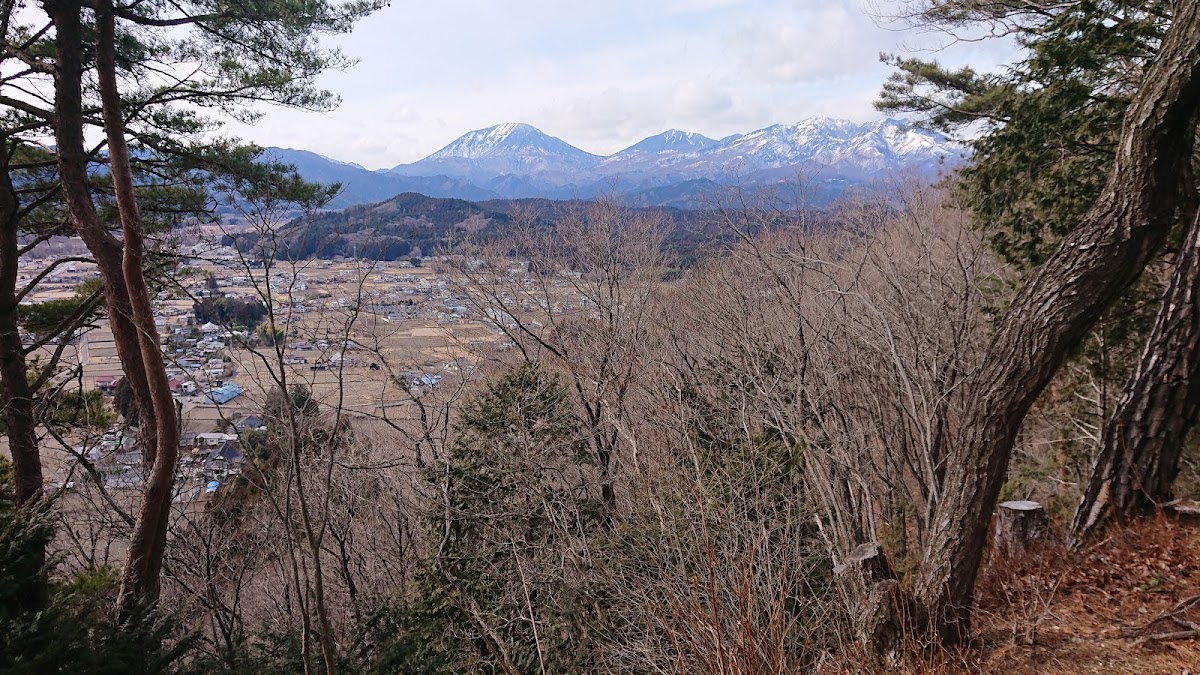
From the castle ruins, one can enjoy a magnificent view of the Kinugawa River and, in the distance, the Nikko Mountains, Takahara Mountains, and Nasu Mountains. It is a valuable place where one can still experience the scenery seen by the castle’s lords of yesteryear.
History of Katsuyama Castle | From the Ujiie Clan to the Haga Clan
Construction of the Castle at the End of the Kamakura Period and the Ujiie Clan
There are various theories regarding the construction period of Katsuyama Castle, but it is generally considered to be the end of the Kamakura period (late 13th to early 14th century). One theory suggests that it was built by Ujiie Kimiyori during the Kenkyu era (1190-1199).
The builder, the Ujiie clan, was a branch of the Utsunomiya clan, descended from Utsunomiya Kimiyori, the son of Utsunomiya Tomotsuna. Ujiie Kimiyori ruled Ujiie County and established his residence in this area. Katsuyama Castle functioned as a base for controlling the 24 villages of Ujiie County, which stretched from present-day Shioya Town to Haga Town, and became the center of regional governance.
The Ujiie clan, as powerful vassals of the Utsunomiya clan, played an important role in the defense of northern Shimotsuke Province.
Muromachi Period | The Entry of the Haga Clan and Transformation into a “War Castle”
In the early Muromachi period, the main branch of the Ujiie clan moved to Utsunomiya. Subsequently, the Haga clan, important vassals of the Utsunomiya clan, entered Katsuyama Castle. Haga Takakiyo, son of Haga Takaie, moved from Tobiyama Castle, and Katsuyama Castle became a branch castle of the Haga clan.
With the entry of the Haga clan, Katsuyama Castle transformed into a “war castle,” serving as the frontline base for the Utsunomiya clan’s northern defense. It is believed that during this period, the castle’s defensive functions were strengthened, and the large-scale dry moats and earthworks visible today were constructed.
During the Sengoku period, Haga Suruga-no-kami became the castle lord, and it functioned as a base for regional control. Its role in defending the northern frontier under the Utsunomiya clan was extremely important in confrontations with the Satake and Nasu clans of Hitachi Province.
Abandonment of the Castle in 1597
After Toyotomi Hideyoshi’s unification of Japan, Katsuyama Castle was abandoned in 1597. This marked the end of its approximately 300-year history as a castle. It is believed that the abandonment was due to the castle reorganization policy under the Toyotomi regime.
After its abandonment, the castle ruins were left neglected for a long time, but since modern times, they have been recognized as a regional historical heritage site, and preservation and development efforts have been underway.
Structure of Katsuyama Castle | A Cliffside Castle Overlooking the Kinugawa River
Location and Layout Characteristics
Katsuyama Castle is built on a river terrace on the west bank of the Kinugawa River, on a hill approximately 90 meters above sea level. The eastern side faces a cliff overlooking the Kinugawa River, forming a natural stronghold. Its most distinctive feature is its structure as a “cliffside castle,” making maximum use of this terrain.
The castle’s layout centers around the main keep (honmaru), surrounded by a deep dry moat and high earthen ramparts. The second and third baileys (ninomaru and sannomaru) are located to the west, creating a tiered defensive line.
The cliff on the Kinugawa River side has a relative height difference of approximately 30 meters, making it extremely difficult for attackers to climb. Therefore, the castle’s defenses are mainly concentrated on the west and north sides, resulting in a complex arrangement of moats and earthen ramparts.
Size and Structure of the Main Keep
The main keep measures approximately 80 meters east-west and 100 meters north-south, a standard size for a medieval castle. Currently, the site is leveled and used as a castle ruins park.
An explanatory sign is installed at the main keep site, allowing visitors to learn about the castle’s history and structure. Furthermore, from the main enclosure, a panoramic view of the Kanto Plain unfolds across the Kinugawa River, and on clear days, the Nikko and Nasu mountain ranges can be seen in the distance.
The earthen ramparts surrounding the main enclosure are approximately 3 to 5 meters high and remain remarkably well-preserved. There are sections where you can walk along the top of the ramparts, allowing you to experience the scale of the castle in its heyday.
Impressive Dry Moat Remains
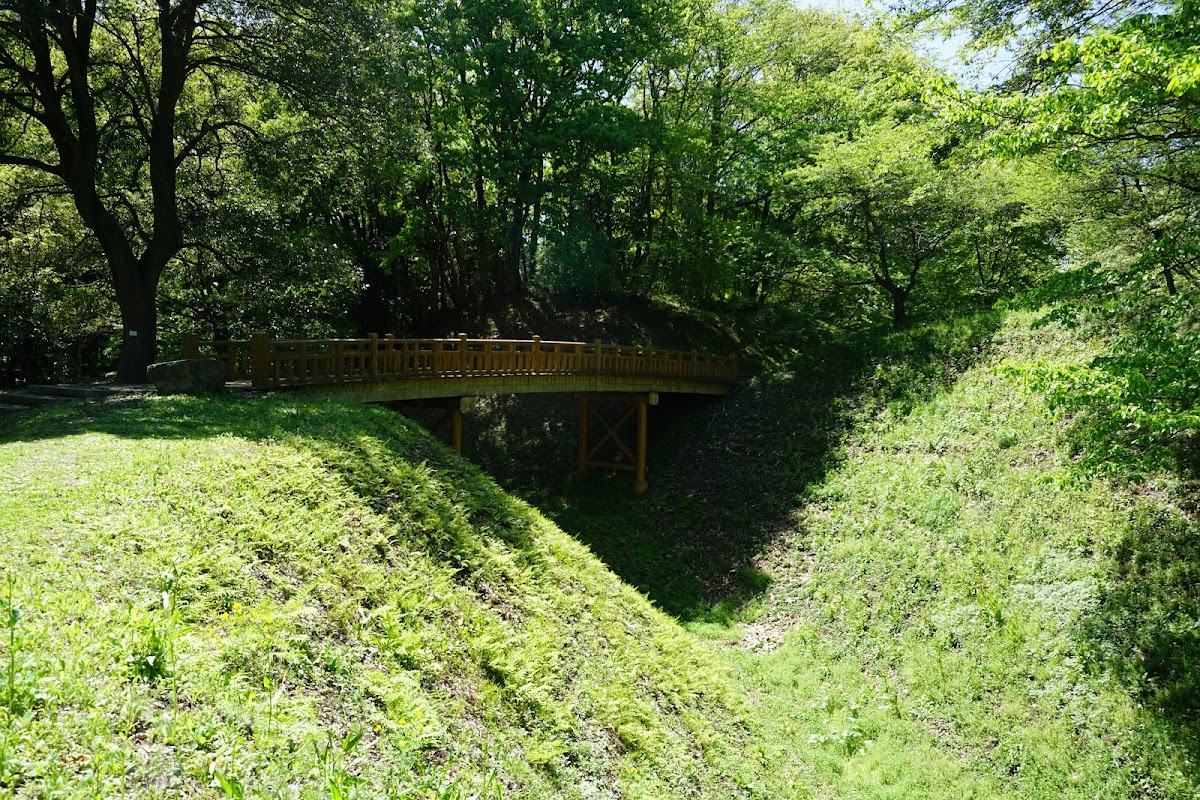
The greatest highlight of Katsuyama Castle is the massive dry moat surrounding the main enclosure. The dry moats on the west and north sides, in particular, reach depths of over 10 meters and widths of over 15 meters in some places, boasting an overwhelming presence as a defensive structure of a medieval castle.
The bottom of the moat remains clearly visible, and walking along its base allows you to truly appreciate the castle’s defensive capabilities. The height of the earthen ramparts, viewed from the bottom of the moat, speaks volumes about how difficult an obstacle it must have been for attackers.
A bridge spanned the entrance to the main enclosure; it is believed that a wooden or earthen bridge was used in its heyday. Currently, an iron bridge has been installed, allowing for safe access to the main keep.
Part of the dry moat retains the shape of a box moat (a moat with a flat bottom), demonstrating the high level of castle construction technology during the Sengoku period. Furthermore, the bends and turns in the moat reveal ingenious designs that allowed for flanking attacks.
Arrangement and Function of Earthworks
The earthworks surrounding the main keep not only demarcated the castle grounds but also served a crucial defensive function. From the top of the earthworks, one could overlook the moat bottom and the area outside the castle, suggesting they also functioned as watchtower platforms for monitoring enemy movements.
Observing the cross-section of the earthworks reveals traces of rammed earth construction (a method of compacting soil in layers), indicating the use of techniques to achieve a robust structure.
Highlights of Katsuyama Castle Ruins | Castle Notes
The Impressive Power of the Massive Dry Moat
A must-see when visiting Katsuyama Castle is the massive dry moat surrounding the main keep. The western moat, in particular, is large in scale, and by descending to the bottom and looking up, you can truly appreciate its depth and grandeur.
This is a rare place where you can observe a dry moat of a medieval castle so clearly, making it a must-see spot for castle enthusiasts. In spring, the dry moat is adorned with fresh greenery, and in autumn, with vibrant autumn leaves, allowing you to enjoy the scenery of each season.
Views of the Kinugawa River and the Kanto Plain
The view from the main keep ruins is one of Katsuyama Castle’s greatest attractions. The majestic flow of the Kinugawa River below and the distant mountain ranges are the very same views the castle lords saw.
Especially on clear days, you can see the Nikko Mountains, Takahara Mountains, and Nasu Mountains, and truly appreciate the vastness of the Kanto Plain. On clear winter days, you can see even further.
Collaboration with Sakura City Museum
The Sakura City Museum, adjacent to Katsuyama Castle Ruins Park, offers opportunities to learn about the history of Katsuyama Castle, excavated artifacts, and the history and culture of Sakura City. Special exhibitions related to the castle, such as “Katsuyama Castle: The Age of Warfare,” are sometimes held.
Visiting the museum before or after visiting the castle ruins will allow for a deeper understanding of Katsuyama Castle’s history.
Preservation of the Remains
Despite being abandoned more than 400 years ago, the remains of Katsuyama Castle, including the dry moats and earthworks, are remarkably well-preserved. This is a testament to the preservation efforts of local residents and the proper management of the park.
Information boards and guides are also abundant, making it easy for first-time visitors to understand the castle’s structure and history.
Access Information to Katsuyama Castle Ruins
Location
Address: 1323 Ujiie, Sakura City, Tochigi Prefecture (Katsuyama Castle Ruins Park)
Access by Train
- Approximately 15 minutes on foot from JR Tohoku Main Line “Ujiie Station”
- Head northwest from the station, via National Route 293 to Katsuyama Castle Ruins Park
- Approximately 1.2 kilometers from the station, a flat route
Access by Car
- Approximately 20 minutes from Tohoku Expressway “Yaita IC”
- Approximately 30 minutes from Tohoku Expressway “Utsunomiya IC”
- Located along National Route 293, easily accessible
Parking
Free parking is available at Katsuyama Castle Ruins Park and the adjacent Sakura City Museum. There is space for approximately 30 regular cars, and parking for tour buses is also available.
Visiting Hours and Fees
- Visiting Hours: Always open (park area)
- Admission Fee: Free
- Sakura City Museum: Please check the official website for opening hours and closing days.
Nearby Tourist Attractions
Sakura City Museum
This museum, adjacent to the Katsuyama Castle ruins, comprehensively introduces the history, culture, and nature of Sakura City. It also features extensive exhibits on Katsuyama Castle, making a visit in conjunction with a stroll through the castle ruins highly recommended.
Around Ujiie Station
The area around JR Ujiie Station is home to many restaurants and shops, offering a chance to enjoy local cuisine. Some establishments serve Tochigi Prefecture’s regional dishes and dishes made with local ingredients.
Kinugawa Riverbank
The Kinugawa Riverbank, stretching out below Katsuyama Castle, is ideal for strolling and cycling. In spring, the cherry blossom trees create a beautiful scene, making it a popular picnic spot.
Visitor Guide | Points to Enjoy Katsuyama Castle
Best Time to Visit
Katsuyama Castle ruins can be visited throughout the year, but the following times are especially recommended:
- Spring (late March to April): Cherry blossoms are in bloom, and the park and surrounding areas are beautiful.
- Autumn (October to November): Autumn leaves color the dry moats and earthworks, offering spectacular views.
- Winter (December to February): The air is clear, providing excellent views of the mountains.
Estimated Time Required
Allow approximately 30 minutes to 1 hour to explore the castle ruins. Including a visit to the Sakura City Museum, a stay of 1.5 to 2 hours is recommended.
Clothing and Items to Bring
- Comfortable walking shoes (especially important when walking on the moat bottom or earthworks)
- Seasonal clothing (sun protection in summer, warm clothing in winter)
- Camera (recommended for photographing the dry moat and views)
- Drinks (especially in summer)
Photo Spots
- View of the Kinugawa River area from the main keep
- View from the bottom of the dry moat
- View from atop the earthworks
- Entrance to the main keep from the bridge
Historical Value and Modern Significance of Katsuyama Castle
Katsuyama Castle holds high historical value as a typical example of a medieval castle in Shimotsuke Province. It is a subject of multifaceted research, encompassing its construction techniques that utilized the cliffside terrain, the development of defensive facilities during the Sengoku period, and its role as a base for regional control.
Currently, the Katsuyama Castle ruins are preserved and utilized as a regional historical heritage site, functioning as a place for education and tourism. Sakura City regularly holds events and exhibitions to convey the castle’s history to citizens and tourists. The castle ruins have been developed into a park, making it an easily accessible place to experience the remains of a medieval castle. It’s popular not only with history enthusiasts but also as a strolling spot for families.
Summary | Katsuyama Castle: A Historic Site Condensing the Charm of a Medieval Castle
Katsuyama Castle in Sakura City, Tochigi Prefecture, is a historic castle built on the cliffs of the Kinugawa River. For approximately 300 years, from the late Kamakura period, it defended a strategic point in northern Shimotsuke Province. The Ujiie and Haga clans, important retainers of the Utsunomiya clan, resided there, playing a crucial role as a base for regional control and defense.
The massive dry moats and earthworks that still remain today demonstrate the high level of defensive technology used in medieval castles, making them a must-see for castle enthusiasts. The view of the Kinugawa River and the Kanto Plain from the main keep offers a valuable opportunity to relive the scenery seen by the castle lords of yesteryear.
With its convenient location within walking distance of JR Ujiie Station, its well-maintained park facilities that allow free admission, and its collaboration with the adjacent Sakura City Museum, Katsuyama Castle ruins offer a user-friendly environment for visitors.
When visiting Tochigi Prefecture, be sure to visit Katsuyama Castle ruins and experience the charm of a medieval castle and the weight of history. The scenery, a blend of seasonal nature and historical remains, is sure to deeply impress visitors.
--765x450.png)