
Koyama Castle (Tochigi Prefecture) Complete Guide | Thorough Explanation of History, Remains, and Access
What is Koyama Castle?
Koyama Castle (Koyama-jo) is a medieval flatland castle located in Shimokoyama, Shimotsuke City, Tochigi Prefecture (formerly Koyama-go, Tsuga District, Shimotsuke Province). Built during the Kenmu era (1334-1338) of the late Kamakura period, it functioned as a southern defense base for the Utsunomiya clan for approximately 220 years until its abandonment in 1558.
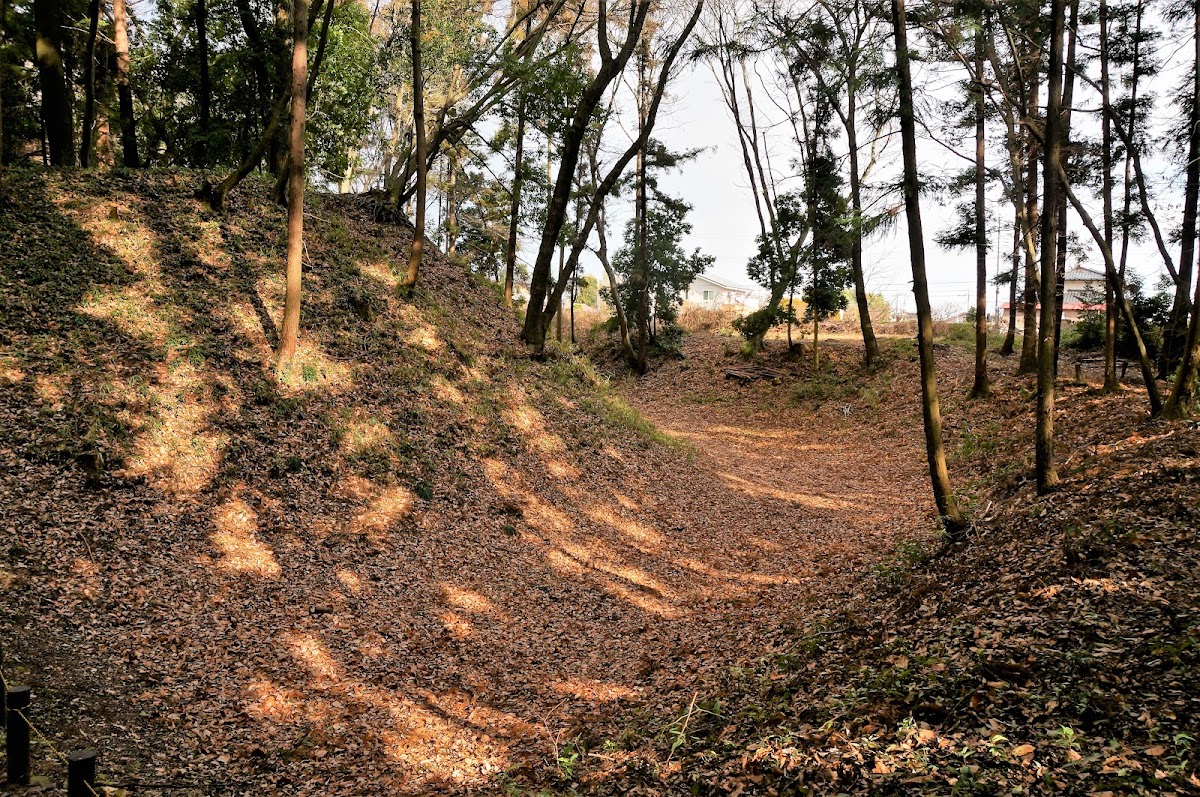
The moat and earthworks of the main keep remain in good condition and are designated as a historical site of Tochigi Prefecture. It is highly regarded by castle researchers and history enthusiasts as a valuable historical site that conveys the typical structure of a medieval castle.
Basic Information on Koyama Castle
Location: Shimokoyama, Shimotsuke City, Tochigi Prefecture
Former Province: Tsuga District, Shimotsuke Province
Classification/Structure: Flatland castle, ring-shaped
Builder: Koyama Tomosada (second or third son of Taku Muneaki)
Year of Construction: Kenmu era (1334-1338)
Lord: Koyama clan
Year of Abandonment: Eiroku 1 (1558)
Remains: Earthworks, moats
Designated Cultural Property: Tochigi Prefecture Designated Historic Site “Koyama Castle Ruins”
Keep Structure: None (No keep existed as it is a medieval castle)
Common Name/Alternate Name: None in particular
History
Background of the Castle’s Construction and its Relationship to the Utsunomiya Clan
The construction of Koyama Castle took place during the turbulent period from the late Kamakura period to the early Nanboku-cho period. Utsunomiya Yoritsuna was a powerful samurai family with influence primarily in Shimotsuke Province, but to stabilize his territory, he needed to station family members and important retainers in various locations.
Yoritsuna’s fourth son, Tako Munetomo, became the lord of Tako Castle, and he granted Koyama village to his second son (or possibly third son), Tomosada. Tomosada built a castle in this area during the Kenmu era and adopted the name Koyama. This marked the beginning of Koyama Castle.
Koyama Castle is located approximately 15 kilometers south of Utsunomiya Castle and, along with Tako Castle and Kamimikawa Castle, was a crucial base forming the Utsunomiya clan’s southern defense line. It held a particularly important strategic position as a defense against powerful southern clans such as the Oyama and Yuki clans.
The Development of the Koyama Clan and its Approximately 220-Year History
While many details about the Koyama clan’s activities after the castle’s construction remain unclear due to limited historical records, they continued to rule the Koyama region from Koyama Castle for approximately 220 years.
Throughout the Muromachi period, the Koyama clan is believed to have acted as a powerful vassal of the Utsunomiya clan. The Utsunomiya clan remained a powerful daimyo in the Kanto region, and in this process, the Koyama clan likely participated in the Utsunomiya clan’s military actions and managed their territory.
With the arrival of the Sengoku period, the Kanto region became a fierce battleground where major powers such as the Hojo, Uesugi, and Takeda clans vied for supremacy. The Utsunomiya clan was also drawn into this conflict, and the Koyama clan found themselves in the midst of it.
The Fall and Abandonment of the Castle in Eiroku 1
The history of Koyama Castle came to a dramatic end in Eiroku 1 (1558). In this year, Uesugi Kenshin (then known as Nagao Kagetora) of Echigo invaded the Kanto region, supporting the Kanto warlords who were in conflict with the Hojo clan.
Uesugi Kenshin attacked Takō Castle, and in response, Sano Toyotsuna, who was on Uesugi’s side, also attacked Koyama Castle. The castle’s lord at the time, Koyama Kanetomo, fought fiercely against Sano’s army but was ultimately killed in battle.
Without its lord, Koyama Castle was abandoned, marking the end of the Koyama clan’s rule, which had lasted for approximately 220 years. Afterward, this region is thought to have become a direct territory of the Utsunomiya clan or been given to other vassals, but it lost its function as a castle.
Structure and Remains
Layout and Castle Structure
Koyama Castle is a typical flatland castle, a medieval castle with a concentric layout. A concentric layout refers to a structure where the central main enclosure (honmaru) is surrounded by earthen ramparts and a moat, with further enclosures such as the second and third baileys (ninomaru and sannomaru) arranged outside of it.
The main enclosure is approximately 50 meters east-west and 70 meters north-south, forming a square shape, surrounded by earthen ramparts 3-4 meters high. These ramparts are still well-preserved, and some are believed to have retained almost their original height.
An inner moat surrounds the main enclosure, estimated to be approximately 10-15 meters wide and 3-4 meters deep. It is thought that further outer baileys were located outside the moat, but much of this has been lost due to residential and agricultural development, and the detailed structure remains unknown.
Condition of Existing Remains
The best-preserved parts of the Koyama Castle ruins are the earthen ramparts and inner moat of the main enclosure. The earthen ramparts, in particular, almost completely surround all four sides and are considered to be in remarkably good condition for earthen ramparts of a medieval castle.
The top of the earthen rampart is flat, suggesting the possibility of a wall or fence being erected there in the past. Furthermore, the inner side of the rampart (towards the main keep) has a gentle slope, while the outer side has a steep slope. This is a defensive feature designed to make it difficult for enemies to climb the rampart.
The inner moat is still clearly visible today, and especially after rain, water accumulates, evoking its former appearance. The bottom of the moat is flat and has a box-shaped form rather than a V-shaped moat. This is a characteristic often seen in medieval castles in the Kanto region.
The interior of the main keep is currently a flat space. It is presumed that buildings such as residences or warehouses once stood here, but no building foundations have been found.
Outer Enclosure and Surrounding Topography
It is believed that the second bailey and outer enclosures once existed outside the main keep, but most of them have now been lost. Some topography and slight elevations suggest the possibility of enclosures to the north and east of the main keep.
Koyama Castle was built on a low-lying area between the Omoigawa and Sugatagawa rivers, surrounded by rice paddies. It’s a typical location for a flatland castle, likely utilizing the rivers as natural moats and the wetlands as a defensive line.
The place name Koyama remains to the south of the castle, suggesting the possibility of a former castle town. Furthermore, small place names such as “Horinouchi” and “Dote” remain in the surrounding area, indicating the presence of castle-related remains.
Preservation and Management
Koyama Castle ruins are designated as a historical site by Tochigi Prefecture and are managed by local owners and Shimotsuke City. The main keep site is regularly maintained with grass cutting and other maintenance, making it easily accessible for visitors.
While the earthworks and moats are well-preserved, some areas are obscured by overgrown trees and sediment accumulation. However, overall, it is considered a very valuable historical site for understanding the structure of medieval castles.
In recent years, visits from castle enthusiasts and history researchers have increased, and the castle is being re-evaluated as a regional historical resource.
Successive Castle Lords and Descendants
First Castle Lord: Koyama Tomosada
Koyama Tomosada, the first lord of Koyama Castle, was born as the second (or third) son of Taku Muneaki. During the Kenmu era, he was granted Koyama village by his father, built a castle there, and adopted the name Koyama.
Historical records regarding Tomosada’s birth and death dates and specific achievements are scarce, and details remain unclear. However, it is certain that he was active as a member of the Utsunomiya clan during the turbulent Nanboku-cho period and laid the foundation for the Koyama clan.
Genealogy of Successive Castle Lords
It is unclear how many generations of castle lords continued from the first lord, Tomosada, to the last lord, Kanetomo, over approximately 220 years. Due to the lack of historical records, the names and achievements of the lords during the intermediate periods are largely unknown.
The only names that are reliably recorded are those of the first lord, Tomosada, and the last lord, Kanetomo. It is estimated that there were perhaps 7 to 10 generations of lords during this period, but the specific lineage is unknown.
The Last Lord: Koyama Kanetomo
Koyama Kanetomo, who died in battle in 1558 (Eiroku 1), is remembered in history as the last lord of Koyama Castle. Amidst the major historical current of Uesugi Kenshin’s invasion of the Kanto region, he remained loyal to his lord, the Utsunomiya clan, and lost his life in battle against Sano Toyotsuna.
It is believed that the main line of the Koyama clan ended with Kanetomo’s death, but it is possible that collateral branches or descendants of the family survived in other regions.
The Aftermath of the Koyama Clan
There is very little historical information regarding the Koyama clan’s activities after the fall of Koyama Castle. It is possible that some members of the family served other Utsunomiya clan retainers or returned to farming, but nothing is certain.
The place name Koyama still exists in Shimotsuke City today, and the name of the former castle lord is etched into the region. Furthermore, a few legends and folktales related to the Koyama clan remain in the local area.
Koyama Castle Highlights and Visitor Guide
Main Highlights
Main Enclosure Earthworks: The earthworks, 3-4 meters high, that almost completely surround the castle on all four sides, are the main highlight of Koyama Castle. You can walk on top of the earthworks and experience the defensive structure of a medieval castle.
Inner Moat: The inner moat surrounding the main enclosure is particularly easy to imagine in its former glory when water accumulates after rain. The depth and width of the moat give a real sense of the defensive strength of a medieval castle.
Inside the Main Enclosure: The flat interior of the main enclosure was once the residence of the castle lord. In this quiet space, you can imagine the life of a medieval samurai.
Lilies: In summer, lilies bloom at the castle ruins, adding beauty to the historical landscape. Enjoy the harmony between the castle ruins and nature.
Access Information
Public Transportation: Approximately 10 minutes by taxi or 40 minutes on foot from JR Utsunomiya Line “Ishibashi Station”. Bus service is infrequent, so taxis are recommended.
By Car: Approximately 15 minutes from Kita-Kanto Expressway “Mibu IC” or approximately 20 minutes from Tohoku Expressway “Tochigi IC”. There is no dedicated parking lot around the castle ruins, but there are spaces available for parking on the roadside (be mindful of private property).
Points to Note When Visiting
- The castle ruins include private land, so please be considerate of the owner when visiting.
- Entry into the main enclosure is permitted, but please be careful not to damage the earthworks or moats.
- The ground can be slippery during and after rain, so appropriate footwear is recommended.
- In summer, the grass can be overgrown, so wearing long sleeves and long pants is advisable.
- There are no toilets or rest facilities, so please prepare accordingly.
Related Historical Sites in the Surrounding Area
Takō Castle Ruins: The residence of the Takō clan, the main branch of the Koyama clan, located approximately 5 kilometers northeast of Koyama Castle.
Kamimikawa Castle Ruins: One of the castles that formed the southern defense line of the Utsunomiya clan, located approximately 7 kilometers east of Koyama Castle.
Shimotsuke Kokubunji Temple Ruins: The ruins of a Kokubunji temple from the Nara period, providing insight into the ancient center of Shimotsuke Province. Located approximately 3 kilometers southwest of Koyama Castle.
Shimotsuke Yakushiji Temple Ruins: One of the three ordination platforms in eastern Japan during the Nara period, and an important historical site. It is located approximately 4 kilometers south of Koyama Castle.
Historical Significance of Koyama Castle
Position in the Utsunomiya Clan’s Rule System
Koyama Castle played a crucial role in the Utsunomiya clan’s control of southern Shimotsuke Province. It formed part of a radial defense network centered around Utsunomiya Castle, and functioned particularly as a frontline against southern forces such as the Oyama and Yuki clans.
The Utsunomiya clan established their rule by strategically placing family members and important retainers throughout the region, and Koyama Castle is a prime example. By placing trustworthy family members based on blood ties in key locations, they ensured the stability of their territorial control.
Value in Medieval Castle Research
Koyama Castle ruins occupy an important position in castle research as a typical example of a medieval flatland castle in the Kanto region. In particular, the well-preserved earthworks and moats make this a valuable archaeological site that allows for an understanding of the structure of a medieval castle without the need for archaeological excavation.
The site provides important information for understanding castle construction techniques in the Kanto region from the 14th to 16th centuries, including the concentric layout, the shape of the box-shaped moats, and the structure of the earthworks.
Significance in Local History
In the history of Shimotsuke City (formerly Kokubunji Town and Ishibashi Town), Koyama Castle played an important role as the center of regional governance during the medieval period. A settlement formed below the castle, and it is believed to have been a center of economic activity.
The place name “Koyama” still remains today, becoming part of the region’s identity. For local residents, the Koyama Castle ruins symbolize the history of their hometown.
References
Research on Koyama Castle is primarily based on the following literature and materials.
- *Shimotsuke City History* (Shimotsuke City Board of Education)
- *Medieval Castle Sites in Tochigi Prefecture* (Tochigi Prefecture Board of Education)
- *Comprehensive Survey of Japanese Castles, Volume 4: Ibaraki, Tochigi, and Gunma* (Shin Jinbutsu Oraisha)
- *The Utsunomiya Clan and Their Retainers* (Tochigi Prefectural Museum)
- Materials from the Tochigi Prefecture Cultural Properties Protection Council
- Local histories such as *Shimotsuke no Kuni Shi*
- Various castle research papers
These documents are available for viewing at the Shimotsuke City Library and the Tochigi Prefectural Library. The Cultural Properties Division of the Shimotsuke City Board of Education also holds materials related to Koyama Castle and is available to answer inquiries.
Summary
Koyama Castle is a valuable medieval castle site remaining in Shimotsuke City, Tochigi Prefecture. For approximately 220 years, from its construction during the Kenmu era until its abandonment in the first year of the Eiroku era, it played an important role as a southern defense base for the Utsunomiya clan.
The well-preserved earthworks and moats are invaluable resources for understanding the structure of medieval castles, making this a must-see historical site for castle enthusiasts and history researchers. Its appeal lies in the fact that, while protected as a historical site by Tochigi Prefecture, it is relatively freely accessible to visitors.
Within the grand currents of history—the rule of the Utsunomiya clan, the Sengoku period in Kanto, and Uesugi Kenshin’s invasion of Kanto—Koyama Castle and its lords undoubtedly existed and lived through their era. The Koyama Castle ruins, which still convey traces of that time, will continue to be preserved as a valuable historical heritage of Shimotsuke City.
Those interested in the history of Tochigi Prefecture or those who enjoy visiting castles should definitely visit the Koyama Castle ruins. The earthworks and moats remaining in this quiet rural area convey the spirit of the medieval samurai.
--765x450.png)
