Kuragasaki Castle (Sakura City, Tochigi Prefecture) Complete Guide | 400 Years of History and Highlights of the Remains of the Shioya Clan
Kuragasaki Castle, located in Kitsuregawa, Sakura City, Tochigi Prefecture, is a mountain castle that served as the residence of the Shioya clan for approximately 400 years, spanning 17 generations from the late Heian period to the Sengoku period. Also known as Okuragasaki Castle and Kitsuregawa Castle, it is now developed as “Omaruyama Park” and is also famous for its cherry blossoms. This article provides a detailed explanation of Kuragasaki Castle’s history, highlights of its remains, and access methods.
Basic Information on Kuragasaki Castle
Location and Access
Location: Kuragasaki, Kitsuregawa, Sakura City, Tochigi Prefecture (Omaruyama Park)
Former Province: Shimotsuke Province
Other Names: Okuragasaki Castle, Kitsuregawa Castle, Kuragasaki Castle, Kuragasaki Castle
Access Method:
- Train: Approximately 15 minutes by car from JR Ujiie Station, or by bus
- Car: Approximately 30 minutes from Tohoku Expressway Yaita IC, parking available
- Nearest Bus Stop: Approximately 10 minutes on foot from Kitsuregawa Onsen bus stop
Basic Castle Data
- Year of Construction: Bunji 2 (1186)
- Builder: Shionoya Korehiro
- Castle Style: Renka-shiki Yamashiro (mountain castle with multiple enclosures)
- Main Lords: Shioya clan (17th generation), Ashikaga Kuniaki (first generation of the Kitsuregawa clan)
- Year of Abandonment: Tensho 18 (1590)
- Remains: Enclosures, earthworks, moats, dry moats, remains of enclosures
- Current Status: Developed as Omaruyama Park
History of Kuragasaki Castle
Late Heian Period to Kamakura Period: Built by the Shioya clan
Kuragasaki Castle was built in Bunji 2 (1186) by Shioya Korehiro, who distinguished himself in the Genpei War while serving under Minamoto no Yoshitsune. Shioya Korehiro belonged to a branch of the Shioya clan, a branch of the Utsunomiya family, and is considered to be a descendant of the Shioya clan that built Kawasaki Castle.
Shioya Korehiro, granted the land of Kitsuregawa for his service under Minamoto no Yoshitsune, built a castle on the summit of a small hill (commonly known as Omaruyama) at the eastern end of the Kitsuregawa Hills, nestled between the Arakawa and Uchikawa rivers. This location, skillfully utilizing the natural terrain, offered excellent defensive advantages and was a strategic point overlooking the surrounding area.
Muromachi Period to Sengoku Period: Prosperity as the Shioya Clan’s Base
From the Kamakura period to the Sengoku period, Kuragasaki Castle continued to function as the Shioya clan’s base. As a prestigious branch of the Minamoto clan, the Shioya clan maintained power in northern Shimotsuke Province, controlling their territory by strategically placing branch castles such as Gozenbara Castle, Katsuyama Castle, and Kawasaki Castle in the surrounding area.
The Shioya clan ruled this land for 17 generations, and the fact that the family served as castle lords for approximately 400 years is a noteworthy example in the history of medieval castles. During this period, the castle underwent repeated renovations to suit the times, and defensive structures such as moats and earthworks were strengthened during the Sengoku period.
Tensho 18 (1590): Dispossession of the Shioya Clan and Abandonment of the Castle
A major turning point in the history of Kuragasaki Castle occurred in Tensho 18 (1590). During the time of the 17th head of the family, Shioya Korehisa (Takanobu), Toyotomi Hideyoshi launched the Odawara campaign. Shioya Korehisa was deemed to have been late in joining the campaign, and was consequently dispossessed of his domain.
This dispossession marked the end of the Shioya clan’s 400-year rule over 17 generations, and Kuragasaki Castle was abandoned. The history of Kuragasaki Castle as a mountain castle ends here.
Edo Period: Entry of the Kitsuregawa Clan and Establishment of a Fortified Residence
After the Shioya clan’s dispossession, Ashikaga Kunichika, grandson of Ashikaga Yoshiaki, the Oyumi Shogun, entered this territory. Ashikaga Kunichika belonged to a prestigious family that inherited the lineage of the Koga Shogunate and adopted the name Kitsuregawa.
The Kitsuregawa clan did not reside at Kuragasaki Castle on the mountaintop, but rather built the Kitsuregawa Jinya (fortified residence) at the foot of the mountain. During the Edo period, although the Kitsuregawa clan’s official stipend was only around 4,500 koku, as descendants of the Ashikaga shogunate, they were granted the status of a high-ranking samurai, effectively boasting the status of a 100,000 koku family.
The Kitsuregawa Jinya was located near the present-day Kitsuregawa City Hall in Sakura City, and remnants such as the main gate remain. The Kitsuregawa clan survived until the Meiji Restoration, playing an important role as a cultural center of the region.
Layout and Structure of Kuragasaki Castle
Location and Topographical Characteristics
Kuragasaki Castle is located on the eastern edge of the Kitsuregawa Hills, sandwiched between two rivers, the Arakawa and the Uchikawa. While the elevation of these hills is not high, they are clearly elevated from the surrounding plains, making them a natural stronghold. The castle is built around the summit of a small hill commonly known as “Omaruyama,” and its layout utilizes a long, narrow ridge extending east and west, creating a series of interconnected enclosures. By making maximum use of this terrain, the structure allowed for effective defense even with a small number of personnel.
Arrangement of the Main Enclosure and Enclosures
The main enclosure, the heart of Kuragasaki Castle, is located at the highest point of Omaruyama. The main enclosure is relatively flat and is thought to have housed the lord’s residence and important facilities.
The layout is a series of interconnected enclosures, with multiple enclosures arranged along the east and west ridges, centered around the main enclosure. Each enclosure is separated by elevation differences, allowing each to function as an independent defensive unit. Earthen ramparts surround the enclosures, and some sections are still clearly visible today.
Moat and Dry Moat Defensive System
The key to Kuragasaki Castle’s defense lies in its moats and dry moats. The trenches, cut across the ridge, were crucial defensive structures designed to prevent enemy intrusion and remain remarkably well-preserved today.
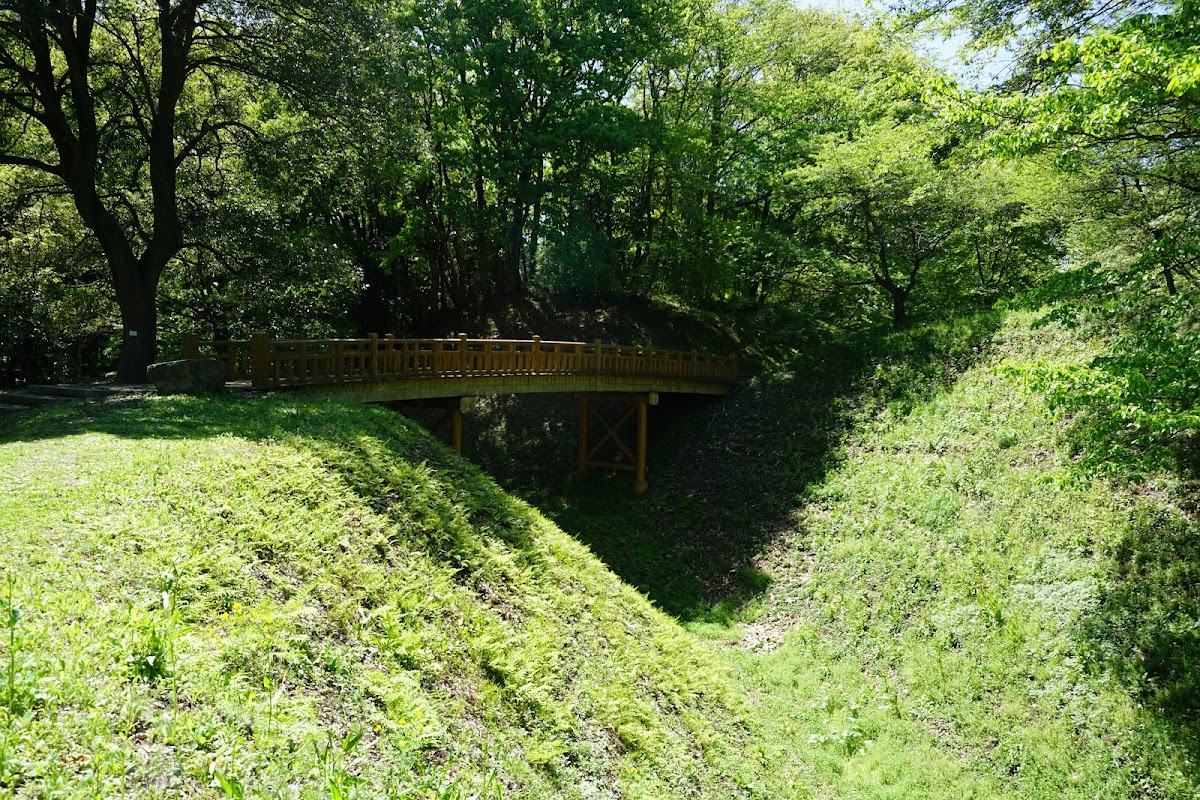
The large trench behind the main enclosure (west side) is particularly impressive, boasting considerable depth and width, suggesting it was reinforced during the Sengoku period (Warring States period). This trench can still be observed within the park, making it a valuable historical relic that allows us to appreciate the defensive techniques of a medieval mountain castle.
Dry moats were also strategically placed around the enclosures, forming multiple lines of defense. These moats skillfully utilized the natural terrain while also being artificially excavated to enhance their defensive capabilities.
Structure of Earthworks
Earthworks were constructed around the perimeter of each enclosure. These earthworks protected the interior of the enclosures and served to defend against enemy arrows and stones. Even today, earthworks approximately 1-2 meters high remain well-preserved, mainly around the main enclosure, providing important clues to understanding the castle’s structure at the time.
While some parts of the earthworks have been altered in later periods, the basic layout is believed to retain its original form from the time of construction, making it a valuable resource illustrating the development of castles from the late Heian period to the Sengoku period.
Current Status as Omaruyama Park
Park Development and Cherry Blossom Spot
Currently, the Kuragasaki Castle ruins have been developed as “Omaruyama Park,” serving as a place of relaxation for local residents. Walking paths have been established within the park, allowing visitors to enjoy exploring the castle ruins.
Especially in spring, it is known as a famous cherry blossom viewing spot, attracting many visitors. The combination of cherry blossoms blooming at the castle ruins and the historical remains offers visitors both historical romance and seasonal beauty. During cherry blossom season, the ruins are sometimes illuminated at night, allowing visitors to enjoy the castle ruins in a magical atmosphere.
Preservation Status of Remains and Points of Interest
Within Omaruyama Park, you can view the following remains:
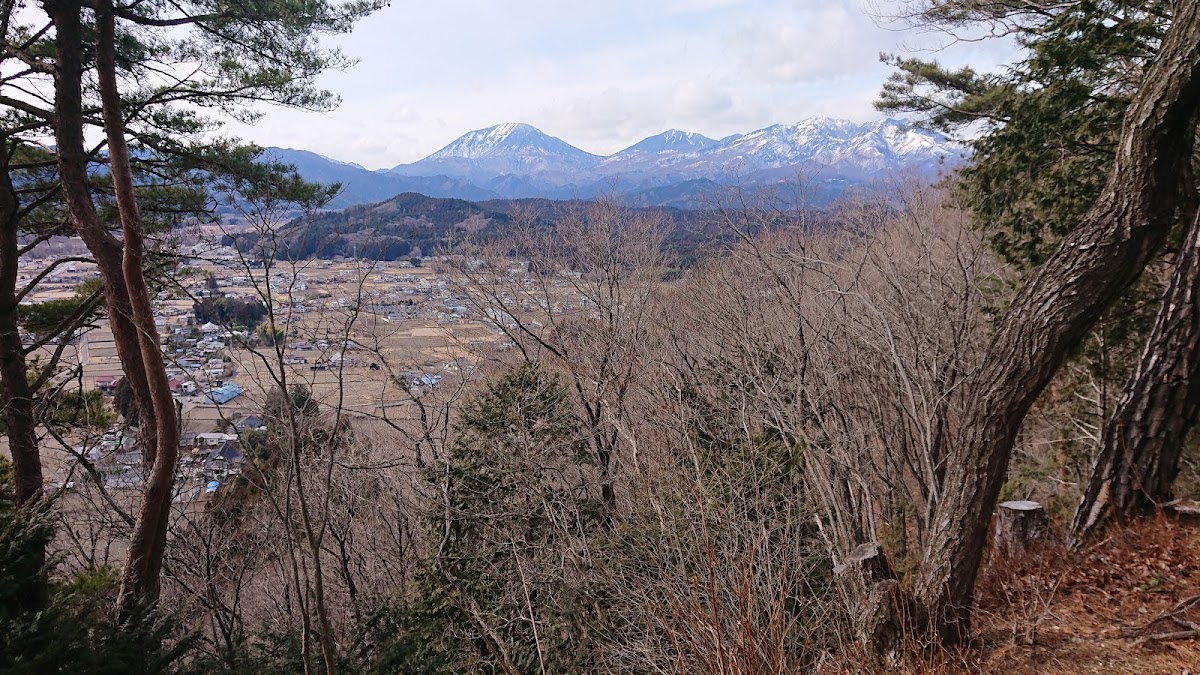
Main Enclosure Ruins: Located at the highest point of the park, it offers panoramic views of the surrounding area. On clear days, you can enjoy panoramic views of the surrounding mountains and the townscape of Kitsuregawa.
Moat: The large moat behind the main enclosure is a must-see. You can descend into the deeply excavated bottom of the moat and observe the defensive techniques of a medieval mountain castle up close.
Earthwork: The earthworks remaining around each enclosure can be seen along the park’s walking paths. Information boards are also installed to help understand the castle’s structure.
Enclosure Remains: You can observe how multiple enclosures are arranged in a stepped pattern. The differences in elevation between the enclosures allow you to understand the defensive plan of the time.
Information Boards and Information Facilities
Information boards explaining the history and structure of Kuragasaki Castle are installed within the park. These boards are located near the main remains, allowing you to learn about the castle’s highlights and historical background while strolling around.
Furthermore, a map is installed near the park entrance, ensuring that even first-time visitors can easily navigate. Parking is also available, making it convenient to access by car.
Historical Sites in and Around Kitsuregawa Jinya
Remains of Kitsuregawa Jinya
At the foot of Kuragasaki Castle, near the current Kitsuregawa City Hall in Sakura City, stood the Kitsuregawa Jinya (fortified residence) from the Edo period. The main gate of the Jinya is still preserved today, conveying the prestige of the Kitsuregawa clan.
Unlike Kuragasaki Castle, a mountain castle, Kitsuregawa Jinya was a residence-style facility built on flat land. Its structure emphasized administrative functions, befitting the peaceful Edo period. The imposing appearance of the main gate speaks to the prestige of the Kitsuregawa clan as a high-ranking family.
Castles Related to the Shioya Clan in the Surrounding Area
Several castles built by the Shioya clan are scattered around Kuragasaki Castle:
Gozenbara Castle: One of the Shioya clan’s branch castles, located north of Kuragasaki Castle.
Katsuyama Castle: An important branch castle of the Shioya clan, forming a coordinated defensive system with Kuragasaki Castle. Kawasaki Castle: This was the main residence of the Shioya clan, and the castle of the main branch of Shioya Korehiro, who built Kuragasaki Castle.
By visiting these castles, you can understand the Shioya clan’s system of territorial control and the castle network of Shimotsuke Province during the medieval period.
Kitsuregawa Onsen
Near the Kuragasaki Castle ruins is Kitsuregawa Onsen, where you can enjoy the hot springs along with visiting the castle. Kitsuregawa Onsen is known as a “beauty-enhancing hot spring,” and has many day-trip bathing facilities. Relaxing in the hot springs after a historical walk is a unique way to enjoy this region.
Historical Significance of Kuragasaki Castle
Value as the Shioya Clan’s Residence for 17 Generations and 400 Years
The greatest historical significance of Kuragasaki Castle lies in the fact that the Shioya clan used it as their residence for 17 generations and approximately 400 years. In the medieval period, it is extremely rare for a family to use the same castle as their base for such a long period of time.
This fact indicates that the Shioya clan maintained stable rule as a deeply rooted local lord, and that Kuragasaki Castle continued to function as a fortress for a long period. Kuragasaki Castle, which continuously adapted to changing times through repeated renovations, can be considered a living textbook illustrating the development process of medieval castles.
Lineage as a Castle of the Minamoto Clan
The Shioya clan was a branch of the Minamoto clan, particularly closely related to the Utsunomiya clan. Kuragasaki Castle was built as a reward for military achievements in the Genpei War and is positioned as a castle that played a part in the Minamoto clan’s control of eastern Japan.
The exploits of Shioya Korehiro, who followed Minamoto no Yoshitsune, are an episode that symbolizes the relationship between the Minamoto clan and the samurai groups of eastern Japan, and Kuragasaki Castle is a valuable historical site that conveys this historical memory to the present day.
Connection with the Ashikaga Clan
The Kitsuregawa clan, who took over after the Shioya clan’s downfall, held a special status as descendants of the Ashikaga shogunate. The presence of the Kitsuregawa clan gave this area significant importance as a place associated with the Ashikaga clan.
The Edo shogunate’s granting of the Kitsuregawa clan the status of a high-ranking samurai family was a manifestation of respect for the Ashikaga shogunate and a political consideration to demonstrate the legitimacy of the samurai government. The Kuragasaki Castle ruins and the Kitsuregawa Jinya (fortified residence) possess historical value that transcends mere castle ruins, as historical sites that tell the story of this complex political background.
Kuragasaki Castle Highlights and Visiting Guide
Recommended Sightseeing Route
Allow approximately 40 minutes to 1 hour to visit Kuragasaki Castle (Omaruyama Park). The recommended sightseeing route is as follows:
- Parking Lot/Park Entrance: Check the overall layout on the map.
- Eastern Enclosures: Observe the terraced enclosures while climbing the walking path.
- Main Enclosure: Enjoy the surrounding view from the highest point.
- Large Moat: Observe the magnificent moat behind the main enclosure.
- Western Enclosures: Descend while observing the earthworks and dry moats.
- Information Board Area: Learn about the castle’s history.
Best Time to Visit
Spring (Late March to Early April): Most popular during cherry blossom season. The combination of cherry blossoms and castle ruins is spectacular, but crowds are expected.
Autumn (October to November): The autumn foliage season allows for a more relaxed observation of the remains. The weather is pleasant, making it ideal for a stroll.
Winter (December to February): The remains become easier to see after the leaves have fallen. With few visitors, it’s recommended for those who want to carefully study the castle’s structure.
Points to Note When Visiting
- Some areas in the park are unpaved, so we recommend wearing comfortable shoes.
- Be careful of your footing in areas with elevation changes, such as moats.
- Insect repellent is recommended during the summer months.
- Refer to the explanatory signs and information boards to confirm the location of the remains while you visit.
- Photography is permitted, but please be considerate of other visitors.
Photo Opportunities
View from the Main Enclosure: An excellent photo spot offering panoramic views of the surrounding area.
Large Moat: Capture the impressive scale of the medieval mountain castle from an angle looking up from the bottom of the moat.
Earthworks and Cherry Blossoms: Available only in spring, the combination of earthworks and cherry blossoms expresses the harmony of history and nature.
Terrain of the Enclosures: You can capture the stepped arrangement of enclosures, a characteristic of a multi-enclosure castle.
Kuragasaki Castle Evaluation and Reviews
The evaluation from castle enthusiasts is generally positive, with the following points being particularly highly rated:
- Preservation Status of Remains: The moats and earthworks are well-preserved, making it easy to understand the structure of a medieval mountain castle.
- Easy Access: It is maintained as a park, making it easy for beginners to visit.
- View: The view from the main enclosure is excellent, allowing visitors to appreciate its strategic importance at the time.
- Depth of History: You can experience the 400-year history of the Shioya clan over 17 generations.
On the other hand, the following points have been raised:
- There are relatively few explanatory signs, and some areas would benefit from more detailed explanations.
- Some of the remains are covered in bushes, making observation difficult in some places.
- It is relatively unknown as a castle, resulting in fewer visitors.
Overall, it is a historical site well worth visiting for those interested in medieval mountain castles and those who want to learn about the history of the Shioya and Ashikaga clans.
Summary: The Charm of Kuragasaki Castle
Kuragasaki Castle is a historically valuable mountain castle that served as the residence of the Shioya clan for 400 years over 17 generations, from the late Heian period to the Sengoku period. Built as a reward for military achievements during the Genpei War, Kuragasaki Castle served as an important strategic point in northern Shimotsuke Province until its abandonment during Toyotomi Hideyoshi’s siege of Odawara.
Currently, it is maintained as Omaruyama Park, with well-preserved remains such as moats, earthworks, and baileys. In spring, it is a popular spot for cherry blossoms, and it is an attractive location where history and nature harmonize.
Including the history of the Kitsuregawa clan, who took over after the Shioya clan’s downfall, this area is a valuable place where you can experience the multifaceted history from the medieval to the early modern period. It is a recommended historical site not only for castle enthusiasts but also for those interested in history and those who enjoy nature walks.
As part of a trip exploring the history of Tochigi Prefecture, or as a destination for a castle tour of medieval castles in the Kanto region, Kuragasaki Castle is a fascinating historical site that you should definitely visit. Visiting it in conjunction with the nearby Kitsuregawa Jinya and Kitsuregawa Onsen will allow you to enjoy an even more fulfilling historical exploration.
--765x450.png)