Minagawa Castle (Tochigi Prefecture) Complete Guide: A Thorough Explanation of History, Highlights, and Access
Located in Minagawa-jonai-cho, Tochigi City, Tochigi Prefecture, Minagawa Castle is a mountain castle known as the residence of the Minagawa clan, who ruled Shimotsuke Province from the Muromachi period to the early Edo period. Due to its unique spiral layout, it is also called Horagai Castle, and is now maintained as Minagawa Castle Ruins Park, a popular cherry blossom viewing spot in Tochigi City.
History of Minagawa Castle: The Residence of a Prestigious Family that Laid the Foundation of Tochigi
Origins of the Minagawa Clan and the Construction of the Castle
The history of Minagawa Castle dates back to Oei 1 (1394) in the Muromachi period. The Minagawa clan originated as a branch family of the Naganuma clan, which held power in Shimotsuke Province since the Kamakura period. The Minagawa clan was once extinguished when their territory was confiscated at the end of the Kamakura period, but in the Muromachi period, a relative, Naganuma Hidemitsu (later Minagawa Hidemitsu), revived the clan in the Minagawa area and built this castle.
The Minagawa clan utilized the natural fortifications of an isolated hill on the west bank of the Nagano River, constructing a typical flatland castle with the main keep on the 147-meter-high summit and a residence at the foot of the hill. The relative height from the base was approximately 80 meters, and it functioned as an impregnable fortress during the Sengoku period.
The Minagawa Clan and Territorial Expansion in the Sengoku Period
During the Sengoku period, the Minagawa clan expanded their power in the southern part of Shimotsuke Province. In particular, during the time of Minagawa Toshimune, they established their own sphere of influence while maintaining relations with the Utsunomiya clan. Later, during the time of Minagawa Hiroteru, they reached their peak, becoming a daimyo with a maximum territory of 70,000 koku.
Minagawa Hiroteru was initially subordinate to the Utsunomiya clan, but when Hojo Ujimasa and Ujinao, father and son, advanced northward with a large army during the Tensho era, he assessed the situation and surrendered to the Hojo. This political decision was a survival strategy for a Sengoku daimyo.
The Siege of Odawara and the Fall of Minagawa Castle
In 1590, when Toyotomi Hideyoshi’s siege of Odawara began, Minagawa Castle, which had sided with the Hojo, also became a target. Besieged by a large Toyotomi army, Minagawa Castle fell. However, because Minagawa Hiroteru surrendered early, his territory was secured, and he was able to remain a daimyo under the Toyotomi regime.
Tokugawa Ieyasu’s Wrath and Dispossession of Domain
After the Battle of Sekigahara, Minagawa Hiroteru served Tokugawa Ieyasu, but in 1609, he incurred Ieyasu’s wrath and was dispossessed of his domain. There are various theories regarding the reason for the Minagawa clan’s dismissal, but it is believed to have stemmed from collective responsibility for misconduct by their retainers and an incident that caused them to lose Ieyasu’s trust.
This dismissal marked the end of the Minagawa clan’s 215-year rule over Tochigi, and Minagawa Castle was abandoned. The governing system and culture established by the Minagawa clan became the foundation for the subsequent development of Tochigi, and they are remembered to this day as “the family that laid the foundation for Tochigi.”
Structure and Layout of Minagawa Castle: Characteristics of “Horagai Castle”
Unique Spiral Layout
The most distinctive feature of Minagawa Castle is its spiral layout. With the main keep at the mountaintop as the center, the second and third baileys are arranged in a spiral pattern. Due to this unique shape, it is also known as “Horagai Castle” (Conch Shell Castle).
This layout is extremely advantageous defensively, as it constantly exposes the sides of the castle to attacking enemies. Furthermore, by skillfully utilizing the mountainous terrain, effective defense was possible even with a small number of troops.
Major Remains
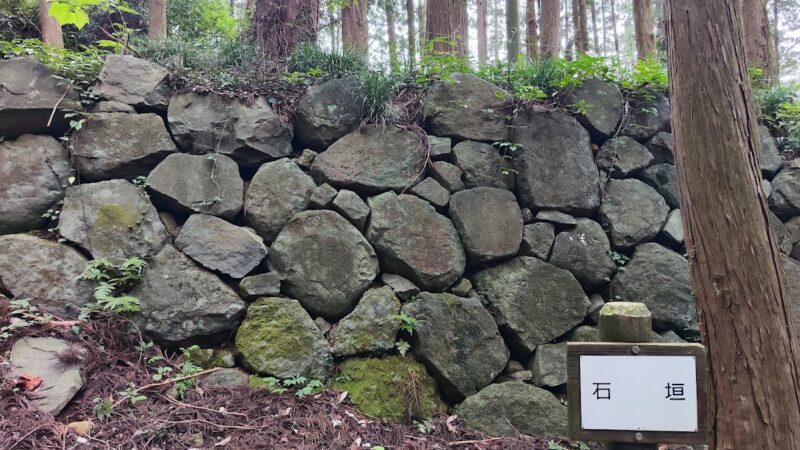
The remains of a medieval mountain castle are well-preserved at the current Minagawa Castle site.
Main Enclosure Site: Located on the mountaintop at an altitude of 147 meters, an observation deck has now been installed. From here, you can enjoy a panoramic view of Tochigi city and experience the scenery that the former lord of the castle must have seen over his territory.
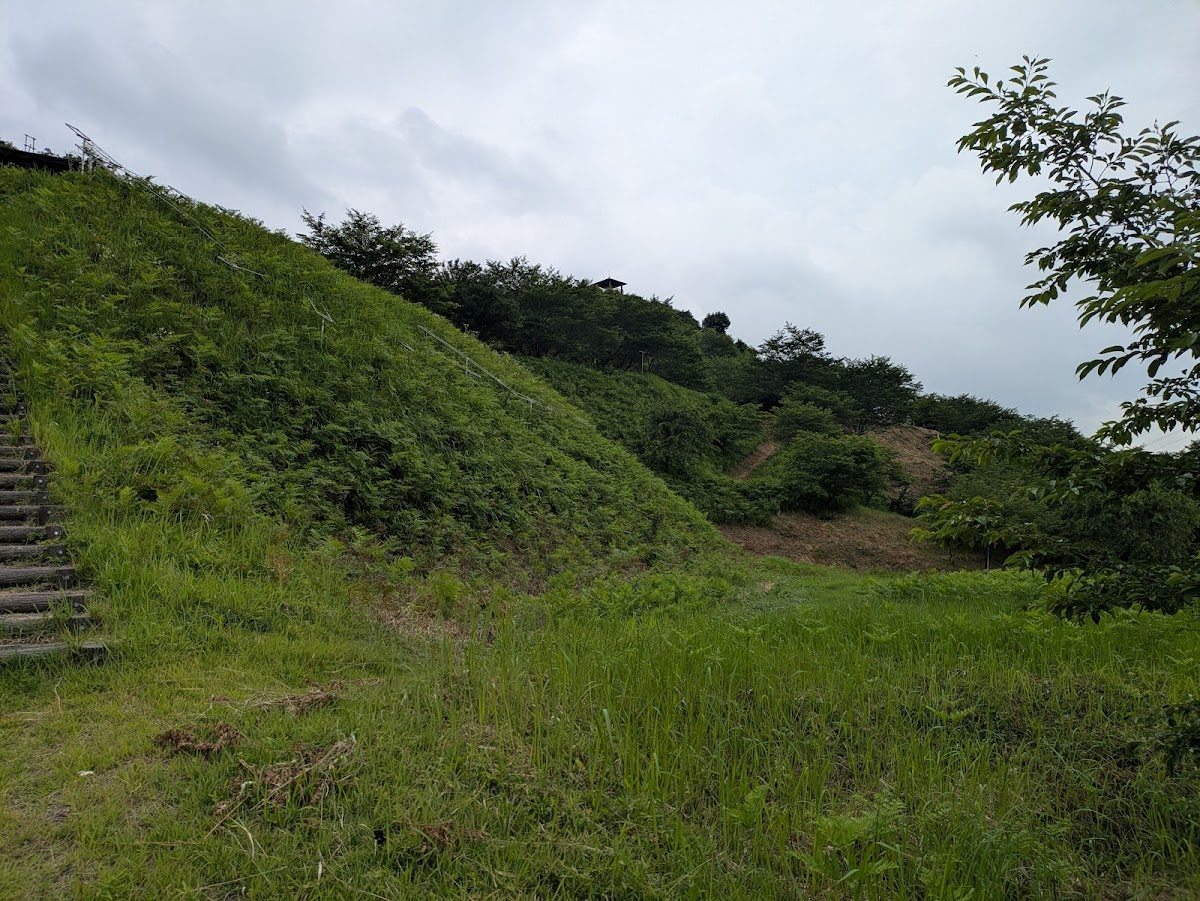
Earthworks and Dry Moats: Around the Minagawa District Community Center at the foot of the mountain, earthworks and dry moats remain, believed to be the site of the former residence. These are remnants of the defensive facilities of the time and are important remains that tell the story of the castle’s scale.
Group of Enclosures: Multiple enclosures (flat areas) are arranged in a stepped pattern on the mountainside, and are thought to have been used as garrisons for soldiers and storage areas for supplies.
Vertical Moats: Multiple vertical moats, designed to prevent enemy lateral movement, can be seen on the mountain slopes, offering insights into the defensive techniques of mountain castles during the Sengoku period.
Highlights of Minagawa Castle Ruins Park
A Famous Cherry Blossom Spot
Minagawa Castle Ruins is now developed as Minagawa Castle Ruins Park, making it one of Tochigi City’s leading cherry blossom viewing spots. In spring, approximately 200 Somei Yoshino cherry trees color the entire mountain, attracting many visitors. The contrast between the mountaintop view and the cherry blossoms is spectacular, making it a popular spot for photography.
Historical Walking Trail
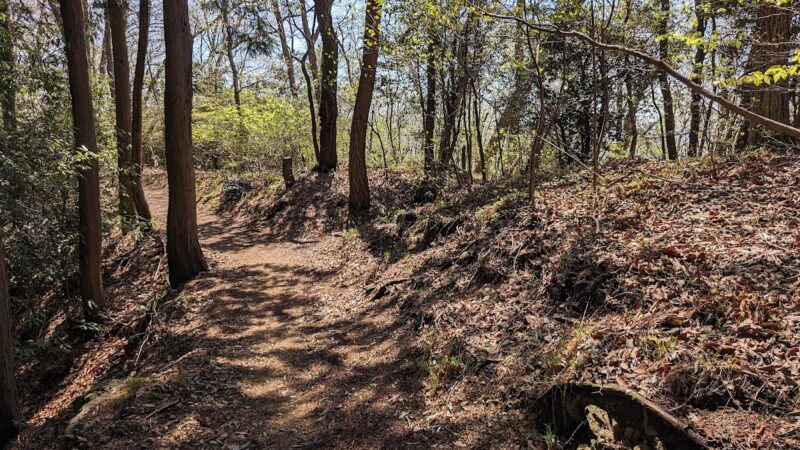
A walking trail is maintained within the park, allowing you to climb to the main keep site in about 20 minutes. Information boards are installed along the way, allowing you to learn about the castle’s history and structure while you walk. The slope is gentle enough for those who are not confident in their physical fitness to climb at a leisurely pace.
View from the Summit
The site of the main keep at the summit is believed to have once housed a lookout post and is now an observation deck. From here, you can see not only the city of Tochigi but, on clear days, even Mount Tsukuba and the Nikko mountain range, giving you a real sense of the vast territory ruled by the Minagawa clan.
Historical Value
Minagawa Castle Ruins were designated a Tochigi City Historic Site in May 1964, recognizing its historical value. It was redeveloped from 1989 to 1999 as part of the “Special Measures Project for Community Development,” and further redevelopment took place from 2003 to 2009.
It is a fine example of a site that is protected as a regional cultural heritage while also serving as a place of relaxation for citizens.
Surrounding Historical Spots
Ancient Temples in the Minagawa Area
Near Minagawa Castle, there are several temples associated with the Minagawa clan. These temples contain the Minagawa clan’s graves and related documents, making them a worthwhile historical exploration route.
The Traditional Warehouse District of Tochigi City
Located about 15 minutes by car from Minagawa Castle, the central area of Tochigi City is known as the “Warehouse District,” retaining the atmosphere of a thriving commercial city from the Edo period to the Meiji era. Designated as an Important Preservation District for Groups of Traditional Buildings, it’s highly recommended to visit in conjunction with a historical walk.
Access Information
Public Transportation
- Approximately 25 minutes by bus from JR/Tobu Tochigi Station, get off at “Minagawa Jōnai” bus stop, then approximately 5 minutes on foot.
- The Tochigi City Loop Bus “Fureai Bus” is also available.
By Car
- Approximately 15 minutes from the Tohoku Expressway “Tochigi IC”
- Approximately 20 minutes from the Kita-Kanto Expressway “Tsuga IC”
- Parking: Minagawa Castle Ruins Park parking available (free)
Basic Information
- Location: Minagawa Jōnai-machi, Tochigi City, Tochigi Prefecture
- Admission Fee: Free
- Opening Hours: Always open
- Inquiries: Tochigi City Tourism Association
Best Season to Visit
Spring (Late March to Early April)
The cherry blossom season is the most popular time to visit, when the entire mountain is dyed pink with blossoms. In some years, the trees are illuminated at night, allowing visitors to enjoy the magical sight of cherry blossoms at night.
Early Summer (May-June)
The fresh greenery is beautiful, and the weather is mild, making it the perfect time for a stroll. It’s less crowded, allowing for a leisurely historical exploration.
Autumn (November)
The autumn leaves color the mountains, offering a different look than spring. The clear air makes the view from the mountaintop exceptional.
Points to Note When Visiting Minagawa Castle
Clothing and Equipment
As it’s a mountain castle, comfortable walking shoes and clothing are essential. Especially after rain, the ground can become slippery, so trekking shoes are recommended.
Time Required
The round trip from the parking lot to the main keep ruins takes about 1 hour. Allow 1.5 to 2 hours for a thorough visit.
Food and Drink Facilities
There are no food and drink facilities within the park, so it’s recommended to bring your own. There are restaurants and shops in the Minagawa area at the foot of the mountain.
Summary: A Valuable Historical Site Where You Can Experience Tochigi’s History
Minagawa Castle is a valuable historical site that tells the story of the Minagawa clan, who ruled Tochigi for 215 years. Its unique spiral layout, well-preserved remains, and the spectacular view from the mountaintop allow visitors to feel the spirit of the Sengoku period.
Minagawa Castle Ruins Park, which displays different expressions throughout the seasons—cherry blossoms in spring, lush greenery in summer, and vibrant autumn leaves—is a recommended spot not only for history buffs but also for those who want to enjoy nature. When you visit Tochigi City, why not take some time to reflect on the glory of the Minagawa clan, who laid the foundation for Tochigi, at this “Horagai Castle”?
The history of Minagawa Castle, which was involved in major turning points in Japanese history, such as its relationship with Tokugawa Ieyasu and its participation in the Siege of Odawara, possesses a charm that transcends the boundaries of local history. Checking the Tochigi City Tourism Association’s sitemap and homepage as related links will make it easier to plan your sightseeing in the surrounding area.
--765x450.png)