Kaneko Castle (Niihama City, Ehime Prefecture) Complete Guide | History, Structure, and Highlights Explained in Detail
What is Kaneko Castle?
Kaneko Castle is a Sengoku period mountain castle built on Mount Kaneko in Niihama City, Ehime Prefecture. Also known as Kanekoyama Castle or Kitsue Castle, it is currently protected as a Niihama City designated historical site.
Located on the summit of Mount Kaneko, approximately 80 meters above sea level, overlooking the alluvial plain on the left bank of the Kokuryo River, it played an important role in the history of the Toyo region as the base of the Kaneko clan, who ruled the Niihama district of Iyo Province. Currently, the castle ruins have been developed into “Takinomiya Park,” a place of relaxation for citizens.
History of Kaneko Castle
Origin of the Kaneko Clan and Migration to Iyo
The Kaneko clan was a samurai family belonging to a branch of the Murayama clan, one of the seven Musashi clans. The family’s ancestry dates back to the Kamakura period, beginning with Kaneko Ietada, who distinguished himself in the defeat of the Taira clan under Minamoto no Yoshitsune.
Kaneko Ietada achieved numerous military successes, including in the Battle of Ichinotani and the Battle of Yashima, and was appointed as the jitō (land steward) of Niihama District in Iyo Province for his achievements. This appointment marked the beginning of the Kaneko clan’s deep connection with Iyo Province.
During the Kenchō era (1249-1255), Kaneko Hiroie, a descendant of Kaneko Ienori (a great-grandson of Ietada), moved from his ancestral home in Kaneko-gō, Iruma District, Musashi Province (present-day Iruma City, Saitama Prefecture) to Niihama District in Iyo Province. Hiroie is considered the founder of the Iyo Kaneko clan, and he established himself in this region, expanding his influence.
Construction of Kaneko Castle
There are several theories regarding the construction period and builder of Kaneko Castle.
Main Theories of Castle Construction:
- Theory of Construction by Kaneko Hiroie: This theory suggests that Kaneko Hiroie, who migrated to Iyo Province between the Kenchō and Kōan periods (1249-1288), built the castle. This is considered the most likely explanation.
- Theory of Construction by Kaneko Yorihira: Another theory suggests that Kaneko Yorihira, Hiroie’s grandson, built the castle.
- Theory of Construction during the Nanboku-chō Period: This theory suggests that the castle was built by the Kaneko clan during the Nanboku-chō period (14th century).
In any case, it is clear that the Kaneko clan established a castle on Kaneko Mountain, a strategically important location, to solidify their control over Niihama District in Iyo Province. Kaneko Castle functioned as a base for the Kaneko clan to effectively control the eastern part of Tōyo Province.
The Kaneko Clan in the Sengoku Period
At the start of the Sengoku period, a complex power structure centered around the Kōno clan formed in Iyo Province. The Kaneko clan is believed to have operated as a branch of the Kono clan, or under their control.
In the late 16th century, Chosokabe Motochika of Tosa Province expanded his power in Shikoku and began invading Iyo Province. The head of the Kaneko clan at this time was Kaneko Motoyasu (or Motoie), who faced pressure from the Chosokabe clan.
To secure the security of his territory, Kaneko Motoyasu made a peace treaty and formed an alliance with Chosokabe Motochika. This temporarily preserved the Kaneko clan’s territory. However, this choice would later significantly alter the Kaneko clan’s fate.
The Shikoku Campaign and the Fall of Kaneko Castle in 1585
In 1585, Hashiba Hideyoshi (later Toyotomi Hideyoshi), aiming for the unification of Japan, dispatched a large army to pacify Shikoku. This was the Shikoku Campaign.
Hideyoshi devised a strategy to attack Shikoku from three directions, dispatching a large army led by Kobayakawa Takakage to the Iyo region. Kobayakawa Takakage was a senior retainer of the Mori clan and possessed a powerful military force, including a navy.
Kaneko Mototaka, who was allied with the Chosokabe clan, had no choice but to resist Hideyoshi’s army. As guardian, Kaneko Mototaka holed up in Takao Castle (another castle in present-day Niihama City), while his younger brother, Kaneko Motoharu (Tsushima-no-kami), was stationed at Kaneko Castle to defend it.
Kobayakawa Takakage’s forces invaded Iyo with overwhelming numbers, approaching Kaneko territory. Kaneko Mototaka fought a fierce battle against the Kobayakawa army at Nonoichihara (present-day Niihama City), but the difference in troop strength was obvious, and Mototaka was killed in action.
Kaneko Castle, having lost its commander, continued to resist, but eventually fell to the fierce attack of Kobayakawa Takakage. Thus, the rule of the Kaneko clan came to an end, and Kaneko Castle became a fallen and abandoned castle.
Kaneko Castle After its Fall
After the conquest of Shikoku, Iyo Province came under the control of Kobayakawa Takakage, and subsequently, Fukushima Masanori and Kato Yoshiaki became the lords of Iyo. Kaneko Castle lost its military value and was left abandoned.
In the Edo period, the Niihama area came under the control of the Saijo and Komatsu domains, but Kaneko Castle was never rebuilt. The castle ruins gradually returned to nature and became a place affectionately known locally as “Kaneko-yama” (Kaneko Mountain).
Structure and Layout of Kaneko Castle
Location and Topography
Kaneko Castle is a flatland castle built on the summit of Kaneko-yama, approximately 80 meters above sea level. Located on the left bank of the Kokuryo River, it occupies a strategically important location overlooking the Niihama Plain.
The mountain’s shape is relatively gentle, and the castle’s layout is characterized by its use of a long, narrow ridge running north-south. The eastern side is a steep slope, functioning as a natural defensive line. The western side is relatively gentle, and it is presumed that a castle town or residence was located there.
Layout and Remains
The layout of Kaneko Castle is thought to have had a typical structure for a medieval mountain castle.
Main Components:
- Main Enclosure (Honmaru): Located at the mountaintop, it is presumed to have been the residence and command post of the castle lord. Currently, the first observation deck is installed, and a stone monument has been erected.
- Second and Third Enclosures: These enclosures were arranged around the main enclosure and are thought to have been used as defensive facilities and troop encampments.
- Moat: A defensive structure built to cut off the ridge. It played an important role in preventing enemy incursions.
- Earthworks: Earthen defensive walls built around the baileys. Traces of some of these can still be seen today.
- Vertical Moats: Moats dug along the slopes, serving to prevent flanking attacks by enemies.
Currently, the Kaneko Castle ruins are maintained as “Takinomiya Park,” so there are few clearly visible remains. However, by carefully observing the topography, traces of the baileys’ elevation changes and moats can still be seen.
The Town Below the Castle
It is presumed that the residences of the castle lord and his retainers, as well as the residential areas of townspeople, were located at the foot of Mount Kaneko. In particular, the place name “Ochaya-dani” still remains today, which is thought to be the location of the castle lord’s tea house or villa. This place name is a valuable trace that shows the cultural aspects of the Kaneko clan at that time.
Highlights of Kaneko Castle
Development as Takinomiya Park
Currently, the Kaneko Castle ruins are maintained as “Takinomiya Park,” a place of relaxation for the citizens of Niihama. The park features playgrounds and walking paths, making it a great place for families to visit.
In spring, cherry blossoms bloom in abundance, making it a popular spot for cherry blossom viewing. In autumn, the autumn foliage is beautiful, allowing visitors to enjoy the changing seasons.
Stone Monument at Kaneko Castle Ruins
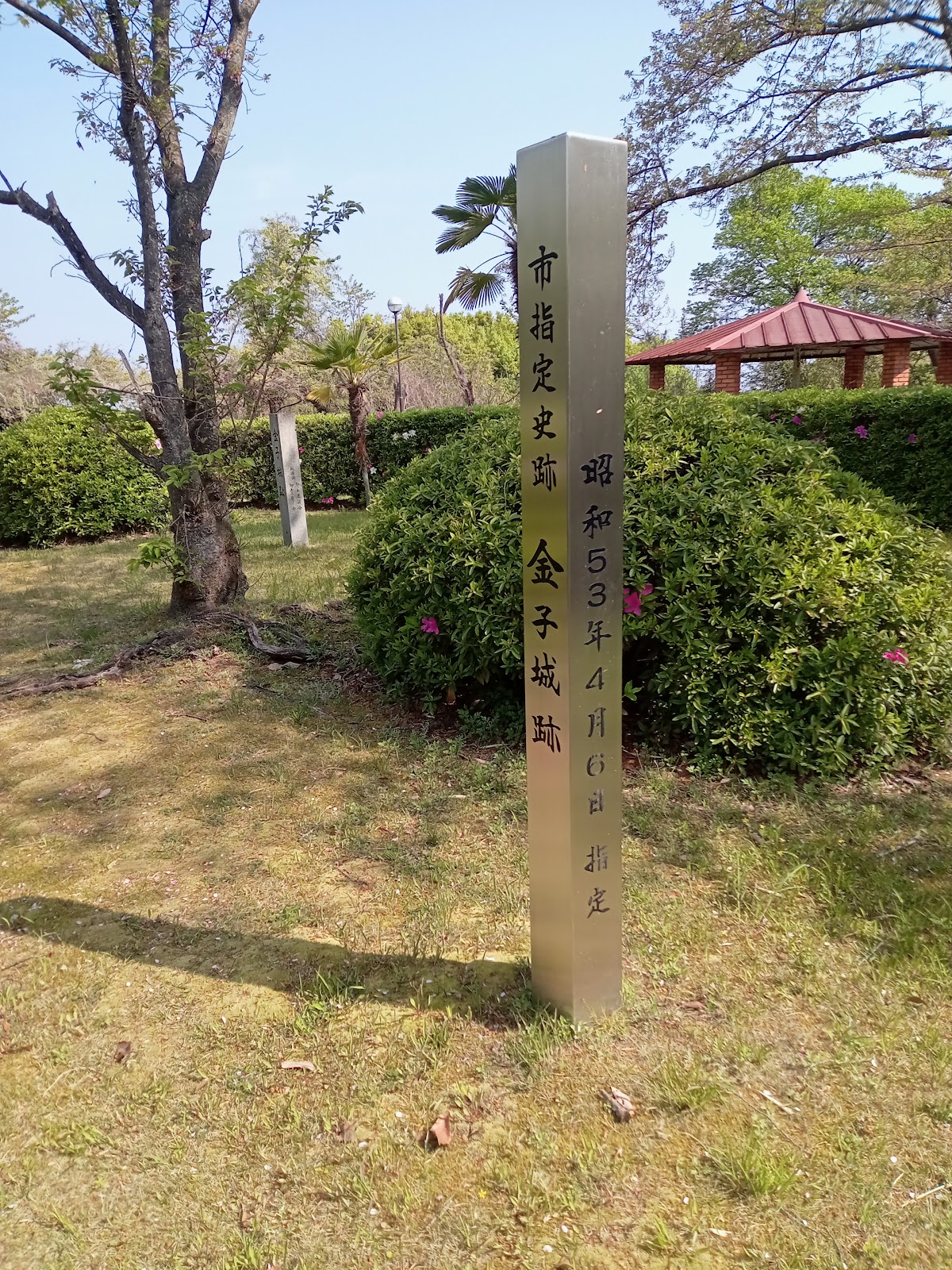
At the first observation deck, where the main keep is believed to have stood, stands a stone monument inscribed with “Kaneko Castle Ruins“. This monument was erected by Niihama City and indicates that this site was once an important castle.
From the area around the monument, you can enjoy a panoramic view of Niihama city, allowing you to imagine how the Kaneko clan once surveyed their territory from this location.
Views from the Observation Decks
Takinomiya Park has several observation decks offering views of Niihama city, the Seto Inland Sea, and the Shikoku Mountains. The view from the first observation deck is particularly magnificent; on a clear day, you can even see the Ishizuchi Mountain Range in the distance.
This view truly conveys the strategic importance of Kaneko Castle. It’s easy to understand why it was ideally located for early detection of enemy movements and monitoring the territory.
Traces of Moats and Earthworks
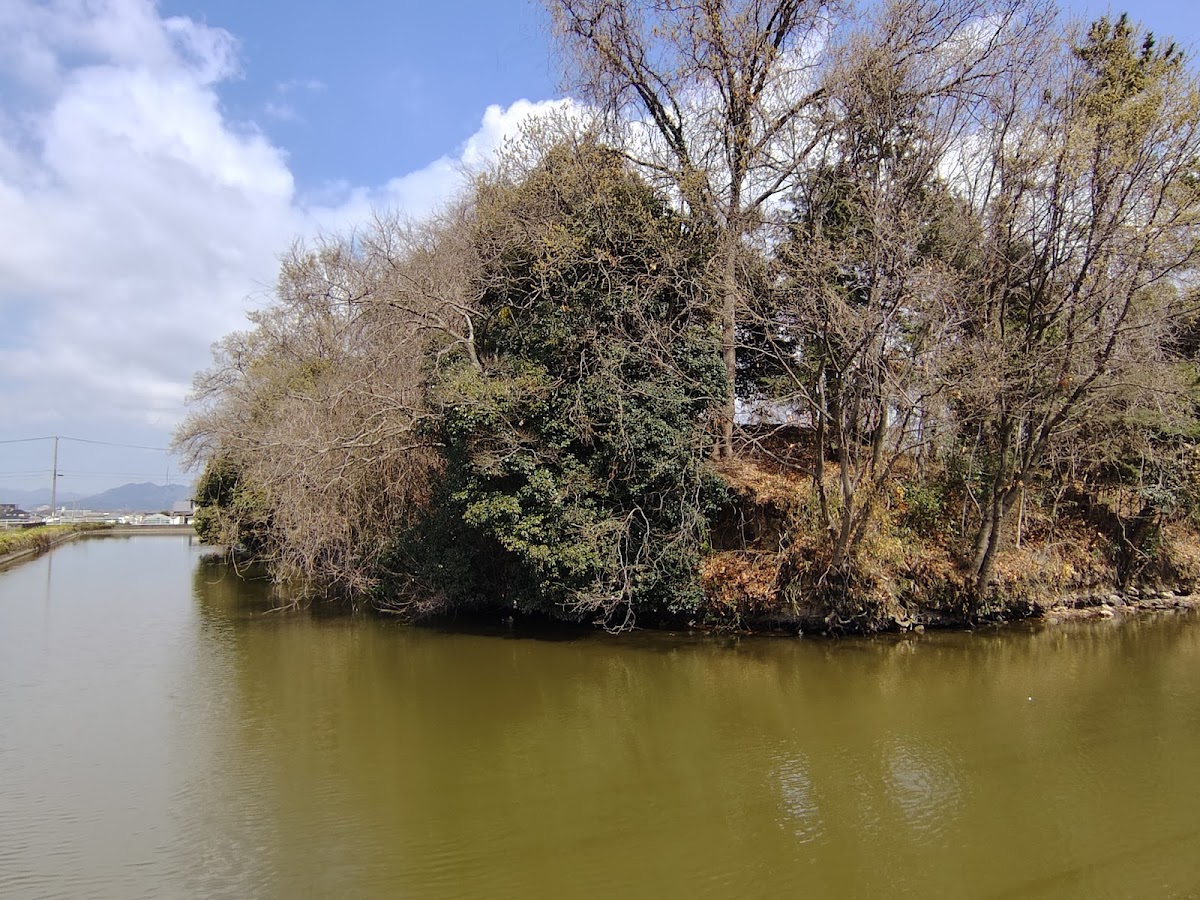
Although the site is now a park, careful observation reveals traces of moats and earthworks. In particular, breaks in the ridges and unnatural elevation changes are highly likely to be remnants of former moats and baileys.
Castle enthusiasts can gain a deeper understanding of Kaneko Castle’s structure by bringing a topographic map and exploring while estimating the castle’s layout.
Surrounding Historical Sites
Nearby historical sites related to the Kaneko clan and the history of Niihama are scattered throughout the area around the Kaneko Castle ruins.
- Takao Castle Ruins: The castle where Kaneko Mototaka met his end. It formed a defensive line in conjunction with Kaneko Castle.
- Ichinomiya Shrine: The main shrine of Niihama. It is said that the Kaneko clan also revered it.
- Niihama City Hirose Historical Museum: A facility where you can learn about the history of Niihama, focusing on the history of the Besshi Copper Mine. Some materials from the Kaneko era are also on display.
By visiting these spots together, you can systematically understand the history of Niihama from the Kaneko era to the modern era.
Access and Visiting Guide to Kaneko Castle
Location
Address: Kaneko-cho and Takinomiya-cho, Niihama City, Ehime Prefecture
Facility Name: Takinomiya Park
Transportation Access
Access by Train:
- Get off at JR Yosan Line “Niihama Station,” approximately 20 minutes on foot
- Approximately 1.5 km west from Niihama Station
Access by Bus:
- Get off at Setouchi Bus “Takinomiya Park” bus stop, short walk
Access by Car:
- Approximately 10 minutes from Matsuyama Expressway “Niihama IC”
- Approximately 5 minutes via city road from National Route 11
Parking:
- Takinomiya Park parking available (free)
- Approximately 50 cars can be accommodated
Visiting Information
Opening Hours: Always open (as it is maintained as a park)
Admission Fee: Free
Estimated Time Required: Approximately 30 minutes to 1 hour Restrooms: Public restrooms are available within the park.
Accessibility: Some walking paths are paved, but caution is advised as there are also mountain trails.
Points to Note When Visiting
- When walking on mountain trails, comfortable shoes are recommended.
- Don’t forget insect repellent during the summer months.
- Watch your step as some sections of the stairs to the observation deck are steep.
- Please respect the stone monuments and historical remains and take care not to damage them.
The Later Life of the Kaneko Clan
After the fall of Kaneko Castle, the Kaneko family scattered to various locations. Some are said to have returned to farming and remained in the Niihama area, while others served other daimyo (feudal lords).
Records remain from the Edo period showing that descendants of the Kaneko family were active in the Niihama area as village headmen and townspeople. Even today, many families with the Kaneko surname reside in Niihama City, allowing visitors to feel the legacy of the former lord.
Niihama City and Kaneko Castle
Niihama City developed from the Edo period onward through the development of the Besshi Copper Mine, becoming an important city supporting modern Japanese industry. However, until the Sengoku period, it flourished as a castle town of the Kaneko clan.
The Kaneko Castle ruins are designated as a Niihama City Historic Site, a valuable historical site that tells the story of Niihama City’s medieval history. The city is working to preserve and utilize the historical site, regularly maintaining explanatory signs and conducting cleaning activities.
The “Niihama Taiko Festival,” held every autumn, is said to be a festival that carries on the traditions from the Kaneko clan era, demonstrating that the region’s history and culture are still alive today.
Current Status and Challenges of Kaneko Castle Research
Research on Kaneko Castle is mainly conducted by local historians and castle researchers. However, due to the limited amount of documentary material, many aspects remain unclear, such as the construction date, detailed layout, and the structure of the castle town.
Future Research Topics:
- Confirmation of remains and dating through archaeological excavations
- Further excavation and analysis of documents related to the Kaneko clan
- Clarification of relationships with surrounding castles (such as Takao Castle)
- Identification of the extent and structure of the castle town
- Detailed verification of the relationship between the Kaneko clan, the Kono clan, and the Chosokabe clan
The Niihama City Board of Education and the Ehime Prefecture’s cultural property department have indicated their intention to continue investigations and research, and new discoveries are expected.
Summary
Kaneko Castle is an important historical site indispensable to understanding the history of Niihama City, Ehime Prefecture. As the base of the Kaneko clan, who ruled the Toyo region from the Kamakura period to the Sengoku period, it was the political and military center of the area.
Although it fell during the Shikoku campaign in 1585 and was abandoned, its historical value remains undiminished. Currently, it is a popular park for citizens, used as a place to learn about history and enjoy nature.
When you visit Niihama, be sure to stop by the Kaneko Castle Ruins and reflect on the history of the Kaneko clan, who once ruled this land. The view from the observation deck will evoke the same scenery seen by the warlords who lived during the Sengoku period, giving you a sense of historical romance.
The Kaneko Castle Ruins are a cultural heritage site that Niihama City can be proud of, and a valuable historical site that should be passed down to future generations. This historical site will be preserved for the future if each visitor cherishes history.