Yamaji Castle (Kochi Prefecture) Complete Guide | History and Remains of a Tosa Mountain Castle Overlooking the Shimanto River
Yamaji Castle is a medieval mountain castle located on Mt. Kaukamine in Yamaji, Shimanto City, Kochi Prefecture. Built on an isolated peak 72 meters above sea level overlooking the Shimanto River, this castle functioned as an important base in western Tosa Province. This article provides detailed information useful for castle enthusiasts and history fans, covering the historical background of Yamaji Castle, its layout, existing remains, and access methods.
Historical Background of Yamaji Castle
Construction History and Lord
Although there are few clear historical records regarding the construction period of Yamaji Castle, it is believed to be a castle associated with the Ichijo clan, who ruled western Tosa Province during the Sengoku period. The Ichijo clan governed the Hata region of Tosa from their base at Nakamura Gosho, and Yamaji Castle is highly likely to have been part of their network of branch castles.
Given its location along the Shimanto River, it is presumed that Yamaji Castle served as a strategic base for monitoring river traffic, controlling the river basin, and defending against inland invasions. Tosa Province had a mountainous terrain, and rivers were crucial transportation routes, making castles in such locations strategically important.
The Ichijo Clan and the Rule of Western Tosa
The Ichijo clan was a force formed when the Ichijo family, a noble family from Kyoto, moved to Tosa. They established the Nakamura Palace in Nakamura (present-day Nakamura, Shimanto City). The Ichijo clan expanded their power primarily in the Hata district of western Tosa, and at their peak, they reigned as a powerful daimyo controlling the western half of Tosa Province.
Yamaji Castle is located relatively close to Nakamura Castle (Nakamura Palace) and is thought to have been one of the important branch castles in the Ichijo clan’s territorial control. It likely functioned as a base for monitoring and controlling the Shimanto River basin, as well as a defensive position against invasions from eastern forces such as the Chosokabe clan.
The Chosokabe Clan’s Invasion and the Castle’s Fate
In the late 16th century, the Chosokabe clan, based in eastern Tosa Province, rapidly expanded its power. Chosokabe Motochika, using Okotoyo Castle as his base, proceeded with the unification of Tosa, and in 1574, he won a battle against the Ichijo clan, gaining control of most of Tosa Province.
While there are no specific records of battles in which Yamaji Castle played a role during this process, it is believed that with the unification of Tosa by the Chosokabe clan and the collapse of the Ichijo clan’s rule, Yamaji Castle was abandoned. Afterward, following Toyotomi Hideyoshi’s conquest of Shikoku and Yamauchi Kazutoyo’s entry into Tosa after the Battle of Sekigahara, the castle became an unused site during the Edo period.
The Layout and Structure of Yamaji Castle
Location and Topographical Characteristics
Yamaji Castle is built on an isolated peak facing the Shimanto River, with a relative elevation difference of approximately 70 meters. While its elevation of 72 meters is not particularly high, this isolated peak stands out remarkably due to its surrounding flat terrain. It boasts a natural moat—the Shimanto River—and is surrounded on three sides by the river and lowlands, making it a strategically important location.
Such isolated mountain castles are well-suited for defense, but securing water and escape routes during a siege presents challenges. However, its location facing the river likely provided advantages for supplying materials and transmitting information via water transport.
Main Enclosure and Earthworks
The main enclosure (honmaru) is located at the summit, surrounded by low earthworks. These earthworks functioned as defensive structures and also show evidence of construction to secure flat areas within the enclosure. The size of the main enclosure is standard for a medieval mountain castle, and it is presumed to have served as living space and a command post.
While the earthworks are now lower due to weathering, they were likely higher at the time of construction, possibly containing defensive structures such as fences or walls. In Tosa’s mountain castles, earthen ramparts rather than stone walls were common, and Yamaji Castle is a typical example.
Arrangement of the Second Enclosure and Terraced Enclosures
The second enclosure surrounds the main enclosure, and terraced enclosures extend along the eastern and southern ridges. This multi-layered arrangement of enclosures is a clever design to prevent enemy incursions in stages, and is a typical layout technique for medieval mountain castles.
The terraced enclosures are arranged in a stepped fashion along the ridge, with differences in elevation between each enclosure. This structure allows for counterattacks from the upper levels even if the lower enclosures are breached. Furthermore, increasing the number of enclosures allows for the deployment of more troops.
The castle is relatively large, and the fact that the enclosures extend onto the mountainside indicates that it was a fortress capable of accommodating a considerable number of soldiers. This suggests that Yamaji Castle was not merely a lookout post, but played an important role as a base for regional control.
Defensive Functions of Moats and Vertical Moats
Vertical moats and moats remain on the northern slope and southern ridge, serving as important defensive structures to prevent enemy intrusion. Moats dug to cut across the ridge served to prevent enemies from advancing along the ridge.
Vertical moats dug vertically along the slope prevented enemies from climbing the slope and restricted lateral movement. They also efficiently drained rainwater, contributing to the stabilization of the castle’s ground.
The remains of these moats are still relatively well-preserved and provide valuable clues to understanding the defensive system of Yamaji Castle.
Highlights and Current Status of Yamaji Castle
Existing Remains
The following remains still exist at Yamaji Castle:
Earthworks of the Main Enclosure: Although weathered, the earthworks surrounding the mountaintop are clearly visible. The earthworks are approximately 1 meter high, but it is presumed they were higher when the castle was built.
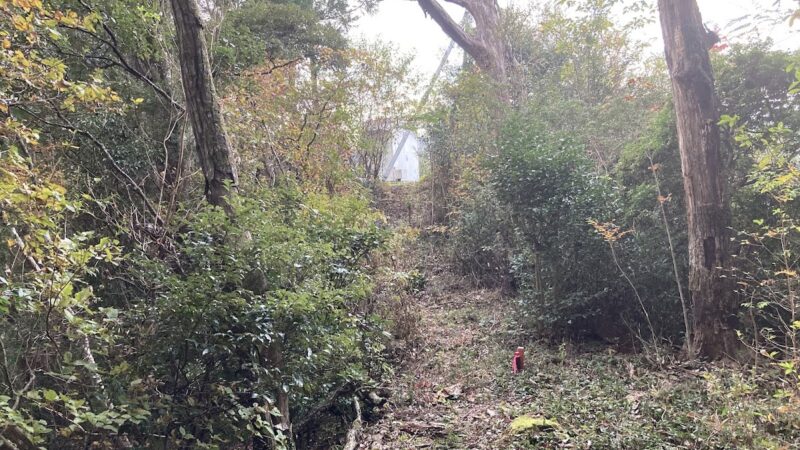
Terraced Enclosures: The terraced enclosures, spread across the eastern and southern ridges, are skillfully arranged, utilizing the undulations of the terrain. While the flat surfaces of each enclosure are covered in vegetation, their outlines are clearly discernible.
Moats: Multiple moats cutting across the ridges can be found, each approximately 2-3 meters deep. Although some sections are partially filled in, their function as defensive structures is clearly evident.
Vertical Moats: Vertical moats carved into the slopes can be found in several locations on the mountainside. Some extend for over 10 meters, demonstrating the advanced civil engineering techniques of the time.
Points for Climbing and Exploring
Yamaji Castle has a relatively low elevation difference of approximately 70 meters, making the climb relatively easy. However, since there isn’t a clearly defined climbing route, it’s best suited for those accustomed to exploring mountain castles.
Please note the following points when visiting the castle:
- Appropriate Equipment: Wear appropriate hiking boots, long-sleeved shirt and pants, gloves, etc. Insect repellent is also essential during the summer months.
- Prior Information Gathering: It is important to check topographic maps and castle layout maps in advance to understand the route.
- Avoid Solo Visits: If possible, visit with multiple people to ensure safety.
- Consideration for Private Property: The area around the castle ruins may be private property, and permission may be required for entry.
From the main enclosure, you can overlook the flow of the Shimanto River and the surrounding mountains, giving you a real sense of how excellent the castle’s location was in terms of views.
Photography Tips
The following are some photography tips when visiting Yamaji Castle:
- Main Enclosure Earthworks: Photographs capturing the cross-section and curved beauty of the earthworks are useful for understanding the castle’s structure.
- Depth of the Moat: Photographing from an angle looking up from the bottom of the moat clearly shows its depth and defensive function. – View of the Shimanto River: Photographs of the view from the main enclosure serve as valuable documentation of the castle’s strategic location.
- Series of Terraced Enclosures: Photographs capturing the continuous series of terraced enclosures along the ridge help in understanding the overall layout of the castle.
Yamaji Castle and Surrounding Castles
Castle Network of Western Tosa
Yamaji Castle functioned as part of the castle network of western Tosa. The following castles exist in the surrounding area:
Nakamura Castle (Nakamura Palace): The base of the Ichijo clan, located in Nakamura, Shimanto City. Yamaji Castle is positioned as a branch castle of Nakamura Castle.
Tamematsu Castle: A castle located in Nishitosa, Shimanto City, which served as a control point for the upper reaches of the Shimanto River.
Yasumi Castle: Located in Yasumi, Shimanto City, it was positioned to control the eastern invasion route to Nakamura.
These castles were interconnected and supported the Ichijo clan’s rule over their territory. Yamaji Castle also played a crucial role in this network, monitoring and controlling the middle reaches of the Shimanto River.
Comparison with Major Mountain Castles in Tosa
Kochi Prefecture has numerous mountain castles, each with its own unique characteristics. Let’s compare Yamaji Castle with other major mountain castles in Tosa:
Okotoyo Castle: The base of the Chosokabe clan, located in Yoshida, Okotoyo-cho, Nankoku City, Kochi Prefecture. Larger in scale than Yamaji Castle, it is a full-fledged mountain castle with stone walls and a complex layout. It is designated a National Historic Site.
Asakura Castle: A castle located in Asakura, Kochi City, and the base of the Motoyama clan. Built on a hill close to the plains, its location differs from Yamaji Castle.
Aki Castle: A castle located in Aki City, Kochi Prefecture, and the residence of the Aki clan. Its location near the sea also served to monitor maritime traffic. Compared to other castles, Yamaji Castle is of medium size, but its distinctive feature is its location facing the important Shimanto River. Its layout, primarily consisting of earthworks and moats, exhibits a typical style of mountain castles in Tosa Province, making it an important example for understanding the history of castles in the region.
Access and Visiting Information
Location
Address: Yamaji Kauka-mineyama, Shimanto City, Kochi Prefecture
Map: Search for “Yamaji Castle” or “Kauka-mineyama” on the Geospatial Information Authority of Japan’s Electronic National Land Web or various map applications.
Access
Access by Car:
- Approximately 40 minutes from Shimanto-cho Chuo IC on the Kochi Expressway via National Route 56
- Approximately 15 minutes by car from Nakamura town center in Shimanto City
- There is no designated parking area, so you will need to park in a safe place on the roadside.
Access by Public Transportation:
- Approximately 15 minutes by taxi from Nakamura Station on the Tosa Kuroshio Railway
- Since there are no bus routes that go close to the castle ruins, visiting by public transportation is difficult.
Notes for Visitors
- Road to the Castle: There is no clearly defined hiking trail, so a topographic map and compass or GPS are necessary.
- Estimated Time Required: Please allow 1-2 hours from ascent to descent.
- Best Season: Autumn to spring is the best time to visit. In summer, vegetation is overgrown and visibility may be poor.
- Cultural Property Designation: While Yamaji Castle is not currently designated as a national or prefectural cultural property, it remains a valuable historical site. Please be careful not to damage the remains.
Current Status and Challenges of Yamaji Castle Research
Literary Materials and Research Status
Historical materials concerning Yamaji Castle are limited, and many details remain unclear regarding its construction date and lord. While it is mentioned in literature such as “The Complete Guide to Japanese Castles” and “Mountain Castles of Tosa,” these primarily focus on descriptions of the remains, and much of the historical background remains speculative.
Future research is expected to include the following:
- Archaeological Excavation: Excavations of the main enclosure and moats may provide clues to determine the construction date and period of use.
- Literary Research: A thorough examination of ancient documents concerning the Ichijo and Chosokabe clans may clarify the historical position of Yamaji Castle.
- Territory Survey: Detailed surveying and creation of a castle layout map will allow for a more accurate understanding of the castle’s structure and defensive system.
Prospects for Preservation and Utilization
While the remains of Yamaji Castle are relatively well-preserved, there is no clear preservation and management plan. The following initiatives are desirable for the future:
- Cultural Property Designation: Receiving designation as a city historical site will establish a legal basis for preservation and management.
- Installation of Information Boards: Installing explanatory and information boards at the site will deepen visitors’ understanding.
- Improvement of Access Routes: Minimum maintenance of the hiking trails is desirable to ensure safe access to the castle.
- Utilization as a Regional Resource: The utilization of historical heritage, including Yamaji Castle, as a tourist resource for Shimanto City is anticipated.
Significance of Visiting Yamaji Castle
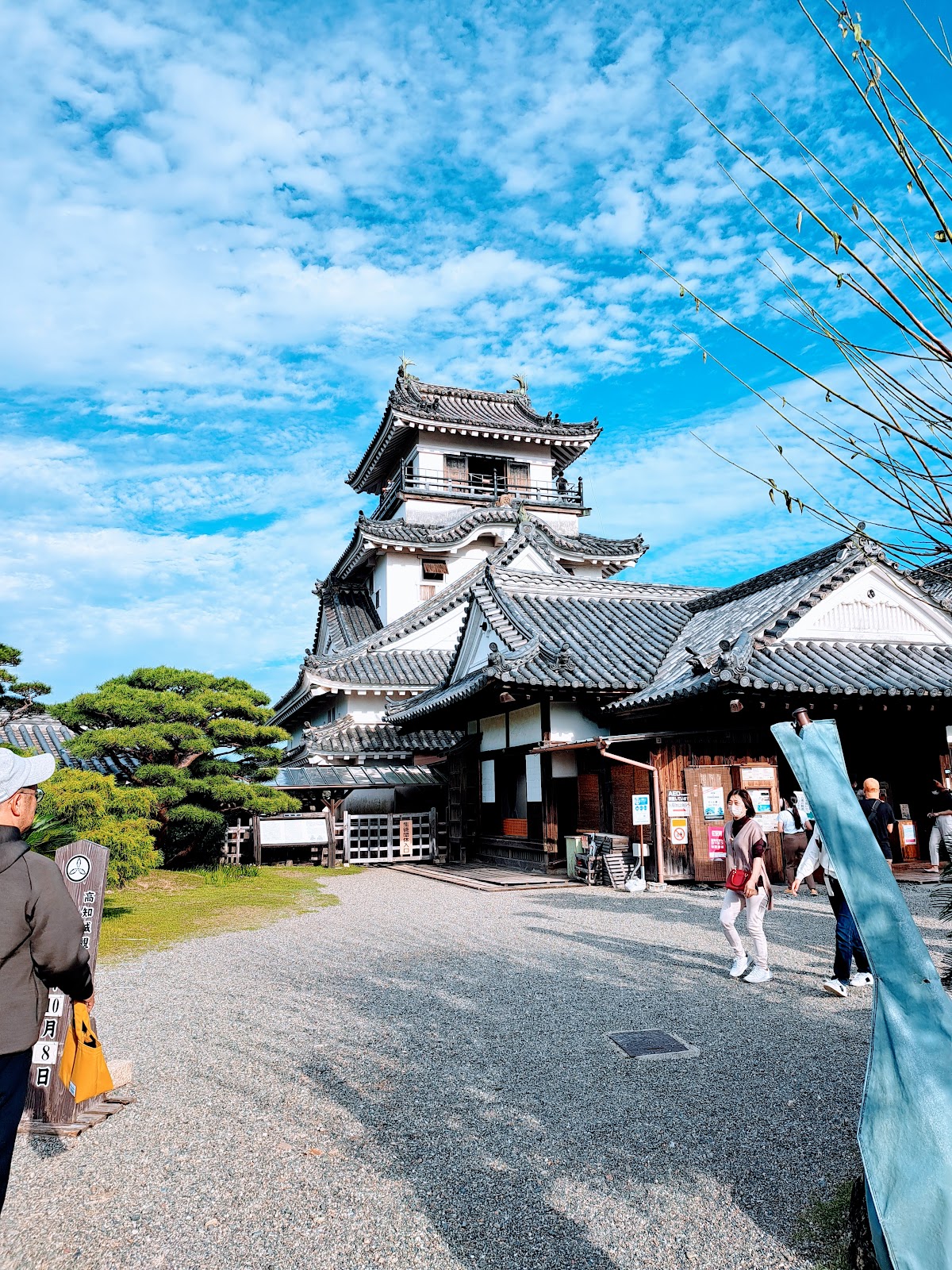
Yamaji Castle is not a famous castle like Kochi Castle, but it is an important castle site for understanding the medieval history of Tosa. Visiting this castle ruin, nestled amidst the rich natural environment of the Shimanto River, offers the following benefits:
Historical Value: You can gain a concrete understanding of the Ichijo clan’s rule over western Tosa and the Chosokabe clan’s process of unifying Tosa.
Value for Studying Castle Layout: You can learn firsthand about the typical structure of a medieval mountain castle, primarily consisting of earthworks and moats.
Harmony with Nature: You can feel the romance of history amidst the beautiful natural scenery of the Shimanto River basin.
Understanding Local History: You can gain a deeper understanding of the history and culture of Shimanto City from the perspective of castles.
Summary
Yamaji Castle is a medieval mountain castle located in Shimanto City, Kochi Prefecture, built on an isolated peak 72 meters above sea level facing the Shimanto River. It functioned as an important base in western Tosa under the control of the Ichijo clan, and the remains of terraced enclosures, earthworks, moats, and vertical trenches remain well-preserved around the main enclosure.
Although abandoned following the Chosokabe clan’s unification of Tosa Province, Yamaji Castle remains a valuable historical site showcasing a typical layout of a medieval mountain castle, attracting attention from castle enthusiasts and history researchers. Located amidst the rich natural environment of the Shimanto River, Yamaji Castle offers a glimpse into the history and culture of Tosa, making it a historical heritage site well worth visiting.
Further detailed research and appropriate preservation management are expected to further reveal the historical value of Yamaji Castle, and it is anticipated that it will be utilized as an important cultural resource for Shimanto City. When planning a tour of Tosa’s mountain castles, be sure to include Yamaji Castle as one of your destinations.