Kira Castle (Kochi Prefecture) Complete Guide: A Thorough Explanation of the Remains and History of the Mountain Castle of the Seven Great Lords of Tosa
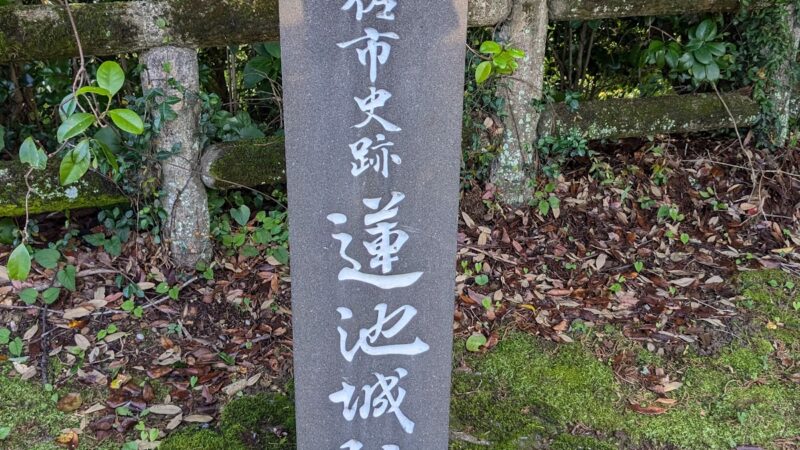
Located in Hirooka-kami, Haruno-cho, Kochi City, Kochi Prefecture, Kira Castle is a medieval mountain castle known as the residence of the Kira clan, one of the seven great lords of Tosa who ruled Tosa during the Sengoku period. Also known as “Hirooka Castle” or “Kiramine Castle,” it is a historically valuable castle site designated as a Kochi City Historic Site in 1960.
Built on a mountaintop approximately 116m above sea level (relative height approximately 110m), this mountain castle boasts well-preserved defensive structures such as large moats, quadruple moats, and ridged vertical moats, making it a valuable legacy that conveys the castle construction techniques of medieval Tosa.
The History and Builders of Kira Castle
Built by the Kira Clan, Descendants of Minamoto no Mareyoshi
The exact date of Kira Castle’s construction is unknown, but it is believed to have been built by the Kira clan, descendants of Minamoto no Mareyoshi, the younger brother of Minamoto no Yoritomo. Minamoto no Mareyoshi was exiled to Tosa to help pursue the Taira clan, but later met a tragic end in an attack by the Taira forces. His descendants are said to have settled in Tosa and adopted the name Kira.
The Kira Clan as One of the Seven Great Clans of Tosa
In Tosa Province during the Sengoku period, before the rise of the Chosokabe clan, seven powerful clans known as the “Seven Great Clans of Tosa” vied for power. The Kira clan was one of them, controlling a sphere of influence centered around the Haruno region. The other seven great clans of Tosa included the Motoyama, Ohira, Tsuno, Aki, Kosokabe, and the Chosokabe clan, who later unified Tosa. The head of the Kira clan is known as Kira Chikasada. During the Sengoku period, Kira Chikasada resided in Kira Castle and controlled the surrounding area, but he eventually became embroiled in conflict with the rising Chosokabe clan.
The Unification by the Chosokabe Clan and the End of Kira Castle
From the mid-to-late 16th century, as Chosokabe Motochika advanced the unification of Tosa Province, the Kira clan was incorporated under the influence of the Chosokabe clan. Although detailed historical records are scarce, it is believed that Kira Castle was eventually abandoned, and the Kira clan’s power declined.
After the Chosokabe clan’s unification of Tosa, like many medieval mountain castles, Kira Castle also ended its historical mission. However, the castle ruins have been well-preserved and are now attracting attention from researchers and castle enthusiasts as a valuable medieval castle ruin.
The Layout and Structure of Kira Castle
The Arrangement of a Mountain Castle on Two Ridges
Kira Castle is a mountain castle built on two ridges extending north and south (the South Ridge and the North Ridge), utilizing both ridges. The main keep (honmaru) is located on the North Ridge, while multiple baileys are arranged in a stepped fashion on the South Ridge. This structure of the two ridges demonstrates a typical layout technique of medieval mountain castles, skillfully utilizing the terrain.
The main keep on the North Ridge was the central part of the castle and the most important defensive point. Along the ridge extending south from here, baileys are arranged in stages, creating a structure that gradually prevents enemy incursions.
The Defensive System of Quadruple Moats and Large Vertical Moats
The greatest highlight of Kira Castle is its defensive system, which combines quadruple moats linked to a large moat with large vertical moats. This is known as a particularly sophisticated structure among Tosa mountain castles.
A horikiri is a dry moat dug to cut across a ridge, serving as an important defensive structure to prevent enemy intrusion. At Kira Castle, instead of a single horikiri, four layers of horikiri were constructed, dramatically increasing its defensive capabilities.
Furthermore, this group of horikiri is linked to a large vertical moat. Vertical moats are dug vertically along slopes, making lateral movement difficult and luring enemies into the valley below. The combination of horikiri and vertical moats creates a complex, three-dimensional defensive network.
Characteristic Remains of Ridge-Shaped Vertical Moats
On the west side of the southern enclosure of Kira Castle, a distinctive structure called a ridge-shaped vertical moat can be observed. A ridge-shaped vertical moat is a defensive structure where multiple vertical moats are dug parallel to each other, creating a ridge-like shape.
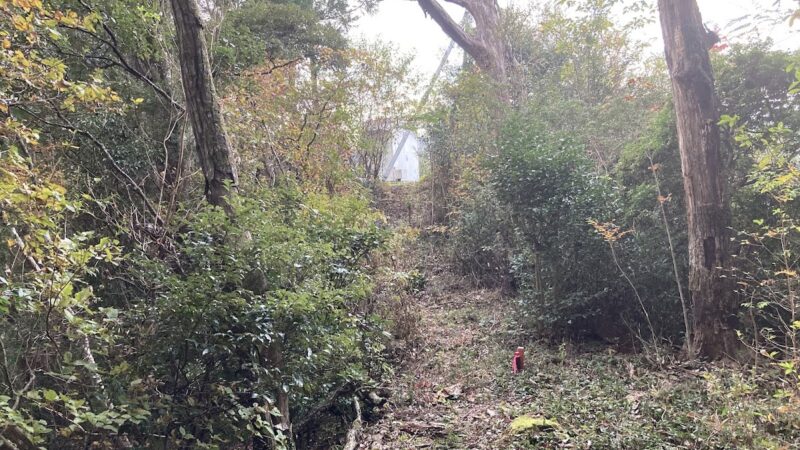
You can encounter this ridge-shaped vertical moat as you walk along the path to the castle. The continuous, regular grooves carved into the slope demonstrate the high level of medieval castle construction technology and leave a strong impression on visitors.
The ridged vertical moats effectively prevented lateral movement of the enemy and limited their attack routes. It is also believed that they provided a visually intimidating presence, offering a psychological defensive effect.
Arrangement of Enclosures and Remains of Earthen Embankments
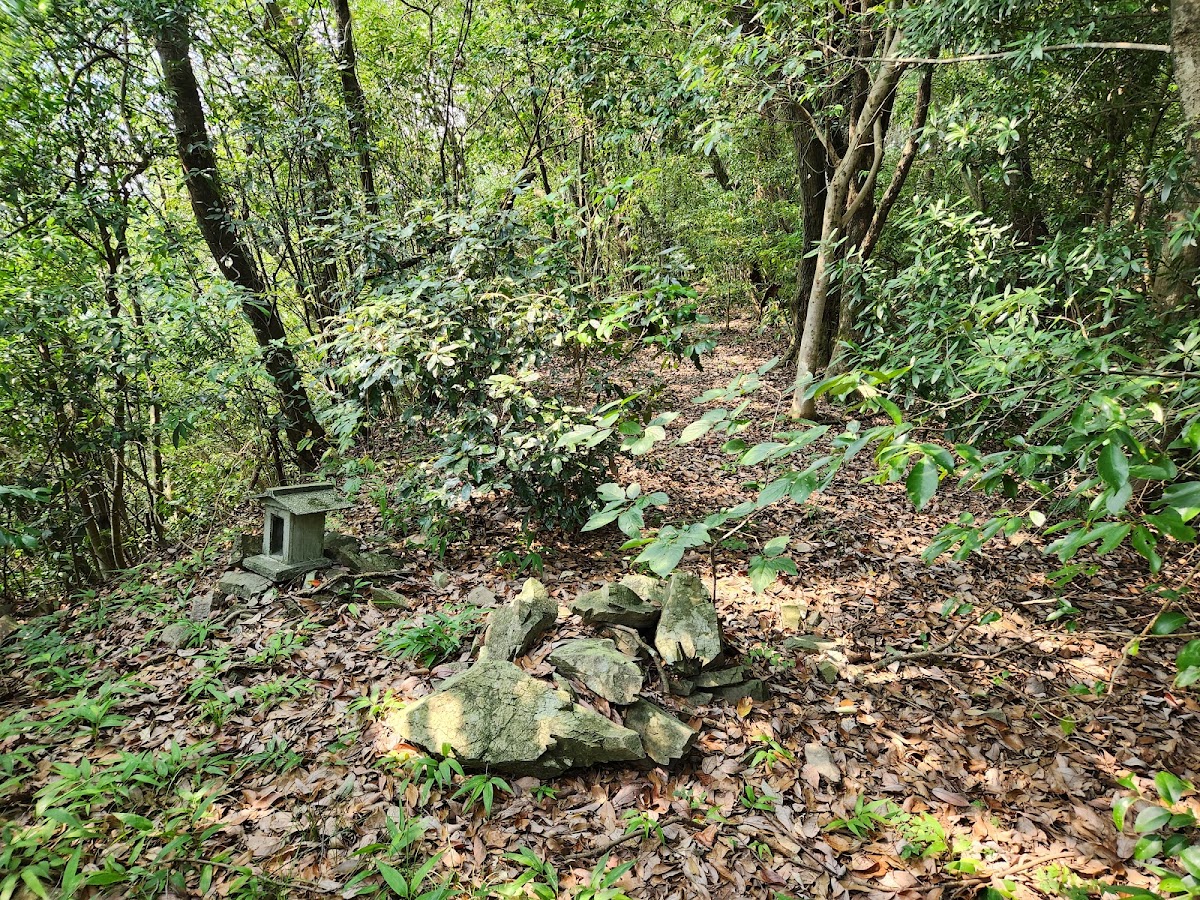
Multiple enclosures have been identified within the castle, each presumed to have had a different role. An enclosure is a leveled, flat area used for building structures or deploying troops.
Remains of earthen embankments have also been found in some enclosures. These embankments, or earthen walls, surrounded the enclosures to enhance their defensive capabilities. Archaeological excavations have clarified the structure of these embankments in some areas, providing valuable information for understanding the actual state of medieval mountain castles.
The arrangement of enclosures along the north-south ridges is based on the concept of tiered defense, ensuring that even if the enemy breaches one enclosure, they can defend again in the next. This concept of multi-layered defense is a common feature of mountain castles from the Sengoku period.
Highlights of Kira Castle’s Remains
Well-Preserved Medieval Mountain Castle
A major attraction of Kira Castle is the excellent state of preservation of its medieval mountain castle remains. Having escaped later development, the castle’s facilities, such as moats, trenches, and baileys, largely retain their original form.
In particular, the depth of the moats and the clarity of the trenches allow visitors to appreciate the high level of medieval castle construction technology. While some areas are covered with vegetation, this only enhances the atmosphere of the mountain castle, evoking a sense of historical romance.
Ease of Access with Signposts
Signposts are installed at the Kira Castle ruins, making it easy to climb without getting lost. The hiking trails are well-maintained in some sections, making it a relatively accessible mountain castle even for those new to castles.
However, due to the steep slopes and slippery areas characteristic of mountain castles, appropriate equipment (trekking shoes, gloves, etc.) and preparation are recommended when climbing. Especially after rain, the footing becomes poor, so it is advisable to check the weather before visiting.
Views and Surrounding Environment
From the mountaintop at an altitude of approximately 116m, you can overlook the surrounding terrain. It offers a valuable perspective for imagining the Haruno region, which was ruled by the Kira clan, and the geographical situation of Tosa during the Sengoku period.
Mountain castles served not only as military defenses but also as a means of monitoring territory. The view from Kira Castle allows you to experience how the lord of that time monitored his territory.
Access and Visiting Information for Kira Castle
Location and Basic Information
- Location: Hirooka-kami, Haruno-cho, Kochi City, Kochi Prefecture
- Designation: Kochi City Designated Historic Site (Designated in 1960)
- Other Names: Hirooka Castle, Kiramine Castle
- Elevation: Approximately 116m (Relative height approximately 110m)
- Castle Type: Mountain castle (Ren-kuruwa style)
Transportation Access
Kira Castle is located in Haruno-cho, in the western part of Kochi City. Access by public transportation is somewhat inconvenient, so visiting by private car is recommended.
By Car:
- Approximately 30 minutes from central Kochi City via National Route 56.
- There is no dedicated parking lot, so you will need to park in a suitable location nearby.
- There may be some street parking spaces near the castle entrance, but please be considerate of local residents.
By Public Transportation:
- Accessible on foot from the nearest bus stop, but buses are limited, so please check the timetable in advance.
Points to Note When Visiting
- Clothing and Equipment: As it is a mountain castle, appropriate clothing and shoes for trekking are necessary. Long sleeves, long pants, and non-slip shoes are recommended.
- Season and Weather: In summer, vegetation can be overgrown, making it difficult to see the remains. Autumn to spring is the best time to visit. Avoid visiting during or after rain, as the ground can be slippery.
- Estimated Time Required: Allow approximately 1-2 hours from the start of the climb to the castle and back down. If you wish to carefully observe the remains, it will take longer.
- Safety Management: Avoid visiting the castle alone; it is recommended to visit in groups if possible. Also, check the cell phone signal strength beforehand.
- Manners: Remember that this is a historical site; be careful not to damage the remains or leave any trash.
Kira Castle and the Medieval History of Tosa
The Historical Background of the Seven Heroes of Tosa
Tosa Province during the Sengoku period was a region relatively unaffected by the central government, and local powerful families formed their own spheres of influence. Symbolic of this era are the seven powerful families known as the “Seven Heroes of Tosa.”
The Kira clan was one of them, holding power primarily in the Haruno region. Their relationship with the other six heroes was complex, sometimes alliances, sometimes conflicts, but ultimately, the rise of Chosokabe Motochika drastically reshaped the political landscape of Tosa.
Medieval Tosa Castle Culture
Medieval mountain castles in Tosa Province are characterized by defensive structures that utilize the steep terrain. Kira Castle is a prime example; its layout, which makes extensive use of moats and vertical trenches, demonstrates the high level of castle construction technology in Tosa Province.
In Tosa at that time, mountain castles were not merely military facilities, but also symbols of the lord’s authority. The size and craftsmanship of a castle served as a barometer of the lord’s power.
Progress of Archaeological Excavations and Research
Partial archaeological excavations have been conducted at Kira Castle, uncovering medieval artifacts and structures. These investigations have deepened our understanding of the castle’s structure and period of use.
In particular, the excavation of the earthen embankment remains has yielded valuable information about the civil engineering techniques and construction methods of the time. Further investigations are expected to reveal a clearer picture of the Kira clan and the era of the Seven Great Lords of Tosa.
Attractions Around Kira Castle
Historical Walks in Haruno Town
Haruno Town, where Kira Castle is located, was formerly an independent town in Kochi City, but was incorporated into Kochi City during the Heisei-era municipal mergers. Besides Kira Castle, this area has many other historical sites.
The local shrines and temples preserve cultural artifacts that tell the history from the medieval to early modern periods. Visiting these sites in conjunction with a visit to Kira Castle will allow you to understand the region’s history more deeply.
Castle Ruins of Other Tosa Seven Lords
Visiting the castle ruins of each of the Tosa Seven Lords will give you a comprehensive overview of Tosa during the Sengoku period. In particular, Okotoyo Castle (Nankoku City, Kochi Prefecture), belonging to the Chosokabe clan, is designated a national historical site and has a historical museum, making it ideal for learning about the medieval history of Tosa.
Each castle ruin, such as Motoyama Castle of the Motoyama clan and the Nakamura Palace Ruins of the Ohira clan, has its own unique characteristics, and comparing them allows you to appreciate the diversity of medieval Tosa castle culture.
The Cultural Value of Kira Castle
Protection as a Kochi City Designated Historic Site
Kira Castle was designated a Kochi City Historic Site in 1960 and is protected as a cultural property. This designation restricts development of the castle ruins and ensures the preservation of the remains.
Historical site designation by local governments is an important system for protecting regional historical heritage. In the case of Kira Castle, its value was recognized and protected thanks to the efforts of local historians and citizens.
Importance in Academic Research
Kira Castle occupies an important position in the study of medieval Tosa castles. The sophisticated remains, such as the quadruple moat and the ridged vertical moat, are valuable materials that demonstrate the level of castle construction technology at the time.
Through the creation of layout maps by castle researchers and archaeological investigations, the structure of Kira Castle has gradually become clear. These research results contribute to the overall understanding of the history of medieval Japanese castles.
As a Local Historical Education Resource
Kira Castle plays an important role in local historical education. Local elementary and junior high schools sometimes incorporate Kira Castle into their local history lessons, providing children with opportunities to engage with local history.
Visiting the castle ruins in person allows for experiential learning that cannot be obtained from textbooks alone. Seeing the remains firsthand makes history feel more tangible and concrete.
Model Course for Visiting Kira Castle
Half-Day Course: Intensive Tour of Kira Castle
Duration: Approximately 3 hours
- Arrival at the Castle Entrance (9:00): Check the signs and prepare your equipment.
- Begin Ascent (9:15): Proceed along the ascent path and observe the ridged vertical moats.
- Visit the Southern Enclosures (9:45): Confirm the multiple enclosures and earthen embankment remains.
- Visit the Large and Quadruple Moats (10:15): Carefully observe the most notable features of Kira Castle.
- Reach the North Peak (10:45): View the surrounding area from the main keep site.
- Confirm the Overall Layout (11:15): Understand the overall structure of the castle.
- Descend (11:45): Return the way you came.
- Return to Castle Entrance (12:00)
One-Day Course: Haruno Town Historical Walk
Duration: Approximately 6 hours
This course involves visiting Kira Castle in the morning and exploring other historical spots in Haruno Town and nearby castle ruins related to the Seven Heroes of Tosa in the afternoon. It allows for a comprehensive understanding of the region’s history.
Summary: The Charm and Significance of Visiting Kira Castle
Kira Castle (Kochi City, Kochi Prefecture) is a medieval mountain castle built by the Kira clan, one of the Seven Heroes of Tosa, and is a castle ruin of high historical value. The sophisticated defensive structures, such as the quadruple moats and ridged vertical moats, demonstrate the high level of castle-building technology of the time, making it an unmissable spot for castle enthusiasts and history buffs.
Protected as a Kochi City designated historical site, Kira Castle maintains a good state of preservation, making it a valuable place to experience the appearance of a medieval mountain castle almost exactly as it was. Guide signs are also in place, making it a relatively accessible mountain castle with proper preparation.
Understanding the history of the Seven Warlords of Tosa is essential to comprehending Tosa during the Sengoku period. Visiting Kira Castle is not merely about viewing ruins; it’s also about experiencing the history of the Kira clan, descendants of Minamoto no Mareyoshi who settled in Tosa, and the grand historical flow of the Chosokabe clan’s unification of Tosa.
Nestled amidst the rich natural beauty of Haruno Town, Kira Castle is a fascinating spot where you can enjoy both history and nature. When visiting Kochi, be sure to extend your trip and experience the charm of this medieval mountain castle. The three-dimensional defensive network of moats and trenches, the series of baileys along the ridge, and the views from the mountaintop will surely create unforgettable memories.