Kuzume Castle (Kochi Prefecture) Complete Guide: From the Tosa Yamada Clan’s Residence to the Chosokabe Clan’s Conquest
Kuzume Castle (Kuzume-jo) is a medieval mountain castle located in Kuzume, Tosa Yamada-cho, Kami City, Kochi Prefecture. Also known as “Yamada Castle,” it is known as a castle that played an important role in Tosa Province during the Sengoku period. Built on the summit of Shiroyama Mountain at an altitude of 122.3 meters, this castle flourished as the residence of the Tosa Yamada clan and later became an important stage in the Chosokabe clan’s unification of Tosa.
Currently, the Kuzume Castle ruins are protected as a Kami City designated historical site, and remains such as earthworks and moats are well-preserved. This article provides a comprehensive explanation of Kuzume Castle, including its detailed history, structure, highlights, and practical information for visitors.
Overview of Kusunome Castle
Kusunome Castle is a medieval mountain castle located in Kusunome, Tosayamada-cho, Kami City, Kochi Prefecture. It was built on the summit of Shiroyama (elevation 122.3 meters). Also known as Yamada Castle or Yamada-Kusunome Castle, it is one of the representative castles of the Sengoku period in Tosa Province.
Basic Information
- Location: Kusume, Tosayamada-cho, Kami City, Kochi Prefecture
- Alternate Names: Yamada Castle, Yamada Kusume Castle
- Castle Structure: Mountain Castle
- Elevation: 122.3 meters
- Relative Height: Approximately 60-80 meters
- Construction Period: Unknown (Kamakura period theory exists)
- Builder: Nakahara clan (legend)
- Main Lords: Yamada clan, Chosokabe clan
- Year of Abandonment: Around Tenbun 18 (1549)
- Designated Cultural Property: Kami City Designated Historic Site “Kusume Castle Ruins”
- Remains: Enclosures, earthworks, dry moats, trenches
- Current Status: Forest (partially private land, access restricted)
Kusume Castle served as the base of the Yamada clan, a powerful local family in Tosa Province, and played an important political and military role in Tosa during the Sengoku period. The castle is built on a hilly area northwest of Kagamino Junior High School, strategically located overlooking the Monobe River basin.
The Seven Heroes of Tosa and Kusume Castle
The Yamada clan, the lords of Kusume Castle, were a powerful local family counted among the “Seven Heroes of Tosa” during the Sengoku period. The Seven Heroes of Tosa refer to seven powerful families that held sway in Tosa before the Chosokabe clan unified the province: the Yamada, Motoyama, Aki, Tsuno, Ohira, Ichijo, and Chosokabe clans.
The Yamada clan held power primarily in Kami District, controlling the fertile land of the Monobe River basin. Kusume Castle functioned as the political and military center of the Yamada clan and served as a governing base for the surrounding region.
History of Kusume Castle
The history of Kusume Castle is ancient, and its origins are unclear, but it is deeply intertwined with the history of Tosa Province from the Kamakura period to the Sengoku period.
Origin of the Castle and the Nakahara Clan
There are various theories regarding the construction date and builder of Kusume Castle, and no definitive records remain. According to the most plausible tradition, during the Kenkyu era (1190-1198), Nakahara Taro Akiie, acting on orders from Minamoto no Yoritomo, descended to Tosa Province. After assuming the position of jitō (land steward) of the two villages of Sogabe and Fukabuchi in Kagami-cho, he moved to Kusume Castle and adopted the name Yamada.
According to this theory, Kusume Castle was built in the early Kamakura period, from the late 12th to the early 13th century. The Nakahara clan was a noble family from Kyoto and was one of the retainers sent to Tosa Province after gaining the trust of Minamoto no Yoritomo. It is believed that the Nakahara clan, who settled in the area as local administrators, changed their name to Yamada and established control over the Kami district from Kusume Castle.
From the Muromachi Period to the Early Sengoku Period
Throughout the Muromachi period, the Yamada clan maintained their power in Kami district, with Kusume Castle as their base. Although detailed records from this period are scarce, the Yamada clan, as a powerful local clan within Tosa Province, maintained a certain degree of independence, similar to the other seven powerful clans of Tosa, while sometimes cooperating and sometimes clashing with others.
In Eisho 5 (1508), Yamada Motoyoshi, lord of Kusume Castle, participated in the battle to defeat Chosokabe Kaneyoshi at Okotoyo Castle, along with Motoyama Yomei and others. At this time, the Chosokabe clan was still merely a local powerful family in Tosa Province, possessing power equal to or less than that of other powerful families such as the Yamada and Motoyama clans. It is believed that Yamada Motoyoshi attempted to protect his own sphere of influence by cooperating with the Motoyama clan to attack the Chosokabe clan.
The Era and Prosperity of Yamada Motoyoshi
During the Tenbun era (1532-1555), particularly around Tenbun 20 (1551), the Yamada clan reached its peak under the leadership of Yamada Motoyoshi. Motoyoshi excelled at managing his territory, solidifying his control over the Kami district. The Yamada clan’s territory, centered around Kusume Castle, prospered economically, supported by the rich agricultural productivity of the Monobe River basin.
However, Motoyoshi gradually became more inclined towards cultural pursuits. He particularly favored performing arts such as Sarugaku (Noh) and Noh, and began to dedicate his time and resources to cultural activities rather than politics or military affairs. Concerned about this trend, senior retainers tried to dissuade Motoyoshi, but he refused to listen and adopted a hardline stance, even placing the dissenting retainers under house arrest.
This style of governance by Motoyoshi destabilized the Yamada clan’s rule over their territory. It is believed that the unity of the retainers weakened, and control over the territory loosened. This internal weakening would eventually manifest as vulnerability to external threats.
The Conquest by Chosokabe Kunichika
Meanwhile, the Chosokabe clan, based at Okotoyo Castle, rapidly expanded its power under Kunichika’s leadership. After his father, Kaneyoshi, was killed by Yamada Motoyoshi and others, Chosokabe Kunichika revived the Chosokabe clan through skillful diplomacy and military strategy, and began the path to unifying Tosa.
In 1549, Chosokabe Kunichika launched an attack on Yamada Castle (Kusume Castle). Weakened by internal instability, the Yamada clan was unable to adequately resist the Chosokabe clan’s attack. Kunichika’s forces besieged Kusume Castle, and after a fierce battle, the castle fell.
The castle lord, Yamada Motoyoshi, was expelled by Kunichika, marking the end of the Yamada clan’s rule. The fall of Kusume Castle was a crucial turning point in the Chosokabe clan’s unification of Tosa Province. This victory brought the Chosokabe clan under their control, significantly expanding their influence in eastern Tosa.
Kusume Castle After its Fall
The Chosokabe clan controlled Kusume Castle for a time, but as their power expanded, more strategically important strongholds were established, and the military importance of Kusume Castle gradually declined.
While detailed records of how Kusume Castle was used after its fall in 1549 are scarce, it’s possible it functioned as a branch castle of the Chosokabe clan for a certain period. However, with the end of the Sengoku period, Kusume Castle was abandoned and subsequently disappeared from historical records.
Structure and Layout of Kusume Castle
Kusume Castle is a typical medieval mountain castle built on the summit of Shiroyama Mountain, at an elevation of 122.3 meters. The castle’s structure is a multi-enclosure type, with multiple enclosures arranged around a central main enclosure (tsume).
Overall Structure
The castle grounds of Kusume Castle are broadly composed of three main parts:
- Main Enclosure (Tsume): The central part of the castle, consisting of sections called “Kita-no-Mori-Tsume” and “Minami-no-Mori-Tsume”
- Nino-Dan: The second most important enclosure after the main enclosure
- Chagamori: An enclosure located in the outer part of the castle grounds
These enclosures are cleverly arranged, utilizing the terrain to achieve a balance between defensive and habitable features.
Main Enclosure (Tsume)
Located at the summit of the castle mountain, the main enclosure is the core of Kusume Castle. It is divided into two sections, “Kita-no-Mori-Tsume” and “Minami-no-Mori-Tsume,” each with independent defensive functions while also being able to cooperate with one another.
Within the main enclosure, there is also a flat area called “Marino-niwa,” which is presumed to be the location of the lord’s residence and important facilities. The main enclosure was surrounded by earthen ramparts, which functioned as a defensive line to prevent enemy intrusion.
Enclosures and Terraced Enclosures
Several enclosures are arranged in a stepped pattern around the main enclosure. These enclosures were built utilizing the elevation differences of the terrain, designed to make attacks from lower enclosures to higher ones difficult.
The second enclosure was an important defensive stronghold second only to the main enclosure, playing a role in preventing direct approaches to the main enclosure. The Chagamori enclosure is located on the outer part of the castle and is thought to have functioned as a forward base for detecting enemy intrusions early and conducting delaying tactics.
Earthen Ramparts and Moats
Notable defensive features of Kusume Castle include the well-preserved earthen ramparts and moats.
The earthen ramparts were built to surround the enclosures, physically preventing enemy intrusion and also functioning as a defensive wall for firing from within the castle. The earthworks of Kusume Castle are relatively high, making them valuable remains that demonstrate the level of castle construction technology at the time.
Horikiri are dry moats dug to cut across the ridgeline, serving as important defensive structures to block enemy incursions. Multiple horikiri have been identified at Kusume Castle, and those located along the main approach routes are particularly substantial in both depth and width.
Dry Moats (Horizontal Moats)
Dry moats (horizontal moats) are also constructed around the baileys. These moats, dug along the edges of the baileys, make direct access to the baileys difficult and allow for attacks from above against enemies moving along the bottom of the moat.
The dry moats of Kusume Castle are important remains that convey the castle construction technology of the time, serving as typical defensive structures of medieval mountain castles.
Koguchi and Passages
The koguchi (gateway), the entrance to the castle, is one of the most important defensive structures. The detailed structure of the entrance to Kusume Castle is not fully understood due to restrictions on on-site investigations, but it is estimated that there were multiple entrances based on the arrangement of earthworks and baileys.
The entrances were not simple openings, but rather incorporated features to make enemy intrusion difficult, and the passages connecting the baileys are thought to have been complex routes designed with defense in mind.
Remains of Kusume Castle
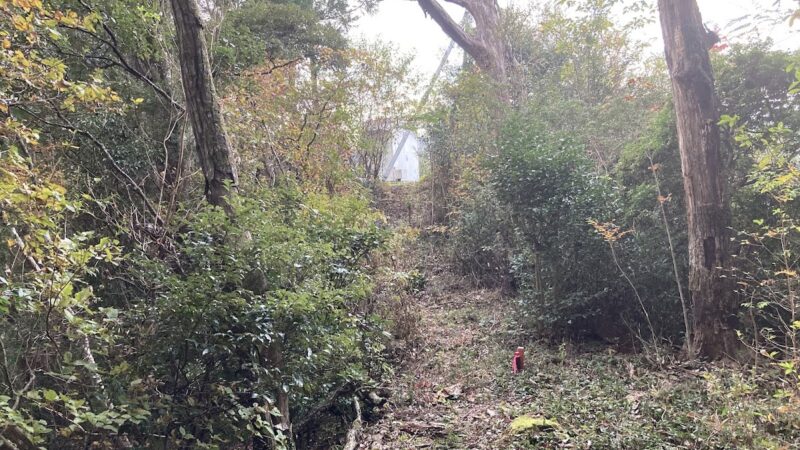
The current remains of Kusume Castle are relatively well-preserved. However, some parts of the castle site are private property, and there are areas where entry is restricted for safety reasons, so caution is necessary when visiting.
Existing Major Remains
Baileys (Enclosures): Multiple baileys remain, arranged in a stepped pattern. The flat surfaces of each bailey, including the main enclosure, retain their original shape well, allowing visitors to appreciate the scale of the castle.
Earthworks: Earthworks surrounding the baileys remain in various places. Despite the effects of weathering and vegetation, the height and shape of the earthworks can be observed relatively clearly, providing valuable clues to the defensive structures of the time.
Dry Moats and Trenches: Trenches cutting across the ridges and dry moats surrounding the baileys remain in good condition. The main trenches, in particular, are deep, offering a glimpse into the defensive techniques of medieval mountain castles.
Stone Walls (Partial): While Kusume Castle is primarily an earthen castle, there are reports of traces of stone walls in some areas. However, these are likely not full-fledged stone walls, but rather reinforcements for the earthworks or partial stonework around the entrance gates.
Preservation Status of the Remains
The Kusume Castle site is protected as a designated historical site of Kami City and is safeguarded from development. The current castle site, now a forest, has experienced minimal human alteration, resulting in relatively good preservation of the medieval castle remains.
However, due to years of weathering and overgrown vegetation, some parts of the remains are unclear. Furthermore, due to the inclusion of private land and safety considerations, restricted areas are currently in place, making it impossible to freely view all the remains.
Archaeological Excavations and Excavated Artifacts
Archaeological excavations have been conducted at the Kusume Castle site in the past, and the results have been reported by the Kochi Prefectural Board of Education and other organizations. The excavations have yielded earthenware, blue and white porcelain, and other ceramics, providing clues to the lifestyle of those who lived there during the time the castle was functioning.
The excavated earthenware was used as everyday tableware, indicating the reality of life within the castle. The discovery of high-quality ceramics such as blue and white porcelain speaks to the economic power and high cultural level of the Yamada clan, the lords of the castle.
In addition, remains such as post holes and pit dwellings have been confirmed, providing important information for reconstructing the building layout and the composition of the castle’s facilities.
Highlights of Kusume Castle
Here are some of the main highlights to see when visiting Kusume Castle. However, as mentioned above, there are areas with restricted access, so we recommend checking the latest information before visiting.
Approach to the Castle Ruins
Kusume Castle Ruins are located northwest of Kagamino Junior High School, and a path leading up to the castle hill is maintained. The path is relatively gentle, but due to the elevation changes typical of mountain castles, comfortable clothing and shoes are recommended.
As you proceed along the path, defensive structures such as moats and earthworks will gradually appear, allowing you to experience the atmosphere of a medieval mountain castle.
Moats and Earthworks
The most impressive remains at the castle are the clearly preserved moats and earthworks. The main moats, in particular, are deep and completely cut off the ridge, demonstrating the defensive ingenuity of the time.
The earthworks surround the baileys, and their height and shape indicate that they formed a strong defensive line to prevent enemy intrusion. Walking along the top of the earthworks allows you to experience the perspective of the castle’s defenders (limited to areas where access is permitted).
View from the Main Enclosure
From the main enclosure, you can see the Monobe River basin and the surrounding mountains. This view truly demonstrates the strategic location in which Kusume Castle was built. On a clear day, you can see the entire territory once ruled by the Yamada clan, and imagine the view the castle’s lord saw.
Castle Ruins Monument and Information Board
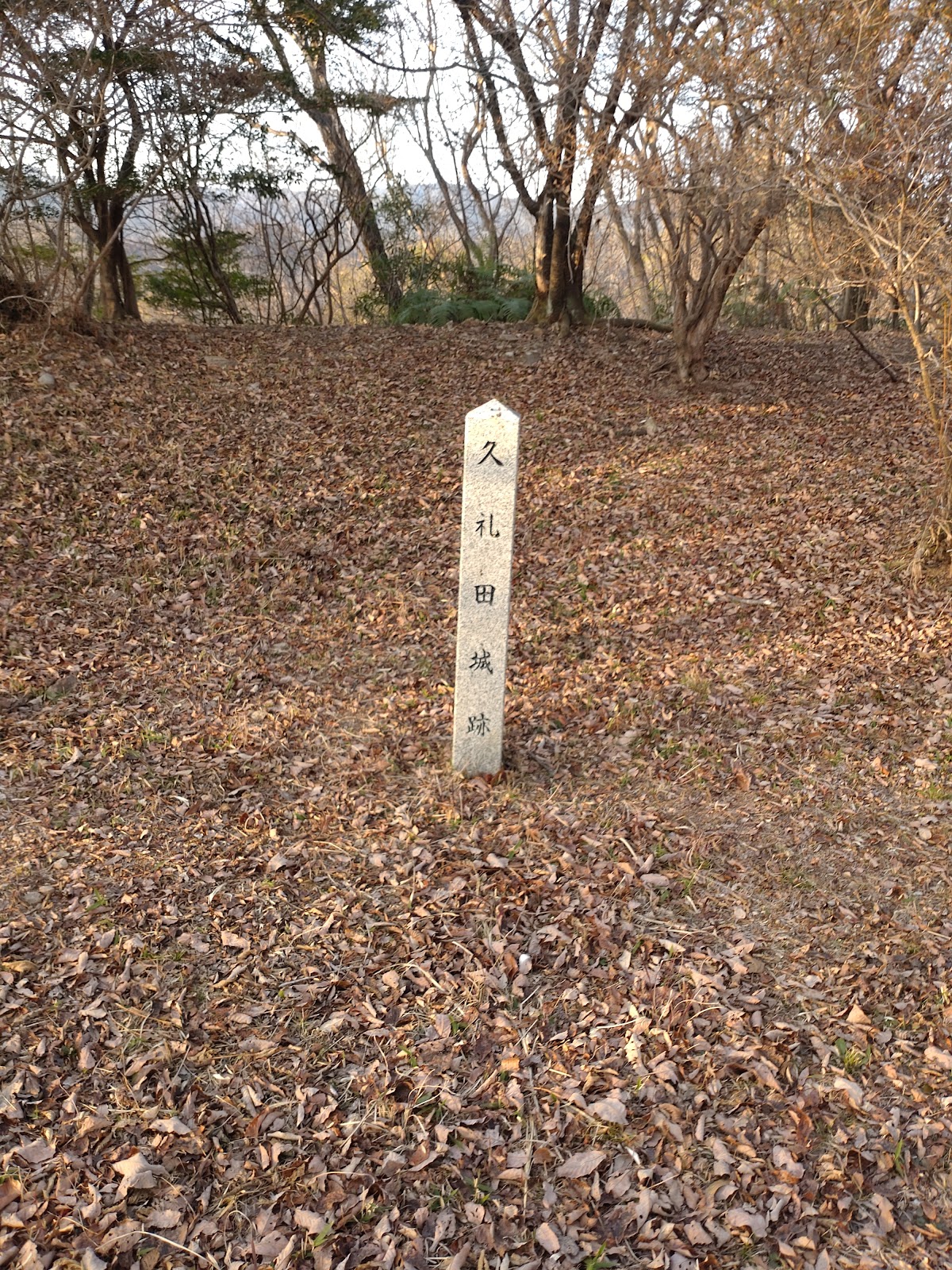
A stone monument and information board marking the site of Kusume Castle are installed at the castle ruins, allowing you to learn about the castle’s history and structure. Utilizing these information facilities will allow you to gain a deeper understanding of Kusume Castle.
Surrounding Historical Environment
The area surrounding Kusume Castle ruins is dotted with historical sites related to the Yamada clan and Tosa during the Sengoku period. If you have time, visiting these related historical sites will allow you to gain a deeper understanding of the historical context of Kusume Castle.
Access
Detailed information on how to access Kusume Castle ruins is provided below.
Access by Public Transportation
By JR:
- Get off at Tosa-Yamada Station on the JR Dosan Line
- Approximately 20-30 minutes on foot from the station to the castle ruins
- Or approximately 5-10 minutes by taxi
Tosa-Yamada Station is a major station where express trains also stop, and is accessible from Kochi Station in about 30 minutes. The castle ruins are relatively close to the station and easily accessible on foot.
By Local Bus:
- Take a local bus from in front of Tosa-Yamada Station and get off at the nearest bus stop
- Approximately 10-15 minutes on foot from the bus stop to the castle ruins
Since the number of local bus services is limited, it is recommended to check the timetable in advance.
Access by Car
From Kochi City:
- Use National Route 32 or National Route 195
- Approximately 30-40 minutes from central Kochi City
- Approximately 20 minutes from the Nankoku Interchange on the Kochi Expressway
Parking:
There may not be a dedicated parking lot for the castle ruins. Please consider using parking at nearby public facilities (such as near Kagamino Junior High School) or using public transportation. It is recommended to check with the Kami City Tourism Association or similar organizations regarding parking availability before your visit.
Precautions for Visiting
- Restrictions on Entry: Part of the castle ruins are private property, and for safety reasons, there are restricted areas. Please follow the signs and markers and do not enter restricted areas.
- Clothing and Equipment: As it is a mountain castle, comfortable walking shoes and clothing are essential. Particular caution is needed after rain, as the ground can become slippery.
- Season and Time: In summer, insect repellent is necessary; in winter, warm clothing is required. Also, please plan your visit with ample time to descend before sunset.
- Manners: To protect the historical site, please be careful not to damage the remains or leave any trash. Also, please be considerate of private property and avoid disturbing local residents.
Nearby Tourist Attractions
Here are some nearby tourist attractions that can be enjoyed in conjunction with a visit to Kusume Castle.
Okotoyo Castle Ruins (Kochi Prefectural Museum of History and Folklore)
Okotoyo Castle Ruins, the base of the Chosokabe clan, was the residence of Chosokabe Kunichika, who conquered Kusume Castle. Currently, the Kochi Prefectural Museum of History and Folklore is located on the site, where you can learn in detail about the Chosokabe clan and the Sengoku period in Tosa. A visit to Okotoyo Castle is highly valuable for understanding the history of Kusume Castle.
Ryugado Cave
Ryugado Cave, a representative tourist attraction of Kami City, is a limestone cave designated as a national natural monument and historical site. Yayoi period artifacts have been discovered within the cave, making it a fascinating spot from both a natural and historical perspective.
Kami City Yanase Takashi Memorial Museum (Anpanman Museum)
This museum commemorates Yanase Takashi, a cartoonist from Kami City, and allows visitors to enjoy the world of Anpanman. It’s ideal for family visits.
Monobe River and Surrounding Nature
The Monobe River, flowing at the foot of Kusume Castle, is known for its clear waters and offers beautiful scenery throughout the seasons. There are numerous spots to enjoy nature, such as riverside walks and camping.
Current Status and Future Prospects of Kusume Castle Research
Research on Kusume Castle is continuously being conducted by the Kochi Prefectural Board of Education, the Kami City Board of Education, and castle researchers.
Academic Evaluation
Kusume Castle is academically valued as an important fortress for understanding the Sengoku period history of Tosa Province. In particular, the role of the Yamada clan in the process of the Chosokabe clan’s unification of Tosa, and the strategic positioning of Kusume Castle, their residence, are important themes in the study of Tosa’s Sengoku period history.
Challenges in Preservation and Utilization
While Kusume Castle ruins are protected as a designated historical site of Kami City, the following challenges exist regarding their preservation and utilization:
- Private Land Issues: Part of the castle ruins are privately owned, limiting preservation, management, and public access.
- Preservation of Remains: Continuous management is necessary to prevent deterioration of the remains due to weathering and overgrowth.
- Ensuring Safety: Mountain castles inherently present dangers, making safety measures essential for public access.
- Consideration of Utilization Methods: Effective utilization methods are needed to widely communicate the value of the site as a historical site.
Future Prospects
The following directions are possible for the future of the Kusume Castle ruins:
- Continued Detailed Academic Research: Further research is needed on the castle’s structure and history, many aspects of which remain unclear.
- Development of a Preservation and Management Plan: It is important to develop a long-term preservation and management plan to ensure the appropriate preservation of the remains.
- Expansion of Public Access and Utilization: While ensuring safety, it is desirable to consider methods of public access and utilization that allow more people to experience the value of Kusume Castle.
- Utilization as a Regional Resource: It is hoped that methods of utilization that contribute to regional development as a tourism and educational resource will be explored.
References and Information Sources
For those who want to learn more about Kusume Castle, we introduce the main references and information sources.
Public Institutional Materials
- Cultural property-related materials published by the Kami City Board of Education
- Excavation survey report by the Kochi Prefecture Board of Education
- Descriptions of Kusume Castle in the “History of Kami City”
Castle Research Books
- “Comprehensive Survey of Japanese Castles,” Volume 15 (Shikoku Edition)
- “Castles of Tosa” series
- Articles on Kusume Castle in various castle research journals
Online Information
- Kami City Official Website (Cultural Property Information)
- Kochi Prefecture Tourism Official Website
- Various Castle Database Websites
Information on Related Historical Sites
- Okotoyo Castle Ruins (Kochi Prefectural Museum of History and Folklore)
- Information on historical sites related to the Chosokabe clan
- Information on castles related to the Seven Great Generals of Tosa
Summary
Kusume Castle is a medieval mountain castle located in Kami City, Kochi Prefecture, and is an important castle representing the Sengoku period of Tosa. Built by the Nakahara clan during the Kamakura period, Kusume Castle flourished as the residence of the Yamada clan. However, it was captured and fell in 1549 by Chosokabe Kunichika.
Currently, the castle ruins retain well-preserved remains such as earthworks, moats, and baileys, and are protected as a designated historical site of Kami City. However, some areas are privately owned, and access is restricted, so caution is advised when visiting.
Kusume Castle is an indispensable historical site for understanding the Sengoku period history of Tosa, and is also important for understanding the process of the Chosokabe clan’s unification of Tosa. Visiting the castle ruins will allow you to experience firsthand the history of Tosa during the Sengoku period.
When visiting Kochi Prefecture, be sure to visit Kusume Castle ruins and feel the spirit of the Sengoku period in Shikoku. Visiting related historical sites in the surrounding area, such as Okotoyo Castle, will allow you to understand the history of Tosa more deeply.