Yoshida Castle (Nankoku City, Kochi Prefecture) Complete Guide: The Residence of a Chosokabe Clan Retainer and the Origin of the Ichiryo-gusoku System
Located in Yoshida, Okutoyo-cho, Nankoku City, Kochi Prefecture, Yoshida Castle is known as the residence of Yoshida Takayori, a senior retainer who supported the Chosokabe clan, who became the rulers of Tosa during the Sengoku period. This castle was the base of the brilliant strategist who devised the “Ichiryo-gusoku” system, which formed the basis of the Chosokabe clan’s military system, and played an important role in the history of unifying Tosa. Currently designated as a city historical site, the remains such as earthworks still convey its former appearance.
The History of Yoshida Castle and its Deep Relationship with the Chosokabe Clan
The Alliance Between the Yoshida and Chosokabe Clans
Yoshida Takayori (Yoshida Bingo-no-kami), the lord of Yoshida Castle, formed a strong alliance with the Chosokabe clan by marrying the sister of Chosokabe Kunichika. This marriage was more than just a political alliance; it laid the foundation for the Yoshida clan’s central role in the Chosokabe clan’s unification of Tosa Province.
Yoshida Takayori was known as a highly intelligent and strategic general, and he greatly contributed to the Chosokabe clan’s rise to power. His contributions to military affairs were particularly significant; during the time of Chosokabe Motochika, he played a strategist-like role, and is said to have devised strategies for numerous battles.
Creator of the Ichiryo-gusoku System
Yoshida Takayori’s greatest achievement was devising the “Ichiryo-gusoku” system, which became the basis of the Chosokabe clan’s military system. The Ichiryo-gusoku system was a semi-agricultural, semi-military system where individuals engaged in agriculture during peacetime and armed themselves to fight in war. This system enabled the Chosokabe clan to efficiently mobilize its limited forces.
This system was the driving force behind the unification of the small province of Tosa into the entire Shikoku region and supported the foundation of the Chosokabe clan’s military power. Without Yoshida Takayori’s strategic vision and practical abilities, the rapid expansion of the Chosokabe clan would not have been possible.
The Dispossession of the Chosokabe Clan and the Abandonment of Yoshida Castle
In the Battle of Sekigahara in 1600, Chosokabe Morichika fought on the Western Army’s side. As a result of the victory of the Eastern Army led by Tokugawa Ieyasu, the Chosokabe clan was dispossessed, and Tosa Province was given to Yamauchi Kazutoyo.
With this dispossession, Yoshida Castle was also abandoned. Many of the Chosokabe clan’s senior retainers became ronin (masterless samurai) or served the new lord, the Yamauchi clan, but Yoshida Castle’s role ended, and it disappeared from the stage of history.
Structure and Layout of Yoshida Castle
Characteristics as a Flatland Castle
Yoshida Castle was built as a typical flatland castle. Located in the plains of Nankoku City, Kochi Prefecture, it was built on a slightly elevated area overlooking the surrounding farmland. In Tosa Province during the Sengoku period, where mountain castles were common, the fact that this was a flatland castle speaks volumes about the position and role of the Yoshida clan.
While flatland castles are less defensively advantageous than mountain castles, they function more easily as political and economic centers and are superior as bases for managing territory. The castle’s form indicates that the Yoshida clan, as important retainers of the Chosokabe clan, played a crucial role in both territorial control and military mobilization.
Existing Remains
The following remains can be confirmed at the current Yoshida Castle site:
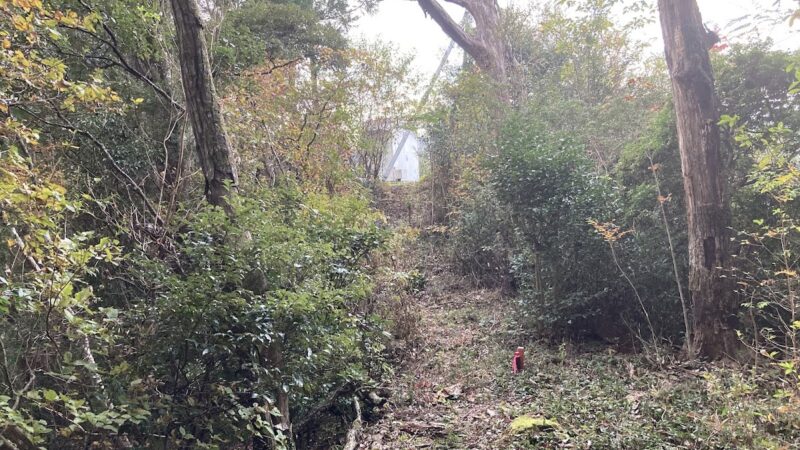
Earthworks: Parts of earthworks built as defensive structures for the castle still exist. Although their height has decreased, they remain as important remains indicating the boundaries of the castle.
Traces of Enclosures: Although not clearly preserved, the layout of enclosures can be inferred from the topography.
Stone Monument: A stone monument marking the “Site of Yoshida Bingo-no-kami’s Residence” stands here, indicating that this was the residence of Yoshida Takayori.
The castle ruins are located within an urban area, surrounded by residential and agricultural land. However, the remains, such as earthworks, allow us to imagine the scale of the castle in its heyday.
Highlights and Historical Value of Yoshida Castle
Historical Value
The greatest value of Yoshida Castle lies in its historical background: it was the residence of a key retainer who supported the Chosokabe clan’s unification of Tosa Province. As the base of Yoshida Takayori, who devised the innovative Ichiryo-gusoku military system, it is an indispensable historical site when discussing the history of Tosa during the Sengoku period.
While numerous castles related to the Chosokabe clan exist in Kochi Prefecture, Yoshida Castle occupies an important position in understanding the formation of the Chosokabe clan’s sphere of influence, as it served as a crucial base supporting Okotoyo Castle, the residence of their lord.
Connection to Okotoyo Castle
Okotoyo Castle, located approximately 1 km from Yoshida Castle, is one of the Continued Top 100 Japanese Castles and is known as the base of the Chosokabe clan. The two castles were closely related, and it is believed that Yoshida Castle also served as a subsidiary castle protecting Okotoyo Castle.
When visiting Okotoyo Castle, visiting both Yoshida Castle and Okotoyo Castle together will allow you to gain a deeper understanding of the Chosokabe clan’s castle network. Okotoyo Castle also houses a historical and folk museum, where you can see detailed exhibits about the Chosokabe clan and the Ichiryogusoku (a type of samurai).
Understanding the Castle’s Scale from the Earthworks
The existing earthworks provide clues to understanding the scale and structure of Yoshida Castle. Based on the arrangement of the earthworks, it is estimated that the castle’s area included part of the current settlement.
As a residence for a high-ranking retainer, it was a medium-sized castle, and it is thought to have had a practical structure that combined living space and defensive facilities. While not flashy, it preserves a typical example of a castle belonging to a local powerful family during the Sengoku period.
Access to Yoshida Castle and Surrounding Information
Basic Information
Location: Yoshida, Okutoyo-cho, Nankoku City, Kochi Prefecture
Designation: Nankoku City Designated Historic Site
Castle Classification: Flatland Castle
Construction Period: Sengoku Period (Warring States Period)
Builder: Yoshida Clan
Main Lord: Yoshida Takayori (Yoshida Bingo-no-kami)
Abandoned: After the Battle of Sekigahara in 1600 (Keicho 5)
Access by Public Transportation
Train: Approximately 10 minutes by car or 30 minutes on foot from JR Dosan Line “Gomen Station” or Tosa Kuroshio Railway Gomen-Nahari Line “Gomen Station”.
Bus: Nankoku City Community Bus may be available, but the number of services is limited, so it is recommended to check the service information in advance.
Access by Car
Kochi Expressway: Approximately 10 minutes from “Nankoku IC”
Kochi Ryoma Airport: Approximately 15 minutes by car
Kochi City Center: Approximately 20 minutes by car
There is no dedicated parking lot, but please check the surrounding road conditions and park in an appropriate location. Since it is located in a residential area, please be considerate of the nearby residents.
Points to Note When Visiting
Yoshida Castle Ruins are not a developed tourist facility, but rather a preserved historical site. Please observe the following points when visiting:
- Visiting Hours: There are no specific restrictions, but please avoid visiting early in the morning or late at night as it is located in a residential area.
- Admission Fee: Free
- Facilities: Information boards and explanatory signs are limited. Visiting after researching the history beforehand will deepen your understanding.
- Estimated Time Required: Approximately 15-30 minutes if only visiting the castle ruins.
- Attire: Comfortable walking shoes are recommended.
Nearby Attractions and Tourist Spots
Okotoyo Castle Ruins and Kochi Prefectural Museum of History and Folklore
Okotoyo Castle Ruins, located about 1km from Yoshida Castle, is the base of the Chosokabe clan and has been selected as one of the Continued Top 100 Japanese Castles. The Kochi Prefectural Museum of History and Folklore is located on the castle ruins, where you can learn in detail about the history of the Chosokabe clan and their Ichiryogusoku (a type of military force).
Opening Hours: 9:00 AM – 5:00 PM (Last entry at 4:30 PM)
Closed Days: Year-end and New Year holidays, and other temporary closures.
Admission Fee: 470 yen for adults, free for university students, high school students and younger (fees may vary during special exhibitions).
Okotoyo Castle Ruins is a mountain castle, and the main keep offers a panoramic view of the Nankoku Plain. Visiting Yoshida Castle along with other castles will provide a more comprehensive understanding of the Chosokabe clan’s system of rule.
Other Castle Ruins in Nankoku City
Besides Yoshida Castle, Nankoku City has numerous other castle ruins:
Tamura Castle: One of the branch castles of Okotoyo Castle
Kureta Castle: A castle associated with the Chosokabe clan
Kuriyama Castle: A mountain castle located in the northern part of Nankoku City
Kameiwa Castle: A castle built at a strategic point in the Monobe River basin
By visiting these castle ruins, you can experience the Chosokabe clan’s sphere of influence and castle network.
Kochi Ryoma Airport and Surrounding Facilities
Kochi Ryoma Airport is approximately a 15-minute drive from Yoshida Castle. The airport has shops selling Kochi Prefecture’s local products and restaurants. If you have time before your flight, it’s an ideal place to visit Yoshida Castle or Okotoyo Castle.
To Deepen Your Understanding of Yoshida Castle and the Chosokabe Clan
Related Historical Books and Materials
For those who wish to learn more about Yoshida Castle and the Chosokabe clan, the following materials are recommended:
- *Chosokabe Motochika* (Multiple biographies published by various publishers)
- *The Sengoku Period History of Tosa*: A comprehensive explanation of the Sengoku period in Tosa
- *Walking Through the History of Nangoku – A Tour of Historical Sites in Nangoku City, Kochi Prefecture*, published by the Nangoku City Board of Education: A guidebook covering historical sites in Nangoku City
- Exhibition Catalog of the Kochi Prefectural Museum of History and Folklore: A detailed explanation of the Chosokabe clan and the Ichiryo-gusoku system
Deepening Your Understanding of the Ichiryo-gusoku System
The Ichiryo-gusoku system was a unique military system in Japan’s Sengoku period, notable for its emphasis on farmers being armed and fighting. This system allowed the Chosokabe clan, despite being a small state, to maintain a powerful military force and achieve the unification of Shikoku.
The Kochi Prefectural Museum of History and Folklore displays actual artifacts and reconstructed models of the Ichiryo-gusoku system, allowing visitors to learn in detail about the equipment and mobilization system of the time. Understanding this system, devised by Yoshida Takayori, will make the historical significance of Yoshida Castle clearer.
Model Itinerary for Visiting Yoshida Castle
Half-Day Course (Approx. 3-4 Hours)
- Arrive at Kochi Ryoma Airport or Nangoku IC (9:00)
- Visit Yoshida Castle Ruins (9:30-10:00): View earthworks and stone monuments
- Travel to Okotoyo Castle Ruins (10:10): Approximately 5 minutes by car
- Visit Kochi Prefectural Museum of History and Folklore (10:15-11:30): Focus on exhibits related to the Chosokabe clan
- Stroll around Okotoyo Castle Ruins (11:30-12:30): Climb to the main keep and enjoy the view of the Nangoku Plain
- Lunch in the surrounding area (12:30-): Head to Nangoku City or Kochi City
Full-Day Course (Approx. 6-7 Hours)
In addition to the half-day course, add the following spots:
- Tamura Castle Ruins: Visit a subsidiary castle of Okotoyo Castle
- Kureta Castle Ruins: A tour of castles related to the Chosokabe clan
- Kochi Castle: A visit to a modern castle built by Yamauchi Kazutoyo (approximately 30 minutes by car from Nankoku City)
By comparing the castles of the Chosokabe and Yamauchi clans, you can gain a deeper understanding of the historical changes in Tosa.
Preservation Status and Future Challenges of Yoshida Castle
Current Preservation Status
Yoshida Castle Ruins are protected as a Nankoku City designated historical site, but large-scale development has not been carried out. Because it is located within a residential area, the preservation of the remains and the harmony with the lives of local residents are challenges.
While the remains such as earthworks are relatively well preserved, explanatory signs and information boards are limited, and the information provided to visitors to understand the historical background is insufficient.
Utilization as a Historical Site
In recent years, interest in local castle ruins has been growing among castle enthusiasts and history lovers, and little-known but excellent castles like Yoshida Castle are attracting attention. With Okotoyo Castle being selected as one of the Continued Top 100 Japanese Castles, the number of visitors to related castles in the surrounding area is on the rise.
In the future, if appropriate signage is installed and a linked sightseeing route is developed in conjunction with Okotoyo Castle, the historical value of Yoshida Castle can be conveyed to even more people.
Summary: The Charm of Yoshida Castle, the Castle of a Strategist
Yoshida Castle in Nankoku City, Kochi Prefecture, may not have a flashy keep or stone walls, but it is a castle ruin of significant historical value as the residence of Yoshida Takayori, a key retainer who supported the Chosokabe clan’s unification of Tosa.
As the base of operations for the strategist who devised the original military system of Ichiryo-gusoku, and as a subsidiary castle supporting Okotoyo Castle, it played an important role in the history of Tosa during the Sengoku period. While the remaining earthworks and other structures are modest, standing there allows one to feel the spirit of the Sengoku period.
Visiting Yoshida Castle along with Okotoyo Castle will allow you to experience the Chosokabe clan’s sphere of influence and castle network, and gain a deeper understanding of Kochi Prefecture’s Sengoku period history. It’s also easily accessible from Kochi Ryoma Airport, making it a must-visit historical site during your Kochi sightseeing trip.
Learning the history of Yoshida Castle is key to understanding the Chosokabe clan’s rise to power and offers a valuable opportunity to learn about the strategies and organizational management of local powerful families during Japan’s Sengoku period. Although the castle ruins remain quietly in a residential area, their historical significance is considerable.