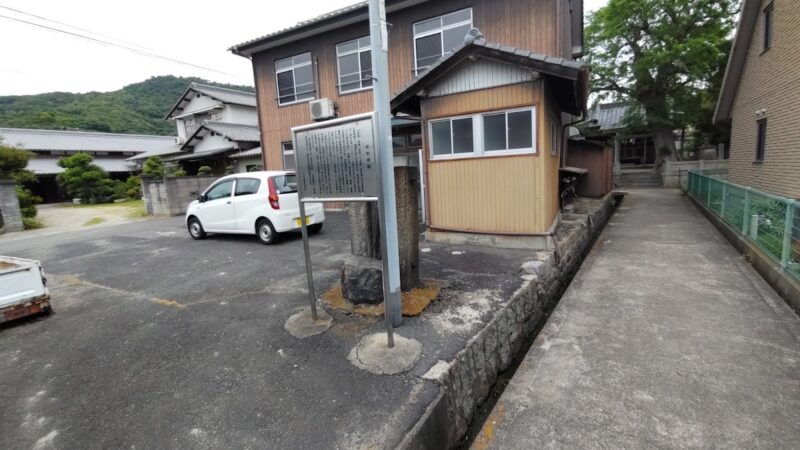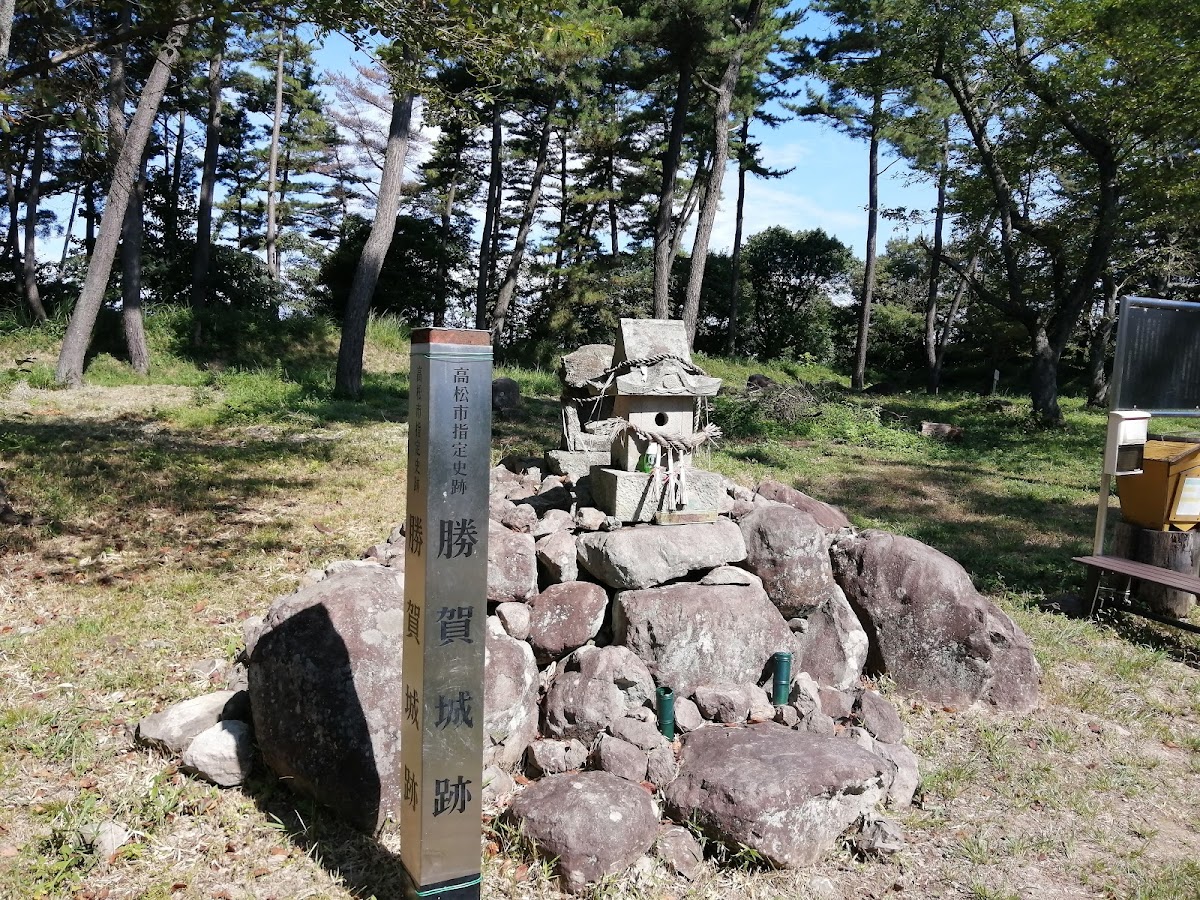
Katsuga Castle (Kagawa Prefecture) Complete Guide – From the Kozai Clan’s Mountain Castle to Toyotomi Hideyoshi’s Camp Fortress
What is Katsuga Castle?
Katsuga Castle is a medieval mountain castle located in Saryo, Kinashi-cho, Takamatsu City, Kagawa Prefecture. Built on the summit of Mount Katsuga (365 meters above sea level), this castle is known as the stronghold of the Kozai clan, a prominent local family of Sanuki Province, and was designated a national historic site in 2023.
Built in a superb location overlooking the Seto Inland Sea and the Takamatsu Plain, Katsuga Castle is an important historical site that tells the story of Sanuki’s history from the medieval period to the Sengoku period. In particular, it is an extremely valuable historical site in the history of castles because the extensive renovations carried out during Toyotomi Hideyoshi’s conquest of Shikoku in 1585 (Tensho 13) transformed it from a medieval mountain castle into a modern camp fortress, with the process of transformation preserved in the remains.
History of Katsuga Castle
The Jōkyū War and the Establishment of the Kōzai Clan
The history of Katsuga Castle dates back to the Jōkyū War of 1221. Sukemura, the son of Niizumi Sukemitsu (the fourth son of Hayuka Suketaka, lord of Hayuka Castle), distinguished himself in battle on the side of the Kamakura Shogunate during the Jōkyū War. For his service, Sukemura was appointed as the district magistrate of 12 villages in Kagawa County and 4 villages in Ano County. He changed his surname to Kōzai and built a fortified castle on Mount Katsuga.
At the same time, Sukemura established Saryō Castle, his residence for peacetime, at the eastern foot of Mount Katsuga. From this point onward, the Kōzai clan established their control over western Sanuki Province with a two-castle system: Katsuga Castle as their fortified castle and Saryō Castle as their residence for peacetime. This system continued for approximately 360 years until the Kōzai clan’s downfall.
The Kozai and Hosokawa Clans in the Muromachi Period
During the Muromachi period, the Kozai clan resided in Kyoto as retainers of the Hosokawa Keicho family, the shogunal deputy, and played an important role in the shogunate. The Kozai clan became a powerful samurai family, even counted among the “Four Heavenly Kings of Hosokawa,” and wielded considerable influence within Sanuki Province.
During this period, the Kozai clan needed to balance political activities in Kyoto with the management of their territory in Sanuki, making the two-castle system of Katsuga Castle and Saryo Castle crucial. Katsuga Castle was maintained as a defensive base in times of emergency and as a symbol of their control over Sanuki.
The Sengoku Period and the Invasion by Chosokabe Motochika
With the arrival of the Sengoku period, Sanuki was engulfed in fierce warfare. In 1582, when Chosokabe Motochika, a Sengoku daimyo from Tosa, invaded Sanuki, the Kozai clan submitted to Motochika without resistance.
During this period, Katsuga Castle was positioned as one of the important bases in the Chosokabe clan’s control of Sanuki Province. However, this situation did not last long.
The Shikoku Campaign of 1585 and Renovations by Hideyoshi
In 1585, Toyotomi Hideyoshi’s campaign to conquer Shikoku began. Hideyoshi’s army invaded Shikoku with overwhelming force, forcing Chosokabe Motochika to surrender in just over a month.
During this Shikoku campaign, Katsuga Castle was seized by Hideyoshi’s army and underwent extensive renovations. Hideyoshi’s army remodeled Katsuga Castle into a fortified encampment, using it as a base for pacifying Sanuki. These renovations transformed Katsuga Castle from a medieval mountain castle into a fortified encampment with elements of early modern castle architecture.
Of particular note are the traces of renovations found in the southwestern part of Katsuga Castle. Archaeological excavations have revealed that this section was a fortified encampment remodeled during Hideyoshi’s Shikoku campaign in 1585. The well-developed structures, such as the flanking defenses and fortified gates, are thought to be the result of renovations during this period.
Abandonment of the Castle and its Aftermath
After the conquest of Shikoku, Sanuki Province came under the rule of Sengoku Hidehisa, and it is believed that Katsuga Castle ceased to serve its purpose and was abandoned. Afterward, the whereabouts of the Kozai clan also disappeared from history.
The Katsuga Castle ruins were largely forgotten after their abandonment, but in 1980, they were designated a historical site by Takamatsu City. A confirmation survey was conducted from 2016 to 2020. Then, in 2023, they were designated a national historical site, becoming the third national historical castle site in Kagawa Prefecture, following Yashima Castle and Takamatsu Castle (Tamamo Castle).
Structure and Layout of Katsuga Castle
Overall Structure
Katsuga Castle is a mountain castle built around the summit of Mount Katsuga, which is 364.1 meters above sea level. The castle’s structure features the main enclosure at the mountaintop, with multiple baileys (kuruma) located on the ridge extending northward and on the northwestern slope. The castle grounds are very extensive, with numerous remains confirmed from the mountaintop to the slopes.
The relative elevation is approximately 320 meters, making it a highly defensible location. Currently, a hiking trail is maintained, allowing access from the entrance to the mountaintop in about 45 minutes.
Features of the Main Enclosure
The main enclosure features a well-organized layout reminiscent of early modern castles. It has a long, narrow shape running east-west, surrounded by earthen ramparts. These ramparts are approximately 2 meters high and functioned as defensive structures.
Within the main enclosure, the remains of the Honmaru (main bailey), Ninomaru (second bailey), and Sannomaru (third bailey) are arranged in a line from east to west. Each bailey is clearly demarcated, with earthen ramparts and gatehouses. The gatehouse structure, in particular, is complex, designed with flanking fire in mind, indicating the use of advanced castle construction techniques.
Stone Walls and Earthworks
Stone walls and earthworks play a crucial role as defensive structures at Katsuga Castle. The stone walls are mainly built around the entrance gates and the edges of the baileys, employing the nozurazumi (rough-stone masonry) technique. Some of these stone walls are thought to have been constructed during the renovations by Hideyoshi’s army in 1585 (Tensho 13).
Earthworks remain in various locations within the castle, with the earthworks surrounding the main bailey being particularly well-preserved. Based on their height and shape, it is estimated that they were constructed at multiple times. The coexistence of earthworks from the medieval period and those from early modern renovations is a distinctive feature of Katsuga Castle.
Arrangement of Baileys
On the ridge extending north from the main bailey, multiple baileys are arranged in a stepped pattern. These baileys skillfully utilize the ridge’s topography, creating a structure that allows for coordinated defense.
Several baileys have also been identified on the northwestern slope of the mountain; these are thought to have been responsible for the defense of the rear entrance. The enclosures are clearly demarcated by steep slopes, and various measures are evident to make enemy intrusion difficult.
Development of the Entrance
The entrances (gateways) of Katsuga Castle have a highly developed structure. Rather than simple openings, they are complex structures that incorporate features such as flanking fire and square enclosures, effectively preventing enemy intrusion.
In particular, the entrance to the main enclosure is a robust structure combining stone walls and earthworks, indicating that modern castle construction techniques were introduced during the 1585 (Tensho 13) renovation. This entrance structure is an important remains that shows the transitional period from medieval mountain castles to modern castles.
Remains of the Fortified Camp in the Southwest
Confirmation surveys conducted from 2016 to 2020 revealed that the southwestern part of Katsuga Castle was a fortified camp that was renovated during Hideyoshi’s invasion of Shikoku in 1585 (Tensho 13).
This section exhibits characteristics unique to fortified camps built in a short period of time. The arrangement of the enclosures is regular, and the earthworks and entrances are strategically placed. Furthermore, the uniformity in the construction of the stone walls indicates that the construction was carried out in an organized manner.
This fortified castle ruin speaks to the importance of Katsuga Castle in Toyotomi Hideyoshi’s strategy for unifying Shikoku, and demonstrates the high level of castle-building technology of Hideyoshi’s army, which carried out large-scale renovations in a short period of time.
Highlights of Katsuga Castle
View from the Main Enclosure
The greatest highlight of Katsuga Castle is the view from the main enclosure. From the mountaintop at an altitude of 365 meters, you can see the Seto Inland Sea and the Takamatsu Plain, and on a clear day, you can even see the Seto Ohashi Bridge, Sanuki Fuji (Mt. Iino), and even Shodoshima Island.
This view makes you realize that Katsuga Castle was in an excellent location as a base for controlling western Sanuki. You can understand why the Kozai clan chose this place as their base from this view.
Well-Preserved Earthworks
The earthworks of Katsuga Castle are in remarkably good condition. The earthen ramparts surrounding the main enclosure, in particular, retain much of their original form from the time of construction, allowing visitors to appreciate their defensive capabilities from their height and width.
It’s possible to walk along the ramparts, gaining an understanding of the castle’s structure from the perspective of the castle’s defenders. By observing the layout of the baileys and the relative positions of the gates from the ramparts, one can discern the intentions of the castle’s builders.
Complex Gate Structure
The gates of Katsuga Castle are important remains that demonstrate the transitional castle construction techniques from the medieval to the early modern period. The layout, designed with flanking fire in mind, and the combination of stone walls and earthen ramparts, are truly ingenious when viewed in person.
The gate to the main enclosure, in particular, is structured to limit enemy incursions and allow for attacks from the flanks, demonstrating the high level of practical castle construction techniques of the Sengoku period.
Stone Wall Remains
Katsuga Castle has numerous remnants of stone walls constructed using the nozura-zumi (rough-stone masonry) method. Many of these stone walls were built during the renovations in 1585 (Tensho 13), and are valuable relics that demonstrate the technology of the transition period to early modern castles.
Although the stone walls are small in scale, the ingenuity in the stacking method and selection of stones is evident, revealing the level of stonemasonry at the time. While some sections have collapsed, this also adds to the sense of the passage of time.
Arrangement of the Enclosures
The group of enclosures, arranged on the ridge extending north from the main enclosure, exhibits a typical structure of a medieval mountain castle that skillfully utilizes the terrain. By walking around each enclosure, you can understand the overall defensive system of the castle.
By observing details such as the cliffs between enclosures and the flat surfaces within the enclosures, you can imagine how the castle was used at the time.
Well-maintained Hiking Trail
Currently, a well-maintained hiking trail leads to the Katsuga Castle ruins. Information boards are installed along the trail, allowing you to learn about the castle’s history and structure as you ascend.
While the hiking trail is relatively well-maintained, as it is a mountain castle, appropriate physical fitness and equipment are necessary. When visiting the castle, we recommend wearing appropriate footwear such as trekking shoes and bringing drinking water.
Map and Access Information
Location
Katsuga Castle Ruins are located in Saryo, Kinashi-cho, Takamatsu City, Kagawa Prefecture. The castle ruins are on the summit of Mount Katsuga, and there are multiple entrances to the castle at the foot of the mountain.
Access by Public Transportation
From JR Takamatsu Station, take the JR Yosan Line for approximately 7 minutes and get off at Kinashi Station. It’s about a 15-minute walk from Kinashi Station to the castle entrance, and about a 45-minute walk from the entrance to the main citadel at the summit. The total journey takes approximately 1 hour.
Kinashi Station is a small station where only local trains stop, but it is easily accessible from Takamatsu Station. You can follow the signs from the station to the castle entrance.
Access by Car
It’s about 10 minutes from the Takamatsu-Nishi Interchange on the Takamatsu Expressway. There is a small parking area near the castle entrance, but spaces are limited, so be aware of potential congestion.
When setting your destination on a car navigation system, it is recommended to search for “Katsuga Castle Ruins Entrance” or “Saryo, Kinashi-cho, Takamatsu City.” The road to the entrance is a narrow mountain path in some parts, so please drive carefully.
Parking Information
There are a few parking spaces near the castle entrance. Parking is free, but spaces are limited, so it may be crowded on weekends and holidays.
The castle entrance is a few minutes’ walk from the parking lot. The area around the parking lot is residential and consists of mandarin orange groves, so please be considerate of the local residents.
Precautions When Visiting
Katsuga Castle Ruins is a mountain castle at an altitude of 365 meters, and climbing it requires a certain level of physical fitness. Please pay attention to the following points when visiting:
- Clothing and Equipment: Wear comfortable walking shoes such as trekking shoes or athletic shoes. In summer, a hat, sunscreen, and insect repellent are also necessary.
- Drinking Water: There are no vending machines or water sources at the summit, so please bring plenty of drinking water.
- Estimated Time: The one-way trip from the trailhead to the summit takes approximately 45 minutes, so allow about 1 hour 30 minutes to 2 hours round trip. Including time to visit the castle ruins, we recommend allowing a total of about 3 hours.
- Weather: The hiking trail can become slippery during or after rain. If the weather is bad, please do not force yourself to go and visit on another day.
- Season: Summer temperatures are high, and there is a risk of heatstroke. Visiting during the cooler spring and autumn seasons is more comfortable.
Nearby Tourist Attractions
Saryo Castle Ruins
Located at the eastern foot of Katsuga Castle, Saryo Castle Ruins were the site of the Kozai clan’s peacetime residence. Although residential development is progressing, some remains such as earthworks still exist. Visiting both Katsuga Castle and Saryo Castle will give you a deeper understanding of the Kozai clan’s two-castle system.
Yashima
Located in the eastern part of Takamatsu City, Yashima is a famous historical site known as the site of a battle during the Genpei War. The Yashima Castle ruins are also designated as a national historic site, and you can see the remains of an ancient mountain castle. Like Katsuga Castle, it boasts a stunning panoramic view of the Seto Inland Sea.
Takamatsu Castle Ruins (Tamamo Castle Ruins)
Located in the center of Takamatsu City, the Takamatsu Castle ruins are the site of the residence of the Sanuki Takamatsu Domain during the Edo period. Known as a water castle facing the sea, it is now maintained as Tamamo Park. The remains of the stone walls, moats, and turrets are well-preserved, and it is designated as a national historic site.
Sanuki Kokubunji Temple Ruins
Located in Kokubunji-cho, Takamatsu City, the Sanuki Kokubunji Temple ruins are the remains of a provincial temple built during the Nara period. The Sanuki Kokubunji Temple still exists today, and within its grounds remain ruins designated as a national special historic site.
Designation of Katsuga Castle as a Cultural Property
The Katsuga Castle ruins were designated as a Takamatsu City Historic Site in 1980. Subsequently, a confirmation survey conducted from 2016 to 2020 re-evaluated the importance of the castle ruins, and on October 20, 2023, it was designated a National Historic Site.
The following points were evaluated as reasons for the National Historic Site designation:
- As the base of the powerful Kōzai clan of medieval Sanuki Province, it served as the political and military center of western Sanuki for approximately 360 years.
- It was renovated during Toyotomi Hideyoshi’s conquest of Shikoku in 1585, and the remains show the transition from a medieval mountain castle to a modern encampment.
- Its historical importance as the stage of the battles surrounding the unification of Shikoku.
- The remains are well-preserved and have high academic value.
As a result, it has become the third National Historic Site castle site in Kagawa Prefecture, following Yashima Castle and Takamatsu Castle (Tamamo Castle), and is positioned as an important historical site representing the history of castles in Kagawa Prefecture.
Investigation and Research of Katsuga Castle
From fiscal year 2016 to fiscal year 2020, the Takamatsu City Board of Education conducted a confirmation survey of the Katsuga Castle site. This survey included archaeological excavation and surveying, with a particularly detailed investigation focusing on the southwestern part of Katsuga Castle.
The investigation revealed the following:
- The remains in the southwest were a fortified camp remodeled by Hideyoshi’s forces during his invasion of Shikoku in 1585 (Tensho 13).
- Remains from the medieval period and those from early modern renovations overlap.
- Remains such as stone walls, earthworks, and gates are well-preserved.
- The layout and structure of the baileys indicate that the castle was built and remodeled systematically.
These research findings have been published as excavation reports such as “Katsuga Castle Ruins III,” and are important resources for castle research.
Points to Note When Visiting Katsuga Castle
Best Time to Visit
The best time to visit Katsuga Castle Ruins is spring (March to May) and autumn (October to November). The temperature is mild during these times, making it suitable for hiking. Autumn, in particular, offers beautiful autumn foliage and excellent views.
Summer (June to September) is hot, and there is a risk of heatstroke, so early morning visits are recommended. Winter (December to February) is relatively mild, but there can be strong northerly winds, so warm clothing is necessary.
Estimated Time Required
- From the entrance to the main enclosure: Approximately 45 minutes one way
- Visiting the castle ruins: Approximately 30 minutes to 1 hour
- Total round trip: Approximately 2 to 3 hours
We recommend visiting with plenty of time to observe the remains at your leisure.
Useful Items to Bring
- Trekking poles (hiking sticks)
- Sufficient drinking water (500ml or more)
- Towel or hand towel
- Insect repellent spray (spring to autumn)
- Hat and sunscreen
- Camera (for photographing views and ruins)
- Binoculars (for enjoying the views)
Tips for Visiting
Here are some tips for effectively visiting the Katsuga Castle ruins.
- Prior Study: Learning about the castle’s history and structure before your visit will deepen your understanding at the site. We recommend reading this article and the references before visiting.
- Utilizing Information Boards: Information boards are installed along the hiking trails and castle ruins. Reading them carefully will help you understand the meaning and importance of the remains.
- Photography: Photographing remains such as earthworks, gates, and stone walls from multiple angles will help you better understand their structure.
- Enjoying the View: The view from the main enclosure is best enjoyed on a sunny day. Check the weather before visiting.
- Observe Slowly: Instead of rushing through, taking your time to observe the remains will lead to new discoveries.
Summary
Katsuga Castle is a representative medieval mountain castle ruin in Kagawa Prefecture, and an important historical site that tells the story of Sanuki’s history spanning approximately 360 years, from the Jokyu War to the conquest of Shikoku. This castle, which flourished as the base of the Kozai clan and was the stage for Toyotomi Hideyoshi’s unification of Shikoku, leaves behind valuable remains that demonstrate castle construction technology from the transition period from the medieval to the early modern era. The view from the 365-meter-high summit is magnificent, offering a panoramic view of the Seto Inland Sea and the Takamatsu Plain. There are plenty of points of interest, including well-preserved earthworks and stone walls, and a complex castle gate structure.
The importance of the Katsuga Castle ruins has become widely recognized since its designation as a national historic site in 2023. When visiting Kagawa Prefecture, be sure to visit this historic mountain castle ruin and experience the history and culture of Sanuki. Along with the sense of accomplishment from the climb, you’ll feel the spirit of the Sengoku period.